
Why GPS Needs Both Special and General Relativity
GPS satellite clocks are affected by both orbital motion and gravitational time dilation, and the two effects work in opposite directions. Explore how atomic-clock experiments tested relativity, calculate the resulting timing errors, and discover why GPS must correct for both effects to measure distances accurately.
A GPS receiver turns a satellite’s timestamp into a distance. If that timing is wrong by just \(1\ \mu\text{s}\), the inferred distance is wrong by about \(300\ \text{m}\). So why do engineers deliberately set GPS satellite clocks to run slightly slow before launch?
Predict which effect should dominate: the satellite’s speed, or its altitude. The catch is that both affect the clock, and they push its rate in opposite directions. Understanding why requires two parts of relativity, plus an experiment that tested whether real atomic clocks actually behave as Einstein predicted.
01Turn time into distance
A GPS satellite continuously broadcasts radio signals containing timing information. The receiver records when a signal arrives and compares that with the time at which the signal was transmitted.
In a simplified model, the signal’s travel time gives the distance:
\[ d\approx c\Delta t \]
Here, \(d\) is the distance travelled by the signal, \(c\) is the speed of light, approximately \(3.00\times10^8\ \text{m s}^{-1}\), and \(\Delta t\) is the signal’s travel time.
Think of GPS as using a stopwatch as a ruler. Instead of measuring a length directly, it measures how long light takes to cover that length.
The analogy has a limit: the stopwatch must be accurately synchronised with the transmitted timestamp. Real GPS receivers must also account for clock offsets, satellite motion, and signal-propagation effects.
Consider a timing error of one microsecond. Since \(1\ \mu\text{s}=10^{-6}\ \text{s}\),
\[ \begin{aligned} \Delta d&=c\Delta t\\ &=(3.00\times10^8)(1.0\times10^{-6})\\ &=300\ \text{m}. \end{aligned} \]
A tiny clock error has become a substantial distance error.
How GPS turns timestamps into position
- Satellite broadcasts timestamp
Signal carries its transmission time.
- Receiver records arrival time
Compare times to estimate signal travel time; account for clock offsets.
- Convert time to range
d ≈ cΔt
A 1 μs timing error biases range by 300 m.
- Combine satellite measurements
Four or more pseudoranges solve for 3D position and receiver clock offset.
Why at least four satellites? The receiver needs to determine three position coordinates and its own clock offset. Four satellite measurements provide the information needed to solve for these four unknowns in the usual GPS positioning calculation.
The inferred distances are often called pseudoranges because they include clock errors and other effects as well as the actual geometric distances.
This makes accurate timekeeping essential. It also gives us a way to test whether relativity matters in a practical measurement system.
02How scientists tested moving clocks
In October 1971, physicists Joseph Hafele and Richard Keating investigated a question that sounds simple: if an atomic clock travels around the world and returns to its starting point, will it show exactly the same elapsed time as an equivalent clock that stayed behind?
The experiment used four portable caesium-beam atomic clocks. These clocks measure time by counting cycles associated with a stable atomic transition.
The procedure followed a clear sequence:
- The portable clocks were compared with reference clocks at the US Naval Observatory in Washington, D.C.
- The clocks travelled aboard scheduled commercial aircraft around the world, once eastward and once westward.
- Their readings were compared with the reference time scale after the journeys.
- The measured time differences were checked against predictions calculated from the aircrafts’ actual flight paths.
How Hafele and Keating tested moving clocks
- Compare clocks
Four portable caesium clocks are compared with the US Naval Observatory reference time scale.
- Fly eastward
Clocks travel aboard commercial aircraft around the world.
- Fly westward
Clocks make a separate westward journey around the world.
- Compare and test
Compare returned readings with the reference and relativistic predictions.
Before looking at the results, make a prediction. If moving clocks run slow according to special relativity, should both sets of airborne clocks necessarily lose time relative to the reference clocks?
Not necessarily. The reference clocks are attached to Earth, which rotates. An aircraft flying eastward travels faster relative to an Earth-centred, non-rotating reference frame than an aircraft flying westward at a similar speed relative to the ground. This changes the special-relativistic contribution. The aircrafts’ altitude also matters because gravitational time dilation affects their clocks.
The experiment therefore tested the combined effects of motion and gravity, not motion alone.
What did the clocks show?
The published predictions and observations were:
| Journey | Predicted time difference | Observed time difference |
|---|---|---|
| Eastward | \(-40\pm23\ \text{ns}\) | \(-59\pm10\ \text{ns}\) |
| Westward | \(+275\pm21\ \text{ns}\) | \(+273\pm7\ \text{ns}\) |
The differences are relative to the US Naval Observatory reference time scale. A negative value means the travelling clocks lost time relative to the reference clocks; a positive value means they gained time.
The predicted values were reported in Hafele and Keating’s paper on predicted relativistic time gains, and the measurements appeared in their report of the observed time gains.
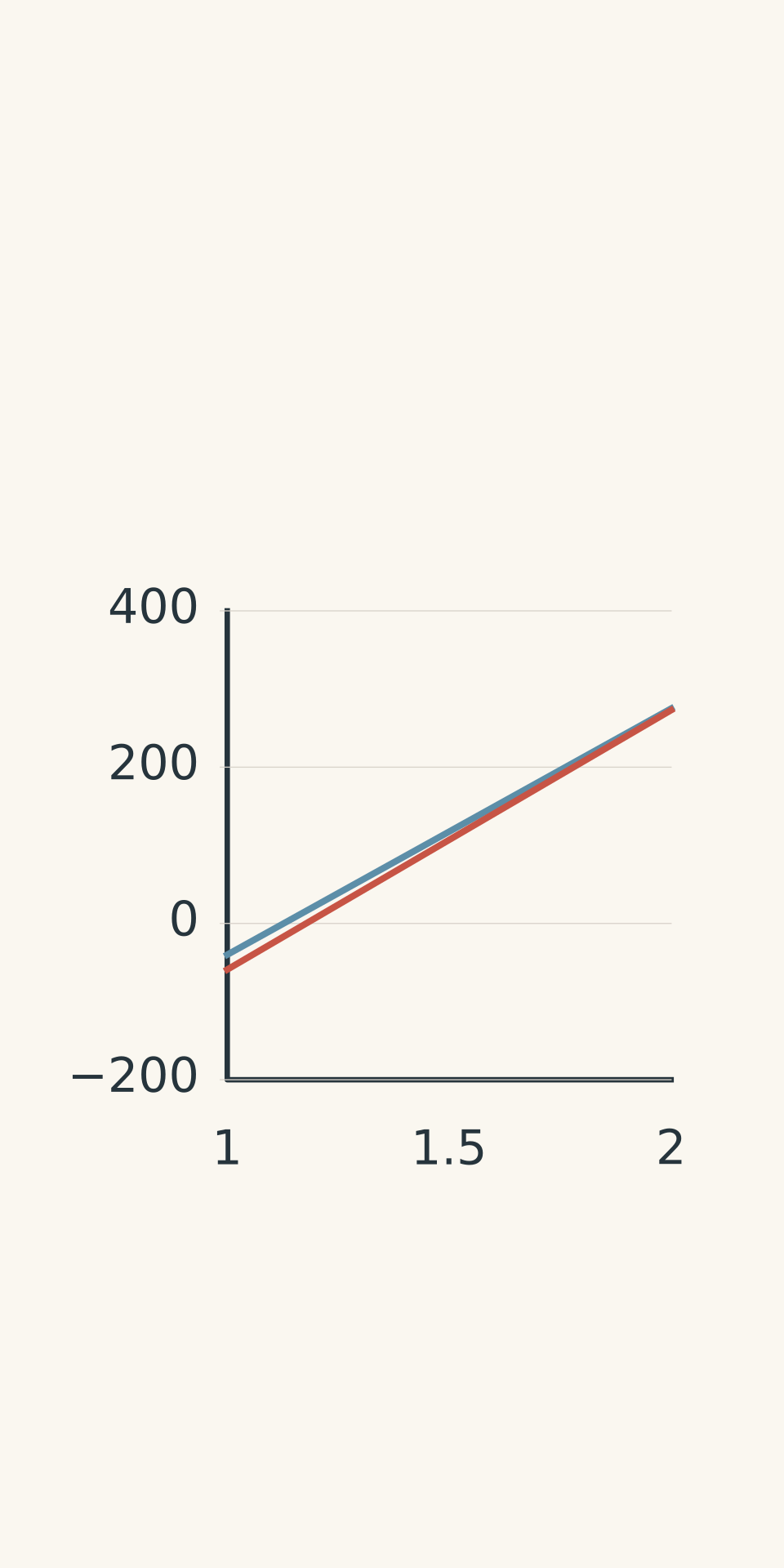
- Predicted
- Observed
The measured differences agreed with the combined relativistic predictions within the experimental uncertainties.
This was important evidence that real atomic clocks accumulate different elapsed times when they follow different paths. It was not, however, a clean test of special relativity in isolation. The clocks experienced different motion and gravitational conditions, so both effects had to be considered.
There is another useful lesson here. A clock does not need to be moving close to the speed of light for relativity to matter. The differences may be tiny over a few hours, but sufficiently precise atomic clocks can measure them.
For HSC Physics, the key connection is special-relativistic time dilation: a moving clock accumulates less proper time than the elapsed time assigned by an appropriate inertial reference frame. The gravitational contribution discussed below is an extension beyond the supplied HSC syllabus.
03Why satellite motion makes clocks run slow
Special relativity predicts that a moving clock accumulates less time relative to an inertial reference frame than a clock at rest in that frame.
The time measured by the moving clock is called its proper time, written \(\Delta\tau\). The elapsed time in the reference frame is written \(\Delta t\).
The relationship is
\[ \Delta t=\gamma\Delta\tau \]
where
\[ \gamma=\frac{1}{\sqrt{1-v^2/c^2}}. \]
Here, \(v\) is the clock’s speed relative to the reference frame, and \(c\) is the speed of light.
When \(v\) is much smaller than \(c\), the clock’s fractional time loss can be approximated by
\[ \frac{\Delta t-\Delta\tau}{\Delta t} \approx\frac{v^2}{2c^2}. \]
The faster the clock moves, the greater the time difference.
GPS satellites orbit roughly \(20\,200\ \text{km}\) above Earth’s surface at about \(3.87\ \text{km s}^{-1}\). Their speed is small compared with the speed of light, but the effect accumulates continuously.
Worked example: Estimate the special-relativistic clock loss
A GPS satellite moves at \(3.87\ \text{km s}^{-1}\). Estimate how much less time its clock accumulates in one day due to special relativity alone. Use \(c=3.00\times10^8\ \text{m s}^{-1}\) and treat the ground reference as approximately stationary for this estimate.
Step 1
\[ v=3.87\times10^3\ \text{m s}^{-1}. \]
For a speed much smaller than \(c\), the fractional time loss is approximately \(v^2/(2c^2)\).
Step 2
\[ \begin{aligned} \frac{v^2}{2c^2} &=\frac{(3.87\times10^3)^2} {2(3.00\times10^8)^2}\\ &\approx8.32\times10^{-11}. \end{aligned} \]
Step 3
There are \(86\,400\ \text{s}\) in a day, so
\[ \begin{aligned} \Delta t_{\text{lag}} &\approx(8.32\times10^{-11})(86\,400\ \text{s})\\ &=7.19\times10^{-6}\ \text{s}\\ &\approx7.2\ \mu\text{s}. \end{aligned} \]
The satellite clock loses approximately \(7.2\ \mu\text{s}\) per day due to its orbital motion.
This is the special-relativistic contribution. It does not tell us the clock’s total rate difference, because the satellite is also much farther from Earth than a ground-based clock.
04Extension beyond the supplied HSC syllabus: gravitational time dilation
Special relativity describes the effects of relative motion. It does not account for differences in gravitational potential.
General relativity predicts that clocks at lower gravitational potential run more slowly than clocks at higher gravitational potential. Near Earth, a clock at a greater altitude runs faster than an equivalent clock on the surface.
The distinction is more precise than saying that gravity is simply weaker in space. The relevant quantity is the difference in gravitational potential between the two locations.
For a satellite above Earth, the weak-field approximation gives the fractional clock-rate difference
\[ \frac{\Delta f}{f}\approx\frac{\Delta\Phi}{c^2}, \]
where \(f\) represents the clock’s tick rate and \(\Delta\Phi\) is the gravitational-potential difference between the satellite and the ground reference.
Approximating Earth as a spherical mass,
\[ \Delta\Phi =GM\left(\frac{1}{R_E}-\frac{1}{r}\right). \]
Here, \(G\) is the gravitational constant, \(M\) is Earth’s mass, \(R_E\) is Earth’s radius, and \(r\) is the satellite’s distance from Earth’s centre.
For a satellite above the surface, \(r>R_E\), so the expression is positive. The gravitational contribution therefore makes the satellite clock run faster relative to the ground clock.
This is the opposite direction to the special-relativistic contribution from the satellite’s motion.
Worked example: Estimate the gravitational clock gain
A GPS satellite is \(20\,200\ \text{km}\) above Earth’s surface. Estimate the gravitational time gain over one day relative to a ground clock.
Use \(R_E=6.37\times10^6\ \text{m}\), \(GM=3.99\times10^{14}\ \text{m}^3\text{s}^{-2}\), and \(c=3.00\times10^8\ \text{m s}^{-1}\).
Step 1
The altitude is not the orbital radius. We must add Earth’s radius:
\[ \begin{aligned} r&=R_E+h\\ &=6.37\times10^6+2.02\times10^7\\ &=2.66\times10^7\ \text{m}. \end{aligned} \]
Step 2
Using the gravitational time-dilation approximation,
\[ \frac{\Delta f}{f} \approx\frac{GM}{c^2} \left(\frac{1}{R_E}-\frac{1}{r}\right). \]
With the given values,
\[ \frac{GM}{c^2}\approx4.43\times10^{-3}\ \text{m} \]
and
\[ \frac{1}{R_E}-\frac{1}{r} \approx1.19\times10^{-7}\ \text{m}^{-1}. \]
Therefore,
\[ \begin{aligned} \frac{\Delta f}{f} &\approx(4.43\times10^{-3})(1.19\times10^{-7})\\ &\approx5.27\times10^{-10}. \end{aligned} \]
Step 3
\[ \begin{aligned} \Delta t_{\text{gain}} &\approx(5.27\times10^{-10})(86\,400\ \text{s})\\ &\approx4.55\times10^{-5}\ \text{s}\\ &\approx45.5\ \mu\text{s}. \end{aligned} \]
The satellite clock gains approximately \(45.7\ \mu\text{s}\) per day due to gravitational time dilation, with the small difference arising from rounding the intermediate values.
This is an extension beyond the supplied HSC syllabus. The important physical idea is that the higher altitude makes the satellite clock run faster, partially offsetting the time loss caused by orbital motion.
05GPS needs both effects
The two contributions can now be combined.
Why GPS needs both relativity corrections
| Special relativity | −7.2 μs/day Orbital motion makes the satellite clock run slower. |
|---|---|
| General relativity | +45.7 μs/day Higher gravitational potential makes the satellite clock run faster. |
| Net effect | −7.2 + 45.7 = +38.5 μs/day The satellite clock gains time overall. |
The approximate daily contributions are:
| Effect | Clock-rate contribution |
|---|---|
| Special relativity: orbital motion | \(-7.2\ \mu\text{s/day}\) |
| General relativity: higher gravitational potential | \(+45.7\ \mu\text{s/day}\) |
| Net effect | Approximately \(+38.5\ \mu\text{s/day}\) |
GPS summaries commonly round the net result to about \(+38\ \mu\text{s/day}\). The precise quoted value depends slightly on the reference conventions and rounding used.
The gravitational effect is larger than the special-relativistic effect. The two do not cancel. Without compensation, the satellite clocks would gain roughly \(38\ \mu\text{s}\) relative to GPS system time each day.
NIST provides a useful overview of relativity and GPS clock corrections.
Why set the clocks slow before launch?
GPS engineers account for the average relativistic rate difference by adjusting the satellite clock’s oscillator frequency before launch. It is set slightly below its nominal frequency on Earth.
Once the satellite reaches orbit, the combined relativistic effects make its clock tick at the intended rate relative to GPS system time.
This is not the same as adding a fixed amount of time to the timestamp once per day. The adjustment is designed to compensate for an ongoing rate difference.
Real GPS also requires further corrections. Satellite clocks drift, and the system estimates their clock offsets and rates. Because satellite orbits are not perfectly circular, a smaller periodic relativistic correction is needed as the satellite’s speed and gravitational potential change around its orbit.
Earth’s rotation introduces another effect, called the Sagnac effect. This changes the signal travel-time calculation in a rotating reference frame. It is a signal-propagation correction, not another average satellite clock-rate contribution.
Worked example: Convert the net clock error into a distance
Suppose the average relativistic rate difference is left uncompensated, and a satellite clock gains \(38.5\ \mu\text{s}\) relative to GPS system time in one day. Estimate the equivalent one-way range error.
Step 1
\[ \Delta t=38.5\times10^{-6}\ \text{s}. \]
Step 2
\[ \begin{aligned} \Delta d&=c\Delta t\\ &=(3.00\times10^8\ \text{m s}^{-1}) (38.5\times10^{-6}\ \text{s})\\ &=1.155\times10^4\ \text{m}\\ &\approx11.6\ \text{km}. \end{aligned} \]
The equivalent one-way ranging error is approximately \(11.6\ \text{km}\) after one day.
Using the commonly rounded value of \(38\ \mu\text{s/day}\) gives \(11.4\ \text{km/day}\), which is why the practical scale is often described as roughly \(11\ \text{km}\) per day.
This is an equivalent timing-based range error, not a guarantee that a phone’s displayed position would move by exactly that distance. The actual position error depends on satellite geometry, receiver clock estimation, and other corrections. Even so, an uncompensated timing discrepancy grows quickly enough to make accurate navigation impossible.
The central point is that GPS does not merely need accurate clocks. It needs clocks whose rates are consistent with the reference time used to interpret the satellite signals.
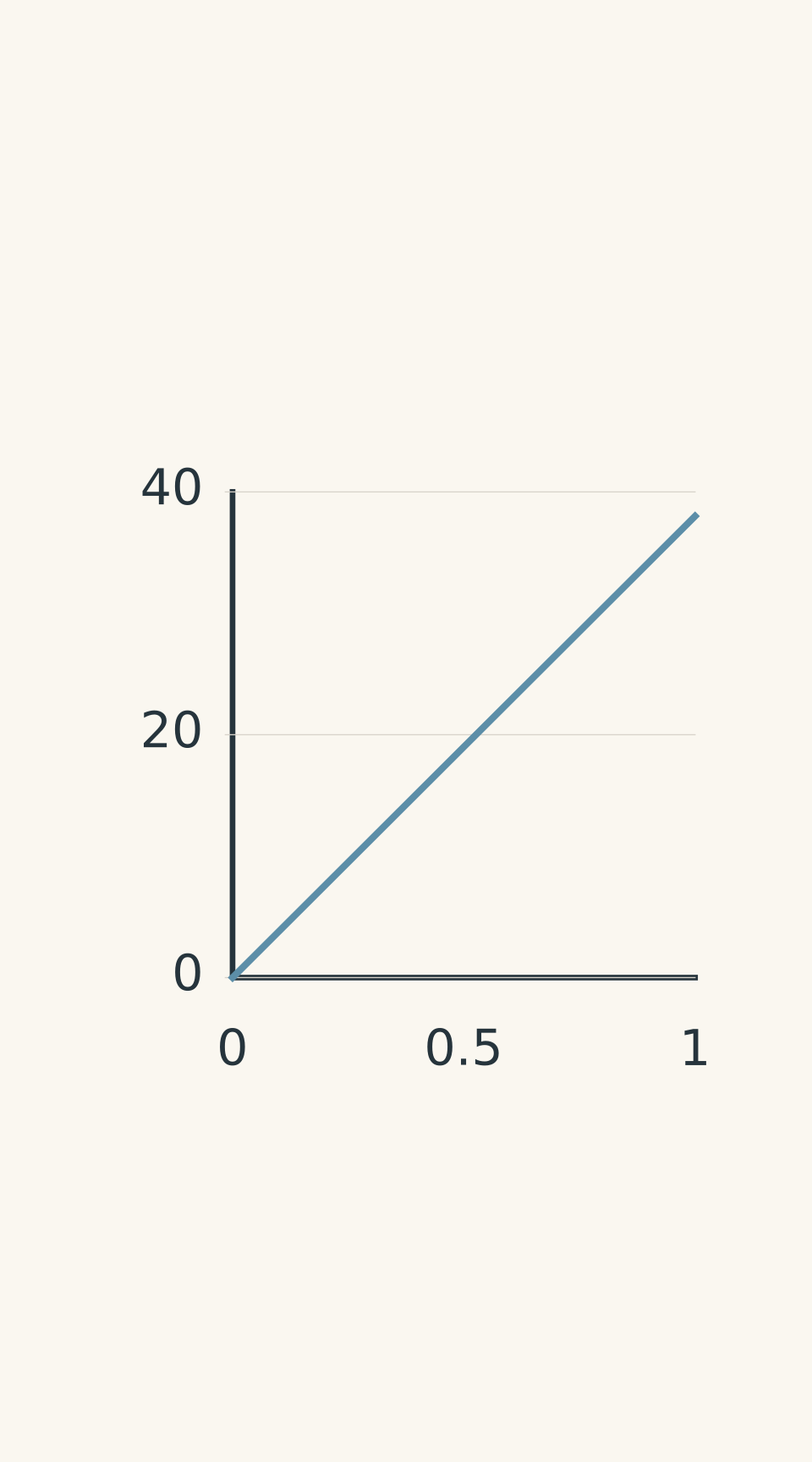
- Uncorrected clock offset
06Questions and solutions
Question 1
A GPS satellite clock gains \(38\ \mu\text{s}\) relative to GPS system time in one day if the average relativistic correction is omitted.
Calculate the equivalent one-way range error after one day. Use \(c=3.00\times10^8\ \text{m s}^{-1}\).
Solution 1
The equivalent range error is approximately \(11.4\ \text{km}\).
A timing error changes the inferred signal travel time, so the corresponding distance error is
\[ \begin{aligned} \Delta d&=c\Delta t\\ &=(3.00\times10^8)(38\times10^{-6})\\ &=1.14\times10^4\ \text{m}\\ &=11.4\ \text{km}. \end{aligned} \]
The important principle is that distance is inferred from signal travel time. A clock-rate error therefore becomes a ranging error. The result is an equivalent range error, not necessarily the exact displacement of the calculated position.
Question 2
A student argues that special relativity makes a GPS satellite clock run slower, so the clock must fall behind a ground clock.
Using a special-relativistic contribution of \(-7.2\ \mu\text{s/day}\) and a gravitational contribution of \(+45\ \mu\text{s/day}\):
- Calculate the net clock-rate difference.
- Explain why the student’s prediction is incomplete.
Solution 2
The satellite clock gains approximately \(37.8\ \mu\text{s}\) per day relative to the ground clock, so the net effect is a gain of about \(38\ \mu\text{s/day}\).
Taking a positive value to mean that the satellite clock gains time,
\[ \begin{aligned} \Delta t_{\text{net}} &=\Delta t_{\text{SR}}+\Delta t_{\text{GR}}\\ &=-7.2+45\\ &=+37.8\ \mu\text{s/day}. \end{aligned} \]
The student’s mistake is treating special relativity as the only contribution. Orbital motion makes the satellite clock lose time relative to the chosen reference, but the weaker gravitational field at orbital altitude makes it gain time. The gravitational contribution is larger, so the net effect is a gain.
The two effects must be added with their signs. Neither can be ignored merely because the other is present.
Question 3
During the Hafele-Keating experiment, the predicted clock differences relative to the US Naval Observatory were \(-40\pm23\ \text{ns}\) eastward and \(+275\pm21\ \text{ns}\) westward.
The observed differences were \(-59\pm10\ \text{ns}\) eastward and \(+273\pm7\ \text{ns}\) westward.
Explain what the results tell us about relativity, why they do not isolate special relativity by itself, and what equivalent light-travel distance corresponds to the observed westward difference of \(273\ \text{ns}\).
Solution 3
The observations agree with the combined relativistic predictions, and \(273\ \text{ns}\) corresponds to approximately \(82\ \text{m}\) of light-travel distance.
First, compare the measured and predicted values. The eastward result was a loss of \(59\ \text{ns}\), compared with a predicted loss of \(40\ \text{ns}\). The westward result was a gain of \(273\ \text{ns}\), very close to the predicted gain of \(275\ \text{ns}\). Both comparisons are consistent within the reported uncertainties.
The experiment does not isolate special relativity because the clocks experienced both motion and different gravitational conditions. Earth’s rotation also affected the aircrafts’ speeds relative to an Earth-centred, non-rotating reference frame. The observed differences therefore tested the combined prediction.
To calculate the equivalent light-travel distance for the westward result,
\[ \begin{aligned} \Delta d&=c\Delta t\\ &=(3.00\times10^8\ \text{m s}^{-1}) (273\times10^{-9}\ \text{s})\\ &=81.9\ \text{m}. \end{aligned} \]
The result illustrates how precisely atomic clocks can measure elapsed-time differences. The \(81.9\ \text{m}\) figure is a timing-equivalent distance; the experiment itself measured clock differences, not GPS positions.
Question 4
A GPS receiver uses four satellites to determine its three-dimensional position and its own clock offset.
At one instant, suppose all four satellite timestamps have the same uncorrected error of \(+20\ \text{ns}\), causing all four inferred ranges to be too long by the same amount.
Calculate the common range error and explain whether the receiver’s calculated position must change. How would the situation differ if only one satellite had the \(20\ \text{ns}\) error?
Assume an ideal positioning solution and ignore all other errors.
Solution 4
The common range error is \(6.0\ \text{m}\), but the receiver’s calculated position does not necessarily change if all four ranges have the same error.
The range error is
\[ \begin{aligned} \Delta d&=c\Delta t\\ &=(3.00\times10^8\ \text{m s}^{-1}) (20\times10^{-9}\ \text{s})\\ &=6.0\ \text{m}. \end{aligned} \]
The key constraint is that the receiver also solves for its own clock offset. If every satellite range has exactly the same bias, the receiver can absorb that common error into its estimated clock offset. In the idealised situation, the position can remain unchanged even though the timing estimate is wrong.
If only one satellite has the error, the pattern is different. The receiver cannot generally absorb a single-satellite error into one common clock offset without affecting the position solution. The inconsistent range distorts the calculated position, with the size and direction of the displacement depending on satellite geometry.
This is why an equivalent range error does not automatically equal the actual position error. The pattern of errors across the satellite measurements matters.
Question 5
An engineer proposes placing a GPS-like satellite in a circular orbit where the average gravitational time gain exactly cancels the special-relativistic time loss. The engineer concludes that relativity would then no longer matter.
Use the following simplified weak-field expressions for fractional clock-rate differences relative to an ideal clock on Earth’s surface:
\[ \delta_{\text{GR}} =\frac{GM}{c^2} \left(\frac{1}{R_E}-\frac{1}{r}\right) \]
and
\[ \delta_{\text{SR}}=-\frac{v^2}{2c^2}. \]
Here, \(R_E\) is Earth’s radius, \(r\) is the orbital radius measured from Earth’s centre, and positive values mean that the satellite clock runs faster relative to the surface clock. For a circular orbit, use \(v^2=GM/r\).
Ignore Earth’s rotation and its non-spherical gravitational field for this calculation.
(a) Find the orbital radius at which the two average clock-rate contributions cancel.
(b) Estimate the corresponding altitude using \(R_E=6.37\times10^6\ \text{m}\).
(c) Explain why the engineer’s conclusion is still incorrect. Consider what happens if the orbit is slightly elliptical and what happens to radio signals travelling in Earth’s rotating reference frame.
Solution 5
The two average clock-rate contributions cancel at an orbital radius of \(1.5R_E\), corresponding to an altitude of approximately \(3.2\times10^3\ \text{km}\). However, this does not make the satellite or its signals free of relativistic effects.
Step 1: Set the net fractional clock-rate difference to zero.
Cancellation requires
\[ \delta_{\text{GR}}+\delta_{\text{SR}}=0. \]
Substitute the given expressions:
\[ \begin{aligned} 0={}&\frac{GM}{c^2} \left(\frac{1}{R_E}-\frac{1}{r}\right)\\ &-\frac{v^2}{2c^2}. \end{aligned} \]
Step 2: Use the circular-orbit relationship.
Since \(v^2=GM/r\),
\[ 0=\frac{GM}{c^2} \left(\frac{1}{R_E}-\frac{1}{r}\right) -\frac{GM}{2rc^2}. \]
Divide through by \(GM/c^2\):
\[ \begin{aligned} 0&=\frac{1}{R_E}-\frac{1}{r}-\frac{1}{2r}\\ &=\frac{1}{R_E}-\frac{3}{2r}. \end{aligned} \]
Therefore,
\[ \frac{1}{R_E}=\frac{3}{2r} \]
and hence
\[ r=\frac{3}{2}R_E. \]
Step 3: Convert the orbital radius into altitude.
The altitude is the orbital radius minus Earth’s radius:
\[ \begin{aligned} h&=r-R_E\\ &=\frac{3}{2}R_E-R_E\\ &=\frac{1}{2}R_E\\ &=3.185\times10^6\ \text{m}\\ &\approx3\,190\ \text{km}. \end{aligned} \]
Step 4: Identify what the cancellation does not establish.
The tempting conclusion is that equal and opposite relativistic effects mean relativity has disappeared. That is incorrect for two reasons.
First, the cancellation applies only to the average clock rate in the simplified circular-orbit model. The gravitational and special-relativistic contributions remain individually non-zero. If the orbit becomes slightly elliptical, the satellite’s altitude and speed vary around the orbit. The gravitational gain and motion-related loss therefore vary as well, so a single constant rate adjustment need not remove every time-dependent difference.
Second, matching the satellite clock’s average rate to the reference clock does not remove the Sagnac effect. Earth’s rotation changes the signal travel-time calculation in the rotating reference frame. This is a separate propagation effect, not a residual average clock-rate difference.
The crucial distinction is between making two clocks agree on average and making every timestamp and signal travel-time calculation correct. The first does not automatically achieve the second.
The next useful concept is the Sagnac effect: it shows why correcting a clock’s rate is not the same as correcting the path and travel time of a signal. In GPS, both the clock and the signal-propagation model must be treated consistently.