
Atomic Structure, Isotopes and Relative Mass: Practice Exam
Test your understanding of atomic structure, isotope notation, relative atomic mass, and radioisotope half-life with this original 50-mark Chemistry revision exam. Includes timed exam instructions, calculation questions, and fully worked solutions with a detailed marking guide.
This original tutorgum practice paper assesses the focused Chemistry revision scope of atomic structure, isotopes, relative atomic mass, and radioisotope applications. It is designed to test your calculations, your understanding of nuclear structure, and your ability to explain what isotope data actually tells you. It is an original practice resource, not an official, endorsed, past, or predicted NESA examination.
01Exam instructions
- Suggested reading time: 5 minutes.
- Suggested working time: 60 minutes.
- Total time: 65 minutes.
- Total marks: 50.
- Permitted equipment: Scientific calculator, pen, pencil, ruler, and a standard periodic table.
Assessed content
This paper assesses the supplied chemistry-2025 syllabus scope:
- Atomic number and mass number, including isotope notation.
- Protons, neutrons, and electrons in atoms and ions.
- Isotopes and their positions in the periodic table.
- Stable and unstable isotopes.
- Radioisotope applications and half-life calculations.
- Relative atomic mass calculated from isotopic masses and natural abundances.
This paper does not assess electron configurations, chemical bonding, reaction stoichiometry, redox reactions, detailed nuclear equations, or decay-constant and activity calculations.
Working conventions
- Show your working for every calculation. A correct numerical answer without supporting working may not receive full marks.
- Use the isotope masses and abundances supplied in each question.
- Relative atomic mass is dimensionless, so do not attach a unit to your final relative atomic mass.
- Give numerical answers to the requested precision. If no precision is specified, use a sensible number of significant figures.
- For half-life questions, assume the sample loses material only through radioactive decay. No radioactive material enters the sample, and the half-life remains constant.
02Questions
Question 1 (8 marks)
(a) Consider the chloride ion represented by
\[ {}^{37}_{17}\mathrm{Cl}^{-} \]
Determine the number of protons, neutrons, and electrons in this ion. (3 marks)
(b) An ion contains 13 protons, 14 neutrons, and 10 electrons.
Write its complete isotope symbol, including the element symbol, atomic number, mass number, and ionic charge. (3 marks)
(c) State what is represented by each of the following quantities:
(i) Atomic number. (1 mark)
(ii) Mass number. (1 mark)
Question 2 (7 marks)
Carbon has two isotopes represented by
\[ {}^{12}_{6}\mathrm{C} \qquad \text{and} \qquad {}^{14}_{6}\mathrm{C} \]
(a) Calculate the number of neutrons in each isotope. (2 marks)
(b) Explain why these two isotopes occupy the same position in the periodic table, despite having different mass numbers. (2 marks)
(c) Carbon-12 is stable, whereas carbon-14 is unstable. Define an isotope and explain why carbon-14 is described as a radioisotope. (3 marks)
Question 3 (10 marks)
(a) Element X occurs naturally as two isotopes.
| Isotope | Isotopic mass (u) | Natural abundance |
|---|---|---|
| X-63 | 62.93 | 69.2% |
| X-65 | 64.93 | 30.8% |
Calculate the relative atomic mass of element X to two decimal places. (5 marks)
(b) Element Y has two naturally occurring isotopes with isotopic masses of 10.0 u and 11.0 u. Its relative atomic mass is 10.8.
Assuming these are the only two isotopes present, calculate the percentage abundance of each isotope. Show your working. (4 marks)
(c) Explain why the relative atomic mass of a naturally occurring element may not be a whole number. (1 mark)
Question 4 (9 marks)
Radioisotopes can be selected for different applications according to their properties and half-lives.
The following table gives information about two radioisotopes.
| Radioisotope | Half-life | Relevant property or application |
|---|---|---|
| P | 6 hours | Emits gamma radiation that can be detected outside the body; suitable for diagnostic imaging |
| Q | 5,730 years | Can be used to estimate the time since once-living material stopped exchanging carbon with its environment |
(a) A sample of radioisotope R initially has a mass of 160 mg. Its half-life is 8 days.
Calculate the mass of radioisotope R remaining after 24 days. (3 marks)
(b) A sample of radioisotope P initially has a mass of 240 mg.
Calculate:
(i) The fraction of radioisotope P remaining after 18 hours. (1 mark)
(ii) The mass of radioisotope P remaining after 18 hours. (2 marks)
(c) A hospital needs a radioisotope for a diagnostic scan that will take place later the same day.
Select either P or Q and justify your choice using the information in the table. (2 marks)
(d) State one limitation of using a radioisotope with a very short half-life for diagnostic imaging. (1 mark)
Question 5 (8 marks)
Element E has two isotopes with the following properties.
| Isotope | Isotopic mass (u) | Natural abundance |
|---|---|---|
| E-20 | 19.99 | 90.0% |
| E-22 | 21.99 | 10.0% |
(a) A student estimates the relative atomic mass of a natural sample by calculating the simple mean of the two isotopic masses:
\[ \frac{19.99+21.99}{2} \]
Explain why this method is inappropriate for the natural sample described in the table. (2 marks)
(b) Calculate the relative atomic mass of the natural sample to two decimal places. (3 marks)
(c) A second sample is prepared with equal abundances of E-20 and E-22.
Calculate the relative atomic mass of this second sample and explain how it compares with the relative atomic mass of the natural sample. (3 marks)
Question 6 (8 marks)
An ion of element X is represented by \(\mathrm{X}^{2+}\). It contains 18 electrons and 20 neutrons.
(a) Determine the number of protons in the ion and hence its atomic number. Show how the ionic charge is used in your calculation. (2 marks)
(b) Identify element X and determine the mass number of this isotope. Write its complete isotope symbol, including its ionic charge. (3 marks)
(c) State the numbers of protons, neutrons, and electrons in a neutral atom of this isotope. (2 marks)
(d) Explain why the formation of the \(\mathrm{X}^{2+}\) ion does not change the mass number of the isotope. (1 mark)
03Worked solutions and marking guide
Solution 1
(a) Protons, neutrons, and electrons (3 marks)
The isotope symbol is \({}^{37}_{17}\mathrm{Cl}^{-}\).
The atomic number is 17, so the ion contains 17 protons.
The mass number is 37. Since mass number equals the total number of protons and neutrons,
\[ \begin{aligned} \text{Neutrons} &= 37-17\\ &=20 \end{aligned} \]
A neutral chlorine atom has 17 electrons. The negative charge indicates that the ion has gained one electron.
\[ \text{Electrons}=17+1=18 \]
Answer: 17 protons, 20 neutrons, and 18 electrons.
Marking guide:
- Protons = 17: 1 mark.
- Neutrons = 20: 1 mark.
- Electrons = 18: 1 mark.
(b) Constructing an isotope symbol (3 marks)
The ion contains 13 protons, so its atomic number is 13. Element 13 is aluminium, Al.
Its mass number is the sum of its protons and neutrons:
\[ A=13+14=27 \]
It has 13 protons but only 10 electrons. The positive charge is therefore \(13-10=+3\).
The complete symbol is
\[ \boxed{{}^{27}_{13}\mathrm{Al}^{3+}} \]
Marking guide:
- Correct element and atomic number: 1 mark.
- Mass number of 27: 1 mark.
- Correct \(3+\) charge and complete isotope notation: 1 mark.
(c) Atomic number and mass number (2 marks)
(i) Atomic number is the number of protons in the nucleus. (1 mark)
(ii) Mass number is the total number of protons and neutrons in the nucleus. (1 mark)
Solution 2
(a) Neutron numbers (2 marks)
Use the relationship
\[ \text{Neutrons}=\text{Mass number}-\text{Atomic number} \]
For carbon-12:
\[ 12-6=6\text{ neutrons} \]
For carbon-14:
\[ 14-6=8\text{ neutrons} \]
Marking guide:
- Carbon-12: 6 neutrons: 1 mark.
- Carbon-14: 8 neutrons: 1 mark.
(b) Position in the periodic table (2 marks)
An element’s identity, and therefore its position in the periodic table, is determined by its atomic number.
Both isotopes have atomic number 6, meaning both have six protons. They therefore occupy the same position in the periodic table.
Their different mass numbers arise from their different numbers of neutrons.
Marking guide:
- States that periodic-table position is determined by atomic number or proton number: 1 mark.
- Identifies that both carbon isotopes have six protons: 1 mark.
(c) Isotopes and nuclear stability (3 marks)
Isotopes are atoms of the same element that have the same number of protons but different numbers of neutrons.
A stable nucleus does not spontaneously undergo radioactive decay. An unstable nucleus can spontaneously decay and emit radiation.
Carbon-14 is a radioisotope because its nucleus is unstable and undergoes radioactive decay. Carbon-12 is stable.
Marking guide:
- Correct definition of isotopes: 1 mark.
- Explains that an unstable nucleus undergoes radioactive decay: 1 mark.
- Identifies carbon-14 as the radioisotope and distinguishes it from stable carbon-12: 1 mark.
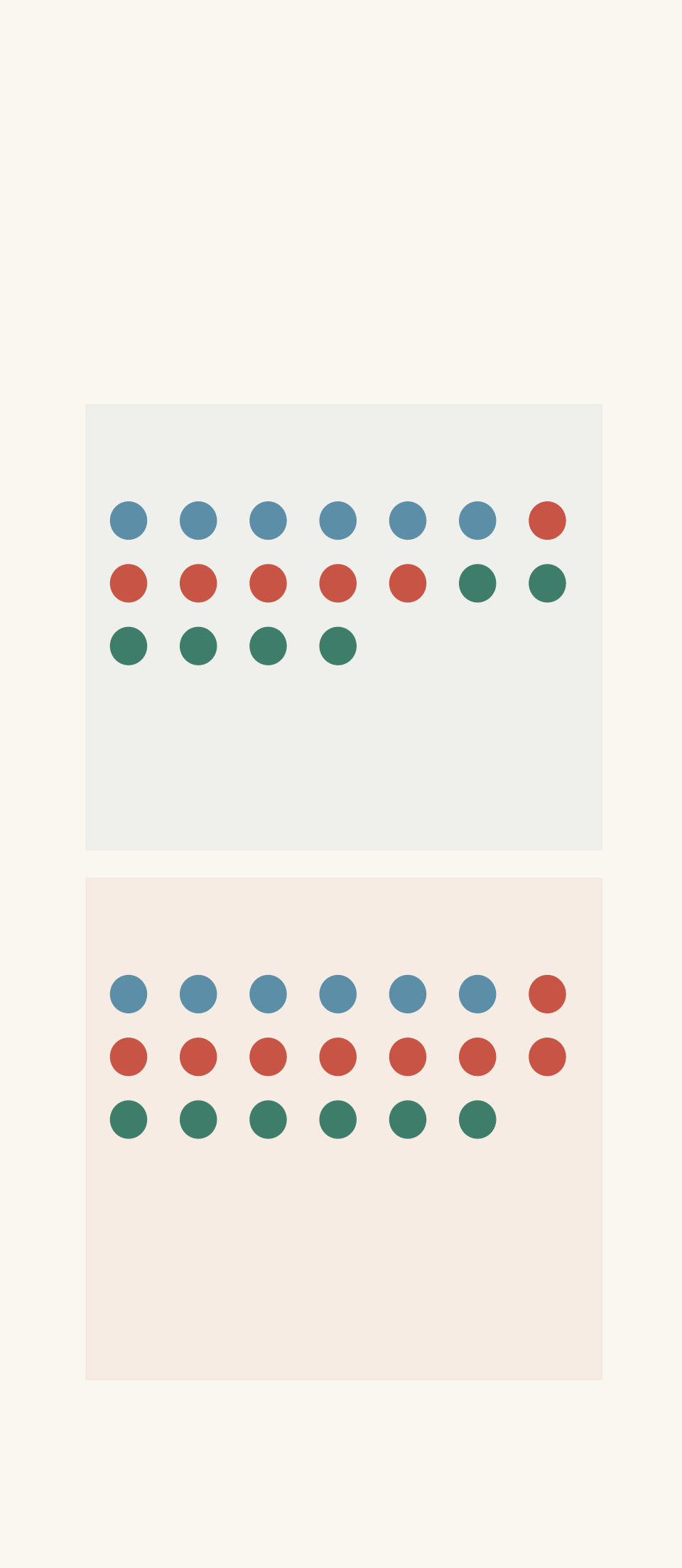
- Protons
- Neutrons
- Electrons
Solution 3
(a) Relative atomic mass of element X (5 marks)
Relative atomic mass is a weighted average of the isotopic masses. Each isotope’s contribution depends on its fractional abundance.
First, convert the percentage abundances into fractions:
\[ 69.2\%=0.692,\qquad 30.8\%=0.308 \]
Multiply each isotopic mass by its fractional abundance, then add the contributions.
\[ \begin{aligned} A_r &= (62.93\times0.692)\\ &\quad +(64.93\times0.308)\\[4pt] &=43.54756+19.99844\\ &=63.546 \end{aligned} \]
To two decimal places,
\[ \boxed{A_r=63.55} \]
Relative atomic mass has no unit.
Marking guide:
- Converts both percentage abundances to fractions: 1 mark.
- Correctly calculates the first weighted contribution: 1 mark.
- Correctly calculates the second weighted contribution: 1 mark.
- Adds the contributions correctly: 1 mark.
- Gives \(63.55\), rounded to two decimal places and without a unit: 1 mark.
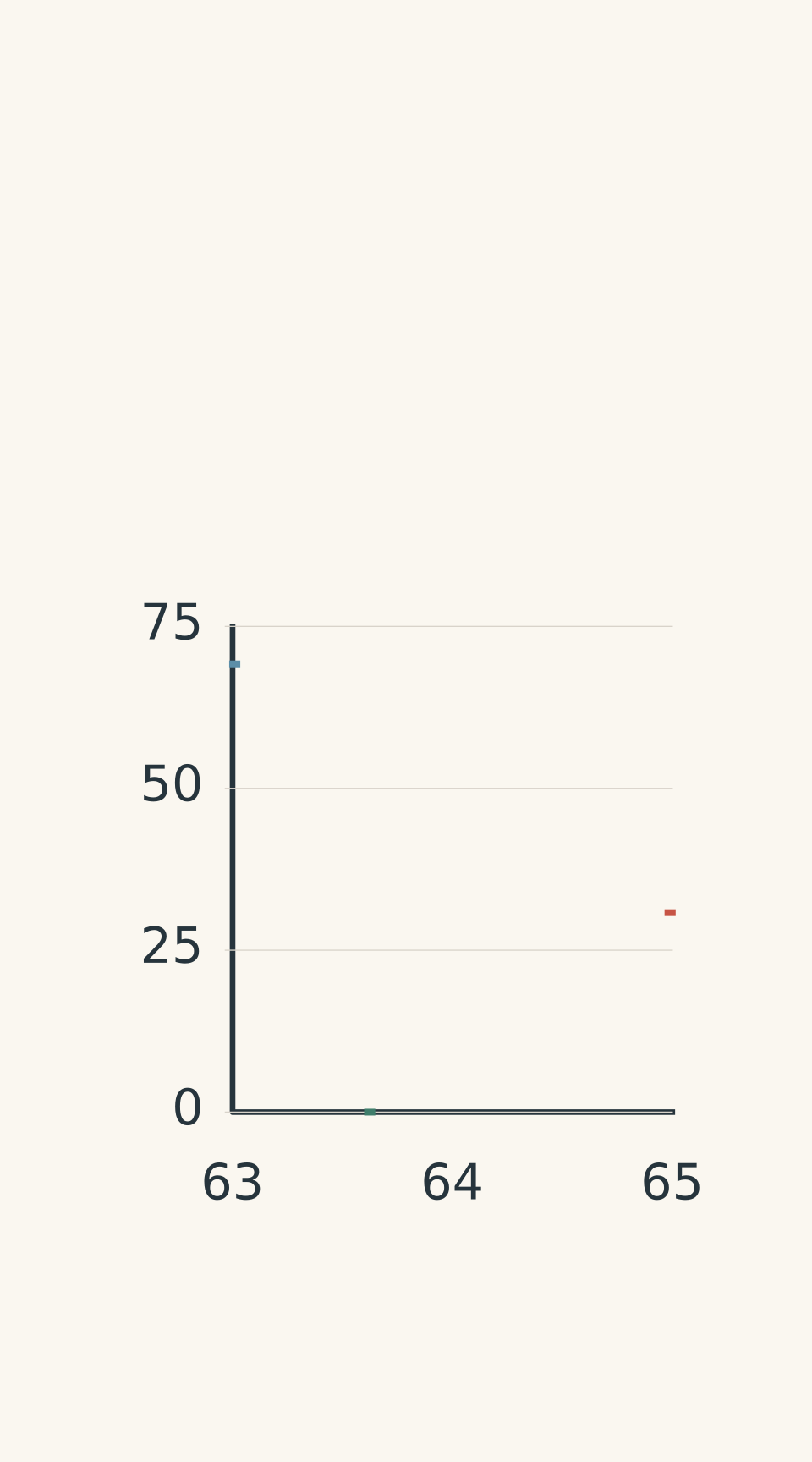
- X-63: 62.93 u, 69.2%
- X-65: 64.93 u, 30.8%
- Weighted mean: 63.55
(b) Unknown isotope abundances (4 marks)
Let \(x\) be the fractional abundance of the isotope with mass 10.0. The fractional abundance of the isotope with mass 11.0 is then \(1-x\).
Using the weighted-average equation,
\[ \begin{aligned} 10.0x+11.0(1-x)&=10.8\\ 10x+11-11x&=10.8\\ 11-x&=10.8\\ x&=0.2 \end{aligned} \]
The abundance of the mass-10.0 isotope is
\[ 0.2\times100\%=20\% \]
The abundance of the mass-11.0 isotope is
\[ 100\%-20\%=80\% \]
Answer: 20% of the mass-10.0 isotope and 80% of the mass-11.0 isotope.
Marking guide:
- Defines \(x\) and represents the other abundance as \(1-x\): 1 mark.
- Constructs the correct weighted-average equation: 1 mark.
- Solves to obtain \(x=0.2\): 1 mark.
- Gives both abundances correctly: 1 mark.
(c) Why relative atomic mass may not be a whole number (1 mark)
Relative atomic mass is a weighted average of the isotopic masses, with each isotope weighted according to its abundance. The average can therefore be fractional.
Marking guide:
- Identifies the abundance-weighted average as the reason: 1 mark.
Solution 4
(a) Mass remaining after 24 days (3 marks)
The half-life is 8 days. The elapsed time is 24 days, so the number of half-lives is
\[ \frac{24}{8}=3 \]
The sample halves three times:
\[ 160\text{ mg}\rightarrow80\text{ mg} \rightarrow40\text{ mg}\rightarrow20\text{ mg} \]
Therefore,
\[ \boxed{m=20\text{ mg}} \]
An equivalent calculation is
\[ m=160\left(\frac12\right)^3=20\text{ mg} \]
Marking guide:
- Determines that three half-lives have elapsed: 1 mark.
- Correctly applies the halving process: 1 mark.
- Gives 20 mg: 1 mark.
Radioactive decay over three half-lives
- 0 days
160 mg remaining
Initial sample
- 8 days
80 mg remaining
One half-life elapsed
- 16 days
40 mg remaining
Two half-lives elapsed
- 24 days
20 mg remaining
Three half-lives elapsed
(b) Fraction and mass remaining after 18 hours (3 marks)
The half-life of P is 6 hours. Therefore,
\[ \frac{18}{6}=3\text{ half-lives} \]
(i) The fraction remaining is
\[ \boxed{\left(\frac12\right)^3=\frac18} \]
(ii) The remaining mass is
\[ \begin{aligned} m&=240\left(\frac12\right)^3\\ &=\frac{240}{8}\\ &=\boxed{30\text{ mg}} \end{aligned} \]
Marking guide:
- Determines that three half-lives have elapsed: 1 mark.
- Gives the remaining fraction as \(\frac18\): 1 mark.
- Calculates the remaining mass as 30 mg: 1 mark.
(c) Selecting a diagnostic radioisotope (2 marks)
Radioisotope P is the better choice.
Its gamma radiation can be detected outside the body, and its six-hour half-life is suitable for a scan later the same day. It decays more quickly than Q, reducing how long the radioisotope remains in the body.
Marking guide:
- Selects P: 1 mark.
- Links its detectable gamma radiation and appropriate half-life to the imaging application: 1 mark.
(d) Limitation of a very short half-life (1 mark)
The radioisotope may decay too quickly during transport or before the scan is completed, leaving too little radiation to obtain a useful image.
Marking guide:
- Identifies a valid limitation, such as insufficient remaining radioactivity before or during imaging: 1 mark.
Solution 5
(a) Why the simple mean is inappropriate (2 marks)
The simple mean gives both isotopes equal weighting. However, the natural sample contains 90.0% E-20 and only 10.0% E-22.
The more abundant isotope should contribute more strongly to the relative atomic mass. An unweighted mean ignores this difference and does not represent the natural sample.
Marking guide:
- Explains that the simple mean weights the two isotopes equally: 1 mark.
- Explains that this ignores their unequal natural abundances: 1 mark.
(b) Relative atomic mass of the natural sample (3 marks)
Convert the percentage abundances into fractions:
\[ 90.0\%=0.900,\qquad 10.0\%=0.100 \]
Calculate the weighted average:
\[ \begin{aligned} A_r&=(19.99\times0.900)\\ &\quad +(21.99\times0.100)\\ &=17.991+2.199\\ &=20.190 \end{aligned} \]
To two decimal places,
\[ \boxed{A_r=20.19} \]
Marking guide:
- Uses the correct fractional abundances in the weighted-average calculation: 1 mark.
- Calculates the weighted contributions and their sum correctly: 1 mark.
- Gives \(20.19\), to two decimal places and without a unit: 1 mark.
(c) Relative atomic mass of the second sample (3 marks)
The two isotopes have equal abundances, so each has a fractional abundance of 0.500.
\[ \begin{aligned} A_r&=(19.99\times0.500)\\ &\quad +(21.99\times0.500)\\ &=9.995+10.995\\ &=\boxed{20.99} \end{aligned} \]
The second sample has a greater relative atomic mass: 20.99 rather than 20.19.
This happens because the proportion of the heavier isotope, E-22, has increased from 10.0% to 50.0%. The weighted average therefore moves closer to the heavier isotopic mass.
Marking guide:
- Uses equal fractional abundances in the calculation: 1 mark.
- Calculates the relative atomic mass as 20.99: 1 mark.
- Correctly compares the two samples and explains the effect of the increased abundance of E-22: 1 mark.
Solution 6
(a) Number of protons and atomic number (2 marks)
The ion has a \(2+\) charge, meaning it has two more protons than electrons.
It contains 18 electrons, so
\[ \begin{aligned} \text{Protons}&=18+2\\ &=20 \end{aligned} \]
Atomic number equals the number of protons. Therefore, the atomic number is also 20.
Answer: 20 protons and atomic number 20.
Marking guide:
- Uses the \(2+\) charge to determine 20 protons: 1 mark.
- Identifies the atomic number as 20: 1 mark.
(b) Element, mass number, and isotope symbol (3 marks)
Atomic number 20 identifies calcium, Ca.
The mass number is the sum of protons and neutrons:
\[ A=20+20=40 \]
The complete isotope symbol is
\[ \boxed{{}^{40}_{20}\mathrm{Ca}^{2+}} \]
Marking guide:
- Identifies calcium, Ca: 1 mark.
- Calculates the mass number as 40: 1 mark.
- Gives the complete isotope symbol with the correct atomic number and ionic charge: 1 mark.
(c) Particles in the neutral atom (2 marks)
The neutral atom has the same nucleus as the ion. It therefore contains 20 protons and 20 neutrons.
A neutral atom has equal numbers of protons and electrons, so it contains 20 electrons.
Answer: 20 protons, 20 neutrons, and 20 electrons.
Marking guide:
- Gives 20 protons and 20 neutrons: 1 mark.
- Gives 20 electrons: 1 mark.
(d) Why the mass number does not change (1 mark)
Forming a positive ion involves removing electrons. It does not change the number of protons or neutrons in the nucleus.
Since mass number is the total number of protons and neutrons, it remains 40.
Marking guide:
- Explains that ion formation changes the electron count, not the number of nucleons in the nucleus: 1 mark.
For further topic practice, see the Atomic Structure, Isotopes and Relative Mass: Practice Exam.