
How to Identify an Unknown Solid from Chemistry Data
Learn how to use melting point, hardness, and electrical conductivity in different states to identify an unknown solid. Follow a step-by-step decision method, avoid common classification errors, and practise with HSC-style questions and worked solutions.
You read a results table, spot a high melting point and a hard, brittle sample, and write “ionic”. Then you notice that it doesn’t conduct electricity as a solid, so you change your answer to “covalent network”. Neither conclusion is justified by those observations alone.
The mistake is treating each property as a label instead of using the full pattern of evidence. To identify an unknown solid reliably, you need to connect its melting point, hardness, and electrical conductivity in different states to the particles that make up its structure.
Unsupported construction: laboratory apparatus illustration
| Required illustration | Four coded unknown-solid samples, a hardness tester, and a melting apparatus. Conductivity electrodes and separate solid, molten, and aqueous test vessels arranged in investigative order. |
|---|---|
| Scientific accuracy requirements | Distinguish conductivity tests on solid, molten, and aqueous samples. Do not imply that high melting point, hardness, or a single conductivity result uniquely identifies a solid’s structure. |
01Why the state of the substance matters
Start with electrical conductivity. An electrical current requires charged particles that can move through a material.
Consider an ionic compound. It contains positive and negative ions arranged in a regular, three-dimensional lattice. The ions carry charge, but in the solid state, they are held in fixed positions.
Predict what happens when the compound melts. Will it still fail to conduct electricity?
No. Melting disrupts the ordered lattice, allowing the ions to move. The molten compound can now conduct electricity because charged particles can travel through it.
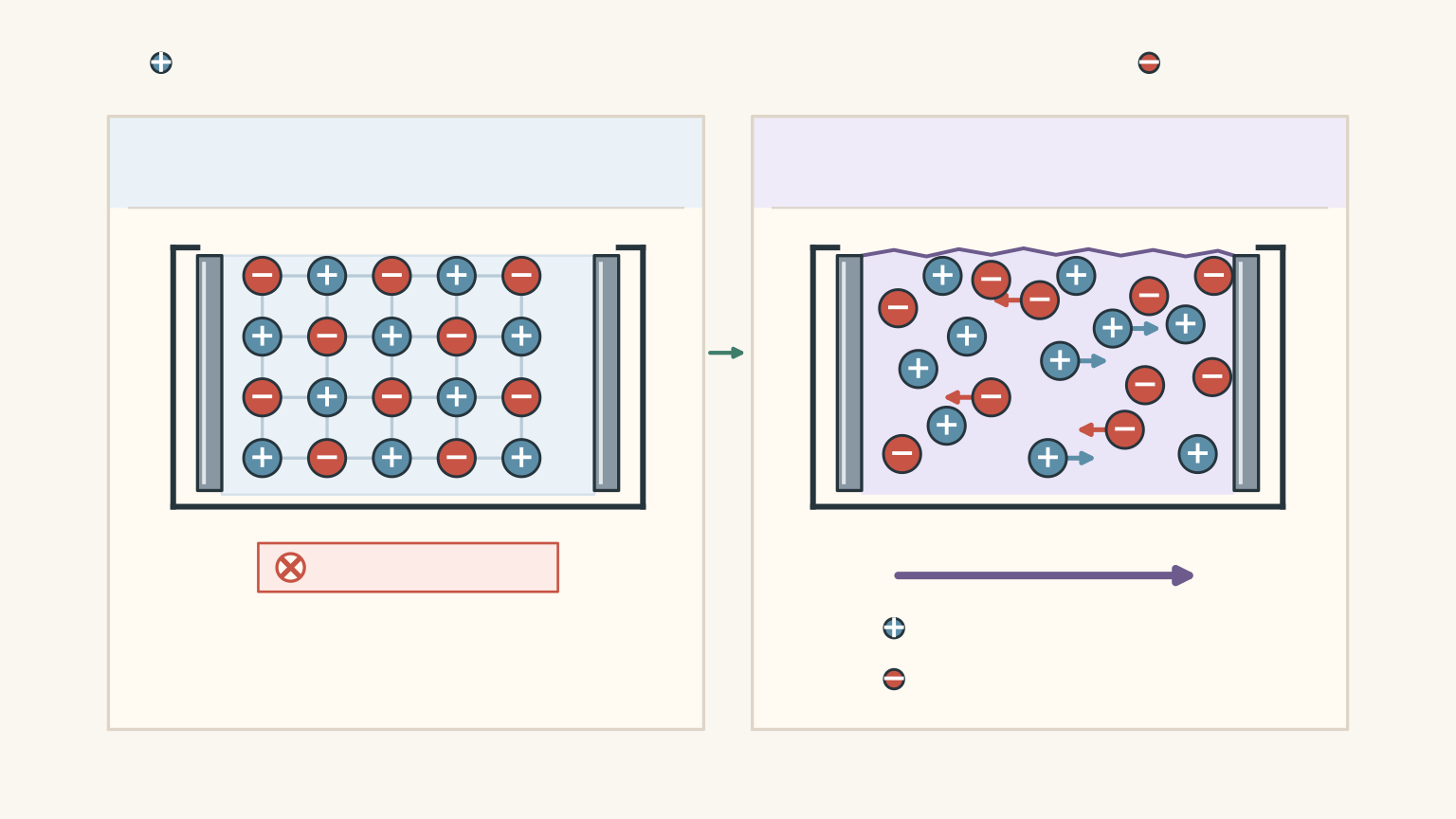
Think of the solid lattice as a room where everyone is glued to an assigned chair. Everyone carrying a charged badge is present, but nobody can move across the room to transport charge. When the lattice melts, the chairs no longer lock everyone into position.
The analogy has a limit: the ions do not become independent particles with no interactions. They still attract and repel one another. The important change is that they can move.
This gives you a useful distinction:
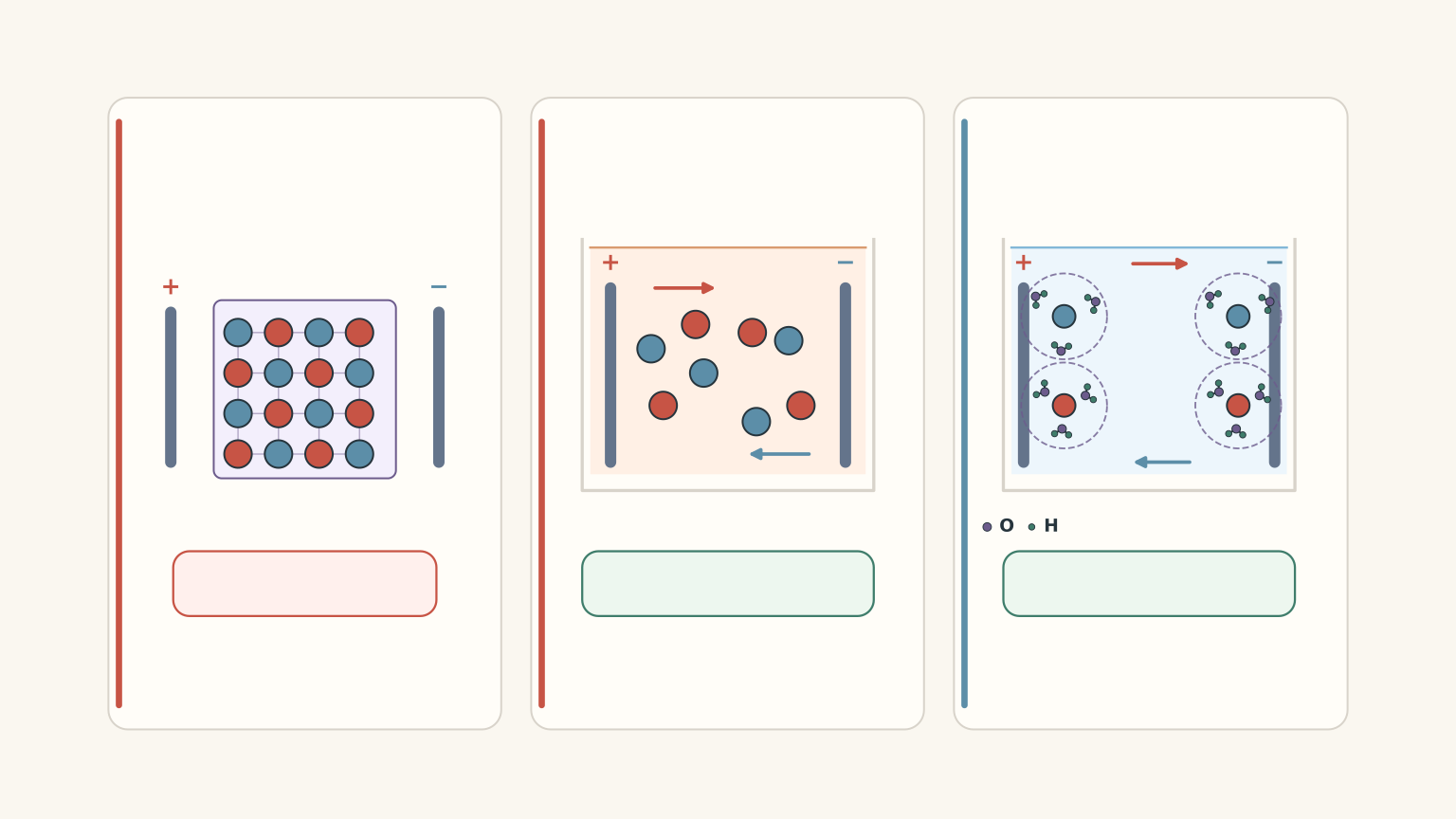
- An ionic solid usually does not conduct electricity because its ions are fixed in place.
- A molten ionic compound conducts because its ions are mobile.
- An ionic compound dissolved in water conducts if it dissolves to produce enough mobile ions.
That third point needs care. Not every ionic compound dissolves in water. An insoluble ionic compound can still have ionic bonding, even if you cannot obtain a conducting aqueous solution from it.
Metals behave differently. They contain mobile, delocalised electrons, so they conduct electricity in both the solid and molten states. They do not need to melt to free their electrons.
This is why the state in which conductivity is measured can be more informative than the result alone.
02Compare the four main structures
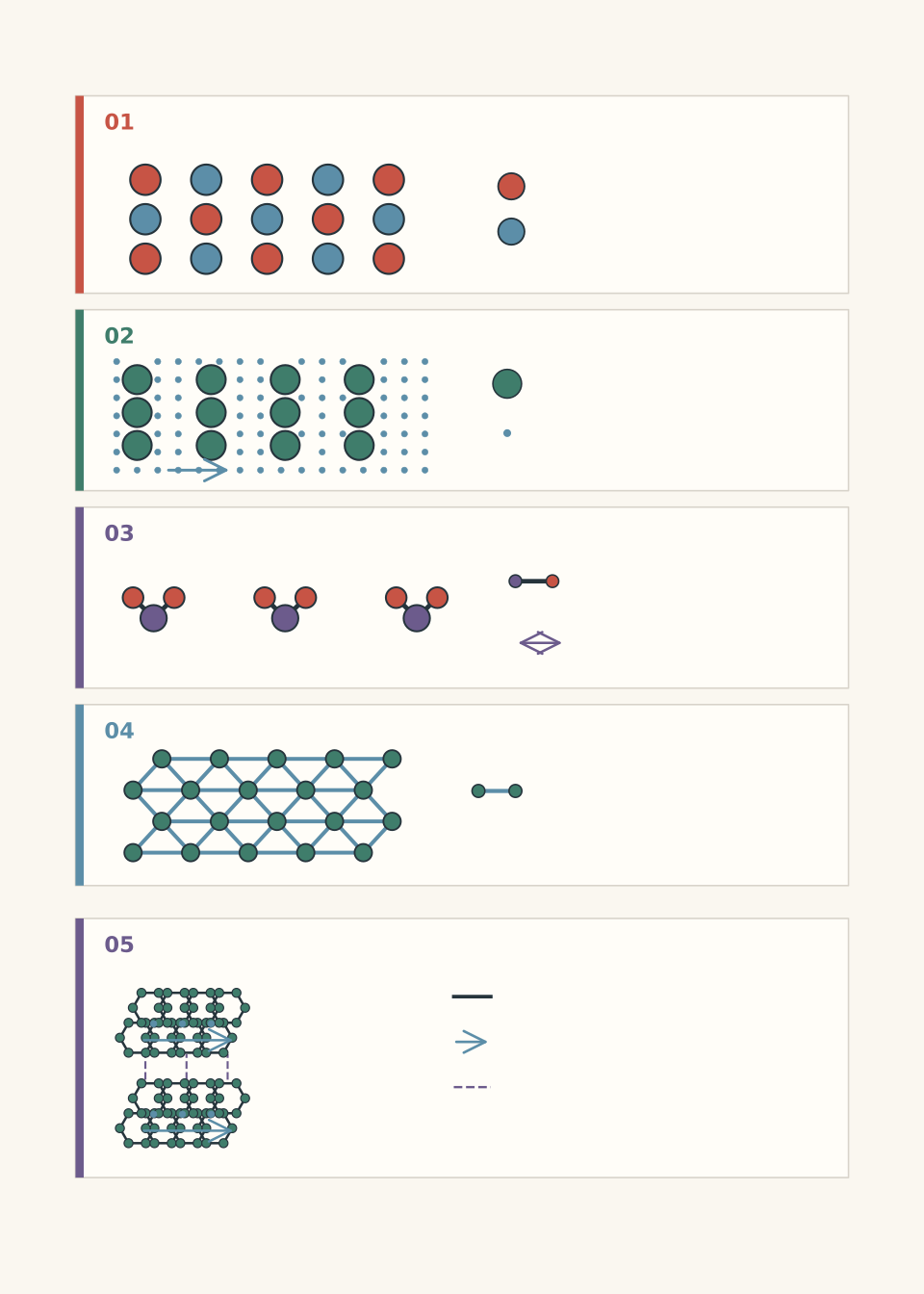
The following table summarises the typical patterns you should recognise in HSC Chemistry.
| Structure | Melting point and hardness | Conductivity as a solid | Molten or aqueous behaviour |
|---|---|---|---|
| Ionic lattice | Usually high melting point; hard and brittle | Usually does not conduct | Molten compound conducts; aqueous solution conducts if soluble and sufficiently ionised |
| Metallic lattice | Melting point varies; usually malleable and ductile | Conducts | Molten metal also conducts; metals generally do not dissolve in water as neutral solutes |
| Simple molecular | Usually relatively low melting point; often soft | Does not usually conduct | Pure liquid usually does not conduct; aqueous solution usually does not unless molecules ionise or react |
| Covalent network | Usually very high thermal stability; often hard | Usually does not conduct, with important exceptions | Often insoluble and may decompose or fail to form a stable liquid before a conductivity test is possible |
These are typical patterns, not four sets of unbreakable rules.
What melting point actually tells you
Melting point gives evidence about how much energy is needed to disrupt the structure sufficiently for the solid to become liquid.
Ionic lattices have strong electrostatic attractions between oppositely charged ions. Covalent networks have extensive covalent bonding throughout the structure. Both can have high melting points.
Simple molecular substances are different. When most simple molecular solids melt, the main change is the weakening of intermolecular forces between molecules, rather than the breaking of the covalent bonds within each molecule. These intermolecular forces are generally weaker, so simple molecular substances usually melt at lower temperatures.
The word usually matters. Some molecular substances have relatively high melting points because of strong intermolecular attractions, and some substances decompose before a stable liquid forms.
A high melting point therefore supports the idea of a strongly held structure, but it does not independently distinguish an ionic lattice from a covalent network.
Also, do not confuse a measured melting point with a decomposition temperature. If a sample decomposes before forming a stable liquid, the correct observation is that it decomposes before a stable melt is observed. You have not measured its melting point.
What hardness actually tells you
Hardness is useful, but it is not a unique fingerprint of bonding.
- Ionic crystals are often hard and brittle. When layers shift, like-charged ions can become aligned, causing strong repulsion and fracture.
- Metals are often malleable and ductile. Their layers can shift while metallic bonding continues to hold the structure together.
- Simple molecular solids are often soft because their molecules are held together by relatively weak intermolecular forces.
- Covalent networks are often hard because their atoms are connected by strong covalent bonds throughout the structure.
There are exceptions. Graphite, a form of carbon with a covalent network structure within its layers, is soft and slippery because the layers can slide over one another relatively easily.
So if a question gives you only hardness and melting point, you may be able to narrow the possibilities, but you might not be able to identify the structure uniquely.
03A decision method you can reuse in an exam
When you receive an unfamiliar results table, work through the evidence in this order.
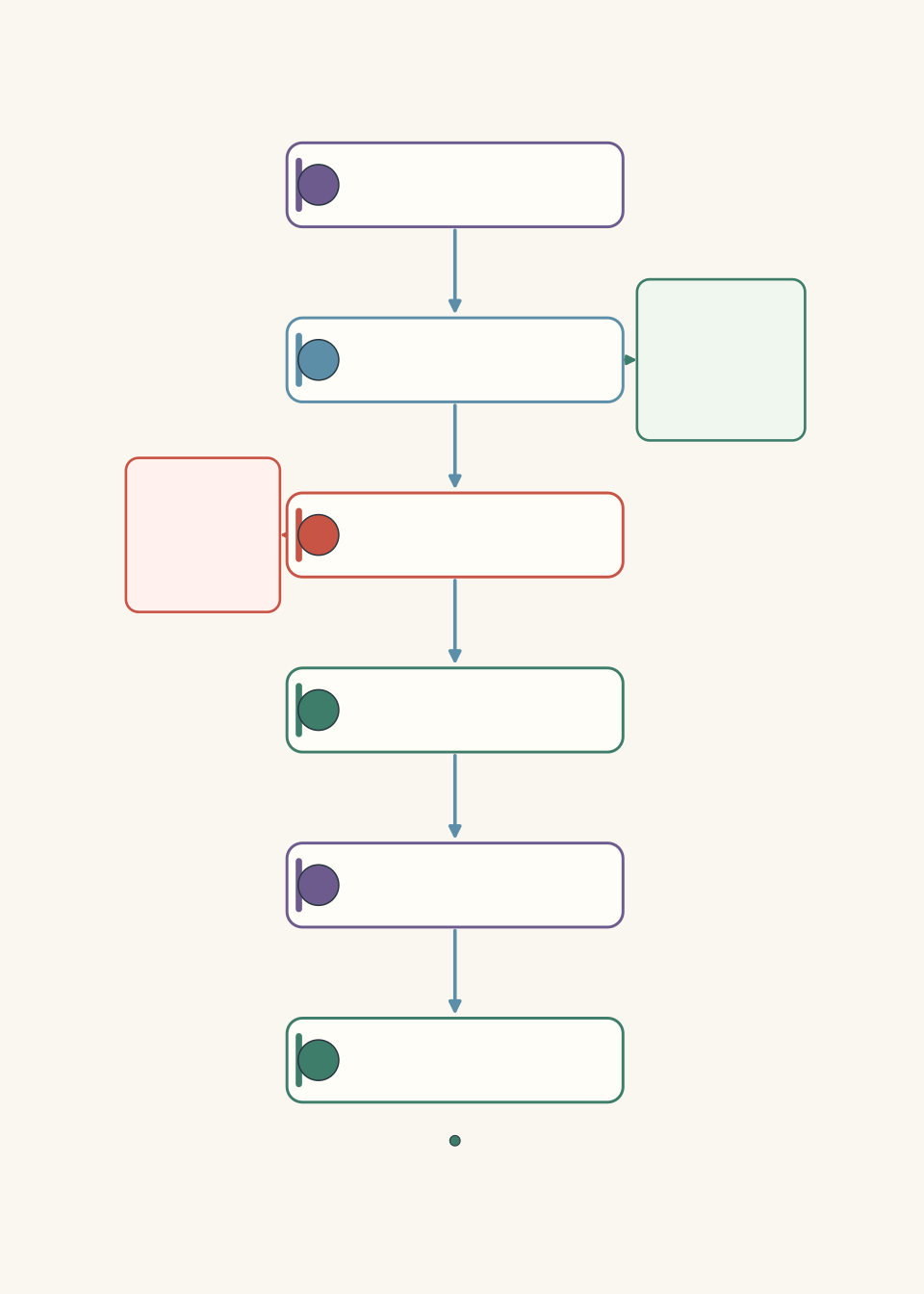
Step 1: Separate observations from conclusions
Write down what the experiment actually establishes.
For example:
- “Does not conduct as a solid” is an observation.
- “Contains no charged particles” is not a valid conclusion from that observation.
- “Decomposes before a stable melt forms” does not mean “does not conduct when molten”.
That last distinction is particularly important. A test that was not possible is not the same as a test that produced a negative result.
Step 2: Check conductivity in the solid state first
If the solid conducts electricity, a metal is a strong possibility because its delocalised electrons are mobile.
However, do not automatically rule out covalent networks. Graphite and graphene can conduct because they have delocalised electrons. Graphite is also soft and layered, unlike a typical malleable metal.
If the solid does not conduct, keep at least three possibilities open: ionic, simple molecular, and covalent network.
Step 3: Use melting point and hardness to narrow the possibilities
A low melting point and a soft solid support a simple molecular structure.
A high melting point and a hard, brittle solid support either an ionic lattice or a covalent network. You need more evidence to distinguish them.
Do not invent a universal temperature threshold. There is no single melting point above which a substance must be ionic or covalent network.
Step 4: Use molten conductivity to test your leading explanation
This is often the most useful test for distinguishing an ordinary ionic solid from a non-conducting covalent network.
If a solid does not conduct but its molten form does, an ionic lattice is strongly supported. Its ions were fixed in the solid but became mobile when the lattice melted.
If both the solid and molten forms conduct, a metal is more likely, although other conducting materials and unusual structures must still be considered.
If a sample decomposes before forming a stable liquid, you cannot use molten conductivity to settle the classification.
Step 5: Interpret the water test conditionally
Ask two separate questions:
- Does the substance actually dissolve in water?
- If it dissolves, does the resulting solution conduct electricity?
A conducting aqueous solution supports the presence of mobile ions in the solution. It does not automatically prove that the original solid had an ionic lattice.
Why not? Some molecular substances ionise or react in water to produce ions. A molecular acid, for example, can form a conducting solution even though its original solid consists of molecules.
A non-conducting solution can support a simple molecular structure if the molecules remain neutral. But if the solid is insoluble, there may be no meaningful solution to test at all.
Step 6: State the strength of your conclusion
Use language that matches the evidence.
| Evidence | Defensible conclusion |
|---|---|
| Solid does not conduct; molten form conducts | Strongly supports an ionic lattice |
| Solid and molten forms conduct; sample is malleable | Strongly supports metallic bonding |
| Low melting point; pure liquid does not conduct | Supports a simple molecular structure |
| Very high thermal stability; hard; insoluble; solid does not conduct | Consistent with a covalent network, but may be inconclusive |
| Properties point in conflicting directions | Check the measurements before assigning a structure |
Your goal is not to force every unknown into one category. Your goal is to make the strongest conclusion the evidence allows.
04Worked examples
Worked example: A hard, brittle solid that conducts only after melting
An unknown solid has a melting point of 801°C. It is hard and brittle, does not conduct electricity as a solid, conducts when molten, dissolves in water, and produces a conducting aqueous solution. Identify its most likely structure and explain the results.
Step 1
The solid does not conduct. This rules against an ordinary metal, but it does not distinguish an ionic lattice from a simple molecular substance or a covalent network.
Step 2
The molten substance conducts. Since the solid did not conduct, this strongly supports a structure in which charged particles were previously unable to move.
For an ionic lattice, melting allows the ions to move and carry charge.
Step 3
The high melting point and brittleness are consistent with an ionic lattice. The conducting aqueous solution provides further support because the dissolved substance produces mobile ions.
Step 4
The substance is most consistent with an ionic lattice. Its ions are fixed in position in the solid, mobile in the molten state, and mobile in the aqueous solution.
The tempting wrong approach is to classify the solid as covalent network simply because it does not conduct as a solid. The molten-conductivity result is the crucial evidence that changes the conclusion.
Worked example: A conducting solution from a molecular solid
An unknown crystalline solid melts at approximately 122°C. Neither the solid nor the pure molten substance conducts electricity. The substance dissolves only slightly in water, and its dilute aqueous solution conducts weakly. What is the most likely structure?
Step 1
The relatively low melting point and the absence of conductivity in the pure liquid support a simple molecular substance. The data do not show the mobile ions in a molten ionic compound that you would normally expect.
Step 2
The solution may conduct because some of the dissolved molecules ionise in water. A molecular acid is one possible example. Limited solubility can also reduce the number of ions present, so the solution may conduct only weakly.
Step 3
A simple molecular solid that partially ionises in water is the most likely explanation. The conducting solution does not, by itself, establish that the original solid was an ionic lattice.
The tempting wrong approach is to use solution conductivity as an automatic synonym for ionic bonding. The corrected approach considers what happens in the pure liquid as well as in water.
Worked example: A hard solid that decomposes before melting
An unknown solid is very hard, insoluble in water, and does not conduct electricity as a solid. When heated, it decomposes before a stable liquid forms at 1,250°C. Its molten conductivity cannot be measured. Can you confidently classify it as a covalent network?
Step 1
The hardness, insolubility, and high thermal stability are consistent with a covalent network. Such structures often have strong covalent bonds extending throughout the solid.
Step 2
The sample does not conduct as a solid, but an insoluble ionic solid could show the same result. The decomposition also prevents you from using molten conductivity to distinguish the two possibilities.
You cannot treat decomposition as proof that the melting point exceeds 1,250°C, nor can you assume the material would conduct if it melted.
Step 3
A covalent network is a plausible explanation, but the available evidence is insufficient to identify the structure uniquely. An insoluble ionic substance that decomposes before forming a stable melt remains a possibility.
A suitable additional chemical or structural test would be needed to distinguish the alternatives. The correct exam response is not to guess; it is to explain why the existing results are inconclusive.
05Questions and solutions
Question 1
An unknown substance has a melting point of 660°C. It conducts electricity as both a solid and a liquid, can be hammered into a thin sheet, and does not dissolve in water. Identify the most likely bonding and explain the conductivity in both states.
Solution 1
The substance is most consistent with a metal with metallic bonding. Its malleability and conductivity in both the solid and liquid states support this classification.
In a metal, positive ions are held together by electrostatic attraction to delocalised electrons. These electrons can move through the solid and carry electrical charge. When the metal melts, the electrons remain mobile, so the liquid also conducts.
The ability to be hammered into a thin sheet supports metallic bonding because the layers can shift without the structure immediately fracturing. Graphite is a reminder that solid conductivity alone does not prove a substance is metallic, but graphite is not malleable like a typical metal.
Question 2
A pure unknown solid melts at 120°C. It does not conduct electricity as a solid or as a pure liquid. It dissolves slightly in water, and the resulting dilute solution conducts weakly.
A student concludes that the solid must be ionic because its aqueous solution conducts.
Evaluate the student’s reasoning and identify the most likely structure.
Solution 2
The student’s conclusion is not justified. The results are more consistent with a simple molecular substance that produces some ions in water.
The relatively low melting point and lack of conductivity in the pure liquid support a molecular structure. The weakly conducting solution could result from partial ionisation of dissolved molecules, such as molecules of a weak acid.
An ionic compound that melts would ordinarily conduct because its ions become mobile. The absence of conductivity in the pure liquid therefore weighs against the student’s proposed explanation.
The key distinction is between the structure of the original solid and the particles present after dissolution. Water can change the chemical species present, so aqueous conductivity alone cannot identify the original bonding.
Question 3
A black, soft, slippery solid is insoluble in water and conducts electricity along its layers. It remains thermally stable at very high temperatures and does not form an ordinary liquid under normal pressure before subliming.
A student classifies the substance as metallic because it conducts electricity as a solid.
Explain why this classification is unreliable. Identify the likely structure and account for both its conductivity and softness.
Solution 3
The substance is most consistent with graphite, a form of carbon with a covalent network structure within its layers.
Within each layer, carbon atoms form strong covalent bonds. Some electrons are delocalised and can move along the layers, allowing graphite to conduct electricity.
The layers are held together by much weaker forces than the covalent bonds within each layer. They can slide past one another relatively easily, making graphite soft and slippery.
The student’s mistake is assuming that every solid conductor must be a metal. Graphite demonstrates that a covalent network can conduct when it contains mobile charge carriers.
The high thermal stability and insolubility also fit graphite. Its structure does not behave like a typical malleable metal, and its conductivity has a different explanation.
Question 4
An unknown substance has a melting point of approximately 900°C. It is hard and brittle, and it does not conduct electricity as a solid. It dissolves readily in water, but a dilute solution containing a substantial amount of the dissolved substance does not conduct electricity.
A known electrolyte conducts using the same equipment. Assume the sample is pure and the reported results are reproducible.
Can you confidently classify the substance as ionic, molecular, metallic, or covalent network? Explain what you would investigate next.
Solution 4
No single structure can be assigned confidently from these results. The observations are inconsistent with the usual pattern for a readily soluble ionic compound, so the measurements need further investigation.
The high melting point, hardness, and brittleness might initially suggest an ionic lattice. However, a sufficiently concentrated solution of a soluble ionic compound should contain mobile ions and conduct electricity. The electrolyte control makes a general equipment failure less likely.
A simple molecular substance could dissolve without producing ions, but the high melting point and hardness do not strongly support that explanation on their own. A typical covalent network is also a poor fit for a substance that dissolves readily in water.
The next step is to verify that the substance truly dissolved rather than merely dispersing, and to repeat the solution test with appropriate controls. If a stable melt can be obtained safely, testing its conductivity would provide another useful line of evidence.
If the solid remains non-conducting but the verified molten substance conducts, an ionic lattice becomes more likely. If the measurements remain contradictory, the correct conclusion is that the structure has not been established.
The trap is allowing two suggestive properties to outweigh a result that conflicts with the proposed structure.
Question 5
A sample is initially described as hard, brittle, non-conducting in the solid state, and largely insoluble in water. A student classifies the entire sample as a covalent network.
A controlled heating experiment reveals the following:
- At approximately 700°C, part of the sample forms a liquid that conducts electricity.
- The liquid is separated and cooled. The resulting solid is hard and brittle, does not conduct electricity as a solid, and dissolves in water to form a conducting solution.
- The remaining solid does not melt by 1,300°C. It is hard, insoluble in water, and non-conducting as a solid.
Assume there is no decomposition or contamination during heating and separation, and that each separated fraction is a single substance.
Is the original sample best described as one covalent network or a mixture? Classify each fraction as far as the evidence permits. Explain why the original bulk properties could have led to the wrong conclusion.
Solution 5
The original sample is best described as a mixture of at least two substances, not as one covalent network. The first fraction strongly supports an ionic lattice, while the remaining fraction is consistent with a covalent network but cannot be identified uniquely from the available evidence.
First, classify the fraction that melts near 700°C.
Its molten form conducts electricity, while its cooled solid does not. This suggests that charged particles are unable to move through the solid but become mobile when it melts.
The hard, brittle nature of the cooled fraction and its conducting aqueous solution provide further support for an ionic lattice. Together, these observations are much stronger evidence than any single property alone.
Next, consider the remaining solid.
It remains solid above 1,300°C, is hard and insoluble, and does not conduct electricity as a solid. These properties are consistent with a covalent network, which has strong covalent bonds extending throughout its structure.
However, they do not prove that classification. An insoluble ionic substance that does not form a stable melt under the test conditions could show similar results. Without another discriminating test, the residue remains incompletely identified.
Finally, reconsider the original sample.
The tempting conclusion was that the bulk sample must have one covalent network structure because it was hard, non-conducting, and largely insoluble.
The heating experiment changes that conclusion because it separates the sample into fractions with distinct properties. One fraction behaves like an ionic compound, while the other behaves like a highly thermally stable, non-conducting solid.
The original solid’s lack of conductivity does not rule out an ionic component: ions in an ionic solid are fixed in position whether the sample is pure or part of a mixture. Similarly, a large insoluble residue can obscure the fact that another component dissolves in water.
The evidence therefore supports a mixture containing an ionic component and a second, highly thermally stable solid. The second component is consistent with a covalent network, but its exact structure remains unconfirmed.
The important constraint is that the bulk properties of a mixture cannot automatically be assigned to one bonding type. You must examine what happens when the components behave differently under controlled conditions.
06Exam self-check
Before submitting a classification, run through this short routine.
- [ ] Have I separated the conductivity results for the solid, molten substance, and aqueous solution?
- [ ] Have I used melting point and hardness as supporting evidence rather than proof?
- [ ] Have I explained which charged particles or electrons can move in each state?
- [ ] Have I checked whether the substance actually dissolves and whether dissolved molecules could ionise?
- [ ] Have I distinguished a negative test result from a test that could not be performed?
- [ ] If the evidence conflicts or supports more than one structure, have I stated the limitation and identified a useful next test?
Once you can justify a structure from its property pattern, the next useful step is to draw a particle-level diagram of that structure. Showing fixed ions, mobile ions, delocalised electrons, or discrete molecules gives you the physical explanation behind the data-and helps turn a classification answer into a convincing chemistry explanation.