
Does Your ATAR Expire? Applying to University After a Gap
Taking a gap year after the NSW HSC does not automatically invalidate your ATAR. Learn how universities assess older HSC results, selection ranks, adjustment factors, and eligibility when you apply after time away from study.
You finish your NSW HSC, receive your ATAR, and decide to take a year off before starting university. You travel, work, save some money, or simply take time to work out what you want to study. When you apply to university the following year, will your ATAR still count?
Yes. Your ATAR does not automatically expire when you leave school, even if you take several years off. However, there is an important distinction between your ATAR remaining valid and a university continuing to use it as the main basis for admission. Universities have their own selection policies, and these can change depending on the course, your subsequent studies, and how long it has been since you completed Year 12.
Understanding that distinction will help you avoid losing access to entry schemes or making unnecessary decisions about when to apply.

Due to technical limitations, this figure may display incorrectly or contain inaccuracies. Please check key details against your course materials.
01Does your ATAR actually expire?
No. There is no general expiry date attached to your NSW ATAR.
The Universities Admissions Centre (UAC) explains that an ATAR is a ranking, not a mark or percentage. It represents your position relative to other students in your age group in the year you completed your senior secondary education.
For example, an ATAR of 85.00 represents a position in the top 15% of your age group. It does not mean you scored 85% in your HSC examinations.
Think of your ATAR as your final position on a competition ladder. Once the competition finishes, your position does not gradually change because you take time away. The result remains a record of how you performed relative to your cohort.
Universities can continue to consider that result when you apply in a later year.
In fact, the Australian Catholic University (ACU) explicitly states in its published admission criteria that Year 12 results do not expire once you leave school. It also explains that whether those results are considered for an offer depends on any additional qualifications you have completed.
You can read this directly in ACU’s admission criteria, published through UAC.
The important qualification is that an unchanged ATAR does not guarantee an unchanged admission outcome.
02Your ATAR and your university selection rank are different
This is where students often get confused.
Your ATAR is your original academic ranking. Your selection rank is the ranking a university uses to assess your application for a particular course.
For most university courses, your selection rank starts with your ATAR and may include additional adjustment factors.
These adjustments were previously commonly called bonus points. They can recognise things such as:
- Strong performance in particular HSC subjects.
- Educational disadvantage or circumstances affecting your schooling.
- Regional or geographical eligibility.
- Other achievements recognised by a university’s admission schemes.
Your selection rank can therefore be higher than your original ATAR.
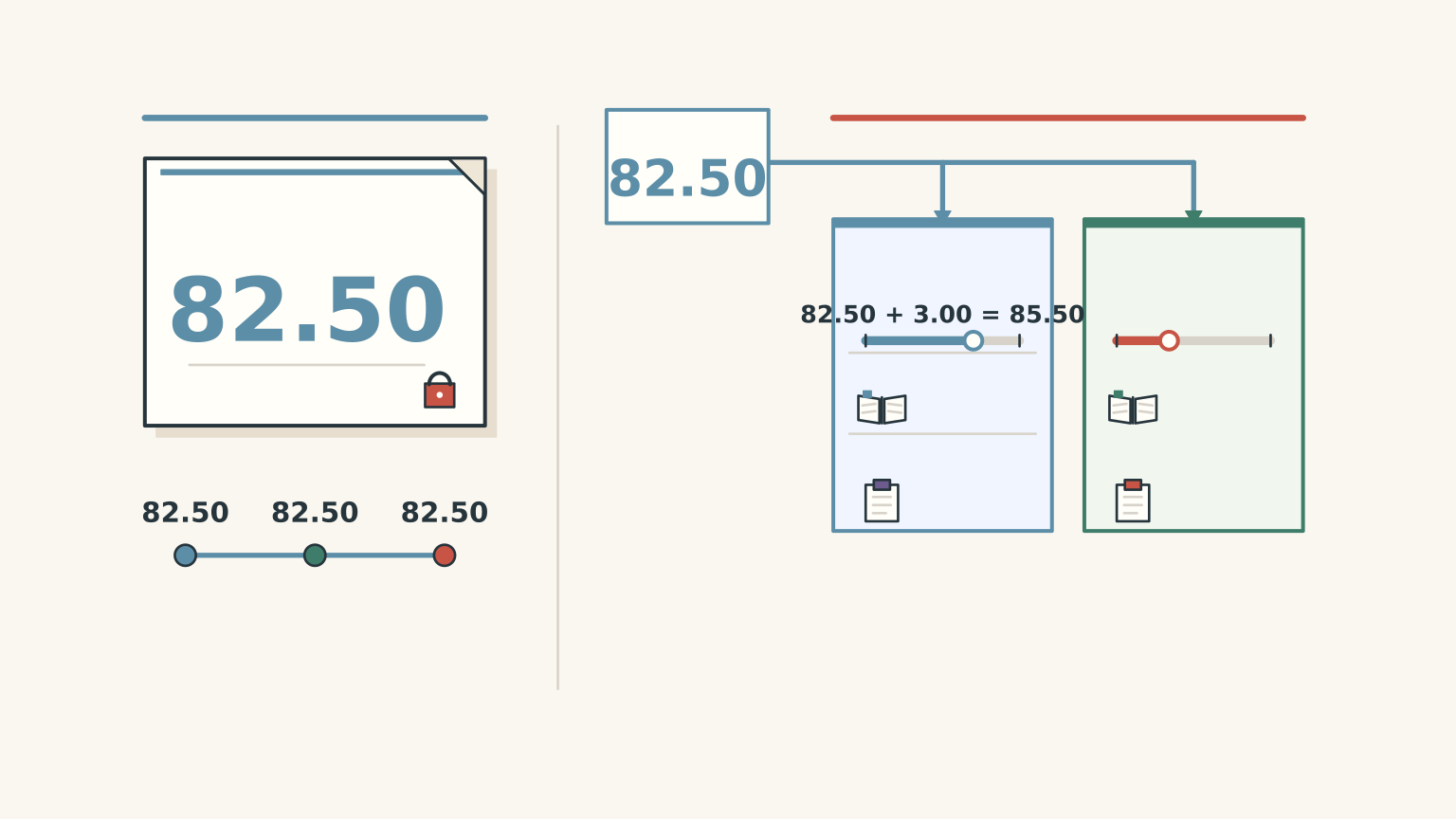
For example, imagine you receive an ATAR of 82.50. A university offers three adjustment factors for a particular course, and you meet its eligibility requirements.
Your selection rank for that course may become 85.50, even though your actual ATAR remains 82.50.
The university has not changed your HSC result. It has simply applied its own selection policy to assess your application.
There is another important detail: adjustment factors are not necessarily the same across every university or course. You might receive an adjustment for one degree but not another at the same institution.
| Term | What it means | Does it change over time? |
|---|---|---|
| ATAR | Your original ranking relative to your age cohort | No, unless your underlying results are formally amended |
| Selection rank | The ranking used to assess your application, including applicable adjustments | Can change depending on the university, course, and admission year |
| Course prerequisites | Specific subjects or academic requirements you must satisfy | Requirements can change between admission years |
| Additional selection criteria | Other requirements, such as interviews, portfolios, or tests | Depends on the course and university |
UAC explains these distinctions in its guide to how Year 12 qualifications are assessed.
Due to technical limitations, this figure may display incorrectly or contain inaccuracies. Please check key details against your course materials.
03What happens to your ATAR if you take a gap year?
If you finish Year 12 and spend the following year travelling, working, or volunteering without undertaking further formal study, your HSC results remain available for university admission consideration.
However, there are a few things worth understanding.
1. You may become a non-school leaver applicant
Taking a gap year can change the category under which you apply to university.
UAC distinguishes between recent school leavers and non-school leaver applicants. This is an administrative distinction used to determine how your qualifications and other experiences are assessed.
Under UAC’s current 2026-27 application guidance, you are considered a non-school leaver if you have:
- Never attempted an Australian Year 12 qualification.
- Attempted an Australian Year 12 qualification in 2025 or earlier.
- Attempted an International Baccalaureate in 2025 or earlier.
Importantly, this classification is not based on your age.
It also does not mean that your ATAR has expired or that you can no longer use your HSC results.
UAC specifically states that non-school leaver admission can be based on previous Year 12 results, tertiary studies, or the Skills for Tertiary Admissions Test (STAT).
The cutoff year changes as new admissions periods begin, so check the definition applicable to the year you actually apply.
You can read the current requirements in UAC’s guide to applying as a non-school leaver.
2. Working or travelling does not automatically replace your ATAR
Suppose you finish the HSC in 2026 and spend 2027 working in hospitality, travelling around Australia, or volunteering.
You haven’t completed another academic qualification.
In this situation, your original HSC results remain an available basis for university admission. Some universities may also consider your employment or other experiences, depending on their entry pathways.
For example, Western Sydney University allows students who have taken a gap year to apply for mid-year entry. Its published guidance explains that applicants who finished school earlier can be considered using their HSC results, work experience, and/or subsequent tertiary study.
This is useful because it demonstrates that university entry is not restricted to students who move directly from Year 12 into a degree.
You can explore Western Sydney University’s mid-year entry information.
3. Studying during your gap year can change how your application is assessed
This is one of the most important distinctions to understand before enrolling in another course.
Imagine you finish the HSC, take a gap year, and decide to study a few university subjects or complete a TAFE qualification.
Your original ATAR still exists. However, the university may now consider your subsequent academic record when assessing your application.
For example, Macquarie University explains that its non-school applicant selection ranks can take into account:
- Previous university study, including GPA or WAM.
- Post-secondary study, such as an accredited Certificate IV qualification or higher.
- Secondary study, including your ATAR and eligible adjustment factors.
Depending on your circumstances, these qualifications may be considered instead of, or alongside, your ATAR.
ACU provides another useful example. Its published admission criteria state that applicants who have completed at least two university units can be assessed on their tertiary academic record. Applicants with fewer than two completed units may instead be assessed using their Year 12 results and/or other qualifications.
These are institution-specific policies, not universal rules for every Australian university.
The practical lesson is simple: if you intend to study at university or TAFE during your gap year, check with your preferred universities before enrolling. Find out whether the qualification will affect how they assess your application.
You can read more about this through Macquarie University’s guidance for non-school applicants.

Due to technical limitations, this figure may display incorrectly or contain inaccuracies. Please check key details against your course materials.
04Can you lose university adjustment factors during a gap year?
Yes. Although your ATAR does not automatically expire, some university adjustment schemes have specific eligibility periods.
This is a particularly important distinction if you are taking a gap year because you want to preserve your options for competitive courses.
Consider the University of Sydney’s Academic Excellence Scheme.
This scheme recognises strong performance in eligible English and mathematics subjects by applying adjustment factors to a student’s selection rank.
However, eligibility is restricted to students who completed their Year 12 qualification or IB Diploma in the year before university admission. Applicants with a record of tertiary study are also ineligible.
The university’s published 2027 entry information provides a clear example:
- A student who completes the NSW HSC in 2026 can potentially receive Academic Excellence Scheme adjustments for eligible 2027 Semester 1 and Semester 2 courses.
- The student must satisfy the scheme’s subject and other eligibility requirements.
- The student cannot have a record of tertiary study.
If that student instead takes 2027 off and applies for a 2028 university intake, they would no longer satisfy the scheme’s requirement to have completed Year 12 in the year before admission.
Their 2026 ATAR has not expired. They have simply missed the eligibility window for that particular adjustment scheme.
This is why you should check individual schemes rather than assume every benefit attached to your Year 12 results will remain available indefinitely.
The same principle applies to some scholarships, early entry programs, and school-leaver admission pathways. Each has its own eligibility requirements.
You can check the current rules through the University of Sydney’s Academic Excellence Scheme.
05Does the ATAR required for a university course change each year?
Yes, and this is another reason why an old ATAR does not guarantee admission.
Universities assess applications against the requirements and available places for each admission period.
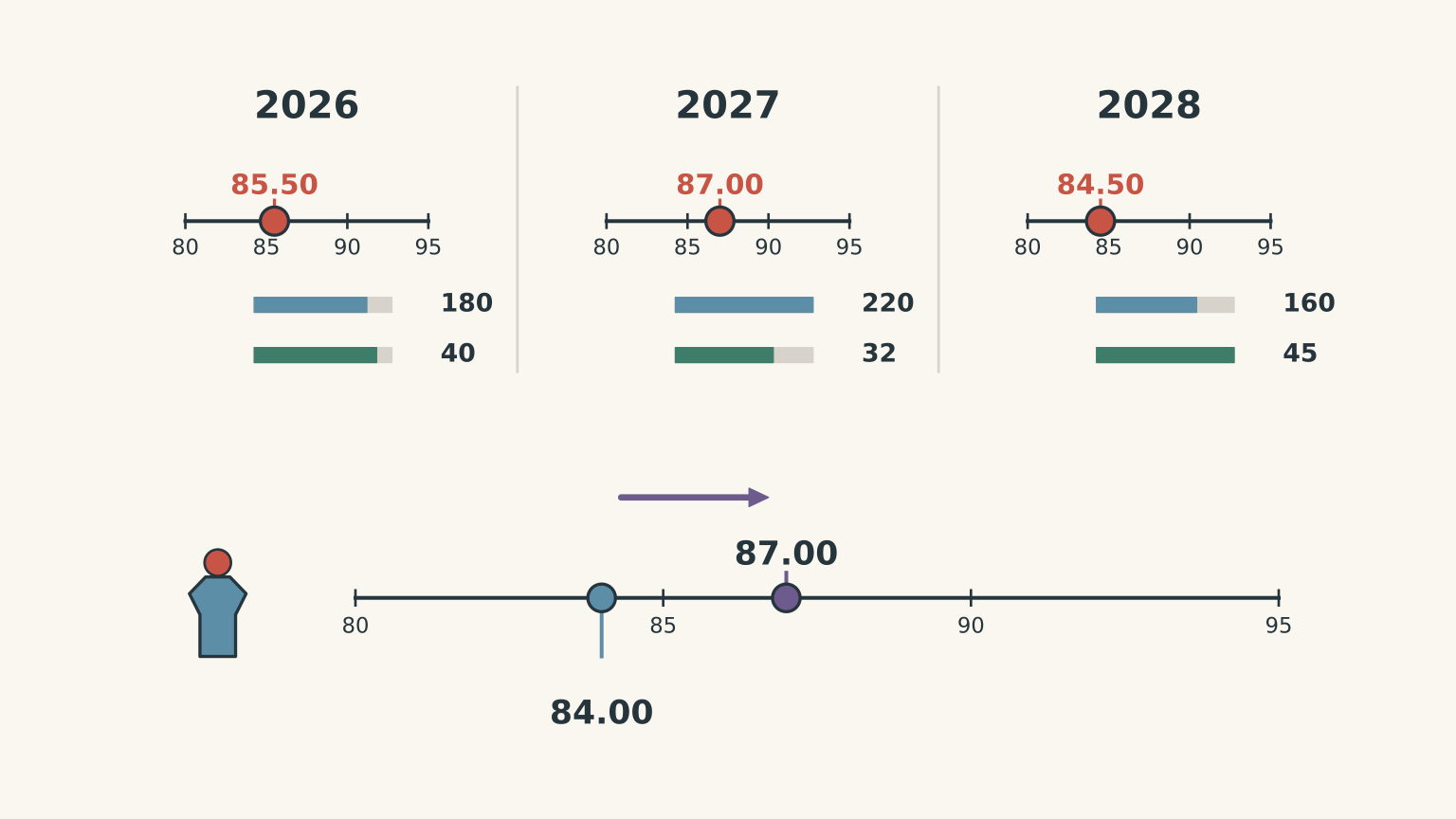
Suppose you receive an ATAR of 88.00 in 2026 and want to apply for a particular degree in 2028.
The degree may have had a lowest selection rank of 87.00 in 2027. It would be tempting to assume that your ATAR of 88.00 guarantees admission.
That conclusion is not reliable.
The lowest selection rank for a course depends on several factors:
- How many places are available.
- How many students apply.
- How competitive those applicants are.
- Which adjustment factors apply to individual applicants.
These factors can change between years and even between offer rounds.
UAC publishes previous admission results to help students understand the competitiveness of different courses. However, these figures are guides, not guaranteed entry requirements.
There is also a difference between the lowest ATAR and the lowest selection rank.
A student who received an offer with a relatively low ATAR may have qualified for adjustment factors that increased their selection rank. This means the published lowest ATAR does not necessarily represent the result another applicant needs.
Before applying after a gap year, look at the course’s current admission requirements rather than relying entirely on the figures published when you finished school.
Due to technical limitations, this figure may display incorrectly or contain inaccuracies. Please check key details against your course materials.
06Worked scenario: Applying two years after your HSC
Let’s put these ideas together.
Imagine a student completes the NSW HSC in 2026 and receives an ATAR of 82.50.
They decide to take 2027 off to work, travel, and save money. They do not enrol in university or complete an accredited tertiary qualification.
In 2028, they decide they want to study a Bachelor of Science.
Can they still use their 2026 ATAR?
Yes. Their ATAR remains 82.50. The fact that two years have passed since completing Year 12 does not automatically invalidate the result.
However, they still need to investigate three things.
First: Will the university consider their 2026 ATAR?
They should check the university’s current admission policy for applicants who completed Year 12 in an earlier year.
ACU, for example, explicitly states that Year 12 results do not expire. Other institutions have their own assessment policies.
Second: Are they still eligible for school-leaver adjustments?
They need to check the eligibility conditions for each relevant scheme.
The University of Sydney’s Academic Excellence Scheme, for example, is limited to students who completed Year 12 in the year before admission and have no record of tertiary study.
A student applying in 2028 with a 2026 HSC would not meet that particular time requirement.
Third: What is the selection rank required for the course in 2028?
The student needs to check the current course information and selection criteria for the 2028 intake.
The previous year’s selection rank is useful for estimating competitiveness, but it cannot guarantee an offer.
The outcome is straightforward: the student can still have their original ATAR considered, but their eligibility for particular adjustments and their competitiveness for the course may be different.
Now imagine the student had completed two university units during their gap year instead.
ACU’s published policy indicates that their tertiary academic record could now be considered. Other universities, such as Macquarie, may also incorporate previous university results into their assessment.
The original ATAR remains unchanged, but the evidence used to assess the application is no longer necessarily the same.
07How to apply to university after a gap year
If you have decided to take time off before starting university, you do not need to do anything to keep your ATAR active.
You do, however, need to prepare for the application process in the year you want to start studying.
Here is a practical decision guide.
Step 1: Work out whether you need to defer or make a new application
There are two different situations.
You already have a university offer.
If you have received an offer but want to start studying a year later, investigate whether the university allows you to defer your place.
Deferral is a separate process from retaining your ATAR. It concerns whether the university will hold your offered place for a later intake.
Read our guide to How Do You Defer a University Offer After the HSC? for the steps involved.
You have not received an offer or have decided not to apply yet.
You can apply during a later admissions period using your existing HSC qualifications, subject to the university’s admission policies.
You do not need to repeat the HSC simply because you took a year off.
Step 2: Check the university’s admission requirements
Identify the exact degree you want to study and check its current admission information.
Pay particular attention to:
- Whether your previous HSC results can be used.
- The selection rank required for the course.
- Any required HSC subjects or course prerequisites.
- Whether additional tests, interviews, portfolios, or other criteria apply.
- Whether you remain eligible for relevant adjustment schemes.
Do not assume that the requirements are identical to those published when you finished Year 12.
Step 3: Declare any study completed during your gap year
If you have completed university or accredited VET study, include the relevant information in your application.
This includes incomplete tertiary study where requested.
UAC specifically asks non-school leaver applicants to provide details of completed and incomplete tertiary study, including relevant qualifications at Certificate III level or higher.
Not every short course counts as an admission qualification. For example, UAC identifies AQF Certificates I and II, Statements of Attainment, and unaccredited private-provider courses as qualifications that institutions generally do not take into account in this assessment.
If you are unsure whether a qualification will affect your application, contact the university directly.
Step 4: Apply through the correct admissions process
For most undergraduate applications to universities in NSW and the ACT, you can apply through UAC.
The process generally involves:
- Creating a UAC account.
- Entering your personal details.
- Providing details of your previous qualifications.
- Selecting your preferred courses.
- Submitting and paying for your application.
Some universities also accept direct applications, so check the application instructions for your chosen institution.
You can find the application information on the UAC undergraduate applications and offers page.
08Current UAC application dates and fees
It is worth understanding the current application calendar, particularly if you are deciding whether to start university immediately or wait another year.
The following information was checked on 15 November 2026 and relates to undergraduate courses commencing in Semester 1, 2027.
| Important date | What it means |
|---|---|
| 26 November 2026 | Apply and pay by this date to be considered in the main December offer round |
| 16 December 2026 | NSW and ACT ATARs released |
| 18 December 2026 | Main December offer round course preference deadline |
| 23 December 2026 | First ATAR-based offers to 2026 NSW and ACT Year 12 students |
| 5 February 2027 | Final application deadline for Semester 1, 2027 courses |
The standard UAC undergraduate application processing charge is currently $215 for applications submitted from 1 October 2026 to 5 February 2027. The earlier discounted application fee of $82 ended on 30 September 2026.
A couple of details matter:
- Some courses have earlier application deadlines.
- Applications must be submitted and paid for by the relevant deadline.
- UAC states that application fees cannot be transferred between admissions periods.
You can verify the current information through UAC’s application dates and offers and UAC’s application processing charges.
Important: These dates are for students seeking a 2027 university start. If you complete the 2026 HSC and take a full gap year in 2027 before starting university in 2028, you will need to follow the 2027-28 admissions calendar instead. Do not use the 2027 entry deadlines as your 2028 application deadlines.
09Before taking your gap year: a quick checklist
You do not need to organise everything before finishing school, but a little preparation will make applying later much easier.
- [ ] Save a copy of your ATAR Advice Notice and HSC results.
- [ ] Make a list of the university courses you might want to study.
- [ ] Check whether those courses have specific HSC prerequisites.
- [ ] Identify any adjustment schemes or scholarships with school-leaver eligibility limits.
- [ ] If considering university or TAFE study during your gap year, ask how it could affect your future admission assessment.
- [ ] Keep records of any completed qualifications and relevant work experience.
- [ ] Check UAC’s application dates and fees for the year you intend to start university.
- [ ] Contact the university’s admissions team if you are unsure how your previous results will be assessed.
One particularly useful question to ask an admissions team is:
“If I completed the NSW HSC in 2026, take a gap year without undertaking tertiary study, and apply for your course in 2028, will my 2026 ATAR still be considered? Are there any school-leaver adjustment schemes or additional eligibility requirements I should know about?”
Getting a clear answer directly from the institution is much more reliable than assuming its policies have stayed the same.
10The bottom line
Your ATAR does not automatically expire when you take a gap year. You can still apply to university using your previous HSC results, even if you do not start studying immediately after Year 12.
What matters is how the university assesses your application in the year you decide to enrol.
Keep three things separate:
- Your ATAR: Your original ranking remains unchanged.
- Your selection rank: The university may apply different adjustment factors or consider additional qualifications.
- Your eligibility: Individual courses, scholarships, and admission schemes can have time limits and changing requirements.
If you are planning a gap year, the most useful next step is to identify the degree you want to pursue and check its admission rules for your intended starting year.
You do not need to rush into university just to preserve your ATAR. You do need to understand which parts of your original HSC results and school-leaver eligibility will still count when you are ready to apply.