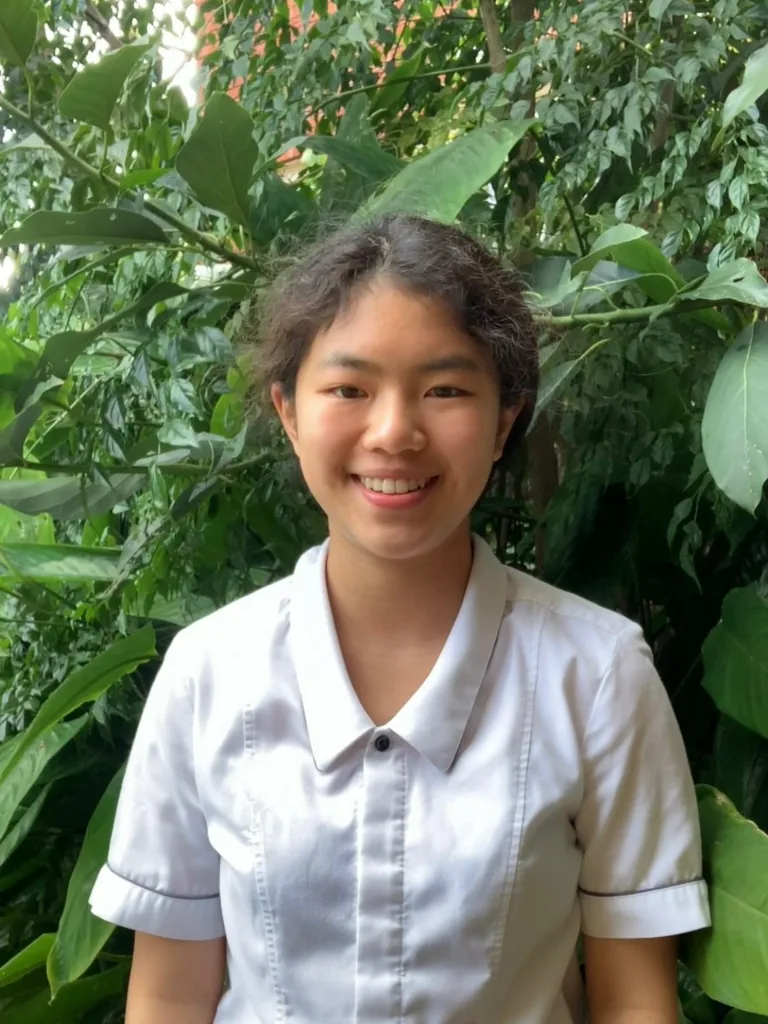
化學由 49% 升到 91%
Meriden
佢好識將每個概念拆細,講到容易明白。
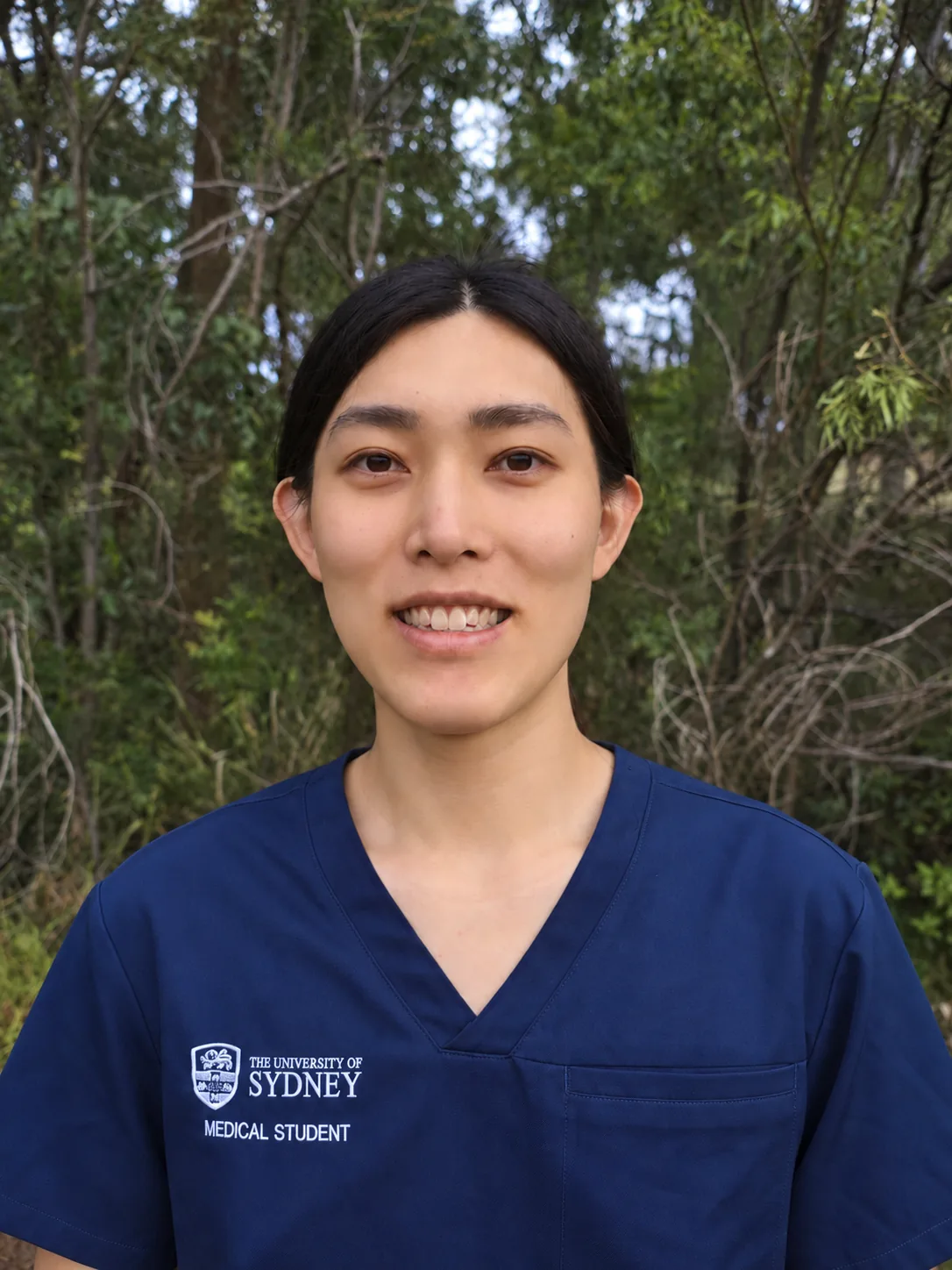
Jade Year 11 化學考咗 49%。佢需要真正理解難嘅概念,唔係淨係做多啲課本題目。Bob 將概念逐步拆解,堂外都會幫手,亦針對佢弱項安排考試練習。最後佢喺 HSC 化學攞到 Band 6。
完整故事向下捲動即可關閉

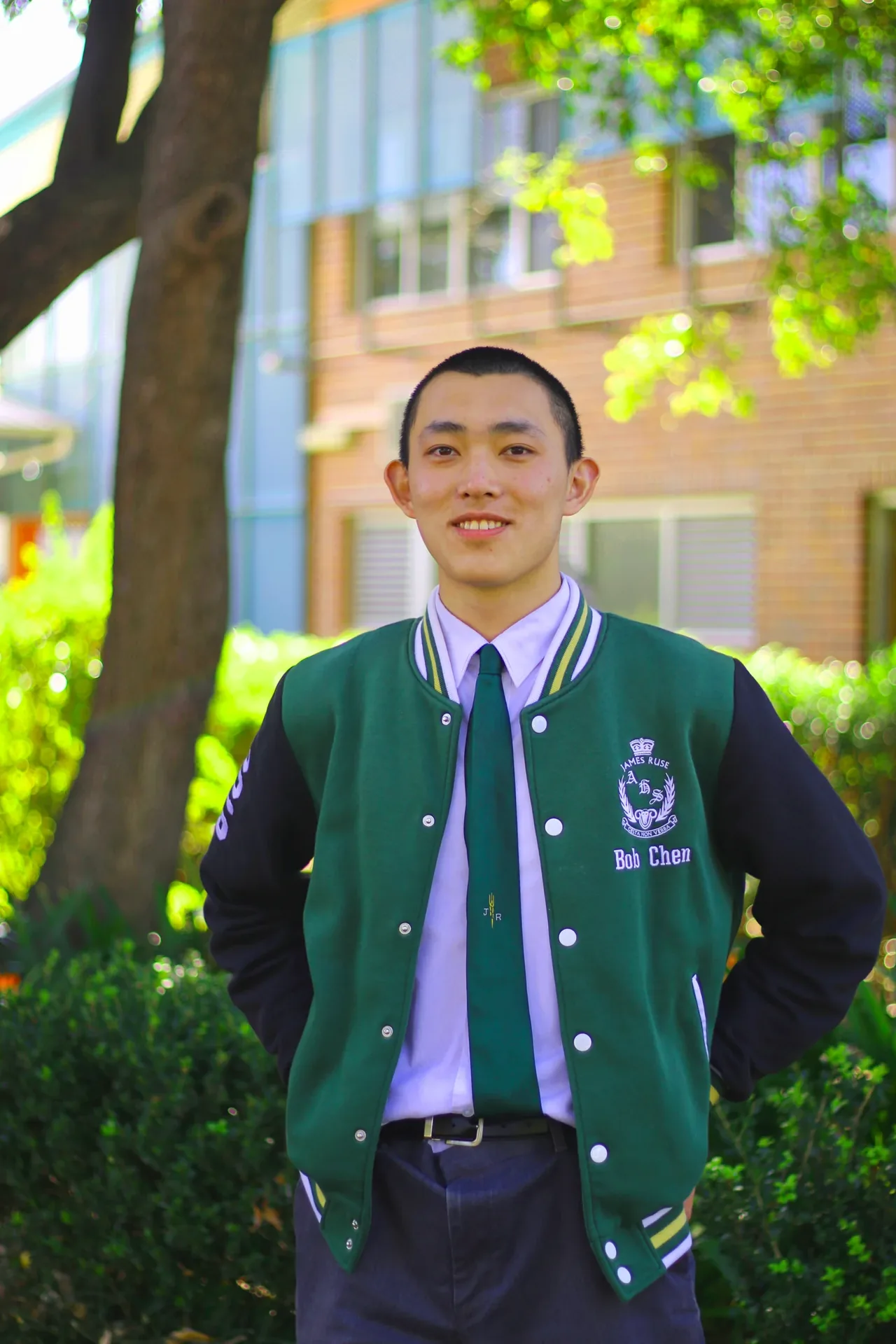
Physics state rank99.85 ATARUSYD Med
Meriden
佢好識將每個概念拆細,講到容易明白。
Jade Year 11 化學考咗 49%。佢需要真正理解難嘅概念,唔係淨係做多啲課本題目。Bob 將概念逐步拆解,堂外都會幫手,亦針對佢弱項安排考試練習。最後佢喺 HSC 化學攞到 Band 6。
完整故事向下捲動即可關閉
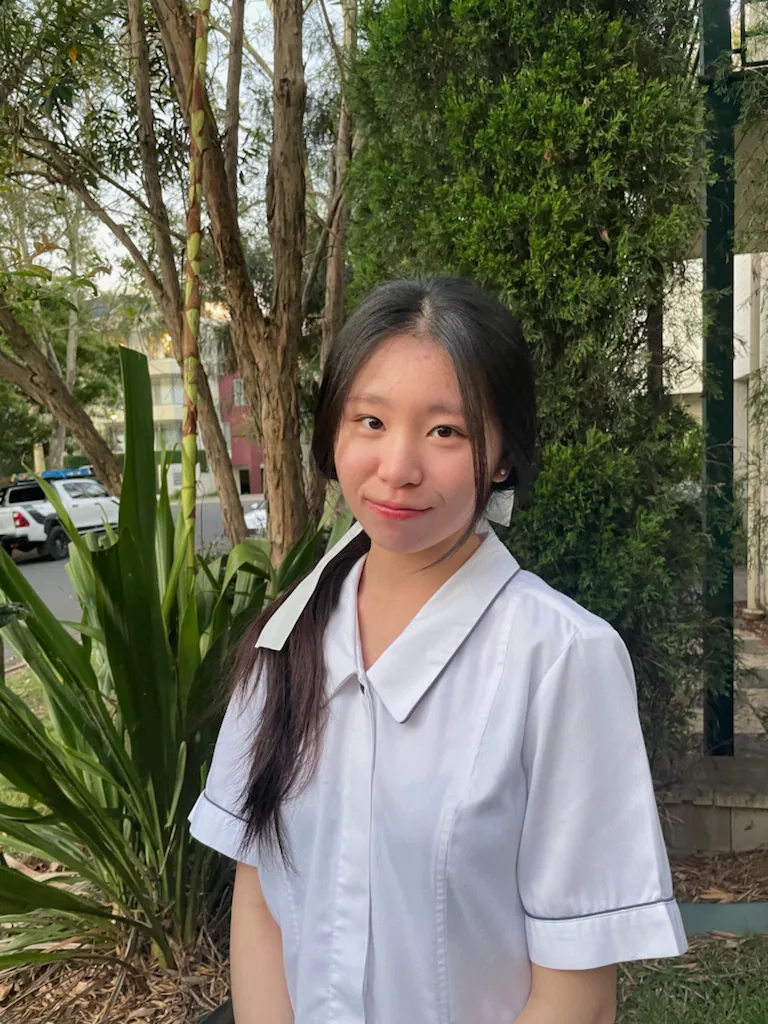
Meriden
我笑住行出考場。
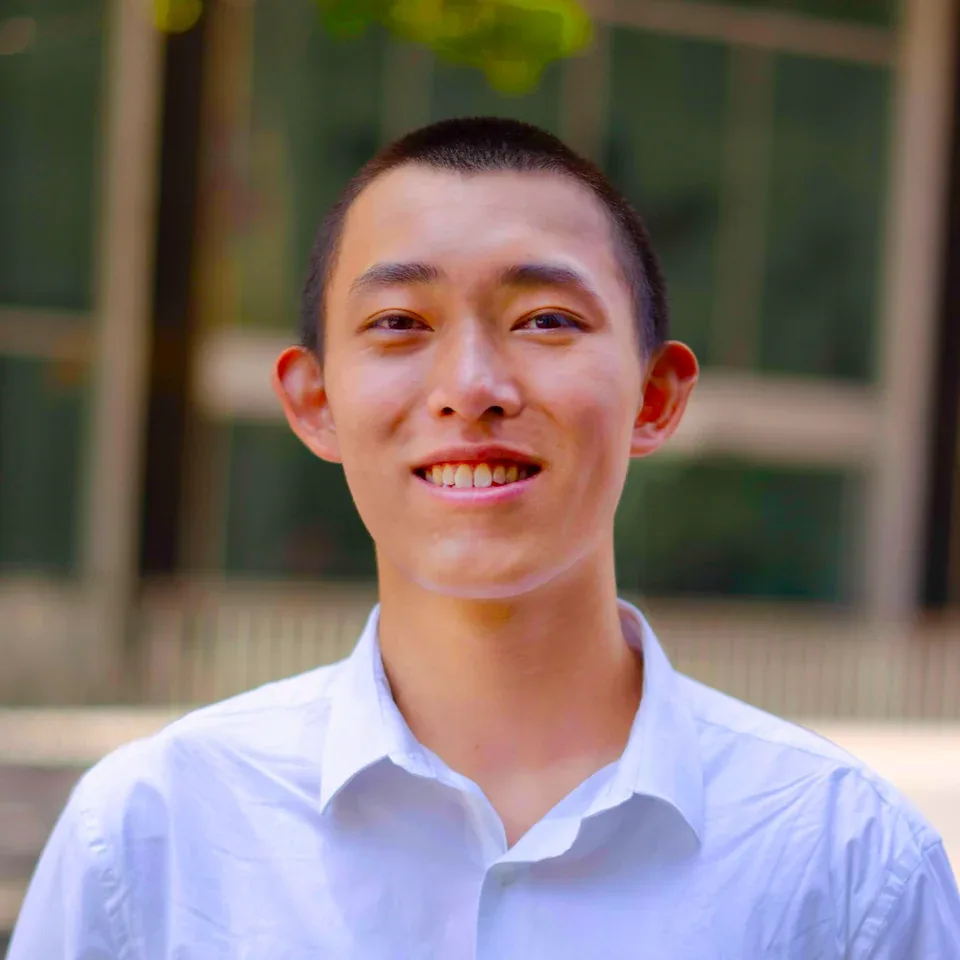
Kirsten 成績一路下跌,亦開始怕物理。更個人化嘅課堂令佢可以放心提問,按自己步伐學習。較有挑戰嘅練習同課外支援令佢準備得更好。化學模擬考由 56% 升到 HSC 91%,物理亦考咗 92 分。
完整故事向下捲動即可關閉
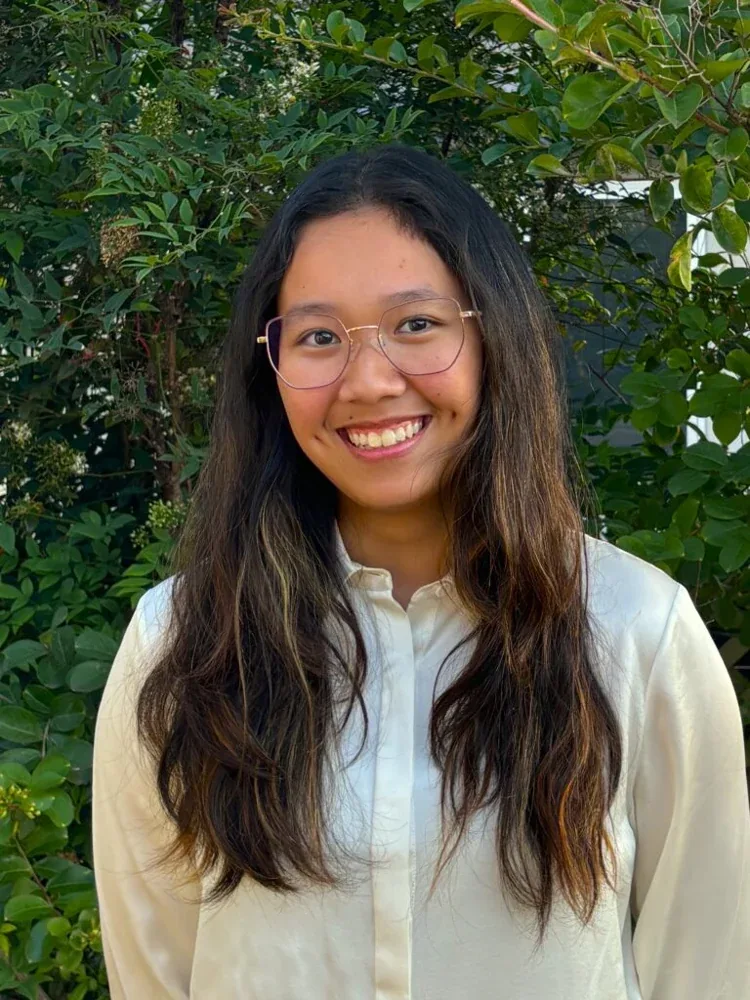
Hurlstone Agricultural High School
佢營造咗一個好玩、舒服又支持學生嘅氣氛。
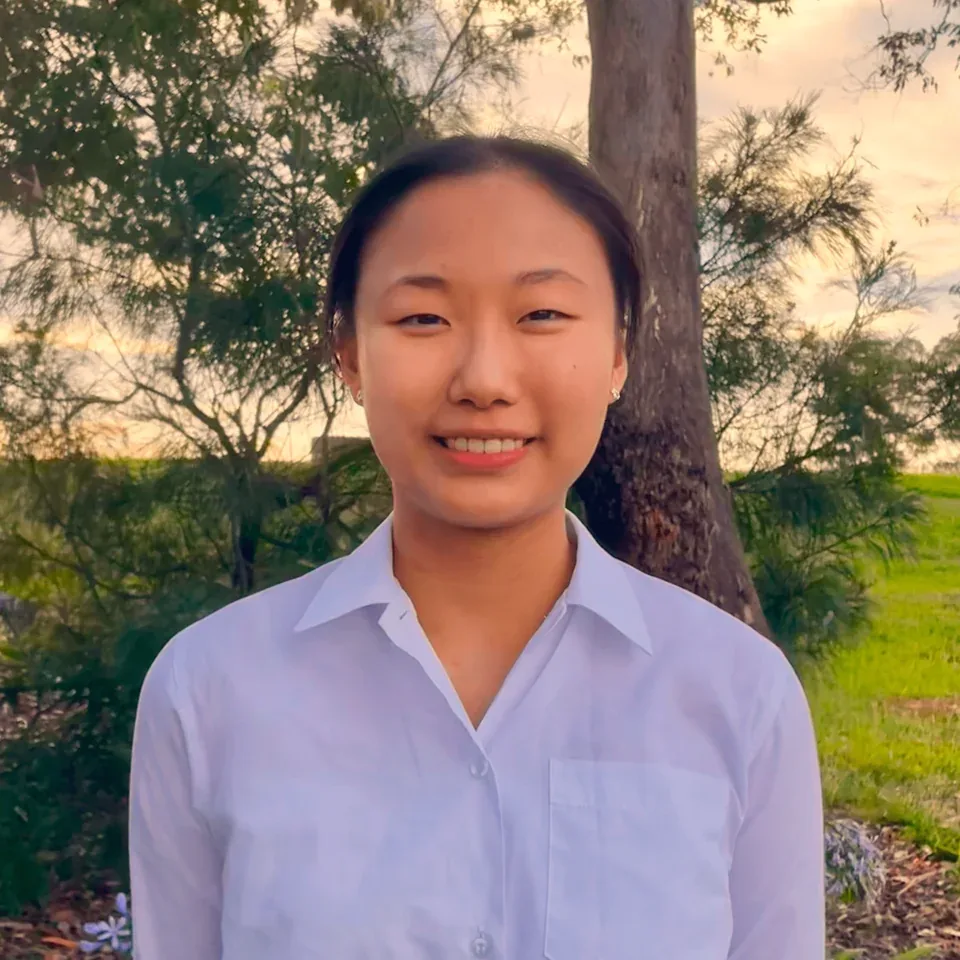
Queenie 好重視有人願意換個方法解釋、落堂後答問題,同埋幫佢準備校內評估。呢啲支援令佢用更靈活嘅方式思考物理,唔使只靠課本解釋。佢喺 Hurlstone Agricultural 畢業時,物理考咗 95 分,ATAR 係 99.75。
完整故事向下捲動即可關閉
Sydney Grammar
Mustafa graduated as Dux of Sydney Grammar in 2023 with a 99.95 ATAR. He achieved 94 in Physics and 95 in Chemistry, and later tutored at Tutorgum.
完整故事向下捲動即可關閉
St Ives High School
At St Ives High School, Avyukt improved from 30% in Year 12 Chemistry Task 1 to 84% in Task 3, and from 40% in Physics Task 1 to 86% in Task 3.
完整故事向下捲動即可關閉
喺 James Ruse 物理考第一之前,我連成績都唔敢話畀阿媽知。
新州物理排名第一ATAR 99.85悉尼大學醫學
嗰陣我讀 Year 10。
不過,有樣嘢我比自拍仲唔掂。
因為我成績一直唔係幾好。
仆街。
全級第 50 名。
我好憎科學。
我讀書、背書、做練習。
但我仍然用錯公式。
考試時要靠估。
我一直入唔到前列,亦考唔到 90% 以上。
我失去咗掌握。
我唔想話畀阿媽知自己嘅成績。
後來我取得咗
Start with saturated salt water at a constant temperature.
Add tracer salt. Bright green marks its radioactive chloride ions.
The pile stays. The amount of dissolved salt stays the same too.
Let’s zoom into one crystal in the pile.
Its surface is a lattice of Na⁺ and Cl⁻ ions.
Watch the bright-green chloride ions at the surface.
Tagged ions leave. Ordinary ions join. Both happen at the same average rate.
Tagged chloride is now in the water, making the solution radioactive.
The amounts stay the same, but ions keep exchanging. That’s dynamic equilibrium.
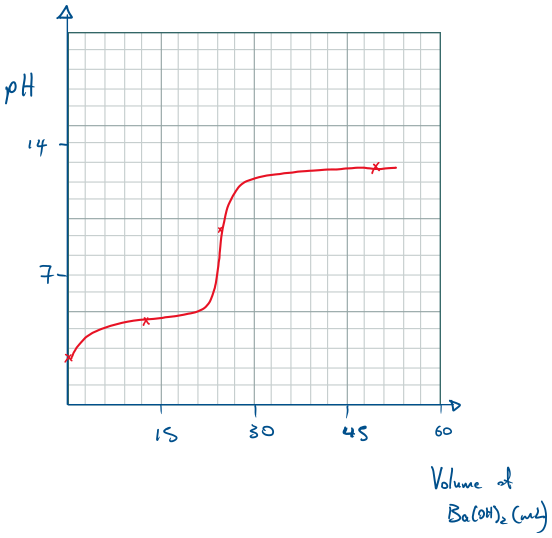
A man begins to titrate 65.7mL of 0.270M acetic acid against 0.350M Ba(OH)2. Acetic acid has a pKa of 4.76. Draw the pH graph, ensuring you label the following points:
ANSWER
Acetic acid is a weak acid and its dissociation in water can be represented as below:

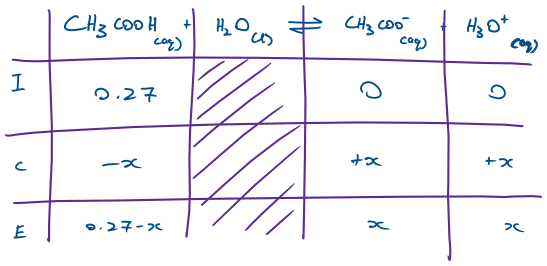
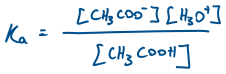
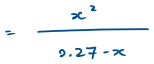
The acid dissociation constant, Ka, can be calculated from the pKa value:
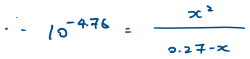
Make the small change assumption
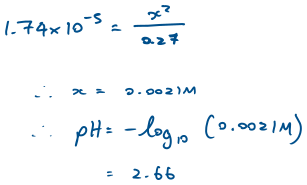
ANSWER
At the equivalence point, all of the acetic acid has reacted with the NaOH to form its conjugate base, acetate ion (CH3COO–). This is why there is a pH at equivalence point!
To determine the pH, we need to consider the hydrolysis of acetate ion in water:

The equilibrium constant for this reaction is given by:
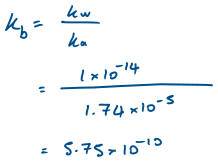
An ICE table can be used to determine the concentration of OH– ions in the solution at equilibrium:
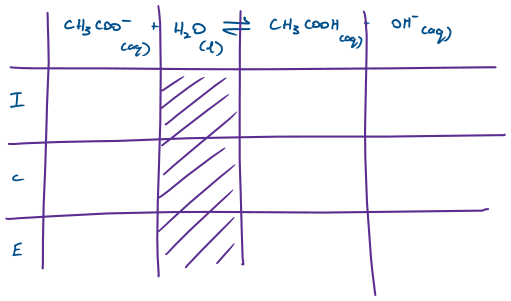
Hm but we don’t know what the concentration of CH3COO– is at equivalence point! Let’s go calculate it first.
At the equivalence point, all of the acetic acid has reacted with the NaOH to form its conjugate base, acetate ion (CH3COO–).
The number of moles of acetic acid initially present is (0.270M)(0.0657L) = 0.0177 moles. To find the concentration we need to know the volume at the end point.
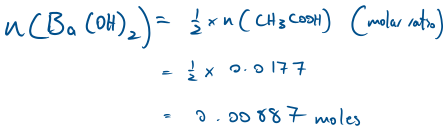
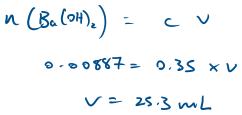
The volume of the solution at the equivalence point is 65.7mL + 25.3mL = 91mL, so the concentration of acetate ion at the equivalence point is (0.0177 moles)/(0.091L) = 0.1944M.
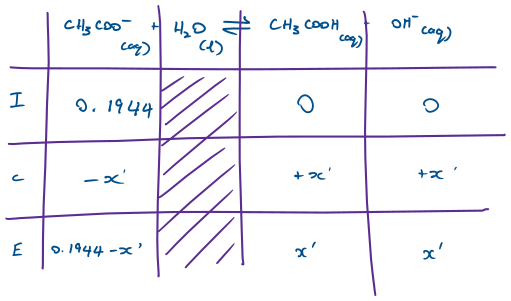
x’ ≈ 10.57 × 10⁻⁶
which is the concentration of OH– ions in the solution. The pOH of the solution at equivalence point is therefore:
and its pH is:
ANSWER
We need to realise that the optimal buffer point is when there is equimolar acid and conjugate base.
This will occur at halfway to the equivalence point.
To understand this, consider you had 1 mole of CH3COOH.
After you add in 0.5 moles of OH- (or in this case, 0.25 moles of Ba(OH)2) you will have 0.5 moles of CH3COO- and also 0.5 moles of CH3COOH left. Thus, you have equimolar amounts of acid and conjugate base.
Thus, it will be at 0.5 x 25.3mL = 12.65mL
The pH will be:
ANSWER
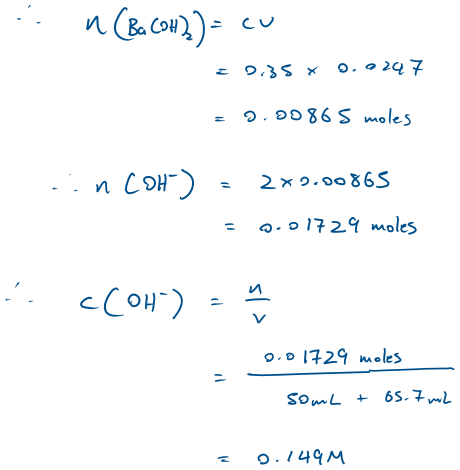
This is about double the equivalence point volume.
Getting to equivalence takes 25.3mL
Thus you add another 24.7 mL of Ba(OH)2.
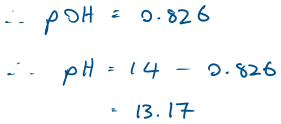
This just adds pure OH-
Flick through the worked answers.
堂上、落堂後或者兩堂之間都可以隨時問問題,亦可以隨時聯絡導師。
我哋唔提供獨立嘅一對一私人課堂。
每個單元都由第 1 星期開始計。
Introduce chemical reversibility and prepare for the Year 12 approach to study and practice.
Explain reversible reactions in closed systems and relate equal forward and reverse rates to observations.
Use the Haber reaction and collision theory to explain how equilibrium responds to changes.
Predict responses to disturbances and interpret concentration-time graphs.
Build an understanding of equilibrium expressions and use the equilibrium constant in calculations.
Examine the effect of water and other disturbances and distinguish concentration changes from changes in the equilibrium constant.
Explain solubility by comparing interactions within solutes, solvents and solutions.
Introduce the solubility product and connect precipitation to a dynamic equilibrium.
Practise molar-solubility and common-ion calculations and revisit equilibrium reasoning.
每個單元都由第 1 星期開始計。
Introduce acid and base definitions and compare their observable properties.
Explore uses and calorimetry of neutralisation and trace the development of acid-base definitions.
Explain proton transfer, hydronium and conjugate acid-base pairs.
Compare proton donation and acceptance and explain acid-base behaviour of oxides and ions.
Calculate pH from hydrogen-ion concentration and handle logarithms and significant figures.
Use Ka, Kb, pKa and pKb and connect them to acid-base equilibria.
Revisit acid-base calculations and introduce titration reasoning and concentration determination.
Choose appropriate standards and explain how glassware preparation affects titration results.
Explain buffer action, natural buffers and responses to added acid or base.
Interpret buffer regions, polyprotic titration features and conductometric reactions.
Apply the module's ideas in exam-style questions.
每個單元都由第 1 星期開始計。
Introduce carbon chemistry, hydrocarbons, functional groups and naming conventions.
Name compounds across functional groups and connect hydrocarbon structures to three-dimensional geometry.
Compare alcohols and alkanes using bonding and intermolecular forces, then consider social and ethical issues.
Write and compare combustion and other characteristic hydrocarbon reactions.
Classify alcohols and connect their structures to physical and chemical properties.
Analyse alcohol redox reactions and bioethanol, then examine carboxylic acids and amines.
Explain esterification, biodiesel production and the formation of amides.
Connect fats to cleaning agents and introduce addition polymerisation.
Compare the structures, properties and uses of polymers including polyethylene, PVC and PTFE.
Explain polyester and polyamide formation and consolidate organic reaction pathways.
Apply organic structures, properties and reaction knowledge to exam-style questions.
每個單元都由第 1 星期開始計。
Explain why chemical monitoring matters and use flame and precipitation tests.
Explore complex formation, gravimetric analysis and precipitation titrations.
Compare colourimetry, ultraviolet-visible measurements and atomic absorption spectroscopy.
Explain atomic absorption and select chemical tests for organic functional groups.
Explain ionisation and fragmentation and use mass spectra to investigate molecular structure.
Connect nuclear shielding, chemical shift and carbon environments to NMR signals.
Interpret hydrogen environments, chemical shifts and integration in proton spectra.
Connect bond vibrations to infrared absorption and interpret spectra to identify structures.
Compare synthesis pathways using reagent availability, conditions, yield, purity and wider impacts.
每個單元都由第 1 星期開始計。
Revisit Module 5 theory and practise questions selected around areas needing revision.
Practise theory comparisons, conjugate pairs, salt acidity, pH and titration reasoning.
Review boiling-point trends, reaction pathways, esters, soaps and polymer questions.
Practise flame tests, complexes, absorption measurements and structure determination.
Apply acid-base, stoichiometric, energetic and organic ideas across a mixed paper.
Practise equilibrium, calibration, organic analysis and conductivity questions.
Review complexes, scientific skills, enthalpy and organic properties through a further mock paper.
每個單元都由第 1 星期開始計。
Practise precipitation, molar-solubility and common-ion calculations alongside related energetics questions.
Compare theory limitations and practise conjugate-pair and buffer calculations.
Revisit alcohol energetics and build reaction flowcharts for alcohols and hydrocarbons.
Practise precipitation titrations, gravimetric analysis and structure questions from the available paper.
Work through selected buffer, enthalpy, organic, solubility and calculation questions.
Review selected paper questions and practise specific explanations, equations and response planning.
Combine final question practice with time management, planning and avoiding common mistakes.
搵唔到相近嘅問題。你可以睇吓下面嘅問題,或者打電話畀我哋。
打電話畀我哋 0490 496 078可以。Chemistry 課堂喺 Zoom 網上進行,歡迎悉尼、新州各區同澳洲其他地方嘅 Year 11 同 Year 12 HSC 學生參加。小組包括考試式功課、詳細解答同一對一導師支援。如果你讀緊其他課程,話畀我哋知課題,我哋會確認 NSW HSC 課程是否適合。
你會用到比例、移項同科學記數法。我哋會將每步計算同化學原理連繫,等你明白數字代表咩。
帶埋學校嘅評估時間表,我哋可以同課程計劃比較,商量點樣提早支援你要學嘅課題。
話畀我哋知你讀邊個年級、學過咩課題,同埋邊度遇到困難。我哋會幫你搵合適班別,亦會講吓報名前要補返啲咩。
可以。將問題同你嘅做法帶畀導師,一對一支援會陪你弄清楚未明白嘅步驟或概念。
Send us your year, subject and preferred class. We’ll help you find a suitable lesson. The first lesson is only charged if you want to continue, otherwise it's totally free!
我細個都係個怕醜嘅男仔。我唔敢問問題,怕人哋會點睇我。
如果你一定要全程一對一上堂,建議搵其他老師。
不過,授課形式同搵專家教你個小朋友,邊樣更重要?補習老師有好多,但有幾多個喺新州有過頂尖成績?唔係個個都好似我咁熟化學平衡同電磁學,識得點講到學生突然明晒,亦知道學生點解失分同點樣改善。所以唔係個個都做到好似 Kirsten Chu 喺 2022 年由 56% 升到 91% 咁嘅成績。
冇人想喺班上落後一大截。畀你參考,我哋學生入班時通常係平均水平或者略低。學生嚟自選拔制中學(例如 NSB、NSG、Ruse)、私立學校(例如 Scots、St Patricks、Meriden),同埋非選拔制中學(例如 Castle Hill、Carlingford HS)。我哋會落堂後答問題,同埋提供之前課題嘅學習資料,幫佢哋跟返進度。
上堂教新課題時,我哋一定會由基礎開始講。就算學生漏咗之前嘅概念,都可以明白新內容。
我哋嘅小班同大部分補習班唔同。我樂意一對一幫學生。有問題,可以落堂之後單獨問我,成個星期都可以搵我!有需要嘅話,我可以用一個鐘同你講解。
每星期一堂,每堂兩個鐘,用 Zoom 上網課。
我哋會先做 10 分鐘小測,再教一個新概念,然後做幾題鞏固理解。成堂會重複呢個過程。臨考試會上溫習堂,事先發一份模擬試卷,上堂再講學生想問嘅難題。
我哋接受銀行轉帳,通常按學期收費。如果你決定唔再上堂,未用嘅堂數會全數退款。
我哋好唔建議因為考試而唔上堂。如果時間緊,可以唔做住功課,但最好照上堂。如果你缺席,我哋會畀返所有教材同課堂錄影,但嗰堂唔會退款。
睇時間表就知道而家有邊啲上堂時間。
係。學校放假時照常上堂。我哋唔會喺假期搞密集課,因為對學生冇乜效果。
人數唔固定,通常大約 5 人。
帶住學習嘅熱情同一支筆,最好再準備一本專用簿。其他資料我哋會發畀你。
學生考得唔理想,主要係未掌握核心概念。跟我哋學過課程內容之後,大部分學生就唔會再遇到呢個問題。打好基礎之後,我哋每星期都會出考試題型嘅功課,等學生每星期都練到考試。
臨考試我哋仲會開放內部收集嘅學校舊試卷畀學生練習,呢啲係最好嘅備考材料。考試之前亦會上堂講解應試技巧。
加速班通常會喺 12 年級模擬試(第 3 學期第 2 星期)前一個學期教晒所有內容。即係考前大約有 7 個星期溫習,考完之後有大約 10 個星期準備 HSC。我哋每星期會做一次指定單元測驗,逐個單元溫,再做模擬試卷。
跟學校進度班同學校同步,所以大約有 6 個星期溫 HSC。
依次教單元 1、2、3、4、5、6、7 同 8。
有啲學校會調動教學次序。以我經驗,冇問題,因為到考試時一樣會學晒相同嘅內容。就算進度同學校唔同步,最重要係學生真係學到嘢。
學生啱啱入班嗰陣通常係平均水平或者略低。佢哋嚟自選拔制中學(例如 NSB、NSG、Ruse)、私立學校(例如 Scots、St Patricks、Meriden),同埋非選拔制中學(例如 Castle Hill、Carlingford HS)。
進步與否唔係睇你有幾叻,最重要係肯唔肯落力。好似 Jade Yang 同 Kirsten Chu 呢啲進步明顯嘅學生,每星期喺物理同化學度用超過 10 個鐘。我哋會令個過程容易啲。只要你做晒全部功課(考試練習),同埋每堂都出席,你就會進步。
問題係,你肯唔肯做?
可以。課堂喺網上,所以喺悉尼、紐卡素、臥龍崗、新州其他地區或者澳洲其他地方都可以參加,唔使去補習中心。
物理同化學係按新州 HSC 設計嘅。如果你讀另一個州或者唔同嘅課程,請聯絡我哋,講低年級同課題,等我哋傾吓適唔適合。上到網課,唔代表所有教學大綱都會教到。
仲有其他問題?
打電話畀我哋 0490 496 078