
Common-Ion Effect: Why Added Chloride Reduces AgCl Solubility
Learn why adding chloride ions reduces the solubility of silver chloride (AgCl) through the common-ion effect. Follow particle-level explanations, Ksp calculations, worked examples, and HSC-style practice questions with detailed solutions.
A beaker contains solid silver chloride, AgCl, and its saturated solution. Add sodium chloride, NaCl, and more white solid can appear – even though you haven’t added any silver. Before reading on, predict what changes first: the concentration of dissolved silver ions, or the concentration of chloride ions? Chloride concentration rises first, and that change can force some dissolved ions back into solid AgCl.
Required construction: common-ion effect in AgCl
| Before adding NaCl | AgCl(s) ⇌ Ag+(aq) + Cl−(aq) Show an AgCl crystal in contact with its saturated solution. Show dissolved Ag+ and Cl− ions; dissolution and crystallisation occur at equal rates. |
|---|---|
| After adding NaCl | NaCl(aq) → Na+(aq) + Cl−(aq) Show additional Na+ spectator ions and Cl− common ions in solution. Show some Ag+ and Cl− returning to the crystal as precipitation restores equilibrium; particle counts are illustrative, not measured. |
01Follow the ions first
Silver chloride dissolves only slightly in water. At the surface of an AgCl crystal, some ions leave the solid and enter the solution. Other dissolved ions return to the crystal.
The process is reversible:
\[ \ce{AgCl(s) <=> Ag+(aq) + Cl-(aq)} \]
At equilibrium, dissolution and crystallisation continue, but they occur at equal rates. The amounts of solid and dissolved ions remain constant overall.
Now add NaCl. It dissociates into sodium and chloride ions:
\[ \ce{NaCl(s) -> Na+(aq) + Cl-(aq)} \]
The extra chloride ions are the important part. Chloride is already a product of AgCl dissolution, so increasing its concentration favours the reverse process: dissolved Ag+ and Cl− ions form more solid AgCl.
A slightly silly analogy helps here. Imagine dissolved Ag+ ions trying to find chloride partners so they can rejoin the crystal. Adding more Cl− is like sending more potential dance partners into the room. Returning to the solid becomes more likely.
The analogy has a limit: ions aren’t assigned permanent partners. The actual equilibrium depends on ion concentrations and the rates of the forward and reverse processes.
The key idea is that adding a common ion can reduce the amount of a sparingly soluble salt that remains dissolved.
02Turn the particle picture into \(K_{sp}\)
The solubility product constant, \(K_{sp}\), describes the equilibrium between a sparingly soluble ionic solid and its dissolved ions.
For silver chloride, the expression is
\[ K_{sp}=[\mathrm{Ag}^+][\mathrm{Cl}^-] \]
The square brackets mean equilibrium molar concentrations, measured in \(\mathrm{mol\,L^{-1}}\). The solid AgCl does not appear in the expression because the activity of a pure solid is constant.
At \(25^\circ\mathrm{C}\), use
\[ K_{sp}=1.8\times10^{-10} \]
This value is fixed at the stated temperature. Adding NaCl does not change \(K_{sp}\). Instead, it changes the ion concentrations, which must adjust towards equilibrium.
To predict what happens before equilibrium is restored, calculate the ion product, \(Q\):
\[ Q=[\mathrm{Ag}^+][\mathrm{Cl}^-] \]
Compare \(Q\) with \(K_{sp}\).
| Comparison | What it means |
|---|---|
| \(QK_{sp}\) | The solution is supersaturated, so AgCl precipitates until the ion product falls to \(K_{sp}\). |
Immediately after adding NaCl to a saturated solution, the chloride concentration rises before the silver concentration has time to adjust. Therefore, \(Q\) increases above \(K_{sp}\). Precipitation then lowers the dissolved silver concentration until the equilibrium condition is restored.
Compare Q with Ksp to predict AgCl behaviour
| Q < Ksp | AgCl(s) → Ag+(aq) + Cl−(aq) Unsaturated solution: net dissolution is favoured if AgCl solid is available. Dissolved Ag+ and Cl− concentrations increase towards saturation. |
|---|---|
| Q = Ksp | AgCl(s) ⇌ Ag+(aq) + Cl−(aq) Saturated equilibrium: dissolution and crystallisation occur at equal rates. No net change in dissolved ion concentrations. |
| Q > Ksp | Ag+(aq) + Cl−(aq) → AgCl(s) Supersaturated solution: net precipitation is favoured. Dissolved ion concentrations adjust until Q returns to Ksp. |
This is the common-ion effect: adding an ion already present in a solubility equilibrium can decrease the solubility of the solid.
03Worked example: Solubility of AgCl in pure water
At \(25^\circ\mathrm{C}\), the solubility product of AgCl is \(1.8\times10^{-10}\). Calculate its molar solubility in pure water.
Step 1
In pure water, no other source of silver or chloride ions is present. Each mole of AgCl that dissolves produces one mole of each ion, so
\[ [\mathrm{Ag}^+]=s \]
and
\[ [\mathrm{Cl}^-]=s \]
Step 2
\[ \begin{aligned} K_{sp}&=[\mathrm{Ag}^+][\mathrm{Cl}^-]\\ 1.8\times10^{-10}&=s^2 \end{aligned} \]
Step 3
\[ \begin{aligned} s&=\sqrt{1.8\times10^{-10}}\\ &=1.34\times10^{-5}\ \mathrm{mol\,L^{-1}} \end{aligned} \]
The molar solubility is \(1.34\times10^{-5}\ \mathrm{mol\,L^{-1}}\).
Notice that the solubility is not equal to \(K_{sp}\). It is the square root of \(K_{sp}\) here because the two ion concentrations are equal.
That relationship will change when another source of chloride is present.
04Worked example: Solubility of AgCl in sodium chloride solution
At \(25^\circ\mathrm{C}\), calculate the molar solubility of AgCl in a solution containing \(0.0100\ \mathrm{mol\,L^{-1}}\) NaCl. Compare it with the solubility in pure water.
Assume that NaCl dissociates fully and that silver-chloride complex formation is negligible. Use the simplified concentration-based equilibrium model.
Step 1
Dissolving AgCl produces \(s\) molar silver ions, so
\[ [\mathrm{Ag}^+]=s \]
However, the solution already contains chloride ions from NaCl. Therefore,
\[ [\mathrm{Cl}^-]=0.0100+s \]
This is the important difference from the pure-water calculation.
Step 2
\[ 1.8\times10^{-10}=s(0.0100+s) \]
Step 3
We expect \(s\) to be much smaller than \(0.0100\), so
\[ 0.0100+s\approx0.0100 \]
Therefore,
\[ \begin{aligned} s&\approx\frac{K_{sp}}{0.0100}\\ &=\frac{1.8\times10^{-10}}{0.0100}\\ &=1.8\times10^{-8}\ \mathrm{mol\,L^{-1}} \end{aligned} \]
The approximation is valid because \(s/0.0100=1.8\times10^{-6}\), which is very small.
Step 4
In pure water,
\[ s_{\text{water}}=1.34\times10^{-5}\ \mathrm{mol\,L^{-1}} \]
In the NaCl solution,
\[ s_{\text{NaCl}}\approx1.8\times10^{-8}\ \mathrm{mol\,L^{-1}} \]
The ratio is
\[ \begin{aligned} \frac{s_{\text{water}}}{s_{\text{NaCl}}} &=\frac{1.34\times10^{-5}}{1.8\times10^{-8}}\\ &\approx7.4\times10^2 \end{aligned} \]
Under the simplified model, AgCl is approximately 740 times less soluble in the NaCl solution than in pure water.
The numerical value of \(K_{sp}\) has not changed. The chloride concentration has changed, so the silver concentration at equilibrium must be lower.
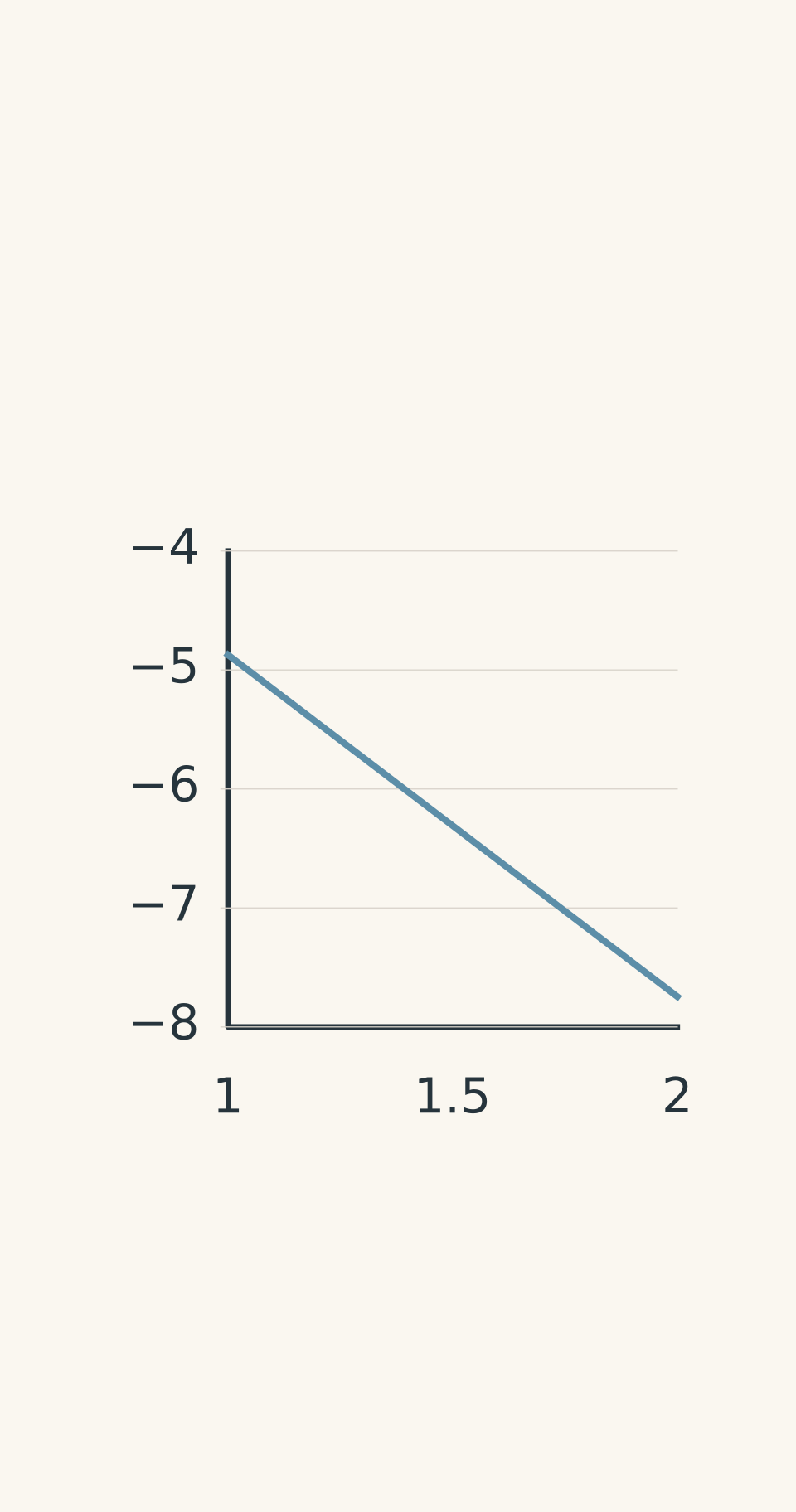
- Calculated AgCl solubility
05Keep \(K_{sp}\), solubility, and \(Q\) separate
These three quantities do different jobs.
| Quantity | What it tells you | Effect of adding NaCl at constant temperature |
|---|---|---|
| \(K_{sp}\) | The equilibrium constant for the AgCl dissolution equilibrium | Unchanged |
| Solubility, \(s\) | The amount of AgCl that dissolves per litre under the stated conditions | Decreases in the simplified common-ion model |
| \(Q\) | The current product of the dissolved ion concentrations | Increases immediately after chloride is added, then returns to \(K_{sp}\) if precipitation restores equilibrium |
A common mistake is to say that \(K_{sp}\) decreases when less AgCl dissolves. That’s incorrect. The solubility changes; the equilibrium constant does not change at a fixed temperature.
The numerical examples above also rely on specific assumptions:
- The temperature remains at \(25^\circ\mathrm{C}\).
- Enough solid AgCl is available to establish saturation equilibrium.
- Concentrations are used as an approximation to activities.
- Silver-chloride complex formation is negligible.
The last assumption is important. In real chloride-rich solutions, dissolved species such as \(\ce{AgCl(aq)}\) and \(\ce{AgCl2-}\) can form. The \(K_{sp}\) expression still applies to the free \(\mathrm{Ag}^{+}\) and \(\mathrm{Cl}^{-}\) ions, but total dissolved silver can include these complexes. The simple calculation above is not a complete prediction of total solubility when complex formation matters.
For the wider equilibrium framework, see tutorgum’s HSC Chemistry Module 5 Equilibrium summary.
Filtration, dilution, and AgCl re-equilibration
- Filter saturated solution
AgCl(s) ⇌ Ag+(aq) + Cl−(aq)
Q = 1.8 × 10−10 = Ksp.
Filtration removes solid AgCl, not dissolved ions.
- Dilute 100-fold
Q = 1.8 × 10⁻¹⁴ < Ksp
Both ion concentrations fall 100-fold; Q falls 10,000-fold.
The filtrate is unsaturated.
- Add fresh AgCl solid
AgCl(s) → Ag+(aq) + Cl−(aq)
AgCl dissolves, increasing Q.
At equilibrium, Q = Ksp = 1.8 × 10⁻¹⁰.
06Questions and solutions
Question 1
At \(25^\circ\mathrm{C}\), a saturated AgCl solution contains \(4.00\times10^{-3}\ \mathrm{mol\,L^{-1}}\) chloride ions supplied by NaCl. Using \(K_{sp}=1.8\times10^{-10}\), estimate the silver ion concentration. Assume that chloride from AgCl dissolution is negligible and that complex formation does not occur.
Solution 1
The silver ion concentration is approximately \(4.50\times10^{-8}\ \mathrm{mol\,L^{-1}}\).
The equilibrium expression is
\[ K_{sp}=[\mathrm{Ag}^+][\mathrm{Cl}^-] \]
Since the chloride concentration is dominated by NaCl,
\[ \begin{aligned} [\mathrm{Ag}^+] &\approx\frac{K_{sp}}{[\mathrm{Cl}^-]}\\ &=\frac{1.8\times10^{-10}}{4.00\times10^{-3}}\\ &=4.50\times10^{-8}\ \mathrm{mol\,L^{-1}} \end{aligned} \]
The calculated silver concentration is much smaller than the chloride concentration, confirming that neglecting the extra chloride from AgCl dissolution is justified.
Question 2
Two saturated AgCl samples are prepared at \(25^\circ\mathrm{C}\), using the simplified common-ion model.
- Sample A contains \(100.0\ \mathrm{mL}\) of solution with \(0.0100\ \mathrm{mol\,L^{-1}}\) NaCl.
- Sample B contains \(500.0\ \mathrm{mL}\) of solution with \(0.00200\ \mathrm{mol\,L^{-1}}\) NaCl.
Assume excess AgCl solid is present and complex formation is negligible. Which sample contains more moles of dissolved AgCl, and by what factor?
Solution 2
Sample B contains 25 times as many moles of dissolved AgCl as sample A.
First, calculate the molar solubility in each sample using \(s\approx K_{sp}/[\mathrm{Cl}^-]\).
For sample A,
\[ \begin{aligned} s_A&\approx\frac{1.8\times10^{-10}}{0.0100}\\ &=1.8\times10^{-8}\ \mathrm{mol\,L^{-1}} \end{aligned} \]
Convert the volume to litres and calculate the dissolved amount:
\[ \begin{aligned} n_A&=s_AV_A\\ &=(1.8\times10^{-8})(0.100)\\ &=1.8\times10^{-9}\ \mathrm{mol} \end{aligned} \]
For sample B,
\[ \begin{aligned} s_B&\approx\frac{1.8\times10^{-10}}{0.00200}\\ &=9.0\times10^{-8}\ \mathrm{mol\,L^{-1}} \end{aligned} \]
Its dissolved amount is
\[ \begin{aligned} n_B&=s_BV_B\\ &=(9.0\times10^{-8})(0.500)\\ &=4.5\times10^{-8}\ \mathrm{mol} \end{aligned} \]
Therefore,
\[ \frac{n_B}{n_A} =\frac{4.5\times10^{-8}}{1.8\times10^{-9}} =25 \]
Sample B has five times the molar solubility and five times the solution volume, giving 25 times as many dissolved moles.
This illustrates an important distinction: solubility is an amount per unit volume, whereas the amount dissolved in a sample also depends on its volume.
Question 3
A student claims:
“Adding NaCl reduces AgCl solubility because it decreases \(K_{sp}\).”
Explain why the predicted decrease in solubility can be correct even though the student’s explanation is wrong. Describe what happens immediately after NaCl is added and how the system reaches its new equilibrium.
Solution 3
The solubility can decrease, but \(K_{sp}\) remains unchanged at constant temperature.
Before NaCl is added, the saturated solution is at equilibrium, so \(Q=K_{sp}\). Adding NaCl increases the chloride concentration while the silver concentration initially remains approximately unchanged.
Consequently,
\[ Q=[\mathrm{Ag}^+][\mathrm{Cl}^-]>K_{sp} \]
The solution is temporarily supersaturated with respect to AgCl. Precipitation occurs, consuming dissolved silver and chloride ions. As the silver concentration falls, \(Q\) decreases until it returns to \(K_{sp}\).
At the new equilibrium, dissolution and precipitation again occur at equal rates.
The mistake is confusing a change in equilibrium concentrations with a change in the equilibrium constant. At the same temperature, the constant remains the same; the concentrations adjust to satisfy it.
Question 4
At \(25^\circ\mathrm{C}\), a solution with no AgCl solid present initially contains
\[ [\mathrm{Ag}^+]=4.0\times10^{-5}\ \mathrm{mol\,L^{-1}} \]
and
\[ [\mathrm{Cl}^-]=2.0\times10^{-6}\ \mathrm{mol\,L^{-1}} \]
Use \(K_{sp}=1.8\times10^{-10}\).
(a) Calculate \(Q\) and predict whether AgCl precipitates.
(b) NaCl is then added. Immediately afterwards, the chloride concentration is \(1.0\times10^{-5}\ \mathrm{mol\,L^{-1}}\), while the silver concentration has not yet changed. Calculate the new \(Q\) and predict what happens.
Assume the volume change is negligible.
Solution 4
Initially, the solution is unsaturated and no AgCl precipitates. After NaCl is added, \(Q\) exceeds \(K_{sp}\), so precipitation begins.
Part (a)
Calculate the initial ion product:
\[ \begin{aligned} Q&=[\mathrm{Ag}^+][\mathrm{Cl}^-]\\ &=(4.0\times10^{-5})(2.0\times10^{-6})\\ &=8.0\times10^{-11} \end{aligned} \]
Since
\[ 8.0\times10^{-11}<1.8\times10^{-10} \]
the solution is unsaturated. Because no AgCl solid is present, there is no solid available to precipitate or dissolve.
Part (b)
Immediately after NaCl addition, use the new chloride concentration and the unchanged silver concentration:
\[ \begin{aligned} Q&=(4.0\times10^{-5})(1.0\times10^{-5})\\ &=4.0\times10^{-10} \end{aligned} \]
Now,
\[ 4.0\times10^{-10}>1.8\times10^{-10} \]
The solution is supersaturated, so AgCl precipitates. The concentrations then adjust until the ion product returns to \(K_{sp}\), provided the available dissolved ions and solid-forming process permit that equilibrium.
The important comparison is between the current ion product and the equilibrium constant, not simply whether the solution contains chloride ions.
Question 5
A saturated AgCl solution at \(25^\circ\mathrm{C}\) is in \(0.0100\ \mathrm{mol\,L^{-1}}\) NaCl, with excess AgCl solid present. Use the simplified model, assuming negligible complex formation.
All the solid is removed by filtration. A \(10.0\ \mathrm{mL}\) sample of the filtrate is then diluted to a final volume of \(1.00\ \mathrm{L}\) using pure water.
(a) Immediately after dilution, estimate \(Q\) and determine whether the solution is saturated.
(b) Excess AgCl solid is added to the diluted solution. Estimate the final equilibrium silver ion concentration, using
\[ [\mathrm{Cl}^-]\approx1.00\times10^{-4}+[\mathrm{Ag}^+] \]
where concentrations are in \(\mathrm{mol\,L^{-1}}\).
(c) Explain why the solution does not have to satisfy \(Q=K_{sp}\) during the stage between dilution and adding the solid.
Solution 5
Immediately after dilution, the solution is unsaturated, with \(Q\) far below \(K_{sp}\). Once excess AgCl solid is added, some of it dissolves until the solution reaches saturation equilibrium, giving a final silver ion concentration of approximately \(1.77\times10^{-6}\ \mathrm{mol\,L^{-1}}\).
Part (a)
Before filtration, the saturated solution has approximately
\[ [\mathrm{Ag}^+]=1.8\times10^{-8}\ \mathrm{mol\,L^{-1}} \]
and
\[ [\mathrm{Cl}^-]\approx0.0100\ \mathrm{mol\,L^{-1}} \]
The sample is diluted by a factor of 100, so both concentrations are divided by 100:
\[ [\mathrm{Ag}^+]=1.8\times10^{-10}\ \mathrm{mol\,L^{-1}} \]
\[ [\mathrm{Cl}^-]\approx1.00\times10^{-4}\ \mathrm{mol\,L^{-1}} \]
Therefore,
\[ \begin{aligned} Q&=[\mathrm{Ag}^+][\mathrm{Cl}^-]\\ &\approx(1.8\times10^{-10})(1.00\times10^{-4})\\ &=1.8\times10^{-14} \end{aligned} \]
Since
\[ 1.8\times10^{-14}<1.8\times10^{-10} \]
the diluted solution is unsaturated. It does not precipitate AgCl. Because all solid was removed by filtration, no solid is available to dissolve either.
Part (b)
After excess AgCl is added, solid is available to dissolve. Let \(x\) be the final equilibrium concentration of silver ions, in \(\mathrm{mol\,L^{-1}}\).
Under the stated assumptions,
\[ [\mathrm{Ag}^+]=x \]
and
\[ [\mathrm{Cl}^-]\approx1.00\times10^{-4}+x \]
At equilibrium with solid AgCl present,
\[ K_{sp}=x(1.00\times10^{-4}+x) \]
Rearranging gives
\[ x^2+(1.00\times10^{-4})x-1.8\times10^{-10}=0 \]
Using the positive root of the quadratic,
\[ x=\frac{-C+\sqrt{C^2+4K_{sp}}}{2} \]
where \(C=1.00\times10^{-4}\ \mathrm{mol\,L^{-1}}\).
Substitution gives
\[ \begin{aligned} x&=\frac{-1.00\times10^{-4}+\sqrt{1.072\times10^{-8}}}{2}\\ &=\frac{-1.00\times10^{-4}+1.035\times10^{-4}}{2}\\ &\approx1.77\times10^{-6}\ \mathrm{mol\,L^{-1}} \end{aligned} \]
The final equilibrium silver ion concentration is approximately \(1.77\times10^{-6}\ \mathrm{mol\,L^{-1}}\).
This is almost \(10{,}000\) times the silver ion concentration immediately after dilution. The increase occurs because fresh solid AgCl dissolves into the unsaturated solution.
Part (c)
The condition \(Q=K_{sp}\) applies to a saturated solution at equilibrium with the solid under the stated model. It does not have to hold for every solution containing dissolved Ag+ and Cl−.
After filtration and dilution, \(Q<K_{sp}\), and no solid remains. The solution is therefore unsaturated and cannot restore saturation by dissolving AgCl until solid is supplied. Once solid is added, dissolution raises the ion concentrations until \(Q=K_{sp}\).
This is the key distinction: \(K_{sp}\) stays fixed, but the current ion product and the amount of dissolved material can change. The next layer of the topic is complex-ion equilibria, where you must distinguish free silver ions from the total amount of silver dissolved in solution.