
M5 Equilibrium and Acid Reactions: 80-Mark Chemistry Practice Exam
Test your understanding of the Chemistry 2017 Module 5 equilibrium and acid reactions scope with this original 80-mark timed practice paper. Includes exam instructions, varied questions, fully worked solutions, and a detailed marking guide.
This original tutorgum practice paper assesses the supplied Chemistry 2017 Module 5 scope: reversible reactions, chemical equilibrium, acid and base dissociation, solubility equilibria, precipitation, and the specified non-equilibrium and Indigenous food-processing case studies. It is a focused revision paper for this legacy assessment unit, not a full-course exam. It is an original tutorgum resource, not an official, endorsed, past, or predicted NESA paper.
01Exam instructions
- Total marks: 80
- Suggested duration: 110 minutes, including 5 minutes of reading time and 105 minutes of working time.
- Permitted equipment: Scientific calculator, periodic table, and writing materials. These are the conditions for this practice paper, not official NESA examination rules.
- Working: Show calculations, substitutions, and reasoning. Include appropriate units for concentrations and solubilities.
- Precision: Give numerical answers to three significant figures unless otherwise stated.
- Equilibrium constants: For this paper, report concentration-based equilibrium constants numerically without units. Use equilibrium concentrations in expressions for \(K_c\), \(K_a\), and \(K_b\).
- Assumptions: Unless stated otherwise, temperature is constant, solutions are dilute, and concentrations are expressed in \(\mathrm{mol\,L^{-1}}\). Pure solids and pure liquids are omitted from equilibrium expressions.
- Reaction quotient: \(Q_c\) is calculated using the same expression as \(K_c\), but with the concentrations at the time being considered.
The assessed scope is limited to the supplied Chemistry 2017 equilibrium and acid-reaction unit. Other syllabus editions and unrelated modules are excluded.
02Questions
Question 1 (6 marks)
A sealed container holds a mixture in which the reversible reaction
\[ \ce{A(g) <=> B(g)} \]
takes place at constant temperature.
(a) Explain what it means for this reaction to reach dynamic equilibrium. Refer to reaction rates and particle collisions. (2 marks)
(b) State one difference between dynamic equilibrium and static equilibrium. (1 mark)
(c) A second container allows gas B to escape continuously through a valve. Explain why this creates an open system and why the system cannot maintain the same dynamic equilibrium composition while B is continuously removed. (3 marks)
Question 2 (6 marks)
Sulfur dioxide reacts with oxygen to form sulfur trioxide:
\[ \ce{2SO2(g) + O2(g) <=> 2SO3(g)} \]
At a particular temperature, a homogeneous equilibrium mixture has the following concentrations:
| Species | Equilibrium concentration |
|---|---|
| \(\ce{SO2(g)}\) | \(0.200\ \mathrm{mol\,L^{-1}}\) |
| \(\ce{O2(g)}\) | \(0.100\ \mathrm{mol\,L^{-1}}\) |
| \(\ce{SO3(g)}\) | \(0.400\ \mathrm{mol\,L^{-1}}\) |
(a) Write the concentration-based equilibrium expression, \(K_c\), for this reaction. (2 marks)
(b) Calculate \(K_c\) at this temperature. (2 marks)
(c) More \(\ce{SO2}\) is introduced into the equilibrium mixture without changing the temperature. State whether \(K_c\) changes and predict the direction of the subsequent net reaction. (2 marks)
Question 3 (5 marks)
Hydrogen and iodine react reversibly to form hydrogen iodide:
\[ \ce{H2(g) + I2(g) <=> 2HI(g)} \]
At a particular temperature, \(K_c=49.0\).
(a) At equilibrium, \([\ce{H2}]=0.0200\ \mathrm{mol\,L^{-1}}\) and \([\ce{I2}]=0.0100\ \mathrm{mol\,L^{-1}}\). Calculate the equilibrium concentration of \(\ce{HI}\). (3 marks)
(b) A different mixture at the same temperature contains:
- \([\ce{H2}]=0.0500\ \mathrm{mol\,L^{-1}}\)
- \([\ce{I2}]=0.0200\ \mathrm{mol\,L^{-1}}\)
- \([\ce{HI}]=0.100\ \mathrm{mol\,L^{-1}}\)
Calculate \(Q_c\) and predict the direction of the net reaction as the mixture moves towards equilibrium. (2 marks)
Question 4 (5 marks)
A weak acid, \(\ce{HA}\), dissociates in water according to:
\[ \ce{HA(aq) + H2O(l) <=> H3O+(aq) + A-(aq)} \]
(a) Write the acid dissociation constant expression, \(K_a\). (1 mark)
(b) A \(0.100\ \mathrm{mol\,L^{-1}}\) solution of \(\ce{HA}\) has \(K_a=1.8\times10^{-5}\). Estimate its equilibrium hydronium concentration, assuming the acid ionises only slightly. Show your working. (2 marks)
(c) A weak base, \(\ce{B}\), reacts with water according to:
\[ \ce{B(aq) + H2O(l) <=> BH+(aq) + OH-(aq)} \]
Write the base dissociation constant expression, \(K_b\). (1 mark)
(d) A \(0.100\ \mathrm{mol\,L^{-1}}\) solution of \(\ce{B}\) has \(K_b=2.5\times10^{-5}\). Compare the extent of ionisation of the acid and the base. (1 mark)
Question 5 (6 marks)
Iron(III) ions react with thiocyanate ions to form a red complex ion:
\[ \ce{Fe^3+(aq) + SCN-(aq) <=> FeSCN^2+(aq)} \]
A student prepares an equilibrium mixture and determines the following concentrations from experimental measurements at \(25^\circ\mathrm{C}\).
| Species | Equilibrium concentration |
|---|---|
| \(\ce{Fe^3+(aq)}\) | \(1.20\times10^{-3}\ \mathrm{mol\,L^{-1}}\) |
| \(\ce{SCN-(aq)}\) | \(2.00\times10^{-3}\ \mathrm{mol\,L^{-1}}\) |
| \(\ce{FeSCN^2+(aq)}\) | \(4.80\times10^{-4}\ \mathrm{mol\,L^{-1}}\) |
(a) Write the equilibrium constant expression for this reaction. (2 marks)
(b) Calculate the equilibrium constant using the experimental data. (2 marks)
(c) A small amount of \(\ce{Fe(NO3)3(aq)}\) is added to the equilibrium mixture at the same temperature. Predict the direction of the shift and explain the immediate rate change using collision theory. (2 marks)
Question 6 (6 marks)
Dinitrogen tetroxide and nitrogen dioxide participate in the following equilibrium:
\[ \ce{N2O4(g) <=> 2NO2(g)} \]
The forward reaction is endothermic, with \(\Delta H=+57\ \mathrm{kJ\,mol^{-1}}\).
(a) The equilibrium mixture is compressed by reducing its volume at constant temperature. Predict the direction of the shift and justify your answer using the gaseous stoichiometry. (2 marks)
(b) The temperature is increased at constant volume. Predict the direction of the shift and state how \(K_c\) changes. (2 marks)
(c) More \(\ce{N2O4}\) is added at constant temperature and volume. Predict the direction of the shift and state whether \(K_c\) changes. (2 marks)
Question 7 (5 marks)
An aqueous cobalt(II) chloride system can be modelled by the equilibrium:
\[ \ce{[Co(H2O)6]^2+(aq) + 4Cl-(aq) <=> [CoCl4]^2-(aq) + 6H2O(l)} \]
The hydrated cobalt complex on the left is pink. The chloride complex on the right is blue.
(a) Concentrated aqueous sodium chloride is added to the equilibrium mixture. Predict the direction of the shift and the expected colour change. (2 marks)
(b) In a separate trial, heating the mixture causes it to become blue. Identify the side favoured by heating and infer the sign of \(\Delta H\) for the forward reaction. (2 marks)
(c) Adding water to a blue mixture restores the pink colour. State what this observation demonstrates about the reaction. (1 mark)
Question 8 (4 marks)
Solid sodium chloride dissolves in water.
(a) Describe the particle-level changes that occur during dissolution. Include the role of water molecules. (2 marks)
(b) The enthalpy change of solution for sodium chloride is \(+3.9\ \mathrm{kJ\,mol^{-1}}\). Predict the thermal effect on the solution and explain how the energy required to separate the ionic lattice compares with the energy released during hydration. (2 marks)
Question 9 (6 marks)
Calcium fluoride dissolves according to:
\[ \ce{CaF2(s) <=> Ca^2+(aq) + 2F-(aq)} \]
At \(25^\circ\mathrm{C}\), its solubility product is:
\[ K_{sp}=3.9\times10^{-11} \]
(a) Write the balanced dissolution equation and the corresponding \(K_{sp}\) expression. (2 marks)
(b) Let \(s\) represent the molar solubility of calcium fluoride in pure water. Express the equilibrium concentrations of \(\mathrm{Ca}^{2+}\) and \(\mathrm{F}^{-}\) in terms of \(s\), then obtain an equation relating \(K_{sp}\) to \(s\). (2 marks)
(c) Calculate the molar solubility of calcium fluoride in pure water at \(25^\circ\mathrm{C}\). (2 marks)
Question 10 (9 marks)
Three precipitation tests are carried out by mixing aqueous ionic solutions. Assume the solutions are sufficiently concentrated for a sparingly soluble product to precipitate.
(a) Aqueous potassium chloride is mixed with aqueous silver nitrate. Predict whether a precipitate forms, identify it, and write the net ionic equation. (2 marks)
(b) Aqueous potassium iodide is mixed with aqueous lead(II) nitrate. Predict whether a precipitate forms, identify it, and write the net ionic equation. (2 marks)
(c) Aqueous sodium sulfate is mixed with aqueous barium nitrate. Predict whether a precipitate forms, identify it, and write the net ionic equation. (2 marks)
(d) Explain why nitrate ions can be omitted from the net ionic equations for these tests. (1 mark)
(e) At \(25^\circ\mathrm{C}\), a solution contains \([\mathrm{Ag}^{+}]=1.0\times10^{-4}\ \mathrm{mol\,L^{-1}}\) and \([\mathrm{Cl}^{-}]=2.0\times10^{-5}\ \mathrm{mol\,L^{-1}}\). For silver chloride, \(K_{sp}=1.8\times10^{-10}\).
Calculate the ionic product, \(Q_{sp}\), and predict whether silver chloride will precipitate. (2 marks)
Question 11 (5 marks)
Consider a reversible reaction that has reached equilibrium.
(a) The temperature is raised from \(20^\circ\mathrm{C}\) to \(35^\circ\mathrm{C}\). Explain, using collision theory and activation energy, why both the forward and reverse reaction rates initially increase. (2 marks)
(b) The forward reaction is exothermic. Predict the direction of the equilibrium shift after the temperature increase. Explain your prediction in terms of heat and the temporary imbalance between the forward and reverse rates. (2 marks)
(c) Would adding a catalyst at constant temperature change \(K_c\)? State your answer. (1 mark)
Question 12 (7 marks)
Combustion and photosynthesis are chemical processes that operate away from equilibrium under their usual conditions.
Consider the combustion of propane:
\[ \ce{C3H8(g) + 5O2(g) -> 3CO2(g) + 4H2O(l)} \]
For this reaction, \(\Delta H<0\).
(a) Explain what the enthalpy change indicates about heat transfer. Discuss a plausible qualitative change in the entropy of the reaction system and its surroundings. (2 marks)
(b) A propane flame burns in an open burner with a continuous supply of propane and oxygen. Hot gases and heat leave the system. Explain why this is a non-equilibrium system and why ignition is required to initiate combustion. (2 marks)
(c) Photosynthesis can be represented by the simplified overall equation:
\[ \ce{6CO2(g) + 6H2O(l) + light\ energy -> C6H12O6(s) + 6O2(g)} \]
For this simplified model, \(\Delta H>0\).
Explain how photosynthesis can produce more ordered, energy-rich molecules without violating the second law of thermodynamics. Refer to enthalpy, entropy, and the system boundary. (3 marks)
Question 13 (6 marks)
Aboriginal and Torres Strait Islander Peoples have diverse food knowledge and practices. Cycad processing is a focused case study associated with some Aboriginal traditions, and practices vary between communities, locations, and plant species.
For this question, consider a simplified model in which a toxin, X, is soluble in water and can move from plant material into surrounding soak water. This model is for analysing the chemistry, not for preparing food.
(a) Describe how toxin X can move from the plant material into the water at the particle level. (2 marks)
(b) Explain why replacing the water with fresh water repeatedly can remove more toxin than leaving the same water in contact with the plant material throughout the process. (2 marks)
(c) State one limitation of the simplified chemical model and explain why safe processing methods should not be generalised across Indigenous communities or plant species. (2 marks)
Question 14 (4 marks)
Magnesium burns in air to form magnesium oxide. Steel wool also reacts with oxygen when heated.
(a) Write the balanced chemical equation for the combustion of magnesium in oxygen. (1 mark)
(b) A student heats steel wool in air and finds that its mass increases. Explain this observation. (2 marks)
(c) Explain why these demonstrations do not, under ordinary conditions, establish that the reactions have reached dynamic equilibrium. (1 mark)
03Worked solutions and marking guide
The marking breakdowns below show how each question’s marks are allocated. Equivalent correct methods should receive credit. Follow-through marks are appropriate when a student uses a consistent method but makes an earlier numerical error.
Solution 1
(a) Dynamic equilibrium (2 marks)
At dynamic equilibrium, the forward and reverse reactions continue to occur, but their rates are equal. Successful collisions continue to convert A into B and B into A.
Because the two rates are equal, there is no net change in the concentrations of A and B. The concentrations remain constant even though reactions continue at the particle level.
- 1 mark – states that the forward and reverse rates are equal.
- 1 mark – identifies ongoing reactions in both directions and explains the constant macroscopic composition.
(b) Static versus dynamic equilibrium (1 mark)
In a static state, no forward or reverse chemical reaction is occurring. In dynamic equilibrium, both reactions continue at equal rates.
- 1 mark – distinguishes ongoing opposing reactions from a state with no ongoing reaction.
(c) Open and closed systems (3 marks)
A closed system does not exchange matter with its surroundings. An open system can exchange matter across its boundary.
Venting B makes the second system open because product molecules leave the container. Removing B lowers its concentration and reduces the reverse reaction rate. The forward reaction can then proceed faster than the reverse reaction, producing more B.
As long as B is continuously removed, the system cannot maintain the same closed-system equilibrium composition. A flowing system may reach a steady state, but that is not necessarily a chemical equilibrium with equal forward and reverse rates.
- 1 mark – identifies the system as open because matter leaves.
- 1 mark – explains how removing B changes its concentration and the balance of reaction rates.
- 1 mark – explains why continuous removal prevents maintenance of the same dynamic equilibrium composition.
Solution 2
(a) Equilibrium expression (2 marks)
For
\[ \ce{2SO2(g) + O2(g) <=> 2SO3(g)} \]
the expression is:
\[ K_c= \frac{[\ce{SO3}]^2} {[\ce{SO2}]^2[\ce{O2}]} \]
The powers come from the stoichiometric coefficients in the balanced equation.
- 1 mark – places the product concentration in the numerator and reactant concentrations in the denominator.
- 1 mark – uses the correct stoichiometric powers.
(b) Calculate \(K_c\) (2 marks)
Substitute the equilibrium concentrations:
\[ \begin{aligned} K_c &=\frac{(0.400)^2}{(0.200)^2(0.100)}\\ &=\frac{0.160}{0.00400}\\ &=40.0 \end{aligned} \]
Therefore, \(K_c=40.0\) at the stated temperature.
- 1 mark – correct substitution into the expression.
- 1 mark – correct calculation and final value.
(c) Adding \(\ce{SO2}\) (2 marks)
\(K_c\) does not change because the temperature remains constant.
Adding \(\ce{SO2}\) increases the forward reaction rate immediately. The system then undergoes a net forward reaction, consuming \(\ce{SO2}\) and \(\ce{O2}\) and producing more \(\ce{SO3}\), until a new equilibrium is reached.
- 1 mark – states that \(K_c\) remains unchanged.
- 1 mark – predicts a shift to the right.
Solution 3
(a) Calculate the equilibrium concentration of \(\ce{HI}\) (3 marks)
For
\[ \ce{H2(g) + I2(g) <=> 2HI(g)} \]
the equilibrium expression is:
\[ K_c=\frac{[\ce{HI}]^2}{[\ce{H2}][\ce{I2}]} \]
Rearrange to find \([\ce{HI}]\):
\[ \begin{aligned} [\ce{HI}]^2 &=K_c[\ce{H2}][\ce{I2}]\\ &=49.0(0.0200)(0.0100)\\ &=0.00980 \end{aligned} \]
Taking the positive square root gives:
\[ [\ce{HI}]=\sqrt{0.00980} \]
\[ \boxed{[\ce{HI}]=0.0990\ \mathrm{mol\,L^{-1}}} \]
The positive root is used because concentration cannot be negative.
- 1 mark – uses the correct equilibrium expression.
- 1 mark – substitutes correctly and rearranges to find the squared concentration.
- 1 mark – calculates the correct concentration with units and appropriate precision.
(b) Reaction quotient and direction (2 marks)
Calculate \(Q_c\) using the current concentrations:
\[ \begin{aligned} Q_c &=\frac{[\ce{HI}]^2}{[\ce{H2}][\ce{I2}]}\\ &=\frac{(0.100)^2}{(0.0500)(0.0200)}\\ &=10.0 \end{aligned} \]
Compare the reaction quotient with the equilibrium constant:
\[ Q_c=10.0<K_c=49.0 \]
The mixture contains too little product relative to the equilibrium requirement. The net reaction proceeds to the right, producing more \(\ce{HI}\).
- 1 mark – calculates \(Q_c=10.0\).
- 1 mark – compares \(Q_c\) with \(K_c\) and predicts the forward reaction.
Solution 4
(a) Acid dissociation expression (1 mark)
\[ K_a=\frac{[\ce{H3O+}][\mathrm{A}^{-}]}{[\ce{HA}]} \]
Liquid water is omitted because it is the pure solvent.
- 1 mark – correct expression.
(b) Estimate the hydronium concentration (2 marks)
Let \(x\) be the concentration of acid that ionises. The hydronium and conjugate-base concentrations are each approximately \(x\), while the remaining acid concentration is \(0.100-x\).
The equilibrium expression is:
\[ K_a=\frac{x^2}{0.100-x} \]
Since the acid ionises only slightly, \(0.100-x\approx0.100\). Therefore:
\[ \begin{aligned} x^2&\approx K_a(0.100)\\ x&\approx\sqrt{(1.8\times10^{-5})(0.100)}\\ &=\sqrt{1.8\times10^{-6}} \end{aligned} \]
Hence:
\[ \boxed{[\ce{H3O+}]\approx1.34\times10^{-3}\ \mathrm{mol\,L^{-1}}} \]
- 1 mark – applies the small-ionisation approximation correctly.
- 1 mark – calculates the hydronium concentration correctly.
(c) Base dissociation expression (1 mark)
\[ K_b=\frac{[\ce{BH+}][\ce{OH-}]}{[\ce{B}]} \]
- 1 mark – correct expression.
(d) Compare ionisation (1 mark)
The base has the larger dissociation constant:
\[ K_b=2.5\times10^{-5} > K_a=1.8\times10^{-5} \]
At the same initial concentration, this indicates that B ionises to a somewhat greater extent than HA under the stated conditions. Both are weak because their dissociation constants are small.
- 1 mark – identifies B as having the greater extent of ionisation and links this to the larger dissociation constant.
Solution 5
(a) Equilibrium expression (2 marks)
For
\[ \ce{Fe^3+(aq) + SCN-(aq) <=> FeSCN^2+(aq)} \]
the expression is:
\[ K_c= \frac{[\mathrm{FeSCN}^{2+}]} {[\mathrm{Fe}^{3+}][\ce{SCN-}]} \]
All three species are dissolved, so their equilibrium concentrations appear in the expression. Each stoichiometric coefficient is one, so each concentration has a power of one.
- 1 mark – correct product numerator and reactant denominator.
- 1 mark – correct species and powers.
(b) Calculate \(K_c\) (2 marks)
Substitute the measured equilibrium concentrations:
\[ \begin{aligned} K_c &=\frac{4.80\times10^{-4}} {(1.20\times10^{-3})(2.00\times10^{-3})}\\ &=\frac{4.80\times10^{-4}}{2.40\times10^{-6}}\\ &=200 \end{aligned} \]
Therefore, \(K_c=200\) at \(25^\circ\mathrm{C}\).
- 1 mark – correct substitution.
- 1 mark – correct numerical result.
(c) Adding iron(III) nitrate (2 marks)
Adding \(\ce{Fe(NO3)3}\) increases the concentration of \(\mathrm{Fe}^{3+}\). This produces more successful collisions between \(\mathrm{Fe}^{3+}\) and \(\ce{SCN-}\), increasing the forward reaction rate immediately.
The forward rate becomes greater than the reverse rate, so the equilibrium shifts to the right and more \(\mathrm{FeSCN}^{2+}\) forms.
- 1 mark – predicts a shift to the right and identifies the initial rate imbalance.
- 1 mark – explains the rate change using collisions between the reactant ions.
Solution 6
(a) Compressing the mixture (2 marks)
The equilibrium is:
\[ \ce{N2O4(g) <=> 2NO2(g)} \]
The left side contains one mole of gas per mole of reaction, while the right side contains two moles of gas.
Reducing the volume increases the pressure. The equilibrium shifts to the left, towards the side with fewer gaseous particles.
- 1 mark – predicts a shift to the left.
- 1 mark – explains the shift using the number of gaseous particles.
(b) Increasing temperature (2 marks)
The forward reaction is endothermic, so it absorbs heat. Increasing the temperature favours the forward reaction, shifting the equilibrium to the right and producing more \(\ce{NO2}\).
For an endothermic forward reaction, increasing temperature also increases \(K_c\).
- 1 mark – predicts a shift to the right.
- 1 mark – states that \(K_c\) increases and links this to the endothermic forward reaction.
(c) Adding \(\ce{N2O4}\) (2 marks)
Adding \(\ce{N2O4}\) increases the reactant concentration. The system shifts to the right, consuming some of the added \(\ce{N2O4}\) and forming more \(\ce{NO2}\).
Because the temperature is unchanged, \(K_c\) remains constant.
- 1 mark – predicts a shift to the right.
- 1 mark – states that \(K_c\) remains unchanged.
Solution 7
(a) Adding sodium chloride (2 marks)
Adding concentrated sodium chloride increases the concentration of \(\mathrm{Cl}^{-}\). Chloride ions are reactants in the equilibrium, so the system shifts to the right.
The concentration of the blue \(\ce{[CoCl4]^2-}\) complex increases, making the mixture bluer.
- 1 mark – predicts a shift to the right.
- 1 mark – predicts the blue colour change.
(b) Heating the mixture (2 marks)
The observation that heating makes the mixture blue indicates that the equilibrium shifts to the right when temperature increases.
Heating favours the endothermic direction. Therefore, the forward reaction is endothermic:
\[ \boxed{\Delta H>0} \]
- 1 mark – identifies the right-hand side as favoured.
- 1 mark – infers that the forward reaction is endothermic.
(c) Adding water (1 mark)
Adding water favours the pink side under these conditions because it dilutes the chloride ions. The return of the pink complex demonstrates that the reverse reaction can regenerate the original hydrated cobalt complex from the blue complex.
The colour change is evidence that the reaction is reversible.
- 1 mark – identifies the re-formation of the pink species as evidence of reversibility.
Solution 8
(a) Particle-level dissolution (2 marks)
Solid sodium chloride contains an ordered ionic lattice of \(\mathrm{Na}^{+}\) and \(\mathrm{Cl}^{-}\) ions. During dissolution, water molecules interact with the ions and help separate them from the lattice.
Water is polar. The oxygen end, which is partially negative, points towards \(\mathrm{Na}^{+}\), while the partially positive hydrogen ends point towards \(\mathrm{Cl}^{-}\). These interactions surround and stabilise the dissolved ions. This process is called hydration.
- 1 mark – explains that the ionic lattice separates into dissolved ions.
- 1 mark – explains the role of polar water molecules in hydrating the ions.
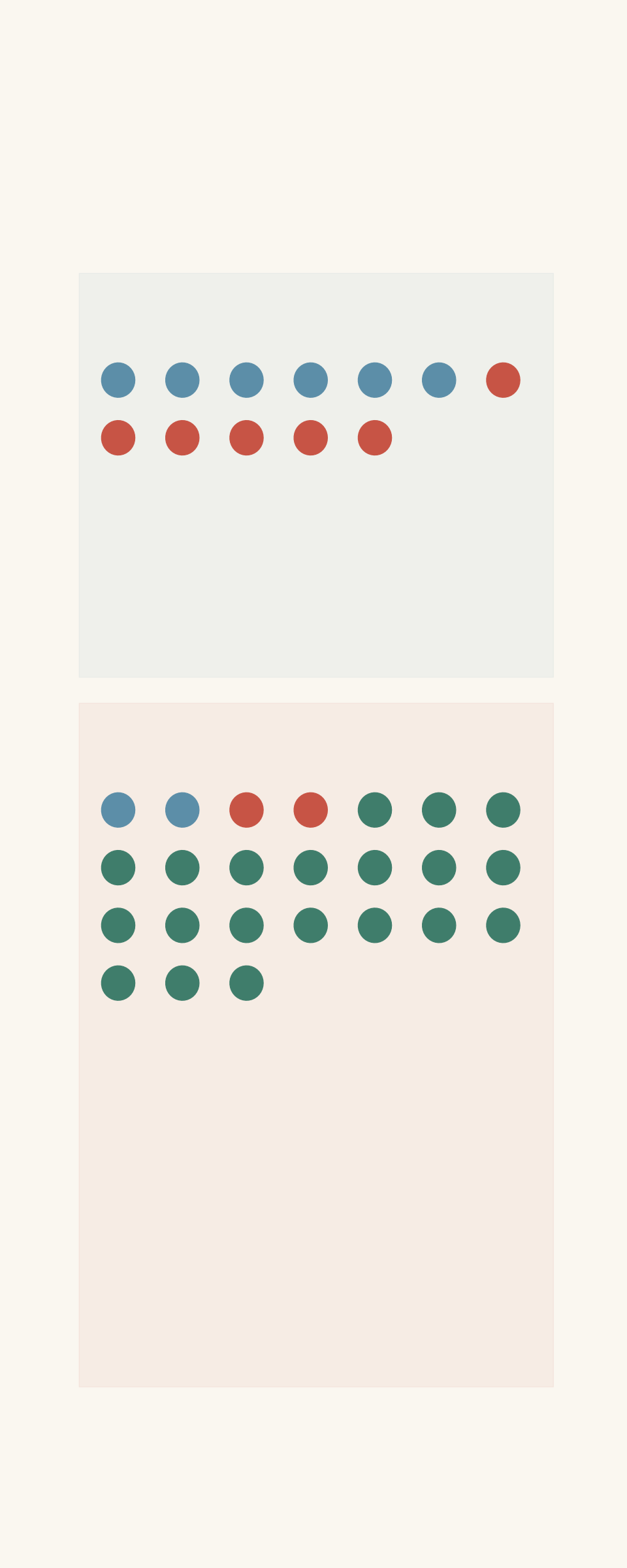
- Na⁺
- Cl⁻
- H₂O
(b) Energy changes (2 marks)
The positive enthalpy change,
\[ \Delta H_{\mathrm{sol}}=+3.9\ \mathrm{kJ\,mol^{-1}}, \]
means dissolution is endothermic. The process absorbs heat from its surroundings, so the solution may cool.
Separating the ionic lattice requires energy, while hydration releases energy. The energy required to separate the lattice is greater than the energy released during hydration by \(3.9\ \mathrm{kJ\,mol^{-1}}\).
- 1 mark – identifies the dissolution as endothermic and predicts heat absorption.
- 1 mark – correctly compares lattice separation energy with hydration energy.
Solution 9
(a) Dissolution equation and \(K_{sp}\) expression (2 marks)
The balanced dissolution equation is:
\[ \ce{CaF2(s) <=> Ca^2+(aq) + 2F-(aq)} \]
The solubility-product expression is:
\[ K_{sp}=[\mathrm{Ca}^{2+}][\mathrm{F}^{-}]^2 \]
The solid \(\ce{CaF2}\) is omitted from the expression because its activity is constant.
- 1 mark – correct balanced dissolution equation.
- 1 mark – correct \(K_{sp}\) expression with the appropriate power.
(b) Express concentrations using \(s\) (2 marks)
One mole of \(\ce{CaF2}\) produces one mole of \(\mathrm{Ca}^{2+}\) and two moles of \(\mathrm{F}^{-}\).
If the molar solubility is \(s\), then:
\[ [\mathrm{Ca}^{2+}]=s \]
\[ [\mathrm{F}^{-}]=2s \]
Substitute into the solubility-product expression:
\[ \begin{aligned} K_{sp}&=[\mathrm{Ca}^{2+}][\mathrm{F}^{-}]^2\\ &=s(2s)^2\\ &=4s^3 \end{aligned} \]
- 1 mark – correctly expresses both concentrations in terms of \(s\).
- 1 mark – obtains \(K_{sp}=4s^3\).
(c) Calculate the molar solubility (2 marks)
Rearrange the expression:
\[ s=\sqrt[3]{\frac{K_{sp}}{4}} \]
Substitute the given value:
\[ \begin{aligned} s&=\sqrt[3]{\frac{3.9\times10^{-11}}{4}}\\ &=\sqrt[3]{9.75\times10^{-12}}\\ &=2.14\times10^{-4}\ \mathrm{mol\,L^{-1}} \end{aligned} \]
Therefore, the molar solubility is:
\[ \boxed{s=2.14\times10^{-4}\ \mathrm{mol\,L^{-1}}} \]
- 1 mark – correct rearrangement and calculation method.
- 1 mark – correct numerical answer, units, and precision.
Solution 10
(a) Potassium chloride and silver nitrate (2 marks)
A precipitate of silver chloride forms.
The net ionic equation is:
\[ \ce{Ag+(aq) + Cl-(aq) -> AgCl(s)} \]
- 1 mark – identifies silver chloride as the precipitate.
- 1 mark – writes the correct net ionic equation.
(b) Potassium iodide and lead(II) nitrate (2 marks)
A precipitate of lead(II) iodide forms.
The net ionic equation is:
\[ \ce{Pb^2+(aq) + 2I-(aq) -> PbI2(s)} \]
Two iodide ions are required for every lead(II) ion, so the equation must be balanced accordingly.
- 1 mark – identifies lead(II) iodide as the precipitate.
- 1 mark – writes the correct balanced net ionic equation.
(c) Sodium sulfate and barium nitrate (2 marks)
A precipitate of barium sulfate forms.
The net ionic equation is:
\[ \ce{Ba^2+(aq) + SO4^2-(aq) -> BaSO4(s)} \]
- 1 mark – identifies barium sulfate as the precipitate.
- 1 mark – writes the correct net ionic equation.
(d) Nitrate ions (1 mark)
Nitrate ions remain dissolved and unchanged during these precipitation reactions. They are spectator ions, so they are omitted from the net ionic equations.
- 1 mark – identifies nitrate ions as unchanged spectator ions.
(e) Calculate \(Q_{sp}\) for silver chloride (2 marks)
For silver chloride:
\[ K_{sp}=[\mathrm{Ag}^{+}][\mathrm{Cl}^{-}] \]
The ionic product is calculated using the current concentrations:
\[ \begin{aligned} Q_{sp} &=[\mathrm{Ag}^{+}][\mathrm{Cl}^{-}]\\ &=(1.0\times10^{-4})(2.0\times10^{-5})\\ &=2.0\times10^{-9} \end{aligned} \]
Compare this with the solubility product:
\[ Q_{sp}=2.0\times10^{-9} > K_{sp}=1.8\times10^{-10} \]
The ionic product exceeds the solubility product, so the solution is supersaturated with respect to silver chloride. Silver chloride precipitates until the dissolved ion concentrations adjust towards equilibrium.
- 1 mark – correctly calculates \(Q_{sp}\).
- 1 mark – compares \(Q_{sp}\) with \(K_{sp}\) and predicts precipitation.
Solution 11
(a) Temperature and collision theory (2 marks)
Increasing temperature raises the average kinetic energy of the particles. A greater fraction of particles has energy equal to or greater than the activation energy, \(E_a\), required for a successful reaction.
As a result, the rates of both the forward and reverse reactions initially increase. The activation energy barriers themselves do not have to change for this to happen.
- 1 mark – explains the increased fraction of particles able to overcome \(E_a\).
- 1 mark – links this to more successful collisions per unit time in both directions.
(b) Heating an exothermic forward reaction (2 marks)
For an exothermic forward reaction, heat can be treated as a product. Increasing the temperature favours the reverse, endothermic reaction, so the equilibrium shifts to the left.
Immediately after heating, the reverse reaction rate becomes greater than the forward reaction rate. The net reverse reaction continues until the rates become equal again at the new equilibrium. The equilibrium constant decreases as temperature increases for an exothermic forward reaction.
- 1 mark – predicts a shift to the left and identifies the reverse direction as endothermic.
- 1 mark – explains the temporary rate imbalance and the movement towards a new equilibrium.
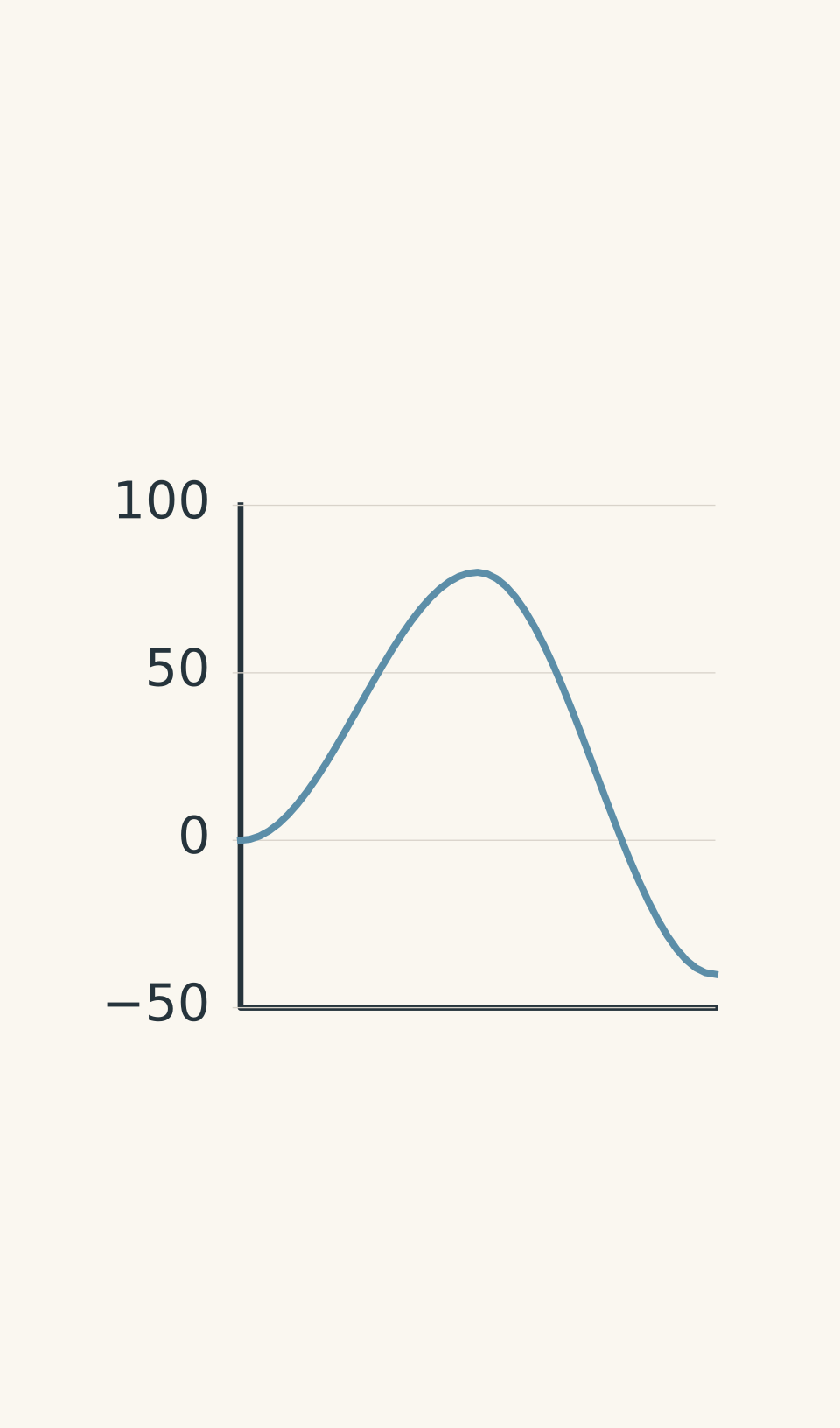
- Forward reaction
(c) Effect of a catalyst (1 mark)
A catalyst does not change \(K_c\) at constant temperature. It lowers the activation energy for both reaction directions, allowing equilibrium to be reached faster without changing the equilibrium composition.
- 1 mark – states that \(K_c\) is unchanged.
Solution 12
(a) Combustion, enthalpy, and entropy (2 marks)
The negative enthalpy change means combustion releases heat to the surroundings.
The entropy of the reaction system can decrease because gaseous reactants form fewer moles of gaseous products and liquid water. However, the surroundings gain entropy as heat is released. For spontaneous combustion under the relevant conditions, the total entropy change of the system and surroundings is positive.
- 1 mark – correctly interprets \(\Delta H<0\) as heat released.
- 1 mark – discusses the entropy changes of the system and surroundings consistently.
(b) Combustion as a non-equilibrium system (2 marks)
A flame is maintained by a continuous supply of fuel and oxygen, while products and heat leave the system. It is therefore an open, energy-dissipating system whose composition is continually changing.
Combustion also requires ignition because the reactants must overcome the activation energy barrier before the reaction can proceed rapidly. Once started, the released heat can help sustain the reaction.
- 1 mark – explains why continuous matter and energy flow prevents the flame from being treated as a closed equilibrium system.
- 1 mark – identifies the activation energy barrier and the role of ignition.
(c) Photosynthesis, enthalpy, and entropy (3 marks)
In the simplified photosynthesis equation, light energy is absorbed to drive the formation of glucose and oxygen. The positive enthalpy change indicates that energy is taken in overall and some of it is stored as chemical energy in the products.
Building glucose creates a more organised chemical structure. The entropy of the local reaction system may therefore decrease. This does not violate the second law of thermodynamics because the photosynthetic system exchanges energy and matter with its surroundings, and energy transfer and dissipation contribute to the entropy of the wider system.
Photosynthesis is maintained by a continuing supply of light and reactants. It is a driven, non-equilibrium process rather than a reaction that has settled into chemical equilibrium.
- 1 mark – identifies energy input and the positive enthalpy change.
- 1 mark – explains how local ordering can occur without requiring a decrease in total entropy.
- 1 mark – explains why ongoing energy and matter flows maintain a non-equilibrium system.
Solution 13
(a) Dissolution and transfer of toxin X (2 marks)
In the simplified model, toxin X dissolves into the surrounding water. Individual toxin particles leave the plant material and disperse through the water.
Diffusion and the concentration difference between the plant material and the water promote net transfer. As the system approaches a partitioning equilibrium, the net transfer slows.
- 1 mark – identifies dissolution of the toxin into water.
- 1 mark – explains the movement of toxin particles and the role of the concentration difference.
(b) Repeated water replacement (2 marks)
As toxin X enters the soak water, its concentration in that water increases. If the same water remains in place, the concentration difference driving further transfer becomes smaller.
Replacing the water with fresh water lowers the concentration of dissolved toxin outside the plant material. This restores the concentration difference, allowing more toxin to move into the new water. Repeating the process can therefore remove more toxin than leaving the same water in place.
- 1 mark – explains that replacing the water reduces the dissolved toxin concentration.
- 1 mark – explains that this restores the driving force for further transfer.
How repeated water replacement promotes toxin removal
- Toxin in plant
Plant material contains soluble toxin X.
- Transfer into water
Toxin X dissolves and diffuses into surrounding water.
- Replace the water
Fresh water lowers dissolved X concentration, allowing further transfer.
(c) Limitations and cultural context (2 marks)
The model assumes a single water-soluble toxin. Real plant materials may contain multiple toxic compounds, and different compounds may have different solubilities or require different chemical processes for removal. Water-based leaching alone cannot be assumed to make a toxic plant safe.
Processing practices also vary across Indigenous communities, locations, and plant species. Safe preparation should not be inferred from this simplified model or generalised into a universal procedure. Community-specific knowledge and appropriate safety guidance are essential.
- 1 mark – identifies a chemical limitation of the simplified model.
- 1 mark – explains why methods must not be generalised across communities or plant species.
Solution 14
(a) Balanced equation for magnesium combustion (1 mark)
The balanced equation is:
\[ \ce{2Mg(s) + O2(g) -> 2MgO(s)} \]
- 1 mark – correct balanced equation with appropriate state symbols.
(b) Increase in steel wool mass (2 marks)
When steel wool is heated in air, iron reacts with oxygen to form iron oxide. Oxygen atoms from the air become part of the solid product.
The measured mass of the solid therefore increases because oxygen has entered the sample from its surroundings. Matter has not been created; the steel wool has incorporated material from the air.
- 1 mark – identifies the reaction between iron and oxygen.
- 1 mark – explains that the added oxygen increases the mass of the solid.
(c) Completion versus dynamic equilibrium (1 mark)
Under ordinary conditions, these reactions proceed strongly towards oxide formation, and an ongoing reverse reaction at an equal rate is not demonstrated. The observations therefore do not establish dynamic equilibrium.
- 1 mark – distinguishes a reaction proceeding towards products from evidence of equal forward and reverse reaction rates.