
Year 12 Organic Chemistry: 100-Mark Practice Exam
Revise Year 12 organic chemistry with this original 100-mark practice exam covering hydrocarbons, alcohols, carboxylic acids, esters, polymers, reaction pathways, stoichiometry, and combustion. Includes timed exam instructions, fully worked solutions, and a detailed marking guide.
This is an original tutorgum practice paper for Year 12 Chemistry revision across the supplied chemistry-2025 organic chemistry content area. It covers hydrocarbon structures and reactions, isomerism, alcohols, carboxylic acids, esters and polyesters, organic synthesis, stoichiometry, combustion calorimetry, fuels, and laboratory safety. It is an original practice resource, not an official, endorsed, past, or predicted NESA paper.
01Exam instructions
Suggested working time: 120 minutes
Suggested reading time: 5 minutes, additional to working time
Total marks: 100
Permitted equipment
- Scientific calculator
- Pen, pencil, and ruler
- Periodic table
These are suggested conditions for this practice paper, not official examination rules.
Assessed scope and exclusions
This paper assesses the supplied chemistry-2025 Year 12 organic chemistry content area, including the listed material on hydrocarbons, alcohols, carboxylic acids, esters, polyesters, and related reactions and applications. It does not combine content from other syllabus editions or assess unrelated Chemistry modules. It is a revision paper for this organic chemistry content area, not a full-course Chemistry examination.
How to answer
- Attempt every question.
- Show your working for calculations, including equations, mole ratios, units, and appropriate significant figures.
- Write balanced chemical equations. Use condensed structural formulae where requested.
- Explain chemical trends by referring to bonding and molecular structure, not just by stating which substance has the higher value.
- For multi-step calculations, marks may be awarded for a correct method even if an earlier arithmetic error affects the final answer. Equivalent valid structural formulae and naming conventions consistent with standard IUPAC nomenclature are acceptable.
Unless otherwise stated, assume reactions proceed as described in the question. For addition reactions involving propene, use the usual major product under standard school-level conditions. In oxidation equations, \([O]\) represents an oxidising equivalent rather than a molecular formula.
02Questions
Question 1 (10 marks)
Answer all parts.
(a) Give the IUPAC name of \(\ce{CH3CH(CH3)CH=CHCH3}\). (1 mark)
(b) Give the IUPAC name of \(\ce{CH3CH2CH(Br)CH3}\). (1 mark)
(c) Give the IUPAC name of \(\ce{CH3CH(OH)CH2CH3}\). (1 mark)
(d) Give the IUPAC name of \(\ce{CH3CH2CH(CH2CH3)CH2CH2CH3}\). (1 mark)
(e) Write the condensed structural formula of hex-2-yne. (1 mark)
(f) For acyclic hydrocarbons containing no rings and only one double or triple bond where applicable, write the general molecular formula for each of the following series, then give the molecular formula of its C8 member. (3 marks)
- Alkanes
- Alkenes with one double bond
- Alkynes with one triple bond
(g) Give the IUPAC name of \(\ce{CH3CH2COOH}\). (1 mark)
(h) Give the IUPAC name of \(\ce{CH3COOCH2CH3}\). (1 mark)
Question 2 (8 marks)
(a) State the molecular geometry around each carbon atom, and the approximate bond angle around each carbon atom, in the following molecules. (3 marks)
- Ethane, \(\ce{CH3CH3}\)
- Ethene, \(\ce{CH2=CH2}\)
- Ethyne, \(\ce{HC\bond{#}CH}\)
(b) But-2-ene can exist as geometric isomers, whereas but-1-ene cannot.
Explain why, referring to the groups attached to the carbon atoms of the double bond and the ability of the bond to rotate. (2 marks)
(c) Using condensed structural formulae, give one valid pair of compounds for each relationship below. Label each pair with its type of isomerism. (3 marks)
(i) Positional isomers of an alcohol with molecular formula \(\ce{C4H10O}\).
(ii) Chain isomers of an alkene with molecular formula \(\ce{C4H8}\).
(iii) Functional-group isomers consisting of an alcohol and an ether with molecular formula \(\ce{C4H10O}\).
Question 3 (10 marks)
(a) Propene, \(\ce{CH3CH=CH2}\), undergoes four separate addition reactions.
For each reaction, write a balanced equation using a condensed structural formula for the organic product. (4 marks)
(i) Addition of hydrogen.
(ii) Addition of bromine.
(iii) Addition of hydrogen bromide.
(iv) Addition of water under acid-catalysed conditions.
(b) Ethane reacts with bromine to form bromoethane and another product.
Write the balanced equation and state the condition required to initiate the reaction. (2 marks)
(c) A mixture contains 0.30 mol of propene and 0.20 mol of hydrogen. The hydrogenation reaction proceeds to completion, with no other reactions occurring.
Determine the limiting reactant and calculate the amount, in moles, of propane produced. (3 marks)
(d) State one key difference between an addition reaction and a substitution reaction involving organic compounds. (1 mark)
Question 4 (10 marks)
(a) Classify each alcohol as primary, secondary, or tertiary. (3 marks)
(i) \(\ce{CH3CH2CH2OH}\)
(ii) \(\ce{CH3CH(OH)CH3}\)
(iii) \(\ce{(CH3)3COH}\)
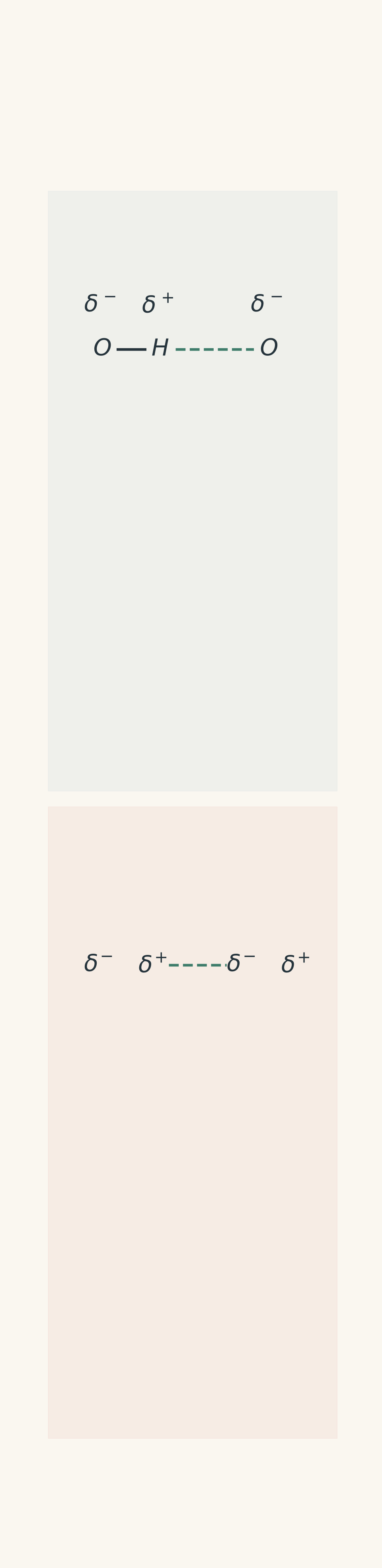
(b) Explain why the boiling points of methanol, ethanol, and propan-1-ol increase across the homologous series. Also explain why these alcohols generally have higher boiling points than alkanes of similar molar mass.
Refer to both intermolecular and intramolecular bonding. (2 marks)
(c) Butan-1-ol can be produced from 1-bromobutane using aqueous sodium hydroxide.
Write the balanced equation, name the reaction type, and state one suitable reaction condition. (2 marks)
(d) Butan-2-ol can undergo dehydration to produce an alkene.
Write an equation for the formation of the major alkene product and state suitable conditions. (2 marks)
(e) Write a balanced equation for the reaction of ethanol with hydrogen bromide to form bromoethane. (1 mark)
Question 5 (8 marks)
(a) Write the balanced equation for the complete combustion of butan-1-ol. (2 marks)
(b) Butan-1-ol is a primary alcohol. Give the organic product formed when it is oxidised under each set of conditions below, and write a balanced equation for each oxidation step using \([O]\). (2 marks)
(i) Controlled oxidation, with the aldehyde distilled off as it forms.
(ii) Oxidation using excess oxidant under reflux.
(c) Butan-2-ol is oxidised using acidified potassium dichromate under suitable heating conditions.
Write the oxidation equation, name the organic product, and explain the structural change that occurs at the carbon atom initially bonded to the hydroxyl group. (2 marks)
(d) Describe the production of ethanol by fermentation. Include a balanced equation and the essential conditions. (2 marks)
Question 6 (6 marks)
A synthesis pathway uses ethene as the starting material to produce an ester. The ethanol produced in the first step is divided into two portions: one is oxidised to produce a carboxylic acid, and the other is retained for the final reaction.
The pathway is represented below.
\[ \text{Ethene} \longrightarrow A \]
\[ A \longrightarrow B \]
\[ A+B \rightleftharpoons C+\text{water} \]
(a) Identify compounds A, B, and C. (3 marks)
(b) For each arrow in the pathway, state the reaction type and suitable reagents or conditions. (3 marks)
Question 7 (12 marks)
Show your working for every calculation.
(a) Propane undergoes complete combustion according to the equation:
\[ \ce{C3H8 + 5O2 -> 3CO2 + 4H2O} \]
A sample of 4.40 g of propane burns completely in excess oxygen.
Calculate the mass of carbon dioxide produced.
Use \(M(\ce{C3H8})=44.0\ \mathrm{g\,mol^{-1}}\) and \(M(\ce{CO2})=44.0\ \mathrm{g\,mol^{-1}}\). (3 marks)
(b) A sample of 2.30 g of ethanol undergoes complete combustion.
Write the balanced combustion equation, then calculate the amount, in moles, of oxygen required.
Use \(M(\ce{C2H5OH})=46.0\ \mathrm{g\,mol^{-1}}\). (3 marks)
(c) A 20.0 mL sample of ethanoic acid is completely neutralised by 25.0 mL of 0.200 mol L\(^{-1}\) sodium hydroxide.
Write the balanced neutralisation equation and calculate the concentration of the ethanoic acid in mol L\(^{-1}\). Assume the acid and sodium hydroxide react in a 1:1 mole ratio. (3 marks)
(d) Ethanoic acid and ethanol react to form ethyl ethanoate and water.
\[ \ce{CH3COOH + C2H5OH <=> CH3COOC2H5 + H2O} \]
A reaction mixture initially contains 0.100 mol of ethanoic acid and 0.0800 mol of ethanol. After the reaction, 5.28 g of ethyl ethanoate is isolated.
Calculate:
(i) The limiting reactant.
(ii) The theoretical mass of ethyl ethanoate.
(iii) The percentage yield.
Use \(M(\text{ethyl ethanoate})=88.0\ \mathrm{g\,mol^{-1}}\). (3 marks)
Question 8 (10 marks)
(a) Name the ester \(\ce{CH3CH2COOCH3}\). Identify the carboxylic acid and alcohol from which it can be produced. (2 marks)
(b) Explain why ethanoic acid generally has a higher boiling point than a similarly sized ester.
Also explain why lower esters are often volatile and why their solubility in water tends to decrease as their carbon chains become longer. (3 marks)
(c) Butanoic acid and ethyl ethanoate have the same molecular formula, \(\ce{C4H8O2}\).
State their isomer relationship and identify the functional group present in each compound. (2 marks)
(d) Outline a small-scale school-laboratory method for preparing ethyl ethanoate from ethanol and ethanoic acid.
Include a balanced equation, the catalyst and heating conditions, and one practical safety control. (3 marks)
Question 9 (5 marks)
A polyester can be made from the following two monomers:
- Ethane-1,2-diol: \(\ce{HOCH2CH2OH}\)
- Butanedioic acid: \(\ce{HOOCCH2CH2COOH}\)
(a) Identify the reactive functional groups on each monomer and name the type of polymerisation involved. (2 marks)
(b) Write an appropriate repeat unit for the polyester, showing the ester links, and identify the small molecule eliminated during polymer formation. (2 marks)
(c) Explain why monomers with two reactive functional groups can form long polymer chains. (1 mark)
Question 10 (10 marks)
A student compares the enthalpies of combustion of ethanol and propan-1-ol using spirit burners to heat water.
The student records the following data.
| Measurement | Ethanol | Propan-1-ol |
|---|---|---|
| Mass of water heated | 100.0 g | 100.0 g |
| Initial water temperature | 20.0°C | 20.0°C |
| Final water temperature | 42.0°C | 50.0°C |
| Mass of fuel burned | 1.20 g | 0.900 g |
Use the following data:
- Specific heat capacity of water: \(4.18\ \mathrm{J\,g^{-1}\,^\circ C^{-1}}\)
- Molar mass of ethanol: \(46.0\ \mathrm{g\,mol^{-1}}\)
- Molar mass of propan-1-ol: \(60.0\ \mathrm{g\,mol^{-1}}\)
Assume, for the calculations, that all measured heat from the fuel is transferred to the water. Ignore heat absorbed by the apparatus.
Use:
\[ q=mc\Delta T \]
where \(q\) is heat gained by the water in joules, \(m\) is the mass of water in grams, \(c\) is its specific heat capacity, and \(\Delta T\) is its temperature increase in degrees Celsius.
(a) Calculate the heat gained by the water in each experiment, in kilojoules. (2 marks)
(b) Calculate the experimental molar enthalpy of combustion of each alcohol, in kJ mol\(^{-1}\). Include the correct sign and appropriate units. (4 marks)
(c) According to the experimental results, which alcohol has the more exothermic molar enthalpy of combustion? Calculate the difference in their experimental molar enthalpies. (1 mark)
(d) Explain why these experimental values may differ from accepted values. Suggest two improvements to the experiment that would improve the quality of the comparison. (3 marks)
Question 11 (6 marks)
A community is considering using bioethanol as an alternative to petrol.
For this question, use the following energy-density data.
| Fuel | Energy released by complete combustion |
|---|---|
| Ethanol | 27 MJ kg\(^{-1}\) |
| Petrol | 46 MJ kg\(^{-1}\) |
(a) Calculate the energy released by the complete combustion of 2.00 kg of each fuel. (2 marks)
(b) Evaluate whether replacing petrol entirely with bioethanol would be a sensible environmental and practical decision.
Discuss energy output, renewable production, environmental effects, and at least one practical consideration. (4 marks)
Question 12 (5 marks)
(a) State three appropriate safety controls for handling and storing flammable organic substances during a school-laboratory practical involving alcohols or esters. (3 marks)
(b) Explain how unused organic liquids and organic reaction residues should be disposed of, and why they should not automatically be poured down the sink. (2 marks)
03Worked solutions and marking guide
Solution 1
(a) 4-methylpent-2-ene. (1 mark)
The longest chain containing the double bond has five carbon atoms. Number from the end nearest the double bond, giving pent-2-ene, with a methyl substituent at carbon 4.
Award 1 mark for the correct IUPAC name.
(b) 2-bromobutane. (1 mark)
The parent chain contains four carbon atoms. Numbering from the nearer end places bromine on carbon 2.
Award 1 mark for the correct name.
(c) Butan-2-ol. (1 mark)
The parent chain has four carbon atoms, and the hydroxyl group is attached to carbon 2.
Award 1 mark for the correct name.
(d) 3-ethylhexane. (1 mark)
The longest continuous carbon chain has six carbon atoms. Numbering from the nearer end places the ethyl substituent at carbon 3.
Award 1 mark for the correct name.
(e) \(\ce{CH3-C\bond{#}C-CH2-CH2-CH3}\). (1 mark)
Hex-2-yne contains six carbon atoms, with the triple bond between carbon 2 and carbon 3.
Award 1 mark for the correct condensed structural formula.
(f) General and molecular formulae. (3 marks)
| Homologous series | General formula | C8 member |
|---|---|---|
| Alkanes | \(\ce{C_nH_{2n+2}}\) | \(\ce{C8H18}\), octane |
| Alkenes with one double bond | \(\ce{C_nH_{2n}}\) | \(\ce{C8H16}\), octene |
| Alkynes with one triple bond | \(\ce{C_nH_{2n-2}}\) | \(\ce{C8H14}\), octyne |
These formulae assume acyclic hydrocarbons with one relevant bond type and no additional rings or multiple bonds.
Marking:
- 1 mark for all three correct general formulae.
- 1 mark for \(\ce{C8H18}\).
- 1 mark for both \(\ce{C8H16}\) and \(\ce{C8H14}\).
(g) Propanoic acid. (1 mark)
The carboxyl group, \(\ce{-COOH}\), identifies the compound as a carboxylic acid. The parent chain has three carbon atoms.
Award 1 mark for the correct name.
(h) Ethyl ethanoate. (1 mark)
The \(\ce{CH3COO-}\) portion comes from ethanoic acid, while the ethyl group comes from ethanol.
Award 1 mark for the correct name.
Total: 10 marks
Solution 2
(a) Molecular geometry and bond angles. (3 marks)
| Molecule | Geometry around each carbon | Approximate bond angle |
|---|---|---|
| Ethane | Tetrahedral | \(109.5^\circ\) |
| Ethene | Trigonal planar | \(120^\circ\) |
| Ethyne | Linear | \(180^\circ\) |
In ethane, each carbon forms four single bonds, giving a tetrahedral arrangement.
In ethene, each carbon forms three regions of bonding around it, giving a trigonal planar arrangement. In ethyne, each carbon has a linear arrangement because of the triple bond.
Award 1 mark for each correct geometry and corresponding angle.
Carbon–carbon bonds and molecular geometry
| Single bond: ethane | CH₃CH₃ Tetrahedral around each C; ≈109.5° |
|---|---|
| Double bond: ethene | CH₂=CH₂ Trigonal planar around each C; ≈120° |
| Triple bond: ethyne | HC≡CH Linear around each C; 180° |
(b) Geometric isomerism. (2 marks)
In but-2-ene, each carbon atom in the double bond is attached to two different groups: a hydrogen atom and a methyl group.
The double bond restricts rotation. The groups can therefore have different relative arrangements, producing cis-but-2-ene and trans-but-2-ene.
In but-1-ene, the terminal carbon of the double bond is attached to two identical hydrogen atoms. This prevents distinct geometric isomers from forming.
Marking:
- 1 mark for explaining that each carbon in but-2-ene has two different attached groups and that rotation is restricted.
- 1 mark for explaining that but-1-ene has two identical groups on one double-bond carbon.
(c) Structural isomers. (3 marks)
(i) Positional isomers of an alcohol:
- Butan-1-ol: \(\ce{CH3CH2CH2CH2OH}\)
- Butan-2-ol: \(\ce{CH3CH(OH)CH2CH3}\)
The carbon skeleton is unchanged, but the hydroxyl group occupies a different position.
(ii) Chain isomers of an alkene:
- But-1-ene: \(\ce{CH2=CHCH2CH3}\)
- 2-methylpropene: \(\ce{CH2=C(CH3)2}\)
Both compounds have molecular formula \(\ce{C4H8}\), but their carbon skeletons differ.
(iii) Functional-group isomers:
- Butan-1-ol: \(\ce{CH3CH2CH2CH2OH}\)
- Ethoxyethane: \(\ce{CH3CH2OCH2CH3}\)
Both have molecular formula \(\ce{C4H10O}\), but one is an alcohol and the other is an ether.
Award 1 mark for each valid pair of structural formulae with the correct relationship identified.
Total: 8 marks
Solution 3
(a) Addition reactions of propene. (4 marks)
(i) Hydrogenation:
\[ \ce{CH3CH=CH2 + H2 -> CH3CH2CH3} \]
The product is propane. A nickel catalyst and heating are suitable conditions.
(ii) Addition of bromine:
\[ \ce{CH3CH=CH2 + Br2 -> CH3CHBrCH2Br} \]
The product is 1,2-dibromopropane. The bromine atoms add across the double bond.
(iii) Addition of hydrogen bromide:
\[ \ce{CH3CH=CH2 + HBr -> CH3CHBrCH3} \]
The major product under standard school-level conditions is 2-bromopropane.
(iv) Hydration:
\[ \ce{CH3CH=CH2 + H2O -> CH3CH(OH)CH3} \]
The product is propan-2-ol. Hydration uses steam and an acid catalyst under suitable conditions.
Award 1 mark for each correct balanced equation and organic product.
(b) Halogen substitution. (2 marks)
\[ \ce{C2H6 + Br2 -> C2H5Br + HBr} \]
The reaction requires ultraviolet light to initiate the radical substitution reaction.
Marking:
- 1 mark for the balanced equation.
- 1 mark for ultraviolet light.
(c) Limiting reactant. (3 marks)
The balanced equation is:
\[ \ce{C3H6 + H2 -> C3H8} \]
The mole ratio of propene to hydrogen is \(1:1\).
The mixture contains 0.30 mol of propene and 0.20 mol of hydrogen. Hydrogen is present in the smaller amount relative to the required \(1:1\) ratio, so it is the limiting reactant.
The equation shows that one mole of hydrogen produces one mole of propane. Therefore,
\[ n(\ce{C3H8})=0.20\ \mathrm{mol} \]
The amount of propane produced is 0.20 mol.
Marking:
- 1 mark for using the \(1:1\) mole ratio.
- 1 mark for identifying hydrogen as the limiting reactant.
- 1 mark for the correct amount of propane.
Award follow-through credit for a correct mole-ratio method applied consistently to an earlier numerical error.
(d) Addition versus substitution. (1 mark)
In an addition reaction, atoms or groups add across a multiple bond, reducing its bond order. In a substitution reaction, an atom or group in a molecule is replaced by another atom or group.
Award 1 mark for a clear distinction.
Total: 10 marks
Solution 4
(a) Classification of alcohols. (3 marks)
(i) \(\ce{CH3CH2CH2OH}\): primary alcohol.
The carbon bonded to the hydroxyl group is attached to one other carbon atom.
(ii) \(\ce{CH3CH(OH)CH3}\): secondary alcohol.
The carbon bonded to the hydroxyl group is attached to two other carbon atoms.
(iii) \(\ce{(CH3)3COH}\): tertiary alcohol.
The carbon bonded to the hydroxyl group is attached to three other carbon atoms.
Award 1 mark for each correct classification.
(b) Boiling points and bonding. (2 marks)
As the alcohol homologous series progresses from methanol to ethanol to propan-1-ol, molecular size and the number of electrons increase. This strengthens London dispersion forces, so more energy is needed to separate the molecules.
Alcohols also form intermolecular hydrogen bonds through their hydroxyl groups. Alkanes cannot form hydrogen bonds with one another and rely on dispersion forces, so similarly sized alcohols generally have higher boiling points.
When a substance boils, its molecules separate as intermolecular attractions are overcome. The covalent bonds within the molecules remain intact.
Marking:
- 1 mark for explaining the increase in dispersion forces across the alcohol series.
- 1 mark for comparing hydrogen bonding in alcohols with dispersion forces in alkanes and recognising that boiling does not normally break intramolecular covalent bonds.
(c) Producing butan-1-ol from 1-bromobutane. (2 marks)
\[ \ce{CH3CH2CH2CH2Br + NaOH -> CH3CH2CH2CH2OH + NaBr} \]
The reaction is a substitution reaction. The hydroxide ion replaces the bromine atom, producing butan-1-ol.
Suitable conditions include aqueous sodium hydroxide and heating under reflux.
Marking:
- 1 mark for the balanced equation.
- 1 mark for identifying substitution and giving suitable conditions.
(d) Dehydration of butan-2-ol. (2 marks)
The major alkene product is but-2-ene:
\[ \ce{CH3CH(OH)CH2CH3 -> CH3CH=CHCH3 + H2O} \]
Suitable conditions include heating with concentrated sulfuric acid or phosphoric acid as a catalyst.
But-1-ene can also form, but but-2-ene is the major product under the usual conditions.
Marking:
- 1 mark for the correct equation.
- 1 mark for identifying but-2-ene as the major product and stating suitable conditions.
(e) Substitution of ethanol with hydrogen bromide. (1 mark)
\[ \ce{CH3CH2OH + HBr -> CH3CH2Br + H2O} \]
The hydroxyl group is replaced by bromine, producing bromoethane.
Award 1 mark for the balanced equation.
Total: 10 marks
Solution 5
(a) Complete combustion of butan-1-ol. (2 marks)
\[ \ce{C4H9OH + 6O2 -> 4CO2 + 5H2O} \]
Complete combustion produces carbon dioxide and water. The equation balances four carbon atoms, ten hydrogen atoms, and thirteen oxygen atoms on each side.
Marking:
- 1 mark for the correct products and carbon and hydrogen balance.
- 1 mark for the correctly balanced oxygen coefficient.
(b) Oxidation of a primary alcohol. (2 marks)
(i) Controlled oxidation produces butanal:
\[ \ce{CH3CH2CH2CH2OH + [O] -> CH3CH2CH2CHO + H2O} \]
Distilling the aldehyde off as it forms reduces the chance of further oxidation.
(ii) Oxidation with excess oxidant under reflux produces butanoic acid:
\[ \ce{CH3CH2CH2CHO + [O] -> CH3CH2CH2COOH} \]
The aldehyde can undergo further oxidation to the carboxylic acid. Suitable conditions include excess acidified potassium dichromate under reflux.
Marking:
- 1 mark for butanal and the controlled oxidation equation.
- 1 mark for butanoic acid and the further oxidation equation or suitable conditions.
(c) Oxidation of a secondary alcohol. (2 marks)
\[ \ce{CH3CH(OH)CH2CH3 + [O] -> CH3COCH2CH3 + H2O} \]
The organic product is butan-2-one, a ketone.
During oxidation, the carbon initially bonded to the hydroxyl group becomes the carbonyl carbon of the \(\ce{C=O}\) group. The oxidation involves the removal of hydrogen from the hydroxyl group and the same carbon atom.
Marking:
- 1 mark for the correct ketone product and equation.
- 1 mark for explaining the structural change.
(d) Fermentation. (2 marks)
The balanced equation is:
\[ \ce{C6H12O6 -> 2C2H5OH + 2CO2} \]
Yeast supplies enzymes that convert glucose into ethanol and carbon dioxide. Fermentation requires suitable warm conditions and limited oxygen.
Marking:
- 1 mark for the balanced equation.
- 1 mark for yeast and suitable conditions, including limited oxygen.
Total: 8 marks
Solution 6
(a) Identifying the compounds. (3 marks)
- A is ethanol, \(\ce{CH3CH2OH}\).
- B is ethanoic acid, \(\ce{CH3COOH}\).
- C is ethyl ethanoate, \(\ce{CH3COOCH2CH3}\).
Award 1 mark for each correct compound.
(b) Reaction types and conditions. (3 marks)
First arrow: ethene to ethanol.
This is an addition reaction, specifically hydration.
\[ \ce{CH2=CH2 + H2O -> CH3CH2OH} \]
Suitable conditions include steam, a phosphoric acid catalyst, and elevated temperature and pressure.
Second arrow: ethanol to ethanoic acid.
This is an oxidation reaction.
\[ \ce{CH3CH2OH + 2[O] -> CH3COOH + H2O} \]
Suitable conditions include excess acidified potassium dichromate under reflux.
Third arrow: ethanol and ethanoic acid to ethyl ethanoate.
This is esterification, a condensation reaction.
\[ \ce{CH3CH2OH + CH3COOH <=> CH3COOCH2CH3 + H2O} \]
Concentrated sulfuric acid can act as the catalyst, with heating under suitable conditions.
Award 1 mark for each arrow with a correct reaction type and suitable reagent or condition.
Synthesis pathway: ethene to ethyl ethanoate
- Hydration (addition)
CH₂=CH₂ + H₂O ⇌ CH₃CH₂OH
Steam; H₃PO₄ catalyst, ~300 °C, 60–70 atm.
- Oxidation
CH₃CH₂OH + 2[O] → CH₃COOH + H₂O
Excess acidified K₂Cr₂O₇; heat under reflux.
- Esterification (condensation)
CH₃CH₂OH + CH₃COOH ⇌ CH₃COOCH₂CH₃ + H₂O
Concentrated H₂SO₄ catalyst; heat. Water is the by-product.
Total: 6 marks
Solution 7
(a) Combustion of propane. (3 marks)
The balanced equation is provided:
\[ \ce{C3H8 + 5O2 -> 3CO2 + 4H2O} \]
First, calculate the amount of propane:
\[ \begin{aligned} n(\ce{C3H8})&=\frac{m}{M}\\ &=\frac{4.40}{44.0}\\ &=0.100\ \mathrm{mol} \end{aligned} \]
The mole ratio of propane to carbon dioxide is \(1:3\).
\[ n(\ce{CO2})=3(0.100)=0.300\ \mathrm{mol} \]
Now calculate the mass of carbon dioxide:
\[ \begin{aligned} m(\ce{CO2})&=nM\\ &=0.300\times44.0\\ &=13.2\ \mathrm{g} \end{aligned} \]
The mass of carbon dioxide produced is 13.2 g.
Marking:
- 1 mark for the amount of propane.
- 1 mark for applying the \(1:3\) mole ratio.
- 1 mark for the correct mass of carbon dioxide with units.
Award follow-through credit for a correct mole-ratio method if an earlier arithmetic error occurs.
(b) Combustion of ethanol. (3 marks)
The balanced equation is:
\[ \ce{C2H5OH + 3O2 -> 2CO2 + 3H2O} \]
Calculate the amount of ethanol:
\[ \begin{aligned} n(\ce{C2H5OH})&=\frac{2.30}{46.0}\\ &=0.0500\ \mathrm{mol} \end{aligned} \]
The mole ratio of ethanol to oxygen is \(1:3\).
\[ n(\ce{O2})=3(0.0500)=0.150\ \mathrm{mol} \]
The amount of oxygen required is 0.150 mol.
Marking:
- 1 mark for the balanced combustion equation.
- 1 mark for the amount of ethanol.
- 1 mark for the amount of oxygen with the correct mole ratio and units.
(c) Neutralisation of ethanoic acid. (3 marks)
The balanced equation is:
\[ \ce{CH3COOH + NaOH -> CH3COONa + H2O} \]
First, convert the sodium hydroxide volume to litres:
\[ 25.0\ \mathrm{mL}=0.0250\ \mathrm{L} \]
Calculate the amount of sodium hydroxide:
\[ \begin{aligned} n(\ce{NaOH})&=cV\\ &=0.200\times0.0250\\ &=0.00500\ \mathrm{mol} \end{aligned} \]
The acid and base react in a \(1:1\) mole ratio, so:
\[ n(\ce{CH3COOH})=0.00500\ \mathrm{mol} \]
Convert the acid volume:
\[ 20.0\ \mathrm{mL}=0.0200\ \mathrm{L} \]
Therefore,
\[ \begin{aligned} c(\ce{CH3COOH})&=\frac{n}{V}\\ &=\frac{0.00500}{0.0200}\\ &=0.250\ \mathrm{mol\,L^{-1}} \end{aligned} \]
The concentration of ethanoic acid is 0.250 mol L\(^{-1}\).
Marking:
- 1 mark for the balanced neutralisation equation.
- 1 mark for the amount of sodium hydroxide and the correct \(1:1\) ratio.
- 1 mark for the acid concentration with units.
Award follow-through credit for a correct concentration method using the student’s calculated amount of acid.
(d) Esterification stoichiometry. (3 marks)
The equation shows a \(1:1\) mole ratio between ethanoic acid, ethanol, and ethyl ethanoate.
The initial amounts are:
- Ethanoic acid: 0.100 mol
- Ethanol: 0.0800 mol
Ethanol is the limiting reactant because it is present in the smaller amount for the \(1:1\) reaction.
The theoretical amount of ethyl ethanoate is therefore 0.0800 mol.
Calculate the theoretical mass:
\[ \begin{aligned} m&=nM\\ &=0.0800\times88.0\\ &=7.04\ \mathrm{g} \end{aligned} \]
Calculate the percentage yield:
\[ \begin{aligned} \%\text{ yield} &=\frac{\text{actual yield}}{\text{theoretical yield}}\times100\\ &=\frac{5.28}{7.04}\times100\\ &=75.0\% \end{aligned} \]
The answers are:
- Limiting reactant: ethanol.
- Theoretical yield: 7.04 g.
- Percentage yield: 75.0%.
Marking:
- 1 mark for identifying ethanol as the limiting reactant.
- 1 mark for the theoretical mass.
- 1 mark for the percentage yield.
Award follow-through credit for a consistent yield calculation based on the student’s theoretical yield.
Total: 12 marks
Solution 8
(a) Ester nomenclature and reactants. (2 marks)
The ester \(\ce{CH3CH2COOCH3}\) is methyl propanoate.
It can be produced from:
- Propanoic acid, \(\ce{CH3CH2COOH}\).
- Methanol, \(\ce{CH3OH}\).
The acid provides the propanoate portion, while the alcohol provides the methyl group attached to the ester oxygen.
Marking:
- 1 mark for methyl propanoate.
- 1 mark for identifying propanoic acid and methanol.
(b) Carboxylic acid and ester physical properties. (3 marks)
Ethanoic acid generally has a higher boiling point than a similarly sized ester because carboxylic acid molecules form strong intermolecular hydrogen bonds. Carboxylic acids can also form hydrogen-bonded pairs, known as dimers, which increase the energy required to separate the molecules.
Esters do not contain an \(\ce{O-H}\) bond, so they cannot donate hydrogen bonds to other ester molecules. Their intermolecular attractions are generally weaker than those of comparable alcohols or carboxylic acids, which helps explain why many lower esters are volatile.
The water solubility of esters generally decreases as their carbon chains become longer. The ester functional group can interact with water, but the increasing non-polar hydrocarbon portion makes the molecule less compatible with water.
Marking:
- 1 mark for explaining the stronger intermolecular hydrogen bonding of carboxylic acids.
- 1 mark for explaining ester volatility in terms of intermolecular forces.
- 1 mark for explaining the decrease in ester water solubility as chain length increases.
(c) Functional-group isomers. (2 marks)
Butanoic acid and ethyl ethanoate are functional-group isomers because they have the same molecular formula, \(\ce{C4H8O2}\), but different functional groups.
- Butanoic acid contains a carboxyl group, \(\ce{-COOH}\).
- Ethyl ethanoate contains an ester group, \(\ce{-COO-}\).
Marking:
- 1 mark for identifying functional-group isomerism.
- 1 mark for identifying the correct functional groups.
(d) Preparing ethyl ethanoate. (3 marks)
The balanced equation is:
\[ \ce{CH3COOH + CH3CH2OH <=> CH3COOCH2CH3 + H2O} \]
A suitable method is to mix small measured quantities of ethanol and ethanoic acid, add a few drops of concentrated sulfuric acid as a catalyst, and warm the mixture in a hot water bath. A water bath is preferable to a naked flame because ethanol and many organic products are flammable.
Appropriate safety controls include wearing safety glasses, handling concentrated sulfuric acid carefully, working with suitable ventilation, and avoiding direct inhalation of vapours. Organic residues should be disposed of according to the laboratory’s waste procedures.
Marking:
- 1 mark for the balanced esterification equation.
- 1 mark for a suitable method, catalyst, and heating conditions.
- 1 mark for an appropriate practical safety control.
Total: 10 marks
Solution 9
(a) Monomers and polymerisation. (2 marks)
Ethane-1,2-diol contains two hydroxyl groups, \(\ce{-OH}\). Butanedioic acid contains two carboxyl groups, \(\ce{-COOH}\).
The polymer forms through condensation polymerisation. Ester links form between the hydroxyl and carboxyl groups, releasing water.
Marking:
- 1 mark for identifying the two hydroxyl groups and two carboxyl groups on the respective monomers.
- 1 mark for naming condensation polymerisation.
(b) Polyester repeat unit. (2 marks)
An appropriate repeat unit is:
\[ \ce{[-O-CH2-CH2-O-C(=O)-CH2-CH2-C(=O)-]_{n}} \]
This representation shows the ester links connecting the diol-derived and diacid-derived sections of the chain.
The small molecule eliminated during ester-link formation is water, \(\ce{H2O}\).
Marking:
- 1 mark for an appropriate repeat unit showing the ester links.
- 1 mark for identifying water as the by-product.
Polyester formation by condensation
- Monomers
HO–CH₂–CH₂–OH + HOOC–CH₂–CH₂–COOH
Ethane-1,2-diol + butanedioic acid; each has two reactive groups.
- Polyester chain
[–O–CH₂–CH₂–O–C(=O)–CH₂–CH₂–C(=O)–]ₙ + H₂O
Ester links: –C(=O)–O–
Water is released as ester links form.
(c) Formation of long chains. (1 mark)
Each monomer has two reactive functional groups, allowing it to bond at both ends to neighbouring monomers. Repetition of these reactions produces a long chain. A molecule with only one reactive group would tend to terminate chain growth rather than extend it at both ends.
Award 1 mark for explaining how two reactive groups allow continued chain formation.
Total: 5 marks
Solution 10
(a) Heat gained by the water. (2 marks)
Use:
\[ q=mc\Delta T \]
For ethanol, the temperature change is:
\[ \Delta T=42.0-20.0=22.0^\circ\mathrm{C} \]
Therefore,
\[ \begin{aligned} q&=100.0\times4.18\times22.0\\ &=9196\ \mathrm{J}\\ &=9.20\ \mathrm{kJ} \end{aligned} \]
For propan-1-ol:
\[ \Delta T=50.0-20.0=30.0^\circ\mathrm{C} \]
Therefore,
\[ \begin{aligned} q&=100.0\times4.18\times30.0\\ &=12540\ \mathrm{J}\\ &=12.5\ \mathrm{kJ} \end{aligned} \]
The heat gained by the water is 9.20 kJ for ethanol and 12.5 kJ for propan-1-ol.
Marking:
- 1 mark for the ethanol result.
- 1 mark for the propan-1-ol result.
(b) Experimental molar enthalpies of combustion. (4 marks)
The enthalpy of combustion is negative because combustion releases energy.
For ethanol, first calculate the amount burned:
\[ \begin{aligned} n(\text{ethanol})&=\frac{1.20}{46.0}\\ &=0.0261\ \mathrm{mol} \end{aligned} \]
The experimental molar enthalpy is:
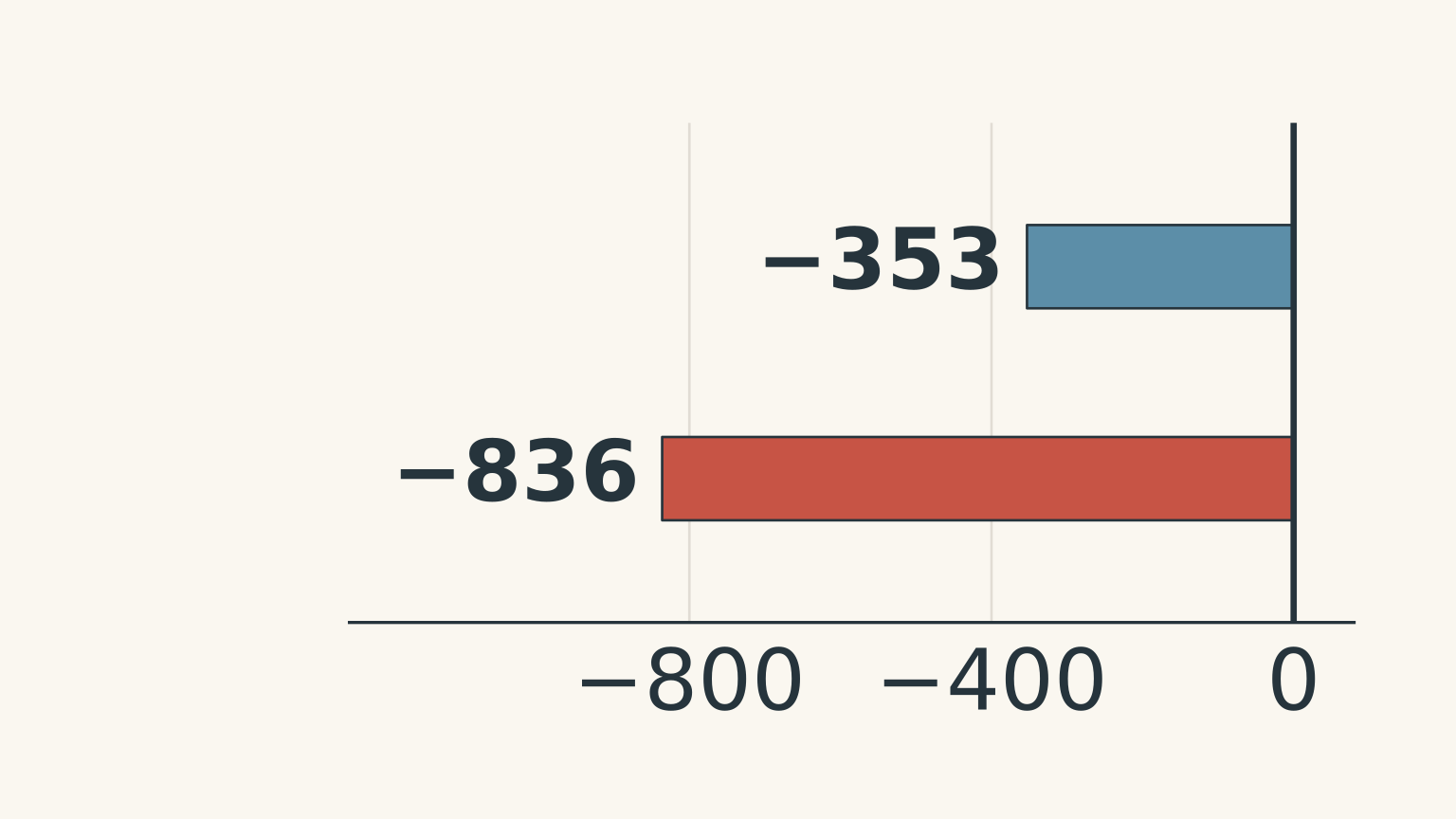
\[ \begin{aligned} \Delta H_c &=-\frac{q}{n}\\ &=-\frac{9.196}{0.0261}\\ &\approx-353\ \mathrm{kJ\,mol^{-1}} \end{aligned} \]
For propan-1-ol:
\[ \begin{aligned} n(\text{propan-1-ol})&=\frac{0.900}{60.0}\\ &=0.0150\ \mathrm{mol} \end{aligned} \]
Therefore,
\[ \begin{aligned} \Delta H_c &=-\frac{12.54}{0.0150}\\ &=-836\ \mathrm{kJ\,mol^{-1}} \end{aligned} \]
The experimental values are:
- Ethanol: approximately \(-353\ \mathrm{kJ\,mol^{-1}}\).
- Propan-1-ol: approximately \(-836\ \mathrm{kJ\,mol^{-1}}\).
Marking:
- 1 mark for the amount of ethanol.
- 1 mark for the ethanol enthalpy.
- 1 mark for the amount of propan-1-ol.
- 1 mark for the propan-1-ol enthalpy.
Award follow-through credit for a correct enthalpy calculation using an earlier calculated amount, provided the method and sign are correct.
(c) Comparing the experimental values. (1 mark)
Propan-1-ol has the more exothermic experimental molar enthalpy because its value is more negative.
The difference in the values is:
\[ |-836-(-353)|=483\ \mathrm{kJ\,mol^{-1}} \]
The experimental value for propan-1-ol is approximately \(483\ \mathrm{kJ\,mol^{-1}}\) more negative than that for ethanol.
Award 1 mark for the correct comparison and difference.
(d) Limitations and improvements. (3 marks)
The experimental values are likely to be less exothermic in magnitude than accepted values because not all the energy released by combustion is transferred to the water. Some energy heats the burner and surrounding apparatus or escapes to the air. Incomplete combustion can also reduce the energy transferred to the water.
Two improvements are:
- Use an insulated calorimeter with a lid and draught protection to reduce heat loss.
- Repeat each experiment several times and calculate a mean, while keeping the apparatus arrangement and measurement procedure consistent.
Other valid improvements include using a more precise calorimeter, stirring the water to maintain a uniform temperature, or improving the combustion conditions to reduce soot formation.
Marking:
- 1 mark for explaining a relevant experimental limitation.
- 1 mark for one valid improvement.
- 1 mark for a second valid improvement.
Total: 10 marks
Solution 11
(a) Energy released. (2 marks)
Use:
\[ E=m\times\text{energy density} \]
For ethanol:
\[ E=2.00\times27=54.0\ \mathrm{MJ} \]
For petrol:
\[ E=2.00\times46=92.0\ \mathrm{MJ} \]
Therefore, 2.00 kg of ethanol releases 54.0 MJ, while 2.00 kg of petrol releases 92.0 MJ, using the supplied data.
Marking:
- 1 mark for the ethanol result.
- 1 mark for the petrol result.
(b) Evaluating bioethanol as a replacement for petrol. (4 marks)
Replacing petrol entirely with bioethanol is not automatically the best decision. The outcome depends on how the bioethanol is produced and whether the vehicles and infrastructure can use it.
Energy output: Ethanol releases less energy per kilogram than petrol according to the supplied data. More ethanol would therefore be needed by mass to provide the same amount of energy. This can affect fuel consumption and vehicle range.
Renewable production: Bioethanol can be renewable when produced from biomass that is regrown. The carbon dioxide released during combustion can be partly offset by carbon dioxide absorbed during plant growth.
Environmental effects: The overall environmental benefit depends on the full production process. Fertiliser use, agricultural machinery, processing energy, transport, and land-use changes can all contribute to greenhouse gas emissions. Growing fuel crops can also compete with food production and require substantial land and water.
Practical considerations: Existing engines, fuel systems, storage facilities, and distribution infrastructure may not all be suitable for high-ethanol fuels. Compatibility depends on the fuel blend and the vehicle.
A reasonable recommendation is to consider sustainably produced bioethanol blends where they are compatible with existing vehicles and infrastructure, while evaluating lifecycle emissions and resource use before committing to complete replacement.
Marking:
- 1 mark for comparing energy output and recognising ethanol’s lower energy density.
- 1 mark for explaining the potential renewable benefit.
- 1 mark for evaluating lifecycle environmental effects.
- 1 mark for a relevant practical consideration and a justified recommendation.
Total: 6 marks
Solution 12
(a) Safe handling and storage. (3 marks)
Appropriate controls include:
- Keep flammable organic liquids away from naked flames, sparks, and other ignition sources.
- Wear safety glasses and use suitable ventilation when handling volatile organic substances.
- Keep containers closed, clearly labelled, and stored away from heat sources.
Other acceptable controls include using small quantities, avoiding direct inhalation of vapours, handling concentrated acids carefully, and using a water bath rather than a naked flame when heating flammable mixtures.
Award 1 mark for each distinct, relevant safety control, up to 3 marks.
(b) Disposal of organic substances. (2 marks)
Unused organic liquids and reaction residues should be collected in the appropriate labelled waste container and disposed of according to the school’s laboratory procedures.
They should not automatically be poured down the sink because some organic substances are flammable, toxic, volatile, or harmful to aquatic environments. They may also interfere with wastewater treatment.
Marking:
- 1 mark for appropriate collection and disposal according to laboratory procedures.
- 1 mark for explaining a relevant environmental or safety reason.
Total: 5 marks
End of paper
Mark allocation check: Question 1: 10; Question 2: 8; Question 3: 10; Question 4: 10; Question 5: 8; Question 6: 6; Question 7: 12; Question 8: 10; Question 9: 5; Question 10: 10; Question 11: 6; Question 12: 5.
Total: 100 marks.