
Why Flame Tests Can Miss Ions in a Chemical Mixture
Learn why a vivid flame colour can reveal one metal ion while hiding others in a mixture. This guide explains flame tests, emission intensity, and spectroscopy.
A student heats an unknown salt and sees a brilliant yellow flame. They remember that sodium ions produce a yellow flame, so they conclude: “The sample contains sodium, and probably nothing else.”
That conclusion feels sensible. The observation is real. The problem is that a flame test is not a perfect “one colour = one ion” detector.
Imagine you have a class photo where one person is wearing a bright yellow jacket and several others are wearing dark colours. From across the room, you might only notice the yellow jacket. That does not mean the others are absent. They are simply harder to see.
Flame tests have the same problem. Some ions produce much stronger visible emissions than others, and the human eye combines all the light it receives into one overall colour.
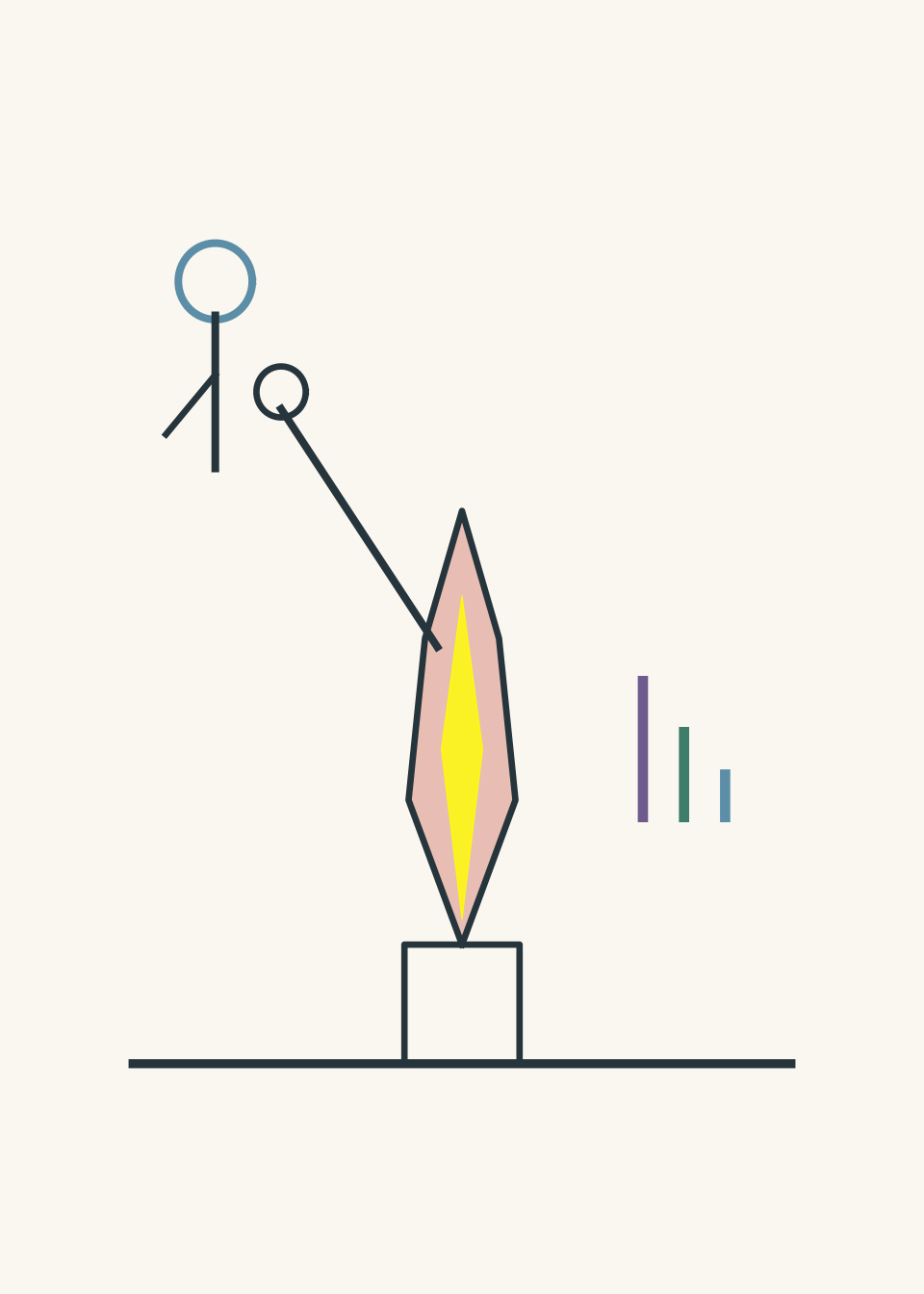
01Why do metal ions make coloured flames?
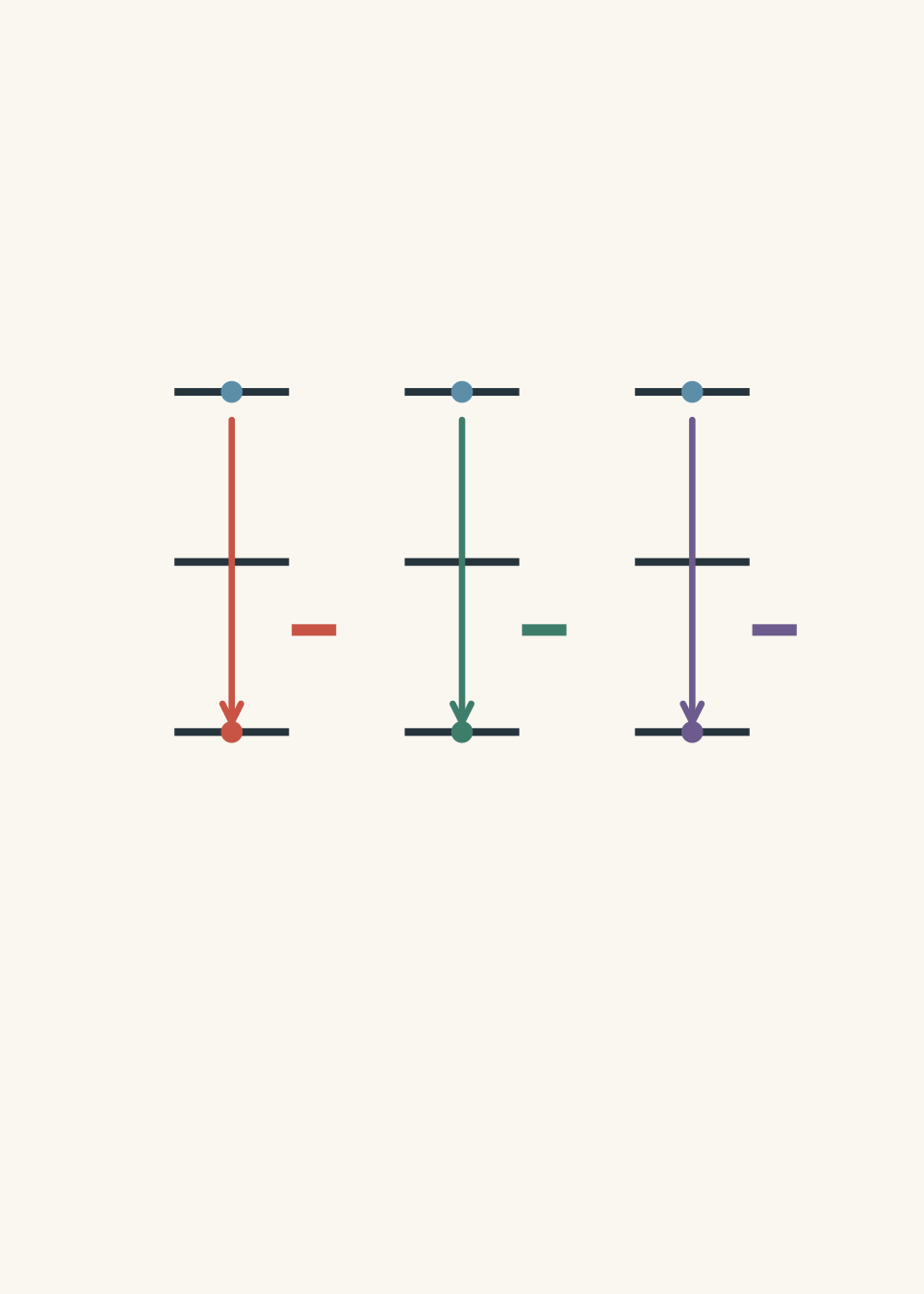
When a metal salt is heated, energy is transferred to the metal ions. Electrons in the metal atoms can absorb this energy and move to higher energy levels.
The electrons do not stay there for long. They fall back to lower energy levels and release the extra energy as light.
The colour of that light depends on the difference between the energy levels.
A simplified picture is:
\[ \text{energy added} \rightarrow \text{electron excited} \rightarrow \text{electron falls back} \rightarrow \text{light released} \]
Different metal ions have different electron arrangements, so they release different wavelengths of light.
A wavelength is a measure of the distance between repeating points in a wave. Visible light wavelengths correspond to different colours:
| Colour | Approximate wavelength range |
|---|---|
| Violet | 380-450 nm |
| Blue | 450-495 nm |
| Green | 495-570 nm |
| Yellow | 570-590 nm |
| Orange | 590-620 nm |
| Red | 620-750 nm |
For example:
- sodium ions produce very strong yellow emission,
- potassium ions produce a lilac emission,
- copper ions can produce blue-green emission,
- calcium ions produce orange-red emission.
The important word is strong. The colour is not just determined by which wavelengths exist. It is also determined by how much light reaches your eyes.
02The sodium problem: why one ion can hide another
Suppose a sample contains both sodium ions and potassium ions.
What should you predict?
You might think:
“The flame should look like a mixture of yellow and lilac.”
That prediction seems reasonable. If you mix red paint and blue paint, you get a new colour. But light does not behave like paint.
Light from different sources is added together. Your eyes receive all the wavelengths at once, and your brain interprets the combined signal as a single colour.
Sodium creates a particularly difficult situation because its yellow emission is extremely intense. Even a small amount of sodium contamination can dominate what you see.
The potassium emission may still be present, but it can be overwhelmed.
A useful analogy is two people speaking in a noisy room. A person with a very loud voice can make it difficult to hear someone speaking quietly beside them. The quiet person has not disappeared. Their sound is just being masked.
The analogy breaks down because light is not sound, and wavelengths do not “cancel out” in the same way voices compete for attention. The key idea is simply that a stronger signal can hide a weaker one.
03Why a flame colour is not a complete identification test
A flame test gives you evidence, but the evidence has limits.
A student might reason:
- I saw yellow.
- Sodium gives yellow.
- Therefore, the unknown contains only sodium.
The mistake is step 3.
The observation supports the presence of sodium, but it does not prove the absence of other ions.
There are several reasons:
1. Emission intensities are different
Two ions can both be present, but one may produce much more visible light.
The eye is good at detecting strong colours, but it is not a sensitive measuring device.
2. Colours can overlap
Some flame colours are not sharply separated. Several ions produce colours that may appear similar, especially when viewed without equipment.
For example, distinguishing subtle orange-red shades by eye is much harder than identifying a strong yellow sodium emission.
3. The sample conditions matter
The amount of each ion, the cleanliness of the equipment, and the flame conditions can affect what is observed.
A tiny amount of sodium left on a wire loop from a previous test can create a strong yellow colour.
04The difference between seeing a flame and measuring a spectrum
A flame test with your eyes is a broad observation.
An emission spectrometer gives a much more detailed measurement.
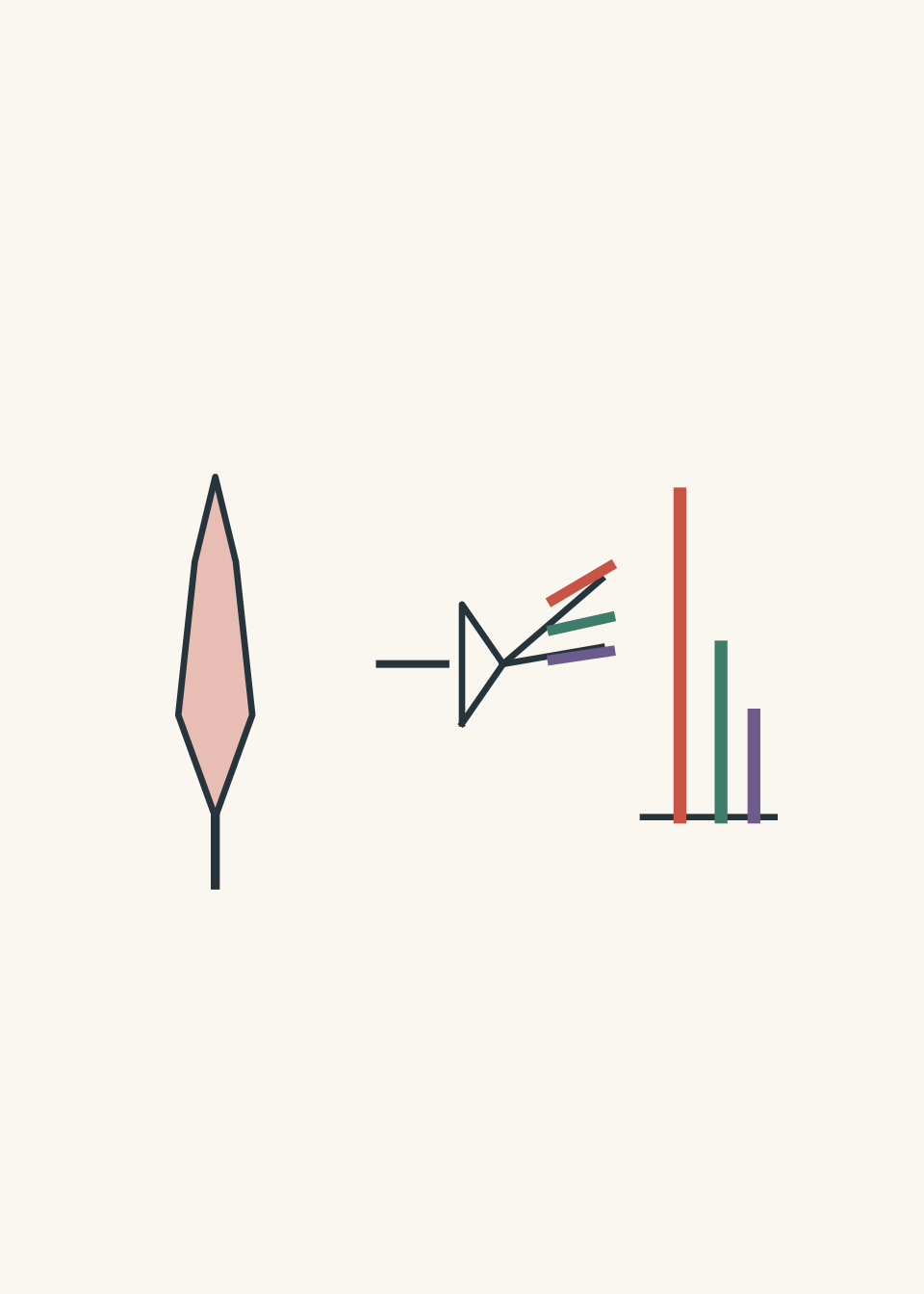
Instead of seeing one overall colour, the instrument separates the light into its individual wavelengths. This produces an emission spectrum: a pattern of bright lines at specific wavelengths.
Each element has a characteristic pattern of spectral lines.
A sodium flame that looks simply yellow to your eye actually contains very specific yellow wavelengths, mainly from sodium’s strong emission lines.
An instrument can detect weaker lines that your eye misses.
However, even emission spectroscopy requires careful interpretation. A complicated mixture can contain many overlapping signals, and identification depends on the quality of the data and the concentrations of the ions present.
It is more accurate to say:
A spectrum can reveal much more information than your eyes, but it does not automatically make every mixture easy to identify.
05Worked example: identifying the strongest clue in a flame test
A sample produces a bright yellow flame. Explain what conclusion can and cannot be made about sodium ions.
Step 1
A bright yellow flame is consistent with sodium ions being present because sodium has a strong yellow emission.
Step 2
The observation supports the conclusion that sodium may be present, but it does not prove sodium is the only metal ion.
Step 3
Other ions may also be present but produce weaker emissions that are hidden by sodium’s intense yellow light.
Conclusion: The sample likely contains sodium ions, but a flame test alone cannot confirm that sodium is the only ion present.
06Worked example: why a mixture can look like one colour
A mixture contains sodium ions and potassium ions. Sodium produces a very intense yellow emission, while potassium produces a weaker lilac emission. Predict what a student is most likely to observe.
Step 1
The sodium emission is much stronger than the potassium emission.
Step 2
The eye receives light from both ions but does not separately identify each wavelength. The stronger yellow light dominates the overall appearance.
Step 3
The flame will most likely appear yellow, even though potassium ions are also present.
Conclusion: A yellow flame does not rule out potassium ions. It may simply mean that sodium’s emission is masking the weaker potassium signal.
07Using flame tests correctly
A flame test is useful when you ask the right question.
Good question:
“Is there evidence that sodium ions are present?”
Poor question:
“Does this colour prove the sample contains only sodium?”
The difference is the difference between detecting a signal and completely identifying a mixture.
In chemistry, measurements always depend on the sensitivity of the method. A ruler cannot measure the mass of an object. A balance cannot measure temperature. A flame test can reveal some information about metal ions, but it has a limited ability to separate overlapping signals.
08Questions and solutions
Question 1
A student performs a flame test on an unknown sample and observes a bright yellow flame.
Explain what the student can conclude and what they cannot conclude.
Solution 1
The student can conclude that sodium ions are likely present, but cannot conclude that sodium is the only metal ion present. Sodium produces a very intense yellow emission, so other ions may be present but hidden by the stronger sodium signal. The flame test provides evidence for sodium, not a complete analysis of the mixture.
Question 2
A sample contains sodium ions and copper ions. A student observes only a yellow flame and states, “There is no copper because copper produces a blue-green flame.”
Explain why this reasoning is incorrect.
Solution 2
The reasoning is incorrect because the absence of a visible copper colour does not prove the absence of copper ions. Sodium’s yellow emission may be much more intense than copper’s blue-green emission, causing the combined light to appear yellow. The student has confused “not detected by this method” with “not present”.
The important constraint is the relative emission intensity of the ions. A weaker signal can be hidden by a stronger one.
Question 3
A chemist analyses an unknown mixture using both a flame test and emission spectroscopy. The flame test shows a strong yellow colour. The emission spectrum shows strong sodium lines and several weaker lines matching another metal.
Explain why the spectrometer provides more information than the flame test.
Solution 3
The spectrometer provides more information because it separates the emitted light into individual wavelengths, allowing weaker emissions to be detected separately from the dominant sodium signal. The flame test combines all visible wavelengths into one colour, so the eye mainly notices the strongest emission.
The key difference is measurement resolution. The flame test gives an overall colour, while the emission spectrum reveals the pattern of individual wavelengths.
Question 4
A student predicts that mixing two metal ions should create a new flame colour in the same way that mixing two paint colours creates a new colour.
Evaluate this prediction.
Solution 4
The prediction is not accurate because light mixing and paint mixing involve different processes. Paint absorbs and reflects light, so mixing pigments changes which wavelengths reach your eyes. In a flame test, different ions emit light at their own wavelengths, and these emissions combine.
The observed colour depends on the wavelengths present and their intensities. A strong sodium emission can dominate the appearance even if another ion is also emitting light.
Question 5
A student receives an unknown salt mixture. Their first flame test shows a strong yellow flame, so they decide the sample contains only sodium ions. Later, a high-resolution emission spectrum shows sodium lines and weak potassium lines. The student argues that the first flame test “failed” because it missed the potassium.
Was the flame test actually incorrect? Explain the deeper issue with the student’s interpretation.
Solution 5
The flame test was not incorrect; the student asked it to provide information it was not designed to provide. The flame test correctly revealed strong sodium emission, but the method did not have enough sensitivity and separation to show the weaker potassium emission.
The tempting conclusion is that “if the test does not show an ion, the ion is absent”. The constraint that changes the result is the detection limit of the method. A measurement can fail to reveal a feature while still being accurate.
The deeper lesson is that every analytical technique has a range of situations where it works well. Flame tests are useful for observing characteristic emissions, but identifying every component of a mixture requires more detailed measurements such as emission spectroscopy.
This idea leads directly into a broader chemistry skill: choosing an analytical method based on what information you need. Detecting a possible ion, measuring its amount, and identifying every component of a mixture are different tasks, and they often require different techniques.