
Calorimetry and Molar Enthalpy: Chemistry Revision Exam
Prepare for Chemistry revision with this original 40-mark practice exam on calorimetry and molar enthalpy, designed for the NSW HSC Chemistry 2017 syllabus scope. Includes timed exam conditions, original questions, fully worked solutions, and a detailed marking guide.
This original tutorgum practice paper assesses calorimetry and molar enthalpy within the supplied Chemistry 2017 syllabus scope. It tests calculations using \(q=mc\Delta T\), the sign of reaction enthalpy, the amount of substance that actually reacts, and the reliability of experimental results. It is a focused revision paper, not a full-course exam or an official, endorsed, past, or predicted NESA paper.
01Exam instructions
- Suggested reading time: 5 minutes.
- Suggested working time: 50 minutes.
- Total marks: 40.
- Permitted equipment: scientific calculator and writing materials. No notes.
- Attempt all five questions. Show your working, include units, and give answers to an appropriate number of significant figures.
- These are practice-paper conditions, not claims about current official examination rules.
Unless a question states otherwise, use the following assumptions and data:
- Specific heat capacity of aqueous solutions: \(c=4.18\ \text{J g}^{-1}\,^\circ\text{C}^{-1}\).
- Density of aqueous solutions: \(1.00\ \text{g mL}^{-1}\).
- Volumes are additive, and the total solution mass equals the total volume in millilitres expressed in grams.
- Use \(q=mc\Delta T\), where \(q\) is heat transferred in joules (J), \(m\) is mass in grams (g), \(c\) is specific heat capacity, and \(\Delta T=T_f-T_i\) is the temperature change in degrees Celsius.
- When calculating molar enthalpy, use the heat attributed to the reaction in kilojoules (kJ) and the appropriate reacting amount \(n\) in moles (mol). Include the sign of the enthalpy change.
Scope: This paper covers calorimetry, experimental molar enthalpy, heat-transfer signs, reacting amounts, and the evaluation of heat loss and measurement assumptions. It excludes Hess’s law, bond enthalpies, reaction rates, equilibrium, electrochemistry, and content from other syllabus editions.
02Questions
Question 1 (7 marks)
A student mixes 50.0 mL of \(1.00\ \text{mol L}^{-1}\) hydrochloric acid with 50.0 mL of \(1.00\ \text{mol L}^{-1}\) sodium hydroxide in an insulated cup.
Both solutions initially have a temperature of \(21.50\,^\circ\text{C}\). The highest recorded temperature after mixing is \(28.20\,^\circ\text{C}\).
The reaction is:
\[ \ce{HCl(aq) + NaOH(aq) -> NaCl(aq) + H2O(l)} \]
Assume the reaction goes to completion.
(a) Calculate the temperature change of the solution. (1 mark)
(b) Calculate the heat gained by the mixed solution. (2 marks)
(c) Calculate the amount, in mol, of water formed. (1 mark)
(d) Calculate the experimental molar enthalpy of neutralisation per mole of water formed. Give your answer in \(\text{kJ mol}^{-1}\). (2 marks)
(e) State the sign of the reaction enthalpy and explain what it indicates about the reaction. (1 mark)
Question 2 (8 marks)
A student mixes 25.0 mL of \(2.00\ \text{mol L}^{-1}\) hydrochloric acid with 40.0 mL of \(1.00\ \text{mol L}^{-1}\) sodium hydroxide.
Both solutions initially have a temperature of \(22.40\,^\circ\text{C}\). The highest recorded temperature after mixing is \(30.50\,^\circ\text{C}\).
The reaction is:
\[ \ce{HCl(aq) + NaOH(aq) -> NaCl(aq) + H2O(l)} \]
Assume the reaction goes to completion.
(a) Calculate the amount, in mol, of each reactant initially present. (2 marks)
(b) Identify the limiting reactant and calculate the amount of water formed. (2 marks)
(c) Calculate the heat gained by the mixed solution. (2 marks)
(d) Calculate the experimental molar enthalpy of neutralisation per mole of water formed. Give your answer in \(\text{kJ mol}^{-1}\). (2 marks)
Question 3 (8 marks)
A student uses a spirit burner containing ethanol to heat 200.0 g of water in a metal can.
The burner has a mass of 120.44 g before heating and 119.62 g after heating. During the experiment, the water temperature increases from \(20.4\,^\circ\text{C}\) to \(34.1\,^\circ\text{C}\).
Use a molar mass of \(46.0\ \text{g mol}^{-1}\) for ethanol.
For comparison, the reference molar enthalpy of combustion of ethanol is \(-1367\ \text{kJ mol}^{-1}\).
The complete combustion reaction is:
\[ \ce{C2H5OH(l) + 3O2(g) -> 2CO2(g) + 3H2O(l)} \]
(a) Calculate the mass of ethanol burned. (1 mark)
(b) Calculate the heat gained by the water. (2 marks)
(c) Calculate the amount, in mol, of ethanol burned. (1 mark)
(d) Calculate the experimental molar enthalpy of combustion of ethanol. (2 marks)
(e) Compare the magnitude of your experimental result with the reference value. Identify one experimental limitation that could explain the difference. (2 marks)
Question 4 (7 marks)
A student dissolves 5.05 g of potassium nitrate, \(\ce{KNO3}\), in 50.0 g of water. All the solid dissolves.
The temperature of the water decreases from \(24.60\,^\circ\text{C}\) to \(19.10\,^\circ\text{C}\).
The dissolution process is represented by:
\[ \ce{KNO3(s) -> K+(aq) + NO3-(aq)} \]
Use a molar mass of \(101.1\ \text{g mol}^{-1}\) for potassium nitrate. Assume the final solution mass is the sum of the masses of the water and dissolved potassium nitrate.
(a) Calculate the temperature change of the solution. (1 mark)
(b) Calculate the heat change of the solution, \(q_{\text{solution}}\). (2 marks)
(c) Calculate the amount, in mol, of potassium nitrate dissolved. (1 mark)
(d) Calculate the experimental molar enthalpy of solution, including its sign. (2 marks)
(e) Explain what the sign of the molar enthalpy tells you about the direction of heat transfer. (1 mark)
Question 5 (10 marks)
A student investigates the molar enthalpy of neutralisation by mixing 50.0 mL of \(1.00\ \text{mol L}^{-1}\) hydrochloric acid with 50.0 mL of \(1.00\ \text{mol L}^{-1}\) sodium hydroxide.
The student compares two experimental setups. Each setup uses the same quantities of reactants, and each run produces 0.0500 mol of water.
The measured temperature rises across three runs are shown below.
| Experimental setup | Run 1 (°C) | Run 2 (°C) | Run 3 (°C) |
|---|---|---|---|
| A: Uncovered cup | 5.90 | 6.00 | 6.10 |
| B: Covered, insulated cup | 6.50 | 6.60 | 6.70 |
For both setups, use a total solution mass of 100.0 g and a specific heat capacity of \(4.18\ \text{J g}^{-1}\,^\circ\text{C}^{-1}\).
For this question, take the reference molar enthalpy of neutralisation to be \(-57.0\ \text{kJ mol}^{-1}\).
(a) Calculate the mean temperature rise for each setup. (2 marks)
(b) Calculate the experimental molar enthalpy of neutralisation for each setup. Show the heat gained by the solution and the sign of the reaction enthalpy. (4 marks)
(c) Calculate the absolute difference between each experimental result and the reference value. Identify which setup gives a result closer to the reference value. (2 marks)
(d) Explain why the covered, insulated setup gives a different result from the uncovered setup. State one experimental limitation that could still affect its result. (2 marks)
03Worked solutions and marking guide
Solution 1
(a) Temperature change (1 mark)
Subtract the initial temperature from the final temperature.
\[ \begin{aligned} \Delta T &= T_f-T_i\\ &=28.20-21.50\\ &=6.70\,^\circ\text{C} \end{aligned} \]
Marking: 1 mark for the correct calculation and unit.
(b) Heat gained by the solution (2 marks)
First, calculate the total mass of the solution.
\[ \begin{aligned} m&=(50.0+50.0)\times1.00\\ &=100.0\ \text{g} \end{aligned} \]
Substitute into \(q=mc\Delta T\).
\[ \begin{aligned} q_{\text{solution}} &=100.0\times4.18\times6.70\\ &=2800.6\ \text{J}\\ &=2.80\ \text{kJ} \end{aligned} \]
The solution gains \(2.80\ \text{kJ}\) of heat, so \(q_{\text{solution}}\) is positive.
Marking:
- 1 mark for the correct mass and substitution into \(q=mc\Delta T\).
- 1 mark for the calculated heat, with an appropriate unit.
(c) Amount of water formed (1 mark)
Convert 50.0 mL to 0.0500 L and use \(n=cV\), where \(n\) is amount in mol, \(c\) is concentration in \(\text{mol L}^{-1}\), and \(V\) is volume in L.
\[ \begin{aligned} n(\ce{HCl})&=1.00\times0.0500\\ &=0.0500\ \text{mol} \end{aligned} \]
The sodium hydroxide is present in the same amount. The reaction has a 1:1 ratio between sodium hydroxide and water, so:
\[ n(\ce{H2O})=0.0500\ \text{mol} \]
Marking: 1 mark for the correct amount of water formed.
(d) Molar enthalpy of neutralisation (2 marks)
The solution gains heat from the reaction. Under the stated calorimetry assumption, the reaction loses the same amount of heat.
\[ q_{\text{reaction}}=-2.8006\ \text{kJ} \]
Divide the reaction heat by the amount of water formed.
\[ \begin{aligned} \Delta H_{\text{neut}} &=\frac{q_{\text{reaction}}}{n(\ce{H2O})}\\ &=\frac{-2.8006}{0.0500}\\ &=-56.0\ \text{kJ mol}^{-1} \end{aligned} \]
The experimental molar enthalpy of neutralisation is \(-56.0\ \text{kJ mol}^{-1}\).
Marking:
- 1 mark for using the correct reacting amount and the negative reaction heat.
- 1 mark for the calculated enthalpy with the correct unit.
(e) Sign of the reaction enthalpy (1 mark)
The reaction enthalpy is negative. The reaction releases heat, which is transferred to the solution, causing its temperature to rise. The reaction is therefore exothermic.
Marking: 1 mark for identifying the reaction as exothermic and explaining the heat transfer.
Heat released and absorbed
| Reaction | q_reaction = −2.80 kJ Releases 2.80 kJ → solution |
|---|---|
| Solution | q_solution = +2.80 kJ ← Absorbs 2.80 kJ from reaction |
Solution 2
(a) Amount of each reactant (2 marks)
Use \(n=cV\), converting each volume into litres first.
For hydrochloric acid:
\[ \begin{aligned} n(\ce{HCl})&=2.00\times0.0250\\ &=0.0500\ \text{mol} \end{aligned} \]
For sodium hydroxide:
\[ \begin{aligned} n(\ce{NaOH})&=1.00\times0.0400\\ &=0.0400\ \text{mol} \end{aligned} \]
Marking:
- 1 mark for the amount of hydrochloric acid.
- 1 mark for the amount of sodium hydroxide.
(b) Limiting reactant and amount of water (2 marks)
The reaction equation has a 1:1 mole ratio between \(\ce{HCl}\) and \(\ce{NaOH}\).
Hydrochloric acid is present in an amount of 0.0500 mol, while sodium hydroxide is present in an amount of 0.0400 mol. Sodium hydroxide is therefore the limiting reactant.
One mole of sodium hydroxide produces one mole of water, so:
\[ n(\ce{H2O})=0.0400\ \text{mol} \]
Marking:
- 1 mark for identifying sodium hydroxide as the limiting reactant.
- 1 mark for the correct amount of water formed.
(c) Heat gained by the solution (2 marks)
Calculate the temperature change.
\[ \begin{aligned} \Delta T&=30.50-22.40\\ &=8.10\,^\circ\text{C} \end{aligned} \]
The total solution volume is 65.0 mL, giving a mass of 65.0 g.
\[ \begin{aligned} q_{\text{solution}} &=mc\Delta T\\ &=65.0\times4.18\times8.10\\ &=2200.77\ \text{J}\\ &=2.20\ \text{kJ} \end{aligned} \]
The solution gains \(2.20\ \text{kJ}\) of heat.
Marking:
- 1 mark for the correct temperature change, mass, and substitution.
- 1 mark for the calculated heat with a suitable unit.
(d) Molar enthalpy of neutralisation (2 marks)
The reaction releases the heat gained by the solution.
\[ q_{\text{reaction}}=-2.20077\ \text{kJ} \]
Use the 0.0400 mol of water formed, not the initial amount of hydrochloric acid.
\[ \begin{aligned} \Delta H_{\text{neut}} &=\frac{-2.20077}{0.0400}\\ &=-55.0\ \text{kJ mol}^{-1} \end{aligned} \]
The experimental molar enthalpy of neutralisation is \(-55.0\ \text{kJ mol}^{-1}\).
Marking:
- 1 mark for using the correct amount of water and the correct sign.
- 1 mark for the calculated enthalpy with units.
The key decision in this question is identifying which reactant limits the amount of water formed. Using the amount of hydrochloric acid instead would give the wrong molar enthalpy.
Solution 3
(a) Mass of ethanol burned (1 mark)
Subtract the final burner mass from the initial burner mass.
\[ \begin{aligned} m(\text{ethanol}) &=120.44-119.62\\ &=0.82\ \text{g} \end{aligned} \]
Marking: 1 mark for the correct mass of ethanol burned.
(b) Heat gained by the water (2 marks)
The water temperature change is:
\[ \begin{aligned} \Delta T&=34.1-20.4\\ &=13.7\,^\circ\text{C} \end{aligned} \]
Use the mass of water, not the mass of the burner or the ethanol.
\[ \begin{aligned} q_{\text{water}} &=mc\Delta T\\ &=200.0\times4.18\times13.7\\ &=11453.2\ \text{J}\\ &=11.5\ \text{kJ} \end{aligned} \]
The water gains \(11.5\ \text{kJ}\) of heat.
Marking:
- 1 mark for the correct temperature change and substitution.
- 1 mark for the calculated heat gained by the water.
(c) Amount of ethanol burned (1 mark)
Use \(n=m/M\), where \(m\) is the ethanol mass in grams and \(M\) is its molar mass in \(\text{g mol}^{-1}\).
\[ \begin{aligned} n(\text{ethanol}) &=\frac{0.82}{46.0}\\ &=0.0178\ \text{mol} \end{aligned} \]
Marking: 1 mark for the correct amount of ethanol.
(d) Experimental molar enthalpy of combustion (2 marks)
The water gains heat, so the combustion reaction releases heat. The reaction heat attributed to each mole of ethanol burned is estimated by dividing the negative heat transfer by the amount of ethanol.
Using unrounded intermediate values:
\[ \begin{aligned} q_{\text{reaction}}&=-11.4532\ \text{kJ}\\ \Delta H_c &=\frac{-11.4532}{0.82/46.0}\\ &=-642.6\ \text{kJ mol}^{-1} \end{aligned} \]
The mass of ethanol was measured to two significant figures, so the final answer is:
\[ \boxed{\Delta H_c=-6.4\times10^2\ \text{kJ mol}^{-1}} \]
Marking:
- 1 mark for dividing the negative reaction heat by the amount of ethanol burned.
- 1 mark for the result with the correct sign and unit.
(e) Comparison with the reference value (2 marks)
The experimental value has a magnitude of approximately \(640\ \text{kJ mol}^{-1}\), compared with the reference magnitude of \(1367\ \text{kJ mol}^{-1}\).
The experimental result is therefore much less exothermic than the reference value.
One reason is that some energy heats the metal can and the burner or escapes to the surroundings instead of heating the water. Incomplete combustion could also reduce the heat transferred to the water.
Marking:
- 1 mark for correctly comparing the magnitudes.
- 1 mark for a valid experimental limitation and its effect on the result.
The important distinction is between heat released by the reaction and heat measured in the water. The water’s temperature change only measures the heat it absorbs, not necessarily all the energy released by the fuel.
Solution 4
(a) Temperature change (1 mark)
\[ \begin{aligned} \Delta T&=T_f-T_i\\ &=19.10-24.60\\ &=-5.50\,^\circ\text{C} \end{aligned} \]
The negative temperature change shows that the solution cooled.
Marking: 1 mark for the correct temperature change and unit.
(b) Heat change of the solution (2 marks)
The final solution contains both the water and the dissolved potassium nitrate.
\[ \begin{aligned} m_{\text{solution}}&=50.0+5.05\\ &=55.05\ \text{g} \end{aligned} \]
Use the solution mass in \(q=mc\Delta T\).
\[ \begin{aligned} q_{\text{solution}} &=55.05\times4.18\times(-5.50)\\ &=-1265.6\ \text{J}\\ &=-1.27\ \text{kJ} \end{aligned} \]
The solution loses heat, so its heat change is negative.
Marking:
- 1 mark for using the total solution mass and the correct substitution.
- 1 mark for the calculated heat change, including its negative sign and unit.
(c) Amount of potassium nitrate dissolved (1 mark)
\[ \begin{aligned} n(\ce{KNO3}) &=\frac{m}{M}\\ &=\frac{5.05}{101.1}\\ &=0.04995\ \text{mol} \end{aligned} \]
Marking: 1 mark for the correct amount of potassium nitrate.
(d) Molar enthalpy of solution (2 marks)
The solution loses \(1.27\ \text{kJ}\). The dissolving process gains that heat under the stated calorimetry assumption.
Therefore:
\[ q_{\text{reaction}}=+1.2656\ \text{kJ} \]
Divide by the amount of potassium nitrate dissolved.
\[ \begin{aligned} \Delta H_{\text{soln}} &=\frac{+1.2656}{0.04995}\\ &=+25.3\ \text{kJ mol}^{-1} \end{aligned} \]
The experimental molar enthalpy of solution is \(+25.3\ \text{kJ mol}^{-1}\).
Marking:
- 1 mark for the correct positive reaction heat and amount of potassium nitrate.
- 1 mark for the calculated enthalpy with the correct unit.
(e) Direction of heat transfer (1 mark)
The positive molar enthalpy means the dissolution process is endothermic. It absorbs heat from the surroundings, including the solution, which is why the measured temperature decreases.
Marking: 1 mark for identifying the process as endothermic and explaining the direction of heat transfer.
A common mistake is to give the reaction enthalpy the same sign as the solution’s heat change. They have opposite signs when the solution is the source or recipient of the reaction’s heat.
Solution 5
(a) Mean temperature rise (2 marks)
Calculate the mean for each setup by adding the three readings and dividing by three.
For Setup A:
\[ \begin{aligned} \overline{\Delta T}_A &=\frac{5.90+6.00+6.10}{3}\\ &=6.00\,^\circ\text{C} \end{aligned} \]
For Setup B:
\[ \begin{aligned} \overline{\Delta T}_B &=\frac{6.50+6.60+6.70}{3}\\ &=6.60\,^\circ\text{C} \end{aligned} \]
Marking:
- 1 mark for the mean temperature rise of Setup A.
- 1 mark for the mean temperature rise of Setup B.
(b) Experimental molar enthalpy for each setup (4 marks)
Both setups use equal amounts of \(1.00\ \text{mol L}^{-1}\) hydrochloric acid and sodium hydroxide. The question states that 0.0500 mol of water forms in each run.
For Setup A:
\[ \begin{aligned} q_{\text{solution,A}} &=mc\Delta T\\ &=100.0\times4.18\times6.00\\ &=2508\ \text{J}\\ &=2.508\ \text{kJ} \end{aligned} \]
The reaction releases this heat:
\[ \begin{aligned} \Delta H_A &=\frac{-2.508}{0.0500}\\ &=-50.16\ \text{kJ mol}^{-1}\\ &\approx-50.2\ \text{kJ mol}^{-1} \end{aligned} \]
For Setup B:
\[ \begin{aligned} q_{\text{solution,B}} &=100.0\times4.18\times6.60\\ &=2758.8\ \text{J}\\ &=2.7588\ \text{kJ} \end{aligned} \]
The reaction enthalpy is:
\[ \begin{aligned} \Delta H_B &=\frac{-2.7588}{0.0500}\\ &=-55.176\ \text{kJ mol}^{-1}\\ &\approx-55.2\ \text{kJ mol}^{-1} \end{aligned} \]
Marking:
- 1 mark for the heat gained by the solution in Setup A.
- 1 mark for the signed molar enthalpy in Setup A.
- 1 mark for the heat gained by the solution in Setup B.
- 1 mark for the signed molar enthalpy in Setup B.
(c) Difference from the reference value (2 marks)
Compare each experimental result with the reference value of \(-57.0\ \text{kJ mol}^{-1}\).
For Setup A:
\[ \begin{aligned} \text{Difference}_A &=|-50.2-(-57.0)|\\ &=6.8\ \text{kJ mol}^{-1} \end{aligned} \]
For Setup B:
\[ \begin{aligned} \text{Difference}_B &=|-55.2-(-57.0)|\\ &=1.8\ \text{kJ mol}^{-1} \end{aligned} \]
Setup B is closer to the reference value because its absolute difference is smaller.
Marking:
- 1 mark for the two absolute differences, allowing follow-through from part (b).
- 1 mark for identifying Setup B as closer to the reference value.
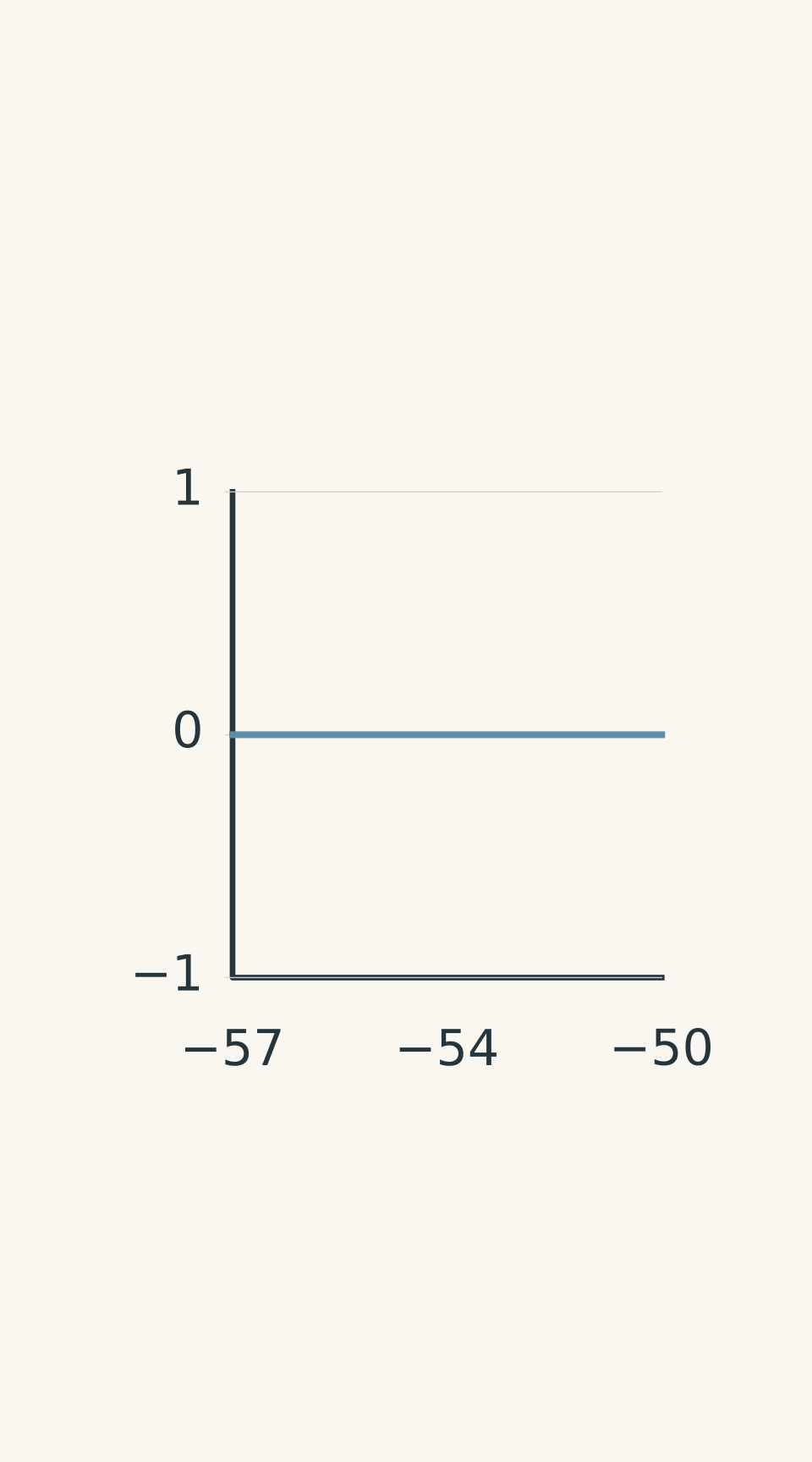
- Reported enthalpy values
(d) Explaining the difference and identifying a limitation (2 marks)
The covered, insulated cup reduces heat transfer from the solution to the surrounding air. More of the reaction’s released energy therefore contributes to warming the solution, producing a larger measured temperature rise.
However, the experiment is not perfectly insulated. Some heat may still escape, or the cup and thermometer may absorb heat that is not included in the solution’s \(q=mc\Delta T\) calculation. Either limitation can affect the measured molar enthalpy.
Marking:
- 1 mark for explaining how the cover and insulation reduce heat loss and affect the measured temperature rise.
- 1 mark for identifying a valid remaining experimental limitation.
The broader lesson from these results is that the calculated molar enthalpy depends on how much of the reaction’s heat is captured by the material being measured. A result closer to the reference value is evidence of better agreement, but it does not prove that every experimental assumption was correct.
Total: 40 marks
| Question | Marks |
|---|---|
| 1 | 7 |
| 2 | 8 |
| 3 | 8 |
| 4 | 7 |
| 5 | 10 |
| Total | 40 |