化学成绩从 49% 提升到 91%
Meriden
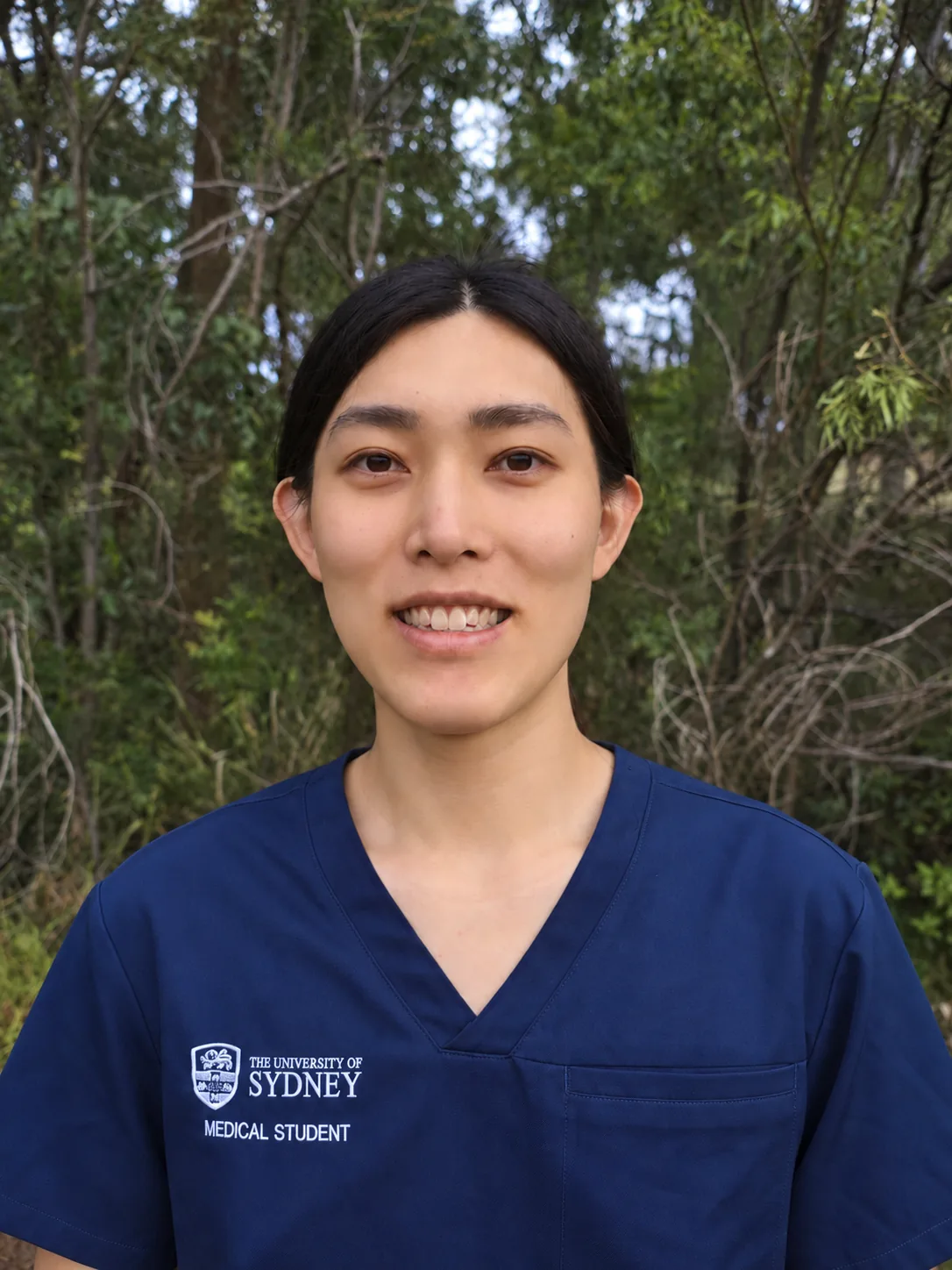
他很擅长把每个概念拆解成容易理解的小部分。
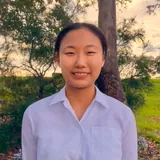
Jade Year 11 化学成绩为 49%。她需要真正理解难点,而不是只多做课本练习。Bob 把概念分解讲解,课外也提供帮助,并针对她的薄弱环节安排考试练习。她最终在 HSC 化学中取得 Band 6。
完整故事向下滚动即可关闭
Physics state rank99.85 ATARUSYD Med
Meriden
他很擅长把每个概念拆解成容易理解的小部分。
Jade Year 11 化学成绩为 49%。她需要真正理解难点,而不是只多做课本练习。Bob 把概念分解讲解,课外也提供帮助,并针对她的薄弱环节安排考试练习。她最终在 HSC 化学中取得 Band 6。
完整故事向下滚动即可关闭
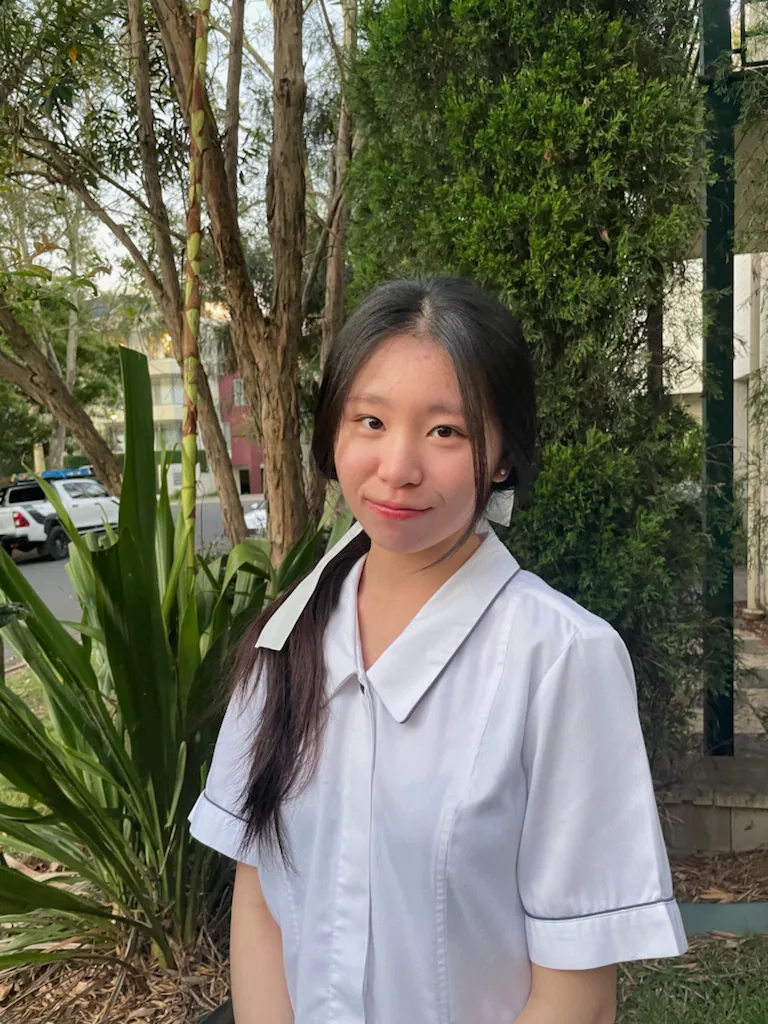
Meriden
我笑着走出了考场。
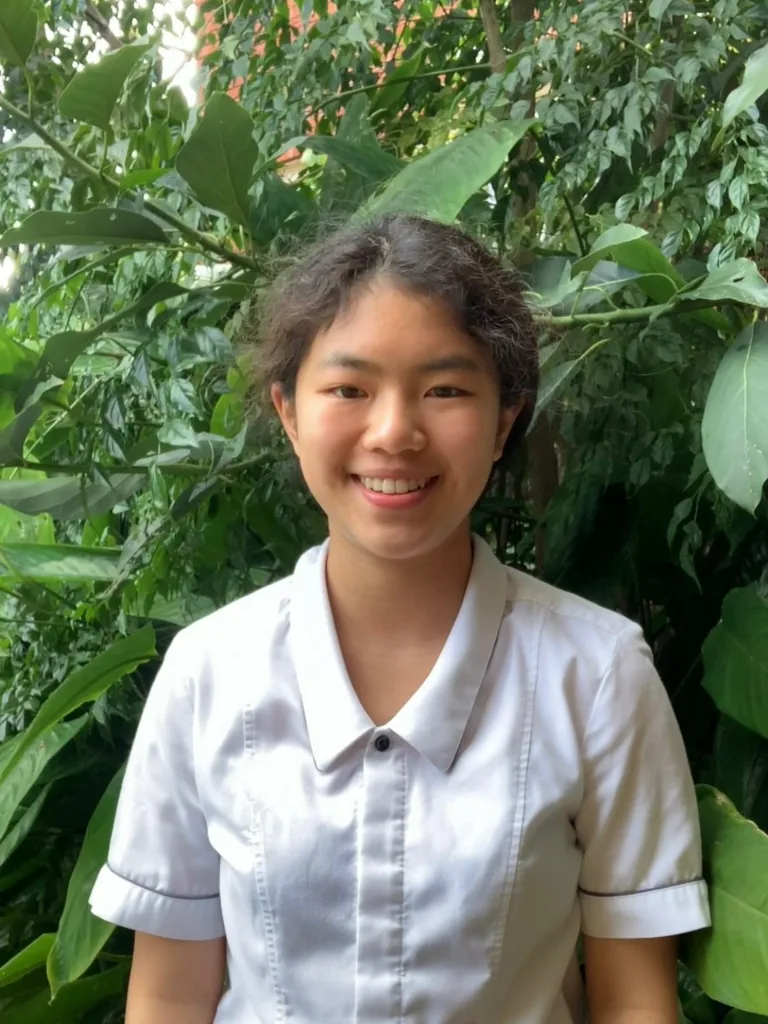
Kirsten 的成绩持续下滑,她也开始害怕物理。更个性化的课程让她可以放心提问,并按自己的进度学习。挑战性练习和课外帮助让她准备得更充分。她的化学模拟考成绩从 56% 提升到 HSC 的 91%,物理也取得了 92 分。
完整故事向下滚动即可关闭
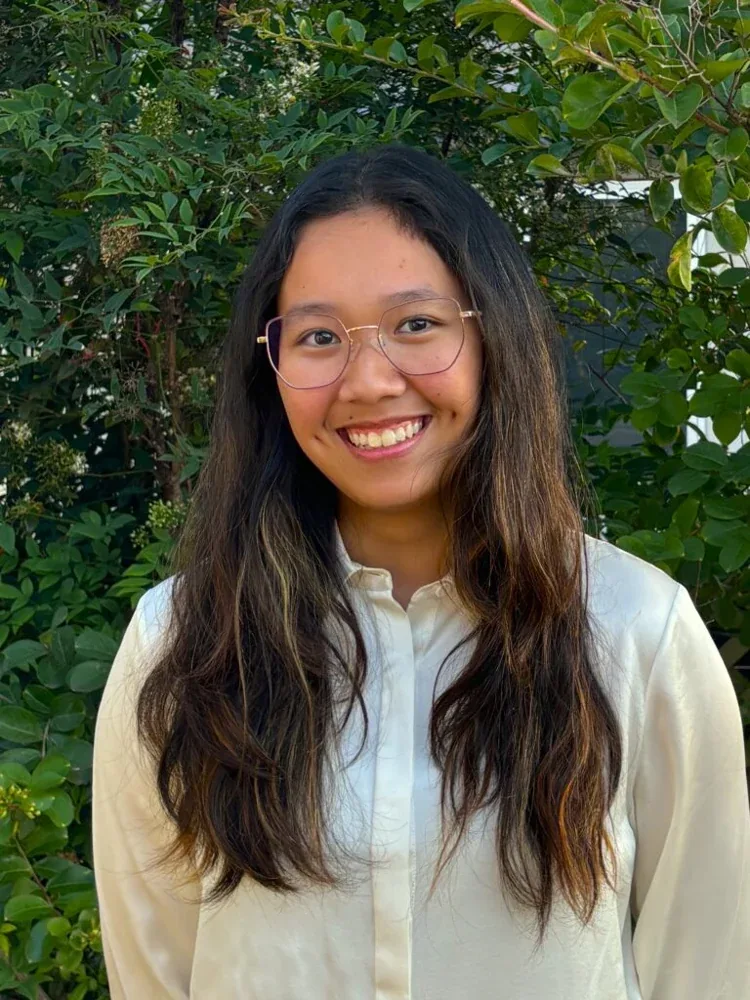
Hurlstone Agricultural High School
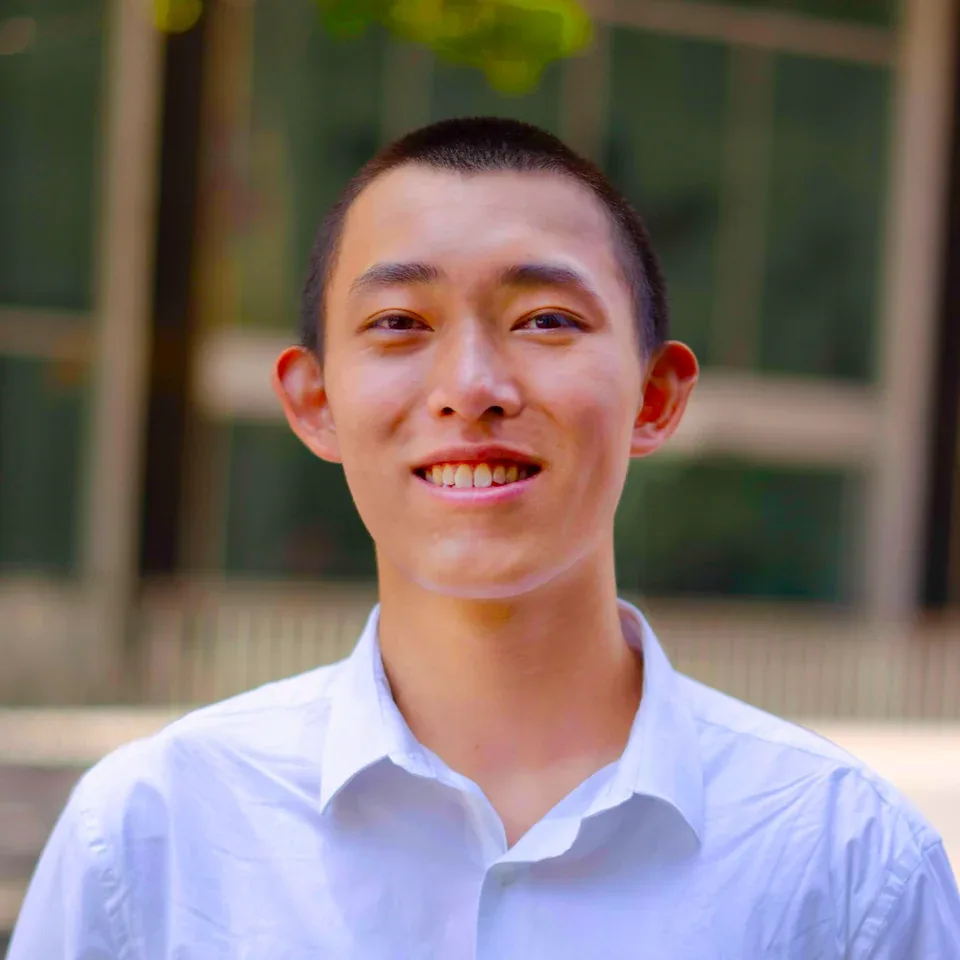
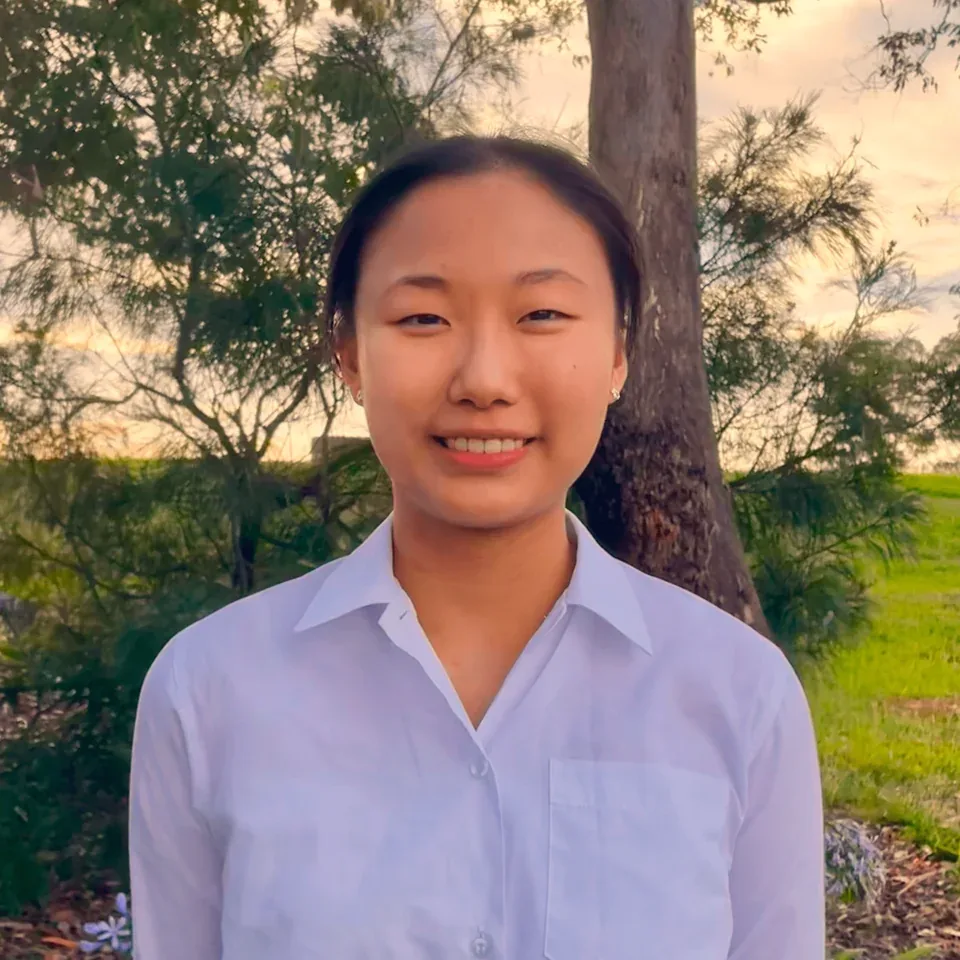
他营造了有趣、轻松而且很支持学生的氛围。
Queenie 很看重老师愿意换一种方式解释概念、课后答疑并帮助她准备校内评估。这些支持让她能更灵活地思考物理,而不是只依赖课本解释。她从 Hurlstone Agricultural 毕业时,物理考获 95 分,ATAR 达到 99.75。
完整故事向下滚动即可关闭
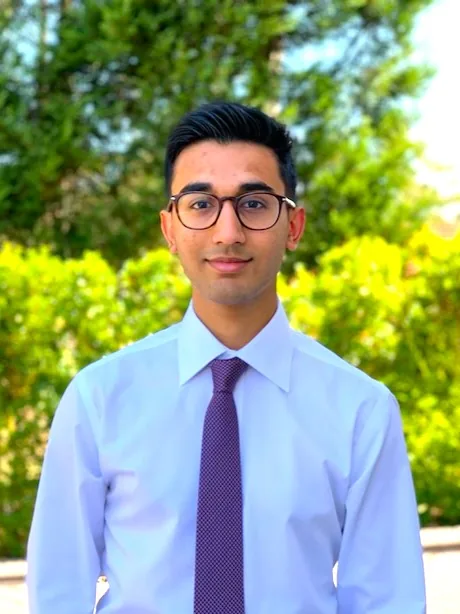
Sydney Grammar
Mustafa graduated as Dux of Sydney Grammar in 2023 with a 99.95 ATAR. He achieved 94 in Physics and 95 in Chemistry, and later tutored at Tutorgum.
完整故事向下滚动即可关闭
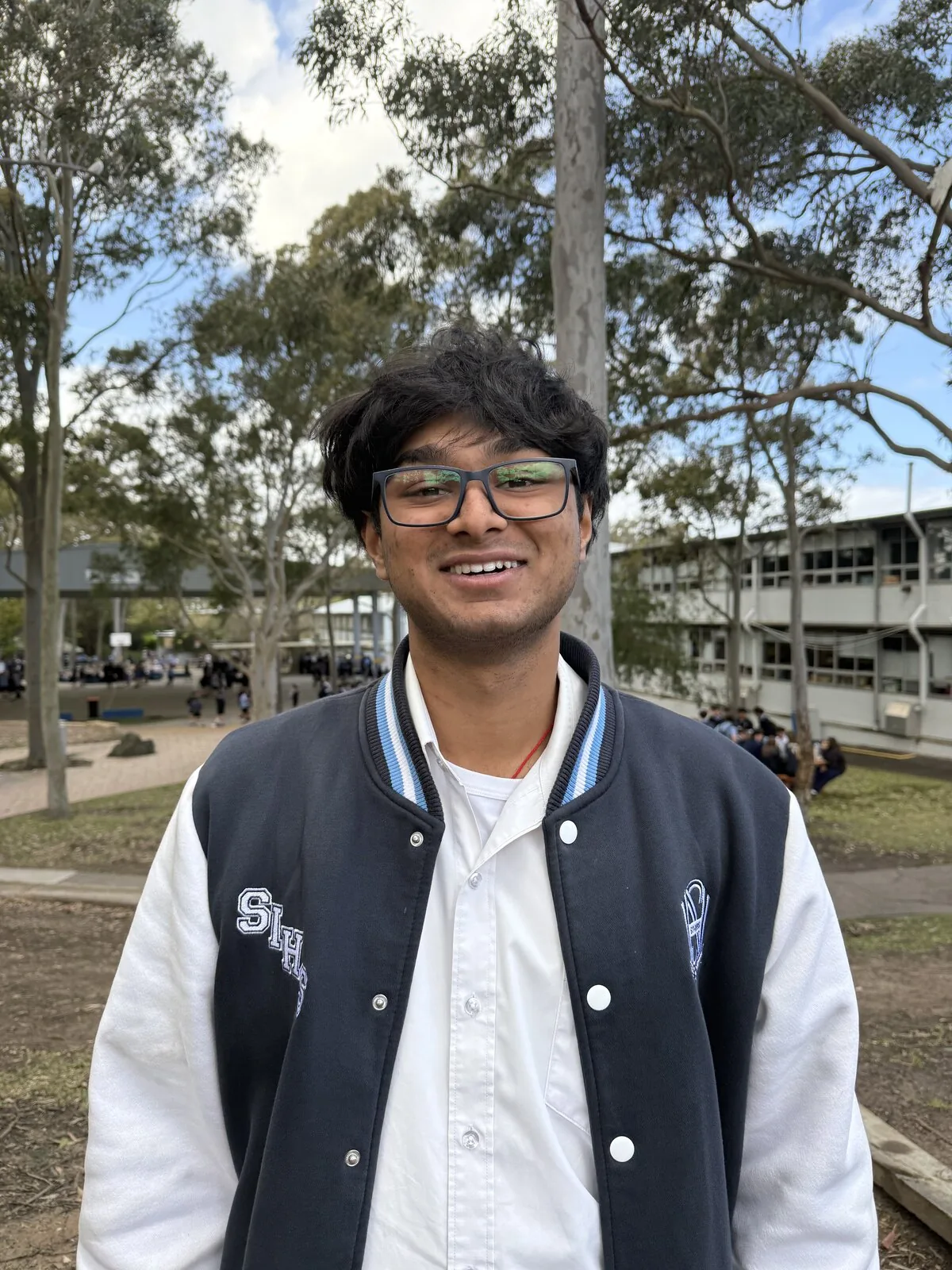
St Ives High School
At St Ives High School, Avyukt improved from 30% in Year 12 Chemistry Task 1 to 84% in Task 3, and from 40% in Physics Task 1 to 86% in Task 3.
完整故事向下滚动即可关闭
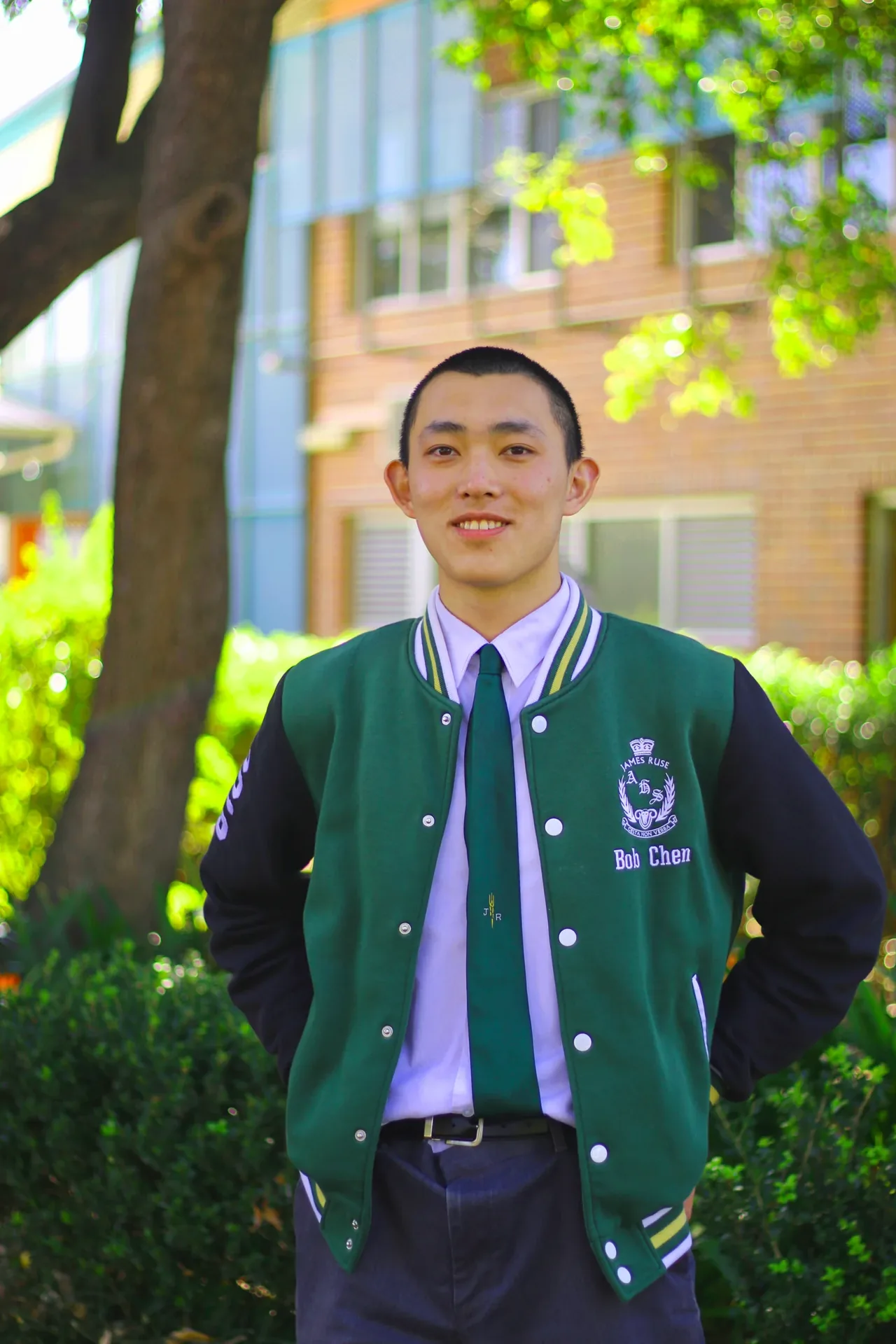
在 James Ruse 物理科考到第一名之前,我甚至不敢把成绩告诉妈妈。
新州物理排名第一ATAR 99.85悉尼大学医学
那时我读 Year 10。
但我还有一件事比自拍更不擅长。
因为我的成绩一直不太好。
糟了。
年级排名第 50。
我讨厌科学。
我努力学习、背诵、练习。
但我还是用错公式。
考试时只能猜。
我始终进不了前列,成绩也达不到 90% 以上。
我失去了掌控。
我不想把成绩告诉妈妈。
后来我取得了
Start with saturated salt water at a constant temperature.
Add tracer salt. Bright green marks its radioactive chloride ions.
The pile stays. The amount of dissolved salt stays the same too.
Let’s zoom into one crystal in the pile.
Its surface is a lattice of Na⁺ and Cl⁻ ions.
Watch the bright-green chloride ions at the surface.
Tagged ions leave. Ordinary ions join. Both happen at the same average rate.
Tagged chloride is now in the water, making the solution radioactive.
The amounts stay the same, but ions keep exchanging. That’s dynamic equilibrium.
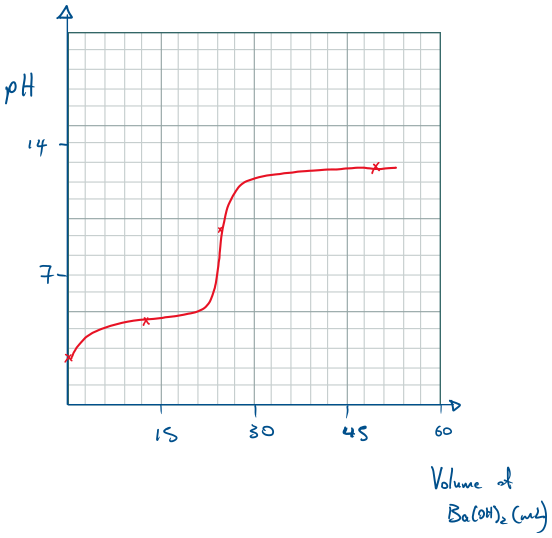
A man begins to titrate 65.7mL of 0.270M acetic acid against 0.350M Ba(OH)2. Acetic acid has a pKa of 4.76. Draw the pH graph, ensuring you label the following points:
ANSWER
Acetic acid is a weak acid and its dissociation in water can be represented as below:

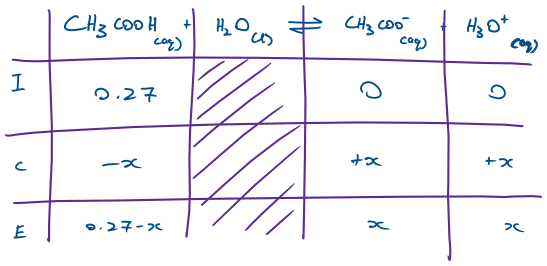
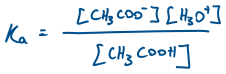
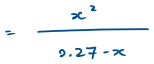
The acid dissociation constant, Ka, can be calculated from the pKa value:
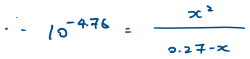
Make the small change assumption
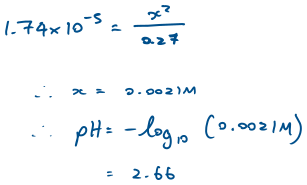
ANSWER
At the equivalence point, all of the acetic acid has reacted with the NaOH to form its conjugate base, acetate ion (CH3COO–). This is why there is a pH at equivalence point!
To determine the pH, we need to consider the hydrolysis of acetate ion in water:

The equilibrium constant for this reaction is given by:
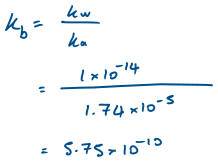
An ICE table can be used to determine the concentration of OH– ions in the solution at equilibrium:
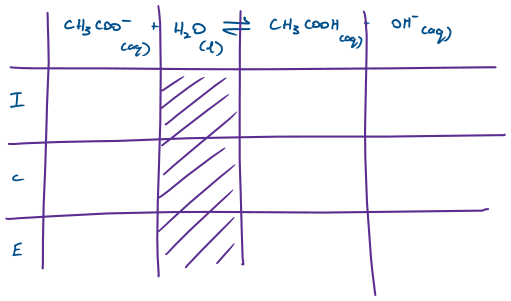
Hm but we don’t know what the concentration of CH3COO– is at equivalence point! Let’s go calculate it first.
At the equivalence point, all of the acetic acid has reacted with the NaOH to form its conjugate base, acetate ion (CH3COO–).
The number of moles of acetic acid initially present is (0.270M)(0.0657L) = 0.0177 moles. To find the concentration we need to know the volume at the end point.
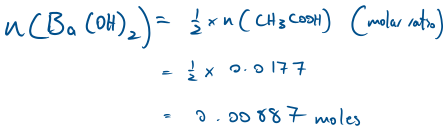
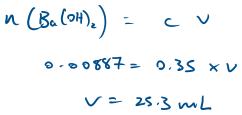
The volume of the solution at the equivalence point is 65.7mL + 25.3mL = 91mL, so the concentration of acetate ion at the equivalence point is (0.0177 moles)/(0.091L) = 0.1944M.
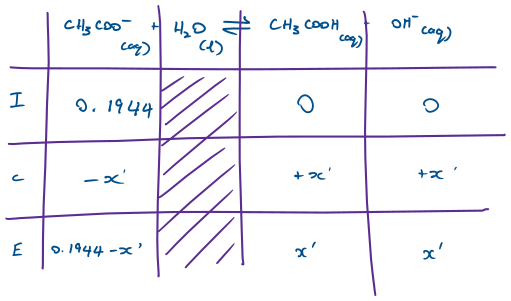
x’ ≈ 10.57 × 10⁻⁶
which is the concentration of OH– ions in the solution. The pOH of the solution at equivalence point is therefore:
and its pH is:
ANSWER
We need to realise that the optimal buffer point is when there is equimolar acid and conjugate base.
This will occur at halfway to the equivalence point.
To understand this, consider you had 1 mole of CH3COOH.
After you add in 0.5 moles of OH- (or in this case, 0.25 moles of Ba(OH)2) you will have 0.5 moles of CH3COO- and also 0.5 moles of CH3COOH left. Thus, you have equimolar amounts of acid and conjugate base.
Thus, it will be at 0.5 x 25.3mL = 12.65mL
The pH will be:
ANSWER
This is about double the equivalence point volume.
Getting to equivalence takes 25.3mL
Thus you add another 24.7 mL of Ba(OH)2.
This just adds pure OH-
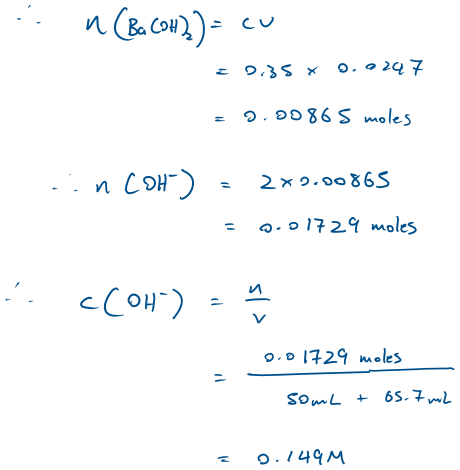
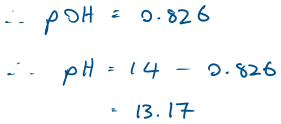
Flick through the worked answers.
课上、课后或两次课程之间,随时都可以提问,也可以随时联系你的老师。
我们不提供单独的一对一课程。
每个模块的周次从第 1 周开始。
Introduce chemical reversibility and prepare for the Year 12 approach to study and practice.
Explain reversible reactions in closed systems and relate equal forward and reverse rates to observations.
Use the Haber reaction and collision theory to explain how equilibrium responds to changes.
Predict responses to disturbances and interpret concentration-time graphs.
Build an understanding of equilibrium expressions and use the equilibrium constant in calculations.
Examine the effect of water and other disturbances and distinguish concentration changes from changes in the equilibrium constant.
Explain solubility by comparing interactions within solutes, solvents and solutions.
Introduce the solubility product and connect precipitation to a dynamic equilibrium.
Practise molar-solubility and common-ion calculations and revisit equilibrium reasoning.
每个模块的周次从第 1 周开始。
Introduce acid and base definitions and compare their observable properties.
Explore uses and calorimetry of neutralisation and trace the development of acid-base definitions.
Explain proton transfer, hydronium and conjugate acid-base pairs.
Compare proton donation and acceptance and explain acid-base behaviour of oxides and ions.
Calculate pH from hydrogen-ion concentration and handle logarithms and significant figures.
Use Ka, Kb, pKa and pKb and connect them to acid-base equilibria.
Revisit acid-base calculations and introduce titration reasoning and concentration determination.
Choose appropriate standards and explain how glassware preparation affects titration results.
Explain buffer action, natural buffers and responses to added acid or base.
Interpret buffer regions, polyprotic titration features and conductometric reactions.
Apply the module's ideas in exam-style questions.
每个模块的周次从第 1 周开始。
Introduce carbon chemistry, hydrocarbons, functional groups and naming conventions.
Name compounds across functional groups and connect hydrocarbon structures to three-dimensional geometry.
Compare alcohols and alkanes using bonding and intermolecular forces, then consider social and ethical issues.
Write and compare combustion and other characteristic hydrocarbon reactions.
Classify alcohols and connect their structures to physical and chemical properties.
Analyse alcohol redox reactions and bioethanol, then examine carboxylic acids and amines.
Explain esterification, biodiesel production and the formation of amides.
Connect fats to cleaning agents and introduce addition polymerisation.
Compare the structures, properties and uses of polymers including polyethylene, PVC and PTFE.
Explain polyester and polyamide formation and consolidate organic reaction pathways.
Apply organic structures, properties and reaction knowledge to exam-style questions.
每个模块的周次从第 1 周开始。
Explain why chemical monitoring matters and use flame and precipitation tests.
Explore complex formation, gravimetric analysis and precipitation titrations.
Compare colourimetry, ultraviolet-visible measurements and atomic absorption spectroscopy.
Explain atomic absorption and select chemical tests for organic functional groups.
Explain ionisation and fragmentation and use mass spectra to investigate molecular structure.
Connect nuclear shielding, chemical shift and carbon environments to NMR signals.
Interpret hydrogen environments, chemical shifts and integration in proton spectra.
Connect bond vibrations to infrared absorption and interpret spectra to identify structures.
Compare synthesis pathways using reagent availability, conditions, yield, purity and wider impacts.
每个模块的周次从第 1 周开始。
Revisit Module 5 theory and practise questions selected around areas needing revision.
Practise theory comparisons, conjugate pairs, salt acidity, pH and titration reasoning.
Review boiling-point trends, reaction pathways, esters, soaps and polymer questions.
Practise flame tests, complexes, absorption measurements and structure determination.
Apply acid-base, stoichiometric, energetic and organic ideas across a mixed paper.
Practise equilibrium, calibration, organic analysis and conductivity questions.
Review complexes, scientific skills, enthalpy and organic properties through a further mock paper.
每个模块的周次从第 1 周开始。
Practise precipitation, molar-solubility and common-ion calculations alongside related energetics questions.
Compare theory limitations and practise conjugate-pair and buffer calculations.
Revisit alcohol energetics and build reaction flowcharts for alcohols and hydrocarbons.
Practise precipitation titrations, gravimetric analysis and structure questions from the available paper.
Work through selected buffer, enthalpy, organic, solubility and calculation questions.
Review selected paper questions and practise specific explanations, equations and response planning.
Combine final question practice with time management, planning and avoiding common mistakes.
查看每周小班课程的费用、课程包含内容,以及适合你的课程时间。
$60/ 小时
每周 120 澳元
没有找到相近的问题。您可以浏览下方的问题,或给我们打电话。
致电 0490 496 078可以。化学课通过 Zoom 在线进行,欢迎悉尼、新州各地及澳大利亚其他地区的 Year 11 和 Year 12 HSC 学生参加。小班课程包括考试练习题、详细解答和一对一导师支持。如果你学习其他课程体系,请告诉我们你学过的主题,我们会确认 NSW HSC 课程是否适合。
你会用到比例、方程变形和科学记数法。我们会把每一步计算和化学原理联系起来,让你明白数字代表什么。
带上学校的评估安排,我们可以和课程计划对照,并讨论如何提前帮助你学习需要的主题。
告诉我们你的年级、学过的主题和卡住的地方。我们会帮你找合适的班级,并讨论报名之前需要补上的内容。
可以。把问题和你的解题过程带给导师。一对一支持能帮你理清还没理解的步骤或概念。
Send us your year, subject and preferred class. We’ll help you find a suitable lesson. The first lesson is only charged if you want to continue, otherwise it's totally free!
我小时候也是个害羞的男孩。那时我不敢提问,怕别人怎么看我。
如果您确定需要全程一对一授课,建议找其他老师。
不过,授课形式和让孩子跟一位专家学习,哪一点对您更重要?辅导老师有很多,但有多少人取得过新州顶尖成绩?并不是每位老师都像我一样熟悉化学平衡和电磁学,知道如何讲到让学生恍然大悟,也知道他们为什么丢分、怎样改进。正因为如此,也不是人人都能取得像 Kirsten Chu 在 2022 年从 56% 提升到 91% 这样的结果。
没有人愿意在班上远远落后。供您参考,我们的学生入班时通常成绩处于平均水平或略低。学生来自选拔制中学(如 NSB、NSG、Ruse)、私立学校(如 Scots、St Patricks、Meriden),以及非选拔制中学(如 Castle Hill、Carlingford HS)。我们会在课后答疑,并提供之前主题的学习材料,帮助学生跟上进度。
课堂上遇到新主题时,我们总会从基础讲起。即使学生没学好前面的某些概念,也能理解新内容。
我们的小班课和大多数补习课不一样。我愿意单独辅导学生。学生有问题可以在课后一对一问我,或者在一周内随时联系我。如果有需要,我可以单独花一小时解答。
每周上一次课,每次两小时,通过 Zoom 在线授课。
每节课先做 10 分钟的小测验,再讲一个新概念,然后做几道题来巩固。整节课重复这个过程。临近考试时,我们会上复习课,提前发一份模拟试卷,并在课堂上讲解学生提出的难题。
我们接受银行转账,通常按学期收费。如果您决定停止上课,尚未使用的课时会全额退款。
我们强烈建议不要因为考试而缺课。时间紧张时,可以先不做作业,但最好照常来上课。如果您缺席,我们会提供全部材料和课堂录屏。缺席的课时不予退款。
请查看课程时间表,了解目前可选的上课时间。
上课。学校放假时,我们照常上课。我们不在假期安排集中强化课,因为这种安排对学生效果不好。
人数会变动,通常在 5 人左右。
请带着学习的热情,准备一支笔,最好再备一本专用笔记本。其余资料会发给您。
学生考得不理想,主要是因为没有掌握核心概念。跟我们学过课程内容之后,大多数学生就不会再遇到这个问题。有了扎实的基础,我们会每周布置考试题型的作业,让学生每周都有应试练习。
临近考试时,我们还会开放内部收集的学校历年试卷供学生练习。这是很好的备考材料。考前我们也会在课堂上讲解应试技巧。
加速班通常会在 12 年级模拟考试(第 3 学期第 2 周)前一个学期讲完全部内容。这样考前大约有 7 周复习时间,考后大约有 10 周准备 HSC。我们会每周安排一次模块测试,逐个复习各模块,然后做模拟试卷。
按学校进度授课的班级与学校同步,因此大约会留出 6 周复习 HSC。
依次讲解模块 1、2、3、4、5、6、7 和 8。
有些学校会调整教学顺序。根据我的经验,这没有问题,因为到考试时会学完相同的内容。即使和学校的进度不完全同步,最重要的还是学生确实学到了东西。
学生刚来时通常成绩处于平均水平或略低。他们来自选拔制中学(如 NSB、NSG、Ruse)、私立学校(如 Scots、St Patricks、Meriden),以及非选拔制中学(如 Castle Hill、Carlingford HS)。
能否进步不取决于你有多聪明。决定你能否在课程中取得进步,最重要的是你愿不愿意下功夫。像 Jade Yang 和 Kirsten Chu 这些进步明显的学生,每周在物理和化学上投入 10 小时以上。我们会让过程更容易。只要完成所有作业(应试练习),并参加每一节课,你就会进步。
问题是,你愿意做到吗?
可以。课程在线进行,无论您在悉尼、纽卡斯尔、卧龙岗、新州其他地区,还是澳大利亚其他地方,都可以参加,无需前往补习中心。
物理和化学课程针对新州 HSC。如果您学习其他州的教学大纲或其他课程体系,请联系我们,告诉我们年级和正在学习的主题,以便讨论课程是否合适。在线授课的范围有别于课程大纲的覆盖范围。
还有其他问题吗?
致电 0490 496 078