
How Many HSC Past Papers Should You Do? A Practical Guide
Find out how many HSC past papers you should complete before your exams, how to choose the right papers for your syllabus, and how to turn mistakes into measurable improvements through targeted practice.
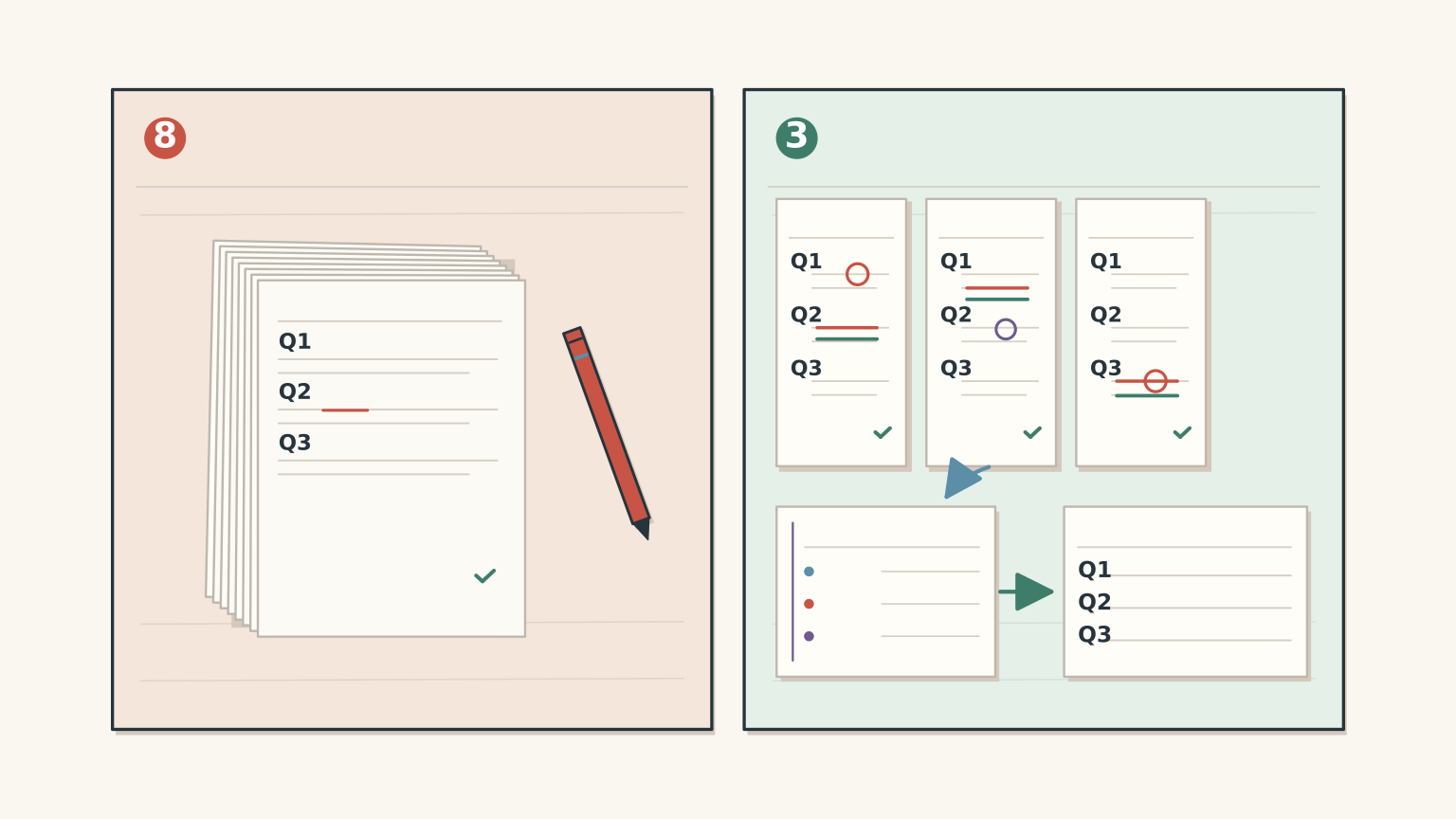
Eight HSC past papers can look like serious preparation. But if you finish each one, check your mark, and immediately move on to the next, you might repeat the same mistakes eight times.
Now compare that with a student who completes three papers, identifies exactly where they lose marks, fixes those weaknesses, and then successfully solves unfamiliar questions testing the same concepts.
Who is better prepared?
Usually, the second student. The number of papers matters far less than what you learn from each one.
Due to technical limitations, this figure may display incorrectly or contain inaccuracies. Please check key details against your course materials.
01The short answer: How many past papers should you do?
For most Year 12 students whose syllabus is substantially covered, around 3-5 complete, timed past papers per subject is a sensible starting range across final exam preparation.
This is not a required minimum, a magic number, or a guarantee of a particular result. Some students will benefit from fewer papers, while others may need more.
The right number depends on three things:
- How much of the syllabus you can already answer confidently.
- Whether you properly review and correct each paper.
- Whether you can apply what you’ve learned to unfamiliar questions.
If you haven’t finished the syllabus, you probably shouldn’t be sitting full papers every few days. If you’re already answering unfamiliar questions confidently, doing another five papers just to reach a target is unlikely to be the best use of your time.
There’s an important distinction between completing a paper and getting value from it.
For this guide, a full paper means an entire examination completed under the appropriate time limit and conditions for your course. Topic-based question sets and individual exam sections are also valuable, but they serve a different purpose.
02Why doing more past papers doesn’t automatically mean better preparation
A past HSC paper has three main jobs.
1. It identifies what you don’t know
A textbook question often tells you exactly which concept you’re practising. An examination question doesn’t necessarily do that.
You might need to recognise that a problem involves conservation of energy, identify the appropriate equilibrium principle, or decide which mathematical technique will actually get you somewhere.
A full paper tests whether you can make those decisions independently.
This makes your first complete paper particularly useful as a diagnostic tool. It shows you where your preparation needs attention.
2. It develops examination technique
Knowing the content isn’t quite the same as being able to demonstrate it under examination conditions.
You need to manage your time, interpret unfamiliar wording, organise calculations, and decide when to move on from a difficult question.
Full papers give you an opportunity to practise these skills together.
This is especially useful in Mathematics Extension 1 and Extension 2, where a difficult question can consume a surprising amount of time if you don’t recognise when to change approach.
3. It tests whether your knowledge transfers
This is arguably the most important job.
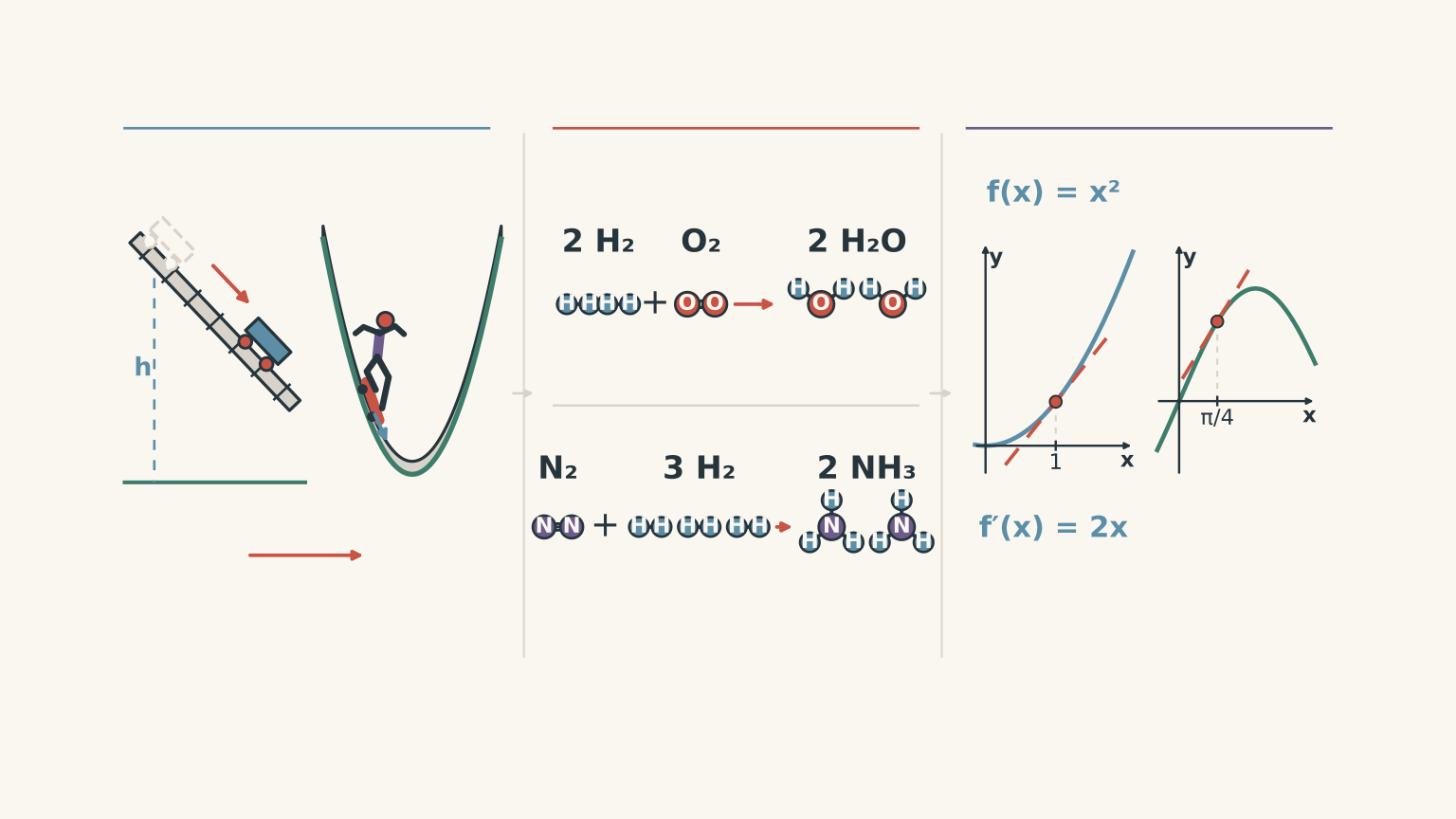
Suppose you successfully solve a Physics question about a moving object using conservation of energy.
Does that mean you can solve another question involving the same principle when the object, starting conditions, or wording changes?
Not necessarily.
A student can become familiar with the appearance of a question without developing a strong understanding of the underlying concept.
Due to technical limitations, this figure may display incorrectly or contain inaccuracies. Please check key details against your course materials.
This is why repeatedly answering familiar questions can create a misleading sense of progress.
NESA also advises students to expect variations in examination topics and formats. Past papers are useful preparation, but they should not be your only preparation. You can read its official HSC examination preparation advice.
03A practical guide to choosing your number of papers
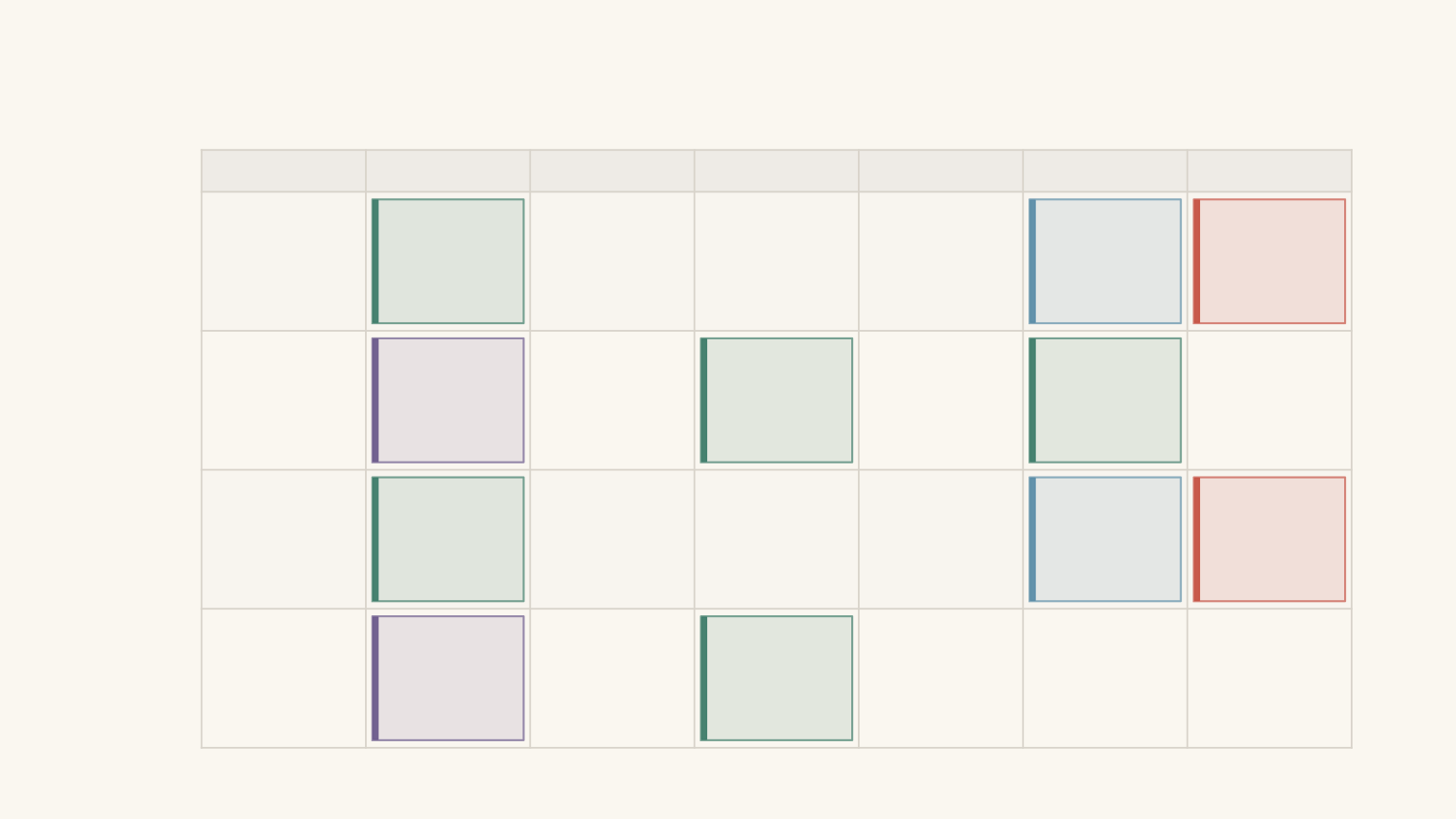
Rather than deciding that you must complete a certain number, consider where you are in your preparation.
| Your current position | Sensible approach |
|---|---|
| You haven’t finished the syllabus | Do topic-based questions. Consider one diagnostic paper once you can attempt most of the course content. |
| You’ve covered most of the syllabus | Start with one complete timed paper. Use its results to decide what needs work. |
| You have several weeks left and are addressing your weaknesses | Build towards approximately 3-5 complete papers in total, provided each one contributes something useful. |
| You have less than two weeks left | One carefully reviewed full paper may be sufficient. Only add another if you have time to correct and practise the weaknesses it reveals. |
| You’re consistently solving unfamiliar questions | Stop chasing additional full papers. Focus on maintaining your skills and addressing any remaining weaknesses. |
The important point is that the next paper should depend on the results of the previous one.
For example, if you complete a paper and discover that you consistently struggle with a particular type of question, your next study session should address that problem.
It shouldn’t automatically be another three-hour examination.
Due to technical limitations, this figure may display incorrectly or contain inaccuracies. Please check key details against your course materials.
If you’re still working through the syllabus, there’s a better way to use examination questions without attempting entire papers prematurely. See our guide to How to Use Past HSC Papers Before You Finish the Syllabus.
Your paper schedule also needs to fit around your other subjects and school assessments. If you’re in Year 11 and planning your overall workload, our guide on How Many Units Should You Take in Year 11? covers that earlier decision.
04How to make each past paper count
Here’s where students often lose the most value.
They sit a paper, check the answers, calculate their mark, and move on.
That tells you how you performed. It doesn’t necessarily tell you how to improve.
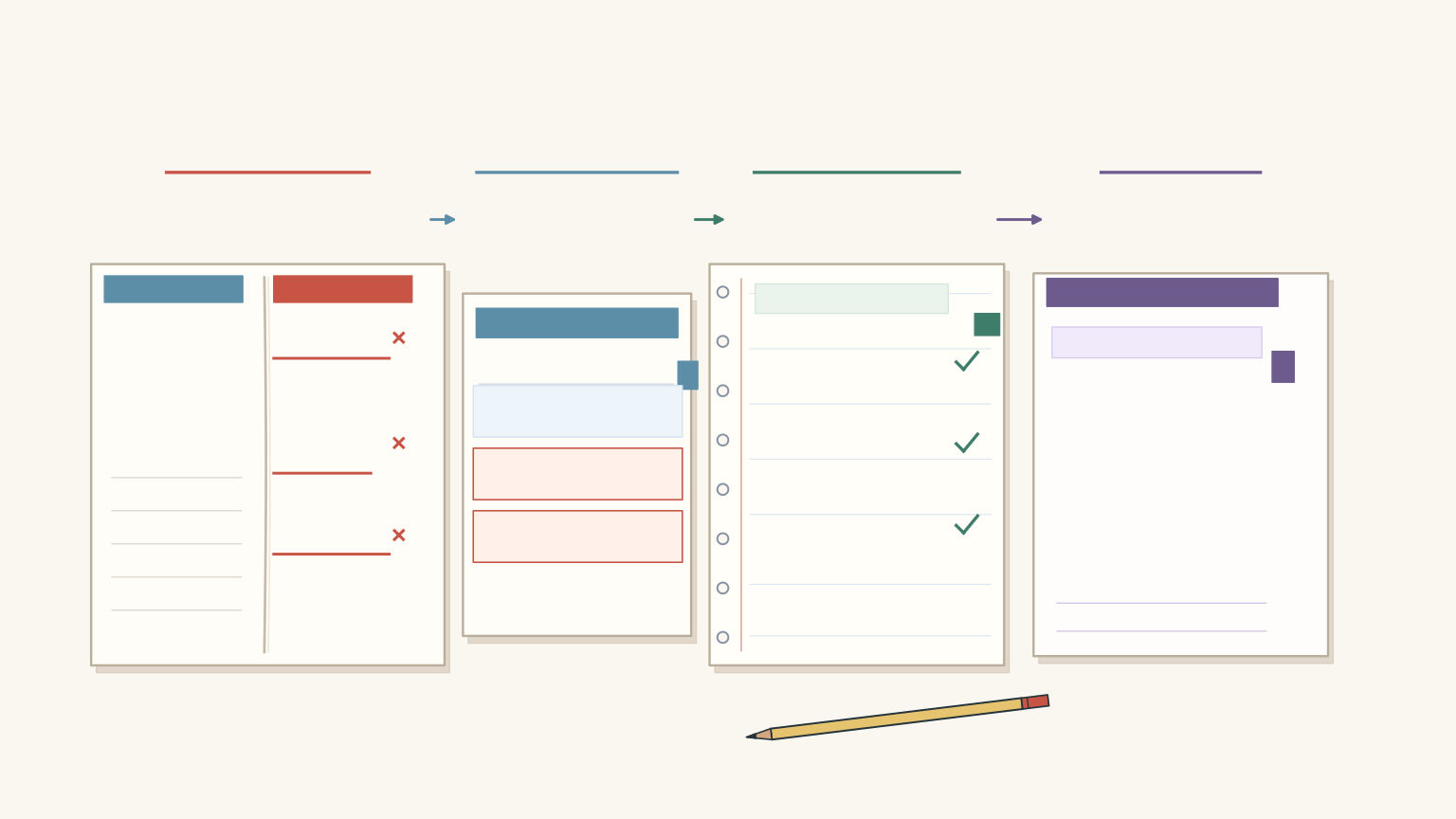
A better approach is to treat every paper as a complete learning cycle.
Step 1: Complete the paper under examination conditions
Choose a paper that matches your current syllabus and examination format.
Set the appropriate time limit. Put your notes away, avoid checking solutions, and don’t pause the clock when you encounter a difficult question.
If you need to look something up, leave the question and return to it after the examination.
You want an honest picture of what you can currently do independently.
Step 2: Mark your work carefully
Use the relevant marking guidelines rather than awarding yourself marks because your answer looks vaguely similar to a solution.
NESA provides past examination papers, marking guidelines, and examination feedback through its HSC examination paper collection.
Pay attention to how marks are awarded.
In Mathematics, you might have the correct approach but lose marks through an incorrect intermediate step or insufficient working.
In Physics, you might calculate the correct numerical value but fail to explain the physical relationship the question asks about.
In Chemistry, you might obtain a correct final answer but fail to demonstrate the required chemical reasoning.
The difference between knowing an answer and demonstrating the required understanding is important.
Step 3: Identify why you lost marks
Don’t simply write down the questions you got wrong.
Identify the reason behind each mistake.
A useful classification is:
| Error type | What happened? | What should you practise? |
|---|---|---|
| Knowledge gap | You didn’t know the relevant concept or relationship. | Revisit the syllabus content and foundational theory. |
| Method selection | You knew the content but couldn’t identify the appropriate method. | Practise recognising which concepts apply to different questions. |
| Execution error | You chose the right method but made an algebraic, numerical, or substitution error. | Practise accurate working and checking. |
| Communication error | You understood the idea but didn’t answer the question precisely. | Practise explaining, justifying, and interpreting results. |
| Time management | You spent too long on one question or couldn’t finish. | Practise timed sections and examination strategy. |
This classification helps you avoid treating every lost mark as a content problem.
For instance, if you understand differentiation but repeatedly make algebraic errors, rereading your calculus notes probably isn’t the best solution.
You need to practise executing the mathematics accurately.
Step 4: Fix the biggest weaknesses
You don’t need to fix every small mistake immediately.
Start with the weaknesses that appear repeatedly or affect several different question types.
If you consistently struggle with equilibrium calculations in Chemistry, revisit the relevant concepts, work through examples, and attempt a fresh set of questions.
If you struggle with unfamiliar integration problems in Mathematics Extension 2, practise recognising the structure of the problem rather than memorising the solution to one particular question.
For Physics, if your calculations are generally sound but your explanations are weak, practise connecting equations to the physical principles they represent.
Due to technical limitations, this figure may display incorrectly or contain inaccuracies. Please check key details against your course materials.
Step 5: Test yourself with a new question
This is the step that determines whether your review actually worked.
Return to the same question if you need to understand the original mistake. But don’t use your ability to repeat a memorised solution as proof that you’ve improved.
Find another question testing the same underlying concept.
Ideally, it should change something:
- The wording might be unfamiliar.
- The information might be presented differently.
- Two concepts might need to be combined.
- A condition might change the method you need to use.
If you can solve that question independently and explain your reasoning, you have stronger evidence that the weakness has been addressed.
If you can’t, you know what to work on before attempting another full paper.
05Two examples: deciding whether to do another paper
Let’s apply this to two common situations.
Example 1: Mathematics Extension 1
Suppose you’ve completed most of the Mathematics Extension 1 syllabus and have several weeks remaining.
You sit a complete paper and notice that your differentiation calculations are generally correct.
However, you repeatedly lose marks when questions ask you to justify the nature of a stationary point.
You know how to differentiate, but you’re not consistently explaining how the sign of the derivative determines whether the function is increasing or decreasing around the stationary point.
Should you immediately attempt another full paper?
Not yet.
Your problem isn’t simply a lack of examination practice. It’s a specific weakness in applying and communicating your mathematical reasoning.
A better approach is to:
- Revisit the relationship between the derivative’s sign and the behaviour of the function.
- Work through several unfamiliar questions involving stationary points.
- Practise writing complete justifications rather than only calculating coordinates.
- Attempt another unseen question without referring to your notes.
Once you can handle these questions independently, another full paper becomes more useful.
It can then test whether you can apply that improvement under time pressure and alongside other topics.
Example 2: Chemistry
Imagine you’ve completed a Chemistry paper and noticed a recurring problem with stoichiometry.
When a balanced chemical equation is supplied, you can usually calculate the amount of product formed.
However, when a question requires you to interpret a reaction, balance the equation, and then identify the limiting reagent, you struggle.
Your first instinct might be to complete another Chemistry paper.
But consider what another full paper would actually achieve.
It might give you more practice, but it won’t necessarily address the reason you’re struggling.
You should instead practise the individual skills involved:
- Writing and balancing chemical equations.
- Interpreting mole ratios.
- Converting between mass, moles, and particles where relevant.
- Comparing reactant quantities to identify the limiting reagent.
Then attempt a new problem that combines these skills.
If you can now solve an unfamiliar limiting-reagent problem, the targeted practice has done its job.
A subsequent full paper can test whether you can use the same reasoning independently in a wider examination.
The lesson is simple: when a specific weakness keeps appearing, fix the weakness before increasing your paper count.
For a practical example of focused examination practice, see our Electrostatics: NSW HSC Physics Practice Exam Paper.
06Make sure you’re using papers from the right syllabus
There’s another detail that can significantly affect how useful a past paper is: your HSC cohort.
NSW is transitioning to new Stage 6 syllabuses, and Mathematics, Physics, and Chemistry are not changing at the same time.
As at November 2026, the first HSC examination years for the new syllabuses are:
| HSC examination year | Mathematics Extension 1 and 2 | Physics | Chemistry |
|---|---|---|---|
| 2027 | 2024 syllabus – first examination | 2017 syllabus | 2017 syllabus |
| 2028 | 2024 syllabus | 2025 syllabus – first examination | 2017 syllabus |
| 2029 | 2024 syllabus | 2025 syllabus | 2025 syllabus – first examination |
These transition dates are confirmed in the official NSW curriculum information:
- Mathematics syllabus implementation timeline
- Physics Stage 6 syllabus and implementation information
- Chemistry Stage 6 syllabus and implementation information
Why does this matter?
Imagine you’re preparing for the 2027 HSC.
Your Mathematics Extension 1 and Extension 2 courses follow the new 2024 syllabuses, but Physics and Chemistry still follow their 2017 syllabuses.
You shouldn’t assume that every older Mathematics paper is an accurate representation of your current course.
The same issue will arise for Physics and Chemistry as their new syllabuses are introduced.
Older questions can still be extremely useful when they test concepts and skills that remain in your syllabus. However, questions covering content outside your course shouldn’t be treated as required practice.
Likewise, an older complete paper might not accurately represent the current examination structure.
Before choosing a paper, check:
- Does it test content from my current syllabus?
- Does it assess the skills and outcomes I’m expected to demonstrate?
- Does its examination structure match the format I’m preparing for?
For a course that hasn’t yet had its first examination under the new syllabus, use the current syllabus, any published NESA sample examination materials, and suitable questions testing retained content.
The goal is to practise the course you’re actually studying, not simply complete every paper you can find.
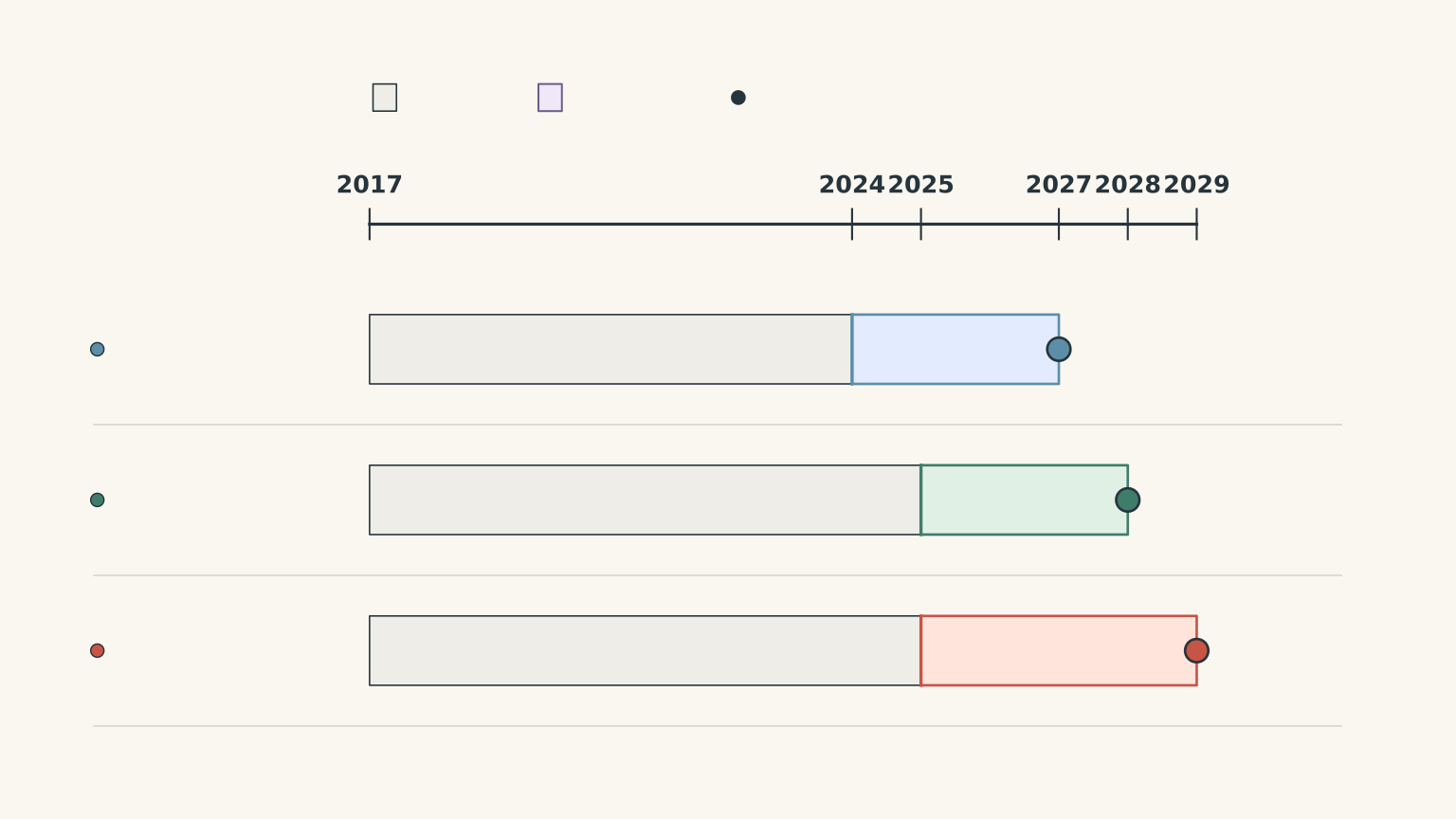
Due to technical limitations, this figure may display incorrectly or contain inaccuracies. Please check key details against your course materials.
07Questions and solutions
Question 1
You’ve completed most of your HSC syllabus and have four weeks remaining before your examinations.
You haven’t attempted a complete past paper yet. Should you start by completing three papers in the first week?
Solution 1
No. Start with one complete timed paper and use it to identify your weaknesses.
Attempting three papers immediately would give you plenty of practice, but you might not leave enough time to review and correct the mistakes they reveal.
After your first paper, identify the main problems, practise those skills, and test yourself using unfamiliar questions.
Then decide when the next full paper will be useful.
The objective is to make each examination attempt more informative than the previous one, not to finish papers as quickly as possible.
Question 2
You’ve completed three full past papers.
Your marks have improved, but you notice that you still struggle with unfamiliar questions involving the same underlying concept. You have one week remaining.
Should you complete another full paper?
Solution 2
Not immediately. Spend your next study sessions addressing the recurring conceptual weakness and testing whether you can apply the concept to unfamiliar questions.
The tempting approach is to assume that another full paper will automatically improve your examination performance.
However, your results have already identified a more specific problem: you haven’t consistently transferred your knowledge to new situations.
A fourth paper may contain the same type of question, but simply encountering it again won’t guarantee that you understand it.
Work through the underlying concept, attempt fresh variations, and check that you can explain your reasoning without notes.
If you have time after that, another timed paper can test your overall preparation. If not, targeted practice is likely to be a better use of the remaining week.
08So, how many past papers should you actually do?
For most students who have substantially covered their syllabus, around 3-5 complete papers per subject is a reasonable starting point.
But don’t let that number become another examination target.
A student who completes three papers, corrects their mistakes, and successfully applies their knowledge to unfamiliar questions may be better prepared than someone who completes ten papers without meaningful review.
Before scheduling another full paper, ask yourself:
- Have I properly marked my previous paper?
- Do I understand why I lost marks?
- Have I addressed my most important weaknesses?
- Can I now solve unfamiliar questions testing those concepts?
- Will another complete paper provide useful practice that targeted questions cannot?
If you can answer these questions confidently, another paper may be worthwhile.
If not, you already know where your next study session should go.
If you need help identifying recurring weaknesses in Physics, Chemistry, Mathematics Extension 1, or Mathematics Extension 2, tutorgum provides online HSC tutoring focused on building subject understanding and problem-solving skills.
And if you’re still working through your syllabus, the next useful decision is learning how to use past examination questions without waiting until you’ve finished every topic.