
How to Compare HSC Subjects Before Making Your Choice
Choosing HSC subjects involves more than interest or scaling rumours. Learn how to compare assessment styles, workload, assumed knowledge, and university prerequisites, with a reusable worksheet to help you make an informed decision.
You have two HSC subjects left on your shortlist. One has frequent tests and regular practice; the other has fewer marked tasks but a long project. Which will take more time? It’s tempting to count the assessments and choose the subject with fewer. But a single project can absorb weeks of work, while regular tests may be manageable if you keep up. The useful comparison is the work you’ll actually do, the skills you’ll need, and the options each subject keeps open.
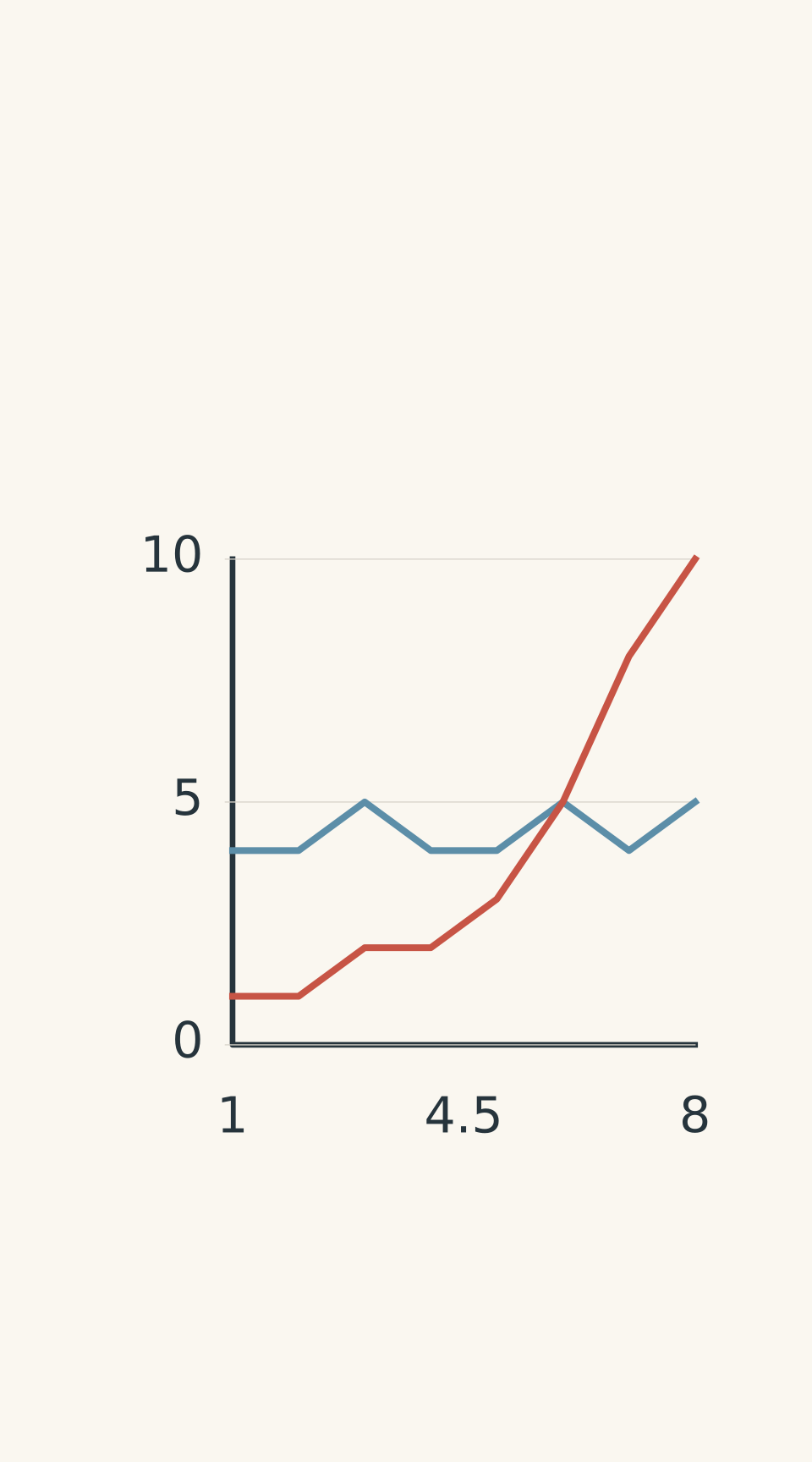
- Regular tests and practice
- Major project (deadline: week 8)
The same principle applies to interest, prerequisites, and university pathways. A subject that sounds impressive might not suit your working habits. A subject you currently find difficult might become manageable with targeted preparation. And a subject that looks optional may be essential for a degree you want to keep available.
Here’s how to compare your options without relying on stereotypes, your friends’ choices, or rumours about scaling.
01Start by separating requirements from preferences
Before ranking subjects, sort the information you have into three groups.
1. Hard constraints
These are requirements that can rule an option in or out.
- Does your school offer the course, and can you fit it into your timetable?
- Are you eligible to study the course?
- Does a university course you want to keep open require a particular HSC subject or result?
- Will your overall subject combination meet HSC requirements and, if needed, ATAR eligibility rules?
2. Preparation needs
These are skills and knowledge you may need to strengthen.
- Algebra, graphs, and rearranging equations.
- Writing clear arguments and supporting them with evidence.
- Analysing sources or interpreting data.
- Recording practical observations and explaining results.
- Planning a long assignment and meeting staged deadlines.
A preparation gap is not automatically a reason to reject a subject. First find out exactly what the gap is, how much it matters, and whether you have a realistic plan to address it.
3. Preferences and trade-offs
These include the content you enjoy, your assessment preferences, course pace, likely workload, and other commitments.
These factors matter, but they don’t all have the same status. A formal university prerequisite can affect your eligibility. A preference for short tests over long assignments affects how you experience the course. A rumour that a subject scales well is neither a requirement nor a reliable prediction of your individual result.
Check the course type, too. NESA distinguishes between Board Developed, Board Endorsed, and VET courses. Board Endorsed courses count towards the HSC but don’t have an HSC exam or contribute to the ATAR. Some VET courses include workplace requirements, and some Board Developed VET courses have an optional HSC exam.
Read NESA’s guide to choosing HSC subjects and confirm your overall study pattern with your school before finalising your choices.
02Compare assessment style, not subject stereotypes
Two subjects can both be challenging while demanding quite different kinds of work.
When someone says a subject is “easy”, ask what they mean. Do they find the content straightforward? Are the assessments predictable? Do they enjoy the task format? Or are they simply strong at the skills the subject rewards?
These are different things.
| Assessment style | You may enjoy it if you… | What can be difficult | What to check |
|---|---|---|---|
| Timed tests and exams | Like solving problems, recalling information, or writing under time limits. | Speed, exam pressure, and gaps in earlier knowledge. | Try a sample question under timed conditions. |
| Essays and extended responses | Enjoy explaining ideas, building arguments, and using evidence. | Planning, structuring, and writing clearly under time pressure. | Inspect a sample task and its marking criteria. |
| Source analysis and data interpretation | Like finding patterns, evaluating evidence, and explaining conclusions. | Moving beyond description to explain what the evidence shows. | Try a question requiring you to interpret unfamiliar information. |
| Practical work, fieldwork, or performance | Prefer learning through investigation, application, or rehearsal. | Precision, practical preparation, reports, attendance, or performance pressure. | Check practical requirements, reports, rehearsal time, and any formal practical exam. |
| Major works and portfolios | Enjoy developing an idea over time and improving it through feedback. | Starting late, managing scope, documenting decisions, and meeting milestones. | Ask how the work is developed, assessed, and submitted. |
| VET and competency-based assessment | Prefer demonstrating practical skills against clear requirements. | Workplace hours, placement logistics, attendance, and demonstrating every required competency. | Ask the VET coordinator about placements, travel, equipment, and costs. |
Four HSC assessment formats
| Timed response | Assesses: accuracy, reasoning, clarity Plan for: time pressure |
|---|---|
| Extended argument | Assesses: evidence and structure Plan for: drafting and editing |
| Practical report | Assesses: methods, data, conclusions Plan for: records and deadlines |
| Major work or portfolio | Assesses: development and final product Plan for: milestones and sustained effort |
These are patterns, not rigid definitions of subjects. Mathematics involves more than timed calculations, science courses include explanation and interpretation as well as practical work, and essay-based subjects may assess several different skills. Check the actual syllabus and assessment information for the course you’re considering.
For most Board Developed courses with HSC examinations, school-based assessment contributes 50% of the final HSC mark. The other 50% comes from the HSC examination. Check the individual course requirements, particularly where practical examinations or submitted works are involved.
Your school’s assessment schedule also matters. Schools set their assessment tasks, dates, and weightings within NESA’s requirements. Two students studying the same subject at different schools may therefore have different task schedules.
If you’re entering Year 11 in 2027, there’s another detail to know. Under NESA’s updated rules, Preliminary courses commencing in Term 1, 2027 are generally limited to one take-home assessment task per course, weighted at no more than 15%. Courses with major projects or HSC practical examinations are exempt from this limit.
This doesn’t mean you’ll have only one assessment, nor does it mean all project work is capped at 15%. In-class assessments still count, and exempt courses have different rules. Read NESA’s current take-home assessment requirements and ask your school for the assessment schedule that applies to your cohort.
03Estimate workload across a whole term
Workload isn’t just the number of assignments. Four features give you a more useful picture.
1. Regular weekly effort
Some subjects reward frequent practice. You might need to solve problems, memorise material, revise concepts, or practise writing throughout the term.
This can feel demanding if you prefer to study in long sessions just before a deadline. It may feel manageable if you can establish a regular routine.
2. Peak weeks
A major assignment might take relatively little time at first, then demand much more as the deadline approaches.
The important question isn’t only how much work a subject creates. It’s when that work arrives.
A project due during a quiet fortnight may be manageable. The same project due alongside several tests, a practical report, and other commitments could be much harder to handle.
3. The cost of falling behind
Some courses build heavily on earlier knowledge. If you miss an algebra skill, for example, later calculations may become harder until you fix that gap.
Other courses may allow more flexibility in when you develop a project, but delaying it can leave too little time for feedback, revision, and refinement.
Ask yourself: if I miss a week, how difficult will it be to catch up?
4. Work that doesn’t appear on the assessment sheet
Remember to account for:
- Travel to fieldwork or work placements.
- Rehearsal and practice outside class.
- Research, planning, and editing.
- Materials, equipment, or specialist preparation.
- Time needed to revise for an examination.
- Other commitments, such as employment, sport, or caring responsibilities.
There is no universal number of homework hours that makes a subject easy or difficult. Your school, teacher, course, preparation, and other commitments all affect the workload you experience.
The best way to compare subjects is to look at both the routine work and the busiest weeks, across your entire subject combination.
Worked example: Comparing two assessment patterns
You’re choosing between Subject A, which has regular timed tests and weekly practice, and Subject B, which has a long assignment. You enjoy both subjects, but you tend to leave assignments until the last minute. You also work two afternoons each week. How should you compare them?
Step 1
Subject A requires ongoing practice and preparation for tests. Subject B requires research, planning, drafting, and completing a longer task. Neither assessment pattern is automatically easier.
Step 2
You already know that you tend to delay long assignments. That is useful evidence about a potential risk in Subject B. It doesn’t mean you cannot improve your planning, but you shouldn’t ignore the pattern.
Step 3
Ask when Subject B’s assignment milestones and due dates fall. Compare them with the assessment schedules for your other subjects and your work commitments.
Step 4
Try a sample timed question for Subject A. For Subject B, break a sample assignment into research, drafting, feedback, and editing stages. Estimate when you would complete each stage.
Step 5
Subject A may fit your current habits better, but only if its content and assumed knowledge suit you. Subject B could still be a good choice if you can commit to staged deadlines. The point is to identify and manage the actual risk, not to label one subject as easier.
04Check prerequisites and post-school pathways
A subject choice can affect your future options, particularly if you’re considering university. Don’t rely on a general statement such as “you need science for health” or “you need advanced maths for engineering”. Requirements can differ between institutions, degrees, majors, and admission years.
Start by distinguishing three terms.
| Term | What it means | What it means for your choice |
|---|---|---|
| Prerequisite | A required subject, result, or other condition for admission to a course or enrolment in a particular university subject. | If you don’t meet it, you may be ineligible unless an accepted equivalent or alternative pathway applies. |
| Assumed knowledge | Knowledge the university expects you to have when you start studying. | You may still be eligible without it, but you could struggle with the early content or need additional preparation. |
| Recommended studies | Subjects that would help prepare you for the course. | They can be useful without being compulsory. Check the exact course requirements. |
Three types of university requirements
| Prerequisite | Must meet the stated entry requirement. Decision: verify eligibility and accepted alternatives. |
|---|---|
| Assumed knowledge | Expected knowledge at the start of study. Decision: plan extra preparation if needed. |
| Recommended studies | Useful background, not necessarily compulsory. Decision: weigh the benefit against other priorities. |
These distinctions aren’t just technicalities. They change what you need to investigate before making a decision.
For example, the University of Sydney’s explanation of prerequisites and assumed knowledge distinguishes a formal prerequisite from recommended background knowledge. UNSW’s assumed knowledge guidance explains that its undergraduate degrees use assumed knowledge rather than formal HSC subject prerequisites.
Those are institution-specific policies. Don’t assume that a rule at one university also applies at another.
How to verify university requirements
Use this process for each pathway you seriously want to keep open.
Step 1: Identify actual courses.
Write down two to four possible university courses, including the institution. “Engineering” or “health” is a starting point, not a complete requirement check.
Step 2: Open the official university course page.
Look for headings such as Entry requirements, Prerequisites, Assumed knowledge, Recommended studies, and Additional selection criteria.
Record the exact subject, required result, and any relevant conditions. A requirement to achieve a particular HSC result is different from a general recommendation to study that subject.
Step 3: Cross-check with UAC.
Use the UAC resources for Year 10 and Year 11 students, including the current Steps to Uni for Year 10 Students guide and course information.
As at October 2026, UAC’s 2026 guide lists courses planned for 2029 entry. That’s useful for students choosing subjects now, but it is still a planning guide. Recheck the official course page when you’re closer to applying, because entry requirements can change.
Step 4: Check equivalents and alternative pathways.
If you don’t study a recommended or assumed-knowledge subject, ask whether bridging courses or other preparation are available. If you don’t meet a formal prerequisite, find out whether the university accepts an equivalent qualification or offers another entry pathway.
Don’t assume that a bridging course removes a formal admission prerequisite. Confirm what it actually allows you to do.
Step 5: Ask the university if anything is unclear.
Contact its future-student or admissions team. Give them the exact degree, intended intake year, and proposed HSC subjects. Keep their response so you can refer to it later.
Verify university requirements before choosing HSC subjects
- Identify courses
Name the degree, institution, and intended entry year.
- Inspect official requirements
Check prerequisites, assumed knowledge, and recommended studies.
- Classify each requirement
Separate entry conditions from preparation advice.
- Verify alternatives
Cross-check UAC and ask admissions about equivalents or bridging.
Unclear? Contact admissions ↶ return to official requirements.
- Record and recheck
Save the decision and confirm requirements again before applying.
If you are considering TAFE, an apprenticeship, or another training pathway, investigate its entry requirements and practical commitments as well. A university prerequisite isn’t the only reason to select a particular subject.
Worked example: A prerequisite versus assumed knowledge
Two hypothetical university courses are on your shortlist. Course A requires HSC Chemistry at a specified standard for direct entry, and the university confirms that no equivalent or alternative entry route applies to your planned intake. Course B lists Chemistry as assumed knowledge and offers a bridging option. You enjoy Chemistry, but your current marks are average. How should you use this information?
Step 1
Course A has a formal prerequisite. If you don’t meet it, you won’t satisfy that direct-entry requirement. Course B treats Chemistry as assumed knowledge, so the missing background may affect your readiness without necessarily preventing admission.
Step 2
If Course A is a pathway you are determined to keep open, you need to take its prerequisite seriously. If Course B is your only realistic goal, the absence of Chemistry from your HSC plan may be manageable, provided you plan for the required preparation.
Step 3
Average marks alone don’t tell you whether you can meet the prerequisite. Ask your teacher which skills are limiting your results, whether those gaps are realistic to address, and what preparation would be required.
Step 4
If Course A is a priority and its prerequisite is non-negotiable, Chemistry may be necessary to preserve direct-entry eligibility. If Course B is the priority, you may have more flexibility, but you should account for the bridging work.
The important distinction is that choosing a subject doesn’t guarantee you’ll achieve the required result, and not studying a subject doesn’t always close every pathway. Verify both the formal rules and the preparation you’ll need.
05Use interest and current marks as evidence
Interest matters because it affects how willing you are to keep working when a subject becomes difficult. But interest alone isn’t enough, and your current mark isn’t a complete measure of your future performance.
Consider two situations.
- You enjoy a subject and currently struggle because of a specific skill gap. If that gap is manageable and you can get appropriate support, the subject may still be a sensible choice.
- You perform well in a subject but dislike its everyday tasks. Strong marks are useful evidence of your current ability, but they don’t guarantee you’ll enjoy two years of the same kind of work.
Ask your teacher to be specific about your preparation. “You’re not a science person” or “you’re naturally good at essays” isn’t useful advice. Find out which skills you already have, which ones need work, and how much practice the course is likely to demand.
You should also look at the course content itself. Which topics genuinely interest you? Which questions would you want to understand even when they become difficult? Do you enjoy the actual work of the subject, or mainly its reputation?
Think of choosing a subject because your friend says it “scales well” like dating someone because your friend says they’re a catch. Your friend isn’t the one doing the weekly work. The analogy only goes so far, though: unlike a date, a course has a published syllabus and formal requirements you can inspect before committing.
Scaling is not a personal bonus for choosing a subject that sounds difficult. UAC advises students to consider their abilities, interests, and goals rather than choosing a course simply because it scales well. Historical scaling information cannot tell you exactly what result you will achieve.
If you want to understand the distinction, read tutorgum’s guide to HSC marks, performance bands, and the ATAR.
06A short self-check before you decide
Answer these questions for each subject on your shortlist. You don’t need a numerical score.
- Interest: Which topics do I genuinely want to study, beyond the subject’s reputation?
- Assessment: Which tasks have I handled well before, and which ones do I tend to avoid or delay?
- Preparation: What specific Year 10 skills or knowledge does this course build on? What would I need to strengthen?
- Workload: Can I sustain the routine work, and what happens when deadlines overlap?
- Pathways: Which post-school options matter to me, and have I checked their formal requirements?
- Evidence: Have I looked at the syllabus, a real sample task, and my school’s assessment information?
If you can’t answer one of these, mark it as unknown. An unknown is a reason to investigate, not a reason to guess.
07Reusable comparison worksheet
Copy this table for the subjects you’re considering. Add another column if you need to compare more than three options.
| What to compare | Subject A | Subject B | Subject C |
|---|---|---|---|
| Why I’m considering it | __________ | __________ | __________ |
| Topics I’m interested in | __________ | __________ | __________ |
| Course type and HSC eligibility checked? | __________ | __________ | __________ |
| Formal prerequisites for my pathways | __________ | __________ | __________ |
| Assumed knowledge and current gaps | __________ | __________ | __________ |
| Main assessment formats | __________ | __________ | __________ |
| Routine weekly work | __________ | __________ | __________ |
| Biggest deadline or workload peak | __________ | __________ | __________ |
| Work outside school or placement | __________ | __________ | __________ |
| Sample task I tried and what I learned | __________ | __________ | __________ |
| My current strengths | __________ | __________ | __________ |
| Main risk and how I could manage it | __________ | __________ | __________ |
| Pathways kept open or potentially closed | __________ | __________ | __________ |
| Questions for my teacher or university | __________ | __________ | __________ |
Use the worksheet as a record of evidence, not a points system. Don’t give each subject a score out of ten and automatically choose the highest. A hard prerequisite for a pathway you must preserve cannot be treated as equivalent to a small preference for one assessment format.
Work through the table in this order:
- Identify any eligibility or prerequisite issues first.
- Compare the real assessment tasks and the workload they create.
- Check how the course matches your interests, preparation, and commitments.
- Investigate every important unknown before making your final selection.
08Questions and solutions
Question 1
You like Subject A and Subject B equally. A friend says Subject A is easier, but you haven’t looked at either subject’s assessment requirements. What is the most useful next step?
Solution 1
Ask your school for the assessment information for both subjects, then inspect a sample task from each. Your friend’s opinion might be useful as a starting point, but it doesn’t tell you whether the subject’s content, task formats, or workload will suit you.
Compare the kinds of tasks you will complete, the skills they assess, and the timing of major deadlines. Also check the course syllabus and assumed knowledge. A subject is not automatically easier because another student found it manageable.
Question 2
Subject A has weekly problem practice and three in-class tests. Subject B has two large assignments, one due during a fortnight when two other subjects also have assessments. You work two afternoons each week. A classmate argues that Subject B must be lighter because it has fewer tasks.
Evaluate this claim. What evidence would you need before deciding which subject is more manageable?
Solution 2
The claim is not justified: the number of tasks doesn’t tell you the total workload or how that workload is distributed.
Subject A requires regular practice and test preparation. Subject B may require substantial research, drafting, and independent work, particularly near its deadline. Its busiest fortnight could be difficult because several subjects compete for the same limited time.
Compare the assignment’s scope, the time available to complete it, any project milestones, and the other assessments due in the same period. Also consider whether you can sustain Subject A’s regular practice alongside your other subjects.
The tempting approach is to count two assignments against three tests. The missing constraint is the time each task requires and when that time is needed. If Subject B can be broken into manageable stages and started early, it may work well. If the workload is concentrated in an already busy period, it may be riskier. You need the actual schedule before reaching a conclusion.
Question 3
Your marks are currently higher in Subject X. You dislike its regular assessment tasks, though. In Subject Y, you enjoy the content but lose marks because of a specific skill gap. Your teacher believes that gap can be addressed with steady practice.
How should you decide between the subjects?
Solution 3
Investigate whether the skill gap in Subject Y is realistically manageable, then compare both subjects’ actual assessment demands and your available study time.
Your higher marks in Subject X are useful evidence of your current performance. However, if you dislike the regular work, you need to consider whether you’ll be willing to sustain it over two years.
Subject Y has a different risk: you may need to spend extra time strengthening a prerequisite skill before you can perform consistently. Ask your teacher what improvement would require, try a representative task, and consider whether the subject supports a pathway you want to keep open.
The tempting approach is to choose X because it produces better marks now, or Y because you enjoy it more. Neither fact settles the decision by itself. The relevant interaction is between interest, preparation, assessment fit, and the time you can realistically commit. If the gap is specific and manageable, Y may be reasonable. If catching up would require more time than you have available, that risk deserves serious weight.
Question 4
A student is comparing two university courses. Course A lists HSC Subject M at Band 4 as a formal prerequisite. Course B lists Subject M as assumed knowledge. The student plans to take a different HSC subject instead.
Can the student assume both university options will remain open?
Solution 4
No, not without checking the formal prerequisite and any accepted alternative pathways for Course A.
If Subject M at Band 4 is a formal prerequisite, the student must meet that requirement for the relevant admission route. If they don’t study the required subject, they may become ineligible for direct entry.
Course B is different. Assumed knowledge generally describes the preparation expected when a student begins studying, rather than a formal admission barrier. The student may still be eligible, but could need bridging study or additional preparation.
The tempting approach is to treat both requirements as suggestions because they appear on university course pages. The constraint that changes the answer is the formal prerequisite attached to Course A. The student should check the exact degree and intake year, verify whether equivalents or alternative entry routes are accepted, and contact admissions if anything is unclear.
Question 5
A student has one remaining subject slot because their school confirms a timetable clash prevents them from studying both options.
They are considering Mathematics Advanced and Physics. A university degree they want to keep open requires HSC Mathematics Advanced at Band 4 for direct entry. The university confirms that there is no accepted equivalent or alternative entry route for the intake the student plans to apply for. A second degree lists Physics as assumed knowledge and offers a bridging course.
The student prefers Physics. They have some algebra gaps, but their teacher can provide weekly support. The Physics assessment schedule also includes a practical report and a test during an already busy fortnight. The student says keeping both degrees open is a non-negotiable priority and that they are willing to complete bridging study if needed.
Which subject should occupy the available slot, and why isn’t choosing the subject they enjoy more sufficient here?
Solution 5
Under the priorities and conditions stated, the student should choose Mathematics Advanced, then make a plan to address the Physics knowledge gap if they later pursue the second degree.
The decisive issue is the difference between a formal prerequisite and assumed knowledge. Not studying Mathematics Advanced would remove the specified direct-entry option for the first degree, according to the university’s confirmed requirements. Not studying Physics would leave a knowledge gap for the second degree, but the university has identified bridging study as an available preparation option.
The other factors still matter. The student’s algebra gaps need attention, and weekly teacher support is useful only if the student follows through with practice. Choosing Mathematics Advanced does not guarantee a Band 4. The student should agree on a diagnostic check and an early progress review with their teacher so they can assess whether their preparation is on track.
The Physics assessment schedule also deserves consideration. Its practical report and test fall during a busy period, which creates a workload risk. That doesn’t make Physics a worse subject; it simply forms part of the student’s current constraints.
The tempting route is to choose Physics because the student prefers it, then assume both university pathways will remain possible. The interaction that changes the decision is that the two missing subjects have different consequences: one closes a non-negotiable direct-entry option, while the other creates a preparation gap that the university says can be addressed.
This conclusion depends on the stated priorities. If the student no longer needs to preserve the first degree, or the university confirms a different accepted entry route, the comparison changes.
Before submitting your subject choices, take your completed worksheet to your subject teachers or careers adviser. Confirm the assessment schedule for your cohort, verify any university requirements directly, and put the likely assessment peaks into one calendar. If you later consider changing your subject combination, check the HSC unit requirements first using tutorgum’s guide to dropping a subject in Year 12.