
Can You Join an HSC Tutoring Class Halfway Through a Term?
Find out how to discuss joining HSC tutoring mid-term, check the class sequence and prepare for a useful start with tutorgum.
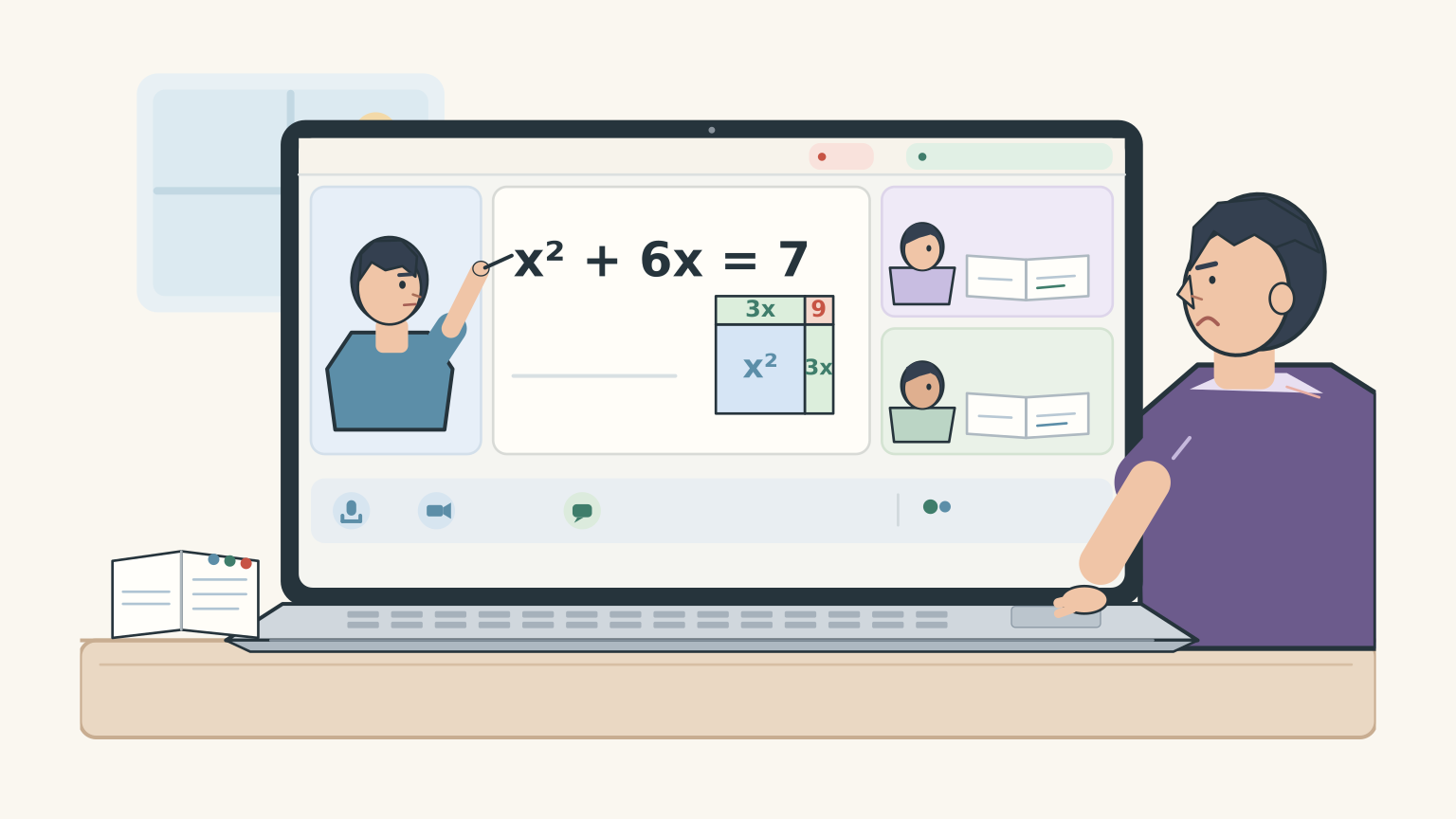
Yes, you can often join an established HSC tutoring class halfway through a term. You don’t necessarily need to wait for the next intake. However, joining an existing group is only worthwhile if you can catch up on the material you’ve missed without falling behind on the current topic.
The important distinction is between missing a few lessons and missing the knowledge those lessons were supposed to build. A student who has missed three weeks but understands the prerequisites may settle in quickly. A student who has missed one essential concept might struggle with every lesson that follows.
Before enrolling, check three things: whether the class follows the correct HSC syllabus for your cohort, what access you’ll have to missed content, and whether you can keep up with the group’s current pace.
Due to technical limitations, this figure may display incorrectly or contain inaccuracies. Please check key details against your course materials.
01Can you join an HSC tutoring class halfway through a term?
In many cases, yes. An established tutoring class doesn’t automatically become unsuitable just because you’ve missed its first few lessons.
The real question is whether the teaching sequence allows you to catch up.
Consider a Mathematics Extension 1 class that has spent its first few weeks studying functions and is now working on polynomials. If you’ve already covered functions at school and understand the underlying algebra, you might only need the class notes and a little independent practice.
But if you’re still struggling with function notation and rearranging algebraic expressions, you’ll need to address those gaps before the newer material becomes manageable.
The same principle applies across Physics and Chemistry.
- In Physics, understanding vectors and interpreting motion graphs can be important before tackling more complicated problems involving forces and motion.
- In Chemistry, understanding moles, concentrations, and chemical equations makes later quantitative topics much easier to follow.
- In Mathematics Extension 1 and Extension 2, gaps in algebra, functions, trigonometry, or calculus can affect your ability to solve more advanced problems.
You don’t need to have attended every previous lesson. You do need the knowledge required for the lessons ahead.
02First, work out what you’ve actually missed
Not all missed content creates the same problem. Separate it into three categories.
| Type of missed content | What it means | What to do |
|---|---|---|
| Revision or familiar material | You’ve already studied the topic and understand it reasonably well. | Review the notes and attempt a few questions. |
| New but independent content | You haven’t studied the topic, but it isn’t essential for understanding the current lesson. | Arrange access to the lesson materials and catch up separately. |
| Missing prerequisite knowledge | The current topic depends on something you haven’t properly understood. | Address this gap before or alongside joining the class. |
The third category deserves the most attention.
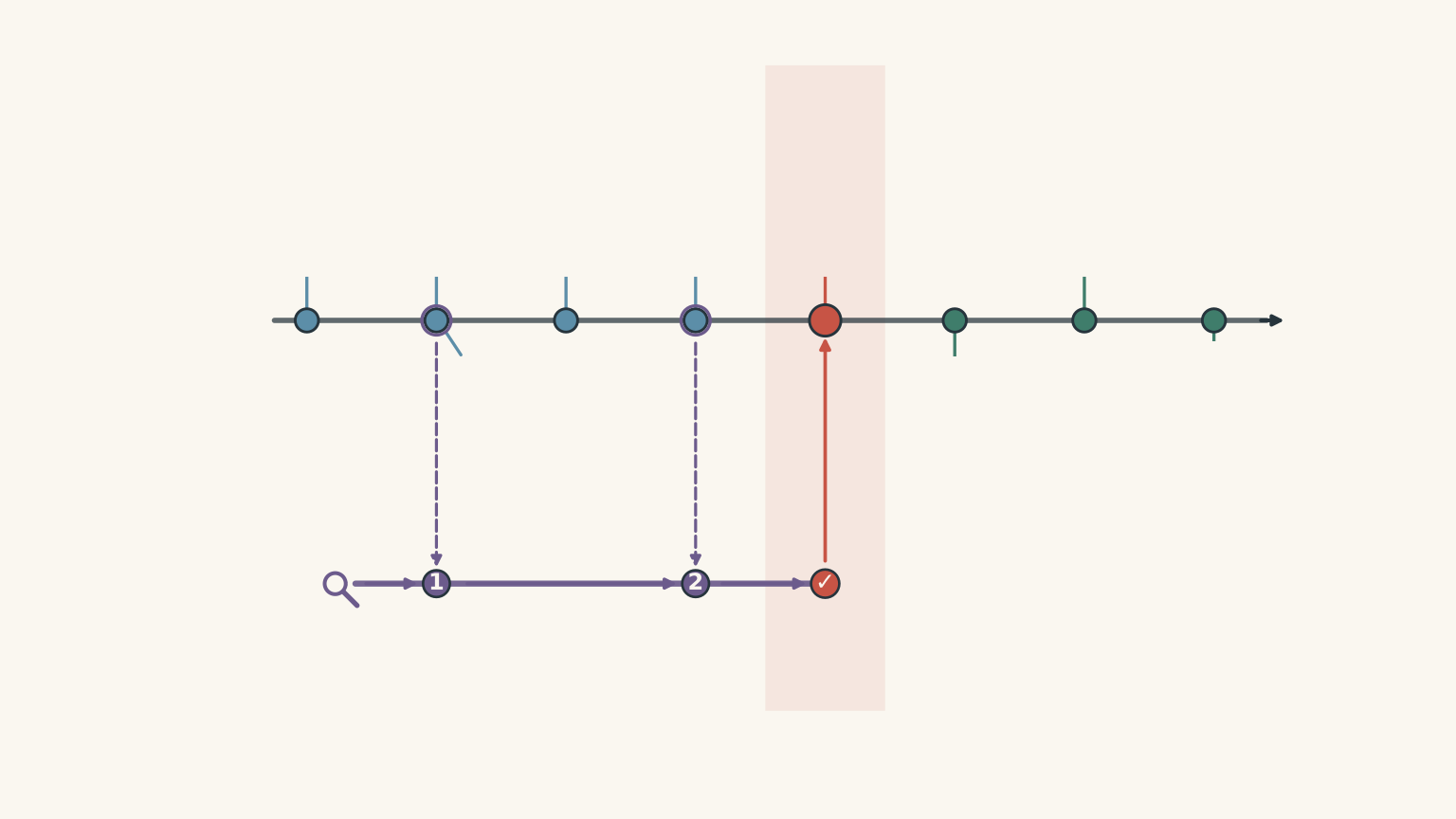
A prerequisite is a piece of knowledge that another concept depends on. Think of it as a step in a staircase. You can miss a step and still climb further, but eventually you’ll reach a point where you cannot move comfortably without going back.
For example, imagine joining a Physics class just as the tutor starts resolving forces into horizontal and vertical components.
If you understand vectors, basic trigonometry, and how to rearrange equations, you might be ready to join.
If you don’t understand what vector components represent, simply watching the next lesson recording probably won’t fix the problem. You’ll need a short explanation and some practice with the underlying mathematics.
Due to technical limitations, this figure may display incorrectly or contain inaccuracies. Please check key details against your course materials.
03Check that the class follows your HSC syllabus
This is particularly important if you’re studying Physics, Chemistry, or Mathematics Extension 1 or 2.
A tutoring class can cover the correct subject but still be following the wrong syllabus for your HSC cohort.
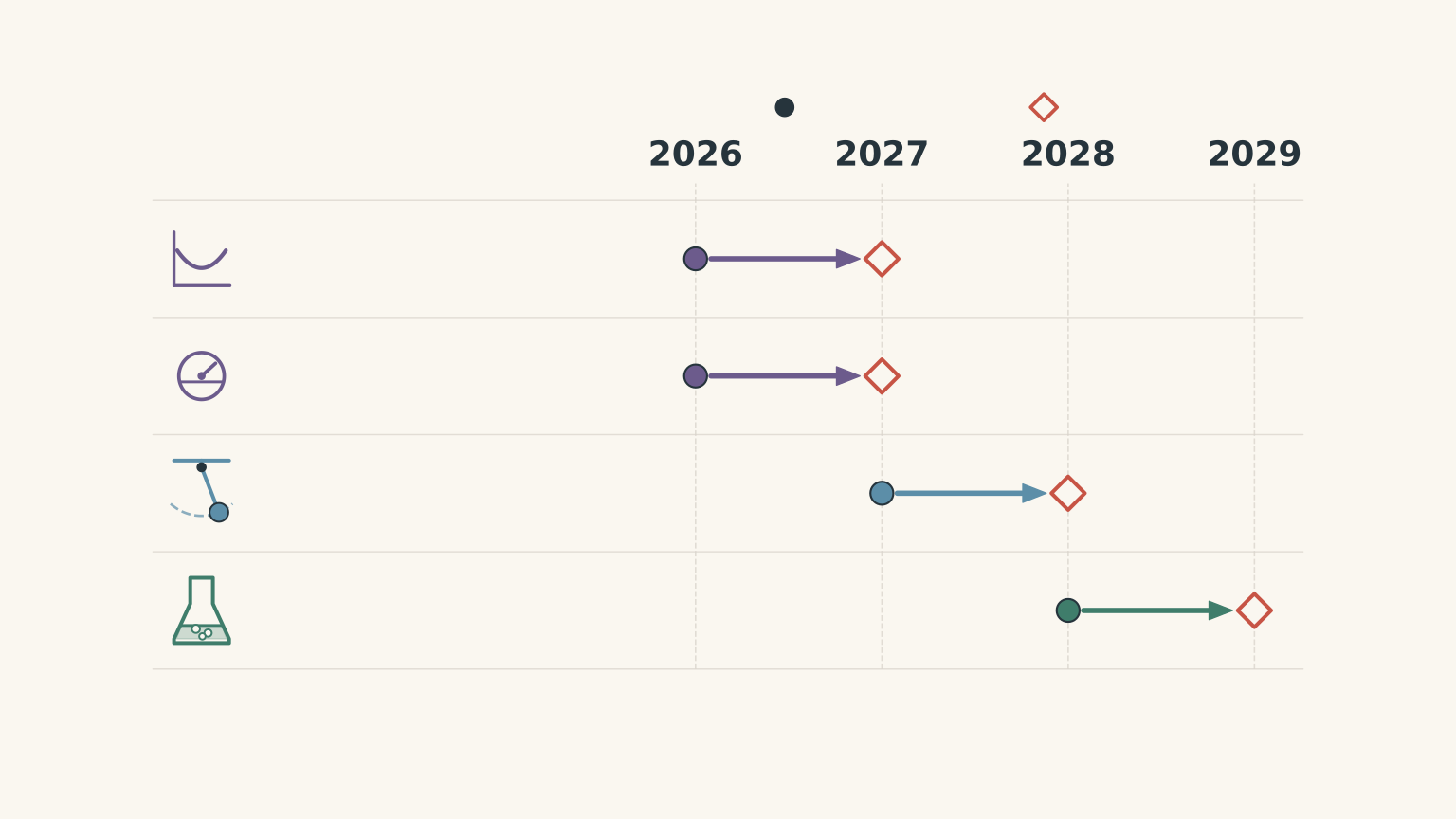
NESA has introduced new Stage 6 syllabuses, with different implementation dates across subjects. As at 15 November 2026, the relevant transition dates are:
| Subject | New syllabus implementation | First HSC examination under new syllabus |
|---|---|---|
| Physics | 2027 | 2028 |
| Chemistry | 2028 | 2029 |
| Mathematics Extension 1 | 2026 | 2027 |
| Mathematics Extension 2 | 2026 | 2027 |
There are some important details behind these dates.
Physics: The new Physics 11-12 Syllabus (2025) starts for Year 11 in Term 1, 2027. Year 12 students in 2027 continue with the 2017 syllabus. The first HSC examination under the new syllabus is in 2028.
Chemistry: The new Chemistry 11-12 Syllabus (2025) starts for Year 11 in Term 1, 2028. Year 12 students in 2028 continue with the 2017 syllabus. The first HSC examination under the new syllabus is in 2029.
NESA: Chemistry 11-12 Syllabus
Mathematics Extension 1 and 2: The new 2024 syllabuses are being implemented from 2026, with the first HSC examinations under the new syllabuses in 2027. For Extension 1, NESA specifies that teaching the new Year 12 syllabus begins in Term 4, 2026.
These differences matter when choosing a tutoring class. A Year 11 Physics student starting in 2027 should not automatically join a group teaching the Year 12 course for the 2027 HSC.
Ask the provider which syllabus version the class follows and which HSC cohort it is designed for. Don’t settle for a general answer such as “We teach HSC Physics”.
Due to technical limitations, this figure may display incorrectly or contain inaccuracies. Please check key details against your course materials.
04What to ask before joining an established class
Before paying for a place, get a clear picture of what happens after you enrol.
These are the questions worth asking.
1. What has the class already covered?
Ask for a topic list or course outline showing:
- Which topics have been completed.
- What the class is studying now.
- What topics are scheduled for the remaining lessons.
- Which earlier topics are essential for understanding the current material.
A tutor should be able to explain where the class is up to and what knowledge you’ll need to participate.
Knowing that the group is in Week 5 doesn’t tell you much. Knowing that it has completed vectors, motion graphs, and introductory kinematics tells you considerably more.
2. Can you access the lessons you’ve missed?
Find out what catch-up resources are available.
Useful options include:
- Recordings of previous online lessons.
- Lesson notes and worked examples.
- Practice questions covering earlier topics.
- Solutions explaining how to approach those questions.
- A topic summary identifying important prerequisite knowledge.
Recordings are particularly useful because you can revisit an explanation at your own pace.
However, having access to a recording doesn’t automatically mean you’ve understood the lesson. You should still attempt questions independently to check whether you can apply the material.
Also ask how long recordings and other resources remain available. Access that expires after a few days may not give you enough time to catch up.
3. Can the tutor check your current understanding?
A short diagnostic assessment can help establish whether you’re ready to join.
This doesn’t need to be a full examination. A few carefully selected questions can reveal whether you understand the concepts that the current topic depends on.
For example:
| Subject | Useful prerequisite checks |
|---|---|
| Physics | Rearranging equations, interpreting graphs, vectors, and basic trigonometry. |
| Chemistry | Balancing equations, mole calculations, concentration calculations, and chemical equations. |
| Mathematics Extension 1 | Algebra, functions, trigonometry, and relevant calculus skills. |
| Mathematics Extension 2 | Extension 1 knowledge, proof, calculus, and the mathematics needed for the current topic. |
The questions should reflect the class’s actual position.
There is little value in testing every topic from the beginning of the year if the tutor only needs to establish whether you can follow the next lesson.
4. What happens if you need extra help catching up?
Ask whether the tutor can recommend a manageable catch-up plan.
This might involve:
- Reviewing two missed lessons independently.
- Completing a short set of prerequisite questions.
- Spending part of a tutoring session revisiting an earlier concept.
- Arranging a separate catch-up lesson if one is available.
Be specific about what support is included in the enrolment and what might cost extra.
A vague promise that you’ll be able to catch up isn’t particularly useful. You want to know what material you’ll receive, how you’ll work through it, and who can help if you get stuck.
5. How much does joining halfway through the term cost?
Don’t assume you’ll automatically receive a discount because you’ve missed the first few weeks.
Tutoring providers set their own fees and enrolment arrangements. Some may calculate fees using the remaining sessions, while others may have different term-based or enrolment arrangements.
Before committing, ask for the total cost in writing.
Check:
- The price for the remaining lessons.
- Whether there are additional enrolment or resource fees.
- Whether recordings and missed lesson materials are included.
- Whether extra catch-up support costs more.
- The arrangements for future missed lessons.
- The cancellation and refund conditions.
Also confirm the actual dates of the remaining classes. A tutoring term doesn’t necessarily follow the NSW school calendar exactly.
For reference, NSW public school Term 4 in 2026 runs from 13 October to 17 December. You can check the NSW Department of Education’s school calendar, but always confirm the tutoring provider’s own timetable.
05A simple decision rule: should you join now?
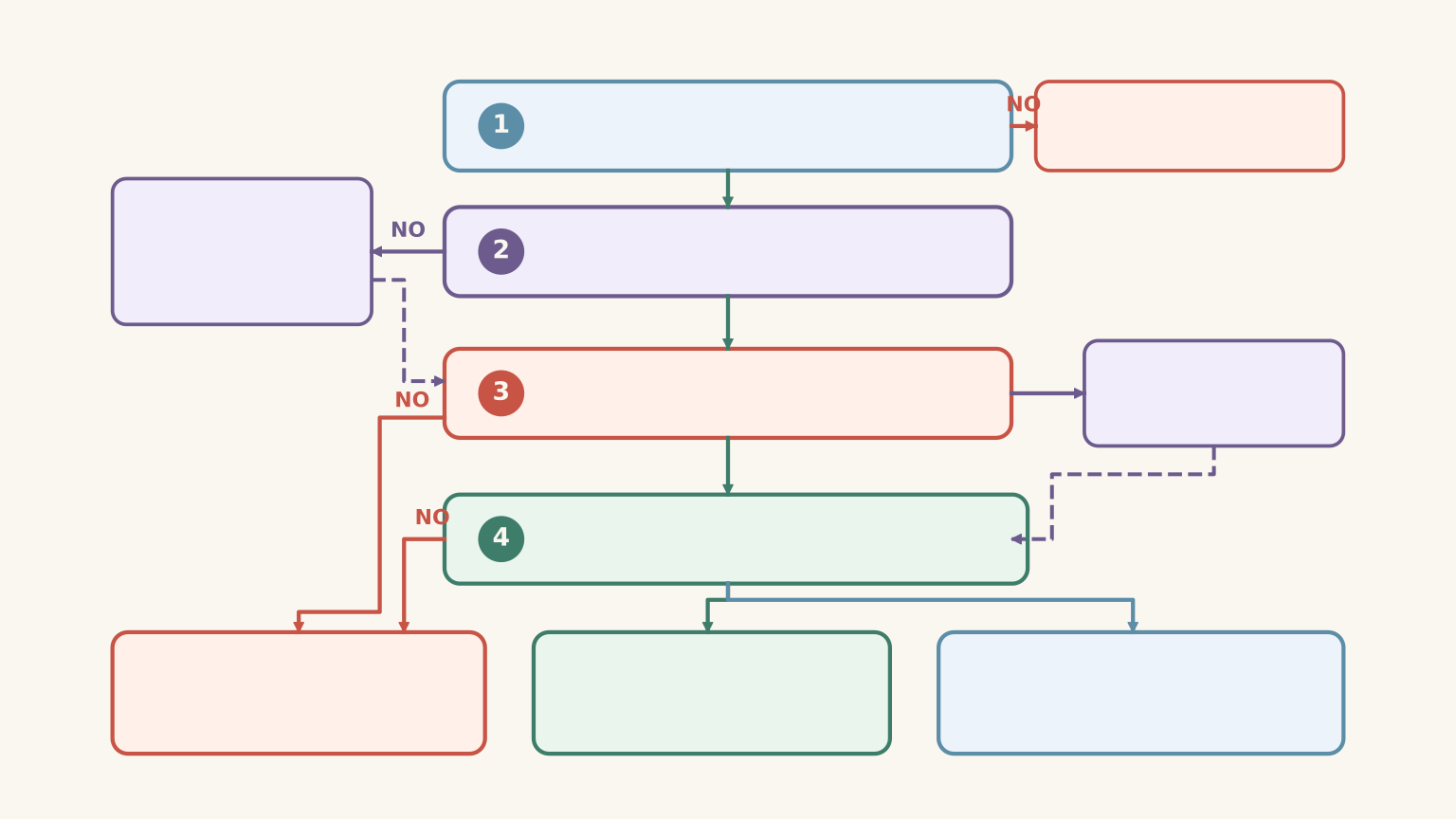
You can use this decision process before committing.
Step 1: Does the class match your year group, subject, and HSC syllabus?
- No: Find a group that follows the correct course.
- Yes: Move to Step 2.
Step 2: Can you access the material covered in previous lessons?
- No: Ask for a topic outline and a clear catch-up arrangement before enrolling.
- Yes: Move to Step 3.
Step 3: Can you understand the prerequisites for the current topic?
- Yes: You’re probably in a good position to join.
- Partly: Ask whether the tutor can help you bridge the specific gaps.
- No: Consider addressing those foundations before joining the established group.
Step 4: Is the remaining term worth the cost and time commitment?
- Yes: Confirm the enrolment and catch-up arrangements.
- No: Consider a short bridging program or joining the next available intake.
Due to technical limitations, this figure may display incorrectly or contain inaccuracies. Please check key details against your course materials.
06Worked scenario: joining a Physics class in Week 5
Imagine you’re a Year 11 Physics student considering joining an online tutoring group halfway through a term.
The class has already covered:
- Vector quantities and components.
- Motion graphs.
- Basic kinematics.
It is now moving into forces and Newton’s laws.
You’ve studied some of this material at school, but you’re not particularly confident with vectors.
Should you join?
Step 1: Find out which earlier topics matter.
Understanding vectors is important because forces can act in different directions. To analyse the net force on an object, you may need to resolve angled forces into horizontal and vertical components.
You also need to be comfortable interpreting motion and acceleration.
Step 2: Check your actual understanding.
You attempt a few questions.
You can interpret a velocity-time graph and calculate acceleration. You can also rearrange the relevant equations.
However, you struggle to resolve a force acting at an angle into its components.
This identifies a specific gap rather than suggesting that you need to repeat the entire first four weeks.
Step 3: Arrange targeted catch-up.
You ask the tutor for the earlier vector lesson recording, worked examples, and a short set of practice questions.
You arrange two short independent study blocks before the next forces lesson.
After completing the questions, you can resolve vector components correctly and explain what the components represent.
Step 4: Decide whether to enrol.
If the tutor confirms that you’re ready for the current material and you can access the remaining lessons, joining makes sense.
If you still cannot resolve vectors after reviewing the material, you may need additional support before the class moves further into more complicated force problems.
The important point is that you haven’t needed to repeat every missed lesson. You’ve identified the one gap that was most likely to affect your understanding going forward.
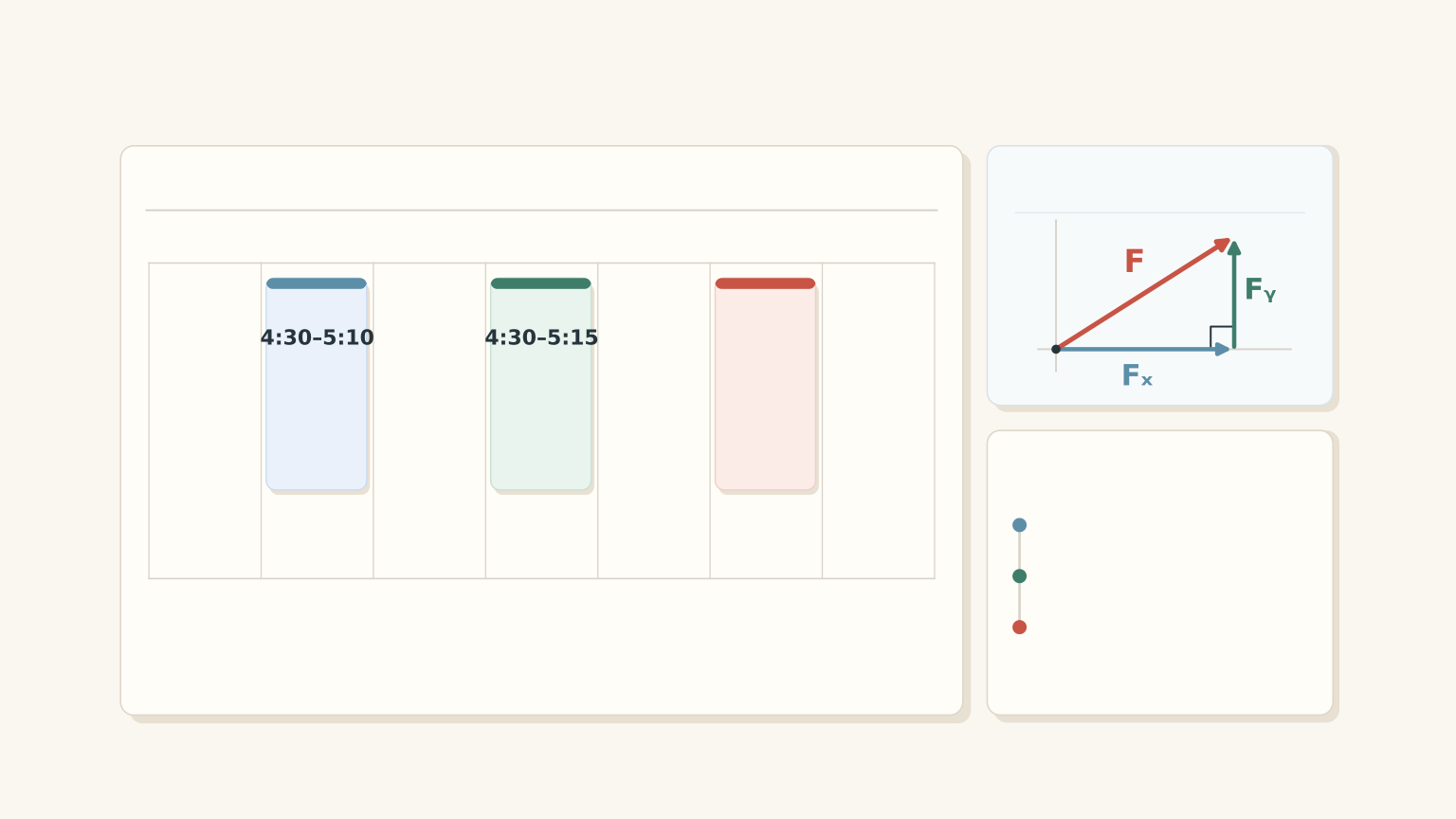
Due to technical limitations, this figure may display incorrectly or contain inaccuracies. Please check key details against your course materials.
07Questions and solutions
Question 1
I’ve missed three lessons, but I’ve already studied the topics at school. Do I still need to catch up before joining?
Solution 1
Not necessarily. If you already understand the material, you may only need a brief review.
The important distinction is between recognising a topic and being able to use it independently.
For example, you might remember learning about differentiation in Mathematics Extension 1, but still struggle to apply differentiation rules to unfamiliar questions.
Try a few questions from the missed lessons without looking at the solutions. If you can complete them confidently and explain your working, you probably don’t need to repeat the entire lesson sequence.
If you struggle, identify the specific concept causing the problem and review that material before moving on.
Question 2
The tutoring class is already studying a topic I haven’t covered at school. Should I wait until my school catches up?
Solution 2
Not automatically. School and tutoring classes don’t always follow identical teaching sequences.
You can study a topic ahead of your school class, provided you understand the prerequisites and have enough time to practise the material.
For instance, a Chemistry tutoring class might introduce a topic before your school begins teaching it. If you understand the relevant mole calculations and chemical equations, you may be perfectly capable of following the lesson.
However, if the new topic relies on concepts you haven’t studied, ask the tutor what background knowledge you need first.
The deciding factor is your understanding, not whether your school has reached the same chapter.
Question 3
If the tutoring provider gives me recordings of every missed lesson, is that enough to catch up?
Solution 3
Recordings are useful, but they aren’t a complete catch-up plan.
Watching someone solve a question can make the method seem straightforward. The real test is whether you can solve a similar question independently.
For each missed topic, aim to:
- Watch or review the original explanation.
- Write down the important definitions, formulas, or methods.
- Attempt several questions without looking at the worked solutions.
- Check your answers and identify mistakes.
- Revisit anything you still cannot explain.
If you can consistently apply the material, you’re much more likely to follow the established class.
If you keep getting stuck, ask for targeted help rather than watching the same recording repeatedly.
Question 4
The term only has a few lessons left. Is it better to wait for the next term?
Solution 4
It depends on the remaining content, the cost, and how much catch-up you need.
If the next few lessons cover important topics that you haven’t studied, joining now could be worthwhile, particularly if the tutor can help you address the missing prerequisites.
On the other hand, if the term is nearly finished and you would spend most of your time catching up, waiting for the next intake may be more sensible.
Compare the cost of the remaining sessions with the time you’ll need to catch up. Also consider whether you can use the remaining weeks for independent study before joining the next group.
There isn’t a universal number of missed lessons that makes joining too late. It comes down to whether you can participate meaningfully in the lessons that remain.
08Explore the next step
Joining partway through a term can be a useful next step. Share your subject, year, current topics and attempted work so the team can discuss the appropriate class and what preparation would help.
tutorgum offers live online small-group teaching for Year 11 and 12 Physics, Chemistry and Maths, with opportunities for questions and feedback on student responses. View the current classes, pricing and timetable and enquire about a first lesson. The published first-lesson arrangement charges the lesson normally if you continue; it is free if you decide not to continue.