
Can You Have Too Much HSC Tutoring? Audit Your Study Load
Plan a useful HSC tutoring workload with regular lessons, independent practice and clear learning goals that fit your weekly commitments.
Yes. You can have too much HSC tutoring. Not because there’s a magic number of hours, but because every tutoring session takes time from somewhere else. If your timetable is so full of lessons that you rarely attempt questions independently, you may be spending more time learning about a subject than actually learning how to do it.
The important question isn’t how many tutoring sessions you have. It’s whether those sessions leave you better equipped to solve problems without help.

Due to technical limitations, this figure may display incorrectly or contain inaccuracies. Please check key details against your course materials.
01Why more tutoring isn’t always better
Imagine your tutor spends an hour explaining a difficult Physics question. They identify the relevant equation, explain why it applies, work through the calculations, and show you how to avoid a common mistake.
By the end, everything makes sense.
Now imagine you close your notes and attempt a different question on your own. You aren’t sure which equation to use, so you get stuck before reaching the calculations.
What happened?
You understood the explanation, but you haven’t yet developed the ability to apply the method independently.
This is one of the biggest traps in HSC tutoring. Following someone else’s reasoning is not the same as producing your own.
Think about learning to play basketball. Watching a coach demonstrate a free throw can help you understand the technique, but you still need to take the shots yourself. Your coach can’t make every decision for you during a game.
Tutoring works similarly. Your tutor can demonstrate methods, correct mistakes, and explain difficult concepts. But you need independent practice to develop the ability to use those methods without prompts.
The analogy isn’t perfect: academic problem-solving involves much more reasoning than repeating a physical movement. However, the distinction between watching a demonstration and performing independently is important.
Guided practice versus independent practice
These are two different parts of learning.
Guided practice happens when someone helps you through a problem. Your tutor might suggest an equation, identify a relevant chemical principle, or point out an algebraic mistake.
Independent practice happens when you make those decisions yourself. You read the question, identify what you need, select an appropriate method, and work towards an answer without someone guiding each step.
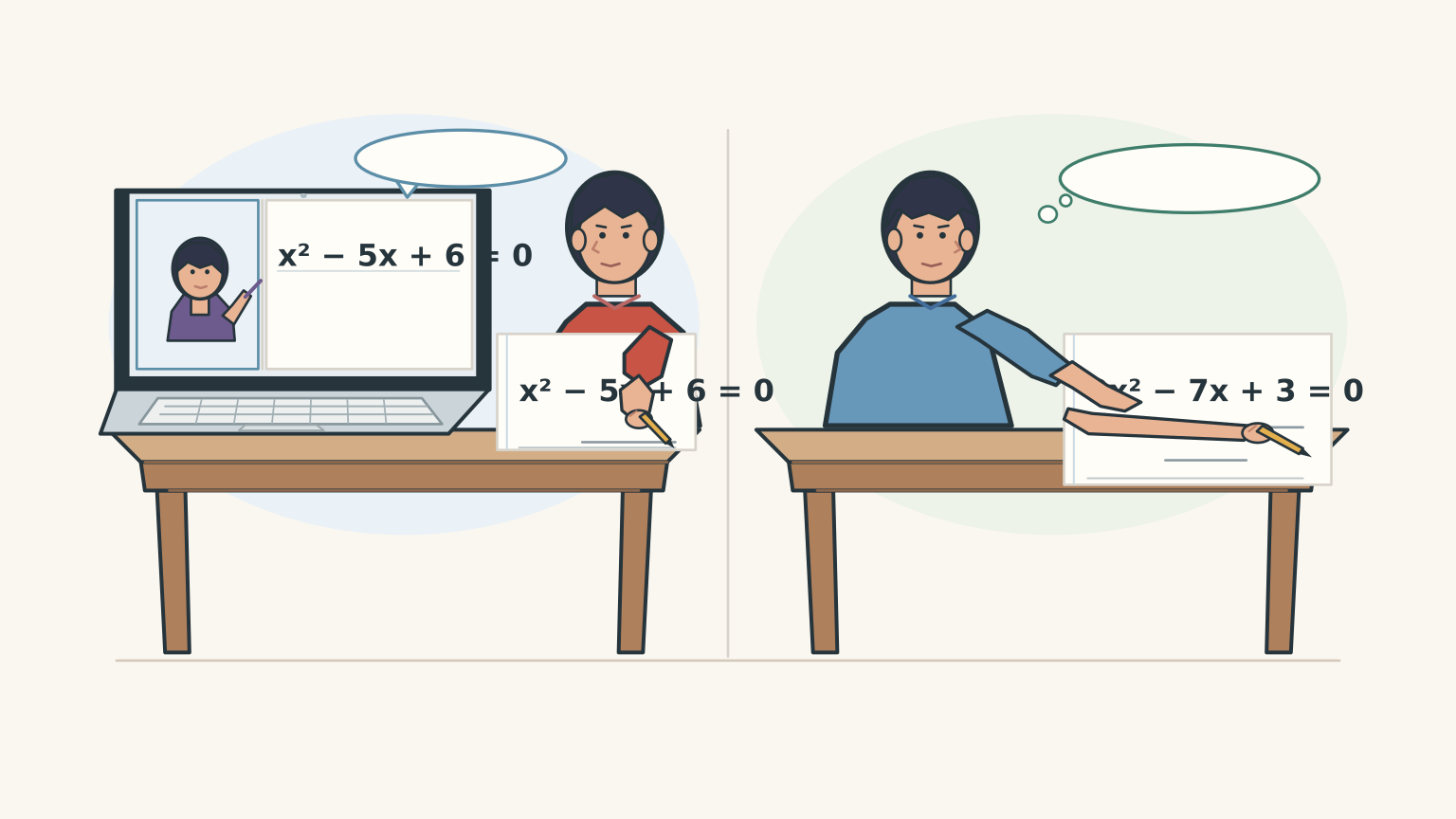
Due to technical limitations, this figure may display incorrectly or contain inaccuracies. Please check key details against your course materials.
Why does this distinction matter so much?
In an HSC examination, nobody tells you which equation to use or which mathematical technique to apply. You have to recognise the problem, choose an approach, and carry it through.
For example:
- In Physics, you need to recognise which physical principle explains an unfamiliar situation.
- In Chemistry, you need to select the appropriate chemical model and use it to explain or predict an outcome.
- In Mathematics Extension 1 and 2, you need to recognise which techniques are useful, sometimes combining several ideas in an unfamiliar question.
A tutoring session should help you develop these skills, not replace the need to practise them.
02How do you know if you have too much tutoring?
There isn’t a universal number of tutoring hours that works for every Year 11 or Year 12 student.
A student taking Physics, Chemistry, and Mathematics Extension 2 might have different support needs from someone studying Mathematics Extension 1 alongside other subjects.
Even two students taking exactly the same subjects can have very different timetables, assessment workloads, and areas of difficulty.
Instead of counting sessions alone, look for these warning signs.
1. You don’t have enough time to practise independently
This is probably the clearest warning sign.
Suppose you have tutoring for Physics on Monday, Chemistry on Tuesday, and Mathematics on Wednesday.
You understand the explanations during each lesson, but your remaining study time is spent completing school assignments and preparing for upcoming assessments.
By the weekend, you haven’t attempted many questions independently.
The problem is that tutoring has become the main way you interact with each subject. You’re receiving explanations without having enough time to test whether you can use them.
A useful tutoring session should lead to independent work afterwards. If your timetable doesn’t allow for that, something needs to change.
2. You’re covering the same material repeatedly
Tutoring should address something specific.
Perhaps you’re struggling with projectile motion in Physics, equilibrium calculations in Chemistry, or integration techniques in Mathematics Extension 1.
Your tutor should help you understand the relevant concepts, identify mistakes, and develop a better approach.
However, if you’re repeatedly attending lessons that explain material you already understand, those sessions might not be adding much value.
This can happen when your school teacher, private tutor, and independent revision are all covering exactly the same material without addressing a particular gap.
Repetition isn’t always bad. Revisiting a difficult concept can strengthen understanding. The problem is repeating explanations without progressing towards independent application.
3. Your schoolwork is constantly being pushed aside
Your tutoring timetable needs to fit around your actual HSC workload.
Consider everything competing for your time:
- School homework and assignments.
- Assessment preparation.
- Independent revision.
- Past-paper questions.
- Tutoring sessions and any preparation or follow-up work.
If attending tutoring regularly means postponing assignments or sacrificing time for practice questions, your schedule may be overcrowded.
This is particularly important during assessment periods, when several subjects can demand extra preparation at once.
4. You understand everything during lessons but struggle alone
This is slightly different from simply having too many sessions.
You might attend several tutoring lessons each week and feel confident because your tutor explains everything clearly.
But when you sit down to complete an unfamiliar question, you struggle to get started.
That suggests the lessons may be too tutor-led.
Rather than adding more explanations, you may need to change how you use your existing sessions. Attempt questions before your lesson, bring your working to your tutor, and spend time understanding exactly where your reasoning breaks down.
The goal is to leave the session able to complete a similar problem independently.
03How to audit your weekly tutoring load
Rather than guessing whether you’re doing too much, take a realistic look at your timetable.
The following audit helps you identify whether tutoring is taking up time that would be better spent elsewhere.
Step 1: Write down your actual weekly commitments
Start with a normal school week.
Include tutoring, homework, assignments, revision, and independent question practice.
Don’t write down what you hope to complete. Record what you realistically have time to do.
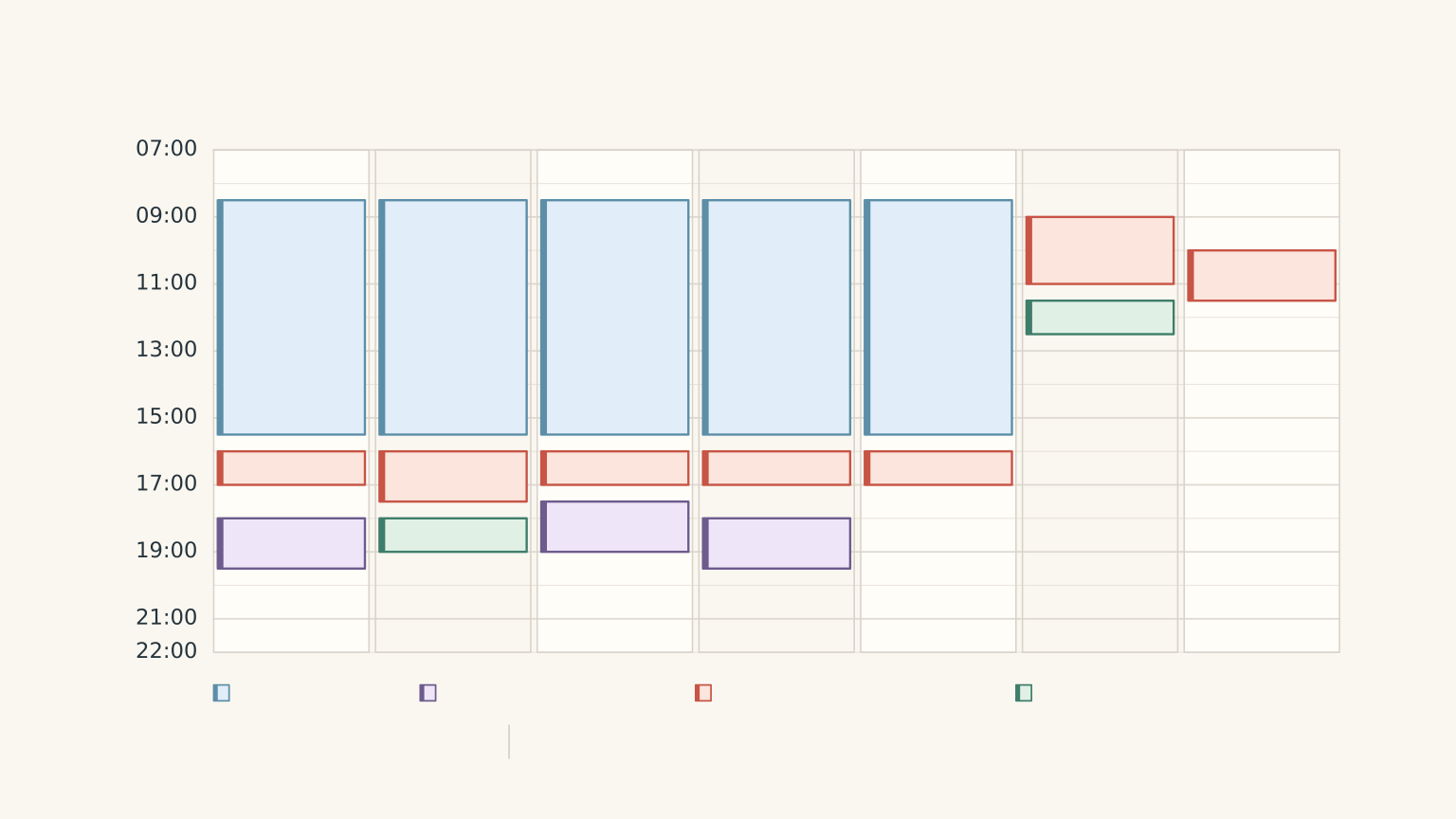
Due to technical limitations, this figure may display incorrectly or contain inaccuracies. Please check key details against your course materials.
Step 2: Separate tutoring time from independent study time
This distinction is essential.
An hour spent with your tutor is not automatically equivalent to an hour spent solving questions independently.
Use a table like this:
| Activity | Time spent | Purpose |
|---|---|---|
| Physics tutoring | 1 hour | Understand difficult concepts and receive feedback |
| Chemistry tutoring | 1 hour | Address gaps in chemical understanding |
| Maths Extension tutoring | 1.5 hours | Develop problem-solving techniques |
| Independent Physics practice | 30 minutes | Attempt questions without assistance |
| Independent Chemistry practice | 45 minutes | Apply concepts to unfamiliar questions |
| Independent Maths practice | 30 minutes | Solve questions without worked examples |
These are illustrative numbers, not recommended weekly targets.
The important thing is to see how much time you’re actually spending applying what you’ve learned.
Also, don’t count watching your tutor solve a question as independent practice. You need to make the decisions yourself.
Step 3: Identify what each tutoring session is achieving
For every session, ask yourself:
- What specific problem am I trying to solve?
- What can I do after this lesson that I couldn’t do before?
- Am I practising something independently between sessions?
- Is this session covering something another part of my study already addresses?
If you can’t identify a clear purpose for a session, it’s worth reconsidering how that time is being used.
Step 4: Look at what tutoring is replacing
This is where the audit becomes particularly useful.
Suppose you have an extra hour available each week.
You could spend it attending another tutoring session, or you could use it to attempt a set of unfamiliar examination questions.
Which option is more valuable?
It depends on what you’re struggling with.
If you genuinely don’t understand the underlying concept, targeted explanation might be the better use of time.
If you already understand the concept but struggle to apply it, independent practice and feedback might be more useful.
The mistake is assuming that another explanation will solve every learning problem.
04Two examples: When tutoring becomes too much
Let’s look at two different situations. Notice that the number of sessions isn’t the only thing determining whether the timetable works.
Example 1: Three subjects, but almost no independent practice
A Year 12 student studies Physics, Chemistry, and Mathematics Extension 1.
Their weekly tutoring schedule is:
| Subject | Tutoring time |
|---|---|
| Physics | 1 hour |
| Chemistry | 1 hour |
| Mathematics Extension 1 | 1.5 hours |
| Total | 3.5 hours |
They also have school assignments and assessment preparation.
After fitting everything into their timetable, they only manage around 30 minutes of independent question practice across all three subjects.
Is this too much tutoring?
The problem isn’t necessarily the 3.5 hours. It’s that the student has very little opportunity to apply what they’ve learned.
Imagine their Physics tutor explains a challenging problem involving conservation of momentum. The student follows every step, but never attempts a similar question independently.
When an unfamiliar momentum problem appears in an assessment, they struggle to identify the appropriate approach.
The solution isn’t automatically to remove Physics tutoring. Instead, the student should review which sessions are genuinely addressing different learning needs.
If one session is mostly repeating classroom explanations, it might be more useful to change its focus, consolidate overlapping support, or free up time for independent practice.
The aim is to make sure the student has time to use what they’ve learned.
Example 2: Only two sessions, but the timetable is still overcrowded
Now consider another student.
They have:
- One hour of Chemistry tutoring on Tuesday.
- One hour of Mathematics tutoring on Thursday.
- A major Chemistry assignment due on Wednesday.
- A Mathematics assessment the following Friday.
The student has enough tutoring to address their difficult topics, but the timing creates a problem.
The Chemistry session takes up the time they had planned to use for completing their assignment. The Mathematics session leaves little room to prepare for the upcoming assessment.
Would adding more tutoring help?
Probably not.
The problem is the arrangement of the existing commitments, rather than simply the number of sessions.
Moving a session, changing its focus, or adjusting the amount of work covered might make the timetable more manageable without losing the support the student needs.
These examples show why counting tutoring hours alone is a poor way to judge whether you’re doing too much.
05What should you change if your timetable is overcrowded?
Once you’ve completed your audit, decide what each tutoring session should contribute.
A simple decision process can help.
First: Does the session address a specific learning gap?
- If yes, identify what you should be able to do independently afterwards.
- If no, consider whether the session is repeating material you already understand.
Second: Do you have time to practise independently?
- If yes, check whether you’re actually using that time effectively.
- If no, reconsider the total tutoring commitment, session scope, or timing.
Third: Is your independent performance improving?
- If yes, the tutoring is contributing something useful.
- If no, change the way the sessions are structured before assuming you need more of them.
There are three main adjustments worth considering.
Keep sessions that address specific difficulties
If you’re struggling with a particular concept, and tutoring helps you understand it and apply it independently, there’s a clear reason to continue.
The important thing is that the session contributes something meaningful to your learning.
Change sessions that are too tutor-led
Sometimes the problem isn’t the amount of tutoring. It’s what happens during the lesson.
Instead of spending the entire session watching worked examples, try this approach:
- Attempt a question before the lesson.
- Show your tutor exactly where you became stuck.
- Work through the reasoning behind the difficulty.
- Attempt a similar question independently.
- Check whether you can now complete it without assistance.
This gives your tutor evidence of what you can and cannot do, rather than relying on how confident you feel during an explanation.
Reduce overlapping support if it crowds out practice
If two sessions are doing essentially the same job, consider whether both are necessary.
You might be better off using that time to complete questions, revise difficult concepts, or prepare for an upcoming assessment.
You don’t need to eliminate tutoring altogether. You need to make sure each session earns its place in your timetable.
06Questions and solutions
Question 1
You currently have four hours of HSC tutoring each week. Your schoolwork is up to date, and you have enough time to complete independent practice.
Does this automatically mean you have too much tutoring?
Solution 1
No. Four hours of tutoring is not automatically excessive.
The important considerations are whether each session addresses a genuine learning need and whether you can apply what you’ve learned independently.
If the sessions provide useful explanations and feedback, and your timetable still allows you to practise, there is no reason to assume the number is too high.
The same number of hours could be excessive for another student whose timetable leaves no time for independent work.
Question 2
A Mathematics Extension 1 student understands every example completed during tutoring but struggles to start unfamiliar examination questions.
They decide to add another weekly tutoring session so they can see more worked examples.
Is this the best first adjustment?
Solution 2
No. The first adjustment should be to change how the existing tutoring sessions are used.
The student can follow worked examples, but that doesn’t demonstrate that they can independently select and apply the relevant techniques.
Their next lesson should include questions they have attempted beforehand.
The tutor can then identify whether the difficulty comes from recognising the appropriate method, understanding a mathematical step, or making an error during the working.
The student should finish by attempting a fresh question without prompts.
Adding more worked examples might reinforce recognition, but it doesn’t necessarily address the difficulty with independent problem-solving.
Question 3
A Physics student has enough time for independent practice, but their tutor spends most lessons explaining concepts already covered successfully at school.
The student still struggles with unfamiliar application questions.
Should they simply continue attending because they have enough free time?
Solution 3
No. Having enough free time doesn’t automatically make every tutoring session worthwhile.
The problem is that the sessions aren’t addressing the student’s actual difficulty.
The student needs to move beyond repeating explanations and focus on applying physical principles to unfamiliar situations.
For example, understanding conservation of energy in a familiar problem doesn’t guarantee that they can recognise when it applies in a new physical situation.
A more useful session would involve attempting unfamiliar questions, identifying the relevant principles, and examining why particular approaches work or fail.
The tutor should help the student develop independent reasoning, rather than simply covering the same content again.
07Explore the next step
A productive tutoring timetable combines regular teaching with time to apply it. Start by clarifying your goals and organising practice around the lessons, rather than treating more or fewer hours as the answer on their own.
tutorgum offers live online small-group teaching for Year 11 and 12 Physics, Chemistry and Maths, with opportunities for questions and feedback on student responses. View the current classes, pricing and timetable and enquire about a first lesson. The published first-lesson arrangement charges the lesson normally if you continue; it is free if you decide not to continue.