
Can You Share a Private HSC Tutor with a Friend?
Compare sharing a private HSC tutor with a friend and joining a small-group class, including learning goals, feedback and cost.
Two friends book the same HSC tutor and agree to split the cost. It sounds like a straightforward way to make tutoring more affordable. But what happens when one student understands the topic already and the other is still struggling with the basics?
Sharing a private HSC tutor can work extremely well, provided both students have compatible learning goals and the tutor can give each person enough individual attention. You don’t need identical marks, confidence, or ability. You do need enough overlap in what you’re learning to make the same lesson useful to both of you.
The important distinction is this: sharing a tutor should mean sharing a learning opportunity, not sacrificing individual attention.
01When does sharing a private HSC tutor work?
The strongest pairings have three things in common:
- Both students study the same subject and course.
- Both are working on similar topics or skills.
- Their differences in ability are small enough that the tutor can accommodate them within one lesson.
That third point deserves some attention.
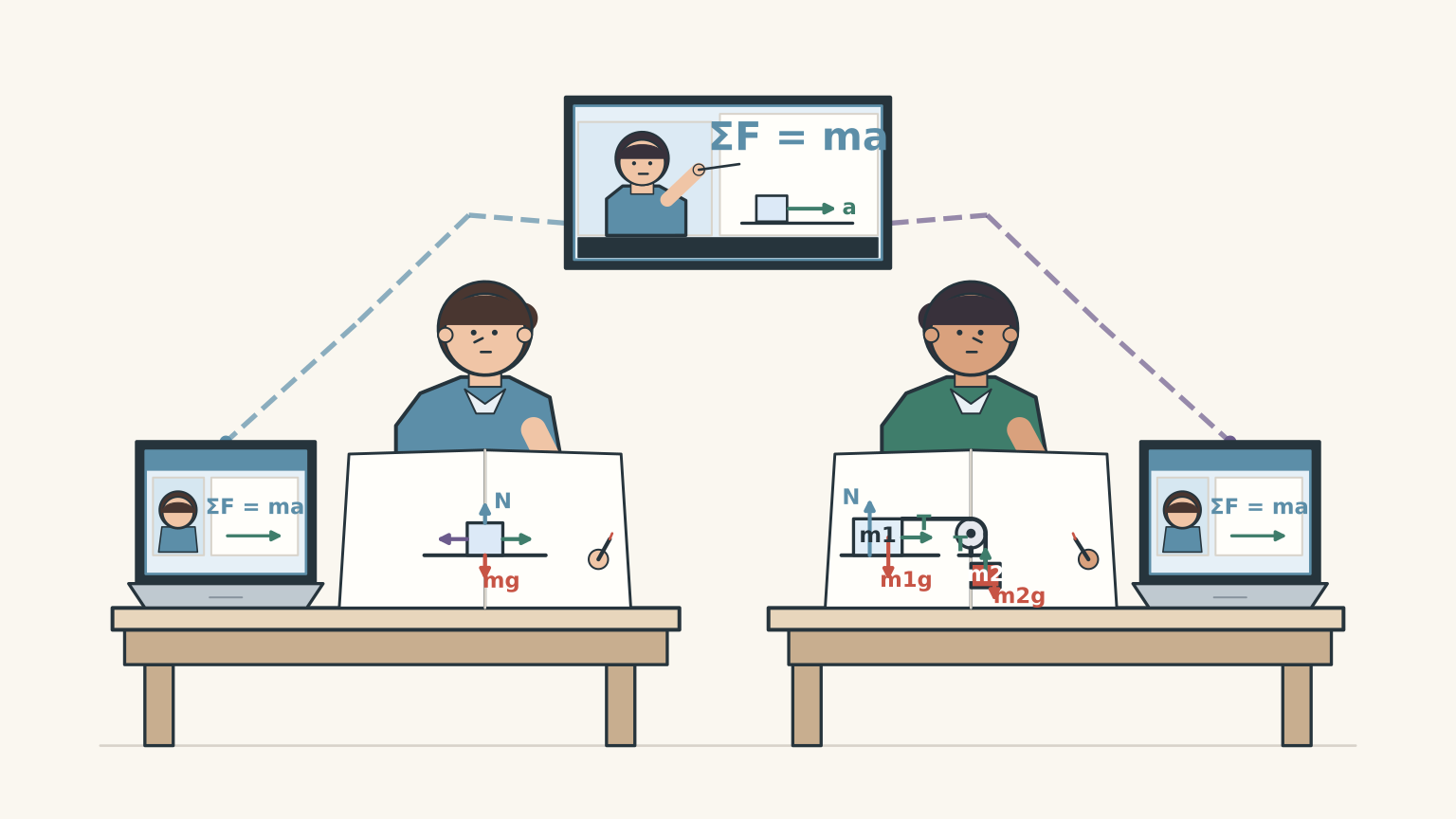
Imagine two students studying Newton’s laws in Year 11 Physics. One is reasonably confident drawing free-body diagrams but struggles to apply them to unfamiliar problems. The other understands the basic equations but needs more practice identifying forces.
Their skill levels aren’t identical, but they’re working towards a common goal: applying Newton’s laws correctly.
A tutor can teach the underlying concept to both students, then give them questions suited to their individual needs.
Now imagine one student is still learning how to rearrange basic equations while the other is ready for challenging multi-step problems. The tutor might spend most of the session helping one student catch up, leaving the other waiting.
The problem isn’t that one student is better at Physics. It’s that their immediate learning needs are too different.
Due to technical limitations, this figure may display incorrectly or contain inaccuracies. Please check key details against your course materials.
Different abilities don’t necessarily mean different lessons
A useful way to assess compatibility is to look at the actual skills each student needs to develop, rather than comparing their school marks.
| Situation | Is sharing likely to work? |
|---|---|
| Both study the same topic, but one needs more worked examples | Yes |
| Both understand the basics, but one wants harder questions | Yes |
| One needs foundational revision while the other studies an unrelated topic | Unlikely |
| Both are studying the same course but are at different points in the syllabus | Possibly, depending on the tutor’s plan |
| One student needs extensive individual attention throughout the session | Usually not |
A capable tutor should be able to explain how they’ll accommodate these differences before you commit.
For example, they might introduce a concept together, give each student a different difficulty of practice question, and then bring both students back together to discuss the underlying reasoning.
That gives you the benefits of learning together without requiring you to work at exactly the same level.
02A shared private lesson isn’t the same as a small-group class
These two arrangements are easy to confuse, but they serve slightly different purposes.
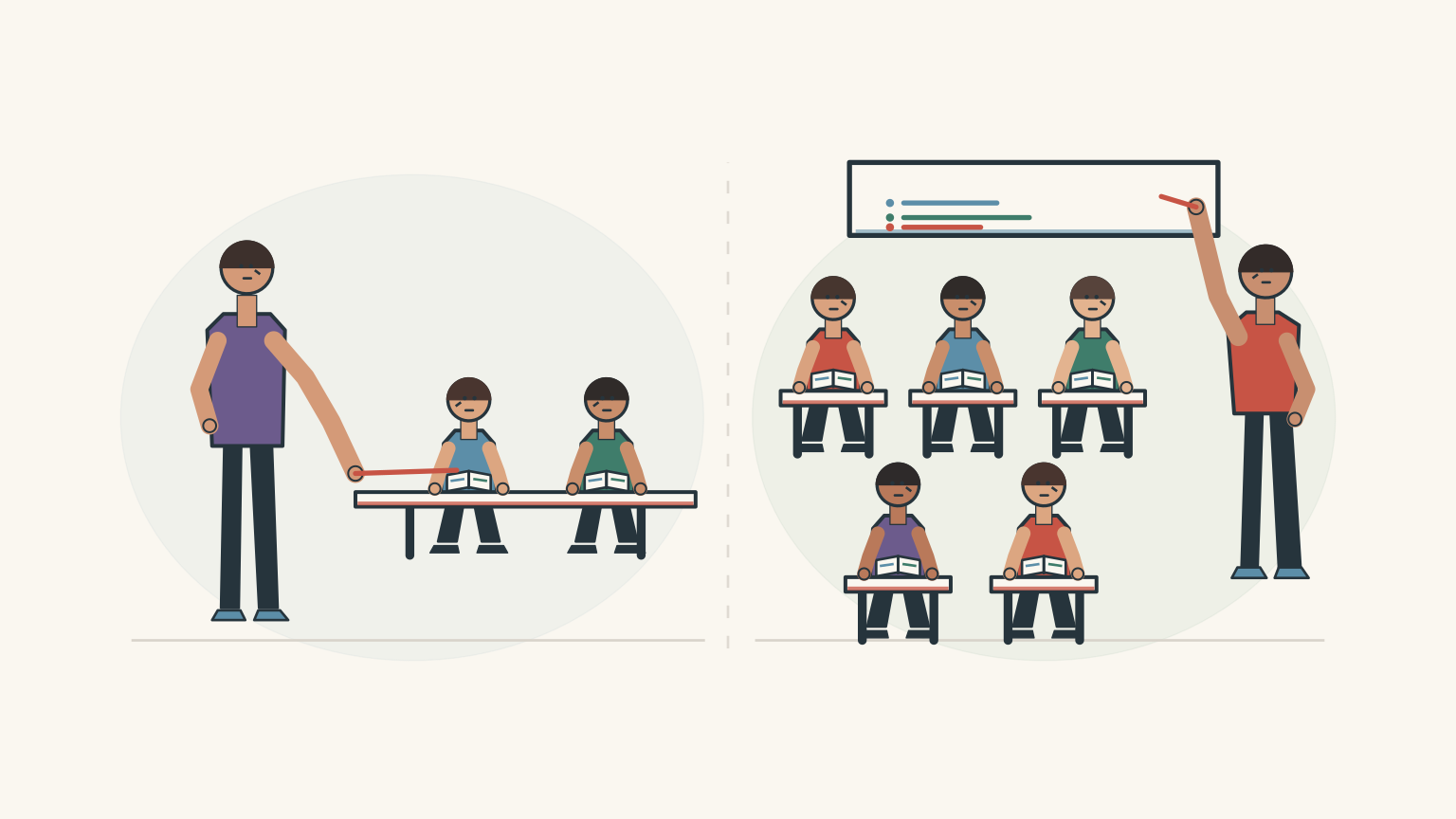
A shared private lesson involves two students organising a tutor together. An established small-group class is organised around a wider group of students, usually following a planned teaching sequence.
| Feature | Shared private tutoring | Established small-group class |
|---|---|---|
| Students | Two friends | A group of enrolled students |
| Lesson planning | Can be tailored to the pair’s needs | Usually follows a planned course or sequence |
| Learning pace | Can accommodate two different ability levels | Generally follows the group’s pace |
| Individual feedback | Tutor divides attention between two students | Tutor divides attention across the class |
| Cost | Agreed between the tutor and the two students | Usually charged according to the class’s fee structure |
| Flexibility | Can focus on the pair’s immediate learning needs | May have a set timetable and topic sequence |
Neither arrangement is automatically better.
A shared private lesson is useful when two students have similar goals but want some flexibility in how they’re taught.
A small-group class can be a better fit when students want a structured programme and don’t need the lesson built around their existing friendship or individual combination of strengths.
The important thing is to know which arrangement you’re actually paying for. A private lesson shared by two friends isn’t automatically equivalent to joining an established tutoring class.
Due to technical limitations, this figure may display incorrectly or contain inaccuracies. Please check key details against your course materials.
If you’re considering joining an existing class rather than organising a private pair lesson, see our guide to joining an HSC tutoring class halfway through a term.
03How should a tutor handle different skill levels?
A shared lesson needs more planning than simply putting two students in front of the same worksheet.
The tutor should have a clear strategy for teaching the shared material while identifying what each student needs individually.
A useful lesson structure might look like this:
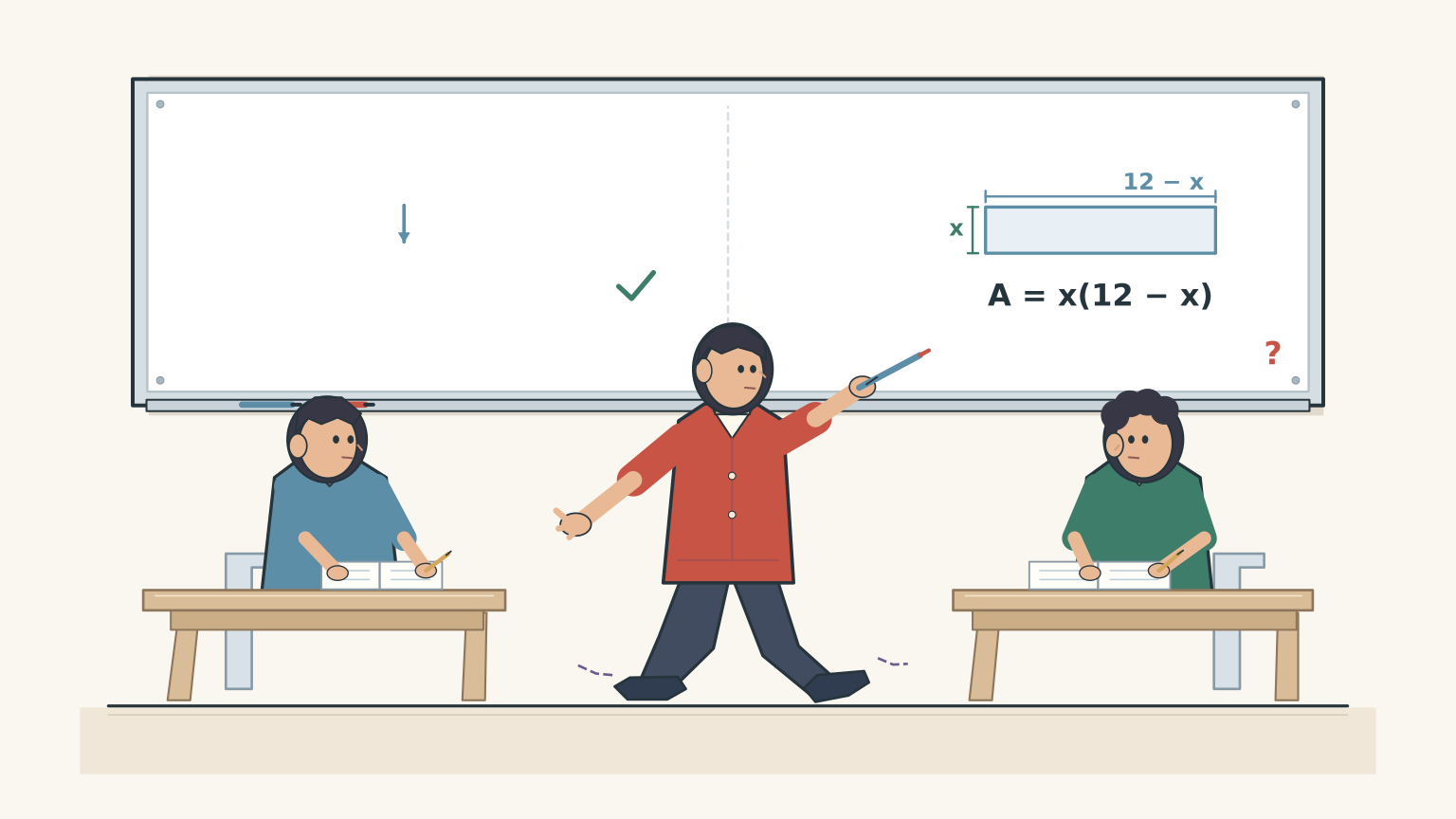
1. Start with a shared problem.
Both students attempt a question that tests the main concept. This gives the tutor an opportunity to identify what each person understands.
2. Identify individual gaps.
The tutor checks each student’s working. One might have difficulty understanding the concept, while the other makes mistakes applying it.
3. Adjust the practice questions.
Both students work on the same underlying idea, but the questions can have different levels of difficulty.
4. Give individual feedback.
The tutor checks each student’s reasoning rather than assuming that one student’s understanding represents both.
5. Finish with independent practice.
Each student attempts a question without help. This checks whether they can apply the concept themselves.
Due to technical limitations, this figure may display incorrectly or contain inaccuracies. Please check key details against your course materials.
This approach works because students can share explanations and learn from each other’s reasoning while still receiving instruction at an appropriate level.
It also avoids a common problem: one student becoming the unofficial assistant tutor.
Your friend might understand a topic more quickly, but that doesn’t mean they should be responsible for explaining it to you. Both students are paying for access to the tutor’s expertise.
04Can sharing a tutor improve accountability?
Yes, although it depends on how you approach the arrangement.
Studying with a friend can make it easier to stay consistent. You have someone to discuss difficult questions with, compare approaches, and remind you about practice between sessions.
Explaining a concept to someone else can also expose gaps in your own understanding. If you can follow a tutor’s explanation but can’t explain the reasoning yourself, you probably haven’t mastered the concept yet.
However, studying together has a potential downside.
Friends can become too comfortable relying on each other. One person might regularly provide the answers while the other copies the method without understanding it.
To avoid this, establish a few simple expectations:
- Attempt questions independently before discussing them.
- Take turns explaining your reasoning.
- Keep separate notes and records of mistakes.
- Complete your own homework and revision.
- Make sure the tutor checks both students’ working.
- Don’t allow one student to answer every question on behalf of the pair.
For online tutoring, both students should also be able to communicate directly with the tutor and show their own working. If one person does all the talking, the tutor may struggle to identify what the quieter student actually understands.
The aim is to make each other more accountable, not more dependent.
05What about privacy and consent?
This is easy to overlook when you’re organising tutoring with a friend.
You might be comfortable discussing difficult questions together, but that doesn’t automatically mean you’re comfortable sharing everything about your academic progress.
Before starting, agree on a few things.
Both students should genuinely want the arrangement.
Don’t agree to shared tutoring just because your friend wants to save money. You should feel comfortable asking questions, making mistakes, and admitting when you don’t understand something.
Decide what information can be shared.
Are you both comfortable discussing school marks, assessment results, homework, and areas of weakness in front of each other?
If not, ask the tutor to provide individual progress feedback privately.
Agree on how parents or carers are involved.
If a parent or carer is organising or paying for the sessions, clarify who receives updates, how fees are handled, and who communicates with the tutor.
Respect each other’s learning space.
You shouldn’t feel embarrassed about asking a basic question because your friend already knows the answer. Equally, the more confident student shouldn’t feel held back or discouraged from asking for harder questions.
If either student feels uncomfortable, a one-to-one arrangement may be more appropriate.
06How much can you save by splitting the cost?
The financial benefit is one of the main reasons students consider sharing a private tutor.
However, it’s important to distinguish between the total lesson fee and the amount each student pays.
Consider this example.
Worked scenario: Splitting a tutoring fee
Suppose a tutor offers the following hypothetical prices:
| Arrangement | Total cost | Cost per student |
|---|---|---|
| One 60-minute private lesson | $90 | $90 |
| One 60-minute shared lesson | $120 | $60 |
If two students share the private lesson, the calculation is:
\[ \text{Cost per student}=\frac{\$120}{2} \]
\[ =\$60 \]
Each student pays $30 less than they would for an individual lesson at the hypothetical $90 rate.
Together, the two students pay $120 instead of $180 for two separate lessons.
That’s a saving of $60 across the pair.
These figures are illustrative only, not advertised tutoring rates or tutorgum fees.
But there’s an important qualification: you’re not receiving the same amount of individual tutor attention as you would in a one-to-one lesson.
A shared lesson is only better value if both students receive enough explanation, feedback, and practice to make the session worthwhile.
What happens if one student misses a lesson?
This is another issue to settle before booking.
Suppose you’ve agreed to split a $120 lesson equally. One student becomes unavailable at short notice.
Does the remaining student:
- Pay the full $120?
- Reschedule the session?
- Pay their original $60 while the absent student remains responsible for their share?
- Lose the session altogether?
There isn’t one arrangement that will suit every tutor or pair of students.
Ask about cancellations, missed lessons, and what happens if one person withdraws from the arrangement.
Also clarify whether the quoted price is the total fee for both students or the price per student. Don’t assume that a shared lesson automatically means the tutor’s normal one-to-one fee is simply divided in half.
07Check that you’re studying the same NESA syllabus
This is particularly important for NSW HSC students.
Two students might both say they’re studying Physics, Chemistry, or Mathematics Extension 1, but that doesn’t necessarily mean they’re following the same syllabus or working towards the same HSC examination.
NESA is introducing new Stage 6 syllabuses at different times across subjects.
As at 15 November 2026, the relevant implementation dates are:
| Subject | Syllabus transition |
|---|---|
| Mathematics Extension 1 | The 2024 syllabus is being implemented from 2026. New Year 12 teaching begins in Term 4 2026, with the first HSC examination under the new syllabus in 2027. |
| Mathematics Extension 2 | The 2024 syllabus begins in Term 4 2026, with the first HSC examination under the new syllabus in 2027. Extension 2 is a Year 12 course. |
| Physics | The 2025 syllabus begins for Year 11 in 2027. Year 12 students in 2027 continue with the 2017 syllabus. The first HSC examination under the new syllabus is in 2028. |
| Chemistry | The 2025 syllabus begins for Year 11 in 2028. Year 12 students in 2028 continue with the 2017 syllabus. The first HSC examination under the new syllabus is in 2029. |
You can check the official implementation information through NESA:
These dates are especially relevant if one student is accelerating a subject, repeating a course, or studying outside the usual year-level sequence.
Before booking, confirm that both students are following the appropriate syllabus and are working towards compatible course requirements.
Even when the syllabus is identical, check that you’re studying similar topics at the same time. One student working through equilibrium while the other is revising organic chemistry may not get much value from a shared lesson.
08Checklist: What should you agree on before sharing a tutor?
Before committing, work through these points with your friend and the tutor.
Learning compatibility
- [ ] We study the same subject and course.
- [ ] We are following compatible NESA syllabus requirements.
- [ ] Our current topics and learning goals overlap.
- [ ] The tutor understands our different strengths and weaknesses.
- [ ] We can both receive individual feedback.
Lesson arrangements
- [ ] The tutor agrees to teach two students in a private lesson.
- [ ] We understand how the lesson will accommodate different skill levels.
- [ ] We can both ask questions and participate.
- [ ] We will each receive individual practice or next steps.
- [ ] We know whether the arrangement is a private pair lesson or an established group class.
Money and attendance
- [ ] We know the total lesson fee.
- [ ] We know exactly how much each student pays.
- [ ] We have agreed on payment responsibilities.
- [ ] We understand the cancellation and rescheduling arrangements.
- [ ] We know what happens if one student stops attending.
Consent and accountability
- [ ] Both students genuinely want to share the tutor.
- [ ] We are comfortable discussing our learning difficulties together.
- [ ] We understand what progress information will be shared.
- [ ] We agree to complete our own practice and homework.
09Explore the next step
A paired private lesson is one possible arrangement when two students have compatible goals. A structured small-group class is another way to combine shared learning, opportunities for feedback and a manageable ongoing cost.
tutorgum offers live online small-group teaching for Year 11 and 12 Physics, Chemistry and Maths, with opportunities for questions and feedback on student responses. View the current classes, pricing and timetable and enquire about a first lesson. The published first-lesson arrangement charges the lesson normally if you continue; it is free if you decide not to continue.