
How to Study for the HSC Without a Quiet Space
You don't need a private bedroom or silent study room to prepare effectively for the HSC. Learn how to use school libraries, public study spaces, household agreements, and portable revision tasks to build a realistic study routine.
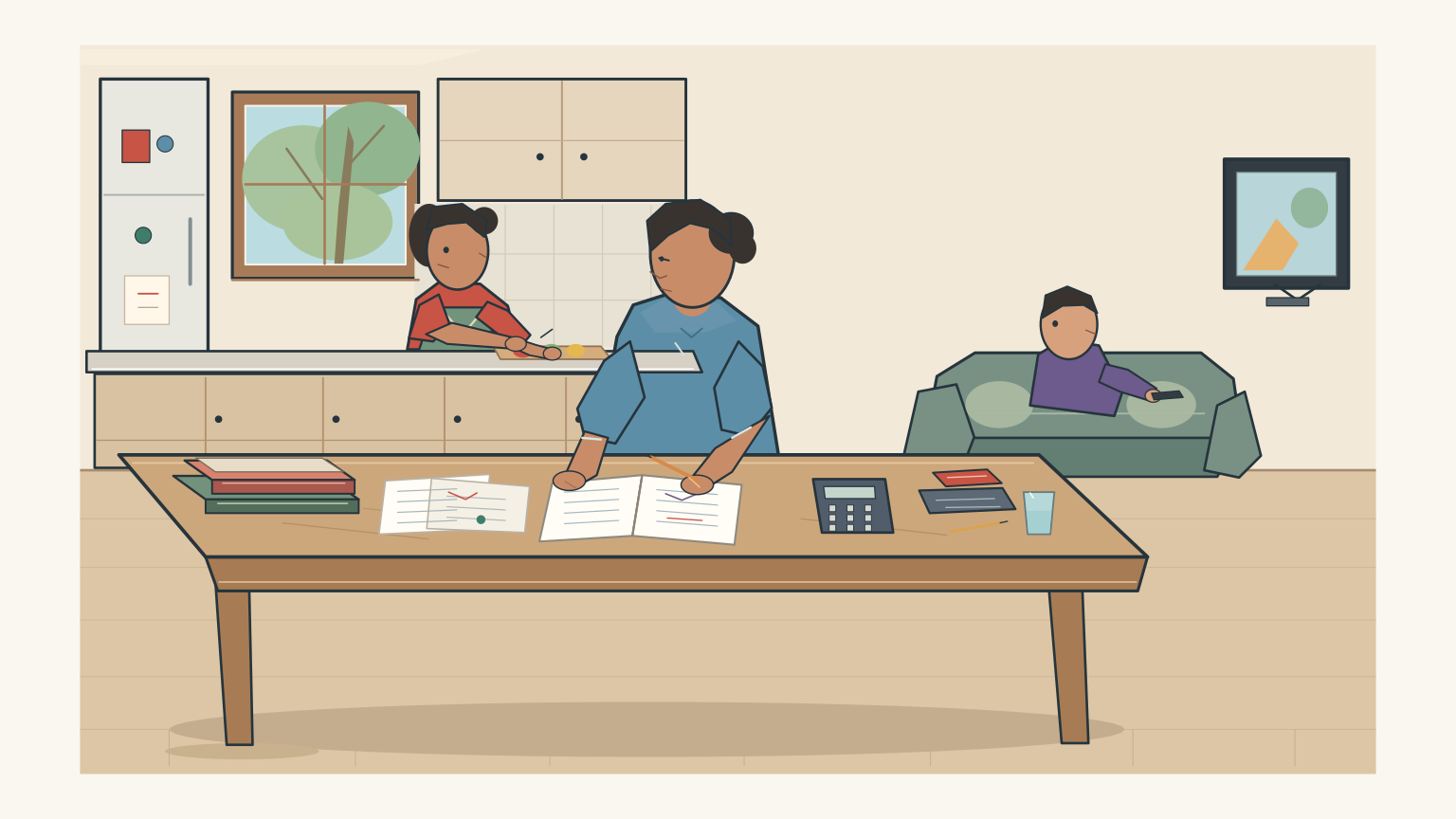
You’re halfway through a multi-step maths question at the kitchen table. Someone asks you to move your bag, a sibling turns on the television, and when you look back at the page, you’ve lost track of what you were doing.
It is tempting to conclude that you simply cannot study properly without a quiet bedroom or a desk of your own. But that’s not true. You can make meaningful HSC progress without a private study space. The trick is to match the work to the environment, find small windows of uninterrupted time, and make better use of the spaces already available to you.
So, should you spend 20 noisy minutes trying to learn a completely new Physics concept, or use that time to test yourself on material you’ve already covered?
Usually, the second option makes more sense. Different study tasks need different conditions, and recognising that difference makes studying around a busy household much easier.
Due to technical limitations, this figure may display incorrectly or contain inaccuracies. Please check key details against your course materials.
01Understand the difference between noise and interruptions
Before choosing where to study, it helps to understand what actually makes a study environment difficult.
There are two separate problems:
- Background noise: Sounds such as traffic, a television in another room, or people talking nearby.
- Interruptions: Someone directly asks you a question, needs your help, or requires you to stop what you’re doing.
These aren’t quite the same.
Background noise can make concentration harder, particularly when you’re trying to understand unfamiliar material. However, an interruption can be especially disruptive because it forces you to switch away from your current problem.
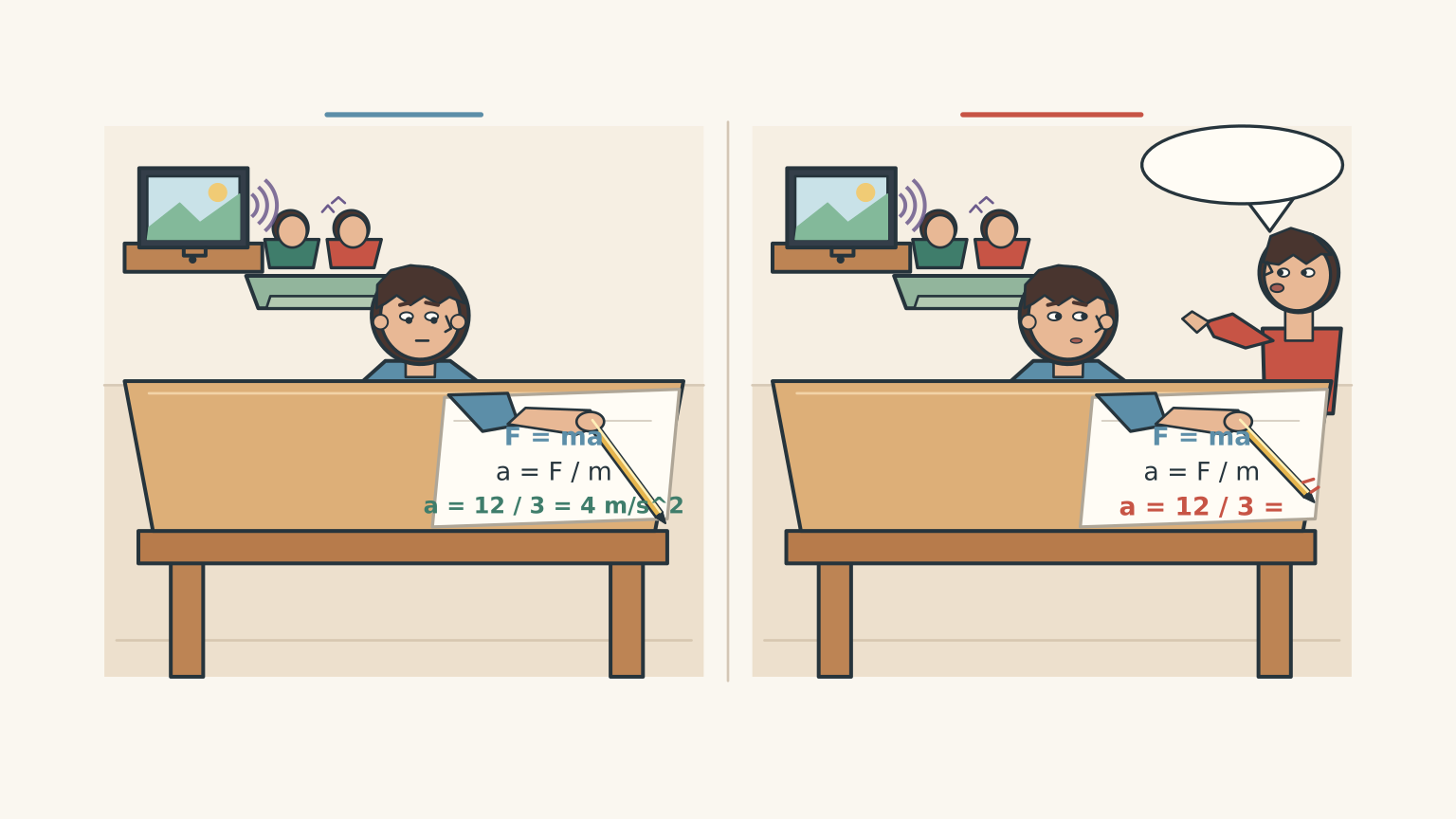
Imagine you’re solving a Physics question involving several stages. You’ve identified the known quantities, selected an equation, and are halfway through rearranging it.
Someone interrupts you.
Even if the conversation only takes a minute, you might return to the page without remembering your original approach. You now have to reconstruct your reasoning before continuing.
This is why protecting uninterrupted time is often more useful than trying to eliminate every background sound.
Due to technical limitations, this figure may display incorrectly or contain inaccuracies. Please check key details against your course materials.
Does this mean you can’t do difficult work unless the room is completely silent?
No. But you should aim to do your most demanding work in the quietest environment you can reasonably access.
When that’s not possible, choose tasks that are easier to pause and restart.
02Match your study task to your environment
One of the biggest mistakes students make is assuming that every study task requires the same level of concentration.
It doesn’t.
Learning a new mathematical technique requires a different kind of attention from reviewing flashcards or checking answers to questions you’ve already attempted.
Think about your study tasks in three groups.
| Type of study | Examples | Suitable environment |
|---|---|---|
| High concentration | Learning new concepts, solving unfamiliar multi-step questions, writing timed responses | Quiet school library, public library, or protected time at home |
| Moderate concentration | Correcting mistakes, marking practice questions, planning essays, reviewing worked examples | Shared study table, quieter part of the home, school common study area |
| Portable study | Flashcards, formula recall, definitions, short self-tests, planning your next session | Lunch breaks, waiting time, shared living spaces |
This gives you a useful decision rule.
Save your quietest available time for the work that requires the most thinking.
For example, suppose you’re studying Chemistry and need to understand a new equilibrium calculation.
That is probably not the best task for a noisy 10-minute window before dinner. You need enough uninterrupted time to understand the relationships between the quantities, follow the calculation, and recognise why each step works.
However, reviewing definitions or testing yourself on previously learned equations is much easier to do in shorter sessions.
The same principle applies to Mathematics Extension 1 and Extension 2. Working through an unfamiliar proof or difficult integration question deserves more concentration than checking whether you can recall a familiar identity.
Make portable study genuinely useful
Portable study doesn’t mean repeatedly reading your notes while waiting for something else to happen.
Instead, use active recall.
Active recall means trying to retrieve information from memory before looking at your notes.
For example:
- Close your Chemistry textbook.
- Write down three important definitions from the topic you’re revising.
- Reconstruct a relevant equation from memory.
- Check your answers against your notes.
- Correct anything you missed.
You can do this in 10 minutes at lunch or while waiting for an appointment.
It’s a much more purposeful use of that time than simply rereading the same page.
Due to technical limitations, this figure may display incorrectly or contain inaccuracies. Please check key details against your course materials.
03Start with the spaces available at school
Your school might already have the most convenient solution.
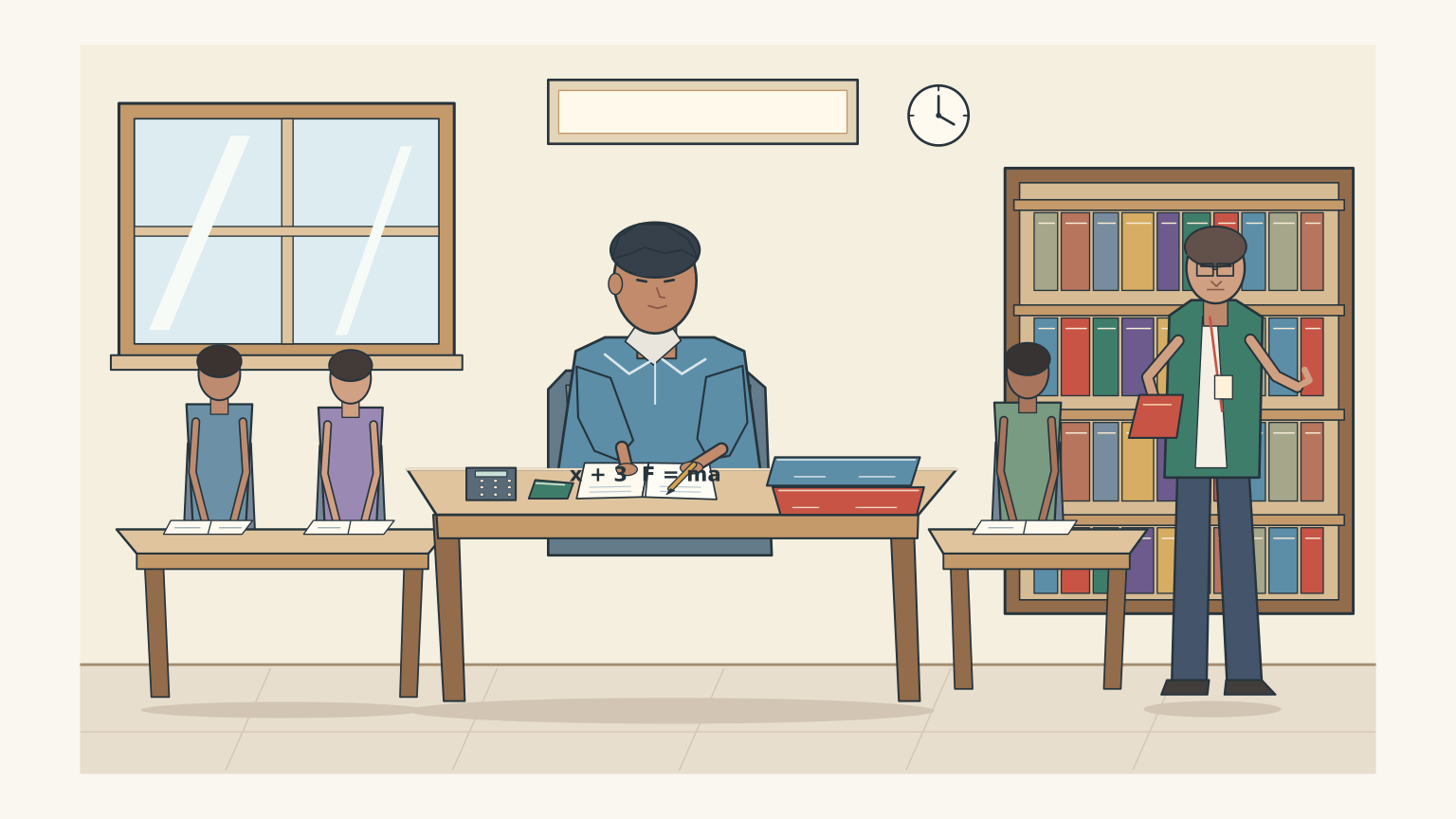
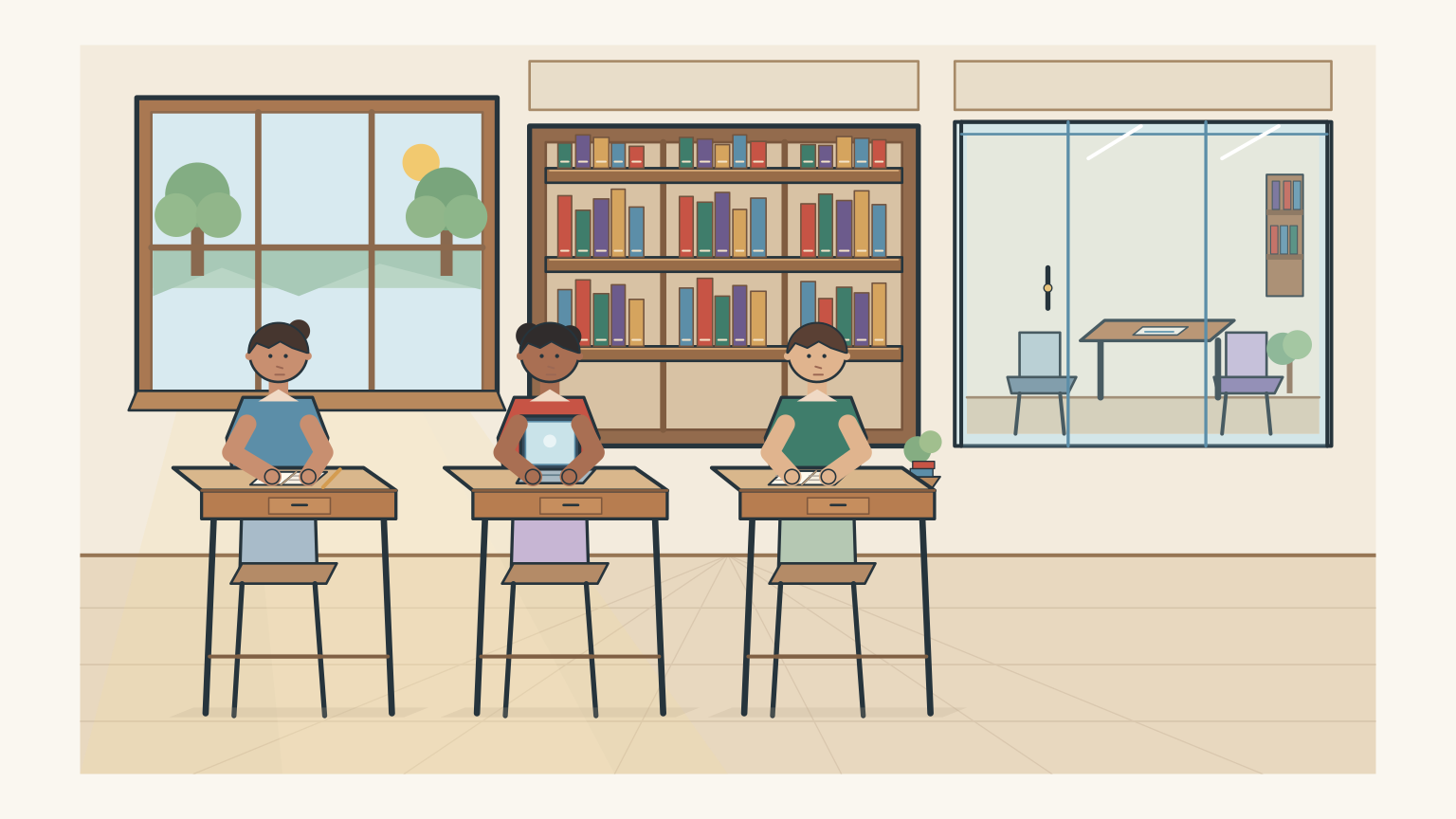
Many schools have libraries, supervised study areas, classrooms available at designated times, or spaces students can use during lunch and before or after school.
However, access differs between schools. Don’t assume that an empty classroom or library is available whenever you want to use it.
Ask your school librarian, year adviser, or a teacher about the options.
A few useful questions:
- Is the school library open before school or after the final bell?
- Can Year 11 and 12 students use a designated study room during lunch?
- Are there supervised classrooms available for independent study?
- Do you need permission or a booking to stay after school?
- Are there particular days when study spaces are available for longer?
- What time must students leave the building?
The last question is particularly important if you rely on public transport.
A school library that closes shortly after the final bell might still be useful for a focused 30-minute study session. You don’t need to spend an entire afternoon there.
Why school study spaces are worth considering
There are a few practical advantages:
- You don’t need to travel somewhere else.
- You’re already in an environment associated with learning.
- You may be able to ask a teacher a question when you’re stuck.
- You can establish a regular study routine around your existing timetable.
For example, you might use two afternoons each week to complete your most difficult Mathematics or Physics questions before heading home.
That leaves the noisier parts of your evening available for revision tasks that are easier to complete in short sessions.
Due to technical limitations, this figure may display incorrectly or contain inaccuracies. Please check key details against your course materials.
04Find a public library near you
If your home is consistently busy, a local public library can provide a useful alternative.
You don’t necessarily need to travel into the city or pay for a private study facility. NSW has a large network of public libraries managed by local councils.
The State Library of NSW provides an official directory of public libraries across NSW, including addresses, contact details, and links to individual library websites.
Public libraries operate under the NSW public-library framework, which provides free access to library materials on site and free membership for eligible local residents and ratepayers. You can read more about this through the State Library’s summary of the Library Act.
However, don’t assume every library has the same facilities or opening hours.
Before making a library part of your weekly routine, check the following.
| What to check | Why it matters |
|---|---|
| Opening hours | Some branches close relatively early or have different weekend hours |
| Quiet study areas | A library may have busy communal areas alongside quieter desks |
| Study room bookings | Some locations offer rooms that need to be reserved |
| Membership requirements | Check whether membership is needed for particular facilities |
| Wi-Fi and power outlets | Important if you use a laptop or online resources |
| Food and drink rules | These vary between locations and rooms |
| Transport | Make sure you can get there and home safely within your available time |
A library being open doesn’t automatically mean every part of it is suitable for quiet study.
If you’re unsure, call the branch and ask whether it has a quiet study area suitable for secondary students.
A specific option: State Library of NSW
If you live in or can conveniently travel to Sydney CBD, the State Library of NSW is another option.
Its Bashir Reading Room provides quiet workspaces, computers, and study rooms that can be used for HSC study.
As at 15 November 2026, the published reading-room hours are:
| Day | Opening hours |
|---|---|
| Monday-Thursday | 9 am-8 pm |
| Friday | 9 am-5 pm |
| Saturday-Sunday | 10 am-5 pm |
The Library also offers study rooms that are free to book for Library members. Bookings can be made up to two weeks in advance, for up to two hours per day. You must check in within 15 minutes of your booking time.
NSW residents can join the State Library for free.
Check the current opening hours and study room conditions before travelling, as hours and availability can change.
The important point is that you have options beyond your bedroom. A council library close to home may be just as useful as a larger facility in the city.
Due to technical limitations, this figure may display incorrectly or contain inaccuracies. Please check key details against your course materials.
05Make an agreement with the people you live with
Sometimes the problem isn’t finding another location. It’s making your existing home environment more predictable.
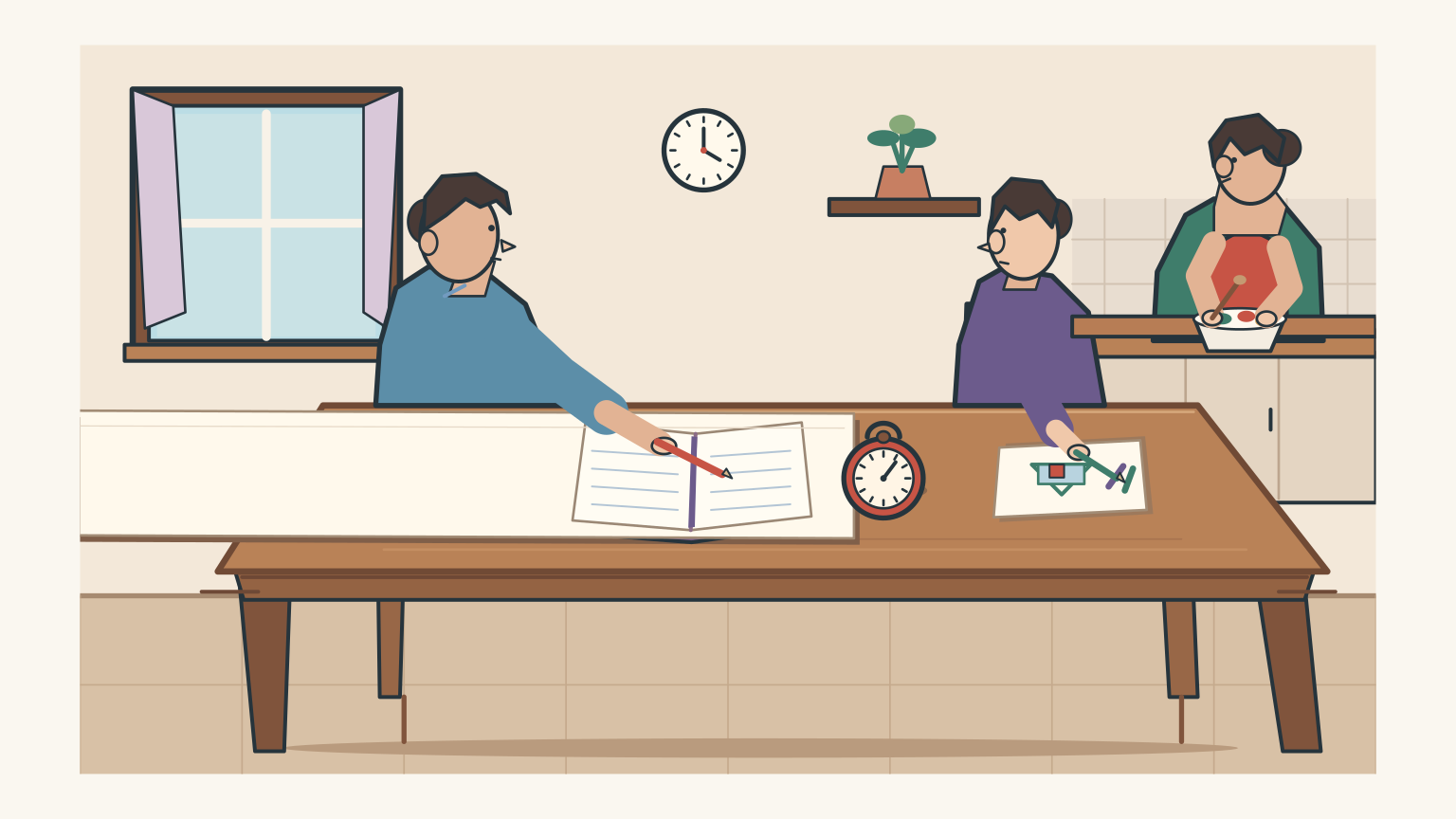
If you share a living space with siblings, parents, grandparents, or other family members, you might not be able to control when people make noise.
You can, however, try to agree on a short period when interruptions are minimised.
The key is to ask for something specific.
Asking everyone to stay quiet for the entire evening is probably unrealistic. Asking for 25 uninterrupted minutes is a much more manageable request.
For example:
I’m going to work on one difficult Maths question between 6:30 and 6:55. Could you avoid interrupting me during that time unless something is urgent? I’ll be available afterwards.
This works better than a vague request because everyone knows:
- Exactly when you need the time.
- How long the arrangement will last.
- When you’ll be available again.
- What counts as an urgent interruption.
You can also make a few small adjustments to your study setup.
Choose a consistent spot
You don’t need a separate room.
Try to find a place where you can:
- Sit with your back towards household activity.
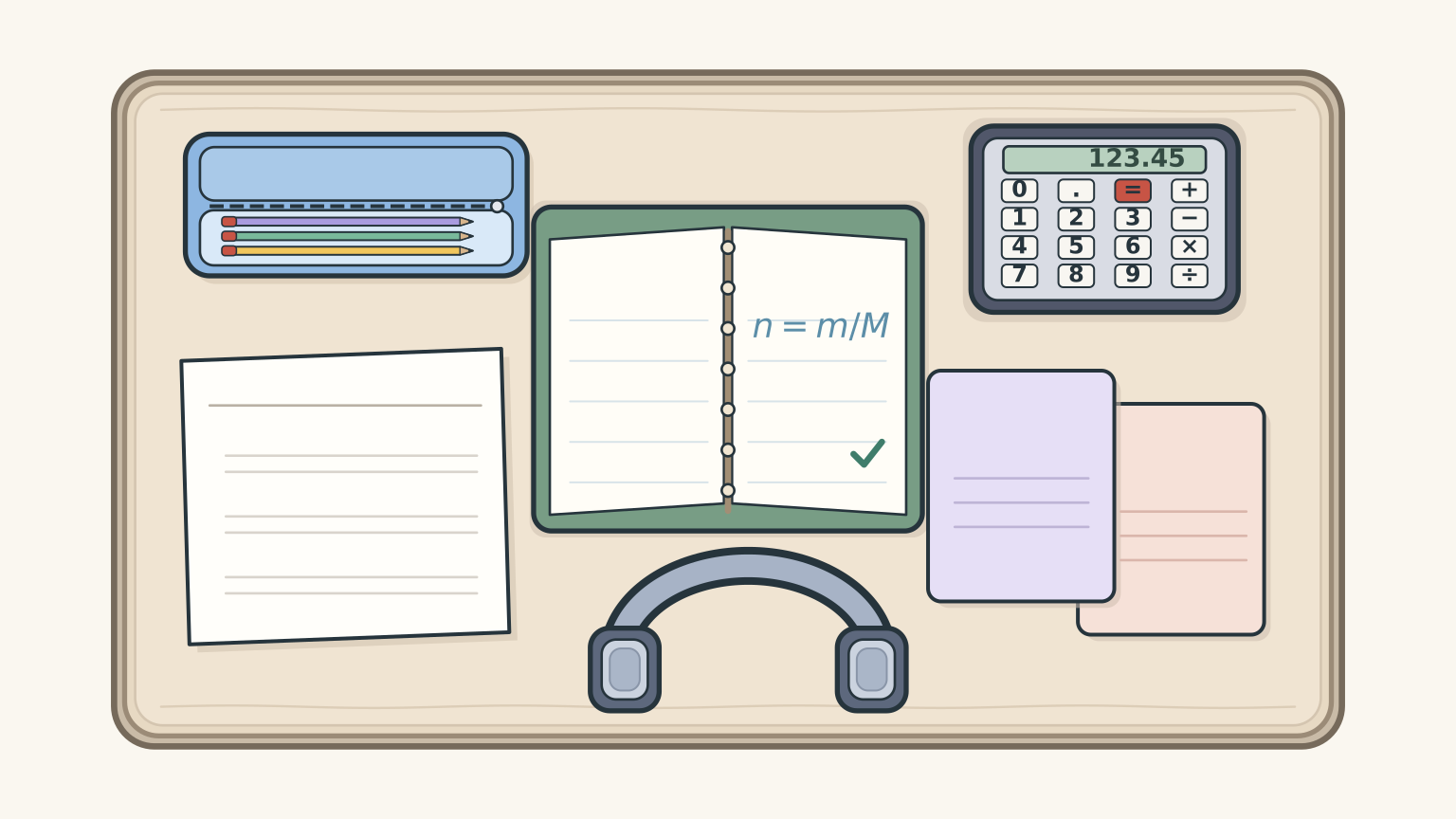
- Keep your books and calculator together.
- Avoid people regularly walking past.
- Leave your phone somewhere it won’t distract you.
- Use headphones or earplugs if appropriate and permitted.
Even a small corner of a dining table can become a useful study spot if you use it consistently.
Agree on a signal
If people frequently interrupt without realising you’re working, a simple visual signal can help.
For example, you could place a small note on the table saying:
Studying until 7:00 pm. Please ask me afterwards unless it’s urgent.
This won’t eliminate every interruption, but it makes your study time visible to the people around you.
Due to technical limitations, this figure may display incorrectly or contain inaccuracies. Please check key details against your course materials.
If your household responsibilities make even short protected periods difficult, don’t build your study timetable around an arrangement that isn’t realistic. Look for a school or library option instead, and consider speaking with your year adviser about available supervised study spaces.
06Build a portable study routine
A portable study routine means having a small collection of tasks that you can complete without needing a full desk setup.
This is particularly useful when your available study time changes from day to day.
Instead of asking yourself, “How can I study right now?”, decide in advance what work you can complete in different environments.
For example:
| Situation | Useful task |
|---|---|
| 10 minutes before class | Test yourself on five definitions |
| 15 minutes at lunch | Recall important equations without notes |
| Waiting for an appointment | Review flashcards |
| 20 minutes at home with background noise | Correct previously attempted questions |
| 30 minutes in a quiet library | Learn a new concept and attempt practice questions |
| 45 minutes of uninterrupted time | Complete a difficult exam-style question or timed response |
The advantage is that you don’t waste your available time deciding what to do.
Keep a study restart note
There’s another useful technique if you’re frequently interrupted halfway through a difficult question.
Before putting your work away, write three things:
- What am I trying to find?
- What have I already worked out?
- What is the next step?
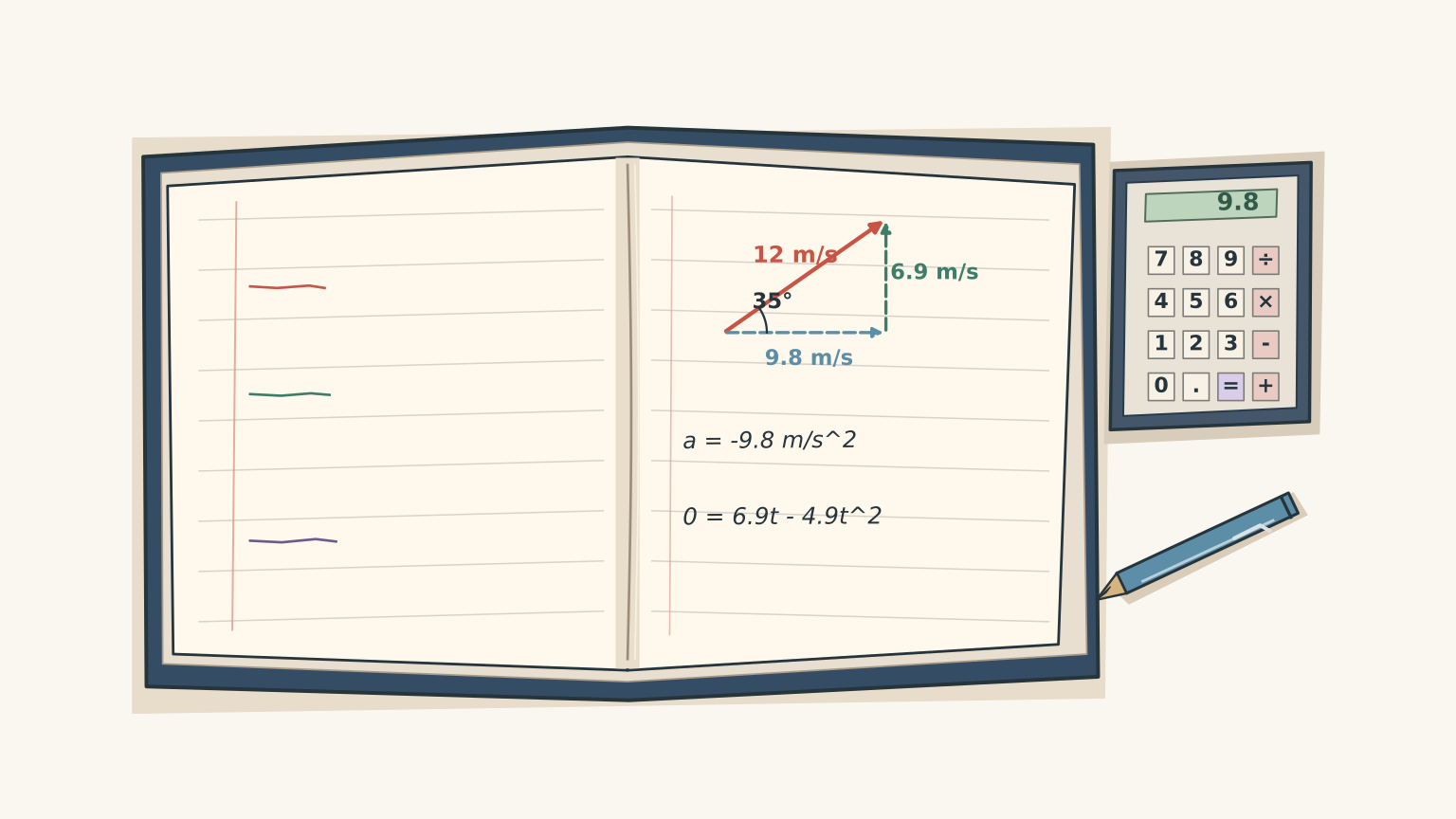
For example, suppose you’re solving a projectile motion question.
Your restart note might say:
- Goal: Find the total time of flight.
- Completed: Resolved the initial velocity into horizontal and vertical components.
- Next step: Use the vertical displacement equation to determine the time.
When you return, you don’t have to start the problem again or reconstruct your entire approach.
This is particularly useful for Mathematics and Physics questions where several steps depend on earlier calculations.
It also works for Chemistry. You could record which quantities you’ve identified, which equation you’ve selected, and which part of the calculation remains unfinished.
Due to technical limitations, this figure may display incorrectly or contain inaccuracies. Please check key details against your course materials.
07A realistic example: Organising a study afternoon
Let’s put these ideas together.
Imagine you have three things to complete:
- Learn a new Chemistry calculation method.
- Revise 15 important Chemistry definitions.
- Correct two questions you got wrong in yesterday’s Mathematics practice.
Your school confirms that its library is available for 35 minutes after the final bell. At home, the busiest period is between 5 pm and 7 pm, but things become quieter afterwards.
Rather than trying to complete everything at home, divide the work according to the available conditions.
| Time | Location | Task |
|---|---|---|
| 3:15-3:50 pm | School library | Learn the Chemistry method and attempt a practice question |
| 5:30-5:45 pm | Home | Test yourself on the 15 Chemistry definitions |
| After 7 pm | Home | Correct the two Mathematics questions |
Notice what happens here.
The most demanding task gets the quietest available time. The definitions are suitable for a shorter, noisier session because you can test yourself in small groups. The Mathematics corrections happen when the household is quieter and you have more time to examine your mistakes.
If the house remains noisy after 7 pm, you can still prepare a restart note and finish the corrections during your next school study session.
You haven’t abandoned any of the work. You’ve simply organised it around the conditions you actually have.
08A simple decision rule for choosing where to study
When you’re planning your next study session, use these three questions.
First: Does the task require several connected steps or a completely new idea?
- Yes: Prioritise the quietest approved space available.
- No: Consider completing it during a shorter portable study session.
Second: Can you protect 20-30 minutes from interruptions?
- Yes: Set one specific outcome and work towards it.
- No: Choose a task that has a natural stopping point, and leave a restart note if necessary.
Third: Is an alternative study location actually available?
- Yes: Check its opening hours, access rules, transport, and booking requirements.
- No: Make the best use of your home or school environment rather than relying on an uncertain arrangement.
Before the week starts, try to identify:
- One regular school or library study opportunity.
- One realistic household study window.
- Two or three portable revision tasks.
- One backup location or arrangement if your usual space isn’t available.
You don’t need to plan every minute of every afternoon. You just need to know where your most demanding work is going to happen.
09Use your quietest time for the hardest thinking
When you do find an uninterrupted study period, make it count.
Don’t spend your best concentration time copying notes or rewriting information you’ve already covered. Use it to understand concepts, attempt unfamiliar questions, and work through the reasoning behind difficult answers.
For example, you might use a protected study block to understand why a particle in a wave doesn’t travel one wavelength with the wave, why electric fields do work but static magnetic fields don’t, or why stronger intermolecular forces don’t guarantee greater toughness.
These are the sorts of problems where understanding the reasoning matters more than simply remembering a definition.
You might not have a silent bedroom, a permanent desk, or several uninterrupted hours every afternoon. That doesn’t mean you can’t build a consistent HSC study routine.
Start by finding one reliable place for your most difficult work. Then prepare a few portable tasks for the times when your surroundings are less predictable.
Your study environment doesn’t have to be perfect. Your study plan needs to be realistic enough to work within it.