
How Many Hours a Day Should You Study for the HSC?
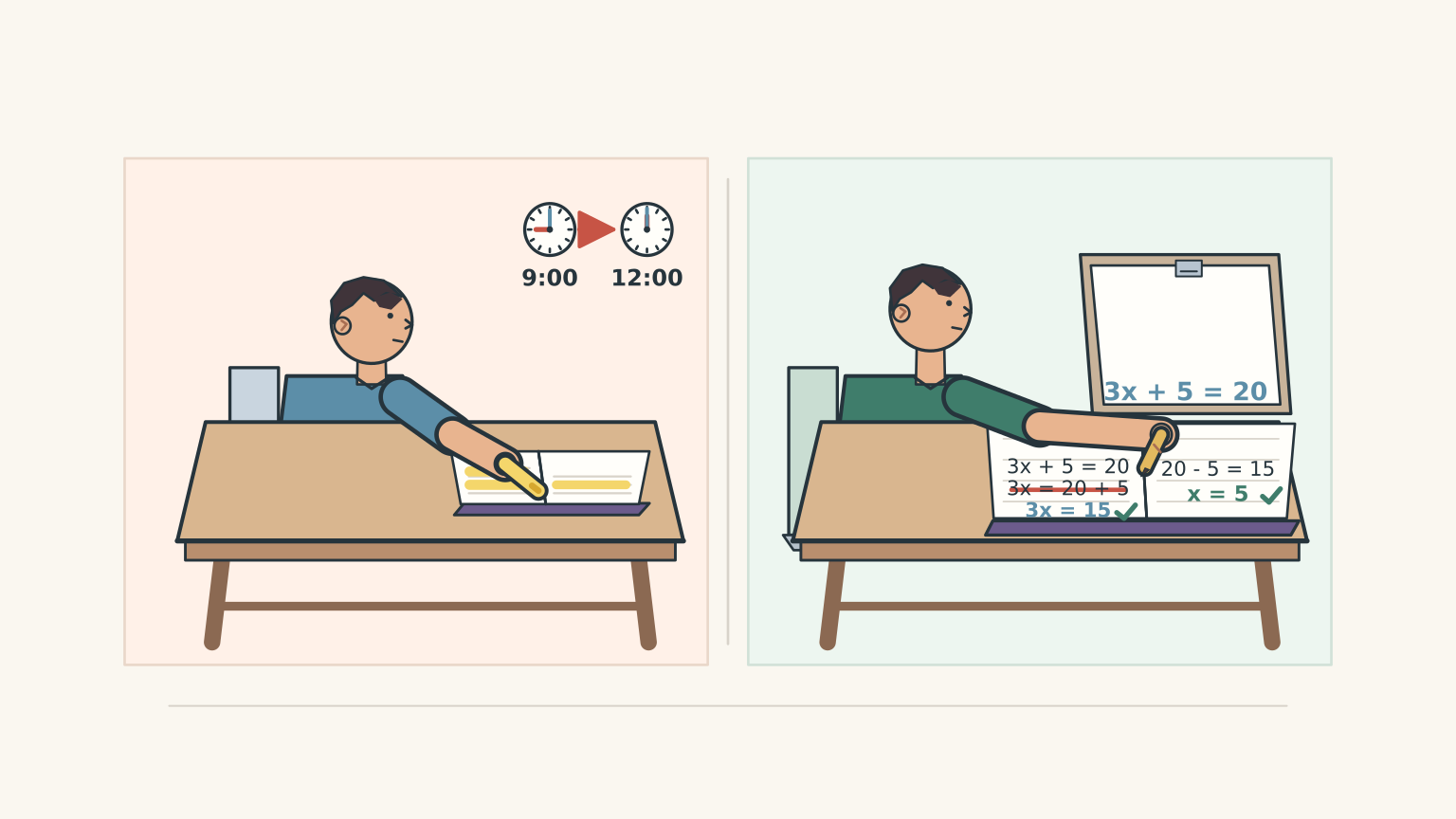
Four hours at a desk can feel like a productive afternoon. But if you close your notes and can't solve a new Maths question, how much have you actually learnt?
Four hours at a desk can feel like a productive afternoon. But if you close your notes and can’t solve a new Maths question, how much have you actually learnt?
Now imagine spending 90 minutes solving unfamiliar questions, checking your answers, and fixing the mistakes you made. You might finish with less time spent studying, but much stronger evidence that you understand the material.
So, how many hours a day should you study for the HSC?
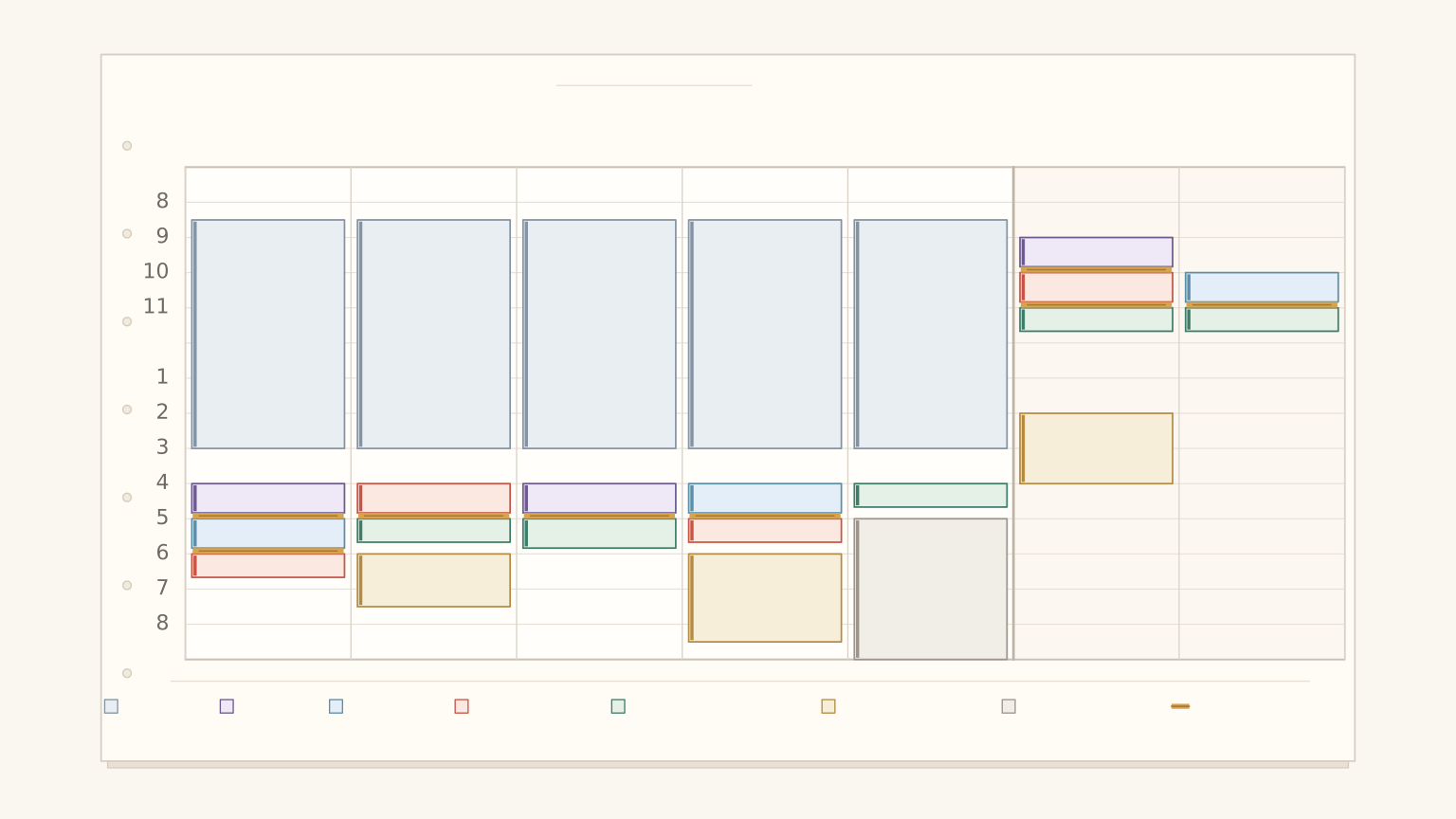
A sensible starting point is 1-2 focused hours outside school on a normal Year 11 school day, and 2-3 hours on a Year 12 school day. On weekends or days without school, aim for roughly 2-3 hours in Year 11 and 3-4 hours in Year 12.
These are planning ranges, not targets you must hit every day. The right workload depends on whether you’re completing your work, retaining what you’ve learnt, and answering unfamiliar questions independently.
01How many hours should you study each day?
Start with the following ranges if you’re attending a normal full school week.
| Stage | School days | Weekends or non-school days |
|---|---|---|
| Year 11 | 1-2 hours | 2-3 hours |
| Year 12 | 2-3 hours | 3-4 hours |
These figures refer to focused study outside school hours. They include homework, revision, practice questions, assignment work, and correcting mistakes.
They don’t include time spent in class, taking breaks, scrolling through your phone, or sitting at your desk without a clear task.
You also don’t need to study at the upper end of the range every day. Sport, part-time work, family commitments, and rest all need space in your week.
Due to technical limitations, this figure may display incorrectly or contain inaccuracies. Please check key details against your course materials.
Why Year 11 and Year 12 have different workloads
Year 11 is about building the habits and subject knowledge you’ll rely on in Year 12.
You need enough time to understand new concepts, practise applying them, and identify gaps before they become difficult to fix. You don’t need to treat every ordinary school week like the final weeks before the HSC exams.
Year 12 is different. You’re managing more demanding course content, school assessments, revision across multiple subjects, and preparation for the HSC examinations.
You’ll also need to revisit material from earlier in the course rather than only studying whatever your teacher covered that day.
This is why a slightly larger daily commitment makes sense in Year 12.
However, if you’re struggling to fit everything into your Year 11 timetable, don’t automatically assume you need more study hours. Your subject load matters, too. Read our guide on How Many Units Should You Take in Year 11? before committing to an unrealistic weekly workload.
02Why studying longer doesn’t always mean learning more
Consider two students preparing for a Mathematics exam.
The first spends three hours reading worked solutions, highlighting formulas, and watching explanations.
The second spends 90 minutes attempting unfamiliar questions, checking their working, and reattempting anything they got wrong.
The first student has spent twice as long studying. But the second has tested whether they can actually use the mathematics without someone showing them what to do.
This difference comes down to two important ideas: retrieval practice and independent application.
1. Retrieval practice: can you remember it without looking?
Retrieval practice means trying to recall information without referring to your notes.
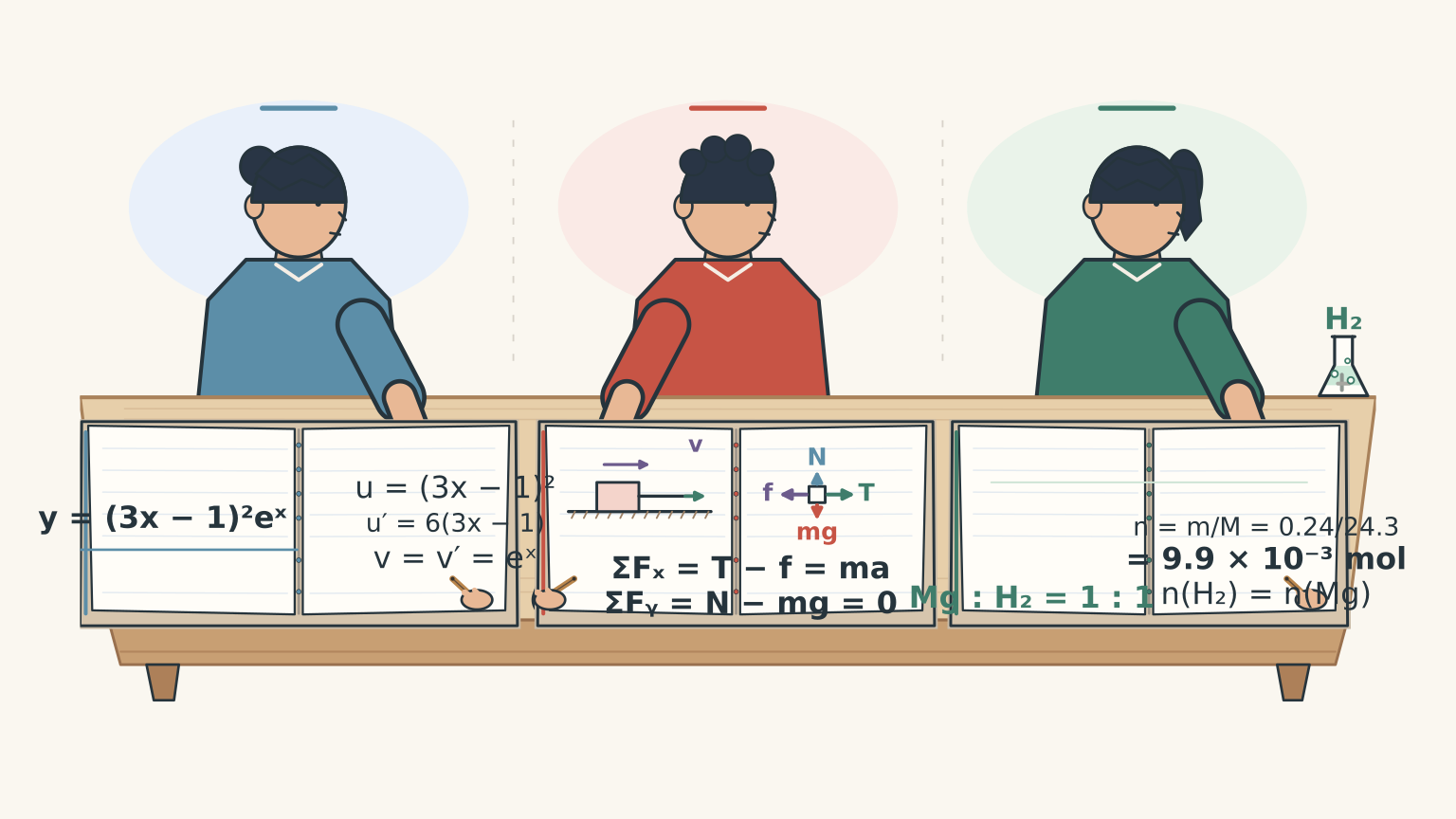
For example, instead of reading your Chemistry notes about equilibrium for the fifth time, close the textbook and try to explain:
- What does dynamic equilibrium mean?
- What conditions must be present?
- What happens when the temperature changes?
- How does the equilibrium position respond to a change in concentration?
If you can’t answer a question, you’ve identified something worth revisiting.
Reading your notes can create a feeling of familiarity. But recognising an explanation when you see it isn’t the same as remembering it independently.
Retrieval practice helps you find out what you actually know.
2. Independent application: can you use what you’ve learnt?
Remembering a definition is only part of the job.
In the HSC, you’ll often need to apply a familiar concept in a situation you haven’t seen before.
For example, understanding Newton’s Second Law is different from knowing how to apply it when a question introduces an unfamiliar arrangement of forces.
Similarly, memorising a Chemistry reaction doesn’t automatically mean you can use experimental evidence to explain why a reaction occurred.
You need to practise making decisions without being shown the next step.
A useful comparison is watching someone else take free throws in basketball. You can understand the technique and recognise a good shot, but that doesn’t demonstrate that you can make the shot yourself.
Worked solutions and explanations are valuable. Just make sure you follow them with an independent attempt.
Due to technical limitations, this figure may display incorrectly or contain inaccuracies. Please check key details against your course materials.
03What should you actually do during your study hours?
A study session needs a purpose.
Writing “study Physics” in your timetable is not particularly helpful. You could spend two hours looking through your notes without making much progress.
Instead, decide what you need to complete before starting.
Here are some examples of useful study tasks.
| Subject | Less useful task | More useful task |
|---|---|---|
| Mathematics | Read through calculus notes | Attempt unfamiliar questions, mark your working, and redo mistakes |
| Physics | Memorise equations | Identify the relevant physical principles, solve problems, and explain your assumptions |
| Chemistry | Highlight reaction summaries | Write reactions from memory, explain observations, and practise calculations |
| Other subjects | Read through the textbook repeatedly | Recall key information, plan responses, and complete timed practice |
Notice that the better tasks give you something you can check.
You can tell whether you solved the question, explained the concept correctly, or identified the reason behind an incorrect answer.
A useful structure for a study session
A focused block of around 40-50 minutes is a reasonable starting point.
You might organise an afternoon like this:
| Activity | Time |
|---|---|
| First focused study block | 50 minutes |
| Short break | 10 minutes |
| Second focused study block | 50 minutes |
| Short break | 10 minutes |
| Third focused study block | 40 minutes |
That’s 140 minutes of focused work, with breaks in between.
You can adjust the length of each block depending on the task. A difficult problem might need more uninterrupted attention, while memorising definitions might work better in shorter sessions.
If you find it difficult to maintain concentration, read our guide on Does the Pomodoro Technique Work for HSC Study?.
Due to technical limitations, this figure may display incorrectly or contain inaccuracies. Please check key details against your course materials.
04How do you know if you’re studying enough?
This is the more important question.
Imagine you have completed two hours of study every afternoon for the past fortnight.
You’ve finished your homework, revised your notes, and completed several practice questions. But when you attempt a mixed set of unfamiliar questions without your notes, you struggle to choose the correct method.
Should you increase your study time?
Not necessarily.
You might have a problem with how you’re studying rather than how long you’re studying.
Use the following decision process to work out what needs to change.
Step 1: Are you completing your planned work?
Start by looking at your actual workload.
If you’re regularly leaving important tasks unfinished, work out why.
There are two possibilities:
- You’re spending too much time distracted or doing low-priority activities.
- Your workload genuinely requires more time than you’ve allocated.
If distractions are the problem, improve your study environment before adding another hour.
If you’ve planned realistic tasks and are consistently completing focused work but still can’t keep up, add another 30-45 minute block on selected days or move some work to the weekend.
Don’t immediately add another two hours to every school night.
Step 2: Can you answer questions without your notes?
This is where you test whether your study is working.
Choose a question you haven’t recently practised. Close your notes and attempt it independently.
For Mathematics, can you identify the method and complete the working?
For Physics, can you identify the relevant physical principles, construct the equations, and explain your answer?
For Chemistry, can you recall the relevant reactions, interpret the evidence, and complete the calculations?
If you can’t do these things, identify the missing knowledge or skill.
You may need to revisit a concept, practise a particular question type, or get feedback on your working.
Simply increasing your study hours without fixing the underlying problem can lead to more time spent repeating the same mistakes.
Step 3: Is your independent performance improving?
Look at your performance over several weeks rather than judging yourself on one difficult practice paper.
Useful signs of progress include:
- You can answer unfamiliar questions with less assistance.
- You make fewer repeated mistakes.
- You can explain why a particular method works.
- You can complete questions within a reasonable time.
- You retain information when you revisit it several days later.
If these things are improving and you’re completing your planned work, your current study hours are probably sufficient.
If your performance is not improving, investigate the specific weakness before deciding to increase your workload.
Step 4: Are you still functioning well outside study?
This is easy to overlook.
If you’re regularly exhausted, struggling to concentrate, or sacrificing sleep to complete another study block, your timetable needs attention.
Sleep and recovery support memory, concentration, and learning. They aren’t rewards you earn after finishing your study.
More hours aren’t automatically better if the extra work leaves you too tired to learn effectively the following day.
05Two examples of getting your study hours right
Example 1: A Year 11 student building consistent habits
Suppose a Year 11 student has three main subjects to revise during the week.
They decide to study for 90 focused minutes after school:
- 40 minutes completing Mathematics questions.
- 30 minutes recalling Physics or Chemistry concepts without notes.
- 20 minutes reviewing mistakes from previous lessons.
They repeat this routine across the week, rotating their subjects according to upcoming lessons and assessments.
At the end of the week, they attempt a few questions without notes.
If they can complete the questions independently and are keeping up with their schoolwork, there’s no obvious reason to increase their daily hours.
They can use additional time for rest, sport, or other commitments.
The goal is to establish a routine that builds knowledge consistently, not to accumulate the largest possible number of study hours.
Example 2: A Year 12 student preparing for assessments
Now consider a Year 12 student who has an upcoming assessment period.
They have identified that Mathematics, Physics, and Chemistry all need attention.
They allocate a 2.5-hour focused session:
| Task | Time |
|---|---|
| Mathematics: complete four unfamiliar questions and correct mistakes | 50 minutes |
| Physics: solve two mixed problems and explain the relevant principles | 50 minutes |
| Chemistry: recall reaction information and complete a calculation | 40 minutes |
| Review: record mistakes and identify the next tasks | 10 minutes |
| Total focused study | 150 minutes |
Breaks are taken between the longer blocks.
This is a much more useful plan than simply writing “study for 2.5 hours”.
Each subject has a specific task, and the student finishes with a record of what needs further attention.
Suppose the Physics questions reveal that the student understands the relevant equations but struggles to identify which forces act on a system.
The next session should target that weakness.
There’s little value in adding another hour of general Physics revision if the actual problem is identifying forces in unfamiliar situations.
The student can then retest the same skill using different questions.
06A simple way to calibrate your weekly study hours
Rather than guessing how much you should study for the rest of the year, try a two-week calibration period.
Use this process:
1. Set your starting hours.
Use the Year 11 or Year 12 ranges as a starting point. Don’t worry about matching another student’s timetable.
2. Write down specific tasks.
For example, replace “study Chemistry” with “complete three equilibrium questions and explain the effect of changing temperature”.
3. Record your actual focused time.
Include homework, revision, practice questions, and assignments. Separate guided learning from independent practice.
4. Test yourself independently.
At least once a week, attempt questions or recall information without your notes.
5. Review your progress.
Ask yourself:
- Did I complete the important tasks?
- Can I now answer questions independently?
- Am I making fewer repeated mistakes?
- Am I retaining what I learnt?
- Am I getting enough rest?
6. Adjust gradually.
If your workload is too large, add a targeted study block or redistribute your tasks.
If your study method is ineffective, change the method before increasing the hours.
If you’re completing everything and performing well independently, keep your routine rather than studying more simply because you feel you should.
07Questions and solutions
Question 1
A Year 11 student studies for 90 minutes each school day. They complete their homework, keep up with their subjects, and can answer unfamiliar practice questions independently.
Their friends study for two hours every afternoon.
Should this student increase their study time?
Solution 1
No. There is no clear reason for the student to increase their study hours.
Their work is being completed, and their independent performance suggests that their current routine is effective.
Studying for an additional 30 minutes simply to match their friends doesn’t guarantee any improvement.
They should maintain their routine and monitor their progress as the course becomes more demanding.
Question 2
A Year 12 student spends three hours studying each afternoon. Most of this time involves reading notes, highlighting textbooks, and watching worked solutions.
However, they struggle to solve unfamiliar Mathematics and Physics questions without assistance.
Should they increase their study time to four hours?
Solution 2
No. They should change their study method before increasing their hours.
The main issue is that they’re spending too much time reviewing information without testing whether they can apply it.
Instead, they should replace some passive revision with:
- Unfamiliar Mathematics questions.
- Independent Physics calculations.
- Closed-book explanations of important concepts.
- Marking and correcting completed questions.
- Reattempting difficult questions without looking at solutions.
The important distinction is between recognising a solution and being able to produce one independently.
Once they’ve changed their approach, they can monitor their performance over the following weeks and decide whether additional time is necessary.
Question 3
A Year 12 student completes their planned work every week and performs well on practice questions covering individual topics.
However, when they attempt a mixed, timed practice paper, their results are noticeably weaker.
They can solve differentiation questions when practising differentiation, and mechanics questions when practising mechanics. But when questions are mixed together, they sometimes choose the wrong method.
Should they increase their daily study hours?
Solution 3
They should introduce more mixed and timed practice, but they don’t necessarily need to increase their overall daily study hours.
The problem is that their topic-specific practice gives them a clue about which method to use.
When they open a differentiation exercise, they already know differentiation is relevant. In a mixed examination, they must first recognise which mathematical technique applies.
These are different skills.
They need to practise identifying the appropriate method before beginning a question.
A useful adjustment would be to replace one of their existing topic-specific revision sessions with a mixed set of unfamiliar questions.
They should then examine each mistake:
- Did they misunderstand the question?
- Did they choose the wrong mathematical technique?
- Did they know the method but make an execution error?
- Did time pressure affect their decision?
This gives them a much clearer picture of what needs improvement.
If their mixed-paper performance improves, the adjustment is working without necessarily requiring more hours.
08The number of hours matters less than what you can do independently
A fixed number of daily study hours cannot determine an HSC mark, Band 6, or ATAR.
Two students can study for exactly the same amount of time and achieve very different levels of understanding.
Your goal should be to build a weekly routine that allows you to complete your work, retain important knowledge, and apply it independently under examination conditions.
Start with a realistic number of hours. Give each study session a clear purpose, and regularly test whether your work is translating into better independent performance.
Once you’ve established the right workload, the next step is putting it into a weekly timetable that you can actually maintain. Make sure every block has a job, and leave enough room for the rest of your life outside school.