
How Many HSC Tutoring Sessions Per Week Do You Need?
Plan HSC tutoring frequency around learning goals and independent practice, with tutorgum's two-hour weekly classes as a starting point.
Two students can both be studying HSC Physics and need very different tutoring schedules. One understands the content but repeatedly makes mistakes when applying it to unfamiliar questions. The other is missing earlier concepts and cannot get started without seeing a worked example.
Giving both students two tutoring sessions a week won’t necessarily solve either problem.
The right number of HSC tutoring sessions depends on four things: how independently you can work, how many genuine gaps you have, which subjects need support, and how much time you have to practise between sessions.
For most students who need ongoing support, one focused session per week in a subject with a recurring knowledge gap is a sensible starting point. If you’re already working independently, fortnightly or assessment-focused tutoring may be enough. If several connected gaps are preventing you from keeping up, two sessions a week may help temporarily.
The goal isn’t to spend as much time with a tutor as possible. It’s to get to the point where you can solve more questions without one.

Due to technical limitations, this figure may display incorrectly or contain inaccuracies. Please check key details against your course materials.
01The short answer: How often should you have tutoring?
Use the following as a starting point rather than a fixed rule.
| Your current situation | Frequency to discuss |
|---|---|
| You are keeping up and want to extend your reasoning. | A regular class focused on challenge, discussion and feedback. |
| A topic or question type repeatedly causes difficulty. | A weekly class with a clear practice goal. |
| Several prerequisite gaps affect later work. | Discuss a structured catch-up plan and suitable class. |
| You want support across two subjects. | Consider the weekly class and practice commitment for each. |
| Your available time is limited. | Prioritise subjects and goals with the tutor. |
Notice that the number of subjects you’re studying doesn’t automatically determine how many tutoring sessions you need.
A student taking four HSC subjects might need just one weekly session. Another student taking two subjects might benefit from three sessions across the week during a particularly difficult period.
The difference is the amount of independent work each student can complete.
02Start with what you can do independently
Before deciding how often to see a tutor, look at your recent schoolwork.
Not how confident you felt during the lesson. Not whether you understood the teacher’s explanation. Look at what happens when you sit down with a fresh question and nobody is helping you.
There are four useful situations to distinguish.
1. You understand the content and can solve questions independently
You can choose the correct method, complete the working, and identify mistakes when checking your answers.
Regular tutoring can extend these skills through unfamiliar applications, detailed reasoning and feedback before assessment.
Choose the frequency around a clear goal and time for practice between lessons. tutorgum offers one two-hour weekly class per subject, giving students a consistent structure for learning and follow-up questions.
2. You understand the explanation but struggle to apply it
This is a common reason to consider weekly tutoring.
For example, you might understand Newton’s second law when your teacher explains it, but struggle to recognise when to apply it in an unfamiliar Physics question.
Or you might understand a Chemistry calculation while following the teacher’s working, but not know how to begin a similar question independently.
The problem isn’t necessarily that you haven’t learnt the formula. It’s that you haven’t yet developed the ability to recognise when and how to use it.
A weekly session can help you practise this decision-making process.
3. You have gaps in earlier content
Suppose you’re struggling with integration in Mathematics Extension 1 because your algebraic manipulation is unreliable.
Working through more integration questions might not fix the underlying problem.
You need to address the earlier skill that’s preventing you from progressing.
This is where regular tutoring can be particularly useful. A tutor can help identify the missing prerequisite, rebuild it, and then connect it to the current topic.
One session per week is a reasonable starting point. If several connected gaps are holding you back, a temporary increase might be worthwhile.
4. You make occasional mistakes but can correct them yourself
Not every mistake requires a tutoring session.
If you understand a question, choose the correct method, and occasionally lose a mark through a sign error or incorrect unit, you might benefit more from careful practice and checking than additional tutoring.
The important distinction is whether the mistake keeps happening because you don’t understand something.
A repeated error is worth investigating. An isolated careless mistake isn’t automatically evidence that you need another session.
03Why independent study determines how many sessions you need
Here’s something worth considering before booking another session.
Imagine you have two Physics tutoring sessions each week. Your tutor explains several difficult concepts, demonstrates exam questions, and gives you strategies for solving them.
But because your timetable is full, you don’t attempt any similar questions between sessions.
Have you actually gained as much as you could from those two meetings?
Probably not.
During a tutoring session, you might recognise the correct method because someone has just explained it. But recognising a method and independently recalling it are different skills.
When you return to a question without assistance, you have to retrieve the relevant information, decide which principles apply, and carry out the solution yourself.
That independent attempt is an essential part of learning.
A useful tutoring cycle looks like this:
- Before the session: Attempt questions independently and identify exactly where you become stuck.
- During the session: Work through the underlying concept, understand the reasoning, and practise applying it.
- After the session: Attempt similar questions without looking at the tutor’s working.
- Before the next session: Revisit the topic and check whether you can still solve the questions independently.

Due to technical limitations, this figure may display incorrectly or contain inaccuracies. Please check key details against your course materials.
This is why two sessions per week aren’t automatically better than one.
If the second session takes time away from independent practice, it may actually reduce the value of the overall schedule.
Your tutoring frequency needs to fit around your schoolwork, assessment preparation, and other commitments.
04How many sessions should you book across different subjects?
The next consideration is how many subjects need attention.
It’s tempting to book one session for every subject you’re studying. That sounds organised, but it can create an unnecessarily crowded timetable.
Instead, identify which subjects have the most significant gaps.
For example, consider a student studying:
- Physics
- Chemistry
- Mathematics Extension 1
- Mathematics Extension 2
They might be performing reasonably well in Physics but struggling with Chemistry calculations and mathematical problem-solving.
It wouldn’t make sense to automatically book four weekly sessions.
A better approach is to identify the underlying problems.
Mathematics Extension 1 and Extension 2 share some mathematical foundations. If algebraic manipulation is causing difficulties across both courses, addressing that prerequisite can help with questions in both subjects.
However, the two courses also contain distinct content. Improving a shared foundation doesn’t mean that one session will cover every difficulty in both courses.
Similarly, some mathematical skills transfer between Physics and Chemistry, but the subject-specific reasoning still needs attention.
Count the sessions across your whole week, not just within individual subjects.
For example, one Chemistry session and one Mathematics session means two sessions per week in total. Two sessions in Physics alone is a different, more intensive arrangement.
If you have several subjects requiring attention, prioritise the most consequential gaps first. You can review the remaining subjects as your independent work improves.
05Two examples: Choosing a realistic tutoring schedule
Let’s apply these ideas to two common HSC situations.
Example 1: A Year 11 student struggling with Physics
Imagine a Year 11 student studying Physics and Mathematics Extension 1.
In Mathematics Extension 1, they can complete most homework independently. They occasionally make mistakes but can identify and correct them using their notes.
Physics is different.
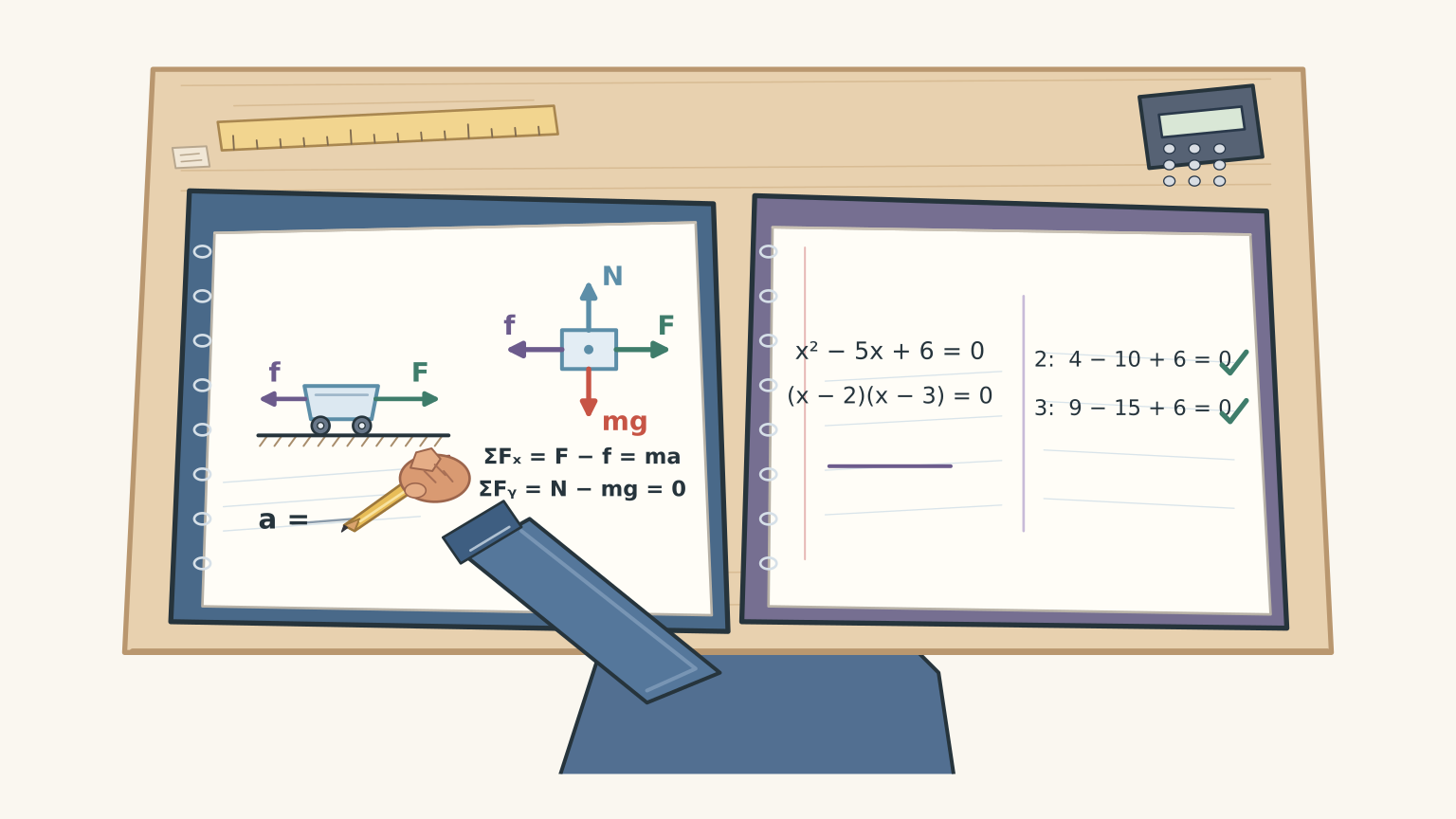
They understand the equations covered in class but repeatedly struggle to translate unfamiliar situations into mathematical models. They aren’t sure which forces to consider or how to choose the appropriate equation.
What should their schedule look like?
A sensible starting point is a weekly Physics class directed at the identified difficulties. For Mathematics, discuss whether the goal is consolidation, extension or feedback on more demanding questions, then choose the subject mix around those priorities.
The Physics sessions should focus on understanding the underlying principles, interpreting questions, and developing the ability to set up problems independently.
Between sessions, the student should attempt questions from their schoolwork and revisit the problems discussed during tutoring.
After three or four weeks, they can review their progress.
If they can now identify the relevant forces and choose appropriate equations without assistance, they might reduce their tutoring frequency to fortnightly.
The important point is that tutoring frequency should respond to the actual difficulty, not simply the number of subjects on the student’s timetable.
Due to technical limitations, this figure may display incorrectly or contain inaccuracies. Please check key details against your course materials.
Example 2: A Year 12 student struggling across multiple subjects
Now consider a Year 12 student studying Physics, Chemistry, Mathematics Extension 1, and Mathematics Extension 2.
They have identified three issues:
- Chemistry: They repeatedly struggle with mole calculations and applying mole ratios.
- Mathematics Extension 1 and 2: Weak algebraic manipulation is making several types of questions difficult.
- Physics: They can understand new content and complete most questions independently.
Booking four weekly sessions would be unnecessary based on these problems.
Instead, they could begin with:
- One Chemistry session per week to address the recurring calculation difficulties.
- One Mathematics session per week focused on the underlying mathematical skills affecting both extension courses.
The Mathematics sessions should still include practice from the relevant Extension 1 and Extension 2 topics. The student shouldn’t assume that improving one shared skill means they have mastered both courses.
Physics can remain self-directed, with additional support considered if a genuine gap develops.
After three or four weeks, the student should review whether the Chemistry and Mathematics difficulties have improved and whether they can complete more work independently.
Two weekly sessions across two priority areas may be more useful than four sessions spread across every subject.
06Does having more sessions mean faster improvement?
Not necessarily.
This is one of the biggest misconceptions about HSC tutoring.
It makes sense to think that more time with an experienced tutor should lead to faster progress. But tutoring is only one part of the learning process.
Consider the difference between these two schedules:
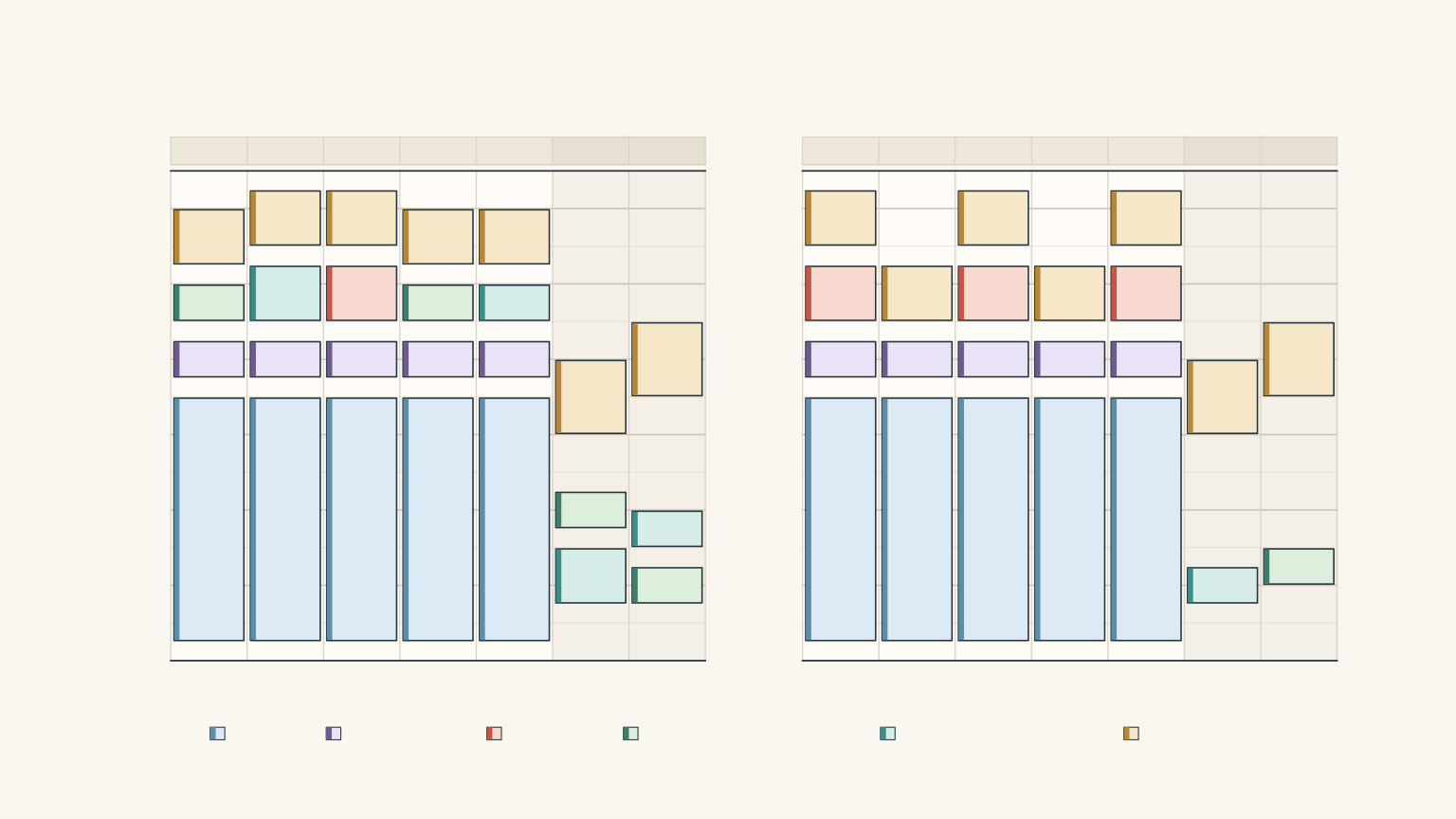
- Student A attends one weekly session, attempts questions independently between sessions, and brings their mistakes back for discussion.
- Student B attends three weekly sessions but spends very little time solving questions independently.
Student A has more opportunities to test their understanding without assistance.
Student B might become familiar with the explanations but still struggle when faced with an unfamiliar exam question.
Due to technical limitations, this figure may display incorrectly or contain inaccuracies. Please check key details against your course materials.
This doesn’t mean that multiple sessions are ineffective.
Two sessions per week can be useful when a student has substantial gaps, needs to catch up on connected content, or requires more frequent feedback during a demanding period.
The key is that each session needs a purpose, and there must still be enough time to apply what was learnt.
More sessions don’t guarantee a Band 6 or a particular ATAR. What matters is whether the student is becoming more capable of completing the work independently.
07Frequency and session length are different decisions
There’s another distinction worth making.
Tutoring frequency describes how often you meet your tutor. Session duration describes how long each meeting lasts.
These decisions are related, but they aren’t interchangeable.
For example, one longer weekly session and two shorter weekly sessions might cover similar amounts of tutoring time, but they provide different opportunities for feedback and spaced practice.
A longer session might allow more time to explore a complicated topic. Two shorter sessions might allow a student to attempt questions independently between meetings and return with specific difficulties.
Neither arrangement is automatically better.
Choose the frequency based on how regularly you need support. Then consider how much time each session needs to achieve its purpose.
For a more detailed discussion, see How Long Should an HSC Tutoring Session Be?.
08When should you increase or reduce your tutoring frequency?
Your initial schedule shouldn’t be permanent.
A practical approach is to review it after three or four weeks, or after completing a relevant topic if that takes longer.
Look for changes in what you can do independently.
Ask yourself:
- Can I now start questions that previously left me stuck?
- Can I explain why a particular equation, method, or principle applies?
- Can I solve a similar question without looking at an example?
- Am I making fewer repeated mistakes?
- Am I completing enough independent work between sessions?
If the answer to most of these questions is yes, your current frequency may be sufficient. You might even be ready to reduce it.
If you’re still struggling, don’t immediately assume you need more sessions.
First, work out why the problem remains.
Perhaps you’re addressing the wrong topic. Perhaps an earlier prerequisite is missing. Perhaps the sessions involve too much explanation and not enough independent problem-solving.
You might also need to adjust the session structure or make more time for practice.
Due to technical limitations, this figure may display incorrectly or contain inaccuracies. Please check key details against your course materials.
09Questions and solutions
Question 1
I’m doing reasonably well in class, but I struggle with unfamiliar exam questions. Should I have tutoring every week?
Solution 1
One session per week in the affected subject is a reasonable starting point if the difficulty happens regularly.
The issue might not be understanding the content itself. It could be recognising which concepts apply in an unfamiliar situation.
For example, a Physics student might understand the equations for energy and momentum individually but struggle to identify which principle is useful in a new problem.
A tutor can help develop this decision-making process through guided examples and independent attempts.
If you can already solve most questions and only need occasional feedback, fortnightly sessions might be sufficient.
Question 2
I’m studying four HSC subjects. Does that mean I need four tutoring sessions every week?
Solution 2
No. Your number of subjects doesn’t automatically determine your tutoring frequency.
Start by identifying which subjects are actually causing problems.
If you can manage Physics and Mathematics independently but need regular help with Chemistry, you might only need one weekly session.
If Chemistry and Mathematics both have significant gaps, two weekly sessions could be appropriate.
Also consider whether the same underlying skill affects multiple subjects. For example, an algebra weakness might affect both Mathematics Extension 1 and Extension 2.
Addressing that shared weakness can help across both courses, although you’ll still need to practise the distinct content in each.
Question 3
I have an important school assessment in two weeks. Should I add another tutoring session?
Solution 3
Only if the additional session has a clear purpose and you have time to complete independent work around it.
An extra session could be useful if you need to address a specific topic, review mistakes from a practice paper, or receive feedback on questions you’ve attempted yourself.
However, booking another session simply because an assessment is approaching isn’t necessarily helpful.
If you’re already struggling to complete your schoolwork, another meeting might take time away from the practice you need.
A better approach is to identify the topics most likely to cause difficulty, prioritise them, and use tutoring to address specific gaps.
Question 4
I’ve been attending weekly tutoring for a while, but I still can’t solve questions without help. Should I increase to twice a week?
Solution 4
Not necessarily. First, investigate why you’re struggling to transfer what you’ve learnt into independent work.
One possibility is that the sessions are too explanation-heavy.
You might understand every step while your tutor demonstrates a solution, but you aren’t getting enough opportunities to attempt the next question yourself.
Another possibility is that an earlier concept is still missing, making the current topic difficult to understand.
Try changing the session structure before increasing the frequency.
Bring questions you’ve attempted independently, ask your tutor to identify the exact point where your reasoning breaks down, and then attempt a similar question without assistance.
If the underlying difficulty is addressed and you still need more frequent feedback, an additional session might then be worthwhile.
10Explore the next step
A consistent weekly class can support learning, feedback and preparation across the term. tutorgum offers a two-hour weekly session per subject; plan practice between classes and discuss your course priorities when choosing subjects.
tutorgum offers live online small-group teaching for Year 11 and 12 Physics, Chemistry and Maths, with opportunities for questions and feedback on student responses. View the current classes, pricing and timetable and enquire about a first lesson. The published first-lesson arrangement charges the lesson normally if you continue; it is free if you decide not to continue.