
Metal Displacement Reactions: Predicting HSC Chemistry Changes
Learn how to predict metal displacement reactions using the reactivity series and electron transfer. Includes worked examples, common misconceptions, and practice questions.
A strip of zinc metal is dropped into a blue copper(II) sulfate solution. After a few minutes, the blue colour fades and a reddish-brown solid appears on the zinc.
Before learning the rule, try to predict what happened.
Did the copper somehow “move” out of the solution and become metal? Why would zinc allow that to happen? And why does the same thing not happen if you drop a copper strip into a zinc sulfate solution?
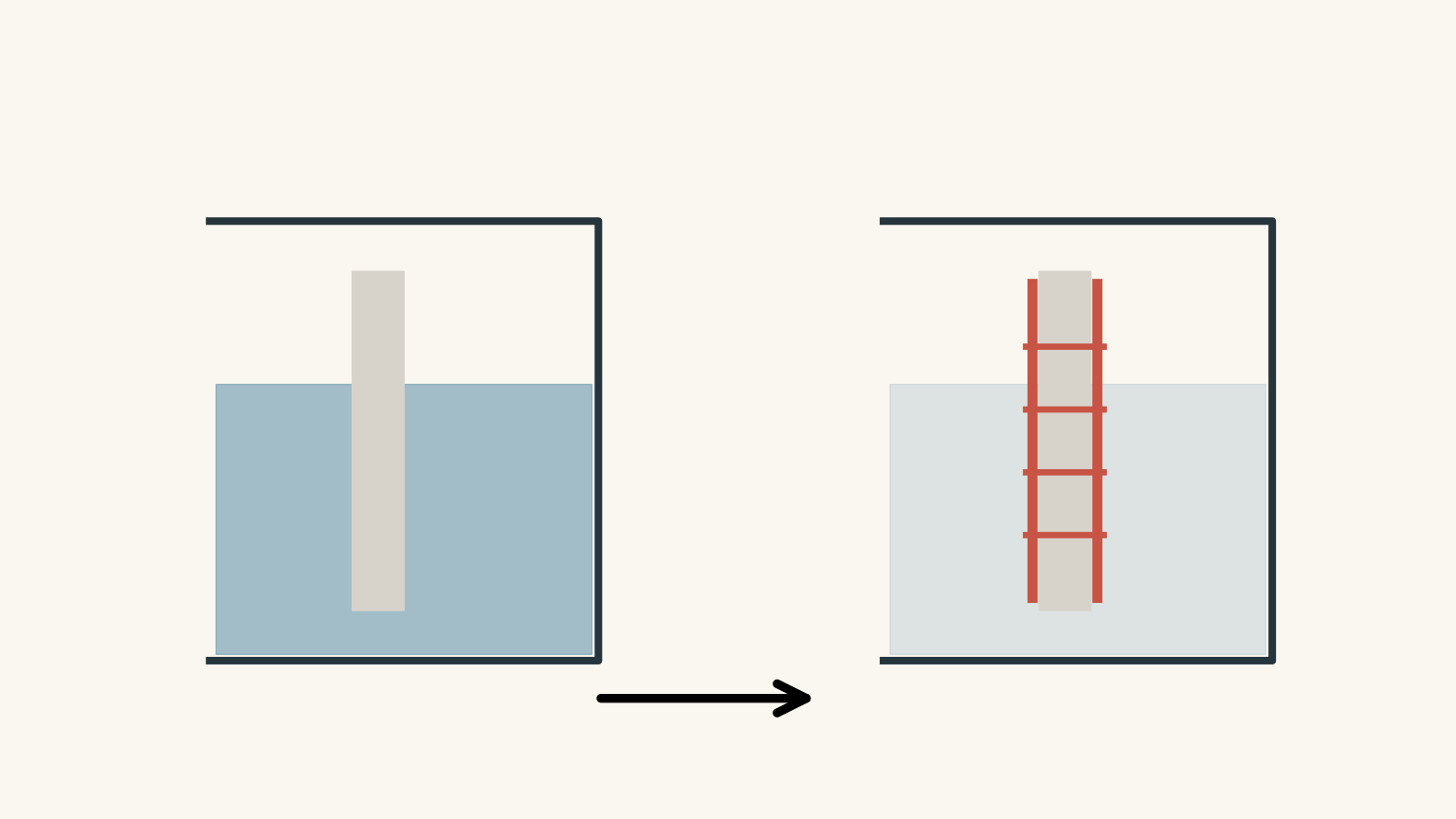
Metal displacement reactions solve a simple but powerful chemistry problem: how can we predict whether one metal will replace another metal in a solution?
The answer comes from understanding which metal atoms are more willing to lose electrons.
01The idea: metals compete for electrons
Imagine two metals meeting in a solution. One metal is sitting as solid atoms in a piece of metal. The other exists as positive metal ions dissolved in water.
A metal atom can become an ion by losing electrons:
\[ \ce{M -> M^{n+} + ne^-} \]
The metal atom is oxidised because it loses electrons.
A metal ion can become a solid metal atom by gaining electrons:
\[ \ce{M^{n+} + ne^- -> M} \]
The metal ion is reduced because it gains electrons.
A displacement reaction happens when a more reactive metal gives electrons to ions of a less reactive metal.
For example:
\[ \ce{Zn(s) + Cu^2+(aq) -> Zn^2+(aq) + Cu(s)} \]
Zinc atoms lose electrons:
\[ \ce{Zn(s) -> Zn^2+(aq) + 2e^-} \]
Copper ions gain those electrons:
\[ \ce{Cu^2+(aq) + 2e^- -> Cu(s)} \]
The zinc “pushes” copper out of solution because zinc is better at giving away electrons.
02Predicting displacement using the reactivity series
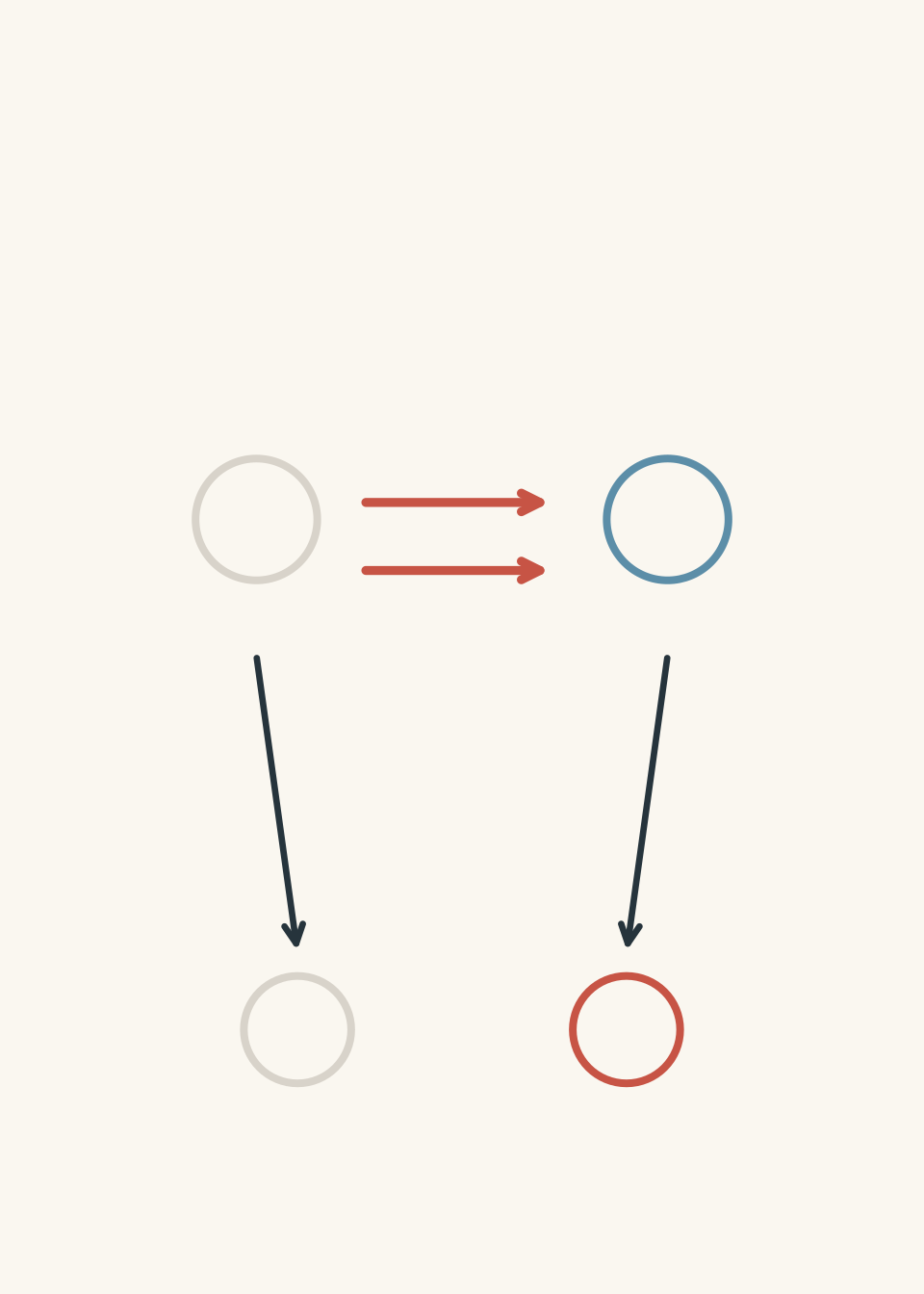
Chemists organise metals into a reactivity series. A metal higher on the list is more likely to lose electrons.
A simplified section of the series is:
| More reactive | Less reactive | |
|---|---|---|
| potassium | K | |
| sodium | Na | |
| calcium | Ca | |
| magnesium | Mg | |
| aluminium | Al | |
| zinc | Zn | |
| iron | Fe | |
| copper | Cu | |
| silver | Ag | |
| gold | Au |
The decision rule is:
A metal can displace the ions of a metal below it in the reactivity series.
So:
- zinc + copper(II) ions → reaction occurs
- copper + zinc ions → no reaction
- magnesium + iron(II) ions → reaction occurs
- silver + copper(II) ions → no reaction
The solid metal must be more reactive than the metal ion it is trying to replace.
03A first model: the “electron generosity” idea
A useful way to picture this is to imagine metals at a party.
Some metals are the friend who gives away their snacks immediately. Others hold onto everything.
A reactive metal like magnesium is very willing to hand over electrons. A less reactive metal like copper is much less willing.
When magnesium meets copper ions, magnesium gives away electrons, and copper ions accept them.
The analogy helps because it captures the competition: one metal loses electrons, the other gains them.
However, the analogy is not exact. Metals are not making a choice or “wanting” anything. Reactivity depends on atomic structure, energy changes, and how easily electrons are removed.
For more on why different metals have different reactivities, see Periodic Patterns in Metal Activity: HSC Chemistry Explained.
04What would you observe in an experiment?
Suppose you place a magnesium strip into copper(II) sulfate solution.
Predict the observations before reading on:
- Would the solution colour change?
- Would a solid appear?
- Would the magnesium disappear?
The reaction is:
\[ \ce{Mg(s) + Cu^2+(aq) -> Mg^2+(aq) + Cu(s)} \]
Magnesium is above copper in the reactivity series, so the reaction occurs.
You would observe:
- the blue copper(II) ions are removed from solution, so the blue colour becomes weaker
- copper metal forms as a reddish-brown coating
- magnesium gradually dissolves as magnesium ions enter the solution
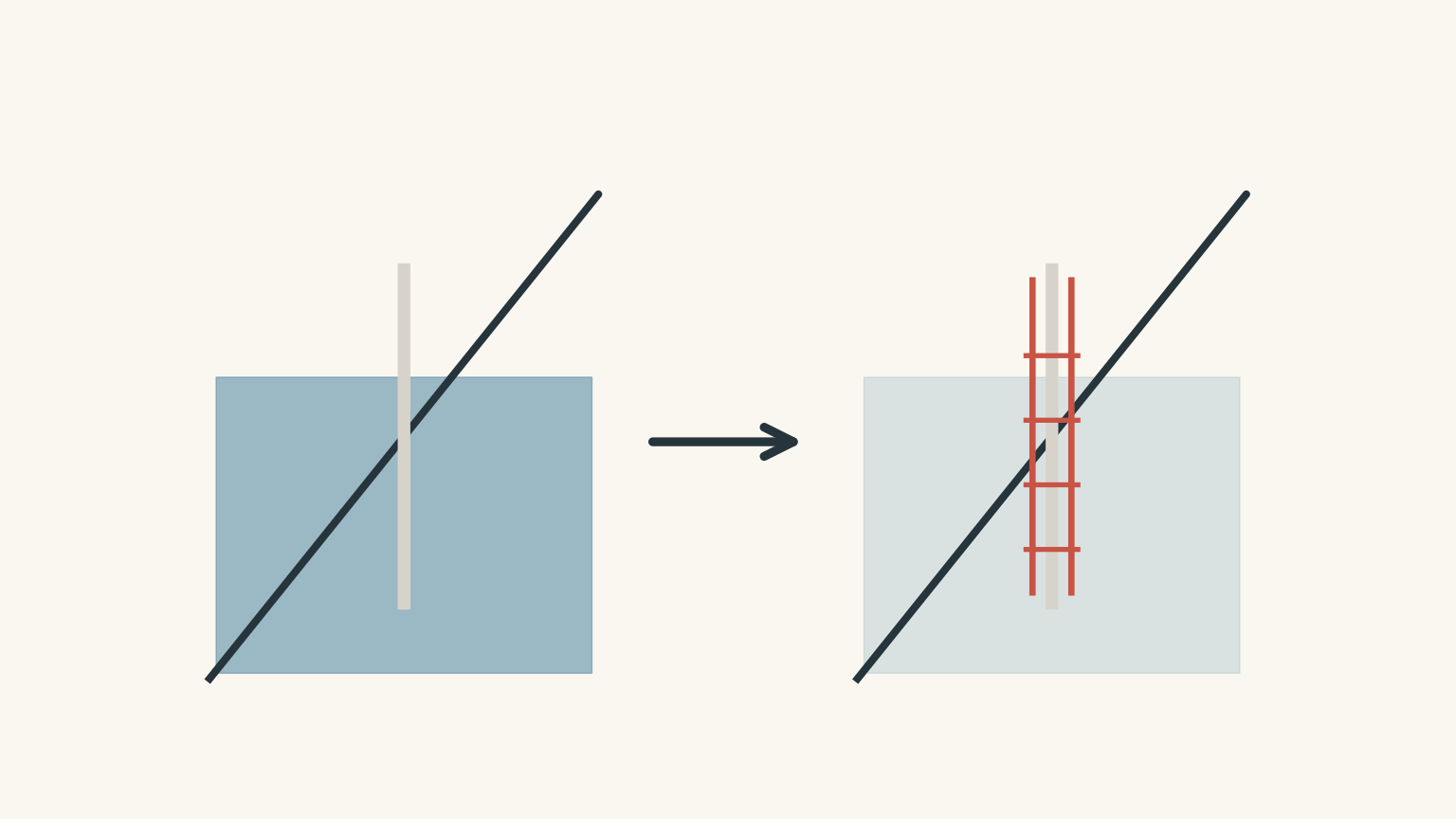
The observations are evidence of electron transfer, but they are not the reaction itself. The chemical change is the movement of electrons between species.
05The part students often get wrong: the metal ion matters
A common mistake is looking only at the solid metal.
A student might think:
“Aluminium is a reactive metal, so aluminium metal must always react.”
Not quite.
The other substance must be able to accept those electrons.
For example:
\[ \ce{Al(s) + Cu^2+(aq) -> Al^3+(aq) + Cu(s)} \]
can occur because copper ions are below aluminium in the reactivity series.
But:
\[ \ce{Cu(s) + Al^3+(aq)} \]
does not occur because copper is not reactive enough to remove aluminium from its ions.
The direction matters.
06Writing displacement reactions correctly
When predicting a reaction, use this sequence.
Step 1: Identify the solid metal
This is the metal you add to the solution.
Example:
\[ \ce{Zn(s) + CuSO4(aq)} \]
The solid metal is zinc.
Step 2: Find the metal ion in solution
Copper sulfate contains:
\[ \ce{Cu^2+(aq)} \]
The ion being displaced is copper.
Step 3: Compare their positions in the reactivity series
Zinc is above copper, so zinc can displace copper.
Step 4: Write the products
Zinc becomes ions:
\[ \ce{Zn(s) -> Zn^2+(aq)} \]
Copper ions become metal:
\[ \ce{Cu^2+(aq) -> Cu(s)} \]
Overall:
\[ \ce{Zn(s) + CuSO4(aq) -> ZnSO4(aq) + Cu(s)} \]
07Worked example: Will magnesium displace iron?
A strip of magnesium is placed into iron(II) sulfate solution. Predict whether a reaction occurs and write the balanced equation.
Step 1
The solid metal is magnesium. The metal ion in solution is iron(II), \(\mathrm{Fe}^{2+}\).
Step 2
Magnesium is above iron in the reactivity series, so magnesium is more likely to lose electrons.
Step 3
Magnesium atoms become magnesium ions:
\[ \ce{Mg(s) -> Mg^2+(aq) + 2e^-} \]
Iron ions gain electrons:
\[ \ce{Fe^2+(aq) + 2e^- -> Fe(s)} \]
Step 4
\[ \ce{Mg(s) + FeSO4(aq) -> MgSO4(aq) + Fe(s)} \]
The reaction occurs because magnesium replaces iron in the solution.
The visible evidence would be magnesium dissolving and iron metal forming.
08Worked example: Predicting a reaction with silver ions
A copper wire is placed into a silver nitrate solution. Predict the products and explain the observations.
Step 1
The solid metal is copper. The solution contains silver ions:
\[ \ce{AgNO3(aq) -> Ag^+(aq) + NO3^-(aq)} \]
Step 2
Copper is above silver in the reactivity series, so copper can displace silver ions.
Step 3
Copper loses two electrons:
\[ \ce{Cu(s) -> Cu^2+(aq) + 2e^-} \]
Each silver ion gains one electron:
\[ \ce{Ag^+(aq) + e^- -> Ag(s)} \]
Two silver ions are needed:
\[ \ce{2Ag^+(aq) + 2e^- -> 2Ag(s)} \]
Step 4
\[ \ce{Cu(s) + 2Ag^+(aq) -> Cu^2+(aq) + 2Ag(s)} \]
The reaction occurs.
The copper wire becomes coated with silver crystals, and copper ions enter the solution. The solution may become blue because \(\mathrm{Cu}^{2+}\) ions are produced.
09Connecting displacement to redox
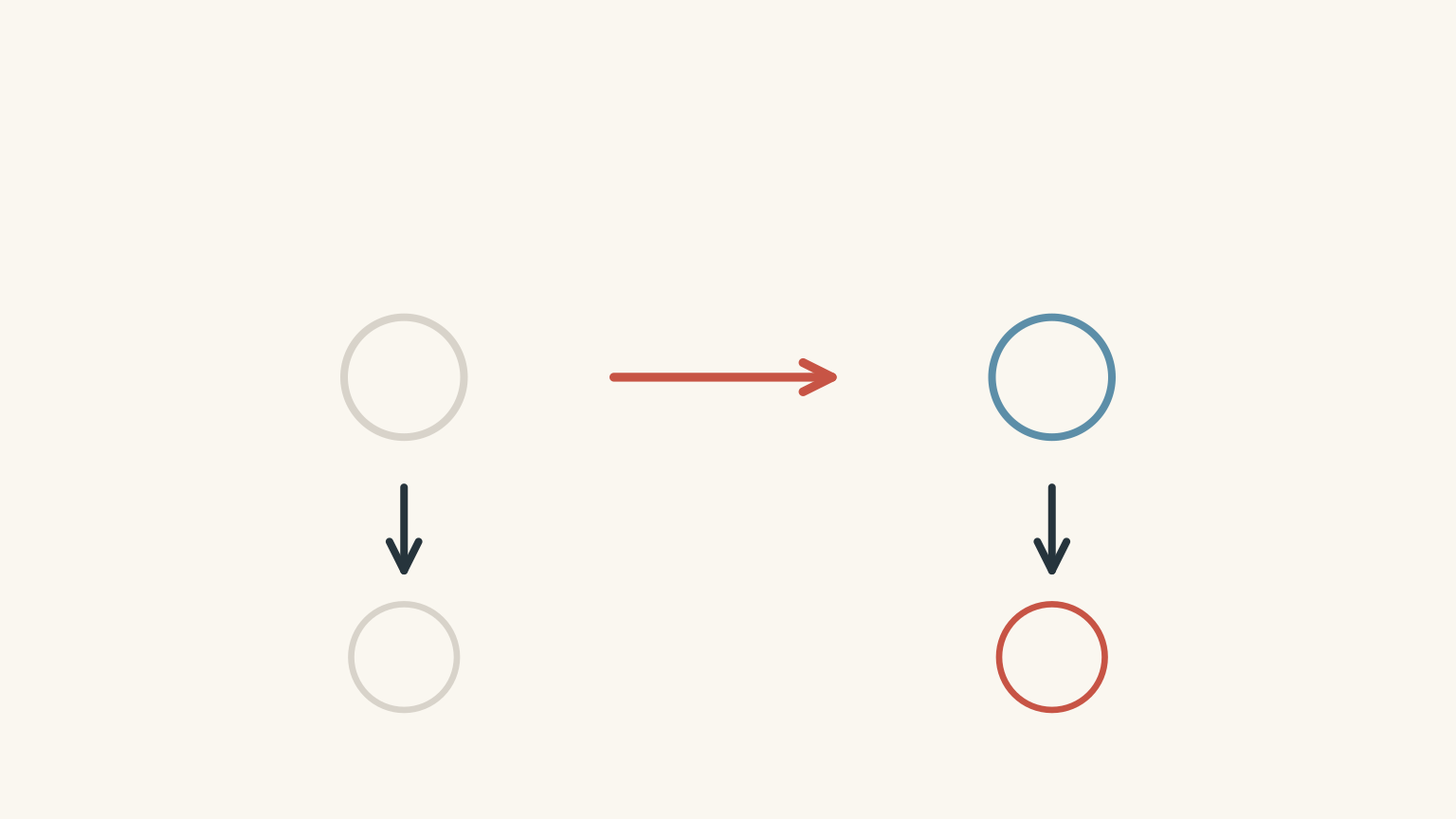
Metal displacement is not a separate trick to memorise. It is a redox reaction.
One species is oxidised:
\[ \text{loss of electrons} \]
The other species is reduced:
\[ \text{gain of electrons} \]
A useful memory rule is:
OIL RIG
- Oxidation Is Loss (of electrons)
- Reduction Is Gain (of electrons)
For more practice with the electron-transfer idea behind displacement reactions, see Oxidation and Reduction by Electron Transfer: HSC Chemistry.
10Questions and solutions
Question 1
A piece of zinc metal is placed into copper(II) chloride solution.
Predict whether a reaction occurs. Write the balanced equation.
Solution 1
A reaction occurs because zinc is more reactive than copper, so zinc can displace copper ions from solution.
Zinc is oxidised:
\[ \ce{Zn(s) -> Zn^2+(aq) + 2e^-} \]
Copper ions are reduced:
\[ \ce{Cu^2+(aq) + 2e^- -> Cu(s)} \]
The balanced equation is:
\[ \ce{Zn(s) + CuCl2(aq) -> ZnCl2(aq) + Cu(s)} \]
The key idea is that zinc does not replace chloride ions. The metal ions are the species involved in the displacement.
Question 2
A student places a copper strip into a solution of magnesium sulfate and predicts that magnesium metal will form because copper is a solid metal.
Explain whether this prediction is correct.
Solution 2
The prediction is incorrect because copper cannot displace magnesium ions.
Magnesium is above copper in the reactivity series. Magnesium atoms lose electrons more easily than copper atoms.
For magnesium metal to form, \(\mathrm{Mg}^{2+}\) ions would need to gain electrons:
\[ \ce{Mg^2+(aq) + 2e^- -> Mg(s)} \]
However, copper is not reactive enough to provide those electrons.
No displacement reaction occurs, so the copper strip remains unchanged.
The trap is assuming that a metal being solid automatically means it can form from ions. The direction of electron transfer depends on relative reactivity.
Question 3
A student tests three metals in separate solutions.
| Test | Metal added | Solution |
|---|---|---|
| A | iron | copper(II) sulfate |
| B | copper | silver nitrate |
| C | silver | copper(II) sulfate |
Predict which tests produce a reaction and explain the pattern.
Solution 3
Tests A and B produce reactions, but test C does not.
For A:
Iron is above copper in the reactivity series, so iron loses electrons and copper ions gain them.
\[ \ce{Fe(s) + Cu^2+(aq) -> Fe^2+(aq) + Cu(s)} \]
For B:
Copper is above silver, so copper displaces silver ions.
\[ \ce{Cu(s) + 2Ag^+(aq) -> Cu^2+(aq) + 2Ag(s)} \]
For C:
Silver is below copper, so silver cannot remove electrons from copper ions. No reaction occurs.
The pattern is not “metals react with metal solutions”. The correct rule is that only a more reactive metal can displace a less reactive metal ion.
Question 4
A student observes that aluminium is high in the reactivity series but notices that an aluminium strip placed in copper(II) sulfate sometimes appears not to react immediately.
Explain how this can happen and predict what would happen if the aluminium surface were exposed.
Solution 4
The reaction can be delayed because aluminium is covered by a thin layer of aluminium oxide.
Aluminium is actually more reactive than copper, so the expected displacement is:
\[ \ce{2Al(s) + 3Cu^2+(aq) -> 2Al^3+(aq) + 3Cu(s)} \]
However, the oxide layer acts as a barrier between the aluminium atoms and the copper ions. The electron transfer cannot easily occur while the surface is protected.
If the oxide layer is removed, aluminium can react and copper metal forms.
The tempting mistake is trusting the observation more than the model. A lack of visible reaction does not always mean the metal is less reactive; the surface conditions can control whether the reaction can begin.
Question 5
A metal X is placed into a solution containing ions of metal Y. The student predicts a displacement reaction because X is higher than Y in the reactivity series.
Later, they discover that the solution also contains a chemical that removes Y metal from the surface as soon as it forms.
Explain why this changes the observation but not the basic displacement prediction.
Solution 5
The displacement reaction can still be predicted from reactivity, but the observed result may be different because the newly formed Y metal does not remain on the surface.
The underlying reaction is still:
\[ \ce{X(s) + Y^{n+}(aq) -> X^{m+}(aq) + Y(s)} \]
The important condition is that X can transfer electrons to \(\ce{Y^{n+}}\) ions. The removal of Y metal changes what the experiment looks like, not which metal is capable of being displaced.
A student might expect “no visible metal means no reaction”. That conclusion is unreliable because observations depend on what happens after the displacement step as well.
The deeper lesson is that chemical equations describe particle changes, while experiments measure the evidence those changes leave behind.
11Where this idea leads next
Once you can predict metal displacement, you can start using the same electron-transfer logic in more complex redox reactions. The next step is learning how to write and balance redox half-equations, where the electrons are tracked explicitly rather than inferred from the reactivity series.
See: Redox Half-Equations: Balancing HSC Chemistry Reactions