
Nuclear Fusion: Conditions and Energy Release | HSC Physics
Learn why fusion requires extreme temperature, density, and confinement, and how mass defect and binding energy explain the energy released.
Two hydrogen nuclei are both positively charged, so they repel each other. If you only knew about electrostatic forces, you would predict that heating them should make them fly apart even faster. Yet stars shine because light nuclei fuse.
The missing piece is distance. If nuclei get extremely close, the strong nuclear force becomes attractive and can overcome the electrostatic repulsion. Getting enough nuclei that close, often enough, is the hard part. For laboratory deuterium-tritium fusion, this means an extremely hot plasma, sufficient particle density, and enough confinement time.
Nuclei must reach the nuclear-distance region
- Larger separation
d ≫ 1 fm
Both nuclei are positively charged
Electrostatic repulsion dominates
- Close approach
d → few fm
Repulsion still opposes the approach
Higher kinetic energy increases close-approach probability
- Fusion region
d ≈ few fm
Strong nuclear attraction becomes dominant
Nuclei can form a bound nuclear system
01Why fusion is difficult
Start with the force competition
A nucleus contains protons and neutrons. Protons are positively charged, so two nuclei containing protons experience electrostatic repulsion.
The strong nuclear force behaves differently. At nuclear distances, roughly a few femtometres (\(10^{-15}\) m), it is strongly attractive between nucleons and acts over a very short range.
So a fusion reaction has a problem:
- The nuclei repel each other while they are still relatively far apart.
- They must get extremely close.
- Once they are close enough, the strong nuclear force can bind them into a new nucleus.
A useful, slightly silly picture is two people trying to high-five while standing on repelling skateboards. They need enough speed to get close before the boards push them apart. The analogy breaks down at nuclear distances, because nuclear forces are not springs or magnets, and quantum mechanics becomes important.
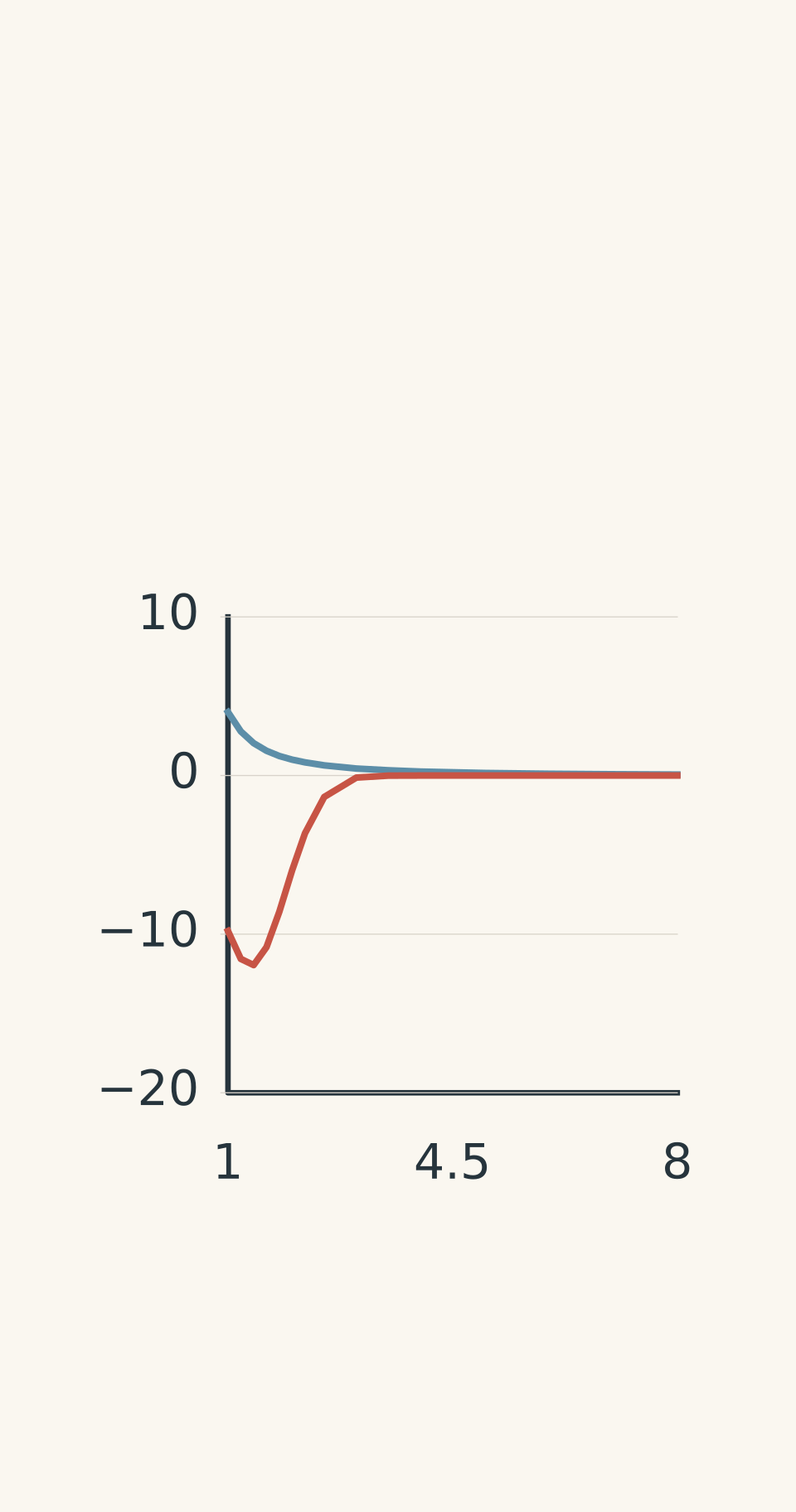
- Electrostatic repulsion
- Strong nuclear force (attractive)
The electrostatic energy barrier that nuclei must get through is called the Coulomb barrier.
Predict this carefully: does every nucleus need enough kinetic energy to classically climb over the entire barrier?
No. That is the first simplification to correct. Quantum mechanics allows quantum tunnelling, so there is a probability that a nucleus can pass through an energy barrier even when its classical kinetic energy is not quite large enough. Higher temperature increases the number of nuclei with high enough energies and increases the likelihood of successful fusion.
You don’t need to calculate tunnelling for HSC Physics. You do need to avoid saying that temperature simply makes every collision successful.
02The three conditions for fusion
The basic conditions can be organised as three questions:
| Condition | What it changes | Why fusion needs it |
|---|---|---|
| High temperature | Particle kinetic energy | Helps nuclei get close enough |
| High density | Number of possible collisions | Makes successful encounters more frequent |
| Sufficient confinement time | How long the plasma stays together | Gives fusion time to occur before the plasma expands and cools |
These conditions work together. Making one condition excellent does not automatically compensate for making another useless.
1. High temperature
Temperature measures the average random kinetic energy of particles in a system.
At an ordinary temperature, nuclei move far too slowly for fusion to be common. Increase the temperature enormously and the nuclei move much faster. A larger fraction of them can approach one another with enough energy to get through the Coulomb barrier.
For laboratory deuterium-tritium fusion, temperatures of around \(150\) million °C are relevant. That is about ten times the temperature at the centre of the Sun.
At these temperatures, the electrons are no longer attached to individual atoms. The fuel becomes a plasma: a mixture of positively charged ions and free electrons.

- D⁺ ion
- T⁺ ion
- e⁻ electron
The important chain is:
higher temperature → greater nuclear kinetic energy → more close approaches → higher fusion reaction rate
Notice what temperature does not do. It does not increase the energy released by an individual successful reaction. That energy is determined by the particular nuclei before and after the reaction.
2. High density
Even if every nucleus is moving quickly, fusion won’t happen often if the nuclei are too spread out.
Number density tells us how many particles occupy a given volume:
\[ n=\frac{N}{V} \]
Here, \(n\) is number density in particles per cubic metre, \(N\) is the number of particles, and \(V\) is volume in cubic metres.
Higher density means nuclei are more likely to encounter other nuclei.
For a deuterium-tritium plasma, let \(n_D\) be the deuterium density and \(n_T\) the tritium density. At fixed temperature, a useful scaling relationship is
\[ R\propto n_D n_T V \]
where \(R\) is the total fusion reaction rate, measured in reactions per second.
For a 50:50 mixture, both \(n_D\) and \(n_T\) increase together. That means doubling the density can increase the number of possible D-T pairs by a factor of four, not two.
This is an easy place to lose a mark. Don’t write only “higher density means more collisions”. Explain that more fuel nuclei in the same volume increases the number of possible encounters.
High pressure can help create a high-density plasma, especially inside stars. But “high pressure” is not a magic fourth condition. Pressure is useful because it can help keep enough nuclei packed together.
3. Sufficient confinement time
A fusion plasma at hundreds of millions of degrees is not going to politely sit still.
If it expands, its density falls. If it loses energy, its temperature falls. Both changes reduce the fusion reaction rate.
So the plasma has to be confined for long enough for a useful number of reactions to occur.
Two ways to confine fusion fuel
| Magnetic confinement | Hot D–T plasma Plasma follows curved magnetic-field paths around a torus Magnetic forces limit radial escape toward the walls Confinement acts continuously while the plasma is sustained |
|---|---|
| Inertial confinement | Compressed D–T fuel Driver energy compresses the fuel rapidly from all directions Inward compression creates extreme temperature and density Fuel inertia briefly resists outward expansion after compression |
There are different ways to do this.
- Magnetic confinement uses magnetic fields to control the charged plasma and keep it away from the reactor walls.
- Inertial confinement rapidly compresses and heats a small fuel target. The fuel’s own inertia helps keep it together for the very short time in which fusion occurs.
The key HSC idea is the same in both cases:
keep the hot, dense fuel together long enough for enough fusion reactions to happen.
03Why does fusion release energy?
Now we have solved the first problem: how nuclei can get close enough.
But there is a second puzzle.
If two nuclei combine into one heavier nucleus, why should that release energy?
The answer is binding energy and mass defect.
For light nuclei, fusion can produce a nucleus with a greater binding energy per nucleon. In simple terms, the nucleons are more tightly bound in the product nucleus.
A more tightly bound nucleus has a lower total rest mass than the same collection of separate nucleons. The difference in mass is called the mass defect.
If mass defect is unfamiliar, the tutorgum mass defect guide is a useful refresher.
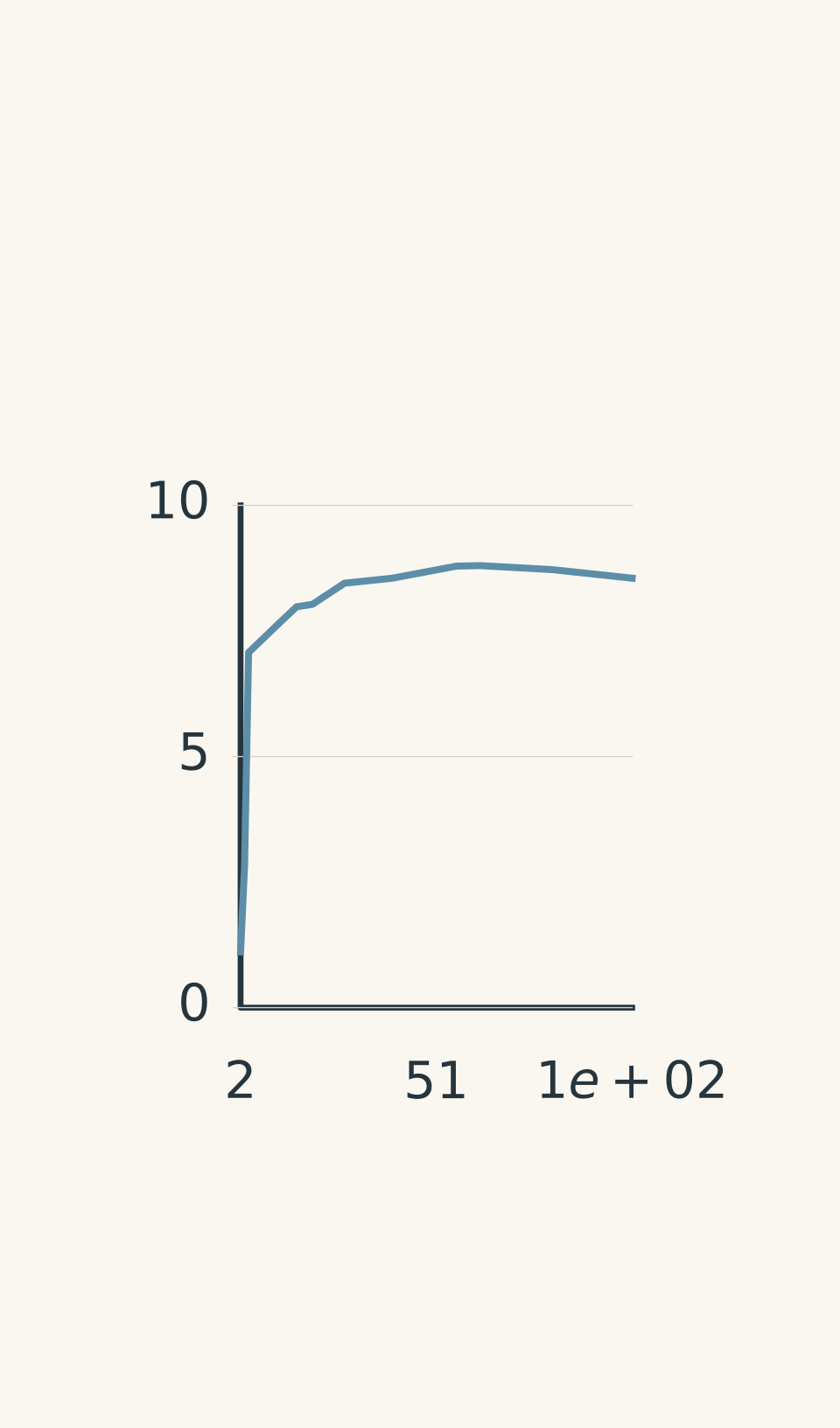
- Binding-energy curve
For a reaction,
\[ \Delta m = \sum m_{\text{reactants}} - \sum m_{\text{products}} \]
where \(\Delta m\) is the mass defect.
Einstein’s mass-energy relationship then gives
\[ E=\Delta m c^2 \]
where \(E\) is the energy released in joules, \(\Delta m\) is the mass defect in kilograms, and \(c\) is the speed of light in metres per second.
The important detail is that mass-energy is conserved. It is not correct to say that mass simply disappears. The products have less rest mass than the reactants, and the corresponding energy appears mainly as kinetic energy of the reaction products.
The deuterium-tritium reaction
One of the most important fusion reactions for energy research is between the hydrogen isotopes deuterium and tritium:
\[ {}^{2}_{1}\mathrm{H} + {}^{3}_{1}\mathrm{H} \rightarrow {}^{4}_{2}\mathrm{He} + {}^{1}_{0}\mathrm{n} + 17.6\ \mathrm{MeV} \]
Deuterium has one proton and one neutron. Tritium has one proton and two neutrons. The products are a helium-4 nucleus and a neutron.
The helium-4 nucleus is an alpha particle. The total energy released is \(17.6\) MeV per reaction, with about \(3.5\) MeV carried by the helium nucleus and \(14.1\) MeV by the neutron.
The neutron is electrically neutral, so a magnetic field does not confine it. It can carry energy out of the plasma and, in a future reactor design, that energy can ultimately be converted into heat.
D-T fusion releases 17.6 MeV
- Reactants
²₁H + ³₁H
Deuterium + tritium
Two light nuclei enter
- Fusion
²₁H + ³₁H → ⁴₂He + ¹₀n
Nuclei combine into new products
- Products and energy
⁴₂He + ¹₀n
Helium-4: 3.5 MeV
Neutron: 14.1 MeV
Total released: 17.6 MeV
This gives you the complete physical chain:
high temperature
\(\rightarrow\) fast-moving nuclei
high density
\(\rightarrow\) frequent encounters
sufficient confinement
\(\rightarrow\) enough time for reactions
close nuclear approach
\(\rightarrow\) strong nuclear force can bind the nuclei
greater binding energy
\(\rightarrow\) lower product rest mass
mass defect
\(\rightarrow\) \(E=\Delta mc^2\)
energy release
Worked example: mass defect into energy
A hypothetical fusion reaction has a mass defect of \(0.0200\) u. Calculate the energy released in joules and MeV.
Step 1
The atomic mass unit is
\[ 1\ \mathrm{u}=1.66\times10^{-27}\ \mathrm{kg} \]
Therefore,
\[ \Delta m = 0.0200\times1.66\times10^{-27} = 3.32\times10^{-29}\ \mathrm{kg} \]
Step 2
Taking \(c=3.00\times10^8\ \mathrm{m\,s^{-1}}\),
\[ E = (3.32\times10^{-29}) (3.00\times10^8)^2 \]
\[ E = 2.99\times10^{-12}\ \mathrm{J} \]
Step 3
Since
\[ 1\ \mathrm{MeV}=1.60\times10^{-13}\ \mathrm{J} \]
we get
\[ E = \frac{2.99\times10^{-12}} {1.60\times10^{-13}} \approx18.7\ \mathrm{MeV} \]
So the reaction releases \(2.99\times10^{-12}\) J, or approximately \(18.7\) MeV.
That looks tiny because it is the energy from one reaction. A macroscopic power output requires an enormous number of reactions every second.
Worked example: how many fusion reactions produce 1.00 MW?
A D-T fusion reaction releases \(17.6\) MeV. How many reactions per second are needed to produce \(1.00\) MW of fusion power?
Step 1
\[ E_f = 17.6\times10^6 \times1.60\times10^{-19} \]
\[ E_f = 2.82\times10^{-12}\ \mathrm{J} \]
Here, \(E_f\) is the energy released by one fusion reaction.
Step 2
Power is energy transferred per second, so
\[ P=R E_f \]
where \(P\) is power in watts and \(R\) is the reaction rate in reactions per second.
Rearrange:
\[ R=\frac{P}{E_f} \]
Step 3
\[ R = \frac{1.00\times10^6} {2.82\times10^{-12}} \]
\[ R \approx3.55\times10^{17}\ \mathrm{s^{-1}} \]
So approximately \(3.55\times10^{17}\) D-T reactions must occur every second to produce \(1.00\) MW of fusion power, assuming every reaction’s \(17.6\) MeV is counted as useful fusion power.
This is the distinction to remember: energy per reaction belongs to the nuclear reaction; power depends on how many reactions happen each second.
04The most common fusion mistakes
| Tempting statement | What is actually correct |
|---|---|
| “Fusion happens because the nuclei are hot.” | High temperature gives nuclei enough kinetic energy for more close approaches. |
| “Every collision at high temperature causes fusion.” | Only some collisions result in fusion. Quantum effects and reaction probability matter. |
| “High pressure alone causes fusion.” | Pressure can help create high density, but high temperature and sufficient confinement are also needed. |
| “Higher temperature means more energy from each reaction.” | Temperature mainly changes the reaction rate. The energy per reaction depends on the nuclei involved. |
| “Mass disappears during fusion.” | The products have lower rest mass; the mass difference becomes other forms of energy. |
| “All fusion reactions release energy.” | Fusion of light nuclei can release energy when the products have greater binding energy per nucleon. |
| “The Sun uses D-T fusion.” | The Sun’s main energy-producing process is the proton-proton chain, not the laboratory D-T reaction. |
The last point is especially useful when comparing stars with fusion reactors. The Sun does not need to reach laboratory D-T temperatures because its enormous gravitational field produces high pressure and density, and the proton-proton chain can occur through quantum tunnelling. The reaction is slow, but there are vast numbers of protons in the core.
So don’t compare fusion conditions using temperature alone.
05A reliable HSC explanation
If a question asks you to explain the conditions required for fusion, build the answer as a chain rather than listing three words.
- The nuclei are positively charged, so they experience electrostatic repulsion.
- Very high temperature gives the nuclei high kinetic energies, increasing the chance that they can approach closely enough to fuse.
- High density increases the frequency of collisions between fuel nuclei.
- Sufficient confinement time keeps the hot, dense plasma together long enough for enough fusion reactions to occur.
- At very small nuclear separations, the strong nuclear force can overcome the electrostatic repulsion and bind the nuclei.
- If the products have greater binding energy per nucleon, their total rest mass is lower than that of the reactants.
- The mass defect is converted into energy according to \(E=\Delta mc^2\).
That last step is where many otherwise good answers stop too early. Saying “fusion releases energy because \(E=mc^2\)” is incomplete. You need to explain where the mass difference comes from: the product nucleus is more tightly bound.
06Questions and solutions
Question 1
A hypothetical fusion reaction has a mass defect of \(0.00200\) u.
Calculate the energy released in joules.
Solution 1
The energy released is \(2.99\times10^{-13}\) J.
Step 1: Convert the mass defect to kilograms.
\[ \Delta m = 0.00200\times1.66\times10^{-27} = 3.32\times10^{-30}\ \mathrm{kg} \]
Step 2: Apply \(E=\Delta mc^2\).
\[ E = (3.32\times10^{-30}) (3.00\times10^8)^2 \]
\[ E = 2.99\times10^{-13}\ \mathrm{J} \]
The tempting route is to put \(0.00200\) u directly into \(E=\Delta mc^2\). That would mix mass units and give the wrong units for energy in joules. The mass must first be converted to kilograms.
The result is the energy released per reaction, not the total energy from a sample.
Question 2
Two 50:50 deuterium-tritium plasmas have the same temperature and the same volume. Plasma B has twice the total fuel-ion density of plasma A.
Assume the reaction conditions are otherwise identical.
Compare:
- the fusion reaction rate of B with A, and
- the fusion power of B with A.
Solution 2
Plasma B has four times the fusion reaction rate and, therefore, four times the fusion power.
Step 1: Start with the reaction-rate relationship.
At fixed temperature,
\[ R\propto n_Dn_TV \]
Because both plasmas are 50:50 D-T mixtures, doubling the total fuel density doubles both \(n_D\) and \(n_T\).
Step 2: Compare the reaction rates.
\[ \frac{R_B}{R_A} = \frac{(2n_D)(2n_T)V} {n_Dn_TV} \]
\[ \frac{R_B}{R_A}=4 \]
So B has four times the reaction rate.
Step 3: Compare power.
For the same D-T reaction, each successful reaction releases the same energy \(E_f\).
\[ P=RE_f \]
Therefore, if the reaction rate is four times greater, the fusion power is also four times greater.
The tempting route is to say “twice the density means twice the collisions”. The missing interaction is that a D-T reaction requires a pair: one deuterium nucleus and one tritium nucleus. Doubling both populations makes the number of possible D-T pairs scale as \(2\times2=4\).
Question 3
A fusion device operates at constant temperature and constant fuel density.
Its confinement time is reduced from \(4.0\) s to \(1.0\) s.
Explain:
- whether the instantaneous fusion reaction rate must change, and
- how the total fusion energy from an idealised pulse changes if the reaction rate remains constant throughout the pulse.
Solution 3
The instantaneous reaction rate can remain unchanged, but the total fusion energy released during the pulse becomes one-quarter as large.
Step 1: Consider the instantaneous reaction rate.
The reaction rate depends on factors such as temperature, fuel density, fuel type, and volume.
The question says the temperature and density stay constant. Under the idealised assumption that the other reaction-rate factors also stay constant,
\[ R_{\text{new}}=R_{\text{old}} \]
So shortening the confinement time does not automatically make the instantaneous reaction rate smaller.
Step 2: Consider total energy.
If the reaction rate is constant,
\[ E_{\text{pulse}}=R E_f t \]
where \(t\) is the duration for which the fusion conditions are maintained.
The new pulse lasts one-quarter as long:
\[ \frac{1.0}{4.0}=0.25 \]
Therefore,
\[ E_{\text{new}}=0.25E_{\text{old}} \]
So the idealised pulse releases one-quarter of the original fusion energy.
The tempting route is to say “shorter confinement means fewer reactions per second”. It doesn’t necessarily. Confinement time mainly controls how long the useful conditions can be maintained. In a real plasma, reducing confinement can also allow more energy and particles to escape, which can lower the temperature and density and make the actual reaction rate fall as well.
Question 4
The temperature at the centre of the Sun is about \(15\) million °C, while laboratory D-T fusion requires temperatures around \(150\) million °C.
A student concludes:
“The Sun must release less energy from each fusion reaction because its temperature is lower.”
Explain why this conclusion is wrong, and explain why the Sun can sustain fusion at the lower temperature.
Solution 4
The conclusion is wrong because temperature affects the likelihood and rate of fusion, not the fixed energy released by a particular nuclear reaction.
Step 1: Separate reaction energy from reaction rate.
For a particular reaction, the energy released depends on the mass difference between the reactants and products.
\[ E=\Delta mc^2 \]
It does not depend on whether the surrounding plasma is hotter or colder.
A higher temperature can make fusion reactions happen more frequently, but it does not change the mass defect of a particular reaction.
Step 2: Identify the Sun’s fusion process.
The Sun’s main energy-producing process is the proton-proton chain. It is not the D-T reaction used as the standard example for laboratory fusion.
Different nuclear reactions have different probabilities and different energy releases.
Step 3: Explain the Sun’s lower temperature.
The Sun has enormous gravitational forces. These produce very high pressure and density in its core, keeping enormous numbers of hydrogen nuclei close together.
The proton-proton reaction can also occur through quantum tunnelling, even though the average proton energy is below the classical electrostatic barrier.
So the Sun compensates for its lower temperature with a combination of very high density, gravitational confinement, and quantum tunnelling.
The tempting route is to compare the two temperatures and assume the hotter plasma must release more energy per event. The exact constraint that changes the conclusion is that reaction energy and reaction rate are different quantities. Temperature mainly changes how often suitable reactions occur; the nuclear mass defect determines the energy released by each reaction.
Question 5
Two idealised pulsed D-T fusion systems contain the same total number of deuterium and tritium ions, in a 50:50 mixture. They also have the same temperature.
System A has volume \(V\) and confinement time \(\tau\).
System B has:
- half the volume, \(V/2\), and
- half the confinement time, \(\tau/2\).
Assume:
- the fuel densities remain constant during each pulse,
- the D-T reaction properties are the same at the common temperature,
- fusion reaction rate scales as \(R\propto n_Dn_TV\), and
- all other losses can be ignored.
A student argues:
“System B is twice as dense, so its fusion rate is four times higher. It is confined for half as long, so it should produce twice as much total fusion energy.”
Is the student correct? Compare both the instantaneous fusion power and the total fusion energy per pulse, and explain the trap.
Solution 5
The student is only partly correct: System B has twice the instantaneous fusion power, but both systems release the same total fusion energy per pulse under the stated assumptions.
Step 1: Use the fact that the total number of fuel ions is unchanged.
Number density is
\[ n=\frac{N}{V} \]
System B has the same \(N\), but only half the volume:
\[ n_B = \frac{N}{V/2} = 2\frac{N}{V} = 2n_A \]
So the total fuel density doubles.
Because the mixture is 50:50, both deuterium and tritium densities double:
\[ n_{D,B}=2n_{D,A} \]
and
\[ n_{T,B}=2n_{T,A} \]
Step 2: Compare the reaction rates.
At the same temperature,
\[ R\propto n_Dn_TV \]
Therefore,
\[ \frac{R_B}{R_A} = (2)(2)\left(\frac12\right) \]
\[ \frac{R_B}{R_A}=2 \]
So System B has twice the instantaneous fusion reaction rate.
Since each D-T reaction releases the same energy,
\[ P=RE_f \]
System B therefore has twice the instantaneous fusion power.
Step 3: Now include confinement time.
Total fusion energy during a pulse is
\[ E_{\text{pulse}}=RE_f\tau \]
System B has twice the reaction rate but half the confinement time:
\[ \frac{E_B}{E_A} = (2)\left(\frac12\right) =1 \]
Therefore,
\[ E_B=E_A \]
The two systems release the same total fusion energy per pulse, despite System B producing that energy at twice the instantaneous power.
The tempting route is to focus on density alone:
doubled density \(\rightarrow\) four times the reaction rate \(\rightarrow\) half the time \(\rightarrow\) twice the energy.
The missing constraint is the volume. System B contains the same total number of fuel ions in half the volume, so its density doubles, but there is also only half as much volume contributing to the total number of possible reacting pairs. The reaction rate therefore increases by a factor of \(2\times2\times\frac12=2\), not \(4\).
This is the conceptual hinge: power and total energy are not the same quantity. A system can produce energy at a higher rate without producing more total energy if it operates for less time.
07What fusion lets you understand next
Fusion and fission look like opposite nuclear processes, but the energy argument behind both is closely related: nuclei can release energy when the reaction moves them towards a more tightly bound configuration.
For fusion, light nuclei can move towards the high binding-energy-per-nucleon region around iron. For heavy nuclei, splitting can move them in the same energetic direction. That is the useful bridge to nuclear fission: fission products, neutrons and energy.