
The Four Fundamental Interactions: What Each One Does
Learn how the strong, electromagnetic and weak interactions work, why gravity is treated separately, and how to identify each interaction in particle and atomic examples.
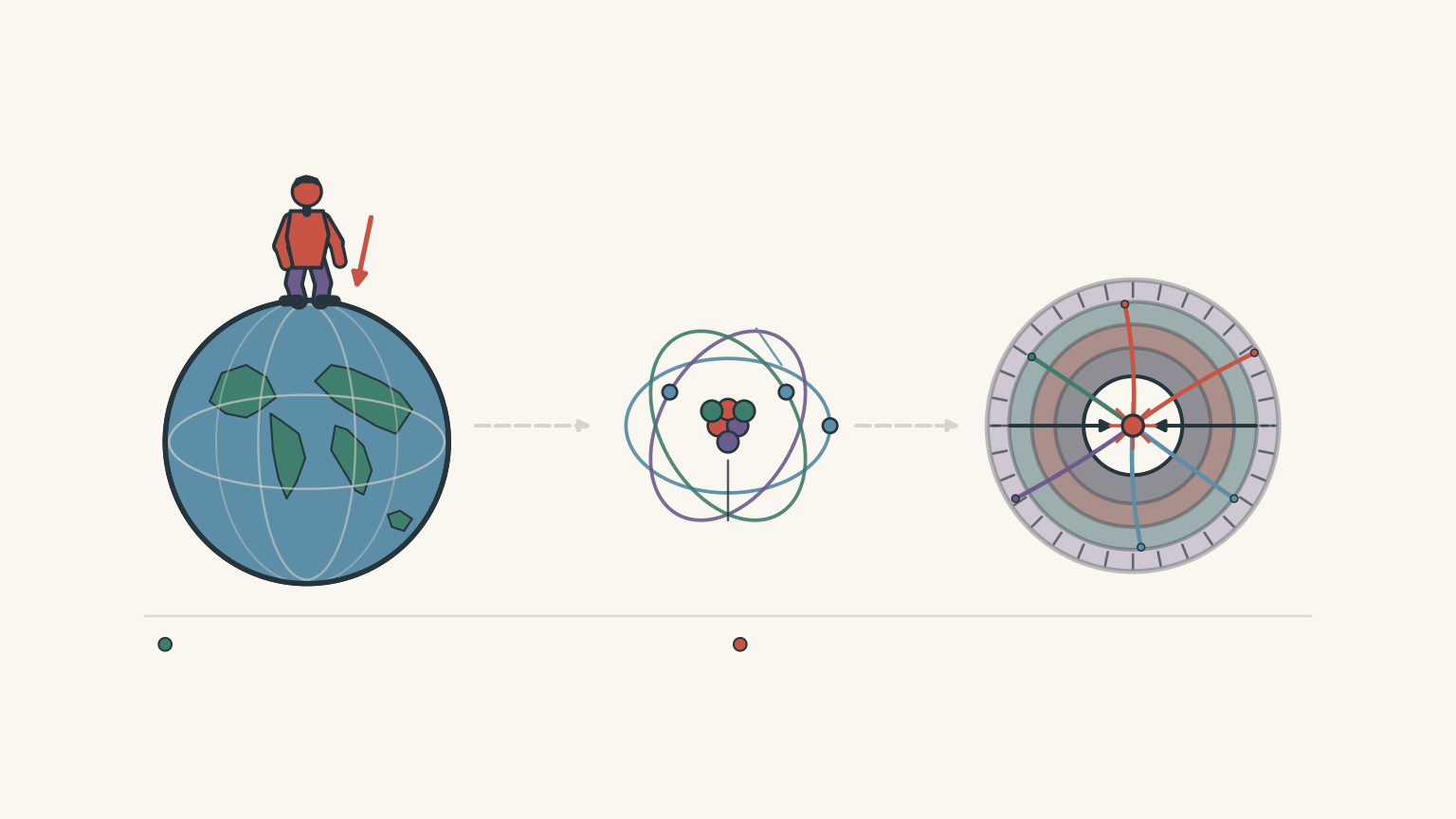
A proton sits in the centre of an atom, packed with three quarks that are constantly interacting. Electrons are held around the same nucleus by an entirely different interaction. Inside the nucleus, some particles can even change into different particles through another interaction.
This creates a strange puzzle: if all forces are just “pushes and pulls”, why do we need different ones? Why does the force holding quarks together not also hold electrons in orbit? And why does gravity, the force we notice every day, not appear in the same theory that explains the other interactions?
The Standard Model answers part of this puzzle. It describes three fundamental interactions: the strong interaction, the weak interaction, and the electromagnetic interaction. Gravity is different. It is not currently included in the Standard Model.
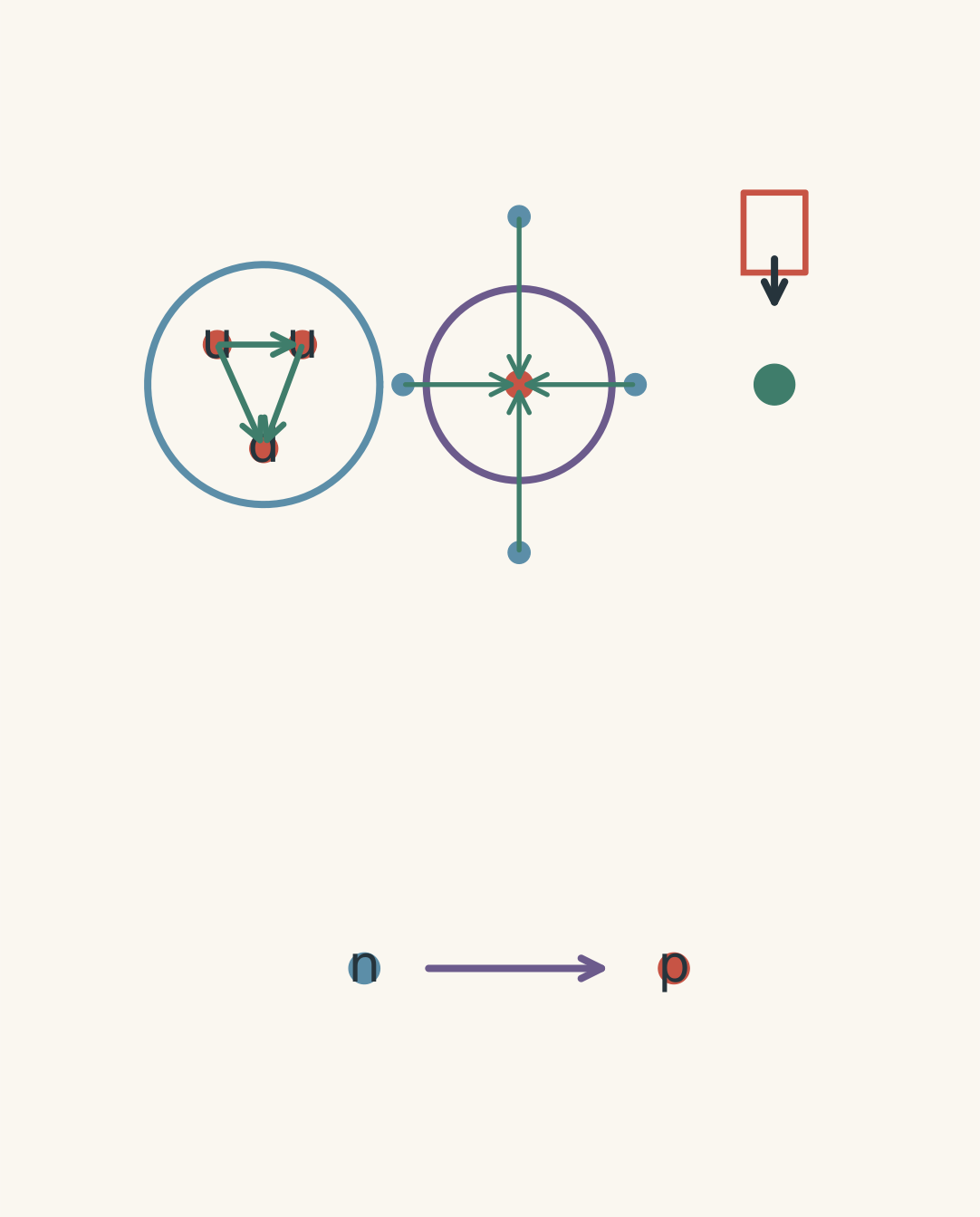
01Why do we need different fundamental forces?
Imagine you are predicting how matter behaves.
A simple model might say: “Everything is controlled by one invisible force.”
Would that work?
Consider three observations:
- A magnet can pull a paperclip, but it does not pull a neutral wooden block.
- The nucleus of an atom stays together even though protons electrically repel each other.
- A neutron can change into a proton through radioactive beta decay.
One force cannot easily explain all three observations. The effects are different, so physicists developed different interaction models.
A useful starting idea is that forces are ways particles influence each other. In the Standard Model, particles do not simply “reach out” and grab each other. Instead, they interact by exchanging force-carrying particles called gauge bosons.
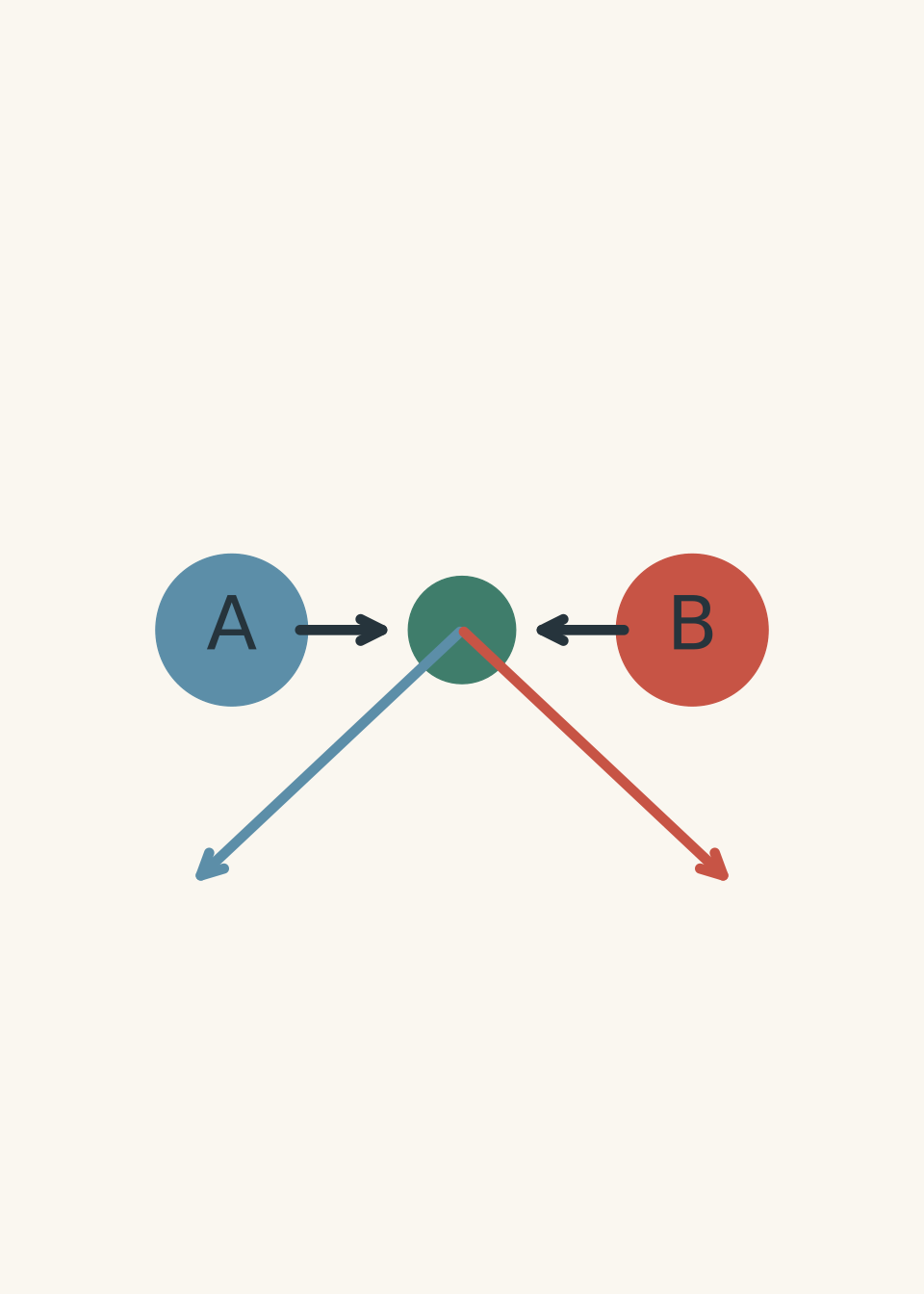
A simplified analogy is passing messages between people. If two people are trying to coordinate a game, they might throw notes to each other. The notes are not the friendship itself, but they allow information to be transferred.
The analogy breaks down because real particles are not consciously exchanging messages, and quantum interactions do not work like everyday objects. However, it helps explain why a force can be connected to the exchange of particles.
02The three Standard Model interactions
The Standard Model groups matter particles into families, and it explains how they interact through three forces.
| Interaction | What it acts on | Force carrier | Relative strength (rough idea) | Example |
|---|---|---|---|---|
| Strong interaction | Quarks and particles made from quarks | Gluons | Strongest | Holding quarks inside protons and neutrons |
| Electromagnetic interaction | Electrically charged particles | Photons | Second strongest | Attraction between electrons and nuclei |
| Weak interaction | Quarks and leptons | W and Z bosons | Much weaker | Beta decay |
The word “strong” can be confusing. It does not mean it is the force that affects everything most. It means that at the scale where it acts, it has the largest interaction strength.
03Strong interaction: the force that builds nuclei
A proton contains two up quarks and one down quark. A neutron contains one up quark and two down quarks.
You can read more about how these combinations form particles in our guide to quarks and hadrons.
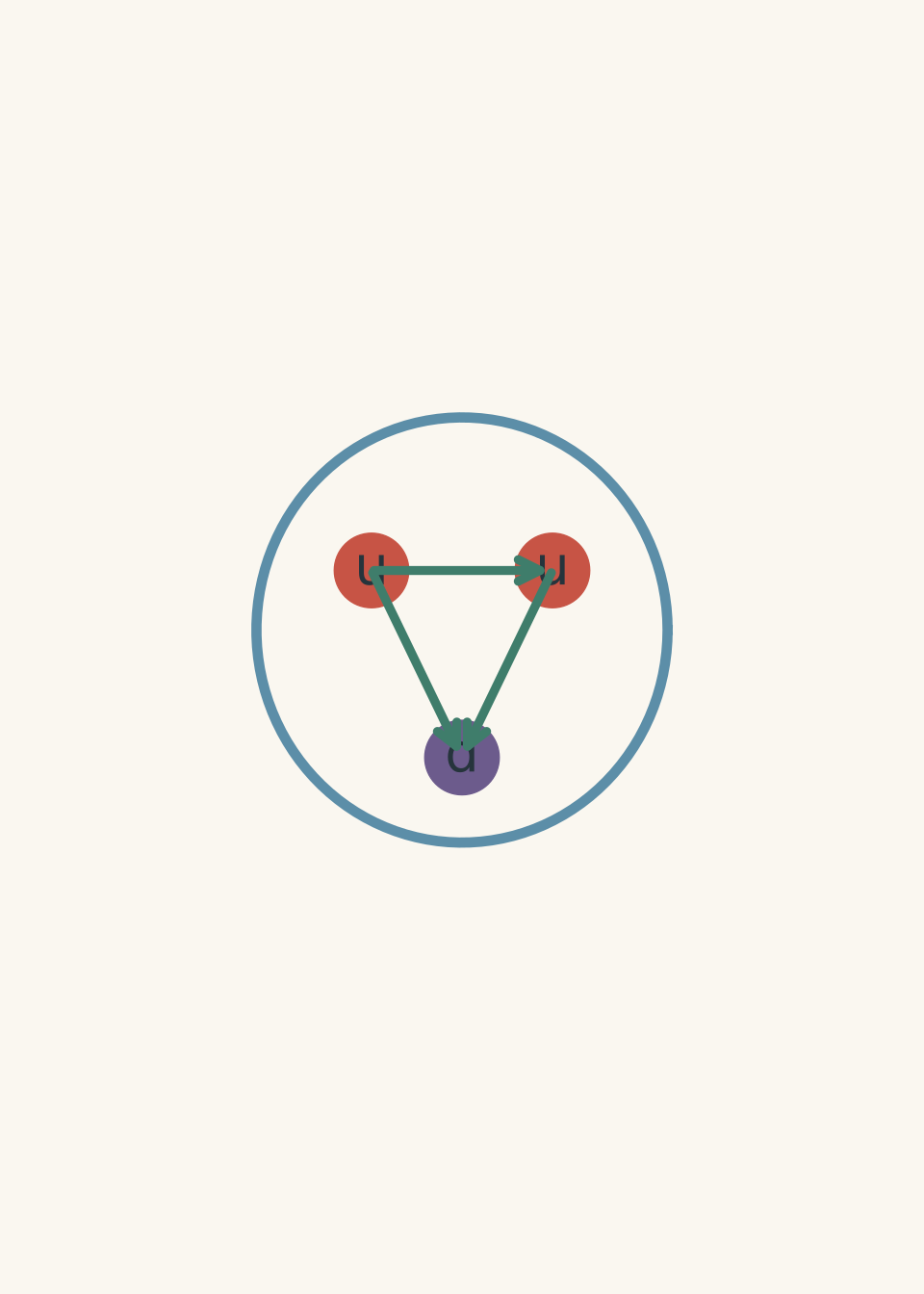
The strong interaction acts on quarks. Its force carrier is the gluon.
A common first prediction is:
“Protons are positively charged, so they repel each other. Therefore, nuclei should fly apart.”
That prediction seems reasonable because like charges repel. The missing idea is that another interaction exists inside the nucleus. At extremely small distances, the strong interaction is powerful enough to overcome the electrical repulsion between protons.
However, the first model is incomplete. The strong interaction does not simply glue whole protons together like a blob of sticky glue. It acts on the quarks inside protons and neutrons. The force that holds protons and neutrons together in a nucleus is a leftover effect of the strong interaction.
This is similar to how two people might stay connected because their friends overlap in a social network. The original connection is between individuals in the network, but the wider effect can hold groups together. The analogy is imperfect because quarks do not have social relationships, and the nuclear force has precise quantum behaviour.
04Electromagnetic interaction: the force behind atoms and chemistry
The electromagnetic interaction acts between particles with electric charge.
Electrons have negative charge. Protons have positive charge. Opposite charges attract, so electrons can remain bound to nuclei.
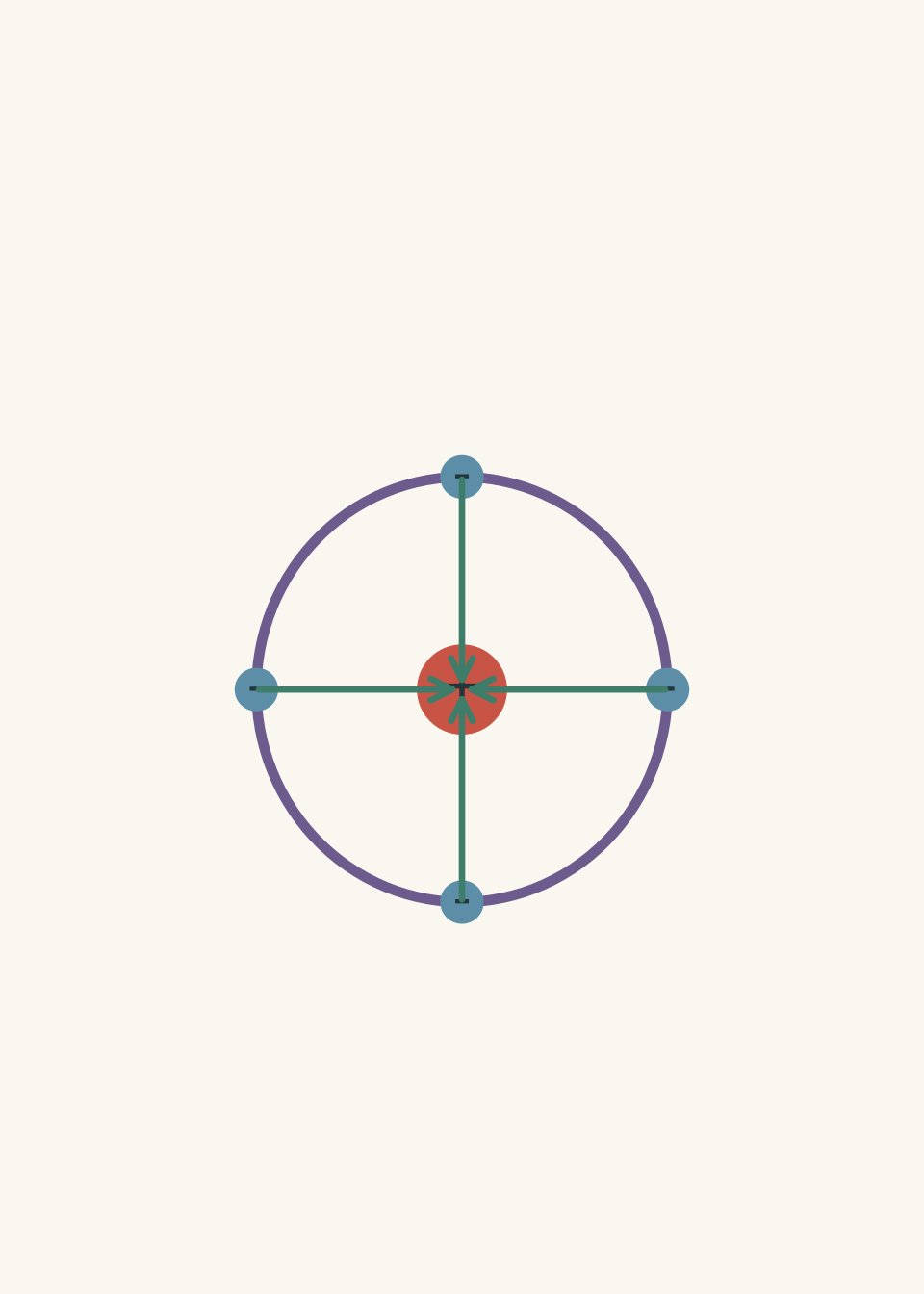
This interaction is carried by photons.
The same interaction explains:
- electric circuits,
- magnets,
- light,
- chemical bonds,
- the structure of atoms.
A student might predict that a larger atom should always have stronger electromagnetic attraction because it contains more protons. That is partly true, but incomplete.
The outer electrons are also affected by other electrons pushing them away and by shielding from inner electrons. The atom is not just one proton pulling on one electron. Many charges are interacting at once.
05Weak interaction: the force that changes particles
The weak interaction is the unusual one because it can change one type of particle into another.
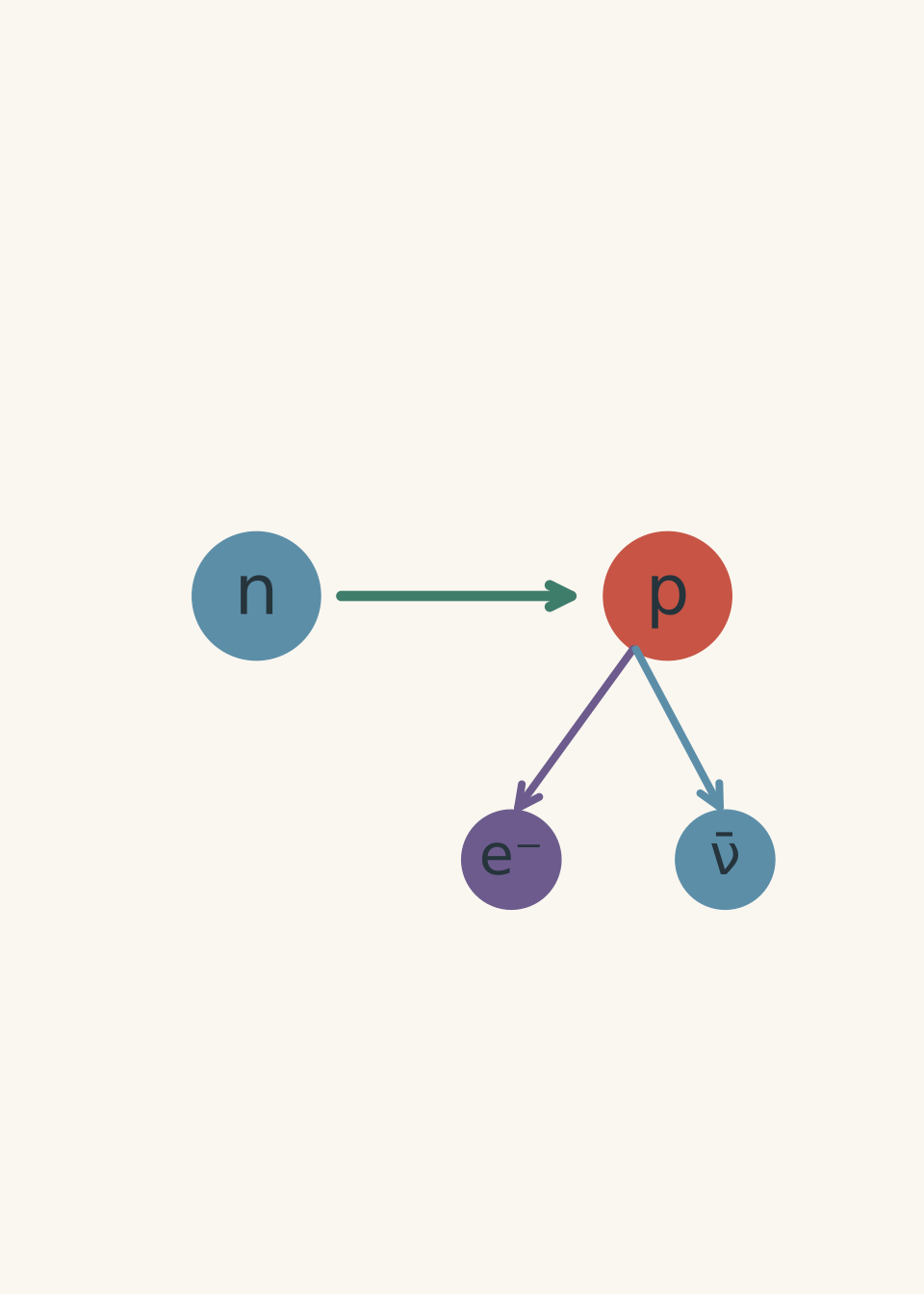
For example, in beta decay, a neutron can become a proton. At the quark level, a down quark changes into an up quark.
The process involves the emission of a \(W^-\) boson:
\[ \text{down quark} \rightarrow \text{up quark} + W^- \]
The \(W^-\) boson then becomes an electron and an antineutrino:
\[ W^- \rightarrow e^- + \bar{\nu}_e \]
The weak interaction is responsible for processes such as radioactive beta decay and helps power the reactions occurring in stars.
The weak interaction is not “weak” because it is unimportant. It is weak because its effects are usually much less likely and much shorter ranged than electromagnetic or strong interactions.
06Why is gravity not in the Standard Model?
Gravity is the odd one out.
The Standard Model successfully describes the strong, weak, and electromagnetic interactions using quantum field theories. Gravity is described extremely well on large scales by general relativity.
The problem is that these two frameworks do not fit together neatly.
A prediction might be:
“If every force is fundamental, there should be a Standard Model particle carrying gravity.”
Physicists often refer to a possible gravity carrier as the graviton, but a confirmed graviton has not been observed, and a complete quantum theory of gravity has not yet been developed.
Gravity also behaves differently from the other interactions. It affects mass and energy rather than electric charge, colour charge, or weak charge. At the scale of atoms and particles, gravity is incredibly weak compared with the other forces.
07Worked example: Identifying the interaction
Worked example: Which fundamental interaction is responsible?
A radioactive nucleus emits an electron during beta decay. Which fundamental interaction causes this process?
Step 1
Beta decay changes a neutron into a proton, so the particle type has changed.
Step 2
The weak interaction allows quarks to change flavour. The strong and electromagnetic interactions do not normally change a particle into a different type.
Step 3
The process is caused by the weak interaction.
This matters because recognising the type of change is often more useful than memorising examples. If particles are changing identity, suspect the weak interaction.
08Worked example: Comparing interactions in an atom
Worked example: Explain why an electron remains near a nucleus but does not fall into it due to the strong interaction.
Step 1
The electron is negatively charged, and the nucleus contains positively charged protons.
Step 2
The strong interaction only acts on quarks. Electrons are leptons, not quarks.
Step 3
The electron and nucleus interact through the electromagnetic interaction because they have opposite electric charges.
Step 4
The electron is held in the atom by electromagnetic attraction, not the strong interaction.
The tempting mistake is thinking “the strong interaction holds atoms together, so it must hold electrons too.” The key constraint is that different particles respond to different interactions.
09Questions and solutions
Question 1
A scientist observes two protons inside a nucleus staying close together despite their electrical repulsion. Which interaction explains this observation?
Solution 1
The strong interaction explains why the protons can remain together. Protons repel each other through the electromagnetic interaction because they both have positive charge, but at nuclear distances the effects of the strong interaction are greater. The strong interaction acts on the quarks inside the protons and produces the effect that binds nucleons together inside nuclei.
Question 2
A student says, “The electromagnetic interaction must be the strongest force because it is responsible for all chemistry and electricity.” Explain why this statement is incorrect.
Solution 2
The statement is incorrect because importance does not mean strength. The electromagnetic interaction controls many everyday phenomena because atoms contain charged particles, but the strong interaction has a greater interaction strength at the distances where it acts. The strong interaction is responsible for binding quarks and contributing to nuclear stability, while electromagnetic effects dominate many larger-scale processes.
Question 3
A neutron inside a radioactive nucleus changes into a proton, an electron, and an antineutrino. Explain why this cannot be caused by the strong interaction or electromagnetic interaction.
Solution 3
The decay is caused by the weak interaction because it changes one particle type into another. The strong interaction can rearrange quarks but does not normally produce flavour-changing processes like a down quark becoming an up quark. The electromagnetic interaction involves electric charge and photon exchange, but it does not change a neutron into a proton with the required emitted particles. The weak interaction allows the quark change and produces the \(W^-\) boson involved in the decay.
Question 4
A researcher proposes that because gravity affects every object with mass, gravity must also be the strongest interaction inside an atom. Evaluate this claim.
Solution 4
The claim is incorrect because gravity is extremely weak at atomic scales. Although gravity acts on all objects with mass, the masses of individual particles are so small that gravitational attraction between them is negligible compared with electromagnetic and strong interactions. Inside atoms, electromagnetic attraction controls electron behaviour, while strong interactions control quark and nuclear behaviour. Gravity becomes dominant only when enormous amounts of mass are involved, such as planets and stars.
Question 5
A new particle is discovered. It has no electric charge, it is not made of quarks, and it does not appear to participate in weak interactions. Scientists also find that it interacts with ordinary matter only through its mass and energy. A student argues that the particle must be part of the Standard Model because “all fundamental particles belong there.” Decide whether this reasoning is valid and explain the deeper issue.
Solution 5
The reasoning is not valid because the particle would not fit the known Standard Model interactions. The Standard Model includes particles that interact through the strong, weak, and electromagnetic forces, but it does not include a complete description of gravity.
The tempting route is to think that the Standard Model is a list of every possible particle. It is not. It is a theory describing a specific set of particles and interactions. The key constraint is how the particle interacts. A particle that only interacts through mass and energy suggests a gravitational interaction, which lies outside the Standard Model.
However, the conclusion would still require careful testing. Scientists would need to measure the particle’s behaviour, rule out unknown interactions, and compare observations with predictions. The important idea is that classification depends on the interaction rules, not simply on the fact that the particle exists.
10Where this idea leads next
Understanding the four fundamental interactions gives you a map of particle physics. The next useful step is learning how particles are classified: quarks, leptons, bosons, and the way quarks combine to form larger particles such as protons and neutrons.