
How Particle Accelerators Test Physics: HSC Physics Explained
Discover how particle accelerators use electric fields to increase particle energy, collide particles to investigate matter, and detect evidence that tests physical theories. Includes worked examples and challenging HSC Physics questions with detailed solutions.
A particle detector never prints a label saying “new particle discovered”. It records curved tracks, energy deposits, and other signals. Physicists must work backwards from those clues to figure out what happened during a collision, then decide whether the evidence supports a particular theory.
The interesting part is that the particles predicted by a theory might exist for an incredibly short time. They can decay before reaching the detector, leaving only other particles behind. So how can scientists test whether they were ever there?
The answer depends on three linked processes: accelerating particles to high energies, colliding them under controlled conditions, and interpreting the resulting detector signals.
From collision to detector evidence
- Incoming beams
Two particle beams approach from opposite directions.
- Collision point
Particles interact and produce outgoing particles; short-lived products may decay.
- Detector signals
Charged particles leave curved tracks; calorimeters record energy deposits.
- Physical interpretation
Signals constrain particle properties but do not directly identify every particle.
01How particle accelerators give particles energy
Imagine trying to investigate the internal structure of a proton. You can’t simply point a microscope at it and see its quarks. You need a way to probe the proton using interactions energetic enough to reveal its internal structure.
That’s one reason particle accelerators are useful. They increase the energy of charged particles before directing them into collisions.
Electric fields provide the energy
A charged particle experiences a force in an electric field. The force is
\[ F=qE \]
where:
- \(F\) is the electric force, measured in newtons (N).
- \(q\) is the particle’s charge, measured in coulombs (C).
- \(E\) is the electric field strength, measured in newtons per coulomb (N/C).
When an electric field does work on a particle, it transfers energy to that particle. Its kinetic energy increases if the field accelerates it in the direction of motion.
For a particle accelerated through a potential difference, the magnitude of its kinetic-energy gain is
\[ \Delta K=|q|\Delta V \]
Here, \(\Delta K\) is the kinetic-energy gain, \(|q|\) is the magnitude of the particle’s charge, and \(\Delta V\) is the magnitude of the accelerating potential difference.
This equation gives you an important shortcut for HSC Physics calculations.
A proton has a charge of \(+1.60\times10^{-19}\\,\mathrm C\). If it gains energy by moving through a potential drop of 1 V, its kinetic energy increases by \(1.60\times10^{-19}\\,\mathrm J\). This amount of energy is called one electronvolt, or 1 eV.
Therefore, a proton accelerated through a potential drop of 1,000 V gains 1 keV of energy.
Remember that an electronvolt is a unit of energy, not voltage.
Worked example: Energy gained by a proton
A proton is accelerated through a potential drop of 4.0 kV in the direction that increases its speed. Calculate its kinetic-energy gain in joules and electronvolts.
Step 1: Identify the quantities.
The proton’s charge magnitude is \(1.60\times10^{-19}\\,\mathrm C\), and the potential difference is
\[ \Delta V=4.0\times10^3\\,\mathrm V \]
Step 2: Apply the energy equation.
\[ \begin{aligned} \Delta K&=|q|\Delta V\\\ &=(1.60\times10^{-19})(4.0\times10^3)\\\ &=6.4\times10^{-16}\\,\mathrm J \end{aligned} \]
Step 3: Express the result in electronvolts.
A proton gains 1 eV per volt of accelerating potential, so
\[ \Delta K=4.0\\,\mathrm{keV} \]
The proton gains \(6.4\times10^{-16}\\,\mathrm J\), equivalent to 4.0 keV.
Notice that this is the change in kinetic energy. If the proton already had some kinetic energy before entering the accelerator, its final kinetic energy would be higher than this gain.
Magnetic fields steer particles rather than supply their energy
Now predict something: if we double the magnetic field around a moving charged particle, will the particle gain twice as much kinetic energy?
No. A magnetic field acting alone changes the particle’s direction of motion, not its speed or kinetic energy.
The magnetic force is perpendicular to the particle’s velocity when it moves perpendicular to a uniform magnetic field. The force therefore changes the direction of its velocity without doing work on it.
This is still acceleration. Acceleration means a change in velocity, and velocity includes both speed and direction.
A useful way to picture the difference is to imagine a runner receiving a shove that adds energy while a curved track guides their route. The shove represents the electric field; the curved track represents the steering role of the magnetic field. The analogy isn’t exact because a magnetic field exerts a continuous force rather than acting as a physical rail, but it captures the difference between adding energy and changing direction.
Inside a circular particle accelerator
| Circulating particle bunch | The bunch repeatedly travels around a closed ring. |
|---|---|
| RF cavities — energy gain | Timed oscillating electric fields transfer energy to the bunch. |
| Bending magnets — steering | Magnetic forces curve the beam without increasing its kinetic energy. |
In a circular accelerator, such as a synchrotron, particles pass through radio-frequency cavities that provide repeated energy increases. Magnets keep the beam on its intended path and help focus it.
At very high energies, a particle’s speed approaches the speed of light. Adding more energy then increases its momentum much more noticeably than its speed. The accelerator must adjust its magnetic fields as the particle momentum increases to maintain the desired orbit.
Keep the roles separate:
- Electric fields transfer energy to the particles.
- Magnetic fields steer and focus the beam.
- The collision allows the energetic particles to interact.
- The detector records evidence about the resulting particles.
02Why collide particles at high energies?
Accelerating a particle is only the preparation. To test a theory about matter, physicists need to make the particles interact.
Suppose two high-energy particles collide. What can happen to their kinetic energy?
It can be redistributed into the motion of the outgoing particles, and some can become the rest energy of newly produced particles. The relationship between energy and rest mass is
\[ E=mc^2 \]
where \(E\) is rest energy, \(m\) is rest mass, and \(c\) is the speed of light in a vacuum.
This does not mean that any collision can produce any particle. The available energy must be sufficient, and conservation laws must still be satisfied. Total energy, total momentum, electric charge, and other relevant quantum numbers must balance between the initial and final states.
Why use colliding beams?
In a head-on collider, the incoming particles travel in opposite directions. If their momenta are equal and opposite, their total momentum is zero.
That is useful because the collision energy can be available to produce new particles without the entire final system having to carry a large net momentum in one direction.
Compare this with firing a particle at a stationary target. The incoming particle’s momentum is not cancelled by an equally energetic particle moving in the opposite direction, so much of the available energy remains associated with the motion of the final system.
Head-on collisions can therefore provide much more energy for producing new mass than a comparable fixed-target experiment.
Where collision energy can go
| Head-on collider | P_initial = p + (−p) = 0 Two equal incoming momentum arrows point towards each other and cancel overall. Available collision energy: E_CM = E₁ + E₂ for equal and opposite beam momenta. |
|---|---|
| Fixed-target collision | P_initial = p_beam The incoming particle strikes a target initially at rest; the outgoing system carries forward momentum. Available collision energy: E_CM is less than the total laboratory-frame energy because the final system retains net motion. |
The collision is a test, not a photograph
A collision can produce several particles, some of which decay almost immediately. The detector may never record the original short-lived particle directly.
Instead, physicists measure the properties of the outgoing particles and use conservation laws to reconstruct what could have happened.
This is particularly important when investigating protons. A proton is not a simple, indivisible sphere. It contains quarks and gluons, and a high-energy collision can involve only some of its constituents. The remaining energy can appear in other particles and proton remnants.
That means the energy of the entire incoming proton beams is not necessarily the energy available to produce one particular particle in a single constituent-level interaction.
For a more detailed explanation of the particles inside protons, see tutorgum’s guide to Quarks and Hadrons: How Protons, Neutrons and Mesons Form.
03How detectors identify particles
After a collision, the detector must turn physical interactions into measurable evidence.
Different parts of a detector measure different properties. No single signal necessarily identifies a particle by itself.
Curved tracks reveal charge and momentum
Tracking detectors record signals produced as charged particles pass through them. A computer links these signals to reconstruct each particle’s path.
When the tracking system operates inside a magnetic field, the paths curve. The direction of the curvature can reveal the sign of a particle’s charge, provided the magnetic-field direction and the particle’s direction of travel are known.
The radius of curvature gives information about momentum.
For a particle moving perpendicular to a uniform magnetic field, the magnetic force supplies the centripetal force. At non-relativistic speeds, we can write
\[ |q|vB=\frac{mv^2}{r} \]
where:
- \(q\) is the particle’s charge.
- \(v\) is its speed.
- \(B\) is the magnetic flux density, measured in tesla (T).
- \(m\) is its mass.
- \(r\) is the radius of the circular path.
Rearranging gives
\[ r=\frac{mv}{|q|B} \]
Since momentum at non-relativistic speeds is \(p=mv\), this relates the track radius to momentum. For high-energy particles, the more general momentum relationship is
\[ p=|q|Br \]
where \(p\) is the magnitude of the particle’s momentum.
The practical rule is straightforward: for particles with the same charge magnitude moving in the same magnetic field, a larger radius means greater momentum.
But there’s a catch. If two particles have different charge magnitudes, you cannot compare their momenta using radius alone.
Worked example: Finding momentum from a particle track
A singly charged particle moves perpendicular to a uniform magnetic field of \(0.80\\,\mathrm T\). Its reconstructed track has a radius of \(0.25\\,\mathrm m\). Calculate the magnitude of its momentum.
Take the magnitude of its charge to be \(1.60\times10^{-19}\\,\mathrm C\).
Step 1: Identify the appropriate relationship.
The particle’s momentum can be determined from its charge, the magnetic-field strength, and the track radius:
\[ p=|q|Br \]
Step 2: Substitute the values.
\[ \begin{aligned} p&=(1.60\times10^{-19})(0.80)(0.25)\\\ &=3.2\times10^{-20}\\,\mathrm{kg\\,m\\,s^{-1}} \end{aligned} \]
Step 3: Interpret the result.
The particle’s momentum magnitude is \(3.2\times10^{-20}\\,\mathrm{kg\\,m\\,s^{-1}}\).
The result comes from the curvature of the track, not from directly reading the particle’s momentum off the detector. In a real high-energy experiment, the momentum measurement is combined with other detector information to identify the particle.
Track curvature reveals momentum
| Tighter curve | p = |q|Br Smaller radius: lower momentum for equal charge magnitude. Arrow indicates direction of travel. |
|---|---|
| Broader curve | p = |q|Br Larger radius: higher momentum for equal charge magnitude. Check charge magnitude before comparing tracks. |
Energy deposits reveal more than tracks can
Tracking detectors are only one part of the system.
Calorimeters measure the energy deposited when particles interact with detector material. Different particles can produce different patterns of energy deposition.
For example, an electrically neutral particle does not curve in a magnetic field because it has no electric charge. It may still interact with the detector and deposit energy, as a photon can do. A neutrino, by contrast, can pass through the detector without leaving a measurable signal.
This creates an important distinction:
- A charged particle can leave a track that reveals its charge sign and momentum.
- A neutral particle may deposit energy without leaving a curved track.
- A particle that escapes without a measurable signal may be inferred from an imbalance in the observed energy and momentum, if the initial conditions and detector response are sufficiently well understood.
How a particle detector records a collision
| Collision point and tracking detector | Outgoing particles begin at the collision point inside the tracking layers. A magnetic field bends charged-particle tracks. |
|---|---|
| Positive and negative particles | Opposite charges curve in opposite directions in the same magnetic field. |
| Photon in the calorimeter | A neutral photon has no initial curved track but can produce an energy shower in the calorimeter. |
| Escaping neutrino | A neutrino may pass through the detector without leaving a measurable signal. |
A detector therefore does not simply take a picture of the particles produced. It records several kinds of evidence, which physicists combine to work out what the event contained.
04When does a collision count as evidence for a theory?
Suppose a theory predicts a previously unobserved particle. Physicists build an experiment capable of producing it, then examine the collision data.
What would count as convincing evidence?
A single event that looks compatible with the prediction is a useful starting point, but it is not enough to establish that the particle exists. Other physical processes can produce similar outgoing particles, and detector errors can create misleading patterns.
Instead, physicists compare many events with quantitative predictions from the theory and from competing explanations.
They investigate questions such as:
- Do the measured charges, momenta, and energy deposits fit the predicted decay products?
- Do the reconstructed properties agree with the predicted particle mass and other characteristics?
- Does the pattern occur often enough to match the theory’s predicted production rate?
- Can known physical processes or detector effects explain the observations instead?
Why a repeated mass peak matters
Imagine a short-lived neutral particle that decays into two charged particles, one positive and one negative.
The parent particle may disappear before reaching the tracking detector. However, the detector can record the two outgoing particles and measure their energies and momenta.
Physicists can then combine those measurements to calculate the mass implied by the pair. This is called reconstructing the pair’s mass.
If a genuine short-lived particle is repeatedly produced and decays into that pair, the reconstructed masses can cluster around the parent’s mass. Detector resolution causes some spread, but a clear peak may emerge.
By contrast, ordinary processes that produce pairs over a broad range of energies often contribute a smoother background. A narrow peak above that background can therefore support the existence of a short-lived particle.
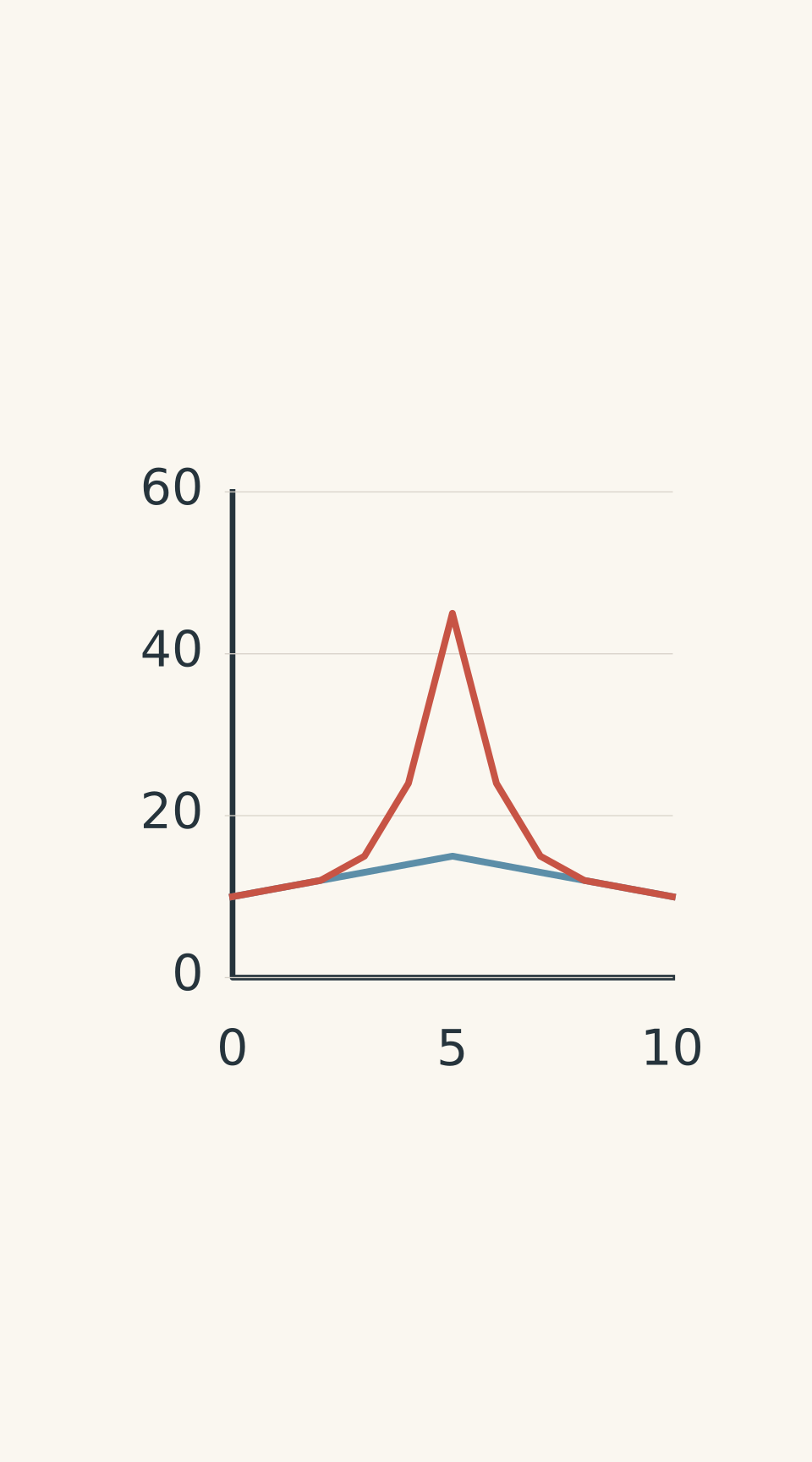
- Smooth background
- Observed events — candidate particle peak
A peak is not automatically proof. Physicists must check whether known processes can produce the same pattern, whether the detector is calibrated correctly, and whether the excess is statistically convincing. They also test whether the observed decay products and production rates agree with the proposed theory.
The logic is cumulative: a theory makes a prediction, the experiment produces measurable data, and repeated observations either support the prediction or reveal a problem with it.
A failure to observe a predicted particle can also be useful. It may rule out some versions of a theory under the tested conditions, although it does not necessarily rule out every possible version.
05Questions and solutions
Question 1
A proton is accelerated from negligible initial kinetic energy through a potential drop of \(1.5\\,\mathrm{kV}\) in the direction that increases its speed.
Calculate its final kinetic energy in joules and electronvolts. Use \(e=1.60\times10^{-19}\\,\mathrm C\).
Solution 1
The proton’s final kinetic energy is \(2.4\times10^{-16}\\,\mathrm J\), equivalent to \(1.5\\,\mathrm{keV}\).
The kinetic-energy gain is
\[ \Delta K=|q|\Delta V \]
Substituting the values,
\[ \begin{aligned} \Delta K&=(1.60\times10^{-19})(1.5\times10^3)\\\ &=2.4\times10^{-16}\\,\mathrm J \end{aligned} \]
A proton gains 1 eV per volt of accelerating potential, so the energy gain is also \(1.5\\,\mathrm{keV}\).
Since its initial kinetic energy is negligible, its final kinetic energy is approximately equal to this gain. The key principle is that the electric field transfers energy to the proton.
Question 2
Two charged particles enter the same uniform magnetic field of \(0.60\\,\mathrm T\), travelling perpendicular to the field in the same initial direction.
- Particle A has charge \(+e\) and a track radius of \(0.20\\,\mathrm m\).
- Particle B has charge \(-2e\) and a track radius of \(0.30\\,\mathrm m\).
Take \(e=1.60\times10^{-19}\\,\mathrm C\).
(a) Calculate the momentum magnitude of each particle.
(b) Determine which particle has greater momentum, and explain why comparing their radii alone would give an unreliable answer.
(c) Explain what their opposite directions of curvature tell you.
Solution 2
Particle B has three times the momentum magnitude of particle A, despite having the larger track radius.
(a) Calculate the momenta.
Use
\[ p=|q|Br \]
For particle A,
\[ \begin{aligned} p_A&=(1.60\times10^{-19})(0.60)(0.20)\\\ &=1.92\times10^{-20}\\,\mathrm{kg\\,m\\,s^{-1}} \end{aligned} \]
For particle B, the charge magnitude is \(2e\):
\[ \begin{aligned} p_B&=(3.20\times10^{-19})(0.60)(0.30)\\\ &=5.76\times10^{-20}\\,\mathrm{kg\\,m\\,s^{-1}} \end{aligned} \]
(b) Compare the momenta.
The ratio is
\[ \frac{p_B}{p_A} =\frac{5.76\times10^{-20}}{1.92\times10^{-20}} =3 \]
Particle B has three times the momentum magnitude.
A larger radius normally indicates greater momentum when the charge magnitude and magnetic field are the same. Here, however, particle B has twice the charge magnitude of particle A. That changes the relationship between radius and momentum.
(c) Interpret the curvature.
The particles curve in opposite directions because they have opposite charge signs. The magnetic force reverses direction when the sign of the charge reverses, assuming the same magnetic field and initial direction of travel.
The important lesson is that track curvature provides evidence about both charge and momentum, but those properties must be interpreted together.
Question 3
A student claims:
“Increasing the magnetic field in a synchrotron gives the particles more kinetic energy because the magnetic force becomes stronger.”
Explain why this claim is incorrect. Describe the roles of the electric fields and magnetic fields in a synchrotron, and explain how a particle can continue accelerating when its speed changes very little.
Solution 3
The claim is incorrect because a static magnetic field changes a charged particle’s direction of motion but does not increase its kinetic energy. The electric fields in the accelerator transfer energy to the particles.
The magnetic force is perpendicular to the velocity for motion perpendicular to the field. Since the force does no work, the particle’s kinetic energy remains unchanged if the magnetic field is the only field doing work.
The radio-frequency cavities supply energy through timed electric fields. As particles pass through these cavities, their kinetic energy and momentum increase.
At very high energies, the particles’ speeds approach the speed of light. Adding energy then produces a relatively small increase in speed but a substantial increase in momentum.
The magnetic fields must be adjusted as the momentum rises so that the particles remain on the intended path.
The trap is to assume that acceleration always means an increase in speed. A particle can accelerate because its direction changes, even when its speed stays constant.
Question 4
Consider an idealised collision in which the initial total momentum is known to be zero.
A calibrated detector reconstructs all charged particles from the collision. Their vector momenta add to \(+0.8\\,\mathrm{GeV}/c\) in the horizontal direction, where \(\mathrm{GeV}/c\) is a unit of momentum.
No neutral particle leaves a track.
(a) What must be true about the total momentum of the unobserved final-state products?
(b) Does this event establish that a new neutral particle was produced? Explain what can and cannot be concluded.
Solution 4
The unobserved final-state products must have a total horizontal momentum of \(-0.8\\,\mathrm{GeV}/c\), but the event alone does not establish that a new neutral particle exists.
(a) Apply conservation of momentum.
The initial total momentum is zero. Therefore, the final total momentum must also be zero:
\[ \vec p_{\text{initial}}=\vec p_{\text{final}} \]
The measured charged particles have a combined horizontal momentum of \(+0.8\\,\mathrm{GeV}/c\). The remaining products must balance that momentum with a combined horizontal momentum of
\[ p_{\text{unobserved},x} =-0.8\\,\mathrm{GeV}/c \]
The negative sign indicates momentum in the opposite horizontal direction.
(b) Interpret the evidence.
The event is consistent with unobserved particles carrying the missing momentum. Those particles could include neutral particles, which do not leave curved tracks in the magnetic field.
However, conservation of momentum does not identify the missing particle or establish that it is new. Several particles could share the missing momentum, and the interpretation depends on the completeness and accuracy of the detector measurements.
Physicists would investigate the energy deposits, other detector signals, possible backgrounds, and whether similar events occur repeatedly.
The important distinction is between establishing that the measured event has an imbalance and establishing the physical explanation for that imbalance.
Question 5
A proton collider has two head-on beams. Each incoming proton has a total energy of \(10\\,\mathrm{GeV}\), giving an initial centre-of-mass energy of \(20\\,\mathrm{GeV}\).
In one event, a positively charged particle and a negatively charged particle emerge from the collision. Their measured momenta are equal and opposite, and their total measured energy is \(5.0\\,\mathrm{GeV}\).
A student argues:
“The pair has zero total momentum and a total energy of \(5.0\\,\mathrm{GeV}\). Therefore, a neutral particle with mass \(5.0\\,\mathrm{GeV}/c^2\) must have been created and decayed into the pair.”
Later, physicists examine thousands of collisions. The reconstructed masses of such pairs show a narrow peak at \(5.0\\,\mathrm{GeV}/c^2\) above a smooth background.
Assess the student’s argument. Explain:
- What the single event establishes about the pair.
- Why the event does not, by itself, prove that an intermediate neutral particle existed.
- Why the repeated mass peak provides stronger evidence.
- How the remaining beam energy can be accounted for without violating conservation laws.
Solution 5
The single event is consistent with a neutral parent particle of mass \(5.0\\,\mathrm{GeV}/c^2\), but it does not prove that such a particle existed. The repeated mass peak is stronger evidence for a short-lived particle, provided alternative explanations and detector effects have been tested.
First, interpret the single event.
The two outgoing particles have equal and opposite momenta, so their combined momentum is zero. Their centre-of-mass frame is therefore also the frame in which the pair has zero total momentum.
In that frame, the pair’s total energy is its rest energy. Using
\[ E=mc^2 \]
the mass implied by the pair is
\[ m=\frac{E}{c^2} =\frac{5.0\\,\mathrm{GeV}}{c^2} \]
Thus, the reconstructed pair mass is \(5.0\\,\mathrm{GeV}/c^2\).
This is a valid statement about the combined system. It does not establish how that system was produced.
Second, consider the competing explanations.
The student’s tempting assumption is that if the pair has the right mass and momentum to come from a neutral parent, that parent must have existed.
But the collision could also have produced the positive and negative particles directly, without an intermediate particle. Both explanations can be compatible with the same final pair.
Conservation laws constrain the initial and final states. They do not, by themselves, identify every intermediate step in the interaction.
Third, use the repeated mass peak.
A narrow peak around the same reconstructed mass across thousands of events is stronger evidence than one compatible event.
If a short-lived particle repeatedly decays into the observed pair, its characteristic mass can produce a concentration of events around one value. Ordinary processes that produce pairs over a range of masses often create a smoother background.
The peak therefore supports the hypothesis of a particle with that mass. However, physicists must still check whether known particles, other physical processes, detector effects, or statistical fluctuations could explain the pattern.
Finally, account for the remaining beam energy.
The initial centre-of-mass energy is \(20\\,\mathrm{GeV}\), whereas the measured pair carries \(5.0\\,\mathrm{GeV}\) of energy.
The pair does not have to contain all the collision energy. Other outgoing particles and proton remnants can carry the remaining energy and momentum. In a proton collider, the particular interaction that produces a particle can involve only a fraction of the energy carried by each incoming proton.
There is therefore no violation of energy conservation simply because the observed pair carries less energy than the incoming beams.
The strongest conclusion comes from combining the reconstructed mass, the repeated pattern, the other final-state measurements, and checks against competing explanations. The next step in testing the theory is to compare the full set of observed properties and event rates with its predictions, rather than treating one plausible event as proof of a discovery.