
Nucleosynthesis in Stars: How Heavy Elements Form
Learn how stars create heavier elements after the main sequence, from helium burning to supernova element formation. This HSC Physics guide explains the processes and evidence behind stellar nucleosynthesis.
A star can spend millions or billions of years turning hydrogen into helium. But that creates a puzzle: if stars are making new elements, why does a star not simply run out of fuel and stop? And where do elements like carbon, oxygen, silicon, iron, and gold come from?
The answer is that a star changes its “factory” as it ages. The reactions inside a young star are not the same as the reactions inside an old, massive star. Once the main sequence ends, increasing temperature and pressure allow new fusion processes to begin, creating heavier nuclei.

To understand nucleosynthesis, you need to follow the star’s changing conditions, not just memorise a list of reactions.
01From hydrogen burning to heavier elements
During the main sequence, stars are supported by hydrogen fusion. In the core, hydrogen nuclei combine to form helium, releasing energy because a small amount of mass is converted into energy.
You can read more about this earlier stage in the proton-proton chain and CNO cycle:
- The Proton-Proton Chain: HSC Physics Explained Clearly
- The CNO Cycle: Hydrogen Fusion in Hot Stars Explained
But eventually, the core runs low on hydrogen.
Imagine a star like a person trying to balance a heavy backpack. At the start, the person has plenty of energy and stands easily. As the fuel changes, the star has to adjust its internal structure to keep supporting itself against gravity.
The important question is:
What happens when hydrogen fusion can no longer provide enough outward pressure?
Gravity wins temporarily. The core contracts, and contracting matter heats up.
That temperature increase is the key. Fusion reactions that were impossible before can now occur.

02The helium-burning stage: making carbon and oxygen
When the core becomes hot enough, helium nuclei can begin to fuse.
A helium nucleus is also called an alpha particle, written as \( \ce{^4_2He} \). Three helium nuclei can combine to form carbon through the triple-alpha process.
The overall reaction is:
\[ \ce{3 ^4_2He -> ^12_6C + energy} \]
The star has now created a new element: carbon.
This process is unusual because helium fusion depends strongly on temperature. A small increase in temperature can cause a large increase in fusion rate.
A simple model helps here. Imagine pushing two magnets together. If they are moving slowly, they may repel before touching. If you push them together much faster, they can get close enough for another interaction to occur.
The analogy breaks down because nuclei do not behave like magnets, but it captures the main idea: higher energy collisions help nuclei overcome their electrical repulsion.
After helium begins to run out, some stars can continue with further stages:
- carbon fusion produces heavier nuclei such as neon, sodium, and magnesium
- oxygen fusion produces elements such as silicon and sulfur
- silicon fusion produces nuclei near iron
Each stage requires a higher temperature than the previous one.

03Why does fusion stop at iron?
A common prediction is:
“Surely the star can just keep fusing heavier and heavier elements forever.”
That feels reasonable. After all, fusion has been producing energy successfully for billions of years.
But iron is the turning point.
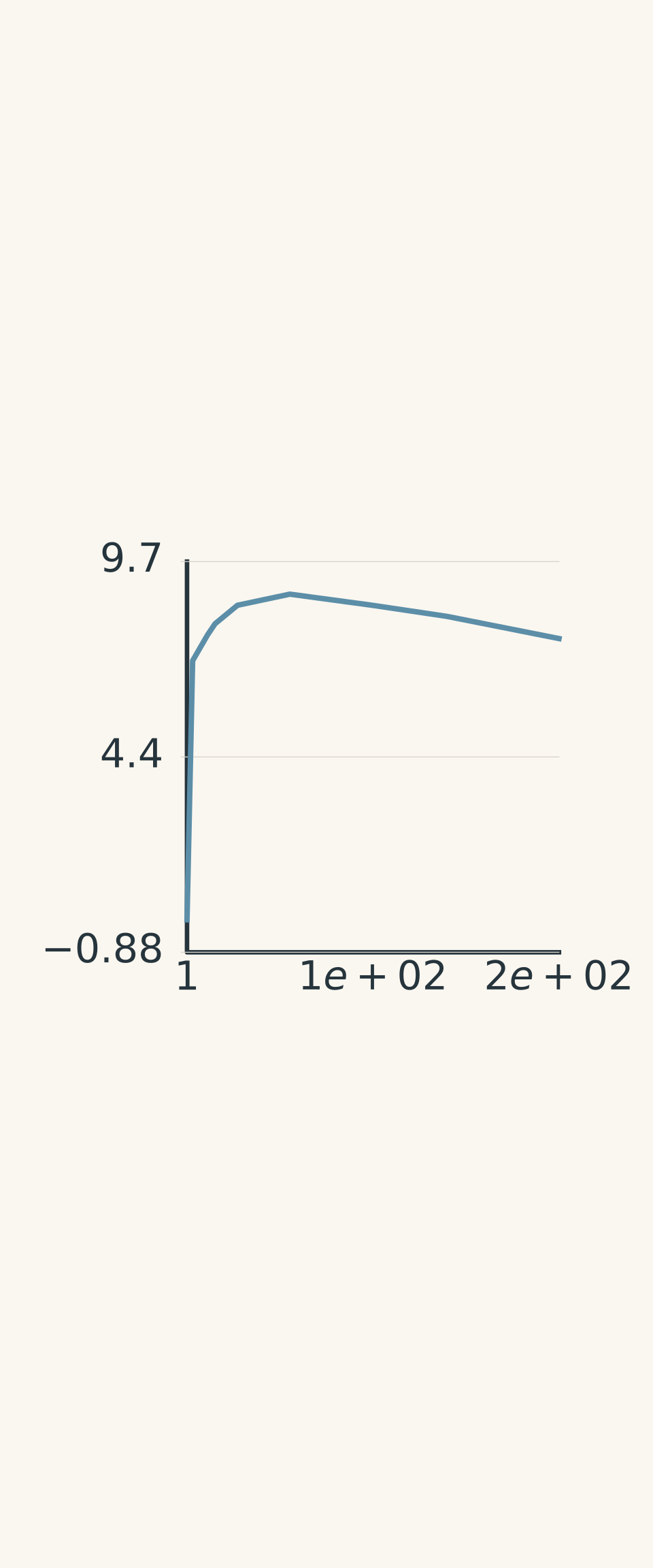
Fusion of light elements releases energy because the final nucleus is more tightly bound than the starting nuclei. However, beyond iron, combining nuclei requires more energy than it releases.
The star has reached a nuclear dead end.
This is connected to mass-energy equivalence:
\[ E = mc^2 \]
where:
- \(E\) is energy released or absorbed,
- \(m\) is the change in mass,
- \(c\) is the speed of light.
The tiny mass difference between reactants and products becomes energy. The direction of this mass change determines whether a reaction releases or absorbs energy.
You can explore this idea further in:
Mass-energy equivalence in stars: HSC Physics explained
04The supernova problem: making elements heavier than iron
If iron stops normal fusion, where do elements heavier than iron come from?
This is where stellar explosions become important.
A massive star with an iron core eventually faces a crisis. The core is no longer producing enough energy to support itself against gravity. The core collapses extremely quickly, and the outer layers rebound in a violent explosion called a supernova.
During this explosion, enormous numbers of neutrons are available.
A nucleus can capture neutrons without needing to overcome the same electrical repulsion problem as proton capture. This allows nuclei to grow larger.
There are two important neutron-capture processes:
- the s-process (slow neutron capture), which occurs in some ageing stars
- the r-process (rapid neutron capture), which occurs in extreme environments such as some supernovae and neutron star mergers
These processes can create many elements heavier than iron.

A useful way to picture this is like adding passengers to a bus.
Adding neutrons is like adding passengers through a side door: the bus does not become electrically harder to enter. Adding protons is different because protons repel the positive charge already inside the nucleus.
The analogy is limited because nuclei can become unstable, and radioactive decay changes the final element.
05How do we know stars made these elements?
Scientists do not directly watch every element being created inside a star. Instead, they use evidence from:
- stellar spectra,
- the composition of old stars,
- meteorites,
- and the distribution of elements in the universe.
Spectra are especially important because atoms absorb and emit specific wavelengths of light. These patterns reveal what elements are present.
The connection between spectra and stellar composition is explained in:
Classifying Stars with Stellar Spectra: HSC Physics Guide

06Worked example: identifying the fusion stage
Worked example: A star’s core contains mostly helium and begins producing carbon. What fusion process is occurring?
Step 1
The core contains helium nuclei, which are alpha particles:
\[ \ce{^4_2He} \]
Step 2
Three helium nuclei combine to produce carbon:
\[ \ce{3 ^4_2He -> ^12_6C + energy} \]
Step 3
The star is undergoing the triple-alpha process, which occurs after hydrogen in the core has been exhausted.
The important idea is that the star is not “burning” a new fuel randomly. The changing temperature and pressure allow a different nuclear reaction to become possible.
07Worked example: calculating mass converted into energy
Worked example: A fusion reaction converts \(2.0 \times 10^{-9}\,\text{kg}\) of mass into energy. How much energy is released?
Step 1
Mass-energy equivalence gives:
\[ E = mc^2 \]
where:
- \(m\) is the converted mass,
- \(c = 3.0 \times 10^8\,\text{m/s}\) is the speed of light.
Step 2
\[ E = (2.0 \times 10^{-9})(3.0 \times 10^8)^2 \]
\[ E = (2.0 \times 10^{-9})(9.0 \times 10^{16}) \]
\[ E = 1.8 \times 10^8\,\text{J} \]
Step 3
The reaction releases:
\[ \boxed{1.8 \times 10^8\,\text{J}} \]
of energy.
The result is enormous because the speed of light is extremely large, so even a tiny amount of converted mass produces a huge amount of energy.
08The biggest misconception: “Supernovae create every element”
It is tempting to think a supernova is a giant furnace that creates all elements instantly.
That is not quite correct.
Different elements form in different environments:
- hydrogen and helium formed mainly in the early universe
- carbon and oxygen are produced inside stars
- elements near iron form during advanced stellar burning
- many heavier elements require neutron capture in extreme events
A supernova distributes these materials into space, where they can later become part of planets, oceans, and living things.

09Questions and solutions
Question 1
A star has exhausted hydrogen in its core. Explain why the core temperature increases before helium fusion begins.
Solution 1
The core temperature increases because gravity compresses the core after hydrogen fusion can no longer provide enough outward pressure.
During the main sequence, energy from fusion balances the inward pull of gravity. When hydrogen is depleted, this balance is disturbed. The core contracts, and compression increases the kinetic energy of particles, raising the temperature.
The higher temperature allows helium nuclei to collide with enough energy to overcome their electrical repulsion and begin helium fusion.
Question 2
A student says, “Iron cannot release energy through fusion because iron is too heavy.” Explain why this statement is incomplete.
Solution 2
Iron cannot release energy through fusion because iron has a very high binding energy per nucleon, not simply because it is heavy.
Fusion releases energy when the final nucleus is more tightly bound than the original nuclei. Up to iron, combining lighter nuclei generally increases stability and releases energy.
Beyond iron, fusion produces nuclei that are less tightly bound, so energy must be added rather than released.
The trap is assuming that mass alone determines whether fusion releases energy. The key factor is nuclear binding energy.
Question 3
A massive star is observed to contain large amounts of carbon and oxygen. Explain how these elements could have formed.
Solution 3
The carbon and oxygen likely formed during helium burning in the star’s core.
After hydrogen fusion ended, the core contracted and heated. Once temperatures became high enough, helium nuclei fused through the triple-alpha process to produce carbon.
Some carbon nuclei then captured helium nuclei to form oxygen.
The important sequence is:
hydrogen fusion → helium core → increased temperature → helium fusion → carbon and oxygen production.
The star’s composition is evidence of its previous nuclear reactions.
Question 4
A researcher finds an element heavier than iron in material ejected from a stellar explosion. Explain why ordinary fusion inside the star’s core could not have produced it efficiently.
Solution 4
Ordinary fusion could not produce it efficiently because fusion reactions beyond iron require energy input rather than releasing energy.
The star can no longer gain energy by building heavier nuclei through normal fusion. Instead, extreme neutron-rich conditions allow neutron capture.
Neutrons can enter the nucleus without being repelled by electric forces. After neutron capture, unstable nuclei can undergo radioactive decay, changing into heavier elements.
The key change is that the star has moved from energy-producing fusion to neutron-capture processes.
Question 5
A massive star has an iron core. A student predicts that because iron is the most stable nucleus, the star will remain stable forever. Evaluate this prediction.
Solution 5
The prediction is incorrect because a stable iron nucleus does not mean a stable star.
Iron is stable in the sense that further fusion does not release useful energy. However, the star itself requires energy production to maintain pressure against gravity.
Once the iron core grows large enough, energy production cannot support the core. Gravity causes collapse, increasing density and temperature, but the collapse does not restart ordinary energy-producing fusion.
The collapse creates the extreme conditions needed for a supernova, where neutron capture and radioactive processes can produce heavier elements.
The subtle point is that “stable nucleus” and “stable star” describe different systems. The nucleus may resist changing, while the star can still undergo a dramatic structural change because its gravitational balance has failed.
10Where nucleosynthesis leads next
Nucleosynthesis connects the life cycle of stars to the structure of the universe. Once you understand how stars create elements, the next step is understanding how astronomers use the light from stars to determine their properties, ages, and evolution through tools such as the Hertzsprung-Russell diagram.