
How to Prepare for Year 12 Chemistry Before Term 4
Identify the Year 11 Chemistry foundations you need for HSC success. This guide includes a two-week revision plan, worked examples, and five diagnostic questions with detailed solutions.
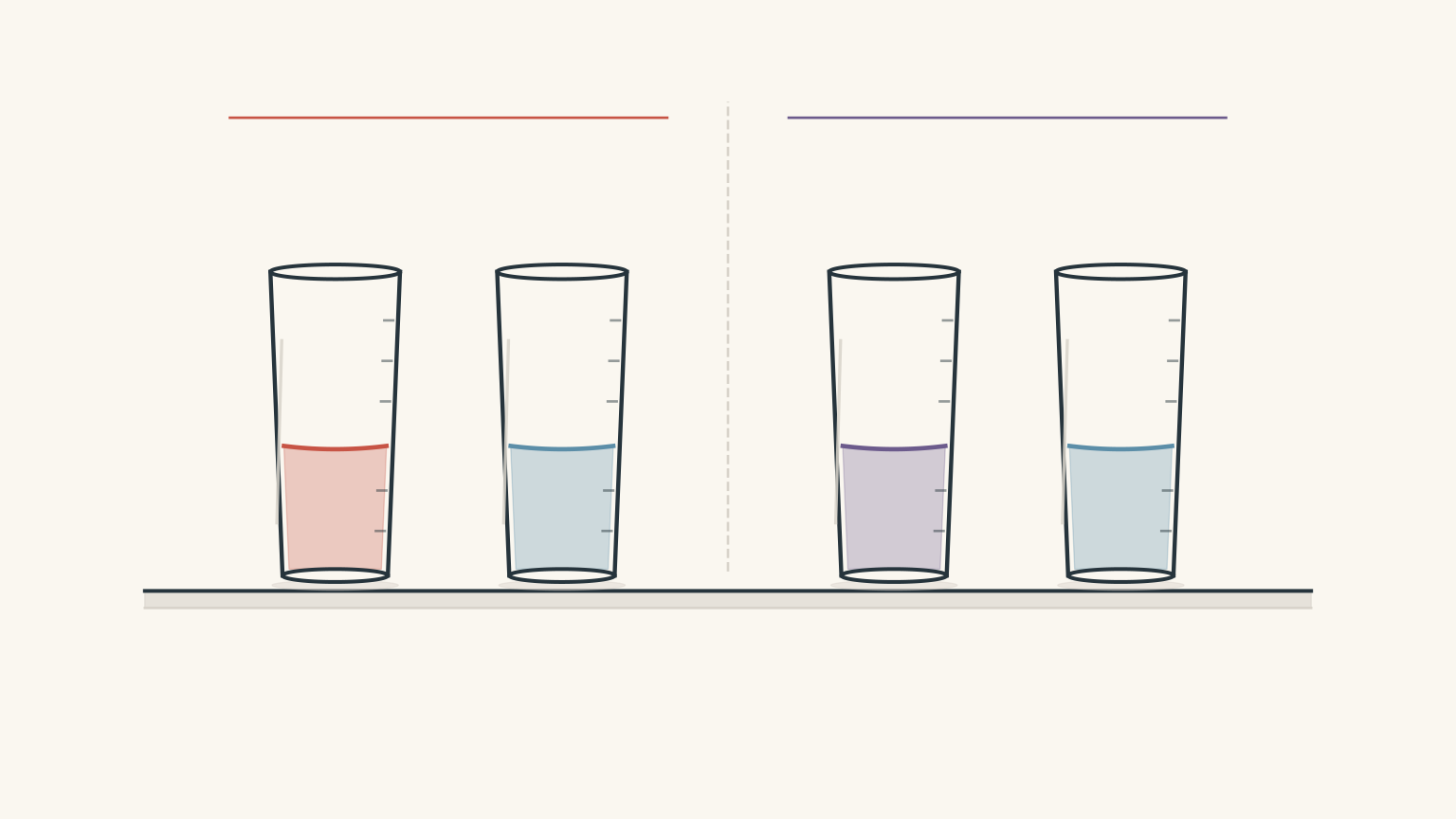
Two students mix equal volumes of acid and base. Both solutions have the same concentration, so they predict that the mixture will be neutral.
They’re right if the acid is hydrochloric acid. But replace it with sulfuric acid, and the prediction fails. Why?
The answer is the mole ratio in the balanced chemical equation. One mole of HCl reacts with one mole of NaOH, but one mole of H₂SO₄ requires two moles of NaOH for complete neutralisation.
That small difference reveals one of the most important skills in HSC Chemistry: connecting chemical equations, moles, concentrations, and particle behaviour.
If those foundations are shaky, Year 12 Chemistry can feel like four completely new subjects. The good news is that you don’t need to relearn all of Year 11. You need to identify the specific skills that Year 12 will repeatedly use, repair the gaps, and practise applying them without relying on your notes.
Due to technical limitations, this figure may display incorrectly or contain inaccuracies. Please check key details against your course materials.
01First, check which Chemistry syllabus applies to you
In NSW, the HSC course begins in Term 4 of Year 11. It doesn’t wait until the following January. NESA’s course commencement rules also require students to have satisfactorily completed the Preliminary course before starting the HSC course.
For students preparing to begin Year 12 Chemistry in Term 4 2027, the applicable course is the Chemistry Stage 6 Syllabus (2017).
There is a new Chemistry 11-12 Syllabus (2025), but its implementation is later:
- Term 1, 2028: the new syllabus begins for Year 11.
- Term 4, 2028: the new syllabus begins for Year 12.
- 2029: the first HSC examination under the new syllabus.
This distinction matters. Don’t accidentally prepare for a different course because you’ve found a newer syllabus document.
You can check the relevant information through NESA’s Chemistry Stage 6 syllabus page and its course commencement rules.
What you’ll study in Year 12
Under the 2017 syllabus, the HSC Chemistry course contains four modules:
| Module | Main focus |
|---|---|
| Module 5 | Equilibrium and Acid Reactions |
| Module 6 | Acid/base Reactions |
| Module 7 | Organic Chemistry |
| Module 8 | Applying Chemical Ideas |
NESA explicitly identifies the Year 11 course as assumed knowledge for the Year 12 course.
That means the concepts you learned in Properties and Structure of Matter, Introduction to Quantitative Chemistry, Reactive Chemistry, and Drivers of Reactions aren’t finished topics. They’re the tools you’ll use to understand the HSC content.
Here’s where the connections appear:
| Year 12 content | Year 11 knowledge you’ll reuse |
|---|---|
| Equilibrium calculations | Mole ratios, balanced equations, concentrations |
| Le Chatelier’s principle | Reaction rates, collision theory, energy changes |
| Acid/base calculations | Moles, concentration, dilution, neutralisation |
| Organic chemistry | Covalent bonding, molecular structures, intermolecular forces |
| Chemical analysis | Quantitative calculations, experimental methods, data interpretation |
| Applied chemical processes | Redox reactions, energy changes, and scientific investigation skills |
The goal of your preparation is to make these foundations reliable before the pace increases.
02The six Chemistry foundations to revise
1. Chemical formulae and balanced equations
Start here if you regularly get stuck when writing chemical equations.
A chemical formula tells you which atoms or ions make up a substance. A balanced equation tells you the relative amounts of each substance involved in a reaction.
Both matter.
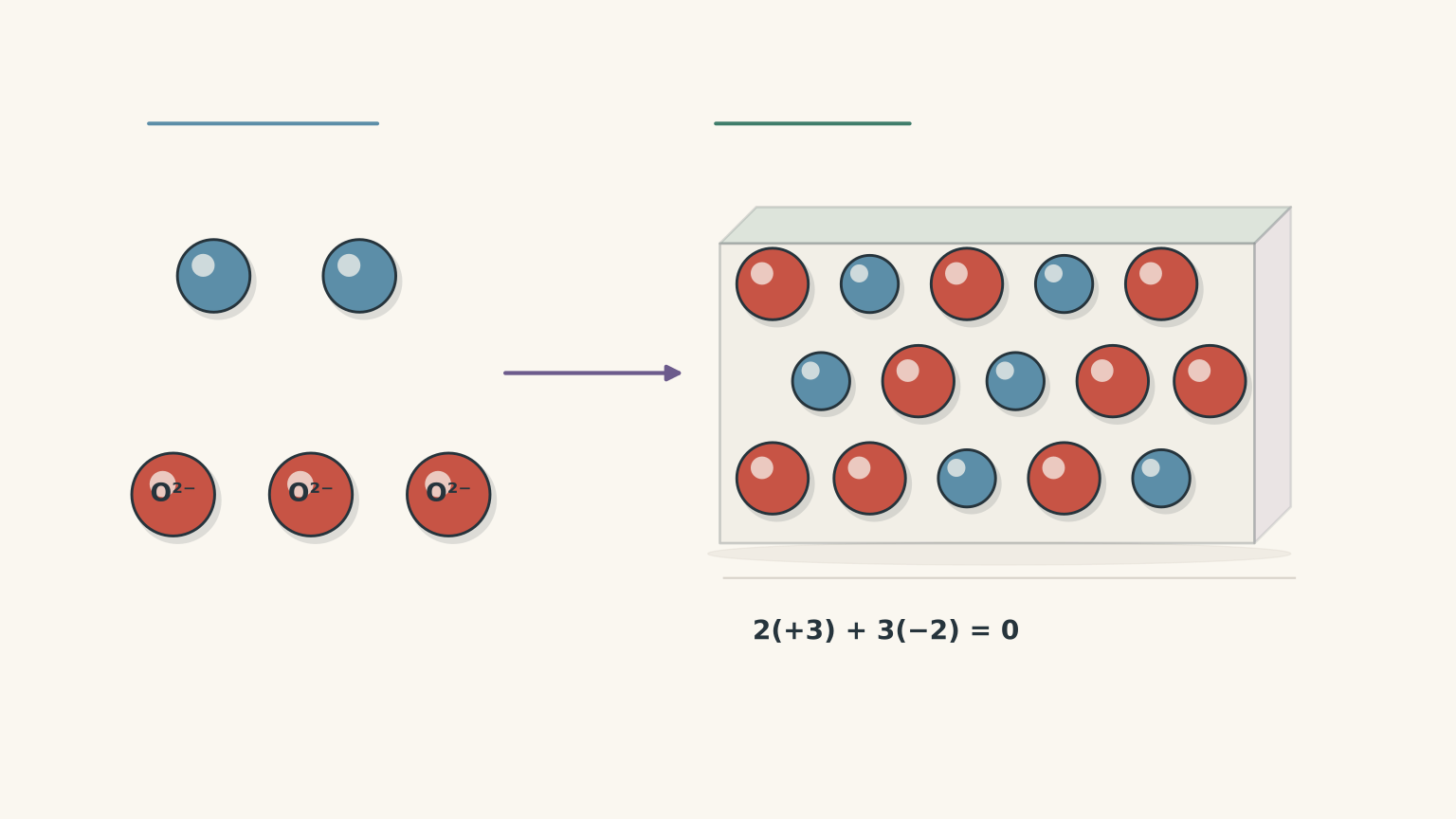
For example, aluminium ions have a charge of \(3+\), while oxide ions have a charge of \(2-\).
A neutral compound needs two aluminium ions and three oxide ions:
\[ \ce{Al2O3} \]
The total positive and negative charges cancel.
You should be comfortable doing this with common ions, including:
- \(\mathrm{Na}^{+}\), \(\mathrm{Ca}^{2+}\), and \(\mathrm{Al}^{3+}\)
- \(\mathrm{Cl}^{-}\), \(\ce{OH-}\), and \(\mathrm{O}^{2-}\)
- \(\mathrm{SO_{4}}^{2-}\), \(\ce{NO3-}\), and \(\mathrm{CO_{3}}^{2-}\)
Next, make sure you can balance equations without changing the chemical formulas.
Consider magnesium reacting with hydrochloric acid:
\[ \ce{Mg + HCl -> MgCl2 + H2} \]
There are two chlorine atoms on the product side, so we need two HCl molecules on the reactant side:
\[ \ce{Mg + 2HCl -> MgCl2 + H2} \]
Now every element has the same number of atoms on both sides.
The important distinction is that coefficients can change, but subscripts cannot. Changing a subscript changes the identity of the substance.
Before Term 4, you should be able to:
- Write formulas using ionic charges.
- Balance equations involving several reactants and products.
- Identify the mole ratio between substances.
- Recognise common reaction types, including precipitation, combustion, and acid/base reactions.
- Write simple ionic and net ionic equations.
Due to technical limitations, this figure may display incorrectly or contain inaccuracies. Please check key details against your course materials.
2. The mole concept and stoichiometry
This is probably the single most important mathematical foundation to refresh.
Imagine trying to bake 100 cupcakes without knowing how much flour you have. You’d need to count the ingredients, compare them with the recipe, and work out whether you have enough.
Chemists do something similar, except they count particles using the mole.
One mole contains approximately \(6.022 \times 10^{23}\) particles. Because atoms and molecules are far too small to count individually, chemists use measurable quantities such as mass to calculate the number of moles.
The basic relationship is:
\[ n=\frac{m}{M} \]
Where:
- \(n\) = amount of substance, in mol
- \(m\) = mass, in g
- \(M\) = molar mass, in g/mol
Once you know the number of moles, the balanced equation tells you how much of another substance reacts or forms.
For example:
\[ \ce{2H2 + O2 -> 2H2O} \]
The equation tells us that two moles of hydrogen react with one mole of oxygen to produce two moles of water.
Notice that these are mole ratios, not mass ratios.
Due to technical limitations, this figure may display incorrectly or contain inaccuracies. Please check key details against your course materials.
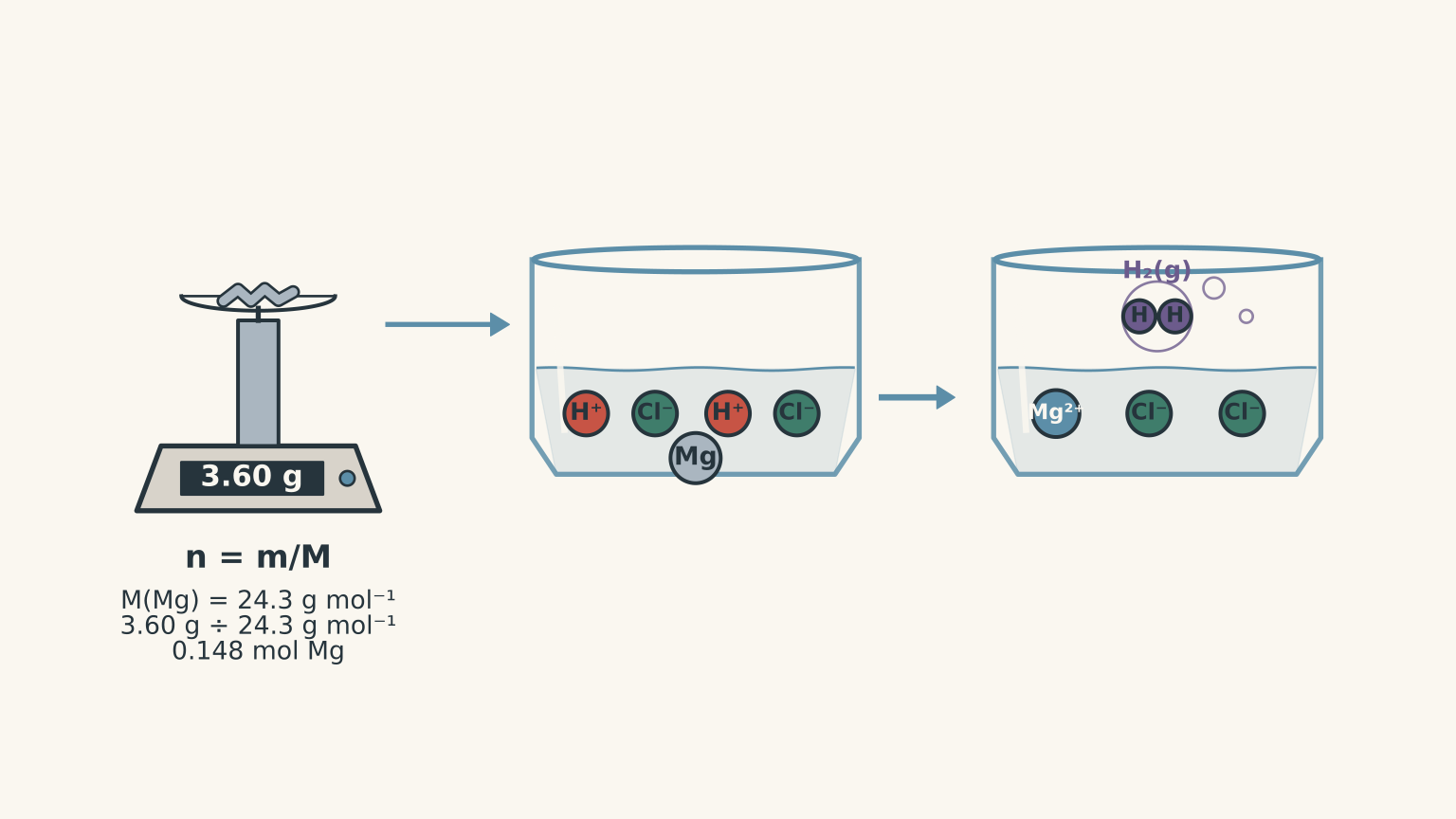
Worked example: Calculating the mass of a reaction product
3.60 g of magnesium reacts with excess hydrochloric acid according to the equation:
\[ \ce{Mg + 2HCl -> MgCl2 + H2} \]
Calculate the mass of magnesium chloride produced.
Step 1: Calculate the molar mass of magnesium.
From the periodic table:
\[ M(\ce{Mg})=24.3\text{ g/mol} \]
Step 2: Convert the magnesium mass into moles.
\[ n=\frac{m}{M} \]
\[ n=\frac{3.60}{24.3} \]
\[ n=0.148\text{ mol} \]
Step 3: Use the balanced equation to determine the mole ratio.
The equation has a 1:1 ratio between magnesium and magnesium chloride.
Therefore:
\[ n(\ce{MgCl2})=0.148\text{ mol} \]
Step 4: Calculate the molar mass of magnesium chloride.
\[ M(\ce{MgCl2})=24.3+2(35.5) \]
\[ M(\ce{MgCl2})=95.3\text{ g/mol} \]
Step 5: Convert the product’s moles into mass.
\[ m=nM \]
\[ m=0.148148\times95.3 \]
\[ \boxed{m=14.1\text{ g}} \]
The reaction produces 14.1 g of magnesium chloride.
Notice that the product weighs more than the original magnesium. This isn’t a violation of conservation of mass. Chlorine from the hydrochloric acid contributes the additional mass.
This is the standard process you’ll use throughout quantitative chemistry: convert to moles, use the equation, and convert to the requested quantity.
3. Concentration, dilution, and titration calculations
You might remember calculating the concentration of a solution in Year 11. Make sure you can still do it confidently.
The fundamental relationship is:
\[ c=\frac{n}{V} \]
Where:
- \(c\) = concentration, in mol/L
- \(n\) = amount of solute, in mol
- \(V\) = solution volume, in L
A common mistake is forgetting to convert millilitres into litres.
For example:
\[ 25.0\text{ mL}=0.0250\text{ L} \]
This becomes particularly important when working with titration data.
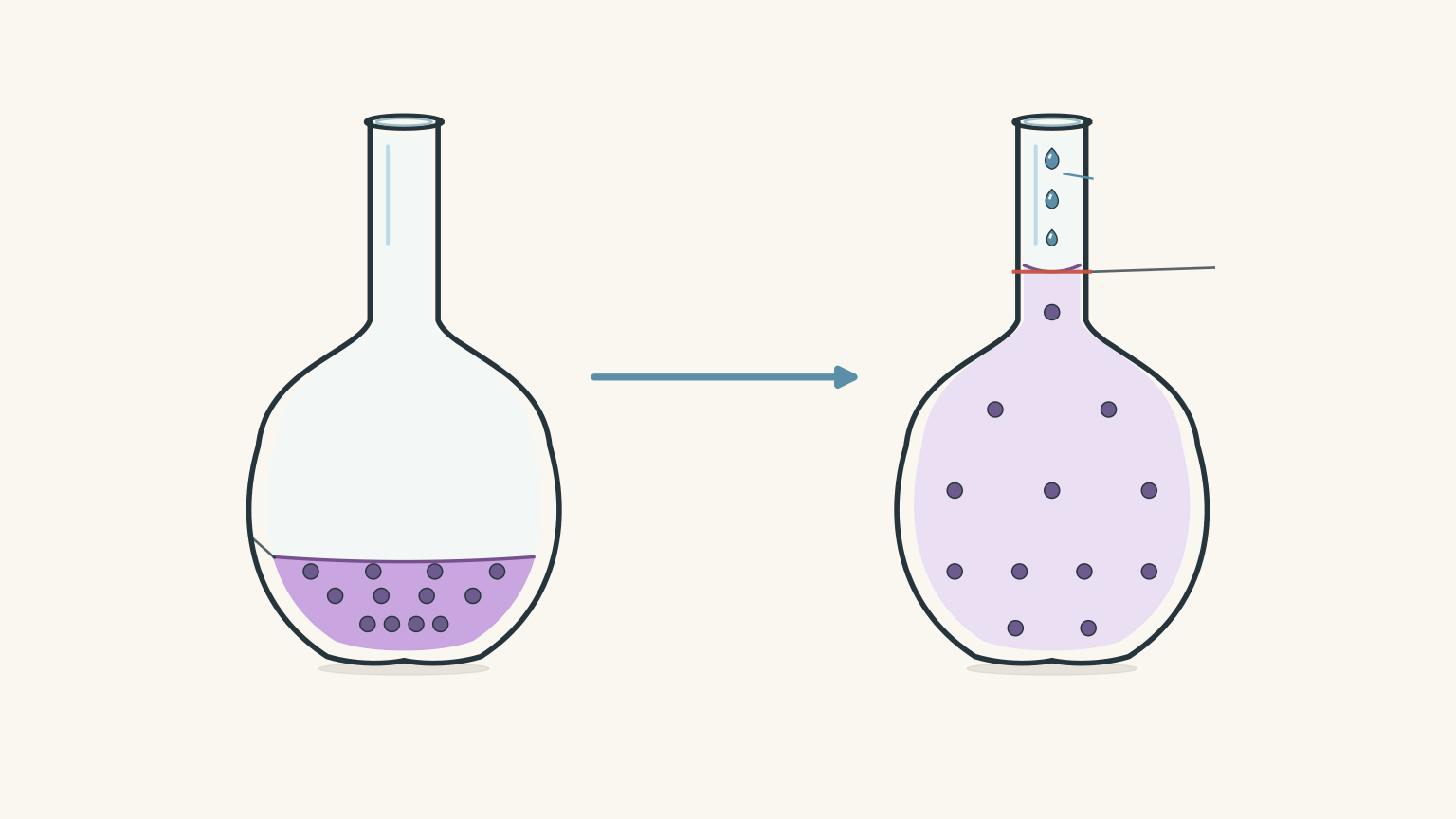
You should also understand dilution.
Imagine taking 20 mL of a concentrated solution and adding water until the total volume reaches 100 mL.
Have you added or removed any solute?
No. You’ve increased the volume, but the number of moles of dissolved substance stays the same.
This gives the dilution relationship:
\[ c_1V_1=c_2V_2 \]
The equation applies when the same solute is simply diluted, with no chemical reaction or loss of material.
Due to technical limitations, this figure may display incorrectly or contain inaccuracies. Please check key details against your course materials.
Titrations add another layer of reasoning.
At the equivalence point, the reactants have combined in the mole ratio specified by their balanced equation.
This means you cannot automatically assume:
\[ c_1V_1=c_2V_2 \]
That shortcut only works for a 1:1 reaction.
For sulfuric acid and sodium hydroxide, the balanced equation is:
\[ \ce{H2SO4 + 2NaOH -> Na2SO4 + 2H2O} \]
One mole of sulfuric acid reacts with two moles of sodium hydroxide.
The coefficient ratio must be included in your calculation.
Worked example: Finding an acid concentration using titration
A 20.00 mL sample of sulfuric acid is completely neutralised by 30.00 mL of 0.150 mol/L sodium hydroxide.
Calculate the concentration of the sulfuric acid.
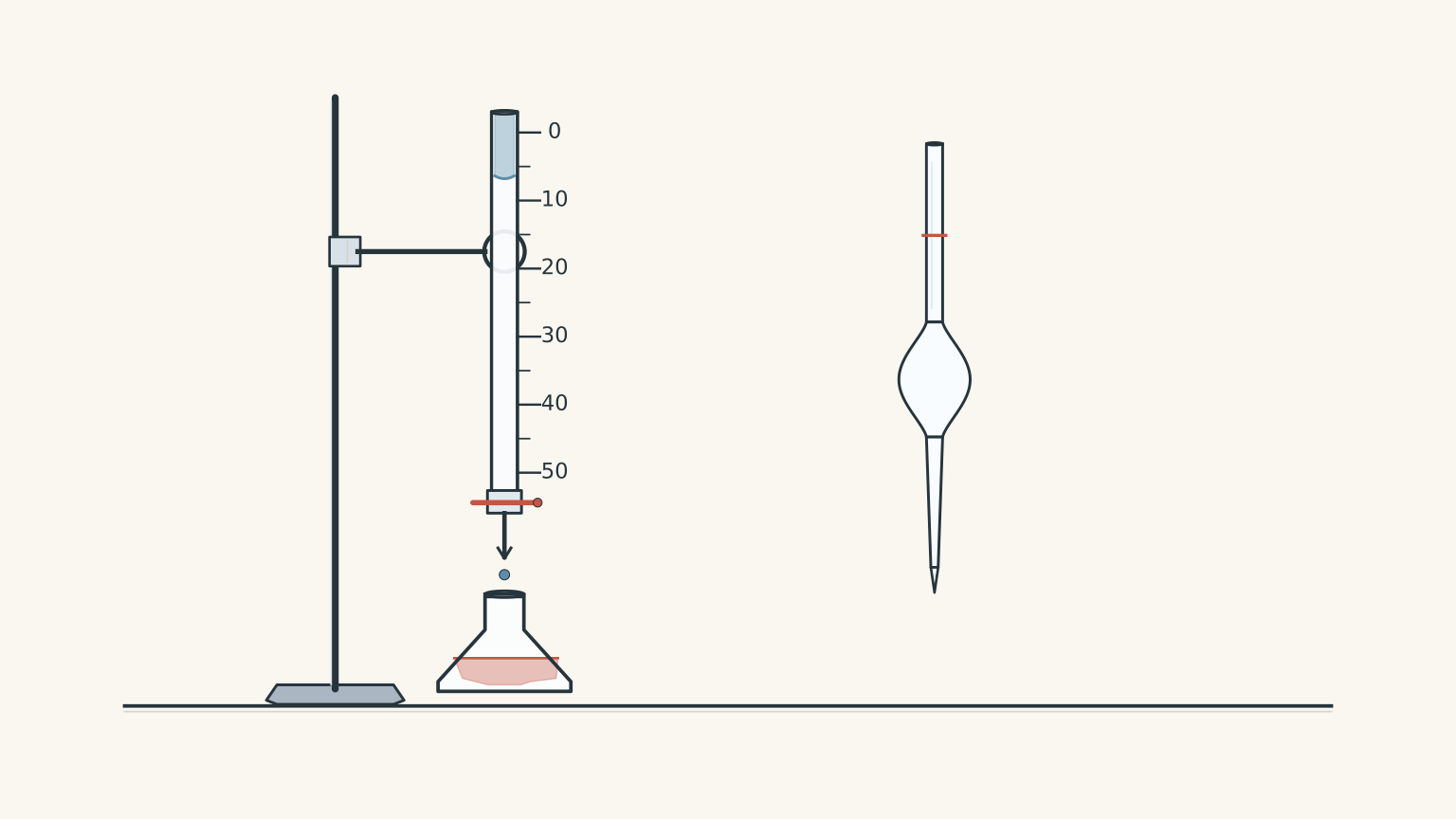
Due to technical limitations, this figure may display incorrectly or contain inaccuracies. Please check key details against your course materials.
Step 1: Write the balanced chemical equation.
\[ \ce{H2SO4 + 2NaOH -> Na2SO4 + 2H2O} \]
The mole ratio is:
\[ \ce{H2SO4}:\ce{NaOH}=1:2 \]
Step 2: Calculate the moles of sodium hydroxide.
Convert the volume into litres:
\[ 30.00\text{ mL}=0.03000\text{ L} \]
Use:
\[ n=cV \]
\[ n=0.150\times0.03000 \]
\[ n(\ce{NaOH})=0.00450\text{ mol} \]
Step 3: Use the mole ratio to calculate the sulfuric acid amount.
Two moles of sodium hydroxide react with one mole of sulfuric acid.
\[ n(\ce{H2SO4})=\frac{0.00450}{2} \]
\[ n(\ce{H2SO4})=0.00225\text{ mol} \]
Step 4: Calculate the acid concentration.
The acid volume is:
\[ 20.00\text{ mL}=0.02000\text{ L} \]
Therefore:
\[ c=\frac{n}{V} \]
\[ c=\frac{0.00225}{0.02000} \]
\[ \boxed{c=0.1125\text{ mol/L}} \]
The sulfuric acid concentration is 0.1125 mol/L.
The key step wasn’t the concentration formula. It was recognising that the acid and base react in a 1:2 mole ratio.
For another practical explanation of solution preparation, see How to Prepare a Standard Solution for HSC Chemistry.
4. Bonding, molecular structure, and intermolecular forces
Year 12 Organic Chemistry becomes much easier when you understand why atoms bond and how molecular structures affect physical properties.
You don’t need to memorise every possible molecular shape before Term 4. You do need a reliable understanding of the main types of chemical bonding.
Start with these distinctions:
| Structure | What holds it together? | Important property |
|---|---|---|
| Ionic lattice | Electrostatic attraction between oppositely charged ions | High melting points; conducts when molten or dissolved |
| Covalent molecular | Covalent bonds within molecules | Often lower melting and boiling points |
| Covalent network | Extensive covalent bonds throughout a structure | Often very high melting points |
| Metallic | Attraction between positive metal ions and delocalised electrons | Conducts electricity and heat |
One distinction deserves particular attention: intramolecular bonds versus intermolecular forces.
Intramolecular bonds hold atoms together within a molecule. Intermolecular forces are attractions between separate molecules.
Consider water.
The O-H bonds within each water molecule are covalent bonds. The attractions between neighbouring water molecules include hydrogen bonding, a type of intermolecular force.
Why does this matter?
When water boils, the molecules separate from one another. The covalent O-H bonds within each molecule are not normally broken.
This distinction helps explain boiling points, solubility, and the physical properties of organic compounds.
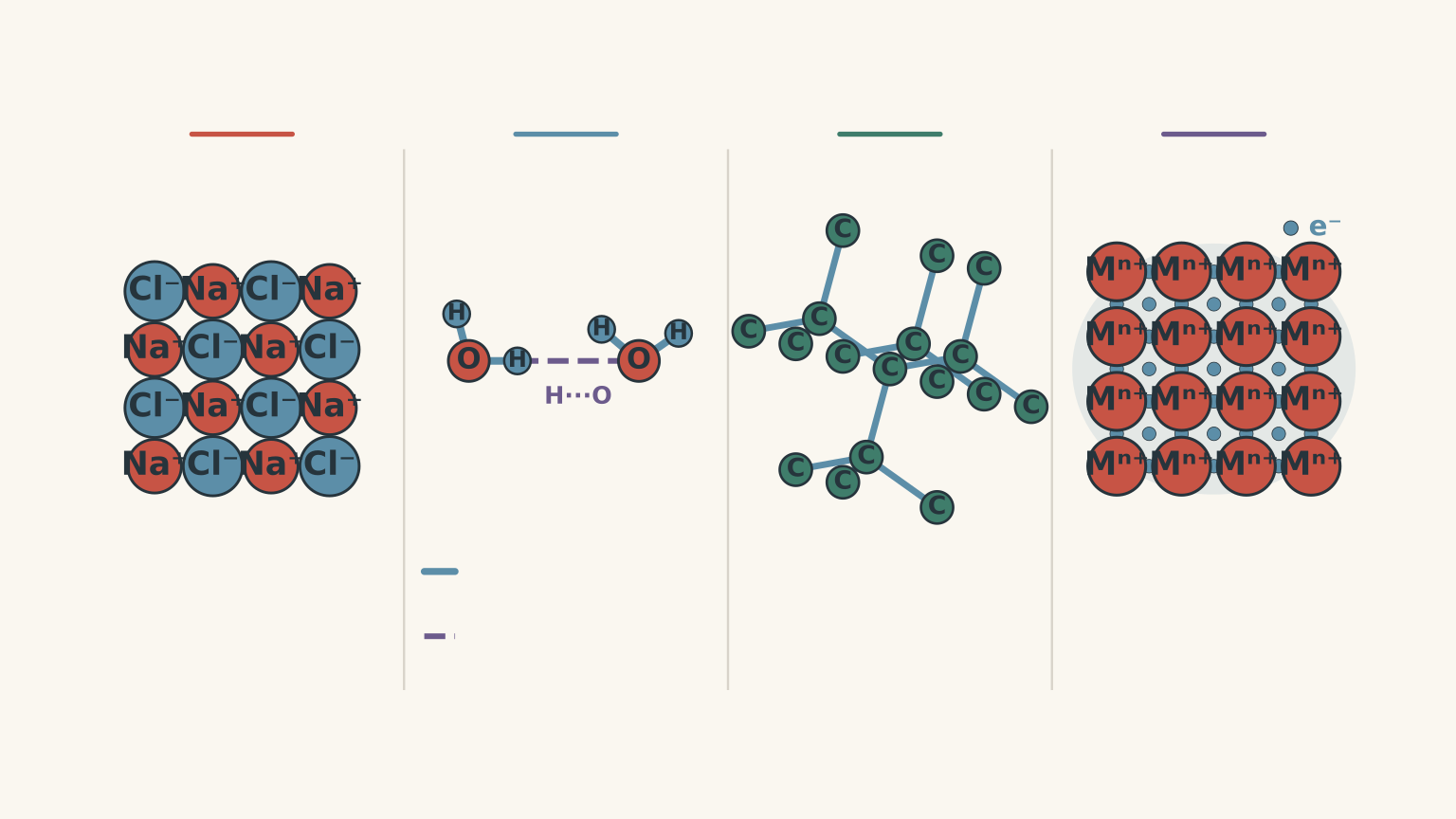
Due to technical limitations, this figure may display incorrectly or contain inaccuracies. Please check key details against your course materials.
You should also be able to explain electrical conductivity using particles.
Solid sodium chloride contains charged ions, but those ions are held in fixed positions in the lattice. They cannot move freely to carry charge.
When sodium chloride melts or dissolves in water, its ions become mobile, allowing the substance to conduct electricity.
Glucose behaves differently. It dissolves as neutral molecules rather than separating into ions, so an aqueous glucose solution does not conduct electricity in the same way.
Being able to explain a property from the particle model is much more useful than memorising a list of properties.
5. Redox reactions and metal reactivity
Redox is another Year 11 topic worth revisiting.
The basic definitions are:
- Oxidation is the loss of electrons.
- Reduction is the gain of electrons.
A useful memory aid is OIL RIG: Oxidation Is Loss, Reduction Is Gain.
But you need to do more than remember the phrase. You should be able to identify which substance loses electrons, which gains them, and how this changes the oxidation states.
Consider zinc placed in copper(II) sulfate solution.
Zinc is more reactive than copper. It can lose electrons, transferring them to copper ions in solution.
The overall ionic equation is:
\[ \ce{Zn + Cu^2+ -> Zn^2+ + Cu} \]
The half-equations are:
Oxidation:
\[ \ce{Zn -> Zn^2+ + 2e-} \]
Reduction:
\[ \ce{Cu^2+ + 2e- -> Cu} \]
Zinc loses electrons, while copper ions gain them.
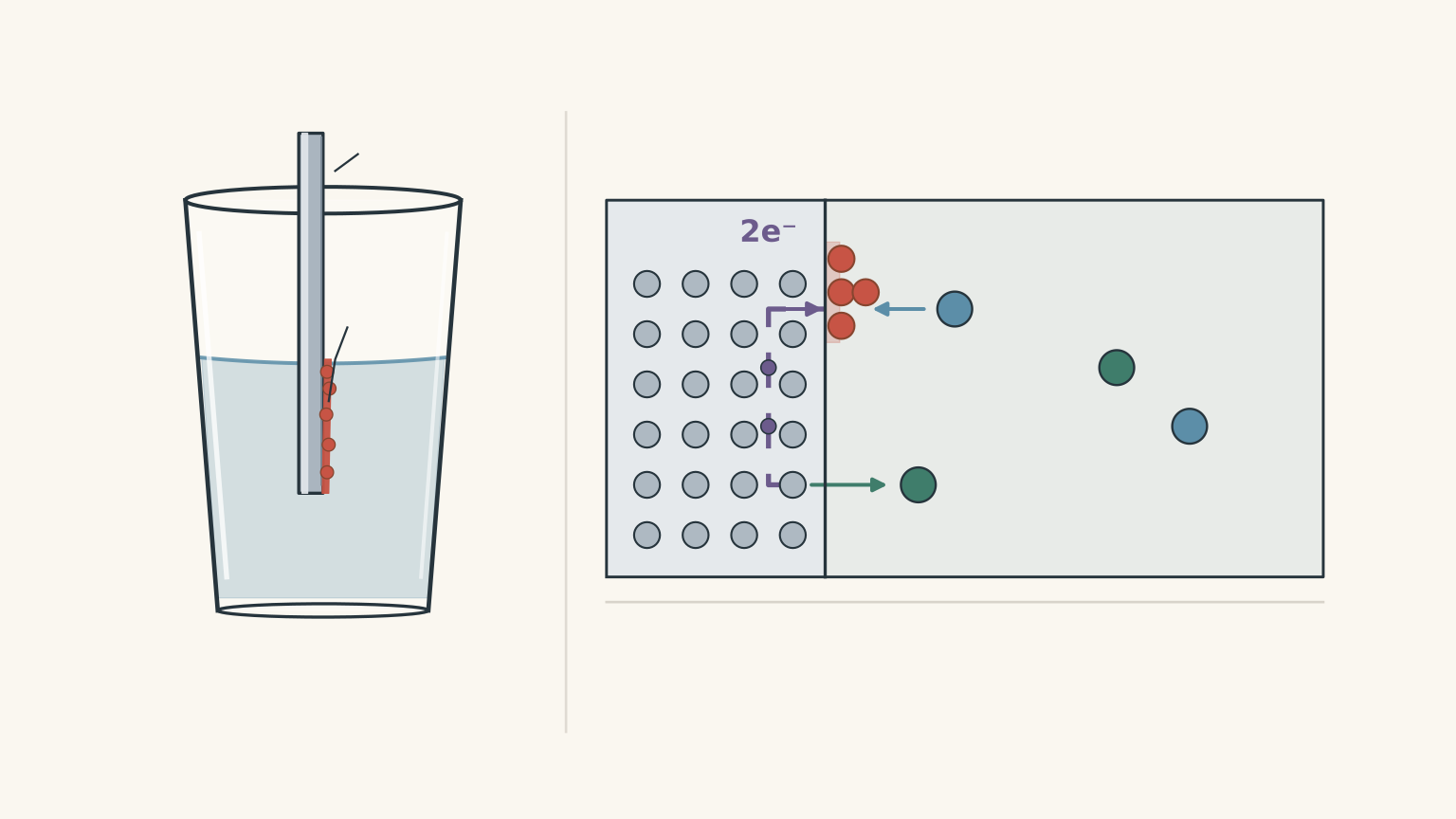
Due to technical limitations, this figure may display incorrectly or contain inaccuracies. Please check key details against your course materials.
Before Term 4, practise:
- Assigning oxidation numbers.
- Identifying oxidation and reduction.
- Writing oxidation and reduction half-equations.
- Combining half-equations into an overall reaction.
- Using the metal activity series to predict displacement reactions.
These skills help when you encounter more complex chemical systems and applications in Year 12.
6. Reaction rates, energy, and scientific investigation
The final foundation combines three areas that students sometimes treat as unrelated.
They aren’t.
Reaction rates describe how quickly reactions occur. Energy changes help explain whether reactions are energetically favourable and how much heat is transferred.
Collision theory connects these ideas to the behaviour of particles.
For a reaction to occur, reacting particles must collide with sufficient energy and an appropriate orientation.
Consider what happens when you increase the temperature of a reaction.
You might predict that the reaction speeds up simply because particles move faster. That’s a reasonable starting point, but there’s another important detail.
Increasing temperature increases the proportion of particles with enough energy to overcome the activation energy barrier. This produces more successful collisions per second, increasing the reaction rate.
A catalyst works differently. It provides an alternative reaction pathway with a lower activation energy.
It isn’t consumed in the overall reaction.
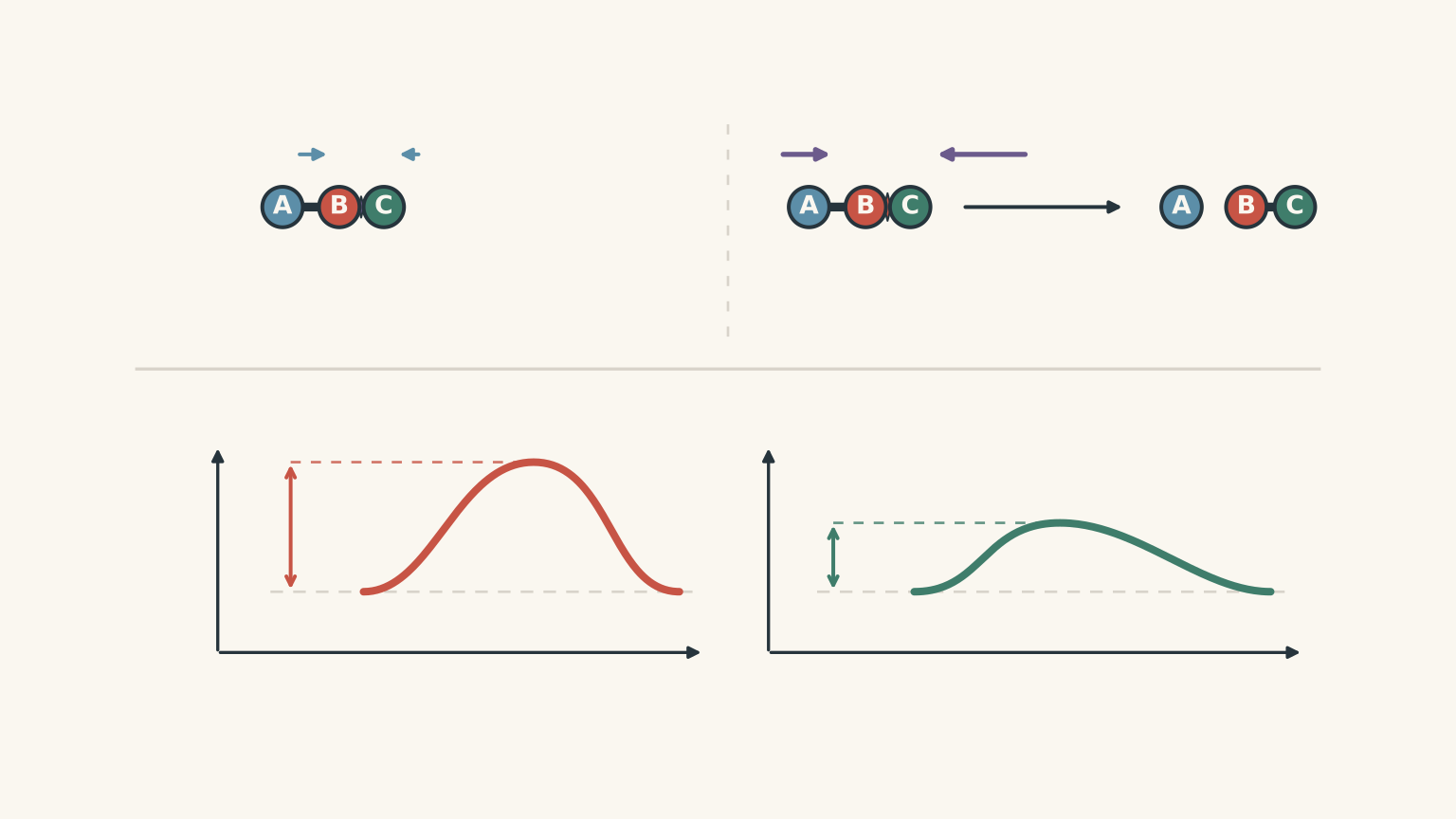
Due to technical limitations, this figure may display incorrectly or contain inaccuracies. Please check key details against your course materials.
You should also refresh the energy calculations from Year 11.
The calorimetry equation is:
\[ q=mc\Delta T \]
Where:
- \(q\) = heat transferred, in J
- \(m\) = mass of the substance, in g
- \(c\) = specific heat capacity, in J g\(^{-1}\) °C\(^{-1}\)
- \(\Delta T\) = temperature change, in °C
Remember the distinction between endothermic and exothermic reactions:
- Exothermic reactions release energy to their surroundings and have a negative enthalpy change.
- Endothermic reactions absorb energy from their surroundings and have a positive enthalpy change.
You should also be familiar with enthalpy, entropy, and Gibbs free energy from Module 4.
These ideas become useful when you study equilibrium because the position of an equilibrium depends on the conditions of the system, including temperature.
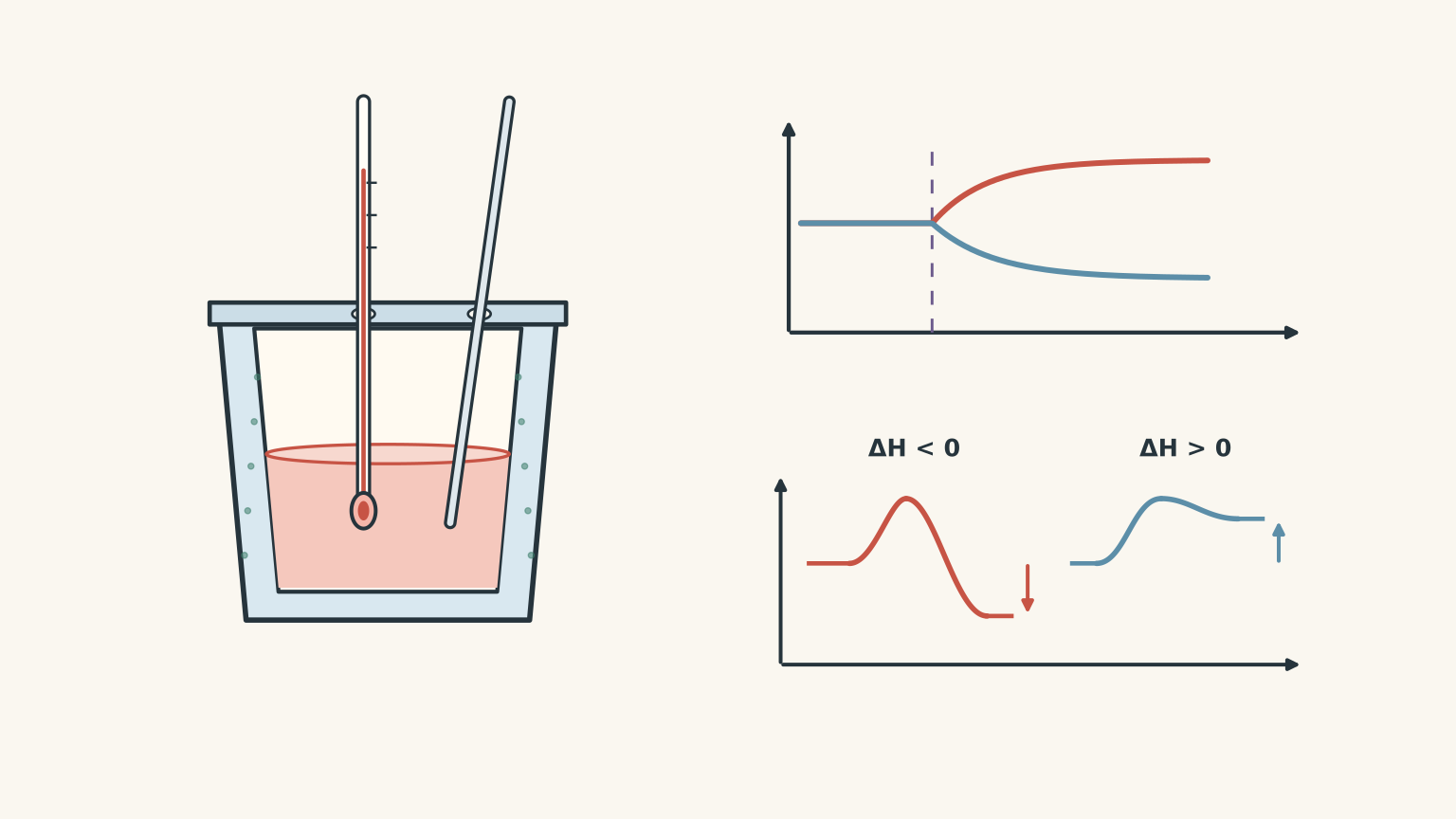
Due to technical limitations, this figure may display incorrectly or contain inaccuracies. Please check key details against your course materials.
Finally, don’t neglect Working Scientifically.
NESA integrates these skills throughout the HSC Chemistry course. The Year 12 course also requires at least 35 hours of practical investigations, so your ability to collect, process, and evaluate experimental data matters.
Refresh your ability to:
- Identify independent, dependent, and controlled variables.
- Construct and interpret graphs.
- Identify patterns, trends, and anomalies.
- Distinguish accuracy, reliability, and validity.
- Identify sources of experimental error.
- Suggest realistic improvements to an experimental method.
- Support conclusions using numerical evidence.
For the 2017 syllabus, the HSC examination is a 100-mark written paper, with three hours writing time and five minutes reading time. NESA provides a data sheet, formulae sheet, and Periodic Table.
Don’t waste your preparation time memorising every value on those sheets. Practise finding the relevant information and applying it correctly.
You can check the current requirements on NESA’s Chemistry assessment and examination page.
03Your two-week preparation plan
You don’t need to spend every afternoon studying Chemistry before Term 4.
Seven focused sessions across two weeks will give you a much clearer picture of your strengths and weaknesses than hours of passively reading old notes.
Aim for approximately 45-60 minutes per session.
| Session | What to revise | What you should be able to do |
|---|---|---|
| 1 | Chemical formulas and equations | Write formulas and balance unfamiliar equations |
| 2 | Mole concept and stoichiometry | Convert between mass and moles, and calculate reaction quantities |
| 3 | Concentration and dilution | Solve concentration problems and interpret titration data |
| 4 | Bonding and structure | Explain physical properties using particle models |
| 5 | Redox and metal reactivity | Write half-equations and predict displacement reactions |
| 6 | Energy and reaction rates | Explain collision theory and solve basic calorimetry problems |
| 7 | Mixed revision and practical skills | Complete unfamiliar questions and evaluate experimental data |
For each session, use this structure:
- Spend five minutes writing down everything you remember without looking at your notes.
- Spend 25-35 minutes solving problems.
- Spend 10 minutes marking your work and identifying mistakes.
- Spend the final five minutes explaining the most difficult concept aloud.
Keep a simple error log.
| What went wrong? | What should I have done? |
|---|---|
| Forgot to convert mL into L | Convert the volume before substituting |
| Used the wrong mole ratio | Read the coefficients from the balanced equation |
| Changed a chemical subscript | Balance using coefficients only |
| Confused concentration with amount | Calculate moles before comparing quantities |
| Described a trend without explaining it | Connect the observation to particle behaviour |
The point is to fix the reasoning behind an error, not simply memorise the correct answer.
If you make the same mistake twice, that topic deserves another session.
04Questions and solutions
Try these questions without your notes first. They test the foundations you’ve just revised, rather than asking you to learn the Year 12 syllabus before it starts.
Questions 1-4 are designed to expose common gaps and build towards more demanding HSC-style reasoning. Question 5 is a deliberate stretch problem.
Question 1
Aluminium reacts with oxygen to produce aluminium oxide.
\[ \ce{Al + O2 -> Al2O3} \]
(a) Balance the chemical equation.
(b) Calculate the amount, in moles, of oxygen required to react completely with 0.400 mol of aluminium.
Solution 1
The balanced equation is \(\ce{4Al + 3O2 -> 2Al2O3}\), and 0.300 mol of oxygen is required.
Start by counting the atoms on each side.
The product contains two aluminium atoms and three oxygen atoms. Balancing the equation gives:
\[ \ce{4Al + 3O2 -> 2Al2O3} \]
The mole ratio between aluminium and oxygen is therefore:
\[ \ce{Al}:\ce{O2}=4:3 \]
We have 0.400 mol of aluminium, so:
\[ n(\ce{O2})=0.400\times\frac{3}{4} \]
\[ \boxed{n(\ce{O2})=0.300\text{ mol}} \]
The important idea is that the coefficients describe mole ratios. They do not represent the relative masses of the substances.
Question 2
Aluminium reacts with chlorine gas to form aluminium chloride.
\[ \ce{Al + Cl2 -> AlCl3} \]
A reaction mixture contains 8.10 g of aluminium and 12.0 g of chlorine gas.
(a) Balance the chemical equation.
(b) Determine which reactant is limiting.
(c) Calculate the maximum mass of aluminium chloride that can form.
Use the following molar masses:
- Al = 27.0 g/mol
- Cl₂ = 71.0 g/mol
- AlCl₃ = 133.5 g/mol
Solution 2
Chlorine is the limiting reactant, and the maximum mass of aluminium chloride produced is 15.0 g.
First, balance the equation:
\[ \ce{2Al + 3Cl2 -> 2AlCl3} \]
Step 1: Calculate the amount of each reactant.
For aluminium:
\[ n(\ce{Al})=\frac{8.10}{27.0} \]
\[ n(\ce{Al})=0.300\text{ mol} \]
For chlorine:
\[ n(\ce{Cl2})=\frac{12.0}{71.0} \]
\[ n(\ce{Cl2})=0.169\text{ mol} \]
Step 2: Identify the limiting reactant.
The equation requires three moles of chlorine for every two moles of aluminium.
To react with all 0.300 mol of aluminium, we would need:
\[ n(\ce{Cl2})=0.300\times\frac{3}{2} \]
\[ n(\ce{Cl2})=0.450\text{ mol} \]
However, only 0.169 mol is available.
Therefore, chlorine runs out first and is the limiting reactant.
Step 3: Calculate the amount of product.
The mole ratio between chlorine and aluminium chloride is 3:2.
\[ n(\ce{AlCl3})=0.169\times\frac{2}{3} \]
\[ n(\ce{AlCl3})=0.1127\text{ mol} \]
Step 4: Calculate the product mass.
\[ m=nM \]
\[ m=0.1127\times133.5 \]
\[ \boxed{m=15.0\text{ g}} \]
The reaction can produce a maximum of 15.0 g of aluminium chloride.
A common mistake is calculating the product from the aluminium amount alone. The reactant present in excess cannot compensate for a shortage of chlorine.
Question 3
Consider four samples:
- Solid sodium chloride.
- Molten sodium chloride.
- Sodium chloride dissolved in water.
- Glucose dissolved in water.
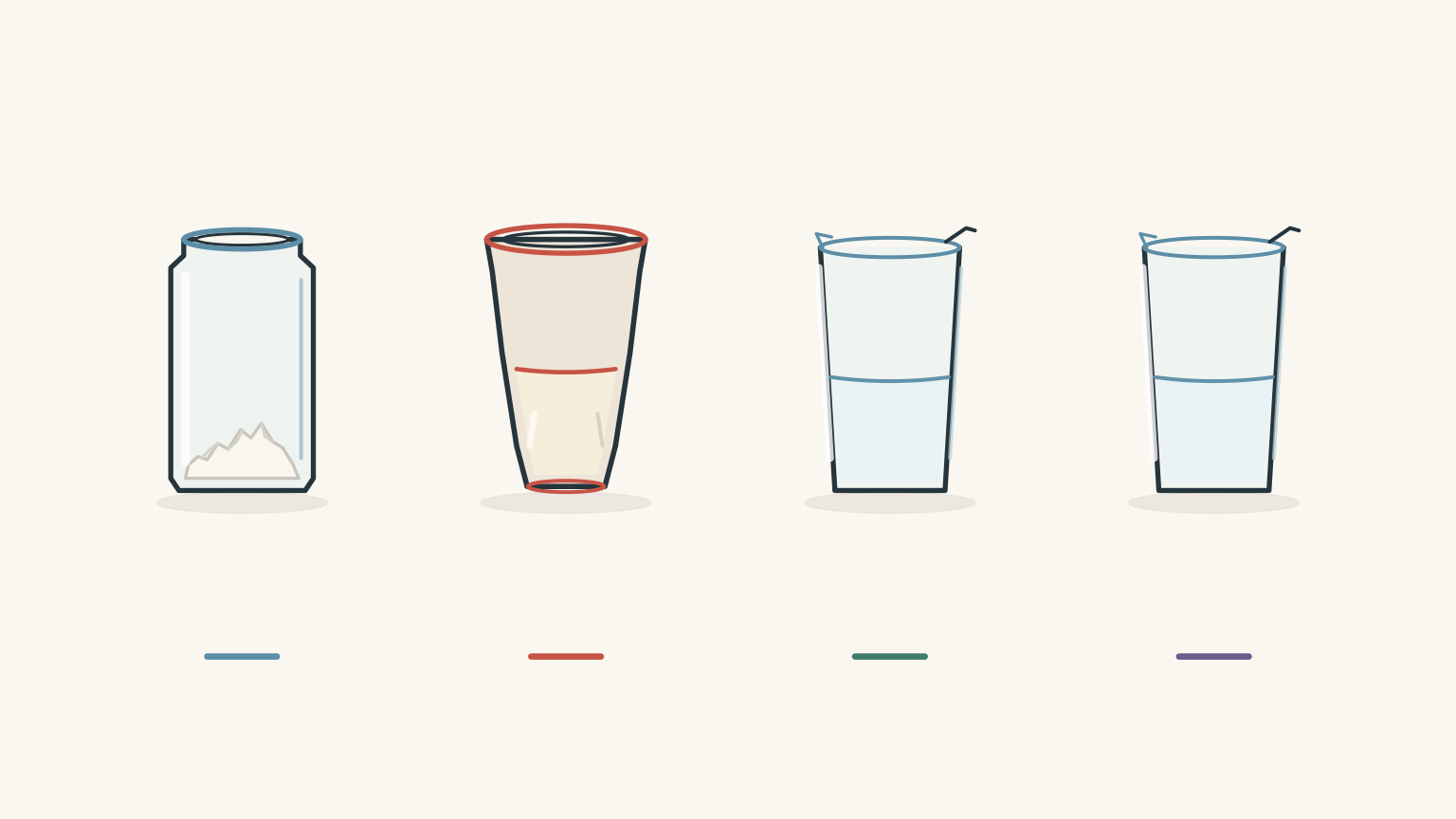
Due to technical limitations, this figure may display incorrectly or contain inaccuracies. Please check key details against your course materials.
(a) Identify which samples conduct electricity.
(b) Explain the differences using the behaviour of charged particles.
(c) Predict what happens to the electrical conductivity of molten sodium chloride as it cools and solidifies. Explain your reasoning.
Solution 3
Molten sodium chloride and aqueous sodium chloride conduct electricity. Solid sodium chloride and aqueous glucose do not conduct electricity effectively under these conditions.
The explanation depends on whether charged particles can move.
Solid sodium chloride: Sodium chloride contains positively charged sodium ions and negatively charged chloride ions. In the solid state, these ions are held in fixed positions in an ionic lattice. They cannot move freely to carry electrical charge.
Molten sodium chloride: When sodium chloride melts, the ionic lattice breaks down. The ions become mobile and can carry charge through the liquid.
Aqueous sodium chloride: Sodium chloride dissolves into mobile sodium and chloride ions. These ions allow the solution to conduct electricity.
Aqueous glucose: Glucose dissolves as neutral molecules. It does not produce a significant concentration of mobile ions, so the solution does not conduct electricity effectively.
For part (c), conductivity decreases dramatically when molten sodium chloride solidifies.
The tempting prediction is that conductivity should remain because the sodium and chloride ions are still present. However, the important change is their mobility, not their existence.
Once the ionic lattice reforms, the ions become fixed in position and can no longer carry charge through the solid.
This is a useful example of why chemical properties must be explained using particle behaviour rather than simply identifying which particles are present.
Question 4
A zinc strip is placed into a solution of copper(II) sulfate.
After some time, a reddish-brown solid forms on the zinc strip, and the blue colour of the solution becomes less intense.
A separate experiment places a copper strip into a solution of zinc sulfate.
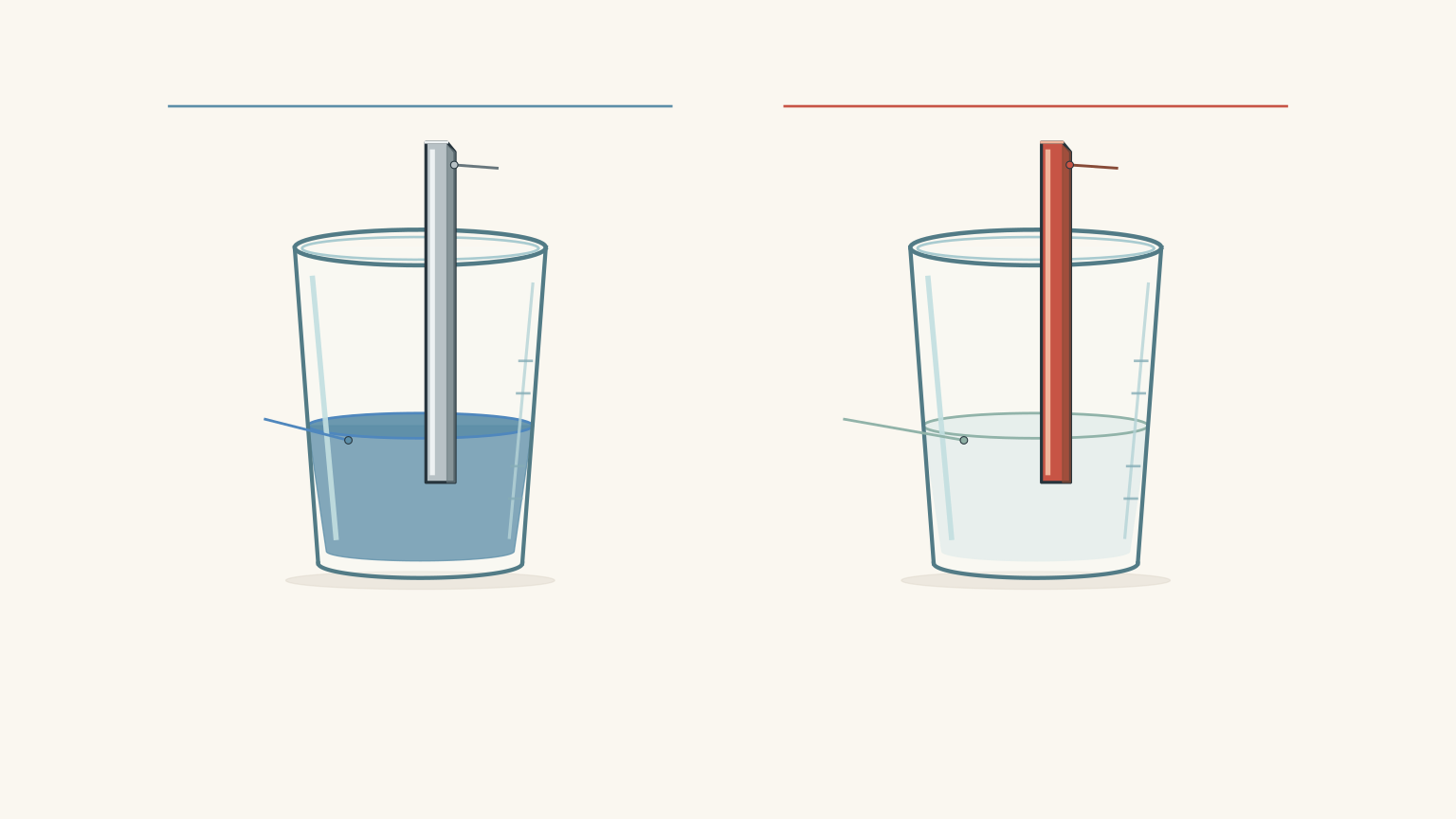
Due to technical limitations, this figure may display incorrectly or contain inaccuracies. Please check key details against your course materials.
(a) Write the net ionic equation for the reaction occurring in the first beaker.
(b) Identify which substance is oxidised and which is reduced.
(c) Write the two half-equations.
(d) Predict whether a reaction occurs in the second beaker. Explain your answer using the relative reactivity of zinc and copper.
Solution 4
Zinc reacts with copper(II) ions in the first beaker, but copper does not displace zinc ions in the second beaker.
(a) The net ionic equation is:
\[ \ce{Zn + Cu^2+ -> Zn^2+ + Cu} \]
Zinc atoms become zinc ions, while copper ions become solid copper.
(b) Zinc is oxidised because it loses electrons.
Copper ions are reduced because they gain electrons.
(c) The half-equations are:
Oxidation:
\[ \ce{Zn -> Zn^2+ + 2e-} \]
Reduction:
\[ \ce{Cu^2+ + 2e- -> Cu} \]
The electrons lost by zinc are exactly the electrons gained by copper ions.
(d) No spontaneous displacement reaction occurs in the second beaker.
Zinc is more reactive than copper. It loses electrons more readily, allowing it to reduce copper ions.
Copper is less reactive and cannot readily transfer electrons to zinc ions to produce zinc metal.
The tempting approach is to assume that because zinc displaces copper, copper should also displace zinc when the solutions are reversed.
However, displacement reactions depend on the relative reactivity of the metals. They are not automatically reversible.
Question 5
An unknown 1.844 g mixture contains only magnesium carbonate and calcium carbonate.
The mixture reacts completely with 50.0 mL of 1.00 mol/L hydrochloric acid.
The reactions are:
\[ \ce{MgCO3 + 2HCl -> MgCl2 + CO2 + H2O} \]
\[ \ce{CaCO3 + 2HCl -> CaCl2 + CO2 + H2O} \]
After the reaction is complete, the remaining solution is filtered and transferred into a 100.0 mL volumetric flask. The flask is made up to the calibration mark with distilled water.
A 10.00 mL aliquot of this solution is then titrated with 0.100 mol/L sodium hydroxide. It requires 10.00 mL of sodium hydroxide to neutralise the remaining hydrochloric acid.
Assume:
- Both carbonate compounds react completely.
- Hydrochloric acid is initially in excess.
- The titration measures only the remaining hydrochloric acid.
- No material is lost during the reaction, filtration, or transfer.
Calculate the mass percentage of magnesium carbonate and calcium carbonate in the original mixture.
Explain why the titration result alone cannot identify the individual amounts of the two carbonates.
Use the following molar masses:
- MgCO₃ = 84.3 g/mol
- CaCO₃ = 100.1 g/mol
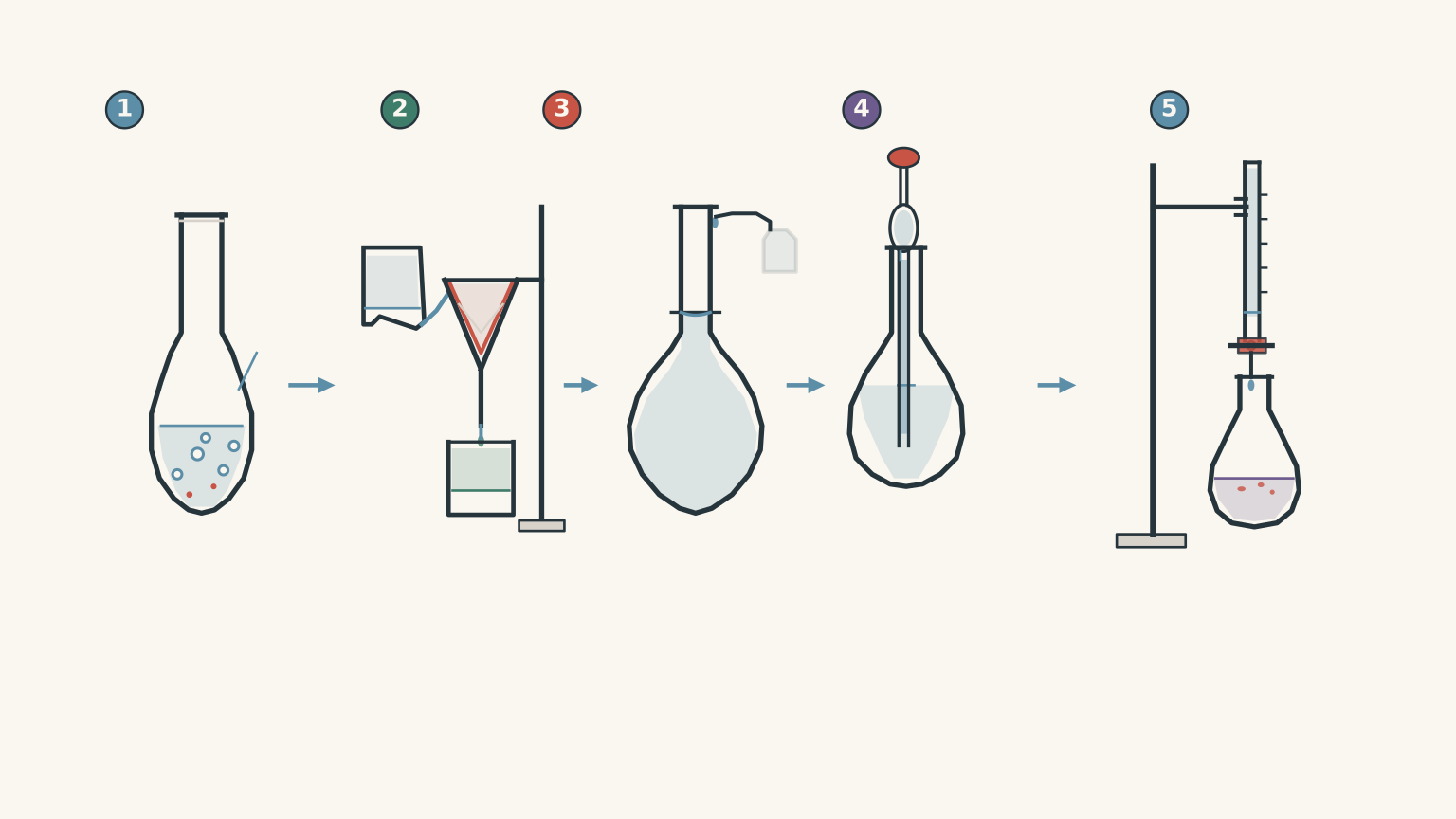
Due to technical limitations, this figure may display incorrectly or contain inaccuracies. Please check key details against your course materials.
Solution 5
The original mixture contains 45.7% magnesium carbonate and 54.3% calcium carbonate by mass.
This question requires several pieces of information to be connected. The crucial detail is that the titration measures only a 10.00 mL aliquot, not the entire 100.0 mL solution.
There is another important complication: both carbonates react with hydrochloric acid in the same mole ratio. The titration tells us their combined amount, but we need the original mixture’s mass to distinguish the two compounds.
Step 1: Calculate the initial amount of hydrochloric acid.
Convert the initial acid volume into litres:
\[ 50.0\text{ mL}=0.0500\text{ L} \]
Using:
\[ n=cV \]
\[ n(\ce{HCl})=1.00\times0.0500 \]
\[ n(\ce{HCl})=0.0500\text{ mol} \]
Step 2: Calculate the hydrochloric acid remaining in the aliquot.
The neutralisation reaction is:
\[ \ce{HCl + NaOH -> NaCl + H2O} \]
The mole ratio is 1:1.
Therefore:
\[ n(\ce{NaOH})=0.100\times0.01000 \]
\[ n(\ce{NaOH})=0.00100\text{ mol} \]
So the 10.00 mL aliquot contains:
\[ n(\ce{HCl})=0.00100\text{ mol} \]
Step 3: Calculate the total hydrochloric acid remaining.
The original filtrate was diluted to 100.0 mL.
The aliquot represents one-tenth of the total solution:
\[ \frac{100.0}{10.00}=10 \]
Therefore:
\[ n(\ce{HCl})_{\text{remaining}} =0.00100\times10 \]
\[ n(\ce{HCl})_{\text{remaining}} =0.0100\text{ mol} \]
Step 4: Calculate the hydrochloric acid consumed.
The original solution contained 0.0500 mol of hydrochloric acid.
The remaining amount is 0.0100 mol.
Therefore:
\[ n(\ce{HCl})_{\text{consumed}} =0.0500-0.0100 \]
\[ n(\ce{HCl})_{\text{consumed}} =0.0400\text{ mol} \]
Step 5: Calculate the total amount of carbonate.
Both carbonate reactions consume two moles of hydrochloric acid for every mole of carbonate.
Therefore:
\[ n(\text{total carbonate}) =\frac{0.0400}{2} \]
\[ n(\text{total carbonate})=0.0200\text{ mol} \]
This tells us the combined number of moles of magnesium carbonate and calcium carbonate.
It does not tell us how much of each is present.
Step 6: Set up two simultaneous equations.
Let:
- \(x\) = moles of magnesium carbonate
- \(y\) = moles of calcium carbonate
We know the total number of moles:
\[ x+y=0.0200 \]
We also know the total mass is 1.844 g.
Using the molar masses:
\[ 84.3x+100.1y=1.844 \]
We now have two equations and two unknowns.
Rearrange the first equation:
\[ x=0.0200-y \]
Substitute into the mass equation:
\[ 84.3(0.0200-y)+100.1y=1.844 \]
Expand:
\[ 1.686-84.3y+100.1y=1.844 \]
\[ 15.8y=0.158 \]
\[ y=0.0100\text{ mol} \]
Therefore:
\[ x=0.0200-0.0100 \]
\[ x=0.0100\text{ mol} \]
The mixture contains equal numbers of moles of both carbonates.
Step 7: Convert the amounts into masses.
For magnesium carbonate:
\[ m=0.0100\times84.3 \]
\[ m(\ce{MgCO3})=0.843\text{ g} \]
For calcium carbonate:
\[ m=0.0100\times100.1 \]
\[ m(\ce{CaCO3})=1.001\text{ g} \]
Step 8: Calculate the mass percentages.
For magnesium carbonate:
\[ \%\ce{MgCO3} =\frac{0.843}{1.844}\times100 \]
\[ \boxed{\%\ce{MgCO3}=45.7\%} \]
For calcium carbonate:
\[ \%\ce{CaCO3} =\frac{1.001}{1.844}\times100 \]
\[ \boxed{\%\ce{CaCO3}=54.3\%} \]
The two percentages add to 100%, as expected.
Why is this question difficult?
There are two tempting mistakes.
First, you might use the titration result directly as the amount of acid remaining in the entire filtrate. That ignores the fact that only one-tenth of the solution was titrated.
Second, you might conclude that equal mole amounts mean equal masses. They don’t. Magnesium carbonate and calcium carbonate have different molar masses.
Most importantly, the titration alone cannot distinguish the two carbonates because both consume two moles of hydrochloric acid per mole of carbonate. The total mass provides the second independent piece of information needed to determine their individual amounts.
This is the sort of linked reasoning that makes a question substantially harder than a routine mole calculation.
05What to do with your results
Use the diagnostic to decide where your revision time should go.
| Your result | What to do next |
|---|---|
| Questions 1 and 2 were difficult | Revisit balancing, mole ratios, and limiting reagents |
| Question 3 was difficult | Rebuild your understanding of ionic and covalent structures |
| Question 4 was difficult | Practise oxidation numbers, half-equations, and metal reactivity |
| Question 5 was difficult | Revisit concentration, dilution, titration, and simultaneous equations |
Don’t panic if Question 5 was difficult. It’s deliberately more demanding than a standard exam question. The important thing is whether you can follow the reasoning after working through the solution.
You should finish your preparation being able to balance equations, calculate moles, use concentration relationships, explain particle behaviour, and interpret experimental results without constantly checking your notes.
Once those foundations are secure, you’re ready for the next major idea: dynamic equilibrium.
In equilibrium, forward and reverse reactions continue occurring, but at equal rates. The concentrations remain constant even though reactions haven’t stopped.
Understanding that idea requires exactly the skills you’ve just revised: balanced equations, concentrations, collision theory, and particle behaviour.
If you’d like feedback on your working before the HSC course gets underway, tutorgum offers online HSC Chemistry tutoring. Bring your diagnostic attempts and error log so the focus can stay on the specific concepts and calculation steps you need to improve.