
How to Get Useful HSC Support Without Paying for Tutoring
Build a free HSC support plan using teachers, official resources and libraries, and explore how live tutoring can complement that plan.
Yes. You can get useful HSC support without paying for tutoring. In fact, NSW students already have access to several valuable sources of academic support: classroom teachers, NESA exam resources, public libraries, and other students studying the same subjects.
The challenge is knowing which resource to use, when to use it, and how to turn the help you receive into better understanding.
A collection of free PDFs won’t automatically improve your results. A teacher can explain a difficult concept, but you still need to practise it. A past HSC paper can show you how a question is structured, but you need to understand why your answer earned the marks it did.
The most effective free approach combines these resources into a consistent study routine.

Due to technical limitations, this figure may display incorrectly or contain inaccuracies. Please check key details against your course materials.
01The four sources of free HSC support
Before looking for another textbook, website, or study group, identify what you actually need help with.
Different resources solve different problems.
| Your current problem | Where to start | What to do |
|---|---|---|
| You don’t understand a concept taught in class. | Your teacher | Bring an attempted question and ask where your reasoning goes wrong. |
| You understand the content but struggle with exam questions. | NESA resources | Attempt past questions, then compare your work with marking guidelines. |
| You need a quiet place, books, or reliable study materials. | Your local library | Use its study spaces, collections, and librarian assistance. |
| You understand solutions when someone explains them but struggle independently. | A peer study group | Solve questions separately, then explain and compare your reasoning. |
| You keep making the same mistakes despite practising. | Your teacher and school support services | Ask for more targeted feedback or additional academic support. |
The important point is that you don’t need to choose just one source. They work best together.
01Make better use of your school teachers
Your classroom teacher is often the most accessible source of subject-specific help.
They know which topics your class is studying, what your assessments require, and which parts of the course students commonly find difficult.
However, there’s a difference between asking a teacher for help and asking a question they can actually answer.
Consider these two approaches:
- “I don’t understand integration.”
- “I understand how to differentiate the function, but I don’t know how to decide which integration technique to use in this question.”
The second question gives your teacher something specific to work with.
How to ask for useful feedback
Before approaching your teacher:
- Find the exact question or concept causing difficulty.
- Attempt the question yourself, even if you cannot finish it.
- Circle the step where you become confused.
- Write down what you thought you should do and why.
- Ask your teacher to explain the reasoning behind the next step.
For example, a Physics student might say:
“I understand how to calculate the magnitude of the force, but I’m unsure how to determine its direction. Could you explain which part of the situation determines that?”
A Chemistry student might ask:
“I can identify the equilibrium reaction, but I don’t understand why changing the temperature affects the equilibrium position. Could we go through the particle-level explanation?”
These questions are much easier to answer than a general request to explain an entire topic.
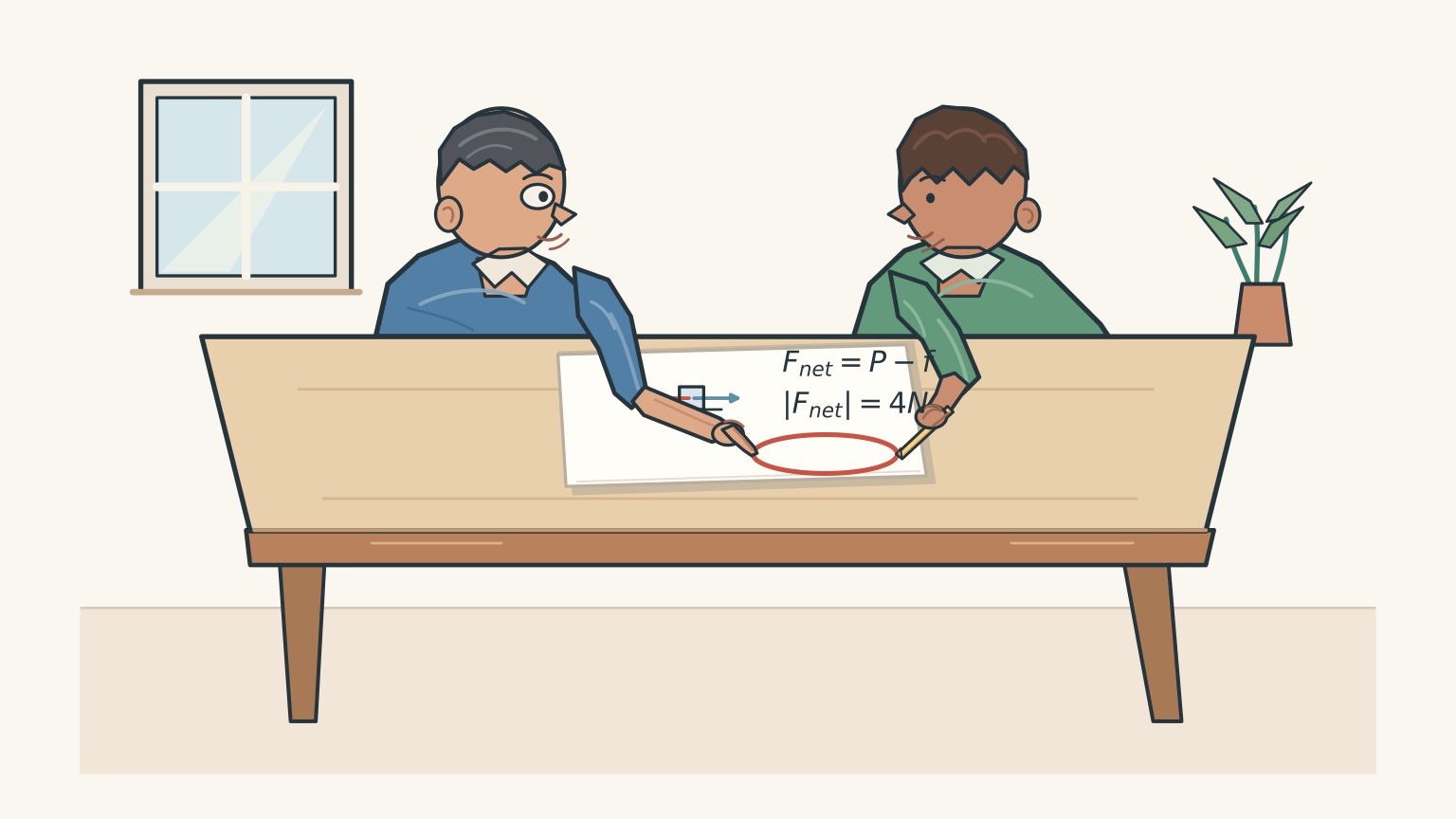
Due to technical limitations, this figure may display incorrectly or contain inaccuracies. Please check key details against your course materials.
Ask what additional support your school offers
Some schools provide academic support outside normal lessons.
Depending on your school, this might include:
- Lunchtime or after-school study sessions.
- Homework clubs.
- Subject-specific revision workshops.
- Holiday examination preparation.
- Small-group assistance from teachers.
- Additional support through school learning programs.
These opportunities aren’t identical across NSW schools, so ask your teacher or head teacher what’s available.
The NSW Department of Education also recommends contacting your school when you’re struggling to keep up. Schools may be able to connect students with additional programs or homework clubs. Source
02Use free NESA resources properly
If you’re preparing for the NSW HSC, the NSW Education Standards Authority (NESA) should be one of your first stops.
NESA provides access to official syllabuses, past HSC examination papers, marking guidelines, examination feedback, and other student resources.
These materials are particularly useful because they’re directly connected to the NSW HSC rather than another country’s senior secondary qualification.
Start with the syllabus, not random practice questions
The syllabus tells you what you are expected to learn.
This matters because students sometimes spend hours practising questions from an online resource without checking whether the content matches their actual course.
Start with the syllabus for your subject and identify the specific content area you’re studying.
Useful official syllabus pages include:
Use past HSC papers as a learning tool
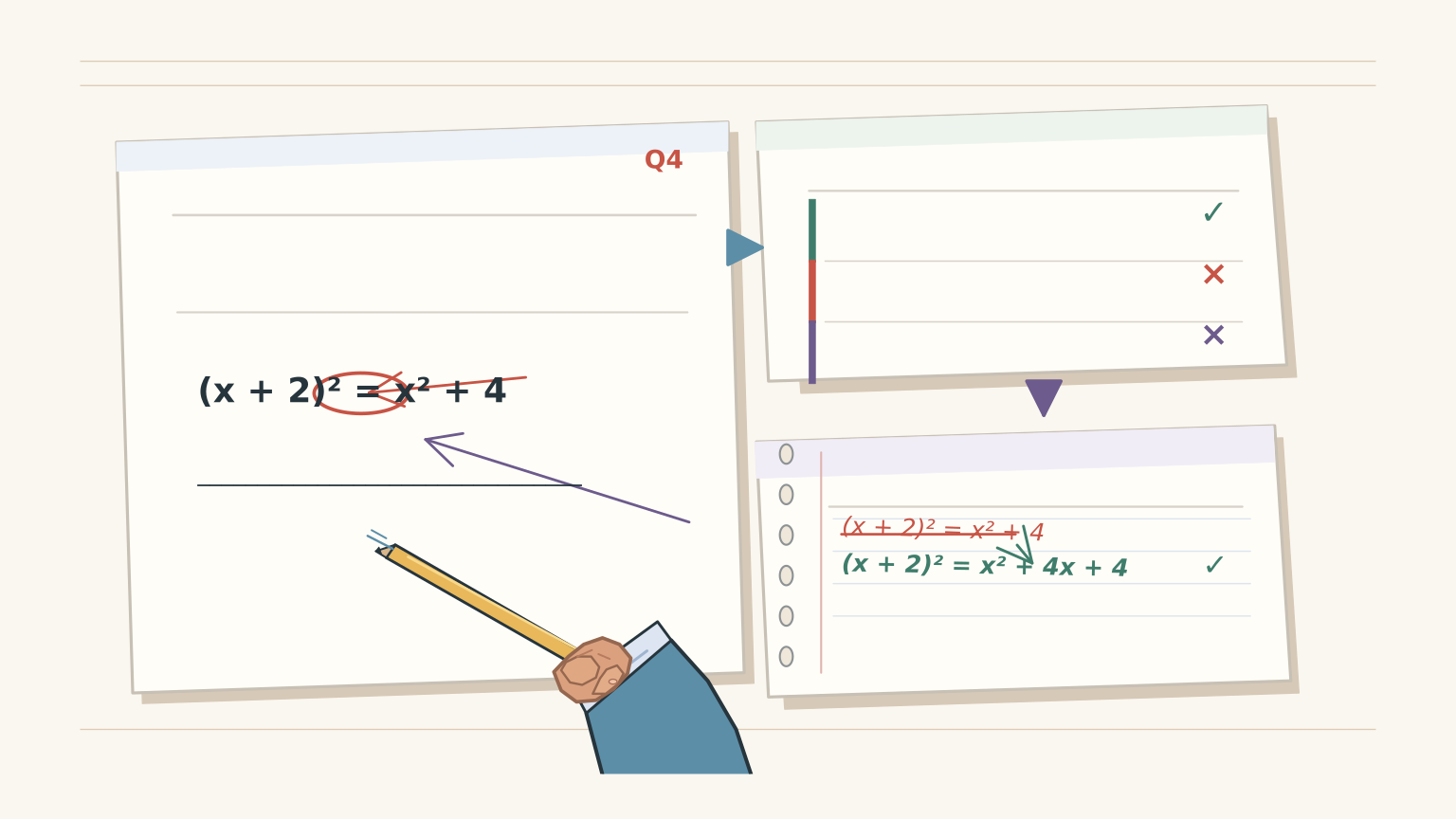
Due to technical limitations, this figure may display incorrectly or contain inaccuracies. Please check key details against your course materials.
You can find official examination papers through NESA’s HSC exam papers collection.
The subject-specific exam packs include examination papers, marking guidelines, and, where available, feedback from HSC markers.
For example, NESA publishes exam resources for Physics, Chemistry, Mathematics Extension 1, and Mathematics Extension 2. Source
However, downloading a paper and reading its solutions isn’t enough.
Use this process instead:
Step 1: Attempt the question independently.
Don’t look at the solution first. Give yourself enough time to work through the problem and identify what you know.
Step 2: Compare your response with the marking guidelines.
Look at what the question actually required.
For a Physics calculation, perhaps you used the correct equation but failed to include the direction of a vector quantity.
For a Chemistry explanation, perhaps you identified the correct reaction but didn’t explain the underlying chemical reasoning.
For Mathematics Extension 1 or 2, perhaps your method was correct but you skipped a mathematical justification.
Step 3: Identify the reason you lost marks.
Write down the specific mistake rather than simply recording your mark.
Useful categories include:
- Content gap: You didn’t understand the concept.
- Method gap: You understood the concept but couldn’t choose an appropriate approach.
- Reasoning gap: You reached a result but couldn’t justify it.
- Communication gap: Your explanation or mathematical working was incomplete.
- Accuracy gap: You made an algebraic, arithmetic, or calculation error.
Step 4: Redo the question without looking at the solution.
This is where the actual learning happens.
If you can reproduce the correct reasoning independently, you’ve made progress. If you still can’t, you have a specific question to take to your teacher.
One important warning: past papers are practice, not predictions. NESA explicitly advises students to expect variations in examination questions and to answer the question actually presented rather than rely on memorised responses. Source
Don’t overlook the free HSC Study Guide
NESA also links to the free 2026 HSC Study Guide.
It includes advice from teachers who have worked as HSC exam markers, tips from recent graduates, and a multiple-choice quiz.
You can find it through the official NESA HSC exam resources page. Source
Check which syllabus applies to your cohort
This is particularly important during the NSW curriculum changes.
Not every subject is moving to its new syllabus at the same time. Using an older examination paper without checking the relevant syllabus can give you an inaccurate picture of what you need to study.
As at 15 November 2026, the implementation schedule is:
| Subject | New syllabus implementation | First HSC examination under new syllabus |
|---|---|---|
| Mathematics Extension 1 | 2026 | 2027 |
| Mathematics Extension 2 | 2026 | 2027 |
| Physics | 2027 | 2028 |
| Chemistry | 2028 | 2029 |
For Mathematics Extension 1 and 2, the 2017 syllabuses have their final HSC examinations in 2026. The new 2024 syllabuses have their first HSC examinations in 2027.
Physics and Chemistry have different transition dates. The new Physics syllabus begins teaching Year 11 students in 2027, while the new Chemistry syllabus begins in 2028. Their first HSC examinations are consequently in 2028 and 2029, respectively. Sources: Mathematics Extension 1, Mathematics Extension 2, Physics, Chemistry.
This means that an older examination paper can still be useful for practising relevant skills, but it shouldn’t automatically be treated as a complete guide to your current course.
Always check the syllabus your school is teaching.
03Use your local public library
A library offers something that can be surprisingly valuable during the HSC: an environment where you can concentrate.
Studying at home isn’t always easy. There might be distractions, limited desk space, or other people using the same room.
A public library gives you another place to work, often with access to books, computers, internet facilities, and study areas.
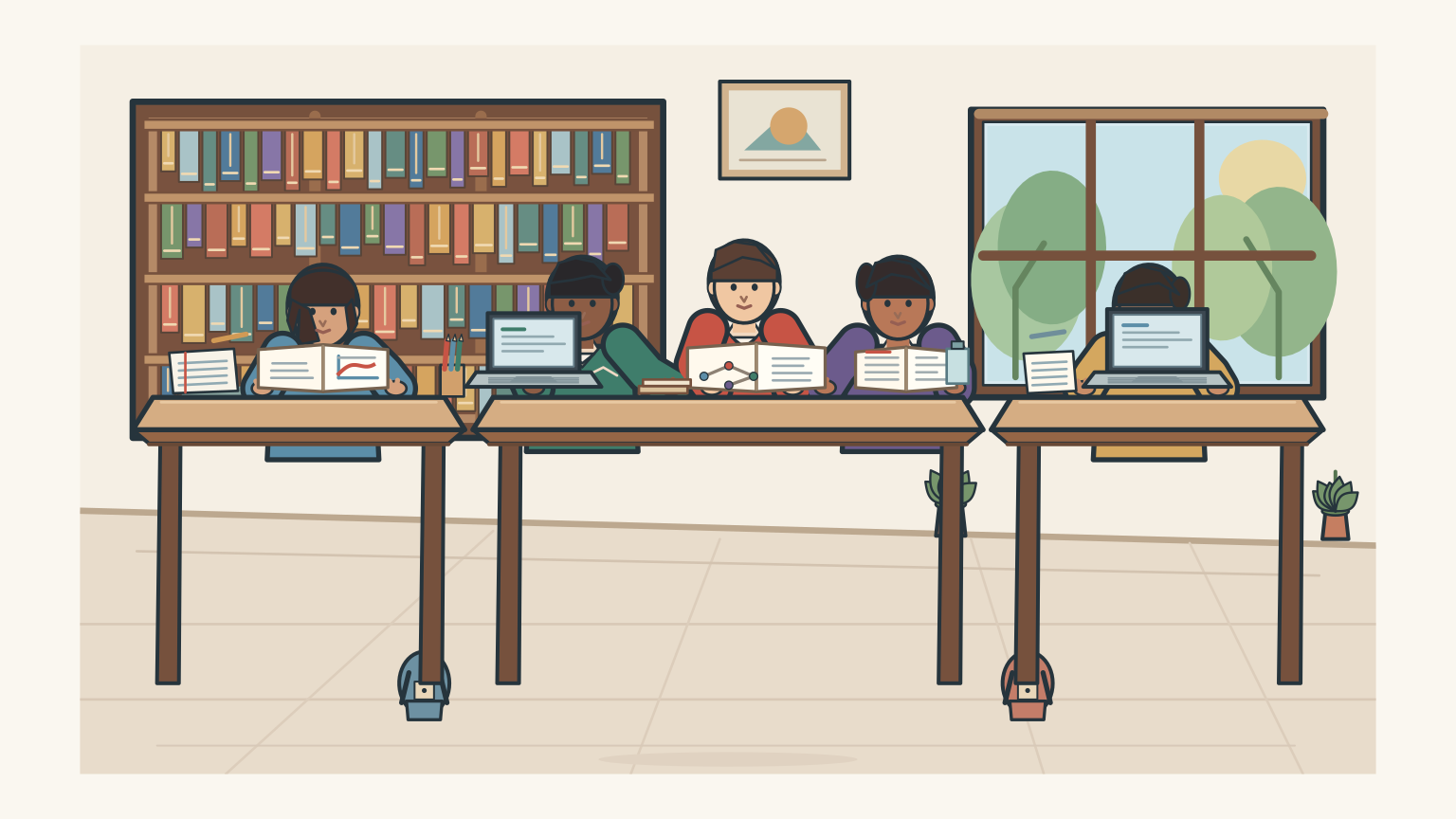
Due to technical limitations, this figure may display incorrectly or contain inaccuracies. Please check key details against your course materials.
What can you get for free?
NSW public libraries provide several services that are useful for students.
These include:
- Library membership for eligible local residents.
- Free borrowing of available library materials.
- Access to information and reference assistance.
- Study spaces and access to library resources.
- Internet and digital resources, depending on the library.
The NSW Library Act 1939 provides for free membership for eligible local residents, free loans, and free access to library materials on library premises. Reciprocal membership arrangements may also apply between councils. Source
The exact facilities, opening hours, and study-room arrangements vary between libraries, so check your local council’s library website.
What about the State Library of NSW?
The State Library of NSW HSC resource hub provides resources for students and teachers, including selected subject guides, research assistance, workshops, and information about accessing its collections.
Its online resources and databases can also be useful when you need reliable information beyond an ordinary internet search.
Many electronic resources are available from home to NSW residents with library membership. Resources can also be accessed onsite without requiring library membership. Sources, eResources access information.
For Physics, Chemistry, and Mathematics Extension, use NESA as your main reference for syllabus content and examination preparation. The library is particularly useful for finding a quiet place to work and accessing additional learning materials.
04Study with other students, but do it properly
Studying with friends can be useful, particularly when you’re working through difficult questions.
However, there’s a difference between collaborative learning and copying someone else’s working.
If one student solves a problem while everyone else watches, the others might understand the explanation without being able to reproduce it independently.
This is a common reason why group study sessions feel productive but don’t always translate into better examination performance.
A better way to organise a study group
Try working with two or three other students studying the same subject.
Use this simple structure for a 45-minute session:
| Time | Activity |
|---|---|
| 5 minutes | Choose a question or topic everyone wants to practise. |
| 15 minutes | Everyone attempts the question independently. |
| 15 minutes | Compare solutions and explain different approaches. |
| 10 minutes | Each student writes a corrected solution without looking at anyone else’s work. |
The most important rule is that everyone attempts the question before seeing another person’s solution.
Make everyone explain their reasoning
The best peer study sessions involve explaining ideas rather than simply exchanging answers.
For example:
- Mathematics Extension 1: Explain why a particular mathematical method applies and justify each important step.
- Mathematics Extension 2: Compare different approaches to a proof or complex problem.
- Physics: Explain the relationship between the physical situation, the relevant equation, and the direction of the calculated quantity.
- Chemistry: Explain what is happening at the particle level, rather than simply memorising an equation or reaction.
If nobody in the group can explain a particular step, write it down and ask your teacher.
Your friends can help you practise, but they aren’t a replacement for checking your understanding against reliable course materials.
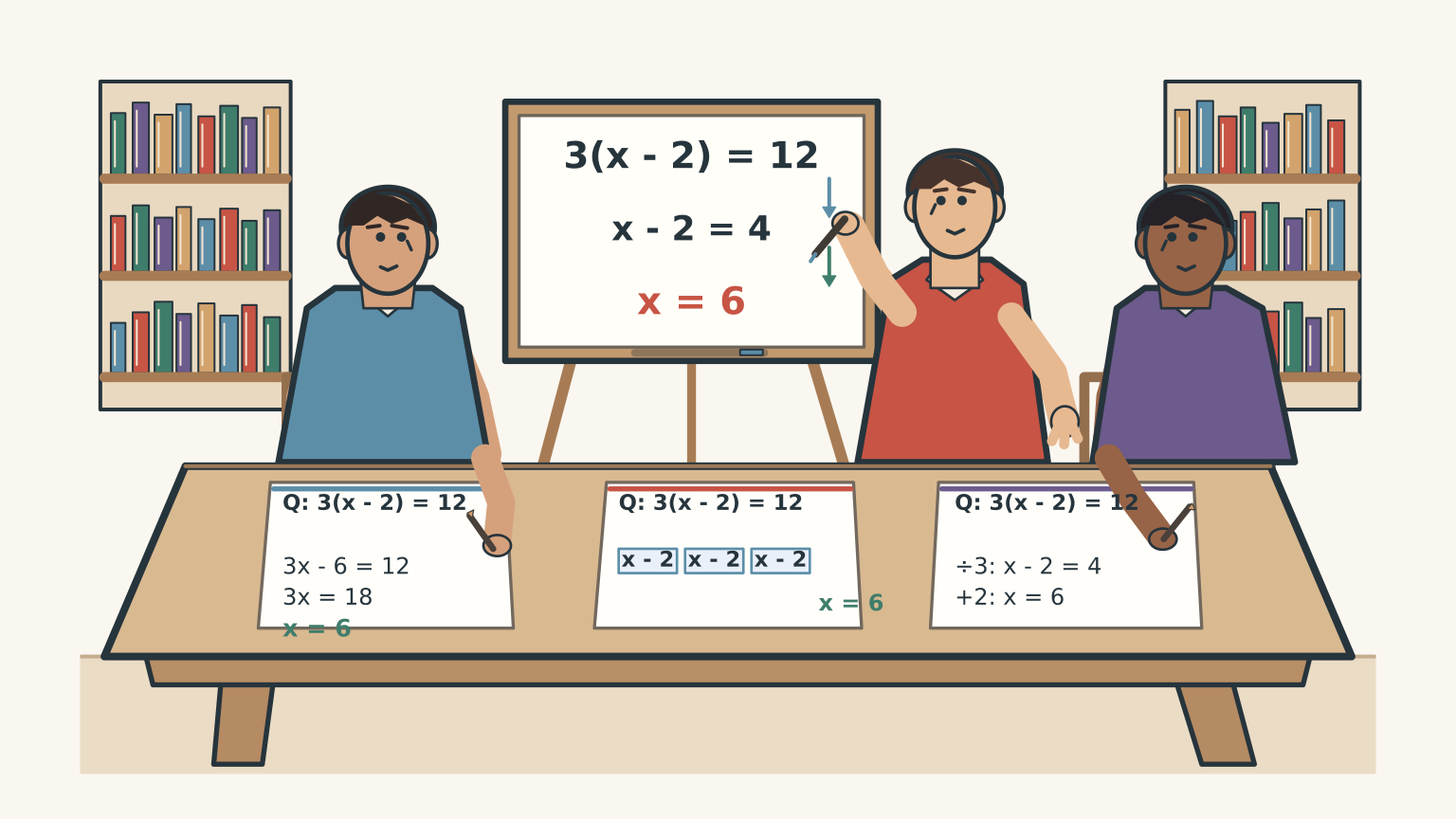
Due to technical limitations, this figure may display incorrectly or contain inaccuracies. Please check key details against your course materials.
05A worked example: Building a free HSC support plan
Imagine you’re studying Mathematics Extension 1.
You understand the examples your teacher demonstrates in class. You can follow the working in your textbook, but when an examination question presents a familiar concept in an unfamiliar way, you struggle to decide where to begin.
You might assume that you need another textbook or a paid tutor.
Before spending money, try the following approach.
Step 1Identify the specific difficulty.
Instead of writing “I’m bad at combinatorics”, identify what is going wrong.
For example:
“I understand permutations and combinations individually, but I struggle to recognise which approach to use in unfamiliar questions.”
That’s a much more useful starting point.
Step 2Ask your teacher for targeted help.
Take one question you couldn’t complete to your next lesson.
Ask your teacher to explain what information in the question helps distinguish between the possible methods.
Try to understand the decision-making process, not just the solution to that particular question.
Step 3Check the syllabus and practise independently.
Find the relevant content in your current Mathematics Extension 1 syllabus.
Then locate a suitable question in an official NESA examination paper.
Attempt it without notes before checking the marking guidelines.
Step 4Use a peer study session.
Ask a friend to attempt the same question independently.
Compare your approaches. Explain why you chose your method and ask your friend to challenge any step that isn’t justified.
If you disagree, check the relevant mathematics and ask your teacher to resolve the issue.
Step 5Consolidate your understanding.
Use a library study session to revisit the topic and attempt another question without looking at previous solutions.
If you need help making sense of mathematical notation and textbook explanations, tutorgum also has a resource called How to Read Maths Textbooks Without Getting Lost in Symbols.
Notice what happened here.
You used your teacher to understand the concept, NESA to practise examination questions, your friend to test your reasoning, and the library to create time and space for independent study.
You didn’t need to purchase another textbook or tutoring session to make that process work.
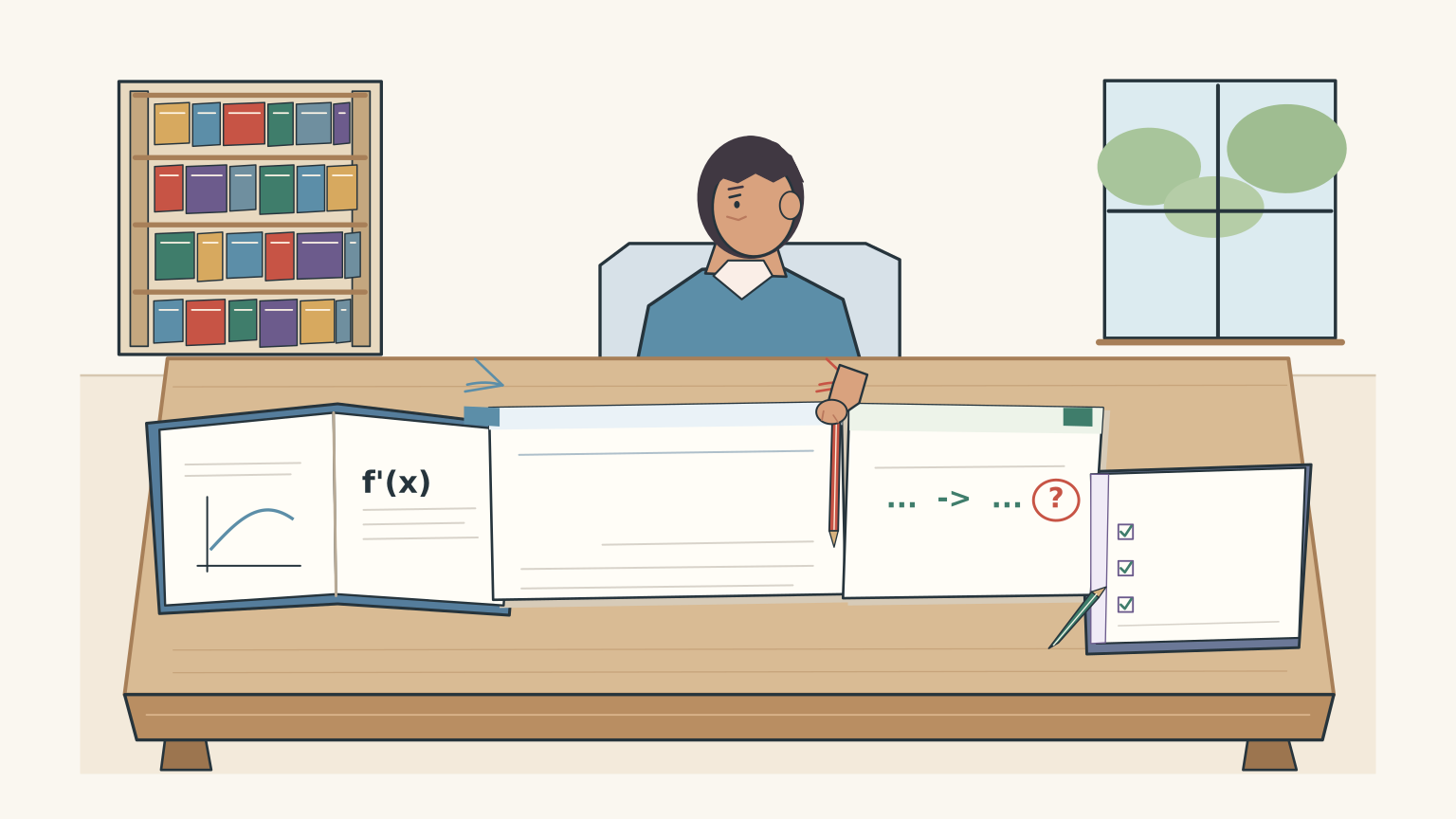
Due to technical limitations, this figure may display incorrectly or contain inaccuracies. Please check key details against your course materials.
06Put the free resources into a weekly routine
The biggest mistake is using these resources occasionally rather than consistently.
You don’t need to spend every afternoon studying. You need a repeatable routine that addresses the areas where you’re losing understanding or marks.
Here’s one practical approach:
| When | What to do | Main resource |
|---|---|---|
| Start of the week | Choose one difficult syllabus area. | Current NESA syllabus |
| During the week | Ask one specific question about something you don’t understand. | School teacher |
| Independent study | Attempt two or three relevant examination questions. | NESA past papers |
| After practising | Check your working and record recurring mistakes. | Marking guidelines and feedback |
| End of the week | Explain difficult questions and compare solutions. | Peer study group |
| When needed | Complete focused study away from distractions. | Public library |
Keep a simple record of your mistakes.
For each question you get wrong, write:
- What was the question testing?
- What did I do incorrectly?
- What should I have recognised?
- Can I now solve a similar question independently?
This gives you something more useful than a list of completed exercises: evidence of what you understand and what still needs work.
07When is paid tutoring worth considering?
Free resources can provide a substantial amount of academic support, but they don’t solve every problem.
There are situations where additional individual teaching might be useful.
For example:
- You regularly struggle to understand concepts, even after asking your teacher.
- You need someone to identify gaps in your understanding and explain them individually.
- You find it difficult to organise independent study or maintain a consistent routine.
- You need regular feedback on how you approach unfamiliar examination questions.
The important distinction is that tutoring should address a specific learning need.
Choose support around your learning goals and budget. Free resources and regular tutoring can complement one another.
Keep using effective school support and independent practice. If you would value a consistent teaching routine and another opportunity for questions and feedback, explore how a weekly class would fit.
tutorgum offers live online small-group tutoring in Physics, Chemistry and Maths, with practice materials and opportunities to discuss your working.
For the advertised classes and current fees, see the pricing and timetable.
09Explore the next step
School feedback, official resources, libraries and peer practice can all contribute to a useful free study plan. Keep those resources alongside any tutoring you choose. If you would value regular teaching and feedback, a live class offers an additional structure for your HSC preparation.
tutorgum offers live online small-group teaching for Year 11 and 12 Physics, Chemistry and Maths, with opportunities for questions and feedback on student responses. View the current classes, pricing and timetable and enquire about a first lesson. The published first-lesson arrangement charges the lesson normally if you continue; it is free if you decide not to continue.