
How Parents Can Support HSC Physics and Chemistry
You don't need to know Physics or Chemistry to support your teenager through the HSC. Learn how to protect study time, encourage independent practice, help manage assessments, and recognise when subject-specific tutoring may help.
Your teenager has spent two hours revising HSC Physics. Their notebook is full, the textbook is covered in highlights, and they’ve watched three videos. But when you ask which questions they attempted without looking at the solutions, they can’t show you one.
You might not know enough physics to judge whether their notes are correct. That’s fine. You can still recognise that something is missing.
Parents don’t need to understand mechanics, electromagnetism, chemical equilibrium, or organic chemistry to support an HSC student. The most useful things you can do are protect time for independent practice, help your teenager turn mistakes into next steps, keep assessment deadlines visible, and make sure they know where to get subject-specific help.
The goal isn’t to become another teacher at home. It’s to create the conditions in which your teenager can learn effectively.

Due to technical limitations, this figure may display incorrectly or contain inaccuracies. Please check key details against your course materials.
01Your job is to support the process, not teach the subject
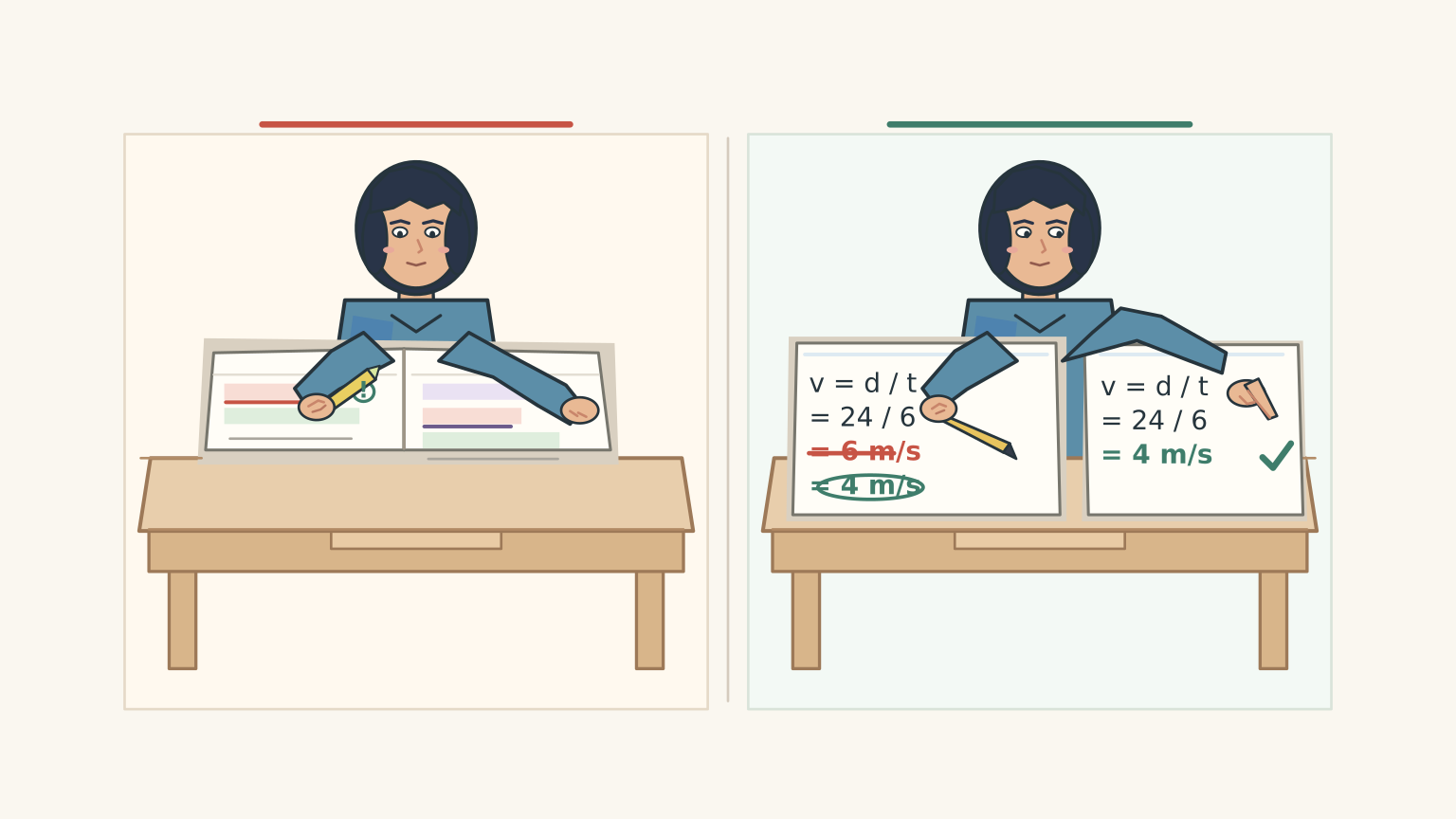
There’s an important difference between spending time studying and actually practising what you’ve learned.
Consider two students preparing for a Chemistry assessment.
- Student A spends an hour reading textbook explanations, highlighting definitions, and rewriting notes.
- Student B spends an hour attempting questions without notes, checking the answers, identifying mistakes, and trying similar questions again.
Both have studied for an hour. But Student B has tested whether they can actually use the information.
This is particularly important in HSC Physics and Chemistry. Students need to apply concepts to unfamiliar questions, perform calculations, interpret experimental data, and explain their reasoning. Recognising an explanation in a textbook isn’t the same as producing one independently.
Think of it like learning to play basketball. Watching someone take free throws helps you understand what the movement looks like. It doesn’t establish whether you can make the shot yourself. You need to attempt it, receive feedback, and adjust.
The analogy isn’t exact: scientific problem-solving involves reasoning rather than physical coordination. But the importance of independent practice and feedback carries across.
Due to technical limitations, this figure may display incorrectly or contain inaccuracies. Please check key details against your course materials.
A useful study session should generally contain three things:
| Stage | What the student does | What it achieves |
|---|---|---|
| Attempt | Tries a question without relying on the worked solution | Reveals what they can do independently |
| Check | Compares their working with feedback or a correct solution | Identifies misunderstandings and mistakes |
| Retry | Corrects the mistake and attempts a similar question | Tests whether the correction has been understood |
You don’t need to check the scientific accuracy of every answer. You can simply ask whether your teenager has completed all three stages.
That is already meaningful support.
01Protect time for actual practice
One of the most useful things a parent can provide is a predictable study routine.
Year 11 and 12 students are balancing several subjects, school assessments, extracurricular commitments, and sometimes part-time work. Physics and Chemistry can easily get pushed aside until an assessment is approaching.
The problem with leaving everything until the last minute is that students lose the opportunity to identify misunderstandings early. A topic that seemed manageable in class can become much harder when several weeks of content need to be revised together.
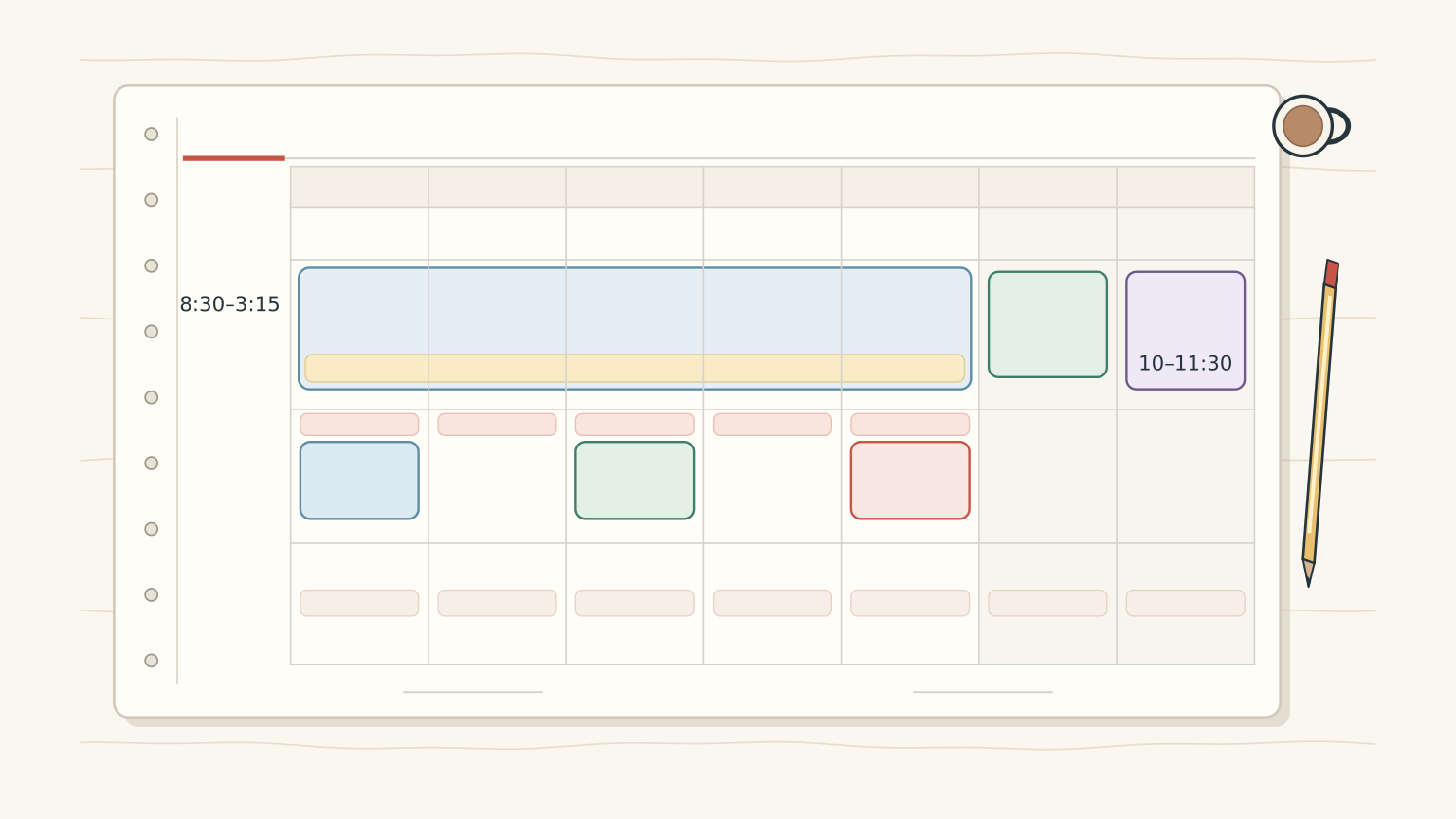
Rather than asking your teenager to study for a certain number of hours every night, help them establish a realistic weekly plan.
Make the plan specific
A calendar entry saying “study Physics” isn’t particularly useful.
A more effective entry identifies what the student intends to accomplish.
For example:
| Study block | Specific task |
|---|---|
| Monday | Attempt Physics questions from the current topic |
| Wednesday | Complete Chemistry calculations and check working |
| Friday | Review mistakes from both subjects |
| Sunday | Prepare for upcoming assessments or complete practical work |
This is an example, not a prescribed timetable. The number and length of sessions should reflect the student’s actual workload.
The important distinction is that each session has a clear purpose.
Due to technical limitations, this figure may display incorrectly or contain inaccuracies. Please check key details against your course materials.
What parents can do
- Help identify regular study times that fit around existing commitments.
- Make sure upcoming assessment dates are visible.
- Encourage the student to decide what they will complete during each session.
- Protect those sessions from unnecessary interruptions.
- Check whether the routine is realistic rather than simply adding more hours.
A useful weekly conversation might take ten minutes.
Ask your teenager what assessments are coming up, which subject needs attention, and when they intend to practise.
Then leave them to complete the work.
Avoid checking every half-hour or repeatedly asking whether they’re studying. The aim is to help them develop ownership of their routine, not make them dependent on reminders.
02Ask about attempted work, not difficult content
This is probably the most useful adjustment a parent can make.
Instead of asking questions that require subject knowledge, ask questions that reveal how your teenager is approaching their work.
For example:
| Instead of asking… | Try asking… |
|---|---|
| Do you understand Physics? | Which question did you attempt today? |
| Are you good at Chemistry now? | What was the hardest part of the work you tried? |
| Did you get everything right? | What did you discover when you checked your answers? |
| Have you finished studying? | What’s the next thing you need to practise? |
| Why are you getting this wrong? | Where did your working first stop making sense? |
These questions encourage students to think about their learning without making the parent responsible for checking the science.
A practical example: helping with a Physics question
Suppose your teenager is working on a question comparing the orbital periods of two objects.
You don’t need to understand orbital mechanics to have a useful conversation.
You could ask:
- What information does the question give you?
- What are you actually being asked to compare?
- Which part of your working are you unsure about?
- Have you checked whether your answer makes sense?
If they can explain their approach, you’ve helped them articulate their reasoning. If they can’t, you’ve identified a question they may need to take to their teacher or tutor.
For an example of the type of problem involved, see How to Compare Orbital Periods Without Knowing Central Mass.
The same approach works in Chemistry.
A student attempting a mole calculation might be unsure how to move from a balanced chemical equation to the required quantity. You don’t need to supply the answer. Ask them to identify the step they understand and the first step they cannot explain.
That gives them something specific to ask their teacher.
One question worth remembering
If you remember only one question from this article, make it:
“Can you show me one question you attempted, and where you got stuck?”
It shifts the conversation away from vague statements about studying and towards something you can actually observe.
03Help turn mistakes into useful next steps
Getting a question wrong isn’t necessarily a problem. Repeatedly getting the same type of question wrong without understanding why is a bigger concern.
Students often check an answer, see that it’s incorrect, read the worked solution, and move on.
That feels like revision, but it can leave the original misunderstanding untouched.
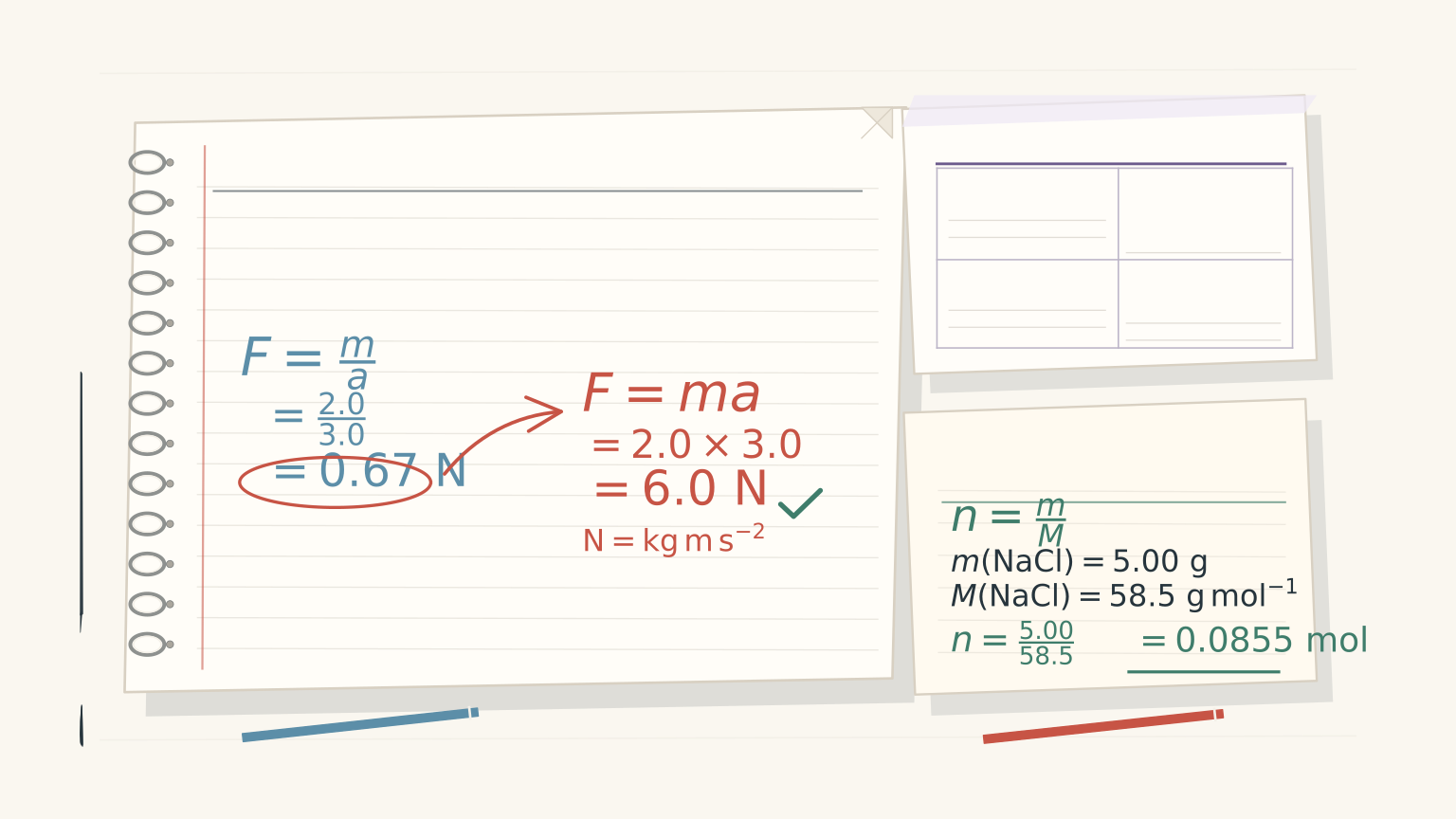
A better approach is to keep a short record of mistakes and what the student intends to do about them.
This is sometimes called an error log.
What should an error log contain?
| Question or topic | What went wrong? | Next action |
|---|---|---|
| Physics calculation | Couldn’t identify which relationship to use | Ask teacher to explain how to choose the appropriate relationship |
| Chemistry calculation | Lost track of the mole ratio | Review the worked example and attempt a similar question |
| Physics explanation | Answer didn’t address the question fully | Review teacher feedback and practise explaining the reasoning |
| Chemistry practical | Couldn’t explain an unexpected result | Identify the relevant evidence and ask for clarification |
The student should complete this record themselves. You don’t need to diagnose the mistakes or decide which scientific principle they misunderstood.
Your role is to help ensure that each mistake leads somewhere.
Due to technical limitations, this figure may display incorrectly or contain inaccuracies. Please check key details against your course materials.
Why does this matter?
Imagine your teenager has attempted five Chemistry questions and made the same mistake in three of them.
Simply completing another ten questions may not solve the problem.
The repeated error is evidence that something needs attention. It could be an underlying concept, an unfamiliar calculation method, or a misunderstanding of the question.
The student now has something concrete to take to their teacher.
A useful parental question is:
“What will you do differently when you attempt this type of question again?”
If they can answer that, the mistake has become a learning opportunity rather than just another incorrect mark.
04Support practical work without taking it over
Physics and Chemistry aren’t exclusively about remembering theory and completing calculations.
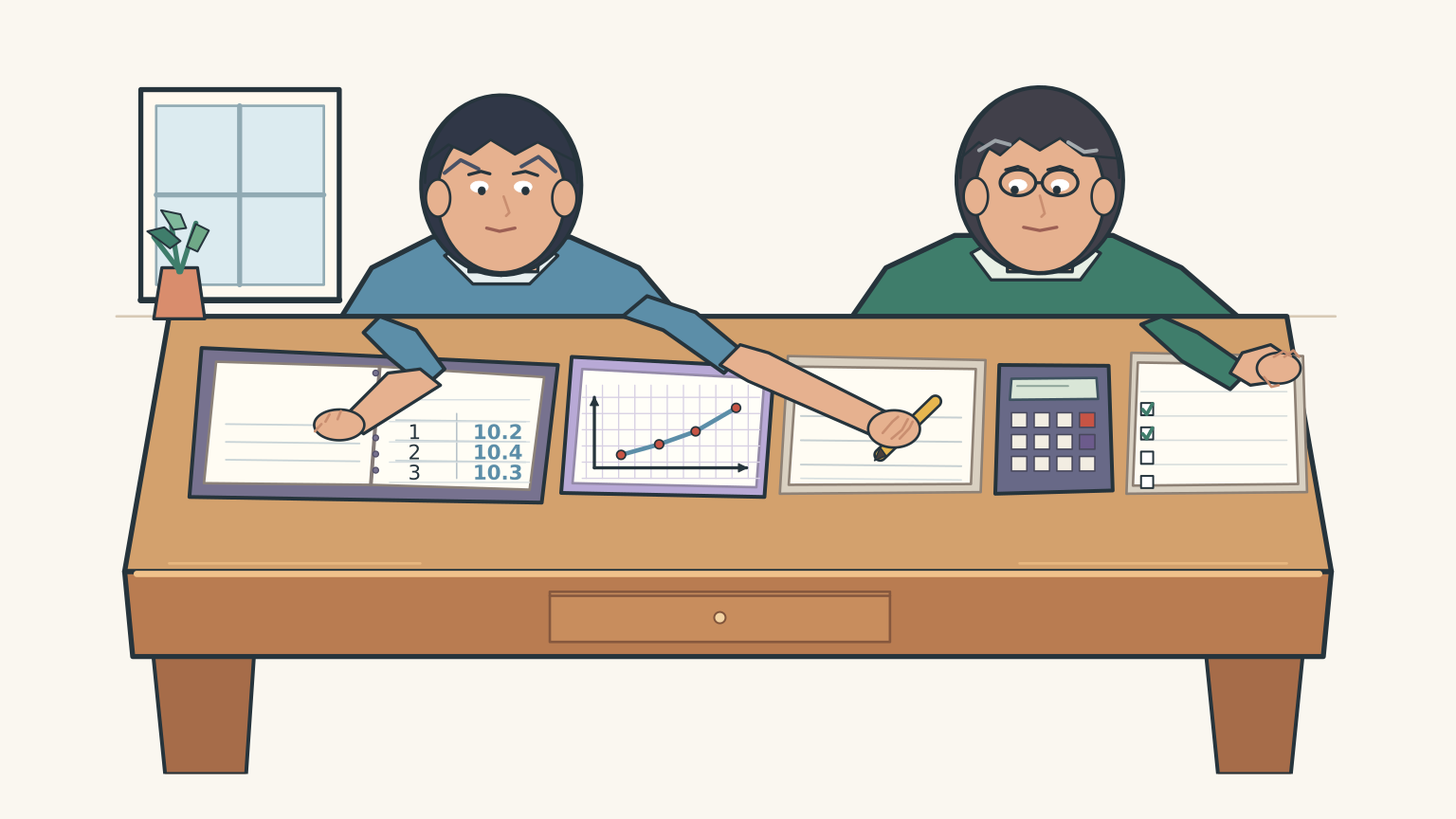
Students also undertake practical investigations, process experimental results, interpret data, and communicate scientific findings.
These activities can create a different set of challenges for families because they often involve several stages of work over an extended period.
For example, a student might have to:
- Plan an investigation.
- Collect and record measurements.
- Process experimental results.
- Construct and interpret graphs.
- Evaluate limitations and sources of error.
- Communicate findings in a written report.
The exact requirements depend on the task and the student’s syllabus cohort.
You can help with the organisation without needing to understand the experiment.
Questions that help with practical assessments
Try asking:
- What exactly needs to be submitted?
- When is the task due?
- Have you recorded all your experimental results?
- Which parts of the report are complete?
- Do you have enough time to check the calculations and presentation?
- Is there anything you need to ask your teacher before finishing?
You can also help with basic presentation.
For example, you might notice that a graph has no axis labels or that a report is missing a section required by the task instructions. You don’t need to interpret the experimental results to notice that something is incomplete.
However, leave the scientific reasoning to the student.
Don’t invent experimental data, write their analysis, or complete calculations on their behalf. The purpose of the assessment is to demonstrate their own understanding and skills.
Due to technical limitations, this figure may display incorrectly or contain inaccuracies. Please check key details against your course materials.
05Recognise when your teenager needs subject-specific help
There is a limit to what good organisation and encouragement can achieve.
Sometimes a student has a consistent difficulty with a particular concept or method. They might attempt questions regularly but still struggle to understand why a particular approach works.
This is where subject-specific teaching becomes important.
Parents shouldn’t feel responsible for explaining every difficult topic. In fact, trying to teach unfamiliar material can sometimes make the situation more frustrating for everyone.
Instead, help your teenager recognise when they need to involve someone who understands the course.
A simple decision guide
| What is happening? | A useful next step |
|---|---|
| The student understands the topic but makes occasional mistakes | Encourage continued practice and checking |
| The student cannot identify how to start a particular question | Take the question and attempted working to their teacher |
| The same misunderstanding appears across several questions | Ask the teacher for targeted clarification or consider subject-specific tutoring |
| The student understands explanations but cannot apply them independently | Focus on guided practice followed by independent attempts |
| Several assessments are approaching and work is falling behind | Review priorities with the student and contact the school if necessary |
The distinction between a practice problem and a content problem is important.
A student who understands a concept but needs more opportunities to apply it probably needs a different type of support from someone who has never understood the underlying concept.
Adding more practice questions won’t necessarily fix a missing explanation.
When might tutoring help?
If a student repeatedly struggles with Physics or Chemistry concepts, a qualified subject tutor can provide the explanations and feedback that a parent cannot reasonably be expected to provide.
A useful tutoring arrangement should help the student move beyond simply watching someone solve a problem.
Look for a learning process that includes:
- An explanation of the difficult concept.
- A worked example demonstrating how to approach a question.
- An opportunity for the student to attempt a similar problem independently.
- Feedback on their reasoning and working.
- A clear recommendation for what to practise next.
After a session, you can ask your teenager two simple questions:
- What can you do now that you couldn’t do before?
- What do you need to practise before your next session?
These questions help you understand whether the support is translating into independent learning.
tutorgum offers online HSC Physics and Chemistry tutoring for Year 11 and 12 students. If you’re considering additional support, the distinction between ongoing help and short-term revision is worth understanding. Our guide to HSC Holiday Intensives vs Weekly Tutoring: Which Fits Your Goal? explains when each approach may be appropriate.
06Check that your teenager is using the correct HSC syllabus
There’s one NSW-specific detail parents should be aware of when looking for textbooks, practice questions, and online resources.
The Physics and Chemistry syllabus updates are being introduced in different years.
As at 15 November 2026, NESA’s implementation schedule is:
| Year 11 starting year | Physics syllabus | Chemistry syllabus |
|---|---|---|
| 2026 | 2017 syllabus | 2017 syllabus |
| 2027 | 2025 syllabus | 2017 syllabus |
| 2028 | 2025 syllabus | 2025 syllabus |
The new Physics syllabus begins teaching Year 11 students in Term 1, 2027. Its first HSC examination will be in 2028.
The new Chemistry syllabus begins teaching Year 11 students in Term 1, 2028. Its first HSC examination will be in 2029.
You can check the implementation schedules directly through NESA:
This difference matters particularly for students starting Year 11 in 2027. They’ll study the new Physics syllabus but the existing Chemistry syllabus.
If you’re purchasing resources or looking for practice questions, check that they match the student’s actual course. The year printed on a syllabus document isn’t necessarily the year in which your teenager will study it.
These dates assume the usual Year 11 to Year 12 progression. If your teenager is accelerating a subject or has transferred between courses, confirm the applicable syllabus with their school.
08A practical checklist for parents
You don’t need to supervise every study session. A short weekly check-in is usually a more useful starting point.
Use this checklist to see whether your teenager has the support and structure they need.
- [ ] Upcoming Physics and Chemistry assessments are recorded in a calendar.
- [ ] Regular study time is protected around school and other commitments.
- [ ] Each study session has a specific task rather than a vague instruction to revise.
- [ ] Your teenager is attempting questions independently, not just reading notes.
- [ ] Mistakes are being checked and turned into specific next steps.
- [ ] Difficult questions are being taken to the appropriate teacher or tutor.
- [ ] Practical work and assessment deadlines are being managed before the last minute.
- [ ] Your teenager knows what they need to practise next.
You can use this checklist once a week rather than turning it into a nightly inspection.
The student should remain responsible for choosing their questions, completing their working, understanding feedback, and submitting their assessments.
Your contribution is to help make that process manageable and consistent.
09The most valuable support isn’t knowing every answer
A parent who doesn’t understand HSC Physics or Chemistry can still make a substantial contribution to their teenager’s learning.
You can protect practice time, encourage independent attempts, help organise assessment work, and recognise when a student needs a teacher or tutor to explain something properly.
Most importantly, you can help your teenager develop the habit of identifying what they know, recognising what they don’t understand, and doing something useful about it.
That’s a much better long-term skill than having someone at home who can supply the answer to every difficult question.
And when your teenager does sit down with a Physics or Chemistry problem they initially find difficult, the most useful thing you can ask might simply be:
“Show me what you’ve tried so far.”