
HSC Holiday Intensives vs Weekly Tutoring: Which Fits Your Goal?
Compare holiday intensives with ongoing HSC tutoring, and explore tutorgum's weekly online classes and support through school holidays.
You have three days of school holidays free. One provider is advertising a three-day HSC intensive, while another offers weekly tutoring throughout the term. Both promise to help you prepare. Which is actually going to make a difference?
It depends on what you can already do.
Weekly tutoring is generally better for learning unfamiliar content, repairing gaps in prerequisite knowledge, and improving through repeated feedback. Holiday intensives are generally better for consolidating material you already understand, practising unfamiliar exam questions, and sharpening exam technique.
The mistake is choosing based on how many hours of teaching you receive rather than what you need to learn.
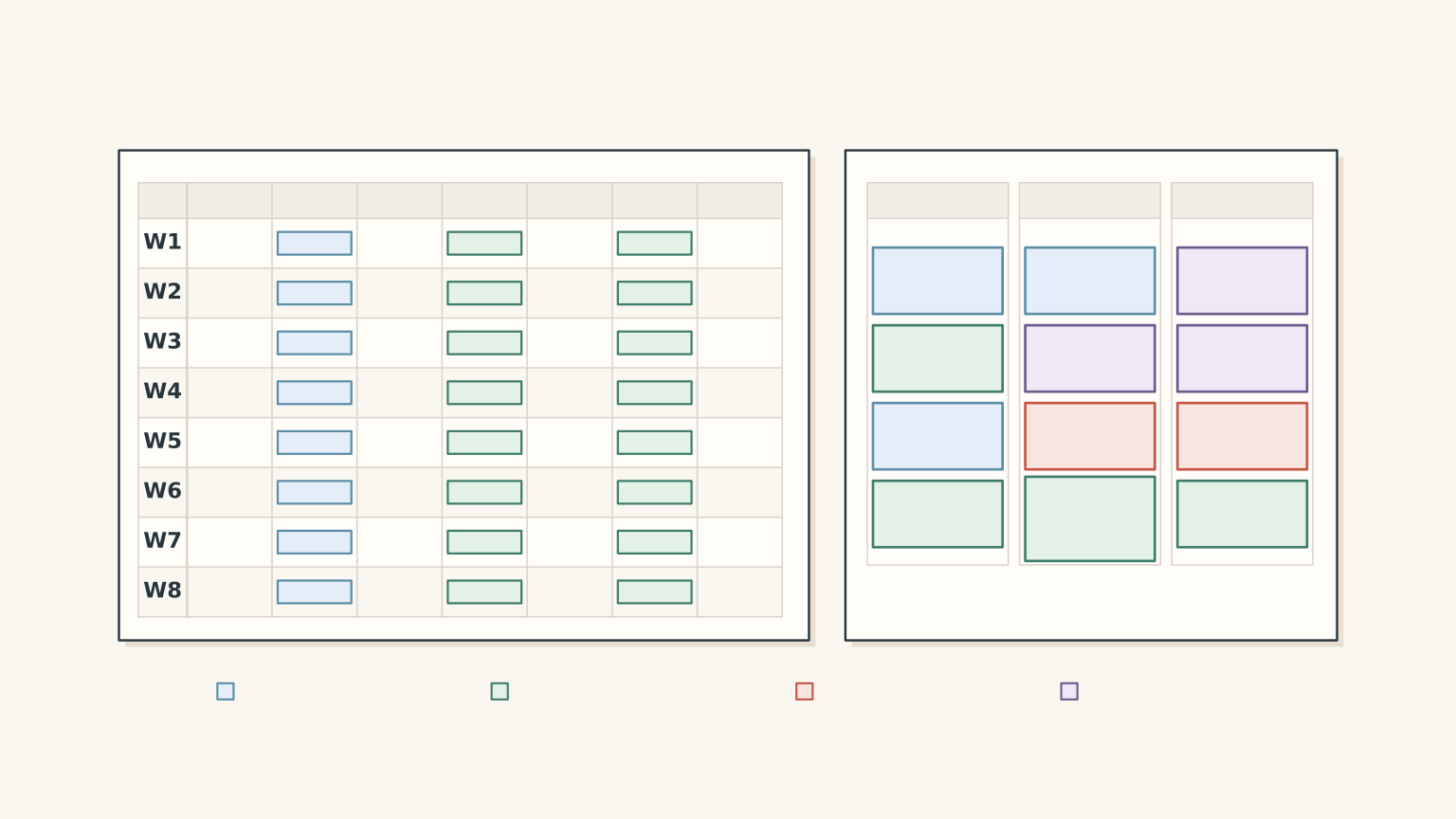
Due to technical limitations, this figure may display incorrectly or contain inaccuracies. Please check key details against your course materials.
01What is the actual difference?
The two formats solve different learning problems.
Weekly tutoring: build understanding over time
Weekly tutoring gives you a regular opportunity to learn something, practise it independently, and return with questions about what went wrong.
Imagine you’re studying Newton’s laws in Physics.
During one lesson, you learn how to draw force diagrams and apply Newton’s second law. During the following week, you attempt questions independently.
You discover that you can handle questions involving horizontal motion, but struggle when an object moves down an inclined plane.
Your next lesson can address that specific weakness.
This cycle is valuable because understanding a concept while someone explains it is different from being able to apply it independently.
Weekly tutoring gives you repeated opportunities to:
- Learn concepts that are new or unfamiliar.
- Repair prerequisite knowledge.
- Identify mistakes that keep appearing in your work.
- Practise questions between lessons.
- Receive feedback and correct your reasoning.
- Build confidence with progressively harder problems.
The important feature isn’t simply having a lesson every week. It’s having time between lessons to discover what you don’t understand.
Holiday intensives: consolidate what you already know
A holiday intensive compresses teaching and revision into a shorter period.
Depending on the provider, this might involve several hours of teaching each day, revision of major syllabus topics, worked examples, and practice examination questions.
Suppose you’ve already studied equilibrium in Chemistry.
You understand Le Chatelier’s principle, can write equilibrium expressions, and know how to calculate equilibrium concentrations.
However, you struggle when an examination question combines equilibrium calculations with changes in temperature, pressure, or concentration.
A well-designed intensive can help you bring these ideas together and practise applying them to unfamiliar situations.
The advantages include:
- Revising several related topics in a concentrated period.
- Seeing connections between different syllabus areas.
- Completing a substantial amount of examination practice.
- Identifying common examination mistakes.
- Using school holidays to address weaknesses before the next assessment.
However, there is an important limitation.
An intensive cannot automatically replace the time needed to understand difficult concepts. If you’re encountering an idea for the first time, several consecutive hours of explanations can leave you feeling familiar with the material without being able to solve questions independently.
Think of an intensive as a training camp. It’s useful for sharpening skills you’ve already developed, but it’s not a substitute for learning the fundamentals of the sport.
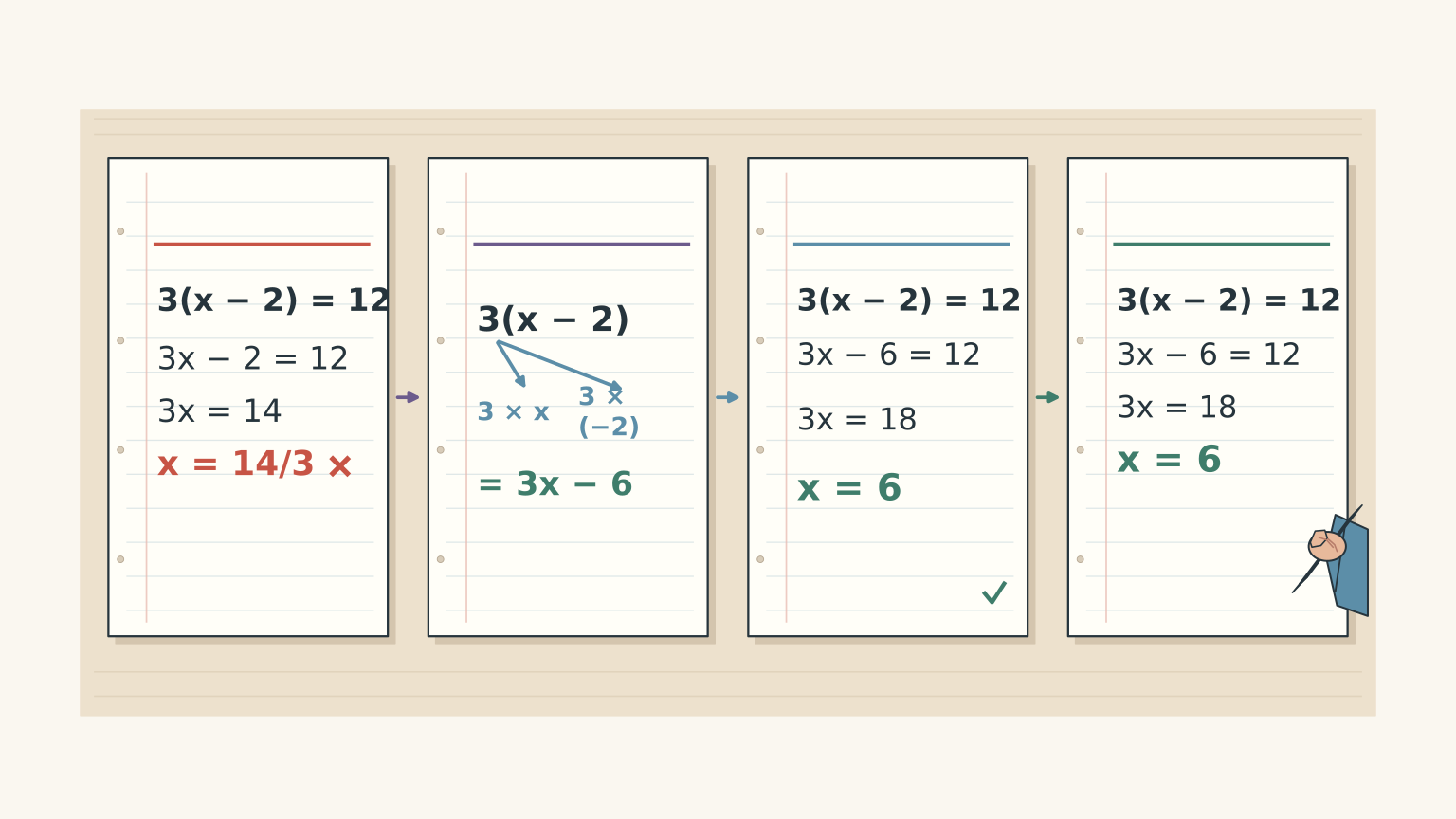
Due to technical limitations, this figure may display incorrectly or contain inaccuracies. Please check key details against your course materials.
02Which format suits your current ability?
This is the most important part of the decision.
Don’t choose a tutoring format based on whether you’re in Year 11 or Year 12. Two students in the same class can have completely different learning needs.
Instead, assess how independently you can use the material.
Start with three questions
Question 1: Can you explain the main concepts without looking at your notes?
For example, can you explain why increasing temperature shifts a particular equilibrium in one direction? Can you explain what acceleration actually represents in Physics?
If you can only repeat a definition without understanding why it is true, you probably need more instruction.
Question 2: Can you solve a standard examination question without looking at a worked solution?
Being able to follow someone else’s working is not the same as knowing how to start a question yourself.
If you regularly get stuck choosing an equation, identifying a relevant principle, or remembering an earlier mathematical technique, you may have gaps in your foundations.
Question 3: Can you handle unfamiliar questions that combine multiple concepts?
Suppose you understand every individual topic but struggle when an examination question combines two or three of them.
This suggests that your next challenge is applying knowledge, rather than simply learning more content.
Follow this decision guide
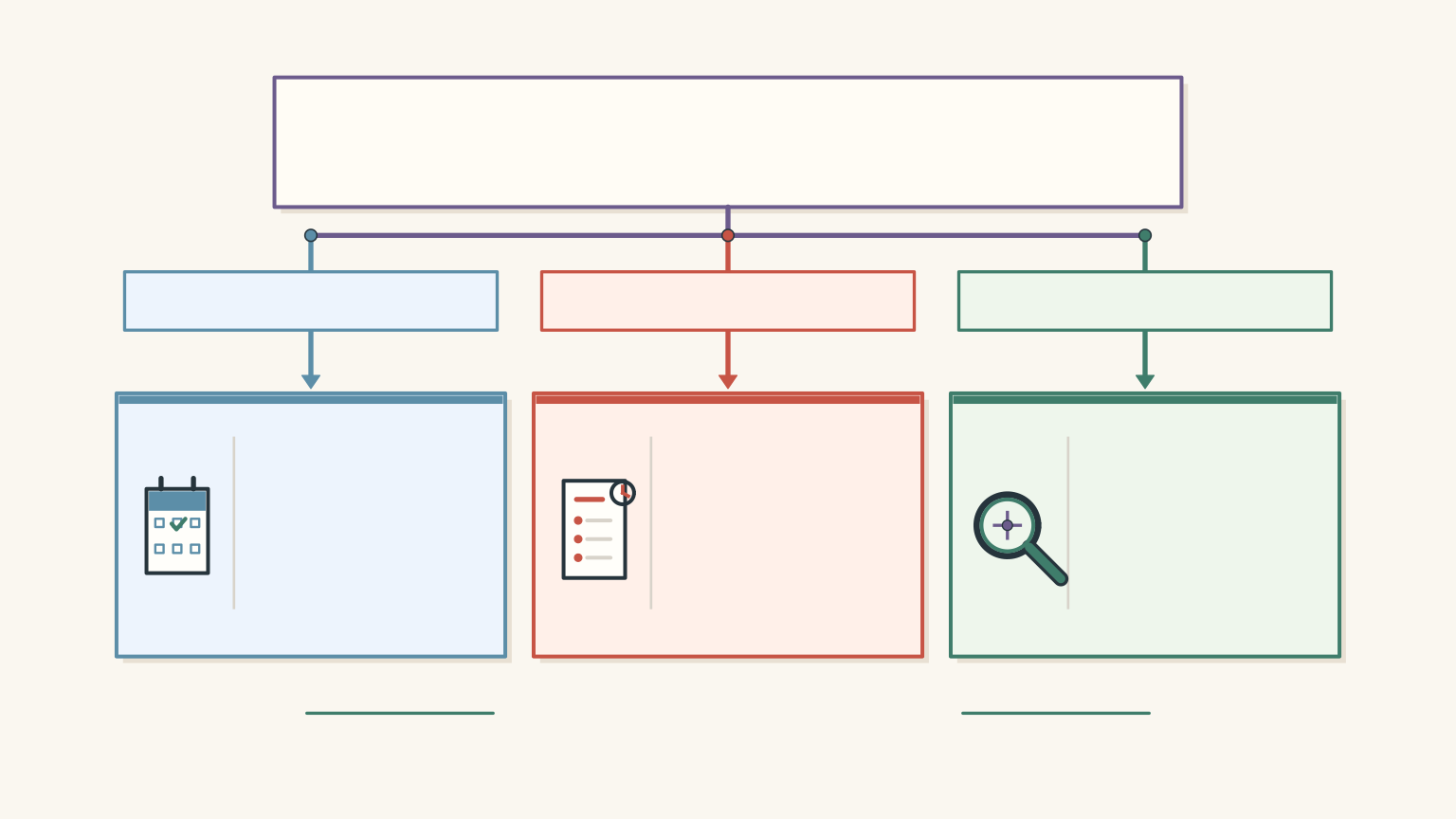
Due to technical limitations, this figure may display incorrectly or contain inaccuracies. Please check key details against your course materials.
| Your current situation | Useful support to look for |
|---|---|
| Gaps in major concepts or prerequisites | Regular teaching with opportunities to revisit and apply ideas. |
| Difficulty solving questions independently | Active practice and feedback on your reasoning. |
| Secure foundations but unfamiliar exam questions are difficult | Mixed-question practice, explanation and follow-up feedback in weekly lessons or focused revision. |
| Mistakes under time pressure | Timed practice with a feedback-and-retry cycle. |
| One isolated weak topic | A clear learning goal to discuss with the tutor. |
Independent revision is useful alongside either teaching format.
Even when the content feels secure, discussion and feedback can reveal a more efficient method or a gap in your reasoning.
Compare what happens before, during and after a lesson, rather than assuming that concentrated hours alone determine its value.
03How does this apply to Physics, Chemistry, and Mathematics?
The distinction becomes clearer when you consider the prerequisites and problem-solving demands of each subject.
Physics
Physics relies heavily on understanding relationships between physical quantities.
For example, knowing that \(F = ma\) is not particularly useful if you cannot identify the forces acting on an object or determine which direction its acceleration points.
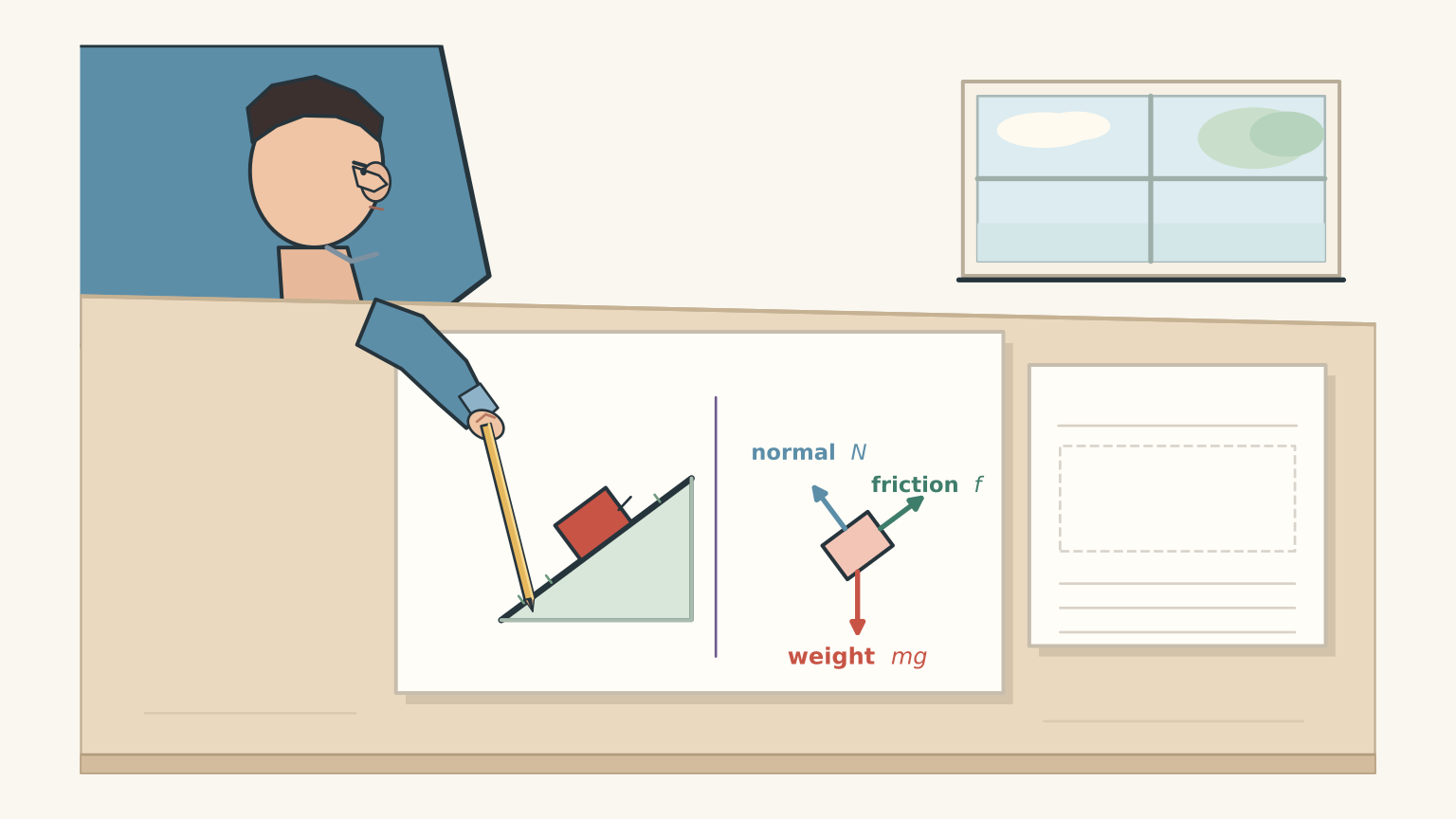
Due to technical limitations, this figure may display incorrectly or contain inaccuracies. Please check key details against your course materials.
Weekly tutoring is likely to suit you if:
- You struggle to understand fundamental physical principles.
- You cannot confidently draw free-body diagrams.
- You have difficulty rearranging equations or interpreting graphs.
- You don’t understand the mathematical reasoning behind common Physics calculations.
- You repeatedly make the same conceptual mistakes.
A holiday intensive may suit you if:
- You understand the major physical principles.
- You can solve standard questions independently.
- You struggle to recognise which principles apply to unfamiliar situations.
- You need practice combining mechanics, electromagnetism, or other syllabus concepts.
- You want to improve the clarity and accuracy of your written explanations.
For Physics, the difference is often between understanding individual physical models and knowing how to select and combine them.
Chemistry
Chemistry has a different challenge.
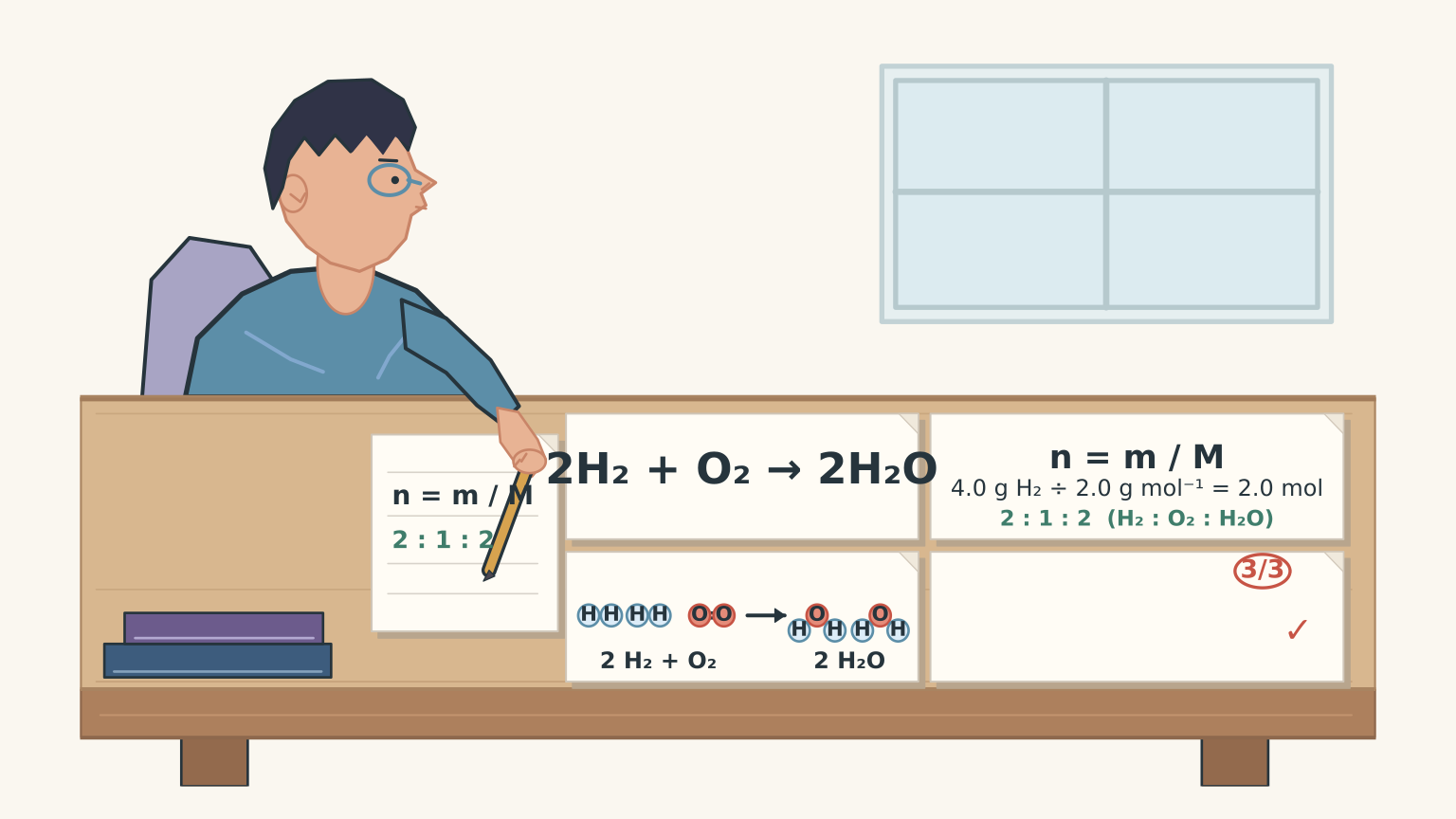
Many topics build on earlier chemical and mathematical knowledge. If you don’t understand the mole concept, for example, quantitative problems in later topics can become difficult.
Due to technical limitations, this figure may display incorrectly or contain inaccuracies. Please check key details against your course materials.
Weekly tutoring is likely to suit you if:
- You struggle with balancing chemical equations.
- You don’t understand mole calculations and stoichiometric relationships.
- You have difficulty understanding equilibrium or acid-base concepts.
- You memorise reactions without understanding the underlying chemistry.
- You struggle to explain why a chemical process occurs.
A holiday intensive may suit you if:
- You already understand the major chemical concepts.
- You can complete standard calculations.
- You struggle with multi-step examination questions.
- You need to improve your interpretation of experimental data.
- You find extended written responses difficult to structure.
Chemistry examinations often require you to connect theoretical knowledge with calculations, experimental observations, and explanations.
If you already understand the underlying chemistry, concentrated examination practice can be particularly useful.
If you don’t, more examination questions may simply expose the same unresolved gaps.
Mathematics Extension 1 and Extension 2
Mathematics presents another interesting distinction.
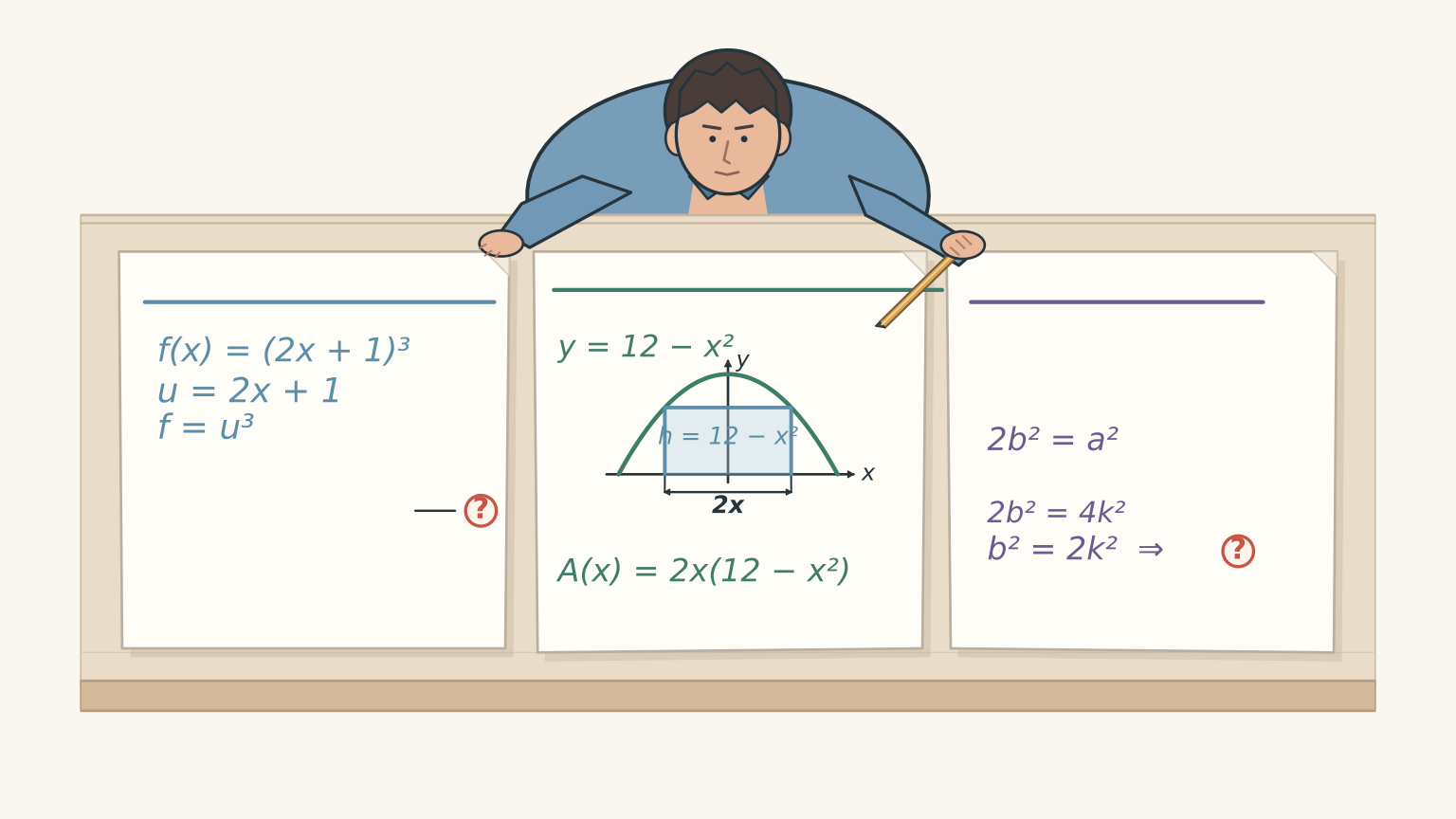
A student might understand differentiation but struggle to recognise when differentiation is useful in an unfamiliar problem.
Another student might not understand the underlying algebra well enough to differentiate complicated functions accurately.
These are different problems, and they need different solutions.
Due to technical limitations, this figure may display incorrectly or contain inaccuracies. Please check key details against your course materials.
Weekly tutoring is likely to suit you if:
- Your algebraic foundations are weak.
- You struggle with functions and trigonometric relationships.
- You cannot confidently apply calculus techniques.
- You have difficulty following mathematical proofs.
- You need someone to identify where your working becomes incorrect.
A holiday intensive may suit you if:
- You understand the main techniques in your course.
- You can solve routine questions but struggle with unfamiliar problems.
- You need to practise selecting and combining mathematical methods.
- You want to improve your speed and accuracy.
- You understand the theory but need more exposure to examination-style problems.
This distinction is particularly important in Extension 2.
Proof, vectors, complex numbers, integration, and mechanics require more than memorising a collection of techniques. You need to recognise mathematical relationships and construct logical solutions.
A short intensive can provide useful practice, but don’t expect a few days of teaching to replace the repeated problem-solving needed to develop these skills.
If mathematical notation itself is slowing you down, our guide on how to read maths textbooks without getting lost in symbols is a useful place to strengthen that foundation.
04The most important factor: feedback
Here’s something worth considering before you spend money on either option.
Imagine two students attend a six-hour tutoring program.
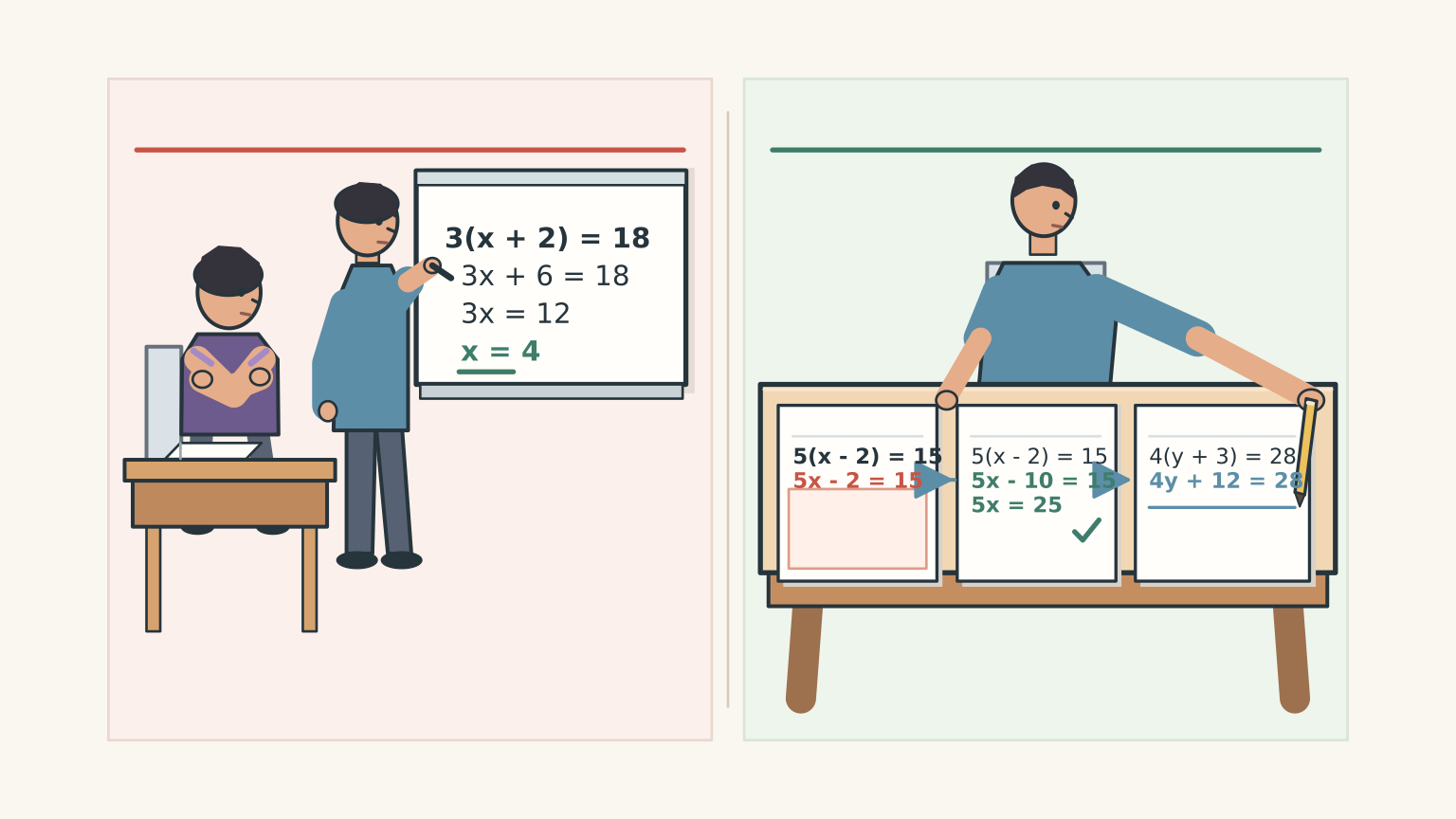
The first student spends the entire time watching worked solutions and listening to explanations.
The second student attempts questions independently, receives feedback on their working, corrects mistakes, and tries similar questions again.
Both students receive six hours of teaching.
But the second student has much better evidence of what they can actually do independently.
This is why the quality of feedback matters so much.
What should good feedback include?
Regardless of the format, look for these features:
| Feature | What it should achieve |
|---|---|
| Diagnostic questions | Identify what you already understand and where your gaps are. |
| Independent practice | Show whether you can apply the material without assistance. |
| Marked responses | Reveal mistakes in your actual working, not just the final answer. |
| Explanation of errors | Help you understand why your approach was incorrect. |
| Corrected attempts | Give you an opportunity to apply the feedback. |
| Follow-up practice | Check whether you can still solve the problem later. |
For an intensive, ask whether students receive individual feedback or simply watch solutions being demonstrated.
For weekly tutoring, ask whether homework and attempted questions are actually reviewed.
A tutor explaining a difficult question is useful. A tutor identifying exactly why your approach failed is much more valuable.
Due to technical limitations, this figure may display incorrectly or contain inaccuracies. Please check key details against your course materials.
05Check the syllabus before booking
There is another detail NSW HSC students need to consider in 2026: several Stage 6 syllabuses are changing.
This matters because a holiday course may advertise revision for a topic that has been reorganised, changed, or taught differently under your syllabus.
The implementation dates also differ between subjects.
As at 15 November 2026, NESA’s published implementation timelines are:
| Subject | New syllabus begins for Year 11 | New Year 12 teaching begins | First HSC examination under new syllabus |
|---|---|---|---|
| Mathematics Extension 1 | 2026 | Term 4, 2026 | 2027 |
| Mathematics Extension 2 | Year 12 course begins in Term 4, 2026 | Term 4, 2026 | 2027 |
| Physics | 2027 | Term 4, 2027 | 2028 |
| Chemistry | 2028 | Term 4, 2028 | 2029 |
These dates are important when choosing revision resources.
For example, a student sitting the 2027 HSC will study the new Mathematics Extension 1 and Extension 2 syllabuses, but will still be studying the 2017 Physics and Chemistry syllabuses.
The first HSC examinations under the new Physics and Chemistry syllabuses occur in different years.
You can check the official NESA implementation information here:
Before enrolling in any revision program, confirm:
- Which syllabus version the material follows.
- Whether it is designed for your Year 11 or Year 12 cohort.
- Whether the topics match your school’s course.
- Whether the practice questions reflect the current course requirements.
Don’t assume that a course is suitable simply because it advertises itself as HSC revision.
06What should you check before paying?
A good tutoring program should be clear about what you’re actually receiving.
Use this checklist before committing to either format.
For a holiday intensive:
- [ ] Is the course designed for your exact HSC syllabus?
- [ ] Does it assume you already understand the content?
- [ ] Are there diagnostic questions before teaching begins?
- [ ] Will you attempt questions independently?
- [ ] Will your written responses be marked?
- [ ] Is there an opportunity to ask questions and receive individual feedback?
- [ ] Is there a plan for revisiting difficult material after the intensive?
For weekly tutoring:
- [ ] Does the tutor explain why concepts work, rather than simply demonstrate procedures?
- [ ] Is there regular independent practice?
- [ ] Are your mistakes and written responses reviewed?
- [ ] Can you ask questions when you become stuck?
- [ ] Does the teaching follow your actual syllabus?
- [ ] Is there a clear progression from foundational concepts to difficult questions?
Also compare the total cost, not just the advertised hourly rate.
An intensive might appear cheaper per hour but offer limited individual feedback. Weekly tutoring might cost more over a term but include regular marking, homework, and opportunities to address weaknesses.
Work out what you are paying for, not just how long the sessions last.
07What does tutorgum currently offer?
tutorgum’s approach is ongoing support through weekly online small-group classes.
As at 15 November 2026, tutorgum offers weekly online group tutoring for NSW HSC students in:
- Year 11 and 12 Physics.
- Year 11 and 12 Chemistry.
- Year 11 and 12 Mathematics Extension 1.
- Year 12 Mathematics Extension 2.
The advertised format is one two-hour lesson each week, conducted online through Zoom.
Lessons include a short quiz, teaching of new concepts, and practice questions. During examination preparation, practice exams are provided beforehand, with difficult questions reviewed during lessons.
tutorgum’s regular weekly classes continue through school holidays, maintaining a consistent teaching-and-practice routine. Its advertised programme is weekly tutoring, rather than a separate holiday intensive.
Its published weekly group tutoring rates are currently:
| Year level | Hourly rate | Weekly cost |
|---|---|---|
| Year 11 | $55 | $110 |
| Year 12 | $60 | $120 |
These are the published weekly tutoring rates, not holiday intensive prices. Check the current timetable and pricing before enrolling, as availability and fees can change.
This weekly format provides repeated opportunities to learn a concept, apply it between lessons and return with questions.
08Questions and solutions
Question 1
A Year 12 Chemistry student understands some of the basic chemical reactions but struggles with mole calculations. They regularly get stuck when attempting questions involving stoichiometric relationships.
They have the opportunity to attend a three-day holiday intensive covering the entire Chemistry syllabus.
Would this be the best option?
Solution 1
Weekly tutoring or targeted foundational teaching would be the better starting point.
The problem isn’t simply a lack of examination practice. The student has a weakness in prerequisite knowledge.
Stoichiometry relies on understanding balanced chemical equations, mole ratios, and quantitative relationships.
These skills are used in later Chemistry topics. If the student cannot confidently apply mole calculations, attempting more complicated examination questions may reinforce incorrect methods.
Weekly instruction allows the tutor to identify the specific misunderstanding, explain the underlying concepts, and provide practice before moving towards more complicated questions.
A holiday intensive might become useful later, once the foundations are secure.
Question 2
A Mathematics Extension 1 student understands differentiation, integration, and the main techniques taught at school.
They can solve standard textbook questions but struggle when examination questions combine several techniques. They also take too long to decide how to approach unfamiliar problems.
Would a holiday intensive be useful?
Solution 2
Yes, a well-designed holiday intensive could be particularly useful here.
The student already understands the individual techniques.
Their weakness is recognising how to apply those techniques in unfamiliar situations.
A concentrated revision program involving mixed examination questions could help develop this skill.
However, the quality of the program matters. It should involve independent problem-solving, examination-style practice, and feedback on the student’s actual working.
Simply watching someone demonstrate difficult solutions will not necessarily improve their ability to construct those solutions independently.
If the student also discovers significant gaps in their underlying calculus or algebra, ongoing tutoring may be more appropriate.
Question 3
A Physics student has generally strong results but struggles with electromagnetism.
They understand mechanics, waves, and electricity, but consistently make mistakes when applying magnetic field concepts.
They are considering paying for a full holiday intensive covering the entire Physics course.
Should they attend?
Solution 3
Not necessarily. Targeted support may be a better use of their time and money.
The student’s weakness is relatively specific.
A full-course intensive might spend several hours revising material they already understand, leaving less time to address the actual problem.
The better approach is to identify precisely where their electromagnetism understanding breaks down.
For example, do they misunderstand magnetic forces? Do they struggle with electromagnetic induction? Or can they explain the concepts but not apply them to unfamiliar examination questions?
Each problem requires a different response.
If they need to learn the underlying concepts, targeted instruction is appropriate. If they understand the concepts but struggle with application, focused examination practice may be more useful.
The lesson is that more tutoring isn’t necessarily the answer. The right kind of tutoring is.
09Explore the next step
Weekly tutoring provides a consistent cycle of teaching, practice and follow-up questions. Focused intensives are a different format, and their usefulness depends on the actual teaching provided. tutorgum’s weekly programme continues through school holidays, giving students ongoing support across the year.
tutorgum offers live online small-group teaching for Year 11 and 12 Physics, Chemistry and Maths, with opportunities for questions and feedback on student responses. View the current classes, pricing and timetable and enquire about a first lesson. The published first-lesson arrangement charges the lesson normally if you continue; it is free if you decide not to continue.