
How to Restart HSC Study When You Have No Motivation
Struggling to get back into HSC study? Learn a practical 17-minute restart method to choose one manageable task, rebuild momentum, and make your next study session easier to begin.
You sit down to study for your HSC exams. You’ve got your textbooks, notes, and a list of things you should have finished by now. You open your laptop, look at the work, and somehow spend the next 20 minutes doing absolutely nothing.
The obvious response is to make a better timetable, catch up on missed work, or promise yourself you’ll study properly tomorrow. But there’s a problem: none of those things gets you started today.
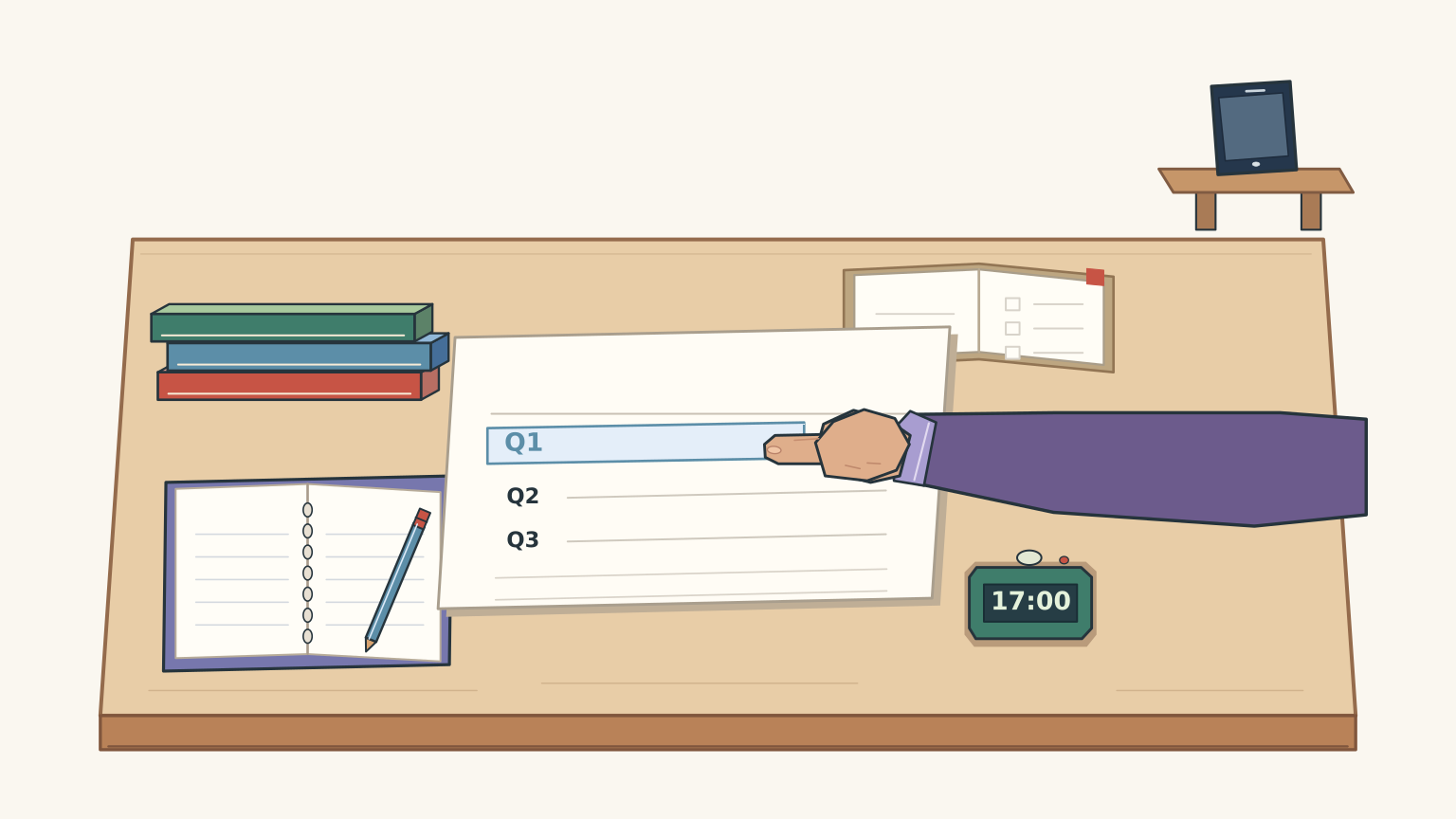
The best way to restart HSC study when you have no motivation is to complete one small, clearly defined task with a fixed stopping point. Give yourself 17 minutes. Choose one question, attempt it, check your work, and write down what to do next.
You don’t need to feel motivated before you begin. You need to make beginning easier.
Due to technical limitations, this figure may display incorrectly or contain inaccuracies. Please check key details against your course materials.
01Why trying to catch up can make starting harder
When you’ve fallen behind, studying can start to feel like one enormous task.
You might have:
- Three unfinished Maths exercises.
- A Physics topic you haven’t revised in weeks.
- Chemistry notes you still need to organise.
- An assessment coming up.
- A study timetable that hasn’t gone to plan.
The temptation is to tackle everything at once. You might spend an hour planning the perfect week, only to finish without answering a single question.
This happens because you’re trying to solve two different problems simultaneously:
- You need to decide what to study.
- You need to actually study it.
When you’re already struggling to get started, making lots of decisions adds another obstacle.
Instead, separate the decisions. Choose one task, decide exactly when it is finished, and leave the rest for later.
Stop waiting until you feel motivated
It’s easy to assume that motivation comes first and studying follows.
In practice, the order can work the other way around. Completing a small task can give you a clearer sense of progress, show you what you understand, and make the next task easier to choose.
This doesn’t mean you’ll suddenly enjoy studying after 10 minutes. It means you no longer need to wait for a particular feeling before doing something useful.
Think of your first study session like a warm-up lap before a race. Its job isn’t to prove how much work you can handle. It’s to get you moving again.
The analogy has a limit: a warm-up alone won’t prepare you for an exam. You’ll still need sustained practice. But it’s a sensible starting point when you’ve been away from your work.
02The 17-minute HSC study restart
Here’s a practical method you can use tonight, regardless of whether you’re studying Maths, Physics, or Chemistry.
The entire process takes 17 minutes.
| Stage | Time | What you do |
|---|---|---|
| Choose and prepare | 2 minutes | Select one small task and get the necessary materials. |
| Focused study | 12 minutes | Attempt the task without switching subjects or resources. |
| Check and close | 3 minutes | Check your work, record one correction, and decide what comes next. |
The important part is that you have a defined task and a defined stopping point.
Step 1: Choose one task, not one topic
Don’t write “study Physics” or “revise Chemistry” on your to-do list.
Those are subjects or broad goals, not tasks.
Choose something you can actually complete in approximately 10-12 minutes.
For example:
| Too vague | A useful starting task |
|---|---|
| Revise calculus | Attempt one integration question and check the working. |
| Study mechanics | Answer one question involving Newton’s second law. |
| Revise equilibrium | Explain the effect of a pressure change in one equilibrium system. |
| Catch up on Chemistry | Recall one reaction pathway and check the relevant equations. |
| Practise Maths Extension 2 | Complete one subpart of an assigned complex numbers question. |
Notice that every useful task has an action and a finish line.
You know what you’re supposed to do, and you know when you’re finished.
Step 2: Make starting as easy as possible
Spend no more than two minutes preparing.
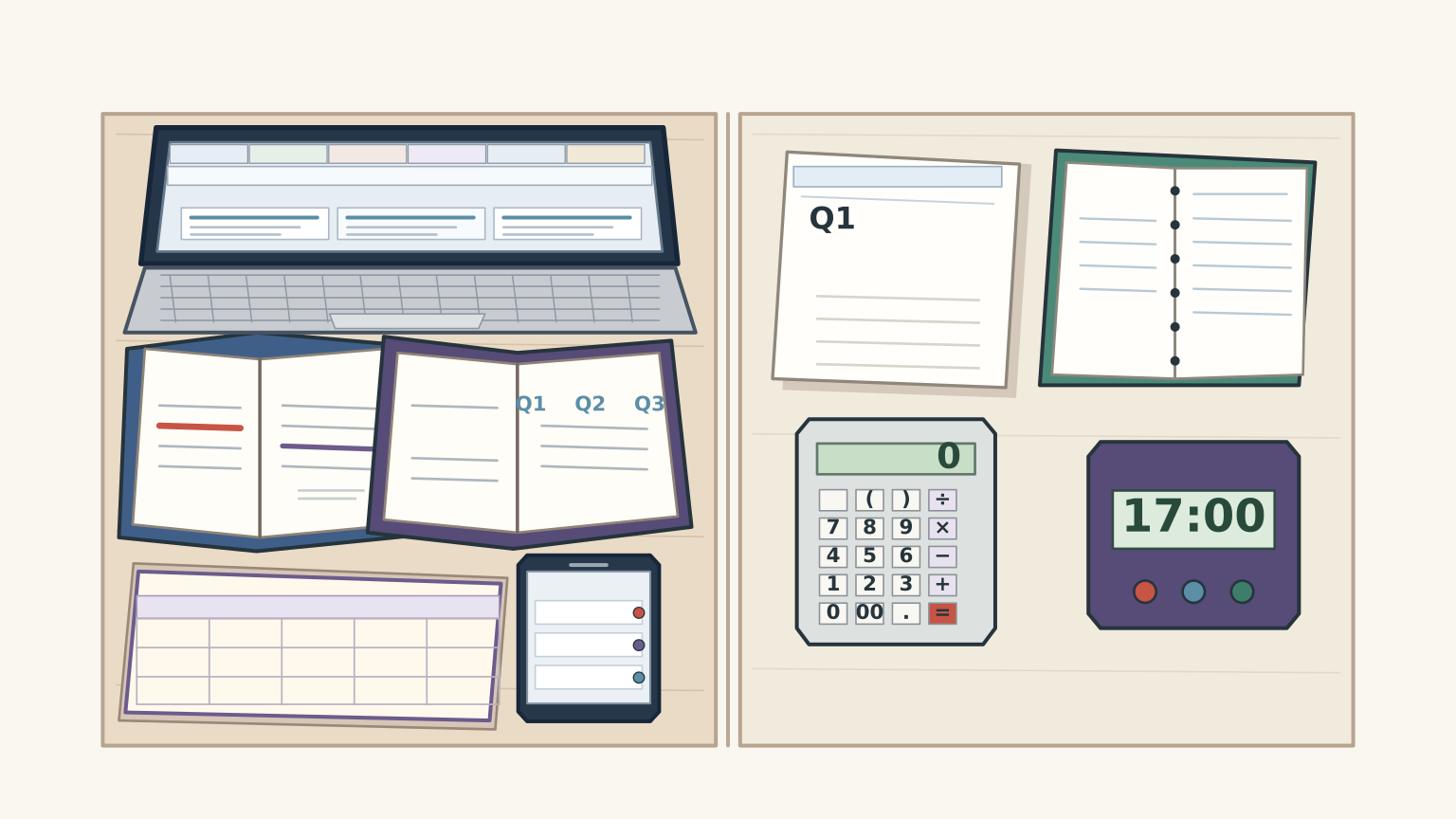
Get out:
- The relevant textbook or exercise.
- One practice question.
- Your notebook or working paper.
- A pen and calculator if needed.
Put your phone somewhere you can’t easily reach it. Close unrelated tabs and leave other subjects alone.
Don’t reorganise your entire desk. Don’t rewrite your timetable. Don’t start searching for a better set of notes.
You’re preparing to complete one task, not establishing a new study system.
Due to technical limitations, this figure may display incorrectly or contain inaccuracies. Please check key details against your course materials.
Step 3: Work for 12 minutes
Start your timer and attempt the question.
If it’s a Maths question, write down the relevant information and attempt the first step.
If it’s Physics, identify the physical situation, choose the relevant principle, and begin your working.
If it’s Chemistry, try to recall the relevant reaction, equation, or explanation before opening your notes.
Don’t worry about producing perfect work.
You’re trying to engage with the material, not demonstrate that you already know everything.
What if you get stuck?
Give the question a genuine attempt. If you’ve spent around three minutes without making progress, identify exactly what’s missing.
For example:
- Do I not remember the equation?
- Do I understand the equation but not know when to use it?
- Am I making an algebra mistake?
- Do I understand the reaction but not the equilibrium explanation?
Then consult one relevant section of your notes or one worked example. Return to the question and try again.
Avoid opening an entire chapter because you can’t remember one step. That’s how a 12-minute task becomes an hour of unfocused reading.
Step 4: Check your work and stop
Use the final three minutes to close the task properly.
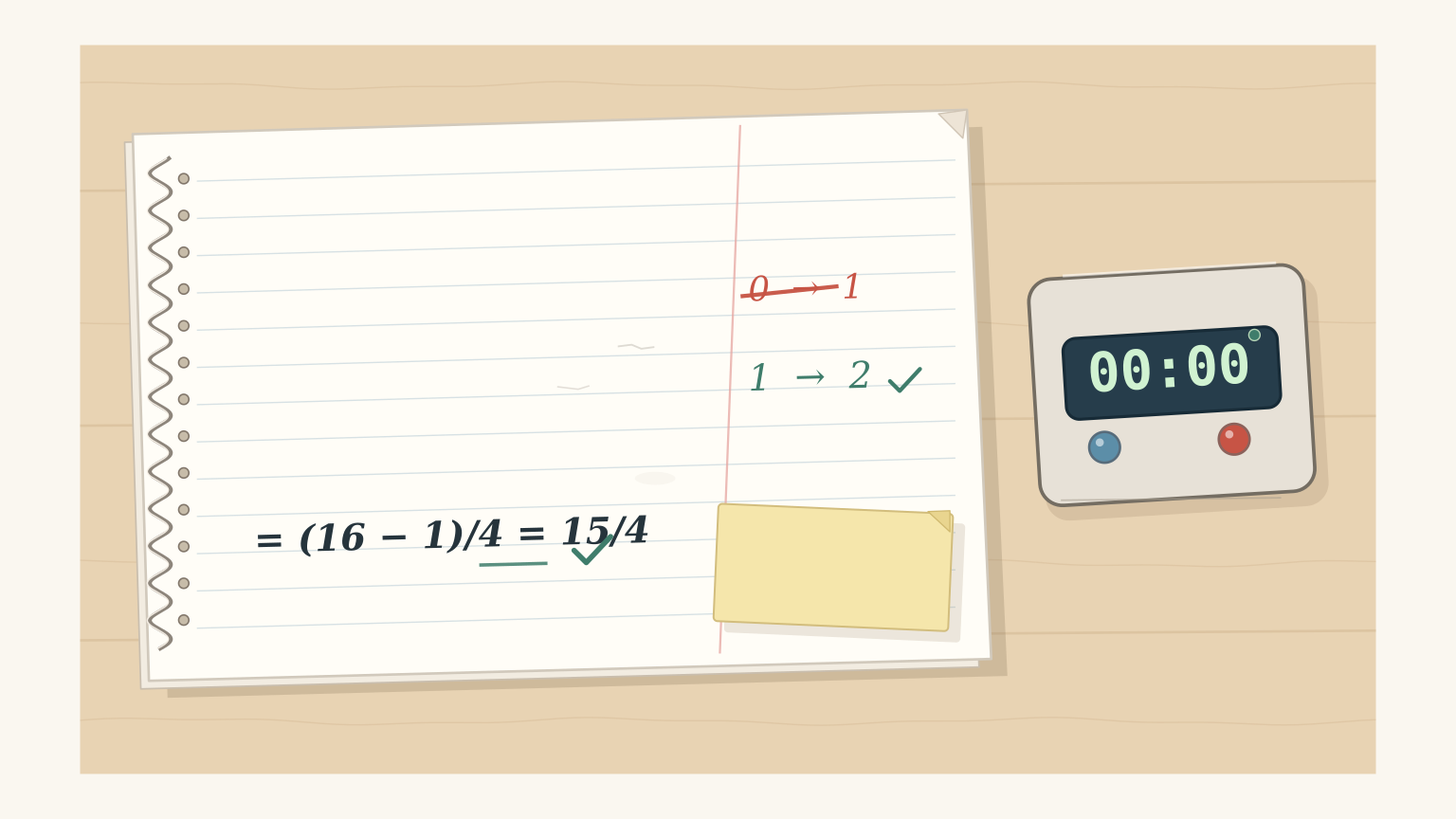
Do three things:
- Check your answer against the worked solution or marking guidance.
- Identify one mistake, missing step, or idea you need to remember.
- Write down the next specific task.
For example:
- Completed: Integration by substitution, Exercise 4, Question 2(a).
- Mistake: Forgot to change the limits after substitution.
- Next task: Attempt Question 2(b) without looking at the worked solution.
Then stop.
Even if you feel like you could keep going, don’t automatically turn your 17-minute restart into an undefined three-hour session.
You can always choose another study block after a short break. The point is to make that a deliberate decision rather than another overwhelming commitment.
Due to technical limitations, this figure may display incorrectly or contain inaccuracies. Please check key details against your course materials.
03Worked examples: What should your first study task look like?
The method becomes easier when you see how it applies to actual HSC subjects.
Worked example: Restarting Maths Extension 1
Question:
You haven’t studied Maths Extension 1 for four days. Your study planner says you need to revise integration, but you don’t feel motivated to work through an entire exercise.
You have 17 minutes available. Turn this into a useful study session.
Step 1
Choose one integration-by-substitution question from your current exercise.
Don’t attempt the entire exercise or start rewriting your integration notes.
Step 2
Your finish line is:
- Attempt one question without looking at the worked solution.
- Show the substitution and subsequent working.
- Obtain an answer or identify the exact step where you become stuck.
This is much more useful than simply reading through an example.
Step 3
Write your working down, even if you’re unsure about the next step.
If you become stuck, identify whether the difficulty is choosing the substitution, changing the expression correctly, or completing the integration.
Check one relevant example if necessary, then return to your question.
Step 4
Suppose you reach the correct integration method but make an algebra mistake when simplifying.
Record that specific error. Don’t label the entire topic as something you don’t understand.
Your next task might be to attempt another substitution question, paying particular attention to the algebra.
The result: You’ve produced an actual attempt, identified a specific weakness, and established what to do next.
You haven’t revised all of integration. You didn’t need to.
Worked example: Restarting Chemistry when your notes feel overwhelming
Question:
You need to revise gaseous equilibrium for Chemistry, but your notes contain several pages of explanations and equations.
You’ve been rereading the same section without making progress.
How can you turn this into a 17-minute study task that tests your understanding?
Step 1
For example:
“Explain why increasing pressure does not change the position of a gaseous equilibrium when both sides of the balanced equation contain the same total number of moles of gas.”
This is more useful than deciding to revise the entire equilibrium topic.
Step 2
Write down:
- What happens when pressure increases.
- How the equilibrium responds.
- Why the number of gaseous moles on each side matters.
Try to connect the chemical principle to the predicted outcome.
Step 3
Compare your response with your notes or a worked explanation.
Look for the actual reasoning, not just the final conclusion.
For example, writing that equilibrium does not shift is incomplete if you cannot explain why neither direction is favoured by the pressure change.
Step 4
Rewrite the explanation in your own words, making the causal reasoning clear.
If you need to revisit this particular concept, see When Does Changing Pressure Have No Effect on Gaseous Equilibrium?.
Your next task could be to explain what changes when the gaseous mole totals are different.
The result: Instead of spending 17 minutes looking at Chemistry notes, you’ve tested an actual HSC explanation and identified what you need to improve.
04What if you still don’t feel like studying?
Sometimes even a small task feels difficult to begin.
Rather than abandoning the session or forcing yourself through an enormous workload, change the task to match the obstacle.
| What’s happening | What to do instead |
|---|---|
| The topic feels too big. | Choose one question or one subpart. |
| You don’t know where to begin. | Read the question and write down what is given and what needs to be found. |
| You keep rereading notes. | Close the notes and write three things you remember. Then check them. |
| You can’t solve the question. | Identify the missing concept and consult one relevant worked example. |
| You’re distracted. | Put your phone away and work with one resource open. |
| You feel overwhelmed by missed work. | Ignore the backlog temporarily and choose the next useful task. |
| You finish earlier than expected. | Check your work and write down the next task. |
One particularly important rule: don’t try to repay missed study time by doubling your workload tonight.
If you planned to study for two hours yesterday and didn’t, that doesn’t mean you need to study for four hours today.
Your missed sessions are in the past. Your next useful study task is what matters now.
05How to choose your next task after restarting
Once you’ve completed your first block, you have something valuable: information about what you actually know.
Use that information to choose what happens next.
There are three sensible options.
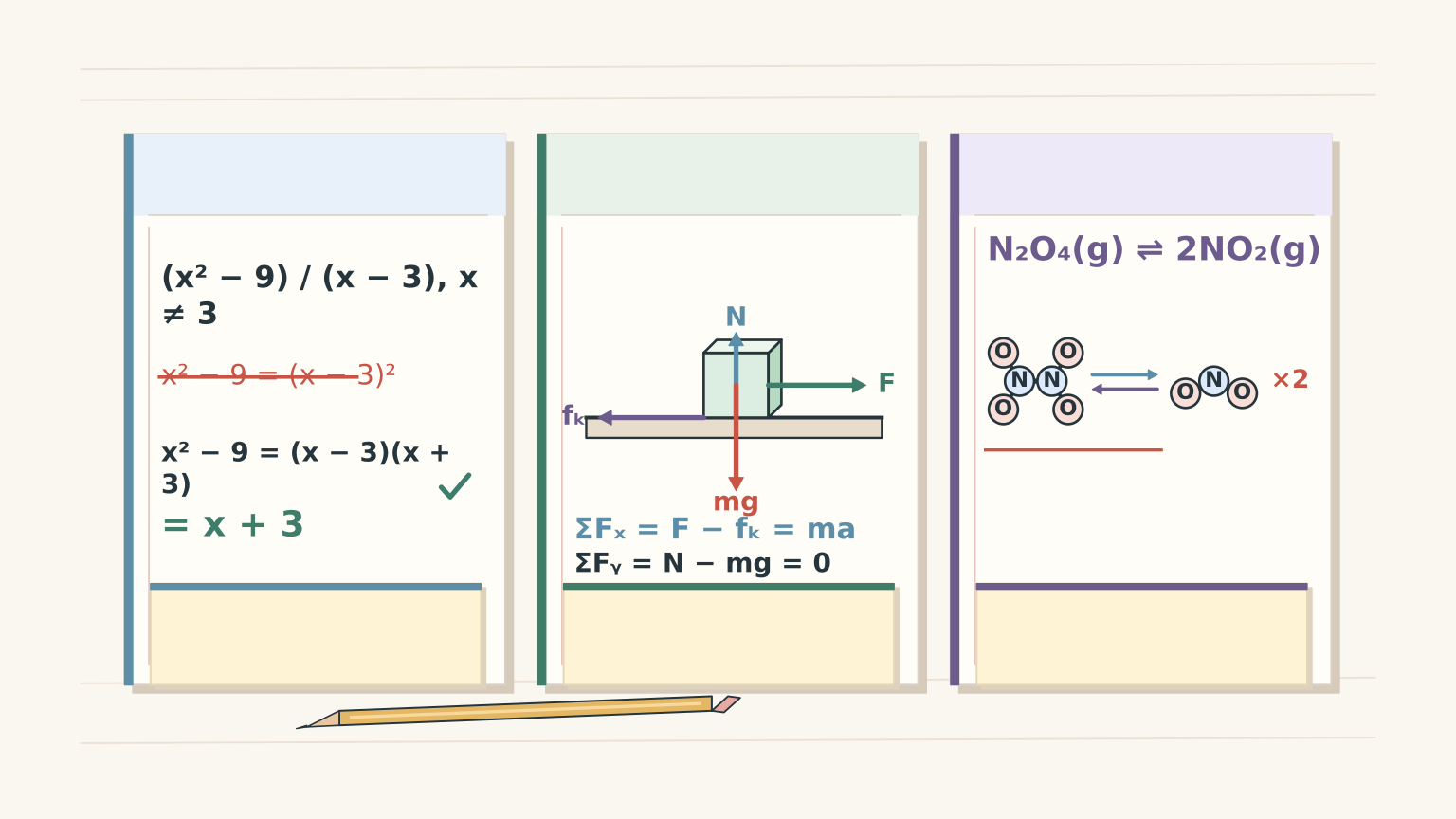
Option 1: You understood the question
Move to a slightly harder question or another question testing the same concept.
For Maths, this might mean attempting a question that combines two techniques.
For Physics, try applying the same principle in a different physical situation.
For Chemistry, practise explaining the same idea using a different reaction or set of conditions.
Option 2: You understood the method but made a mistake
Don’t immediately move to a completely different topic.
Try another question that tests the same skill.
For example, if you made an error rearranging an equation in Physics, attempt another question where you need to rearrange the same type of relationship.
If you made an algebra mistake in Maths, check whether you can avoid it in a similar question.
You want to establish whether the mistake was isolated or whether there’s a gap worth addressing.
Option 3: You couldn’t understand the question
Your next task should be smaller and more targeted.
Instead of attempting another full exam question, identify the missing prerequisite.
For example:
- In Maths, revisit the algebraic technique needed for the question.
- In Physics, identify the relevant physical principle and what each quantity represents.
- In Chemistry, revisit the specific reaction, equilibrium condition, or chemical relationship involved.
Then return to the original question.
This is also where feedback from a teacher or tutor can help. Sometimes the difficult part isn’t doing the question; it’s identifying which underlying idea you’re missing.
Due to technical limitations, this figure may display incorrectly or contain inaccuracies. Please check key details against your course materials.
06Questions and solutions
Use these situations to check whether you can apply the restart method independently.
Question 1
A Year 11 student has 15 minutes available before dinner.
Their study plan says “revise Physics”.
They haven’t opened their Physics notes for a week and aren’t sure where to begin.
Write one suitable study task with a clear starting point and stopping point.
Solution 1
A suitable task is to attempt one short Physics question involving Newton’s second law, check the working, and record one correction.
This is better than revising an entire topic because the student knows exactly what to do.
A practical 15-minute session could look like this:
- 2 minutes: Select the question and prepare the necessary materials.
- 10 minutes: Attempt the question.
- 3 minutes: Check the answer and record one mistake or missing idea.
The important distinction is that the task produces evidence of learning. Simply opening a textbook or reading a page doesn’t establish whether the student can apply the Physics.
Question 2
A student starts a 12-minute Chemistry revision block.
They choose one equilibrium question but become stuck after four minutes. They don’t remember how changing pressure affects the equilibrium position.
They decide to reread their entire equilibrium chapter.
Is this the best response? Explain what they should do instead.
Solution 2
No. They should identify the precise missing concept, consult only the relevant explanation, and return to the original question.
Rereading the entire chapter might expose them to useful information, but it doesn’t directly address the obstacle.
A better approach is:
- Write down what the question is asking.
- Identify the missing principle.
- Find the relevant explanation in their notes.
- Close the notes and attempt the question again.
If they still cannot complete it, they should record exactly where their reasoning breaks down.
For example, they might understand that pressure changes can affect equilibrium but not understand why the total number of gaseous moles determines whether a shift occurs.
That is a much more useful observation than writing “I don’t understand equilibrium”.
The stopping point remains important. The purpose of the block is to make progress on one defined problem, not to finish the entire chapter.
Question 3
A student finally completes their first 12-minute study block after avoiding Maths for several days.
However, they realise that they only obtained the correct answer because they copied the method from a worked solution.
They feel motivated and want to immediately attempt five more questions.
Should they continue, and can they count the original question as completed?
Solution 3
They should first check whether they can reproduce the method independently. They shouldn’t treat a copied answer as proof that they understand the question.
This is an important distinction.
A correct answer and an independently produced correct answer are not necessarily the same thing.
The student has made progress by engaging with the question and seeing how the method works. However, they haven’t yet demonstrated that they can apply it themselves.
A better next step is to:
- Cover the worked solution.
- Attempt the original question again without looking.
- Identify which steps they can reproduce independently.
- Record any remaining difficulty.
- Choose one similar question for their next block.
If they still have time and want to continue, that’s fine. They can take a short break and deliberately begin another block.
The mistake would be to assume that feeling motivated means they should abandon the stopping point and attempt as much work as possible.
The stopping point isn’t a restriction on how much you can study. It’s a way to keep each session purposeful.
07What to do tomorrow
The first restart session is only the beginning. You also want to make sure you don’t find yourself in exactly the same position tomorrow.
Before finishing today’s study, write down one specific task for your next session.
For example:
| Today | Next session |
|---|---|
| Attempted one integration question. | Complete another question using the same technique. |
| Identified a gap in Newton’s laws. | Revise the relevant principle and attempt a new application question. |
| Corrected an equilibrium explanation. | Answer a question involving a different equilibrium condition. |
This removes the need to decide what to study when you next sit down.
You can also gradually increase the length of your study sessions as you establish a more consistent routine. Start with manageable blocks, then add more when your workload and available time allow.
Don’t confuse a short restart session with a complete HSC revision strategy. You’ll still need regular practice, revision, and exposure to unfamiliar exam questions.
If you’re finding that you understand your notes but struggle to apply them when you open an exam question, Why Do I Forget What I Studied When I Open an HSC Question? explores that separate problem.
And if you’re unsure which topics or question types deserve your attention, working through them with a teacher or tutor can help you establish a more targeted study routine. tutorgum offers online HSC tutoring in Maths Extension 1 and 2, Physics, and Chemistry.
For tonight, though, keep it simple. Choose one question, give it 12 minutes, check your work, and stop. Your next study session can build on what you actually accomplished, rather than everything you wish you’d done.