
Should You Drop Maths Extension 2 After a Difficult First Term?
Struggling with Maths Extension 2 after your first term? Learn how to assess your progress, manage your workload, understand the HSC and ATAR implications, and decide whether continuing is the right choice.
A difficult first term in Maths Extension 2 does not automatically mean you should drop it. But it is a good reason to stop, look at how the course is affecting your other subjects, and decide whether continuing is still worthwhile.
The key distinction is between struggling because you’re adjusting to a more demanding style of mathematics and struggling because the course is no longer a sensible use of your time. The first can often be addressed with better foundations, practice, and feedback. The second may be a good reason to withdraw.
My advice: don’t make the decision based on one disappointing assessment. Make it based on your progress, workload, interest, and the consequences of changing your HSC pattern.
There is also an important difference between choosing Extension 2 before Year 12 and deciding whether to continue after you’ve experienced the actual course. You now have evidence that you didn’t have when you first enrolled. Use it.
Due to technical limitations, this figure may display incorrectly or contain inaccuracies. Please check key details against your course materials.
01Work out why you’re struggling
Before deciding to drop Extension 2, identify what is making the course difficult. Different problems require different solutions.
There are three common possibilities.
You’re struggling with the mathematical ideas
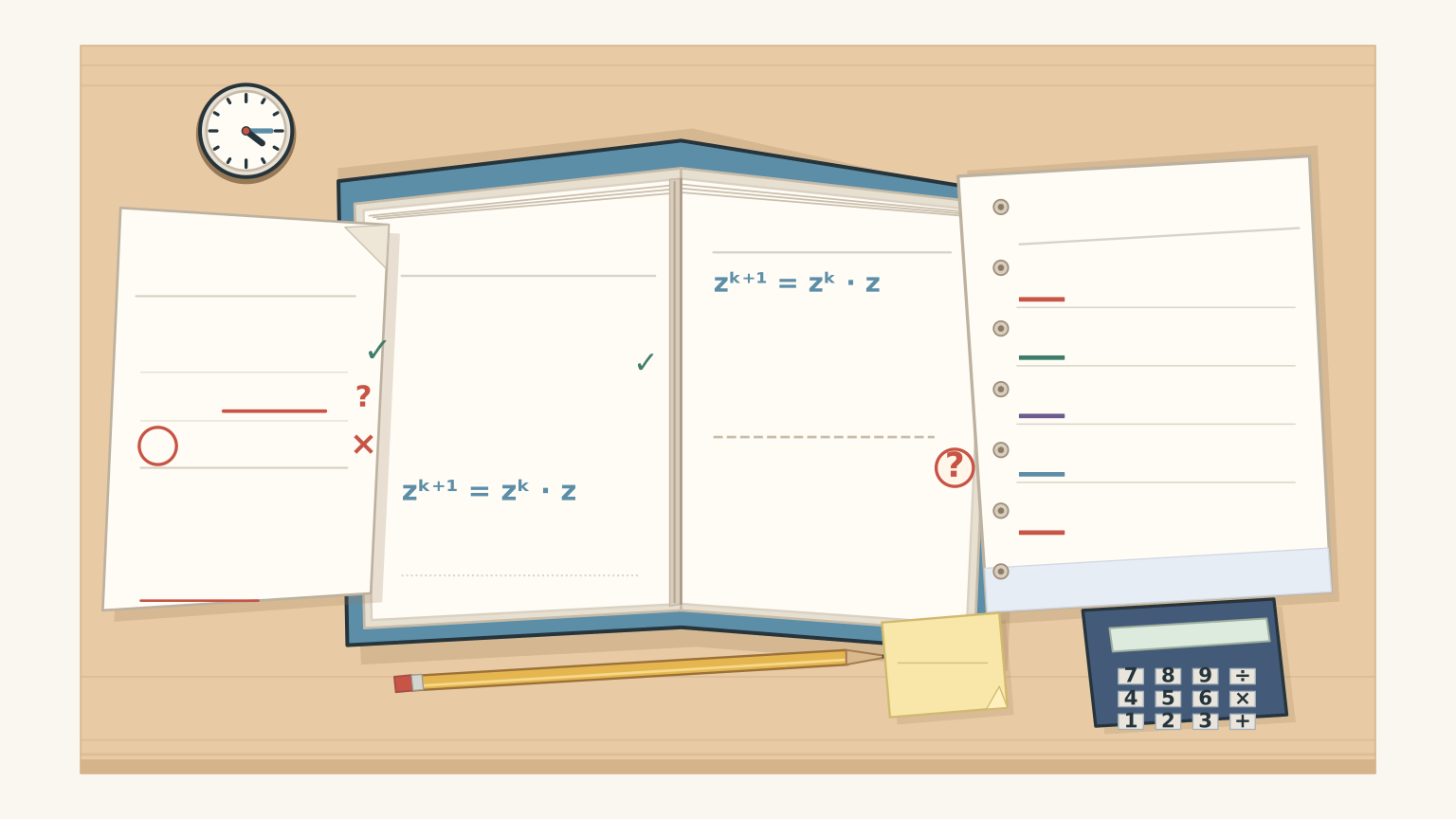
Extension 2 requires more than remembering a procedure and applying it to a familiar question. You need to understand why mathematical statements are true, recognise connections between topics, and apply ideas in unfamiliar situations.
You might understand a worked example in class but struggle when the next question changes one condition. You might also find that your solutions are correct numerically but lack the reasoning needed for a complete mathematical argument.
Neither problem automatically means you’re unsuited to the course.
Try this distinction:
- Can you follow your teacher’s explanation but struggle to reproduce the method independently? You may need more practice.
- Can you reproduce a method but cannot explain why it works? You may have a conceptual gap.
- Do you understand the ideas but regularly run out of time? Your mathematical fluency or exam technique may need attention.
- Are you missing several prerequisite skills from Year 11? You may need to repair those foundations before moving further.
A useful test is whether you can solve a similar question independently the day after learning the method. If you can, you’re making progress. If you still cannot identify where to begin, you need to investigate the underlying gap.
You’re struggling with the workload
Sometimes the problem isn’t the mathematics. It’s the number of hours required to keep up with everything else.
Extension 2 might be taking time away from:
- Mathematics Advanced and Extension 1.
- Physics and Chemistry, particularly when practical reports and assessments overlap.
- English, where regular reading and writing practice matter.
- Other subjects where you’re currently performing well but struggling to maintain consistency.
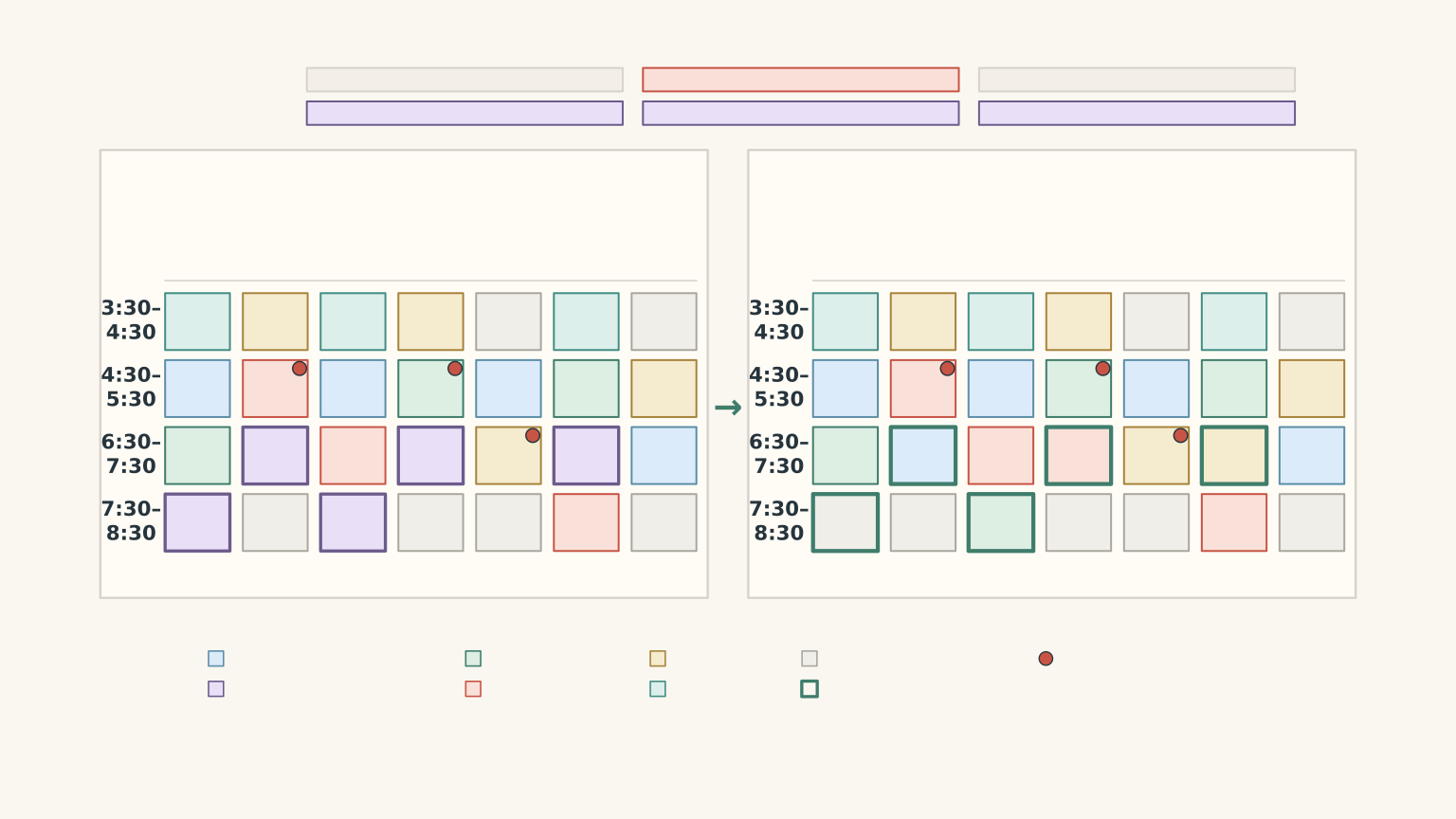
Keep a record of your actual study time for two weeks. Include homework, revision, catching up on missed content, and preparation for assessments.
Also record what you’re sacrificing to make those hours available.
There is a difference between a busy week caused by several assessments falling together and a workload that is consistently unsustainable. The first may pass. The second deserves serious attention.
Due to technical limitations, this figure may display incorrectly or contain inaccuracies. Please check key details against your course materials.
You’re no longer interested in the course
This is worth taking seriously.
Some students choose Extension 2 because they’re strong at mathematics, enjoy challenging problems, or have heard that it scales well. Those reasons might make sense when selecting subjects, but they don’t necessarily justify continuing after a term of actual experience.
Ask yourself:
- Do I enjoy solving difficult mathematical problems, even when they take a while?
- Am I interested in the ideas being introduced?
- Would I choose this course if I knew nothing about its scaling?
- Does the course support my interests or future study plans?
- Am I continuing because I genuinely want to, or because dropping it feels like admitting defeat?
You don’t need to love every topic. However, if you consistently dislike the work and cannot identify a meaningful reason to continue, that is relevant evidence.
02Understand what you’re actually giving up
Before making a decision, understand what Mathematics Extension 2 involves.
For students completing the 2027 HSC, the current course is the Mathematics Extension 2 11-12 Syllabus (2024). It begins implementation for Year 12 in Term 4 of 2026, with the first HSC examination under the new syllabus in 2027. The previous 2017 syllabus had its final HSC examination in 2026.
The new course covers five areas:
| Area of study | What you’ll encounter |
|---|---|
| Proof | The nature and structure of mathematical proof |
| Vectors | Further work with vectors |
| Complex numbers | Introduction to complex numbers |
| Calculus | Further integration |
| Mechanics | Applications of calculus to mechanics |
Extension 2 develops mathematical ideas beyond those covered in Mathematics Advanced and Extension 1.
This is an important distinction. You’re not simply doing more questions from the same topics. You’re exploring additional mathematical concepts and learning to connect them.
For example, you might need to construct a proof rather than simply demonstrate a familiar result. You might use complex numbers to represent mathematical relationships that cannot be handled as ordinary real-number calculations.
If you enjoy this kind of reasoning, Extension 2 offers something valuable that you won’t get from simply doing more Advanced Mathematics.
How Extension 2 connects to your other maths courses
Extension 2 is not a standalone course.
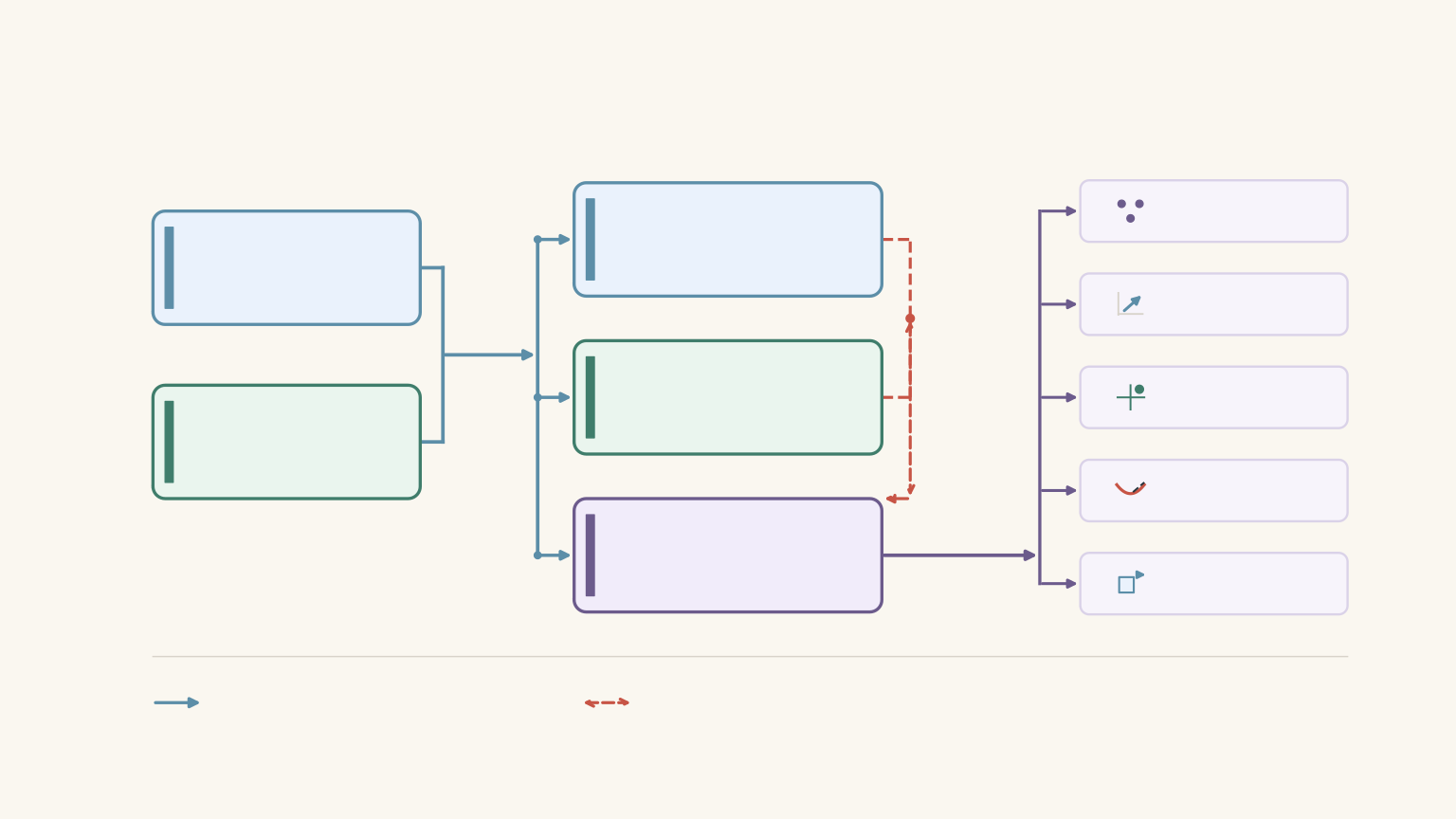
Under the current 2024 syllabus, the course structure is:
| Course | Year 11 | Year 12 |
|---|---|---|
| Mathematics Advanced | 2 units | 2 units |
| Mathematics Extension 1 | 1 unit | 1 unit |
| Mathematics Extension 2 | – | 1 unit |
To study Extension 2, you must have completed the Year 11 Mathematics Advanced and Mathematics Extension 1 courses.
In Year 12, Mathematics Advanced and Mathematics Extension 1 are corequisites. This means you study them concurrently with Extension 2.
The Extension 2 course itself is 60 hours and worth 1 unit in the current syllabus.
Due to technical limitations, this figure may display incorrectly or contain inaccuracies. Please check key details against your course materials.
This matters because dropping Extension 2 does not necessarily mean dropping Extension 1 or changing your entire mathematics pathway.
You may be able to continue with Mathematics Advanced and Extension 1 while removing Extension 2. However, there are specific NESA requirements for making that change, which we’ll cover shortly.
03Give yourself a fair opportunity to improve
If you’re struggling but still interested in the course, consider running a short improvement trial before withdrawing.
Two or three weeks is a reasonable starting point, provided you check your school’s withdrawal deadline first.
The purpose isn’t to force yourself to stay. It’s to find out whether targeted changes actually improve your performance.
Step 1: Identify your two biggest weaknesses
Don’t write down something vague like “I’m bad at proofs”.
Be specific.
For example:
- I understand mathematical induction but struggle to construct the inductive step.
- I can manipulate complex numbers but don’t understand how to interpret their geometric representation.
- I understand integration techniques but struggle to recognise which method a question requires.
- I can follow vector solutions but cannot construct my own argument.
Specific problems are much easier to address.
Step 2: Ask your teacher for targeted feedback
Bring two or three questions that you couldn’t solve independently.
Ask your teacher to identify whether the issue is:
- Missing prerequisite knowledge.
- Difficulty understanding a new concept.
- Weak mathematical communication.
- Poor problem-solving strategy.
- Insufficient practice.
Ask what you should be able to do independently after another two weeks of practice.
You want a measurable improvement target, not simply the instruction to study harder.
Step 3: Change how you practise
If you’ve been reading worked solutions and then attempting similar questions, change the order.
Try this:
- Attempt a question independently before looking at the solution.
- Identify the exact step where you become stuck.
- Review the relevant concept and understand why the method works.
- Close the solution and attempt the original question again.
- Attempt a new question that uses the same concept in a different way.
This is particularly important in Extension 2 because recognising a familiar question is not the same as understanding the mathematics.
For proof-related difficulties, these two tutorgum resources may help:
- When to Use ⇒, ⇔ and = in HSC Mathematics Extension 2
- Examples and Counterexamples in HSC Mathematics Extension 2
Step 4: Check whether your workload is improving
At the end of your trial, look at your actual week.
Ask yourself:
- Am I spending less time getting stuck on routine questions?
- Can I complete more work independently?
- Are my other subjects receiving enough attention?
- Am I keeping up with assessment preparation?
- Is my sleep and general wellbeing being affected by the workload?
If your understanding is improving and your workload is becoming manageable, continuing is a reasonable choice.
If you’ve made a genuine effort, received support, and still find that Extension 2 is consistently damaging your performance elsewhere, dropping it deserves serious consideration.
04Check the HSC and ATAR consequences
This is the part you should not guess.
Dropping a course changes your HSC pattern of study. Whether that matters depends on how many units you currently have and which other courses you’re completing.
NESA’s HSC requirements
For the HSC credential, students must satisfactorily complete:
- At least 10 units of HSC courses.
- At least 2 units of a Board Developed English course.
- At least 4 additional units of Board Developed courses.
- At least 3 courses worth 2 or more units.
- At least 4 different subjects.
There is also a special rule for Mathematics Extension 2.
When you’re entered in Extension 2, NESA counts both Mathematics Extension 1 and Mathematics Extension 2 as 2-unit courses for the requirement to complete at least three courses worth 2 or more units.
This is a special pattern-of-study rule. It does not change the nominal 1-unit course value listed for each Year 12 extension course in the 2024 syllabus.
If you withdraw from Extension 2, your school needs to recalculate your remaining units and check that your pattern still satisfies the requirements.
What happens to your ATAR?
Dropping Extension 2 does not automatically make your ATAR higher or lower.
The Universities Admissions Centre (UAC) calculates the NSW ATAR using:
- Your best 2 scaled units of English.
- Your best 8 scaled units from your remaining courses.
To be eligible for an ATAR, you must also satisfactorily complete at least 10 units of Board Developed courses, including 2 units of English, three Board Developed courses worth 2 or more units, and four subject areas.
This means that having more than 10 units can provide flexibility. Not every course necessarily contributes to your final ATAR calculation.
There is also special weighting for Mathematics Extension 1 and Extension 2 when calculating the ATAR. Extension 1 is weighted differently depending on whether you study Extension 2.
The important point is that Extension 2 is not an automatic ATAR bonus.
A course’s scaling does not guarantee that taking it will improve your result. Your performance and the scaled marks included in your best 10 units matter.
If you’re considering dropping Extension 2 for ATAR reasons, ask your careers adviser to check your exact course combination against the current UAC rules.
The specific NESA withdrawal rule
There is another important detail.
NESA permits students to withdraw from an HSC course before the HSC written examination. However, withdrawing from Mathematics Extension 2 while continuing Mathematics Extension 1 has additional requirements.
This change is only permitted:
- If the school can provide a valid assessment mark for Mathematics Advanced, where that course has not already been completed.
- Up to the due date for submission of HSC school assessment data to NESA.
In other words, don’t assume that you can withdraw from Extension 2 at any point and automatically continue with Extension 1.
Your school needs to confirm that the change is permitted and that your assessment arrangements can be maintained.
The relevant deadline is the NESA assessment-data submission deadline, not a universal date that applies to every student’s personal timetable. Your school may also have an earlier internal deadline.
Speak to your Mathematics teacher and Year Adviser before stopping attendance or assuming your enrolment has changed.
05Worked scenario: should you drop Extension 2?
Consider a student completing the following HSC courses:
| Course | Current units |
|---|---|
| English Advanced | 2 |
| Mathematics Advanced | 2 |
| Mathematics Extension 1 | 1 |
| Mathematics Extension 2 | 1 |
| Physics | 2 |
| Chemistry | 2 |
| Economics | 2 |
| Total | 12 |
The student is finding Extension 2 difficult. They enjoy Mathematics Advanced and Extension 1, but the additional workload is affecting their Physics and Chemistry preparation.
They are considering withdrawing from Extension 2 while keeping Extension 1.
What happens to their pattern?
If the withdrawal is approved, their remaining courses are:
| Course | Remaining units |
|---|---|
| English Advanced | 2 |
| Mathematics Advanced | 2 |
| Mathematics Extension 1 | 1 |
| Physics | 2 |
| Chemistry | 2 |
| Economics | 2 |
| Total | 11 |
The student now has 11 HSC units.
Assuming all courses are Board Developed and satisfactorily completed, the student still meets the numerical HSC requirements:
- At least 10 HSC units: yes, 11 units remain.
- At least 2 units of English: yes.
- At least 4 additional Board Developed units: yes.
- At least 3 courses worth 2 or more units: yes.
- At least 4 different subjects: yes.
The student also retains enough Board Developed units to meet the basic ATAR unit requirement.
In this situation, withdrawing from Extension 2 could be a sensible decision if the freed-up time improves their performance in other courses.
Now consider a different student with exactly 10 units:
| Course | Current units |
|---|---|
| English Advanced | 2 |
| Mathematics Advanced | 2 |
| Mathematics Extension 1 | 1 |
| Mathematics Extension 2 | 1 |
| Physics | 2 |
| Chemistry | 2 |
| Total | 10 |
If this student withdraws from Extension 2, they have only 9 units remaining.
They would no longer meet the 10-unit HSC minimum or the 10-unit ATAR eligibility requirement.
They would need their school to arrange an eligible replacement or another approved study arrangement.
The lesson is simple: the same decision can have very different consequences depending on your existing course combination.
Don’t assume that having Extension 2 means you automatically have enough units to drop it.
06A practical decision checklist
Before making your final decision, work through the following checklist.
Reasons to consider staying
- [ ] I still enjoy challenging mathematical problems.
- [ ] My difficulties are connected to specific topics or skills.
- [ ] I can understand solutions after receiving feedback.
- [ ] I’m beginning to solve unfamiliar questions independently.
- [ ] My workload is manageable with a better study routine.
- [ ] Extension 2 is relevant to my interests or future study plans.
Reasons to seriously consider dropping
- [ ] I’ve struggled consistently, not just in one assessment.
- [ ] I’ve made a genuine effort to improve but am seeing little progress.
- [ ] Extension 2 is regularly taking time away from other HSC subjects.
- [ ] My performance in other subjects is suffering.
- [ ] My wellbeing is being affected by the workload.
- [ ] I have little interest in the actual content and no strong reason to continue.
These aren’t marks out of six. You don’t need a certain number of ticks to justify either decision.
Look at the overall pattern.
If you’re enjoying the subject, improving with support, and managing your other courses, staying is probably worth considering.
If you’re consistently struggling, sacrificing other subjects, and continuing mainly because of the course’s reputation, dropping may be the more sensible option.
07What to discuss with your teacher
Before making the change, arrange a conversation with your Mathematics teacher and Year Adviser.
Bring your recent assessments, a few questions you’ve struggled with, and your two-week study record.
Ask these specific questions:
- Is my current performance mainly caused by gaps in my Year 11 knowledge, or am I struggling with the new Extension 2 concepts?
- Which specific skills should I improve before the next assessment?
- Based on my current progress, is catching up realistic without sacrificing my other subjects?
- If I withdraw from Extension 2, can I continue Extension 1, and what assessment requirements must be met?
- How many HSC units will I have remaining, and will my pattern still satisfy NESA and UAC requirements?
- What is the school’s internal withdrawal deadline?
Also check the prerequisites and assumed knowledge for any university courses you’re considering. Extension 2 can be useful preparation for mathematically demanding tertiary study, but it is not a universal prerequisite for every mathematics, science, or engineering degree.
Can tutoring help?
If your main difficulty is understanding particular concepts, additional teaching support may help you decide whether the course is still manageable.
For example, an Extension 2 tutor can help you identify gaps in proof-writing, complex numbers, vectors, or calculus, then work through problems until you can reproduce the reasoning independently.
tutorgum offers online Mathematics Extension 1 and Extension 2 tutoring. If you seek additional support, bring your actual classwork and questions rather than simply asking someone to work through an entire topic for you.
The aim is to become more independent, not more dependent on explanations.
08The final decision
You should not drop Mathematics Extension 2 simply because the first term was difficult. Equally, you shouldn’t keep it just because you’ve already enrolled or because you believe it will automatically improve your ATAR.
Make the decision using three things:
- Your progress: Are you developing the skills needed to solve unfamiliar Extension 2 problems?
- Your workload: Can you continue without consistently sacrificing other subjects or your wellbeing?
- Your reasons: Does the course still serve your interests and future plans?
If all three are reasonably positive, give yourself the opportunity to continue.
If two or more are seriously concerning, investigate withdrawal with your school rather than allowing the workload to become harder to manage.
And if you decide to stay, make your next step specific. Identify whether proof, vectors, complex numbers, integration, or mechanics is holding you back, and build a targeted plan to improve that area.
If you decide to leave, allocate the reclaimed time deliberately. Use it to strengthen your remaining mathematics courses, improve weaker subjects, or restore a more sustainable study routine.
The best HSC subject combination isn’t necessarily the one with the most demanding courses. It’s the one that allows you to perform well across the subjects that matter to your education and future plans.