
Organic Acids and Bases: HSC Chemistry Structures and Reactions
Understand how organic acids and bases behave by connecting their functional groups, structures, electron arrangements, and reactions. This guide explains the reasoning behind acidity and basicity in HSC Chemistry.
A bottle of vinegar and a bottle of ammonia cleaner can both react with other substances, but they behave in opposite ways. Vinegar contains ethanoic acid, which can donate a hydrogen ion. Ammonia can accept a hydrogen ion. The strange part is that both are made from ordinary non-metal elements, and both can be found in organic chemistry contexts.
So how can one molecule act like an acid while another acts like a base?
Before naming the rules, make a prediction. If you place an organic acid and an organic base together, what should happen? Do they both “fight” by releasing and absorbing hydrogen ions forever, or is there a point where the reaction settles into a new balance?
The answer comes from looking at where electrons are in the molecules. Organic acids and bases are not defined by having a particular element. They are defined by how their structures control the movement of hydrogen ions and electron pairs.
01The big idea: acids donate, bases accept
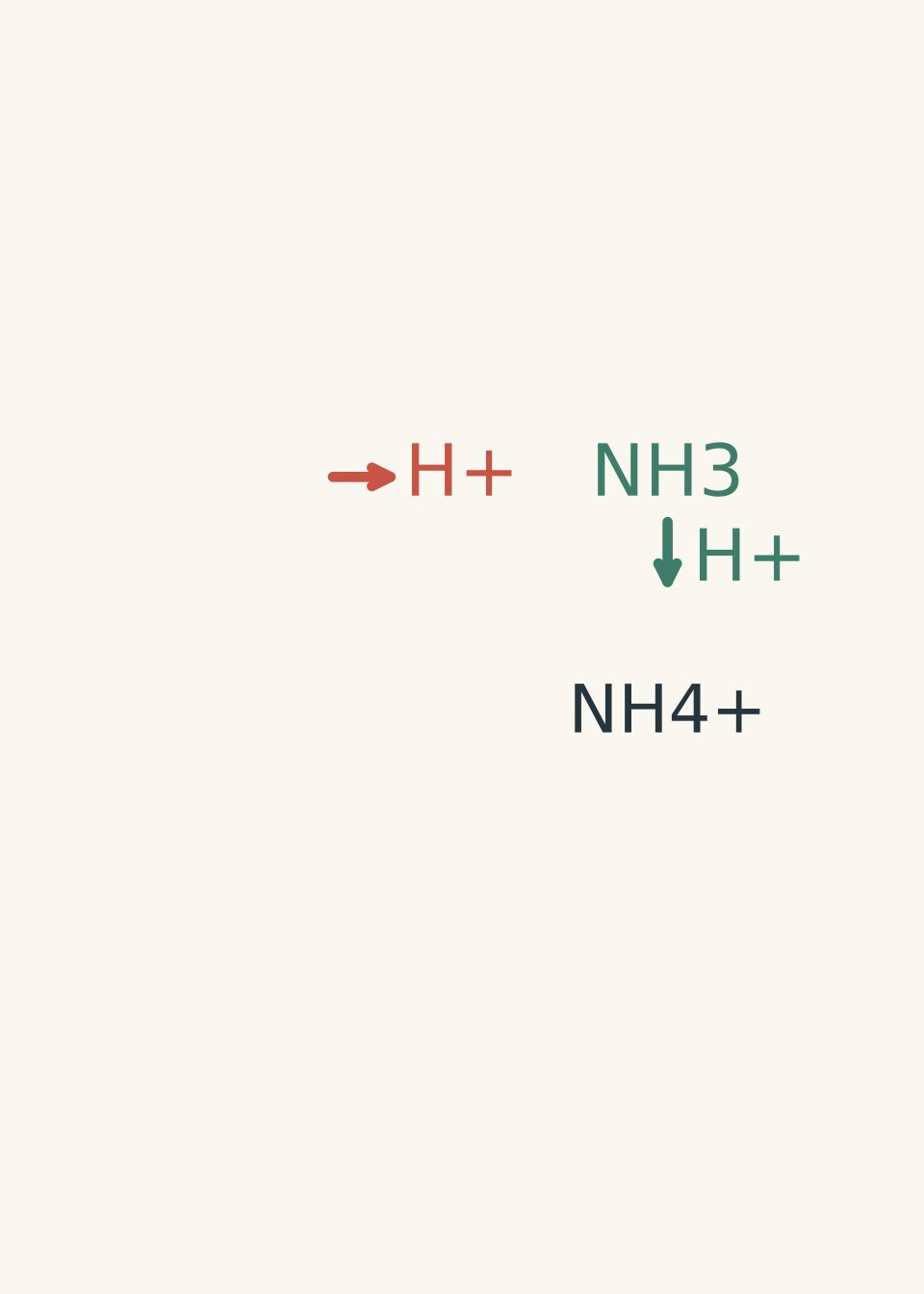
In HSC Chemistry, an acid-base reaction is often introduced using hydrogen ions:
- An acid donates \( \mathrm{H}^{+} \)
- A base accepts \( \mathrm{H}^{+} \)
For organic molecules, this idea still works, but the structure of the molecule determines whether the hydrogen ion can leave easily or whether another atom has the electrons needed to accept it.
A useful mental model is to think about a hydrogen ion as someone looking for a place to sit.
- An organic acid has a hydrogen that is sitting on a bond where it can leave without causing too much instability.
- An organic base has a spare electron pair that can “hold onto” that hydrogen.
The analogy breaks down if taken too literally. Molecules are not choosing partners or forming friendships. The movement of \( \mathrm{H}^{+} \) is controlled by electron arrangement and energy changes.
02Organic acids: molecules that can release hydrogen ions
The most common organic acids studied in senior chemistry contain a carboxyl group:
\[ \ce{-COOH} \]
This functional group contains:
- a carbon atom,
- a carbonyl group \( \ce{C=O} \),
- a hydroxyl group \( \ce{-OH} \).
The acidic hydrogen is the hydrogen attached to the oxygen in the hydroxyl group.
For example, ethanoic acid:
\[ \ce{CH3COOH} \]
can donate a hydrogen ion:
\[ \ce{CH3COOH <=> CH3COO^- + H+} \]
The remaining molecule is called the ethanoate ion.
Why does the carboxyl group make a molecule acidic?
A student might predict that any molecule containing hydrogen should be acidic. That feels reasonable because acids release hydrogen ions.
But most hydrogen atoms in organic molecules do not leave easily.
For example, methane:
\[ \ce{CH4} \]
contains hydrogen atoms, but methane is not an acid in normal HSC Chemistry conditions. Removing a hydrogen would create a very unstable carbon-based ion.
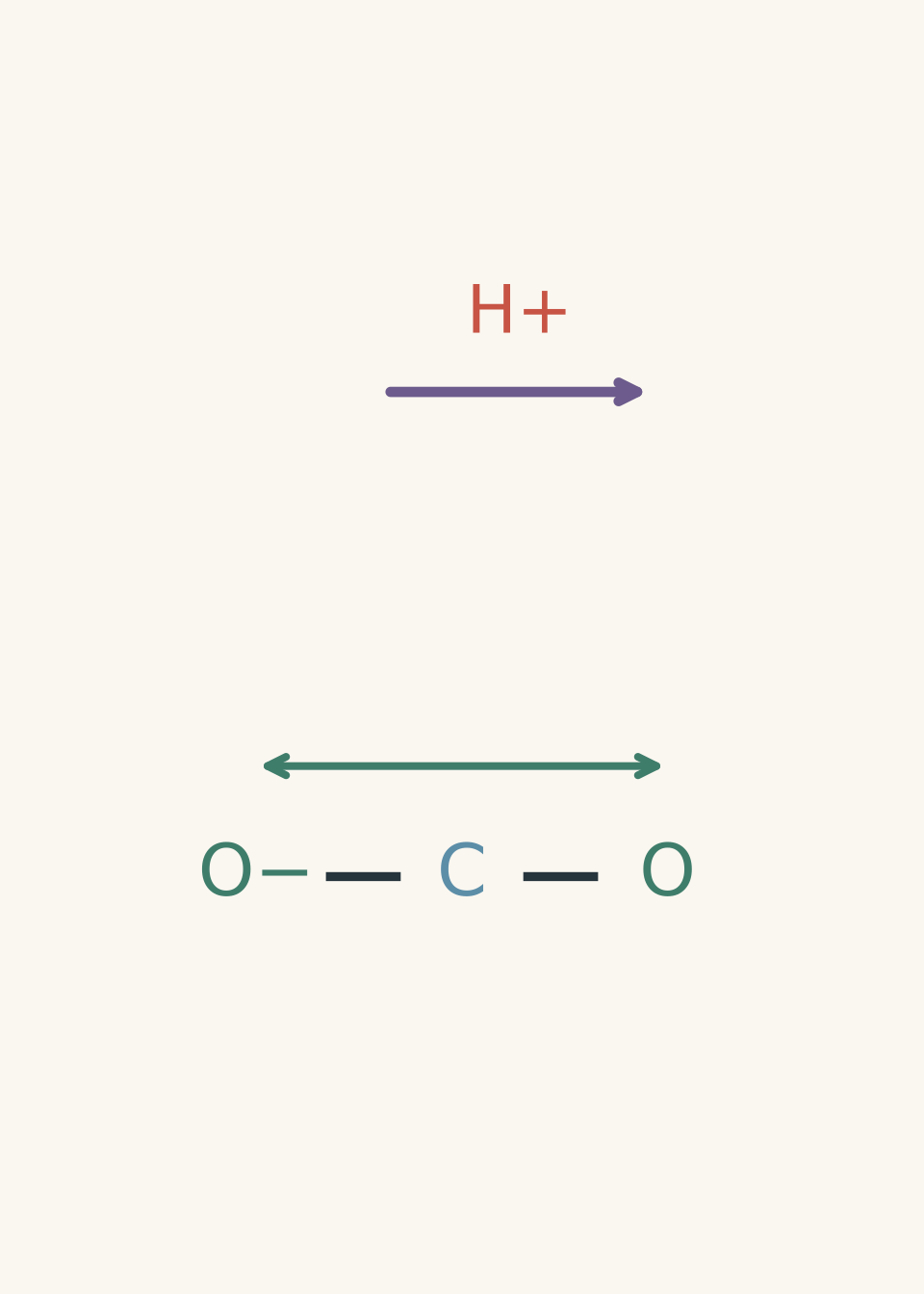
The carboxyl group changes the situation. When the hydrogen leaves, the negative charge on the carboxylate ion can spread across two oxygen atoms.
This spreading of charge is called resonance stabilisation.
A more stable product means the molecule is more willing to donate the hydrogen ion.
03Organic bases: molecules that can accept hydrogen ions
Organic bases usually contain nitrogen atoms with a lone pair of electrons.
A lone pair is a pair of electrons that is not involved in a bond but can be used to form a new bond.
A common example is methylamine:
\[ \ce{CH3NH2} \]
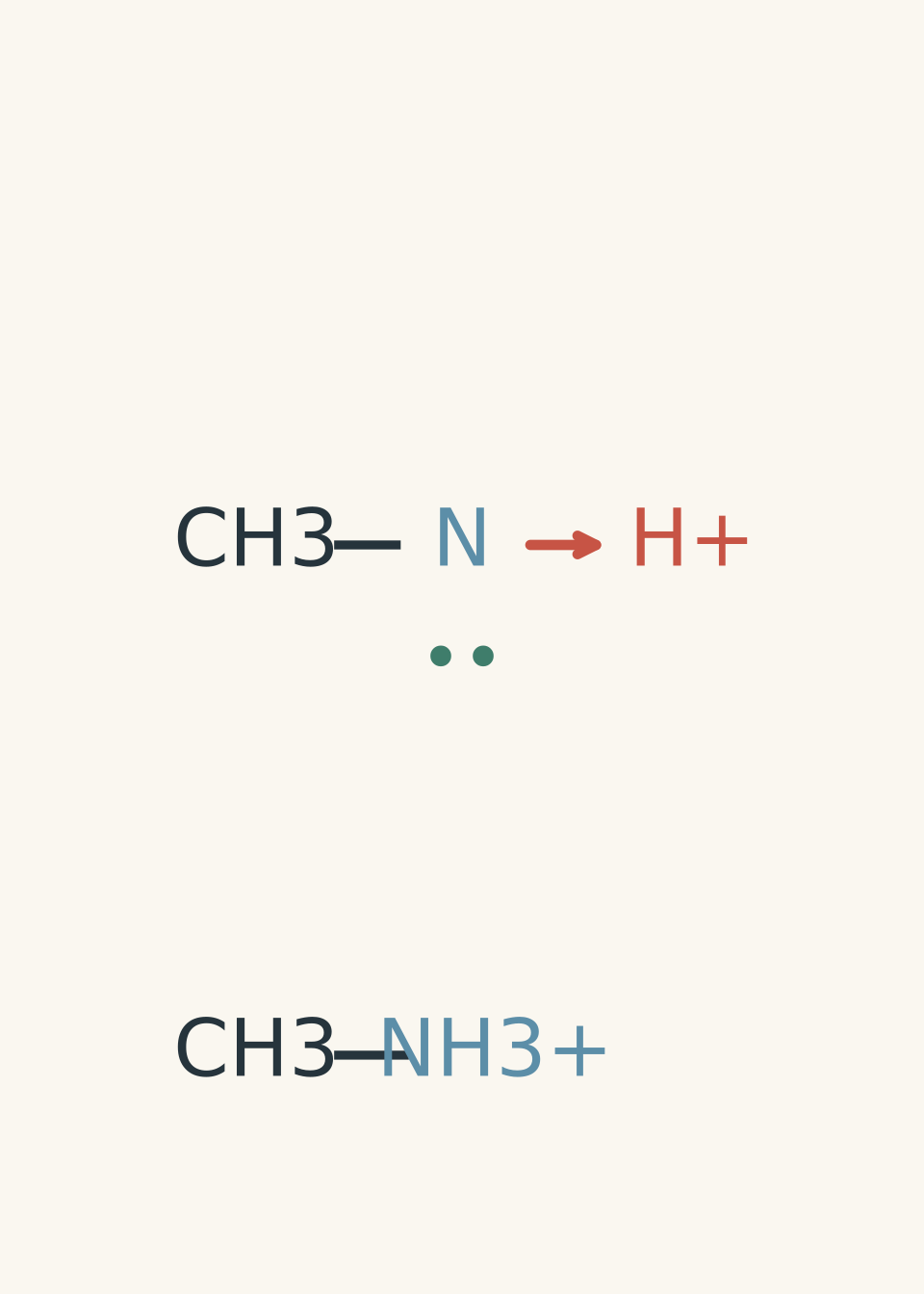
The nitrogen atom has a lone pair that can accept \( \mathrm{H}^{+} \):
\[ \ce{CH3NH2 + H+ -> CH3NH3+} \]
The product is a positively charged ion called a methylammonium ion.
The important feature is not simply “nitrogen equals base”. The nitrogen must have available electrons.
For example, in an amide:
\[ \ce{-CONH2} \]
the nitrogen lone pair is involved with the carbonyl group. It is less available to accept \( \mathrm{H}^{+} \), so amides are much weaker bases than amines.
04Comparing organic acids and organic bases
| Feature | Organic acids | Organic bases |
|---|---|---|
| Typical functional group | Carboxyl group \( \ce{-COOH} \) | Amine group \( \ce{-NH2} \) |
| Main action | Donate \( \mathrm{H}^{+} \) | Accept \( \mathrm{H}^{+} \) |
| Important structure feature | Stable conjugate base after losing \( \mathrm{H}^{+} \) | Available lone pair of electrons |
| Example | Ethanoic acid \( \ce{CH3COOH} \) | Methylamine \( \ce{CH3NH2} \) |
| Reaction product | Carboxylate ion | Protonated amine ion |
The word “conjugate” simply means the related molecule after an acid-base change.
- Acid loses \( \mathrm{H}^{+} \) → conjugate base forms.
- Base gains \( \mathrm{H}^{+} \) → conjugate acid forms.
05How structure changes acidity and basicity
The functional group gives the starting point, but the rest of the molecule can change the strength.
A useful question is:
Does the surrounding structure make losing \( \mathrm{H}^{+} \) easier, or make accepting \( \mathrm{H}^{+} \) easier?
Electron-withdrawing groups increase acidity
Groups that pull electron density away can stabilise a negative charge.
For example, compare ethanoic acid and fluoroethanoic acid:
\[ \ce{CH3COOH} \]
and
\[ \ce{FCH2COOH} \]
The fluorine atom pulls electron density away from the carboxyl group. This helps stabilise the carboxylate ion after hydrogen leaves, making fluoroethanoic acid more acidic.

Electron-donating groups can increase basicity
Groups that push electron density towards nitrogen can make a lone pair more available.
For example, alkyl groups such as \( \ce{-CH3} \) donate electron density slightly, which can strengthen amine basicity compared with ammonia.
However, structure is always the deciding factor. More carbon atoms do not automatically mean a stronger base.
06Worked example: identifying an organic acid
Worked example: Is propanoic acid acting as an acid?
Question: Propanoic acid has the formula \( \ce{CH3CH2COOH} \). Explain why it can act as an acid in water.
Step 1
Propanoic acid contains the carboxyl group:
\[ \ce{-COOH} \]
The hydrogen attached to the oxygen is the hydrogen that can be donated.
Step 2
\[ \ce{CH3CH2COOH <=> CH3CH2COO^- + H+} \]
The molecule loses \( \mathrm{H}^{+} \) and forms a propanoate ion.
Step 3
The propanoate ion is stabilised because the negative charge can be shared between the two oxygen atoms in the carboxylate group.
Conclusion: Propanoic acid acts as an acid because its carboxyl group can release \( \mathrm{H}^{+} \), leaving behind a stable conjugate base.
07Worked example: comparing an organic acid and base
Worked example: Predicting the reaction between ethanoic acid and methylamine
Question: Predict the products when ethanoic acid reacts with methylamine.
Step 1
Ethanoic acid:
\[ \ce{CH3COOH} \]
can donate \( \mathrm{H}^{+} \).
Methylamine:
\[ \ce{CH3NH2} \]
can accept \( \mathrm{H}^{+} \) using its nitrogen lone pair.
Step 2
The hydrogen from the carboxyl group moves to the nitrogen atom.
Step 3
\[ \ce{CH3COOH + CH3NH2 -> CH3COO^- + CH3NH3^+} \]
The products are ethanoate and methylammonium ions.
Step 4
The reaction works because the acid forms a stable carboxylate ion and the base forms a stable positively charged ammonium ion.
Conclusion: Ethanoic acid and methylamine undergo an acid-base reaction because one molecule donates \( \mathrm{H}^{+} \) and the other accepts it.
08The common HSC trap: confusing oxygen and nitrogen atoms
A common mistake is to memorise:
- oxygen-containing molecules are acids,
- nitrogen-containing molecules are bases.
This shortcut fails.
Consider these examples:
- Alcohols contain \( \ce{-OH} \), but they are much weaker acids than carboxylic acids.
- Amides contain nitrogen, but their nitrogen is a poor base because its lone pair is tied up with the carbonyl group.
The better rule is:
Look at the electron environment, not just the elements present.
09Questions and solutions
Question 1
Ethanoic acid reacts with sodium hydroxide. Write the balanced chemical equation and identify the acid-base behaviour of each reactant.
Solution 1
The reaction is:
\[ \ce{CH3COOH + NaOH -> CH3COONa + H2O} \]
Ethanoic acid acts as the acid because it donates \( \mathrm{H}^{+} \). Sodium hydroxide acts as the base because the hydroxide ion accepts \( \mathrm{H}^{+} \) to form water.
The sodium ion remains as a spectator ion, so the important acid-base change is:
\[ \ce{CH3COOH + OH^- -> CH3COO^- + H2O} \]
The key idea is that the carboxyl group allows ethanoic acid to lose its hydrogen and form a stabilised carboxylate ion.
Question 2
Two molecules are shown below:
- Molecule A: \( \ce{CH3COOH} \)
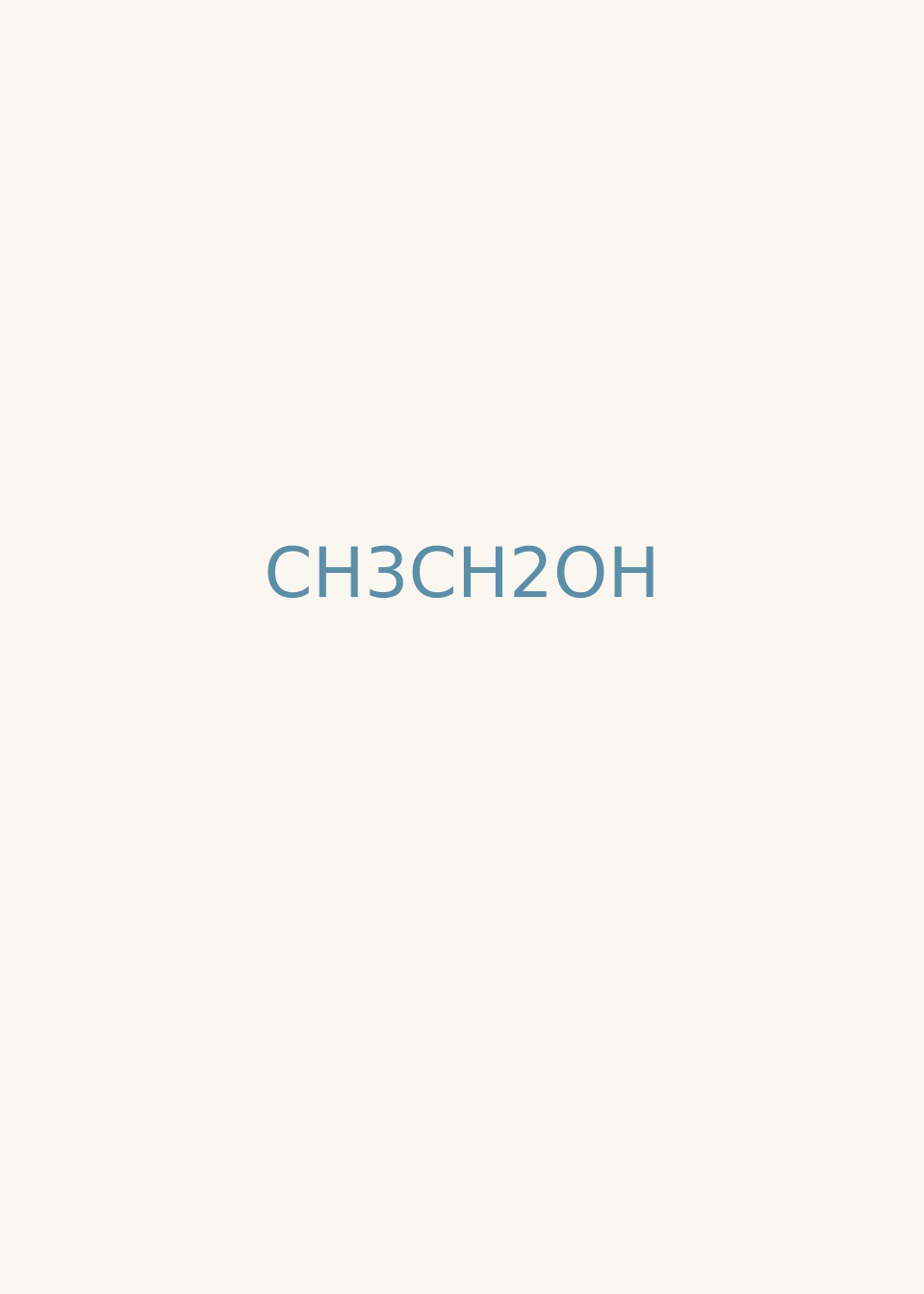
- Molecule B: \( \ce{CH3CH2OH} \)
Both contain an oxygen-bound hydrogen. Explain why molecule A is more acidic than molecule B.
Solution 2
Molecule A is more acidic because losing \( \mathrm{H}^{+} \) produces a more stable conjugate base.
For ethanoic acid:
\[ \ce{CH3COOH -> CH3COO^- + H+} \]
The negative charge in \( \ce{CH3COO^-} \) is shared between two oxygen atoms through resonance.
For ethanol:
\[ \ce{CH3CH2OH -> CH3CH2O^- + H+} \]
the negative charge stays mainly on one oxygen atom, making the ion less stabilised.
The tempting mistake is to see the same \( \ce{-OH} \) group and assume similar acidity. The surrounding structure changes the stability of the product, which controls acidity.
Question 3
Methylamine and ammonia are both bases. Predict which is the stronger base and explain why.
Solution 3
Methylamine is the stronger base because the methyl group slightly increases electron density around nitrogen.
The reaction with hydrogen ions is:
\[ \ce{CH3NH2 + H+ -> CH3NH3+} \]
The nitrogen lone pair is more available because the methyl group donates electron density towards nitrogen.
The trap is assuming that both molecules have nitrogen, so they must behave identically. The difference comes from the chemical environment around the nitrogen atom.
Question 4
An unknown organic compound reacts with hydrochloric acid to form a positively charged ion. It does not contain a carboxyl group. Predict what functional group is likely present and explain your reasoning.
Solution 4
The compound likely contains an amine functional group.
Amines contain nitrogen with an available lone pair:
\[ \ce{RNH2 + HCl -> RNH3^+Cl^-} \]
The nitrogen accepts \( \mathrm{H}^{+} \), producing a positively charged ammonium ion.
The tempting route is to search only for acidic groups because hydrochloric acid is involved. However, the compound is gaining \( \mathrm{H}^{+} \), so the unknown molecule is behaving as a base.
Question 5
A student claims:
“Compound X contains a nitrogen atom, so it must be a stronger base than compound Y, which contains no nitrogen.”
Compound X is an amide:
\[ \ce{CH3CONH2} \]
Compound Y is methylamine:
\[ \ce{CH3NH2} \]
Evaluate the student’s claim.
Solution 5
The claim is incorrect. Methylamine is the stronger base because its nitrogen lone pair is available to accept \( \mathrm{H}^{+} \), while the amide nitrogen’s lone pair is involved with the carbonyl group.
For methylamine:
\[ \ce{CH3NH2 + H+ -> CH3NH3+} \]
The lone pair on nitrogen directly forms a bond with \( \mathrm{H}^{+} \).
For the amide:
\[ \ce{CH3CONH2} \]
the nitrogen lone pair contributes to the carbonyl system. This reduces its ability to bond with \( \mathrm{H}^{+} \).
The tempting argument is based on the shortcut “nitrogen means base”. The deeper rule is that basicity depends on whether an electron pair is available.
This is the kind of structure-based reasoning that becomes essential when predicting organic reactions. Once you can identify where electrons are available and where charge is stabilised, reaction pathways become much easier to construct. This connects directly to planning organic transformations and synthesis pathways, where functional groups are tracked through a sequence of reactions: How to Construct Organic Synthesis Pathways for HSC Chemistry.