
How Aboriginal Food Detoxification Uses Chemistry Concepts
Learn how Aboriginal and Torres Strait Islander food preparation methods reduce natural toxins through processes such as leaching, diffusion, and chemical change. Explore the HSC Chemistry ideas behind these practices with worked examples.
A food can look safe, smell normal, and still contain a chemical that makes people seriously ill. So how could Aboriginal and Torres Strait Islander Peoples safely use plants that naturally contain poisons?
The key idea is that a dangerous food is not always useless. Sometimes the problem is a particular molecule inside the food. If people understand where that molecule is, how it behaves in water, and how it reacts, they can develop careful preparation methods that reduce the risk.
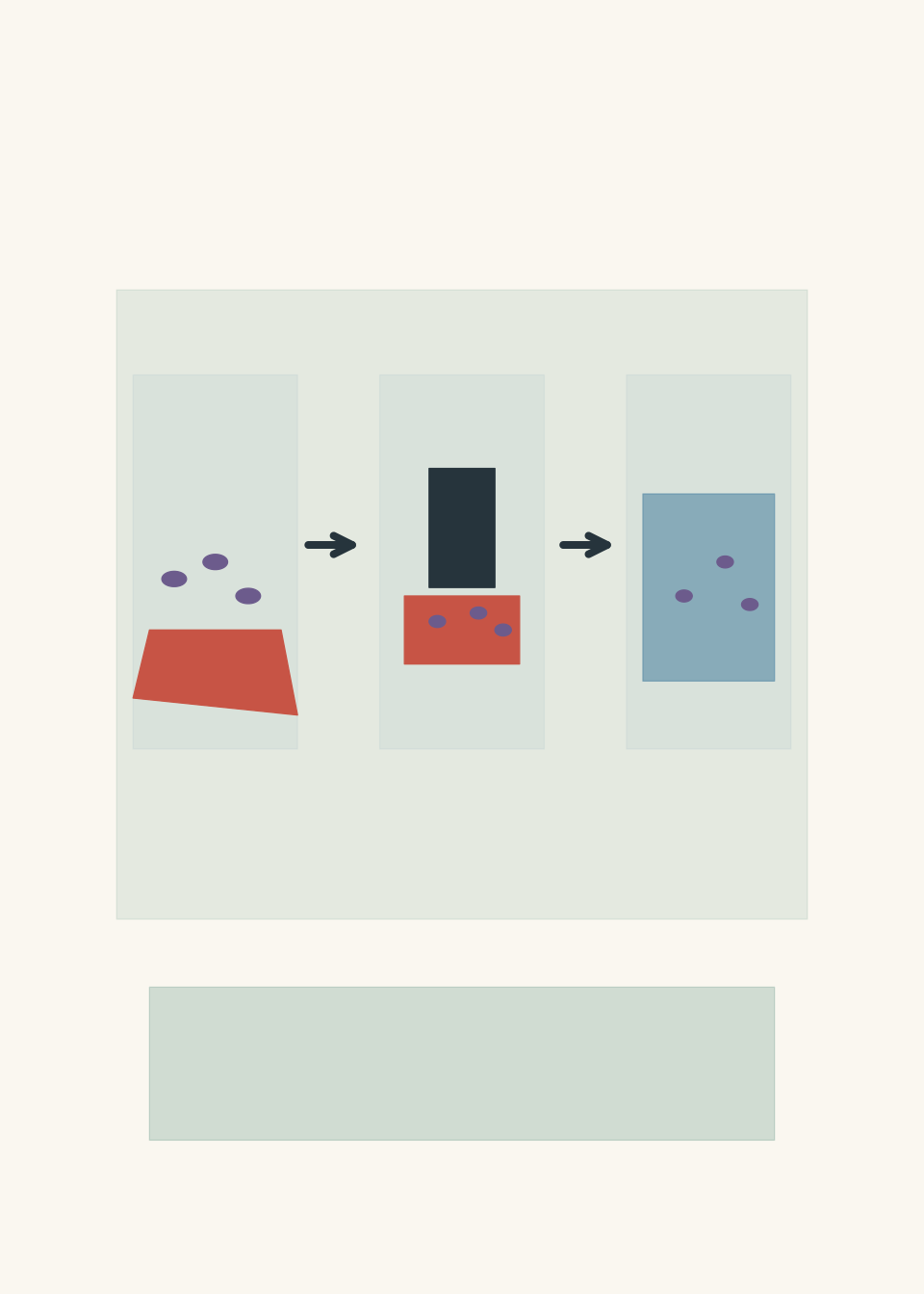
This is a useful way to think about chemistry: not just as reactions in a laboratory, but as understanding materials and making decisions about how they behave.
01A poisonous plant is a chemistry problem
Imagine you find a plant seed that contains a useful amount of energy and nutrients, but it also contains a toxin.
What would you predict is the safest way to make it edible?
A first guess might be: “Cook it until the poison disappears.” That feels reasonable because heat changes many substances. However, heat does not automatically destroy every toxin.
The better question is:
What is the chemical property of the toxin that allows us to remove or change it?
Different toxins require different solutions. Some can be broken down by reactions. Some can be dissolved and removed. Some need a combination of grinding, soaking, repeated washing, fermentation, or heating.
Many Aboriginal and Torres Strait Islander food practices involve detailed knowledge of plants, seasons, preparation methods, and environmental conditions. These methods are examples of applied chemistry developed through observation and cultural knowledge over many generations.
02Example: reducing toxins in cycad seeds
Some Australian cycad species contain compounds that can produce toxic substances when processed incorrectly. Different Aboriginal groups have used careful preparation methods for particular cycad foods, including processes such as crushing, washing, and repeated leaching to reduce toxic compounds before eating.
The chemistry idea behind this is extraction and diffusion.
When a crushed plant material is placed in water, some soluble molecules can move from inside the plant tissue into the surrounding water.
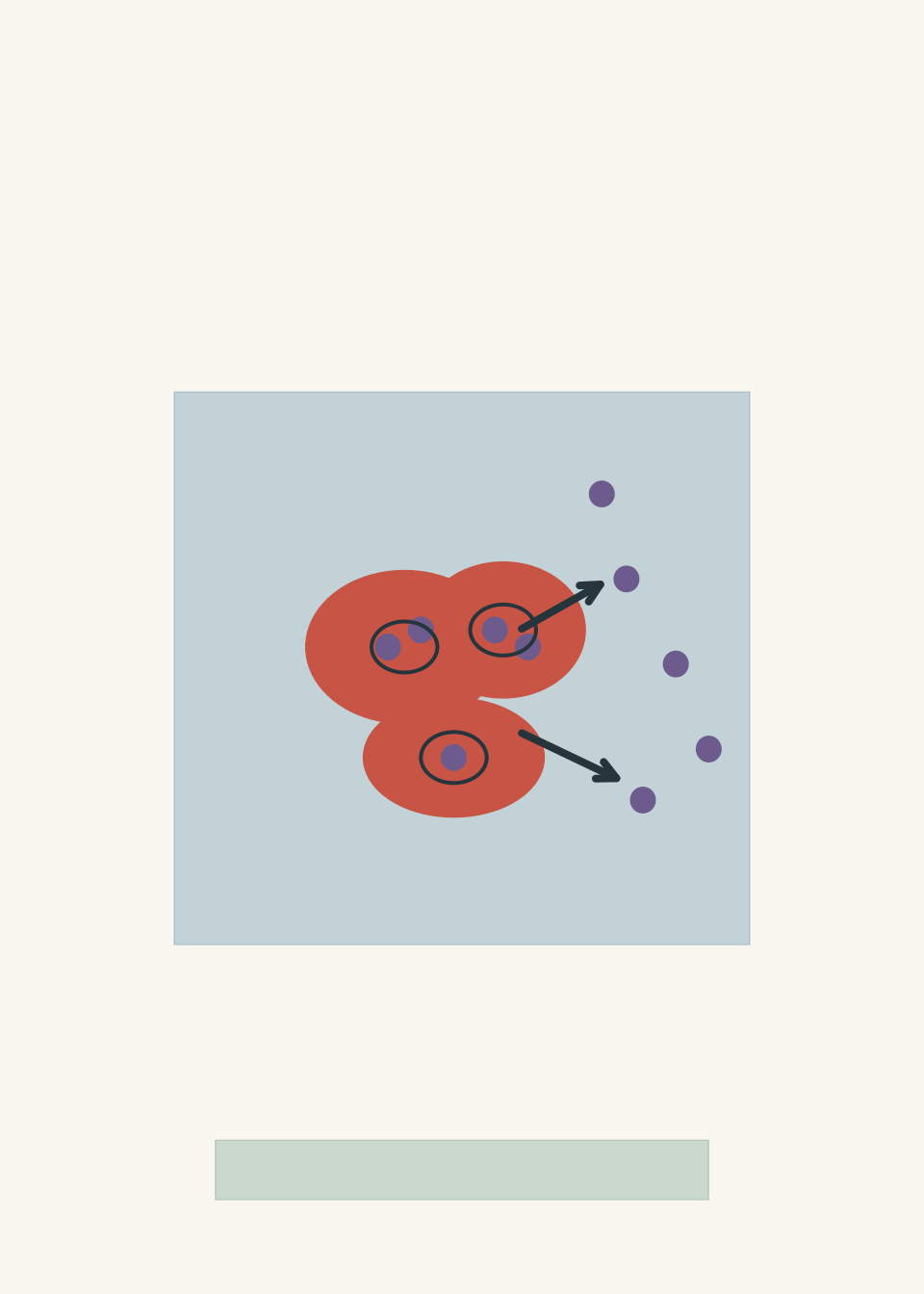
Think of the plant material like a crowded room. If people inside the room can leave through open doors, the room gradually becomes less crowded. Molecules do something similar: particles move from regions of higher concentration to regions of lower concentration.
This movement is called diffusion.
The first simple model is:
- crush the plant → increase surface area
- add water → allow soluble compounds to leave
- remove the water → remove some dissolved compounds
But this model is incomplete.
The toxin is not removed because water is “washing away poison” in a magical way. The process depends on the chemical properties of the molecules involved:
- Are they soluble in water?
- Are they trapped inside plant structures?
- How quickly do they diffuse?
- How many times is the water replaced?
The amount removed depends on concentration differences and contact time.
03Why crushing helps
Students often predict that crushing a food would make it more dangerous because it “releases the poison”.
That prediction is partly reasonable. Crushing can release compounds that were trapped inside cells.
However, crushing can also make detoxification more effective.
Why?
A whole seed has a smaller exposed surface area. Water cannot easily reach every part. Crushing creates more contact between the plant material and water, allowing more molecules to move out.
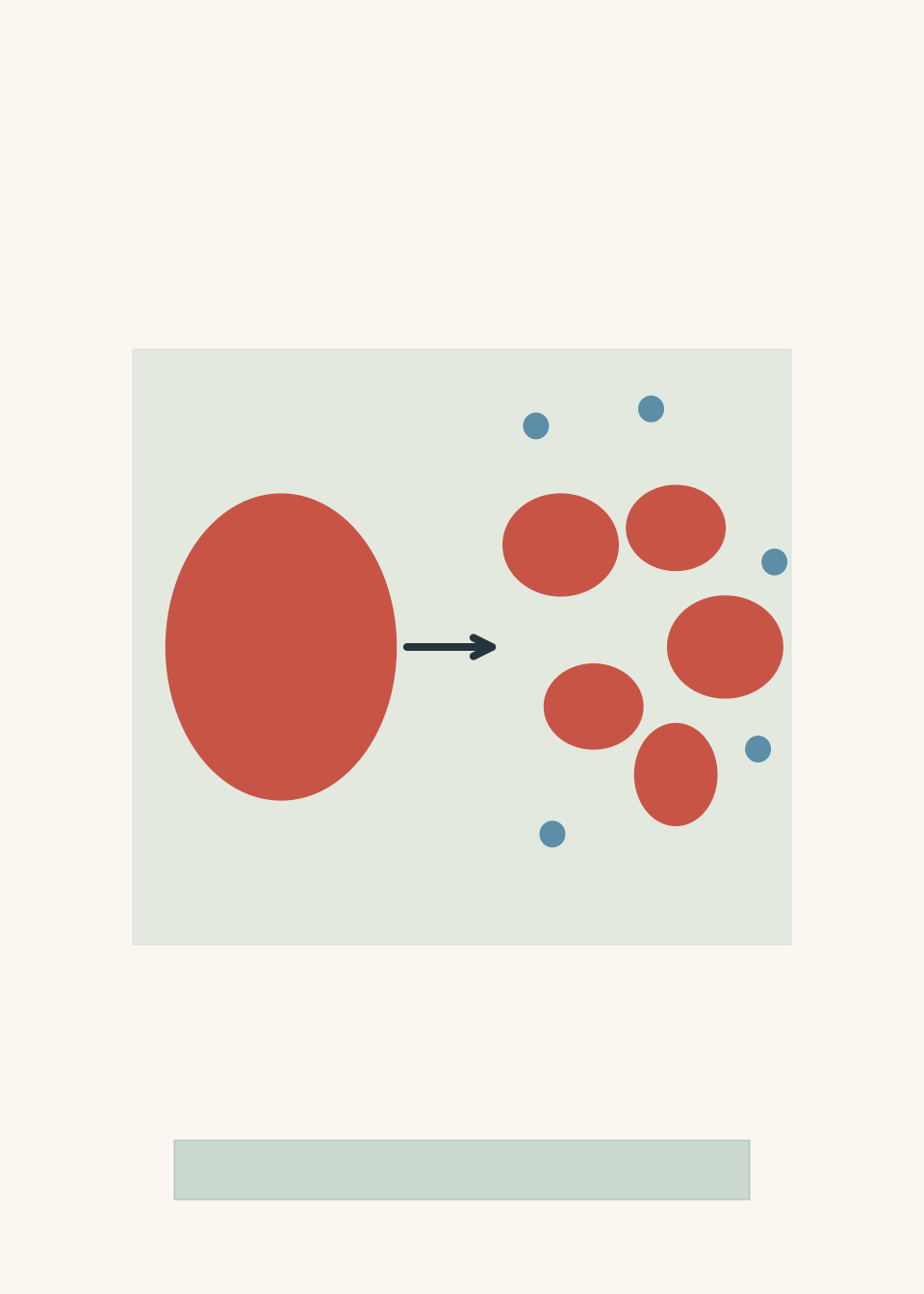
The same idea appears throughout chemistry. Increasing surface area often increases the rate of a process because more particles are available to interact.
This connects to reaction rates, which are covered when studying factors affecting chemical change.
04A second chemical pathway: changing a molecule
Not all detoxification relies on physically removing a substance.
Some plant toxins can be chemically transformed into less harmful substances.
For example, some cyanogenic plants contain cyanogenic glycosides. When plant cells are damaged, enzymes can help convert these compounds into hydrogen cyanide, \(\ce{HCN}\), a toxic substance.
A simplified representation is:
\[ \text{cyanogenic glycoside} + \ce{H2O} \rightarrow \text{sugar compound} + \ce{HCN} \]
The exact chemistry depends on the plant and the compounds involved, but the important HSC idea is that a molecule can undergo a chemical change into different products.
This is different from leaching.
- Leaching: the unwanted molecule is moved away.
- Chemical transformation: the molecule is changed into different substances.
05Connecting food preparation to HSC chemistry
These practices involve several ideas you already meet in Chemistry:
| Food processing idea | HSC chemistry connection |
|---|---|
| Washing and soaking | Solubility and diffusion |
| Crushing plant material | Surface area and reaction rate |
| Heating | Energy transfer and possible decomposition |
| Fermentation | Chemical reactions involving microorganisms |
| Removing acidic or basic compounds | Acid-base chemistry |
You can also connect these ideas to acid-base reactions. For example, understanding how substances react with acids and bases helps chemists predict whether a compound remains stable or changes form. You can review the core idea of proton transfer here: Acid-Base Reactions: Proton Transfer and Neutralisation.
06Worked example: calculating toxin removal by leaching
Worked example: A seed processing method removes dissolved toxin
A preparation method reduces the concentration of a water-soluble toxin from \(50 \text{ mg/L}\) to \(5.0 \text{ mg/L}\). Calculate the percentage decrease in toxin concentration.
Step 1
The initial concentration is:
\[ 50 \text{ mg/L} \]
The final concentration is:
\[ 5.0 \text{ mg/L} \]
The amount removed is:
\[ 50 - 5.0 = 45 \text{ mg/L} \]
Step 2
\[ \text{percentage decrease}=\frac{\text{amount removed}}{\text{original amount}}\times100 \]
Substitute the values:
\[ \text{percentage decrease}=\frac{45}{50}\times100 \]
\[ =90\% \]
Step 3
The concentration decreased by \(90\%\). This does not automatically prove the food is safe because safety depends on the toxin, the remaining concentration, and the safe exposure limit.
The chemistry tells us how much changed. Biology and toxicology determine whether the final amount is acceptable.
07Worked example: comparing repeated washing cycles
Worked example: A toxin concentration decreases after each washing step
A crushed plant material contains \(80 \text{ mg}\) of a soluble compound. Each washing step removes \(50\%\) of the remaining compound. Calculate the amount remaining after three washes.
Step 1
Each wash removes half of what is left, so the amount is multiplied by \(0.50\) each time.
Step 2
After one wash:
\[ 80 \times 0.50 = 40 \text{ mg} \]
After two washes:
\[ 40 \times 0.50 = 20 \text{ mg} \]
After three washes:
\[ 20 \times 0.50 = 10 \text{ mg} \]
Step 3
After three washing steps, \(10 \text{ mg}\) of the compound remains.
The important idea is that repeated washing is not removing the same amount each time. It removes a fraction of what remains, so the decrease follows a pattern.
08The misconception: “If a food is natural, it must be safe”
This is one of the easiest mistakes to make.
A plant being natural tells us where it came from. It does not tell us whether it contains useful chemicals, harmful chemicals, or both.
Many natural substances are chemically active. The difference is that careful preparation changes the risk by controlling the concentration or changing the chemical form.
A useful chemistry habit is:
Do not ask whether something is natural or artificial. Ask what molecules are present and how they behave.
09Questions and solutions
Question 1
A plant material contains a water-soluble compound. A sample initially contains \(40 \text{ mg}\) of the compound. After soaking and draining, \(10 \text{ mg}\) remains.
Calculate the percentage of the compound removed.
Solution 1
The compound removal percentage is \(75\%\).
The amount removed is:
\[ 40 - 10 = 30 \text{ mg} \]
The percentage removed is:
\[ \frac{30}{40}\times100=75\% \]
The tempting mistake is to divide by the final amount, but percentage change is always compared with the original amount. The original concentration represents the starting risk before processing.
Question 2
A student says, “Crushing a toxic seed makes detoxification less effective because it releases more toxin.”
Explain why this statement is incomplete.
Solution 2
The statement is incomplete because crushing can both release toxins and improve their removal.
Crushing damages plant structures, which may allow more compounds to leave the cells. However, it also increases surface area, allowing water to contact more of the material and increasing diffusion of soluble compounds into the water.
The key factor is what happens after crushing. If the material is properly washed or processed, the increased surface area can help remove unwanted compounds.
Question 3
A preparation method uses three washing cycles. Each cycle removes \(40\%\) of the remaining toxin. If the original amount of toxin is \(100 \text{ mg}\), calculate the amount remaining after three cycles.
Solution 3
The amount remaining after three cycles is \(21.6 \text{ mg}\).
Each cycle leaves:
\[ 100\%-40\%=60\% \]
of the toxin behind.
So the remaining amount is:
\[ 100 \times 0.60^3 \]
\[ =100 \times 0.216 \]
\[ =21.6 \text{ mg} \]
The trap is assuming three washes remove \(120\%\) of the toxin because each removes \(40\%\). Each wash acts on the smaller amount left after the previous wash.
Question 4
Two preparation methods are tested.
Method A removes a toxin by repeated washing.
Method B converts the toxin into different molecules through a chemical reaction.
A student claims Method A is a chemical reaction because “the food becomes chemically different after washing”.
Evaluate this claim.
Solution 4
The claim is incorrect because washing is mainly a physical separation process, not a chemical reaction.
In Method A, the toxin molecules are moved from the food into the water. The molecules themselves are not necessarily changed into new substances.
In Method B, the toxin molecules are converted into different chemical substances, meaning chemical bonds are broken and formed.
The trap is confusing any visible change in a material with a chemical reaction. A change in appearance or composition does not always mean a new substance has formed.
Question 5
A researcher compares two explanations for why a traditional preparation method reduces toxicity.
Model 1: The process works because heat destroys all toxic molecules.
Model 2: The process works because crushing, soaking, and repeated water replacement reduce the concentration of soluble toxic compounds.
The food contains a toxin that remains stable when heated but dissolves easily in water.
Which model better explains the result, and why?
Solution 5
Model 2 better explains the result because the toxin’s key property is water solubility, not heat sensitivity.
The tempting route is to choose Model 1 because cooking is commonly associated with making food safer. However, the stated constraint is that the toxin remains stable when heated, so heat cannot be the main mechanism.
Model 2 matches the observations:
- Crushing increases surface area.
- Soaking allows diffusion of soluble toxin molecules into water.
- Replacing the water maintains a concentration difference, allowing more toxin to leave.
The deeper idea is that a successful detoxification method depends on the chemical properties of the unwanted substance. A method that works for one toxin may fail completely for another because molecules behave differently.
Understanding how molecules move and react leads into a broader HSC skill: predicting what happens when substances are mixed, heated, or transformed. This is the foundation behind writing and balancing chemical equations, where you track exactly how atoms are rearranged during chemical change. You can continue with Conservation of Atoms in Chemical Reactions: HSC Chemistry Guide.